The Myth That Refuses to Die
Every few months, the same claim resurfaces in forums and comment sections: “Bitcoin miners could crack any password in seconds.” It sounds alarming. It is also completely wrong.
This misconception reveals a fundamental misunderstanding of what an ASIC actually does, how password hashing works, and why the two have almost nothing in common. As Bitcoin mining hackers who have torn apart, reflashed, and rebuilt thousands of ASICs, we are going to set the record straight with hard technical facts — not hand-waving.
What a Bitcoin ASIC Actually Does
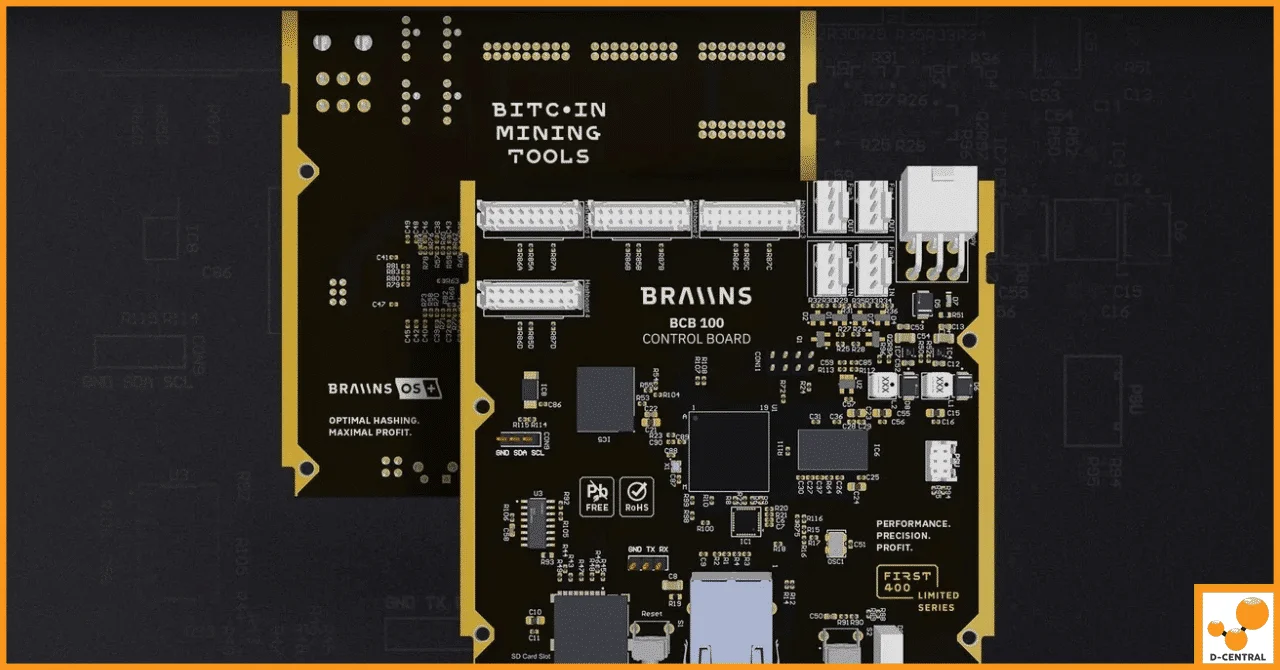
An Application-Specific Integrated Circuit (ASIC) is hardware engineered to perform exactly one operation: double SHA-256 hashing. That is the proof-of-work algorithm that secures the Bitcoin network. Every transistor on the die, every logic gate, every signal path is etched into silicon for this single purpose. There is no instruction set. There is no operating system. There is no reprogramming.
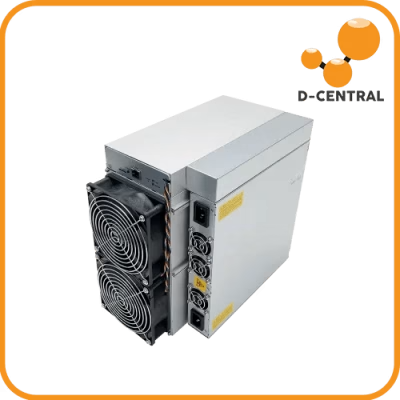
When your Antminer S21 fires up and pushes 200 TH/s, it is performing 200 trillion double-SHA-256 hashes per second — and absolutely nothing else. The chip cannot add two numbers, sort a list, render a pixel, or run any other hashing algorithm. It is a purpose-built machine in the most literal sense of the word.
| Property | Bitcoin Mining ASIC | General-Purpose CPU/GPU |
|---|---|---|
| Algorithm support | Double SHA-256 only | Thousands of algorithms |
| Programmable | No — hardwired logic | Yes — fully programmable |
| Flexibility | Zero | Unlimited |
| Efficiency at target task | Extreme (joules per terahash) | Low by comparison |
| Can run bcrypt, scrypt, Argon2 | No | Yes |
Think of it this way: a mining ASIC is to computing what a meat grinder is to a kitchen. The meat grinder is phenomenally efficient at grinding meat. It cannot chop vegetables, bake bread, or boil water. Asking an S21 to crack passwords is like asking a meat grinder to make you a soufflé.
How Password Hashing Actually Works
Here is the critical piece that the myth-spreaders never understand: modern passwords are not stored or hashed with SHA-256.
When you create an account on a well-engineered system, your password is run through a key derivation function (KDF) specifically designed to be slow, memory-hard, and resistant to brute-force attacks. The most common algorithms used in production systems today are:
| Algorithm | Used By | Why ASICs Cannot Help |
|---|---|---|
| bcrypt | Most web applications, Linux /etc/shadow | Based on Blowfish cipher — entirely different algorithm, deliberately CPU-bound with tunable cost factor |
| scrypt | Cryptocurrency wallets, some web apps | Memory-hard — requires large RAM allocations that ASICs do not have |
| Argon2 | Password Hashing Competition winner (2015), modern best practice | Memory-hard AND parallelism-resistant — explicitly designed to defeat custom hardware attacks |
| PBKDF2 | Older systems, Wi-Fi WPA2, some enterprise apps | Iterative hashing with thousands of rounds — even if SHA-256 based, the iteration count and HMAC wrapping make raw SHA-256 hardware useless |
The entire point of these algorithms is to make brute-force attacks expensive regardless of the hardware thrown at them. Argon2, for example, was specifically designed with ASIC resistance in mind. It requires configurable amounts of memory (often 64 MB or more per hash attempt), which makes it physically impossible to implement efficiently on a chip designed to do nothing but SHA-256 with minimal memory.
Even PBKDF2 — the weakest modern KDF — wraps SHA-256 in an HMAC construction and iterates it tens of thousands of times. A Bitcoin ASIC’s SHA-256 pipeline cannot perform HMAC. It cannot loop. It cannot iterate. It computes SHA256(SHA256(block_header)) and nothing more.
The Numbers: Why the Math Does Not Add Up
Let us assume, for the sake of argument, that someone could somehow magically repurpose the entire Bitcoin network’s hashpower for password cracking. As of early 2026, the Bitcoin network operates at roughly 800+ EH/s (exahashes per second). That is 800,000,000,000,000,000,000 SHA-256 operations per second. Sounds terrifying, right?
Now consider a properly configured Argon2id hash with standard parameters (64 MB memory, 3 iterations, 4 lanes). Even if you could somehow run Argon2 on mining hardware — which you cannot — each hash attempt would require:
- 64 MB of dedicated RAM per attempt (mining ASICs have essentially zero accessible RAM)
- Multiple passes over that memory in a pattern that defeats parallelization
- Computation that takes approximately 0.5-1 second on modern server hardware by design
A 12-character password using mixed case, numbers, and symbols has roughly 4.7 × 10²³ possible combinations. At one billion Argon2 attempts per second (far beyond what any real hardware can achieve), brute-forcing that password would take approximately 15 million years.
The network’s SHA-256 hashpower is simply irrelevant. It is raw speed at the wrong task, like measuring a submarine’s horsepower to estimate how fast it can fly.
What Bitcoin’s Hashrate Actually Secures
Rather than being a threat to passwords, Bitcoin’s staggering hashrate is the visible output of the most robust security system ever built. The proof-of-work consensus mechanism uses all that computational power for one purpose: making it astronomically expensive to rewrite transaction history.
With the current difficulty at over 110 trillion and a block reward of 3.125 BTC, miners collectively spend billions of dollars annually on electricity and hardware to secure the network. This is not wasted energy — it is the thermodynamic wall that protects every bitcoin ever transacted. Every hash strengthens the ledger. Every hash counts.
The specialization of mining ASICs is precisely why Bitcoin is so secure. Because these chips can only do SHA-256, the entire economic investment in mining hardware is locked into defending the Bitcoin network. The chips cannot be repurposed for attacks on other systems. They are single-purpose security guardians.
The Real Password Cracking Threat Landscape
If mining ASICs are not the threat, what is? The actual tools used by password crackers are far more mundane — and far more relevant to understand:
GPUs (Graphics Processing Units): Modern GPUs like the NVIDIA RTX 4090 are the workhorses of password cracking. They are general-purpose parallel processors that can run any algorithm. A single RTX 4090 can attempt roughly 164 billion MD5 hashes per second, or about 22,000 bcrypt hashes per second (cost factor 5). Crucially, they can switch between algorithms at will.
FPGAs (Field-Programmable Gate Arrays): These sit between GPUs and ASICs on the flexibility spectrum. They can be reconfigured for different algorithms, making them useful for targeted attacks. However, they are expensive and typically limited to well-funded operations.
CPU clusters: For memory-hard algorithms like Argon2, even GPUs struggle. Large-scale attacks on modern KDFs require CPU clusters with substantial RAM, making attacks expensive and slow — which is exactly the point.
The lesson here is clear: your defense against password cracking is not hoping attackers lack the right hardware. Your defense is strong passwords combined with modern hashing algorithms. Use a password manager. Enable two-factor authentication. The algorithm does the heavy lifting.
Why This Myth Matters to Bitcoiners
This misconception is not just an innocent misunderstanding — it actively harms Bitcoin adoption. When people believe that mining hardware threatens their online security, it creates irrational fear of the very technology that secures the hardest money ever created.
Understanding what ASICs actually do is fundamental to understanding Bitcoin itself. The network’s security model depends on the fact that SHA-256 ASICs are ruthlessly specialized. Their inability to do anything except mine Bitcoin is a feature, not a bug. It means the hundreds of billions of dollars invested in mining infrastructure serve one and only one purpose: protecting the Bitcoin ledger.
As home miners, this understanding is empowering. When you plug in a Bitaxe or fire up an Antminer in your basement, you are not powering a potential weapon against internet security. You are adding your hashrate to the most secure computational network in human history. You are participating in decentralization. You are a Bitcoin mining hacker in the truest sense — taking institutional-grade technology and running it in your home to strengthen the network.
Frequently Asked Questions
Can Bitcoin mining ASICs crack SHA-256 passwords?
No. While mining ASICs perform SHA-256, modern password systems do not use raw SHA-256 for password storage. They use key derivation functions like bcrypt, scrypt, or Argon2 that are fundamentally different algorithms. Even systems using PBKDF2-SHA-256 wrap the hash in HMAC and iterate thousands of times — operations that a mining ASIC physically cannot perform because its circuits are hardwired for double SHA-256 block header hashing only.
What if someone built an ASIC specifically for password cracking?
This is theoretically possible for older, simpler hash functions like MD5 or NTLM, but it would be economically irrational. Modern password hashing algorithms (Argon2, bcrypt, scrypt) are specifically designed to resist hardware optimization by requiring large amounts of memory and complex data-dependent operations. Building an ASIC for Argon2 would require embedding megabytes of RAM per cracking core — the resulting chip would be enormous, expensive, and barely faster than a general-purpose CPU, which defeats the entire purpose of an ASIC.
Could quantum computers crack passwords or break Bitcoin mining?
Quantum computing is a separate threat model entirely. Grover’s algorithm could theoretically halve the effective bit-strength of SHA-256 (reducing 256-bit security to 128-bit), but 128-bit security remains computationally infeasible to brute-force. The greater quantum concern for Bitcoin is Shor’s algorithm targeting ECDSA signatures, not the proof-of-work algorithm. Password KDFs like Argon2 would similarly retain strong practical security. In any case, quantum computers capable of these attacks remain years to decades away.
Does more Bitcoin network hashrate make passwords less secure?
Absolutely not. Bitcoin’s 800+ EH/s of hashrate is entirely SHA-256 specific. It cannot be redirected at passwords because the hardware physically cannot run the algorithms used to protect passwords. Even if the network reached a zettahash per second, your bcrypt or Argon2 passwords would be exactly as safe as they are today. The two systems operate in completely separate domains.
What is the best way to protect my passwords in 2026?
Use a reputable password manager to generate unique, random passwords of 16+ characters for every account. Enable two-factor authentication (preferably hardware keys like YubiKey, not SMS). Ensure the services you use employ modern hashing (Argon2id or bcrypt with a cost factor of 12+). Your password security depends on the hashing algorithm and password complexity — not on what mining hardware exists in the world.
How does Bitcoin mining actually work if ASICs only do one thing?
Bitcoin mining is a competitive process where miners repeatedly hash block headers (containing transaction data, a timestamp, and a random nonce) using double SHA-256 until they find a hash below the current difficulty target. This is essentially a brute-force lottery — and the ASIC’s singular focus on SHA-256 makes it extraordinarily efficient at this specific task. A modern miner like the Antminer S21 performs 200 trillion of these hashes per second while consuming only 3,500 watts. Proof of work turns this raw computation into the security backbone of the Bitcoin network.
The Bottom Line
Bitcoin mining ASICs are extraordinary machines. They represent some of the most specialized, efficient silicon ever manufactured. But their power is precisely bounded: SHA-256, and nothing else. They cannot crack your passwords, hack your accounts, or threaten your online security. Anyone who claims otherwise is confusing raw hashrate with computational versatility — and those are fundamentally different things.
The next time someone tells you that Bitcoin miners could crack any password, you now have the technical ammunition to set them straight. Mining hardware secures Bitcoin. Password hashing algorithms secure your accounts. They are parallel systems with zero overlap, each engineered for their own domain.
And if you want to put that ASIC power to its intended use — securing the Bitcoin network and stacking sats from your own home — D-Central has the hardware to get you started. We have been the Bitcoin mining hackers since 2016, pioneering open-source mining solutions and making institutional-grade technology accessible to home miners across Canada and worldwide.