The Antminer S17 occupies a peculiar and powerful position in the Bitcoin mining landscape of 2026. It is not the fastest machine on the network. It is not the most efficient. But it is one of the most battle-tested, well-understood, and hackable ASIC miners ever produced — and that makes it one of the most interesting machines a home miner can own.
With the Bitcoin network hashrate now exceeding 800 EH/s and the block reward sitting at 3.125 BTC following the April 2024 halving, the economics of mining have shifted dramatically. Institutional operations run fleets of S21s and next-gen hydro units. But for the home miner — the pleb miner, the sovereign individual who mines not for corporate profit margins but for participation in the most decentralized monetary network ever created — the S17 still has a role to play. And at D-Central Technologies, we have been hacking these machines into home-friendly configurations since before most mining companies knew what a space heater conversion was.
This is the definitive guide to the Antminer S17 in 2026: what it can do, where it fits, and how to decide if it belongs in your setup.
The Antminer S17: Technical Specifications and Architecture
The Antminer S17 was released by Bitmain in 2019, built on their second-generation 7nm BM1397 ASIC chip. It was a significant leap from the S9 era and represented Bitmain’s push toward higher efficiency before the S19 series arrived.
Core Specifications
| Specification | Value |
|---|---|
| Algorithm | SHA-256 |
| Hashrate | 53 TH/s (Normal) / 56 TH/s (Turbo) |
| Power Consumption | ~2,385 W (Normal) / ~2,520 W (Turbo) |
| Efficiency | ~45 J/TH |
| ASIC Chip | BM1397 (7nm) |
| Cooling | Dual fan, forced air |
| Operating Modes | Normal, Low Power, Turbo |
| Dimensions | 298 x 178 x 296 mm |
| Weight | ~9.5 kg |
The BM1397 Chip: Why It Matters
The BM1397 was Bitmain’s second 7nm ASIC design and a meaningful improvement over the BM1391 used in the S15. The chip architecture enabled three distinct operating modes — Normal, Low Power, and Turbo — giving miners flexibility that earlier generations simply did not have. Low Power mode drops consumption to roughly 1,600 W while still delivering around 35 TH/s. That is a critical capability for home miners who need to stay within residential electrical limits or manage noise and heat output.
The S17 also introduced a revamped cooling system with improved heatsink contact and fan control algorithms. These were not just marketing bullet points — they directly impact the machine’s longevity, a factor we see constantly in our ASIC repair shop. S17s that were properly maintained and run at reasonable temperatures can still perform reliably years later. The ones that were overclocked in poorly ventilated shipping containers? Those end up on our repair bench.
S17 Variants: Know What You Are Buying
Bitmain released several variants under the S17 umbrella, and the differences matter:
| Model | Hashrate | Efficiency | Notes |
|---|---|---|---|
| S17 | 53-56 TH/s | ~45 J/TH | Standard model, three operating modes |
| S17 Pro | 53-62 TH/s | ~40 J/TH | Binned chips, better efficiency, four hashboards |
| S17+ | 73 TH/s | ~40 J/TH | Upgraded revision, higher hashrate ceiling |
| S17e | 64 TH/s | ~45 J/TH | Economy variant |
The S17 Pro and S17+ are generally the better picks if you can find them in good condition. The Pro model in particular had better binned chips and a four-hashboard design that many miners preferred for its thermal balance.
The S17 in 2026: Where Does It Fit?
Let us be direct: at 53-73 TH/s and 40-45 J/TH, the S17 is not competitive for pure hashrate mining against current-generation hardware. The Antminer S21, for comparison, delivers 200 TH/s at roughly 17.5 J/TH. That is nearly four times the hashrate at less than half the energy per terahash.
But “competitive” depends entirely on what you are competing for.
Scenario 1: Dual-Purpose Mining and Home Heating
The S17 pulls approximately 2,400 watts in Normal mode. That is roughly 8,200 BTU/hr of heat output — equivalent to a decent space heater. In Canadian winters, or anywhere cold climate makes heating a necessity, that energy is not wasted. It is doing double duty: securing the Bitcoin network AND heating your home.
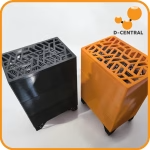
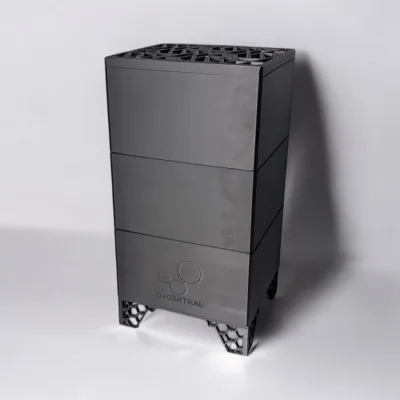
D-Central pioneered this concept with our Bitcoin Space Heater line, and the S17 is one of the best candidates for conversion. Its form factor, airflow design, and power draw hit a sweet spot for residential heating applications. We sell the Antminer S17/T17 Space Heater Case — DIY Conversion Kit specifically designed for this purpose.
When you factor out the heating cost that the miner replaces, the effective electricity cost of mining drops significantly. In many Canadian provinces with electricity rates between $0.06-0.10/kWh, a space heater S17 can approach break-even or even positive ROI during heating season — something that is increasingly difficult with standalone mining operations.
Scenario 2: Budget Entry Into Mining
The used market for S17s has compressed pricing to a fraction of the original cost. For someone who wants to learn the mechanics of ASIC mining — setting up a miner, configuring pools, managing firmware, understanding power delivery — an S17 is an excellent and affordable training platform. You learn on real hardware doing real work, contributing real hashrate to the network, without the capital outlay of a new-generation machine.
Scenario 3: Decentralization of Hashrate
This is the one that matters most, and the one that institutional miners will never tell you about. Every S17 running in a home, pointed at a pool like Ocean or solo mining through public-pool.io, is a node of resistance against hashrate centralization. The Bitcoin network’s security model depends not on having the fastest machines in the fewest hands, but on having hash power distributed as widely as possible.
At 800+ EH/s of global hashrate, does your 56 TH/s S17 move the needle statistically? No. Does it move the needle philosophically? Absolutely. Every hash counts. That is not a marketing slogan — it is the fundamental truth of proof-of-work.
Head-to-Head: Antminer S17 vs. Other Mining Rigs
To make an informed decision, you need to see where the S17 sits relative to the machines that came before it, alongside it, and after it.
S17 vs. S9: The Generational Leap
The S9 was the workhorse of the 2016-2019 era. At 14 TH/s and ~98 J/TH, it is dramatically less efficient than the S17. The S17 delivers roughly four times the hashrate at less than half the energy per terahash. If you are choosing between the two for a home mining setup, the S17 is the clear winner on every metric except possibly noise, where the S9 — particularly in our custom Slim Edition builds — can be quieter at lower hashrates.
S17 vs. T17: Same Generation, Different Tier
The T17 was the budget-tier companion to the S17, running at 40 TH/s with slightly worse efficiency. The price difference on the used market is often minimal, making the S17 the better value in most cases.
S17 vs. S19 Series: The Successor
The S19 series (95-110 TH/s, ~29.5-34 J/TH) represents a significant efficiency improvement. If you can afford the higher upfront cost and your electrical infrastructure supports it, the S19 is the stronger mining machine. But the S17 often costs a fraction of what an S19 commands on the used market, and in dual-purpose heating applications, the efficiency gap matters less because the “wasted” energy is still useful heat.
S17 vs. Current Generation (S21, S21 XP)
Current-generation machines like the S21 (200 TH/s, ~17.5 J/TH) and S21 XP (270 TH/s, ~13.5 J/TH) are in a different league entirely. They are the machines institutional miners deploy. The price difference reflects this: a new S21 costs many times what a used S17 costs. For pure ROI calculation on a per-dollar-invested basis, the S17 can still compete in specific scenarios, particularly in cold climates with moderate electricity rates.
Comparison Table
| Miner | Hashrate | Efficiency (J/TH) | Power Draw | Best Use Case |
|---|---|---|---|---|
| Antminer S9 | 14 TH/s | ~98 | ~1,375 W | Space heater, education |
| Antminer T17 | 40 TH/s | ~55 | ~2,200 W | Budget mining |
| Antminer S17 | 53-56 TH/s | ~45 | ~2,385 W | Space heater, home mining |
| Antminer S17+ | 73 TH/s | ~40 | ~2,920 W | Home mining, heating |
| Antminer S19 | 95 TH/s | ~34 | ~3,250 W | Serious home mining |
| Antminer S19 Pro | 110 TH/s | ~29.5 | ~3,250 W | Dedicated mining |
| Antminer S21 | 200 TH/s | ~17.5 | ~3,500 W | Maximum hashrate |
| Whatsminer M50S | 126 TH/s | ~26 | ~3,276 W | Alternative to S19 Pro |
Use our ASIC Miner Comparison Tool for detailed side-by-side analysis with current pricing and profitability estimates.
Common S17 Issues and Repair Considerations
If you are buying an S17 on the used market — and in 2026, that is the only market — you need to understand the failure modes. The S17 series earned a mixed reputation for reliability, and much of that comes down to how the machines were operated.
Known Failure Points
Hashboard temperature sensor failures. The S17 uses thermistors on each hashboard, and these can fail or drift over time. A bad temperature reading can cause the firmware to shut down the board entirely or, worse, allow it to overheat. This is the single most common repair we perform on S17 units at D-Central.
BM1397 chip degradation. Chips that were run consistently at high temperatures (above 85C) show accelerated degradation. This manifests as gradually declining hashrate on individual boards, eventually leading to board failure.
Control board firmware corruption. The S17’s control board can experience firmware issues, particularly on units that have been power-cycled frequently without clean shutdowns. Reflashing the firmware often resolves this.
Power supply connector damage. The S17 uses 6-pin PCIe connectors for power delivery to hashboards. Loose or corroded connections create resistance, which creates heat, which creates more resistance. Check connectors carefully on any used unit.
What to Check When Buying Used
- Request photos of all three hashboards — look for discoloration, burn marks, or visible chip damage
- Ask for a screenshot of the miner dashboard showing all boards hashing and temperatures stable
- Verify the specific model (S17, S17 Pro, S17+, S17e) — prices should reflect the variant
- Check the serial number against known batch ranges for quality issues
- Confirm the power supply is included and functional — the APW9 or APW9+ is the correct PSU
If you buy an S17 that needs repair, D-Central offers comprehensive Antminer S17 repair services — from hashboard-level diagnostics and chip replacement to full refurbishment. We also stock replacement hashboards and BM1397 chips for those who prefer DIY repairs.
Optimizing Your S17 for Home Mining
Running an S17 at stock settings in your home is not a great experience. The noise alone — approximately 76 dB from the factory fans — is enough to make it unwelcome in any living space. But with the right modifications, the S17 can be tamed for residential use.
Noise Reduction
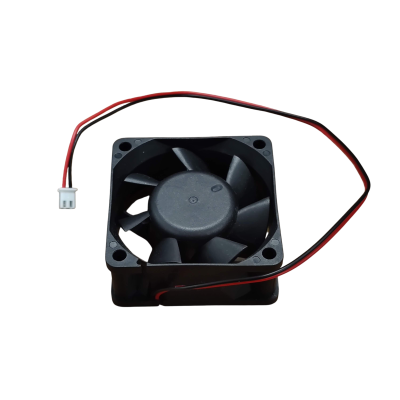
Replace the stock fans with aftermarket low-RPM fans (Noctua or Arctic are popular choices among home miners). This drops the noise floor dramatically, from jet-engine-adjacent to a level comparable to a window AC unit. The trade-off is reduced airflow, which means you need to manage ambient temperature more carefully or accept a slight hashrate reduction in Low Power mode.
Space Heater Conversion
Our S17/T17 Space Heater Case directs the hot exhaust into your living space instead of venting it outside. In heating season, this is the most elegant solution: the miner heats your home, and the electricity cost is partially or fully offset by the heating bill you would have paid anyway. In Canadian winters, this is not a novelty — it is a practical, economic decision.
Firmware Optimization
Custom firmware like Braiins OS+ (formerly known as Braiins OS) unlocks additional tuning capabilities for the S17:
- Per-domain voltage tuning for improved efficiency
- Dynamic frequency scaling based on temperature
- Better pool failover and monitoring
- Autotuning that optimizes each chip individually
Running custom firmware on an S17 can improve efficiency by 10-20% depending on the silicon lottery of your specific unit. This is real-world data from thousands of machines — not theoretical.
Power Management
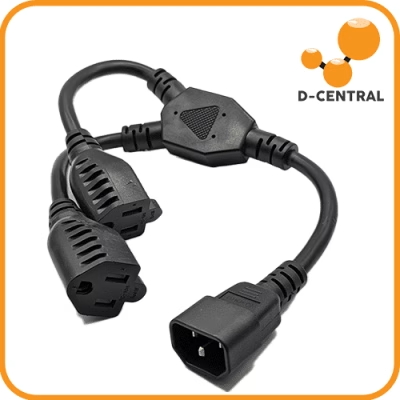
The S17 requires a 220V power supply delivering approximately 2,400 watts. In North American homes, this means a dedicated 240V circuit — typically a 30A breaker with the appropriate outlet. If you are running on 120V with a step-up transformer, expect efficiency losses and potential stability issues. Do it right: run proper 240V.
The Economics: Running an S17 in 2026
Let us run the numbers with honest assumptions. At 56 TH/s, 2,520 W, and current network conditions:
Pure Mining Revenue
With the network hashrate above 800 EH/s and the block reward at 3.125 BTC, your daily revenue from 56 TH/s is modest. The exact amount depends on Bitcoin’s price and network difficulty, both of which fluctuate. Use our Mining Profitability Calculator for real-time estimates.
The Heat Offset Equation
Here is where the math gets interesting for home miners. Say your electricity costs $0.08/kWh (a reasonable rate in Quebec):
- Daily power cost: 2.52 kW x 24h x $0.08 = $4.84/day
- If you are replacing a 2,400 W electric space heater, the heating cost is identical — $4.84/day
- The mining revenue becomes pure bonus on top of heat you were already paying for
This is why the dual-purpose mining thesis is so compelling. You are not asking “is mining profitable?” You are asking “is getting some Bitcoin while heating my home better than getting zero Bitcoin while heating my home?” The answer is obvious.
When the S17 Does Not Make Sense
Honesty matters more than sales. The S17 is not the right machine if:
- You live somewhere with electricity above $0.15/kWh and do not need supplemental heating
- You want maximum hashrate per dollar invested — newer machines win on pure efficiency
- You cannot provide a dedicated 240V circuit
- Noise is a hard constraint and you are unwilling to do fan modifications
In those cases, consider a Bitaxe for silent solo mining, or save up for a current-generation machine.
Maintenance and Longevity: Keeping Your S17 Running
An S17 that is properly maintained can continue operating for years. Here is what ongoing maintenance looks like:
Regular Cleaning Schedule
Dust is the enemy. Every 3-6 months (more frequently in dusty environments), open the unit and blow out dust with compressed air. Pay particular attention to the heatsink fins and fan blades. Clogged heatsinks cause thermal throttling and accelerate chip degradation.
Thermal Paste Replacement
After 2-3 years of operation, the thermal interface material between the ASIC chips and the heatsink degrades. Replacing thermal paste is an intermediate-level repair that can restore lost performance. If you are uncomfortable doing this yourself, our repair team handles it routinely.
Firmware Updates
Keep your firmware current. Whether you run stock Bitmain firmware or Braiins OS+, updates address bugs, improve efficiency algorithms, and patch security vulnerabilities. Mining firmware that phones home to unknown servers or has unpatched vulnerabilities is a risk to your network and your Bitcoin.
Environmental Controls
Intake air temperature significantly affects performance and longevity. The S17 operates optimally with intake air between 5-35C. In Canadian summers, this is rarely an issue. In heated indoor environments during winter — especially if you are using the miner as a heater — ensure adequate airflow so the intake side pulls room-temperature air, not its own exhaust.
Why Home Mining Matters: Beyond the Spreadsheet
Every discussion about mining hardware eventually comes back to the same question: “Is it profitable?” It is a fair question but an incomplete one.
Bitcoin’s security model is proof-of-work. The network is secured by the aggregate hashrate of every miner on the planet. When that hashrate is concentrated in a handful of institutional facilities, the network becomes more vulnerable — to regulatory pressure, to physical interdiction, to the kinds of centralized failures that Bitcoin was designed to resist.
When you run an S17 in your home, you are doing more than mining. You are participating in Bitcoin’s security. You are running infrastructure that no government can easily shut down, no corporation can easily control, and no regulation can easily reach. You are the decentralized layer.
This is what we mean when we say D-Central is about the decentralization of every layer of Bitcoin mining. Not every miner needs to be profitable on a pure-hashrate-per-watt basis. Some of them just need to exist, distributed across thousands of homes, garages, and basements, keeping the network resilient.
Frequently Asked Questions
Is the Antminer S17 still worth buying in 2026?
For pure hashrate mining at current difficulty levels, the S17 is not the optimal choice — newer machines like the S21 deliver far more hashrate per watt. However, for dual-purpose mining and heating, budget-conscious home mining, and contributing to network decentralization, the S17 remains a viable and practical machine, especially at current used-market prices.
How much Bitcoin can an S17 mine per day?
Daily revenue depends on network difficulty and Bitcoin price, both of which change constantly. At 56 TH/s against 800+ EH/s of network hashrate, daily earnings are modest. Use D-Central’s Mining Profitability Calculator for real-time estimates based on current conditions.
What power supply does the S17 need?
The S17 requires Bitmain’s APW9 or APW9+ power supply unit, delivering approximately 2,400-2,600 W. It runs on 220-240V AC input. In North America, this means a dedicated 240V circuit with a 30A breaker. Running on 120V with a transformer is possible but not recommended due to efficiency losses.
How loud is the Antminer S17?
Stock noise level is approximately 76 dB — comparable to a vacuum cleaner running continuously. This is not suitable for living spaces without modification. Replacing the factory fans with aftermarket low-RPM alternatives (Noctua, Arctic) can reduce noise to roughly 50-55 dB. Our space heater conversion kits include noise-reducing enclosure options.
What is the difference between the S17, S17 Pro, and S17+?
The S17 is the standard model (53-56 TH/s, ~45 J/TH). The S17 Pro uses better-binned chips and a four-hashboard design for improved efficiency (~40 J/TH) and slightly higher hashrate (up to 62 TH/s). The S17+ is a later revision with a higher hashrate ceiling of 73 TH/s at ~40 J/TH. The S17e is the economy variant.
Can I use the S17 as a space heater?
Yes, and this is one of the best use cases for the S17 in 2026. At ~2,400 W, it produces approximately 8,200 BTU/hr of heat — equivalent to a mid-sized electric space heater. D-Central sells a purpose-built S17/T17 Space Heater Case for this exact application. During heating season in cold climates, the heat offsets your heating bill while you earn Bitcoin.
What are the most common S17 failures?
The most frequent issues are hashboard temperature sensor failures, BM1397 chip degradation from sustained high temperatures, control board firmware corruption, and power connector damage. D-Central provides full S17 repair services including chip-level hashboard repair.
Should I mine in a pool or solo mine with an S17?
Pool mining provides consistent, predictable payouts proportional to your hashrate. Solo mining at 56 TH/s against 800+ EH/s means your odds of finding a block are extremely low, but if you do, you receive the full 3.125 BTC reward. Most S17 operators mine in pools. If the lottery appeal of solo mining interests you, consider dedicating a Bitaxe to solo mining while your S17 earns steady pool rewards.
Can D-Central repair my S17?
Yes. D-Central Technologies has been repairing Antminer hardware since 2016 and maintains one of the most comprehensive ASIC repair operations in North America. We perform chip-level hashboard diagnostics and repair, firmware reflashing, thermal paste replacement, and full refurbishment. Visit our Antminer S17 Repair page for details.