Last updated: February 2026
The Antminer S19 series changed everything. When Bitmain dropped the S19, S19 Pro, and S19j Pro, they did not just iterate on what came before — they redefined the performance floor for Bitcoin mining hardware. These machines pushed SHA-256 ASICs into a new efficiency class, and even now, years after their initial release, they remain some of the most widely deployed miners on the planet.
But here is the reality check that most “review” sites skip: the S19 series is no longer the current generation. Bitmain’s S21 lineup has since taken the efficiency crown. So why does this series still matter in 2026, with the Bitcoin network hashrate blowing past 800 EH/s and the block reward sitting at 3.125 BTC post-halving?
Because the S19 series has entered its most interesting phase — the one where hardware hackers, home miners, and the pleb mining community turn institutional leftovers into sovereign infrastructure. At D-Central Technologies, we have been doing exactly that since day one, and the S19 series is one of the best platforms we have ever worked with.
This is the complete technical breakdown. No fluff. No recycled spec sheets. Just the data and context you need to decide whether an S19-series machine belongs in your operation.
From CPUs to Custom Silicon: How We Got Here
Bitcoin mining hardware has gone through four distinct evolutionary leaps: CPU, GPU, FPGA, and finally ASIC. Each transition represented roughly a 100x improvement in hashes per watt. By the time purpose-built ASICs arrived in 2013, the era of mining Bitcoin on general-purpose hardware was already over.
Bitmain emerged as the dominant ASIC manufacturer through the Antminer line, iterating relentlessly on chip process nodes and board design. The progression from the S9 (16nm, ~13.5 TH/s) through the S17 (7nm, ~56 TH/s) to the S19 series (7nm refined, 95-110 TH/s) followed a clear trajectory: more terahashes, fewer joules per terahash, better thermal management.
The S19 series arrived in 2020 and represented the maturation of Bitmain’s 7nm chip platform. Where earlier generations often suffered from reliability issues — the S17 was notorious for hashboard failures — the S19 platform delivered something miners had been demanding for years: consistent, predictable performance over multi-year deployment windows.
Why the S19 Generation Was a Turning Point
Three things made the S19 series different from what came before:
- Thermal architecture overhaul. Bitmain redesigned the heatsink and airflow path, reducing hot spots that had plagued earlier models. The result was lower variance in chip temperatures across the hashboard, which directly translates to longer component life.
- Power delivery refinement. The APW12 power supply unit, designed specifically for the S19 series, delivered cleaner voltage regulation under load. Cleaner power means fewer chip-level faults and more stable hashrate output.
- Firmware maturity. By the time the S19 shipped, BraiinsOS and other aftermarket firmware options were well-established. This meant miners could immediately unlock underclocking, overclocking, and custom autotuning profiles — capabilities that transform a stock machine into something far more versatile.
Antminer S19 (95 TH/s) — The Workhorse
The base S19 delivers 95 TH/s at roughly 3,250 watts, translating to an efficiency of approximately 34.5 J/TH. On paper, that efficiency number looks modest compared to current-gen machines. In practice, the S19 remains a solid workhorse for operators who have access to low-cost power or who are deploying these units in dual-purpose configurations.
Technical Specifications
| Parameter | Value |
|---|---|
| Hash Rate | 95 TH/s (stock) |
| Power Consumption | ~3,250 W |
| Efficiency | ~34.5 J/TH |
| ASIC Chip | BM1398 (7nm) |
| Cooling | Dual fans, forced air |
| Operating Temp | 5°C to 45°C |
| Noise Level | ~75 dB (stock fans) |
| PSU | APW12 (sold separately) |
| Algorithm | SHA-256 |
Where the Base S19 Shines
The base S19 has become the ideal candidate for two specific use cases in the current market:
1. Space heater conversions. At 3,250 watts, the S19 produces roughly 11,000 BTU/h of heat — enough to warm a large room or small apartment. D-Central’s Antminer S19 Space Heater Edition takes a stock S19, underclocks it to reduce noise and power draw, and packages it in a shroud configuration designed for residential deployment. You mine Bitcoin while heating your home. Every watt consumed by the miner becomes heat, and that heat displaces your electric baseboard or forced-air system. The thermodynamics are straightforward: 100% of electrical input becomes thermal output.
2. Low-cost power deployments. If your all-in electricity cost is below $0.06/kWh, the base S19 remains profitable even at 2026 difficulty levels. Canadian miners — especially those in Quebec and Manitoba with access to hydro rates — continue to run fleets of S19 units productively.
Antminer S19 Pro (110 TH/s) — The Efficiency Leader
The S19 Pro was the flagship of the original S19 launch. At 110 TH/s and approximately 3,250 watts, it achieved an efficiency of roughly 29.5 J/TH — a significant step forward from the base model’s 34.5 J/TH. That 15% efficiency gap translates directly into higher margins per terahash at any given electricity rate.
Technical Specifications
| Parameter | Value |
|---|---|
| Hash Rate | 110 TH/s (stock) |
| Power Consumption | ~3,250 W |
| Efficiency | ~29.5 J/TH |
| ASIC Chip | BM1398 (7nm, higher bin) |
| Cooling | Dual fans, forced air |
| Operating Temp | 5°C to 45°C |
| Noise Level | ~75 dB (stock fans) |
| PSU | APW12 (sold separately) |
| Algorithm | SHA-256 |
The Pro Difference: Chip Binning
The performance gap between the S19 and S19 Pro comes down to chip binning. Both use the BM1398, but the Pro gets the higher-quality dies — the ones that achieve target hash rates at lower voltages. Same silicon, different selection criteria. This is why the Pro hits 110 TH/s at the same 3,250W power envelope that gives the base model only 95 TH/s.
For miners running aftermarket firmware like BraiinsOS, the S19 Pro’s better silicon also means more headroom for overclocking. It is not uncommon to push a well-cooled S19 Pro past 120 TH/s, though power consumption scales accordingly. Conversely, underclocking a Pro to 80-90 TH/s drops power consumption dramatically, making it one of the most efficient home mining platforms available.
S19 Pro in 2026: Still Competitive?
At 29.5 J/TH, the S19 Pro sits in an awkward middle zone for pure mining profitability in 2026. The S21 series achieves ~17.5 J/TH — nearly twice as efficient. If you are buying new hardware for a dedicated mining facility, the S21 is the obvious choice.
But the S19 Pro’s value proposition has shifted. Used S19 Pros are available at a fraction of their original price, and their proven reliability makes them excellent candidates for:
- Home heating integration — underclocked S19 Pros are quiet enough for residential deployment with proper shrouding
- BraiinsOS custom profiles — tune wattage to match your exact electricity rate for optimal $/TH
- Learning platforms — if you want to understand ASIC maintenance, repair, and firmware, the S19 Pro has the largest knowledge base of any miner ever produced
Antminer S19j Pro (104 TH/s) — The Reliable Middle Ground
The S19j Pro slots between the base S19 and the S19 Pro in the performance hierarchy. At 104 TH/s and roughly 3,068 watts, it achieves approximately 29.5 J/TH — matching the Pro’s efficiency while consuming slightly less total power.
Technical Specifications
| Parameter | Value |
|---|---|
| Hash Rate | 104 TH/s (stock) |
| Power Consumption | ~3,068 W |
| Efficiency | ~29.5 J/TH |
| ASIC Chip | BM1362 (5nm) |
| Cooling | Dual fans, forced air |
| Operating Temp | 5°C to 45°C |
| Noise Level | ~75 dB (stock fans) |
| PSU | APW12 (sold separately) |
| Algorithm | SHA-256 |
The j-Series Advantage
The “j” designation in Bitmain’s naming convention typically indicates a revised board layout with improved power delivery circuitry. In practice, the S19j Pro earned a reputation for better long-term reliability than the original S19 Pro, particularly in high-temperature or dusty environments. Many large-scale operators who ran both models reported lower failure rates on the j Pro hashboards over multi-year deployments.
For D-Central’s ASIC repair team, the S19j Pro is also one of the more straightforward machines to service. The board layout is cleaner, test points are more accessible, and replacement hashboards are widely available. If you are buying used S19-series hardware and want to minimize long-term maintenance headaches, the j Pro is the variant to target.
Head-to-Head: S19 vs. S19 Pro vs. S19j Pro
Numbers talk. Here is the direct comparison:
| Specification | S19 (95T) | S19 Pro (110T) | S19j Pro (104T) |
|---|---|---|---|
| Hash Rate | 95 TH/s | 110 TH/s | 104 TH/s |
| Power Draw | ~3,250 W | ~3,250 W | ~3,068 W |
| Efficiency | ~34.5 J/TH | ~29.5 J/TH | ~29.5 J/TH |
| ASIC Chip | BM1398 | BM1398 (higher bin) | BM1362 |
| Reliability | Good | Good | Excellent |
| Repairability | Good | Good | Best in class |
| Best For | Space heater builds, low-cost power | Overclocking, max hashrate | Long-term reliability, used market value |
Which Model Should You Buy?
The answer depends entirely on your use case:
- You want to heat your home while mining: The base S19 or S19 Pro, underclocked. D-Central’s S19 Space Heater Edition comes pre-configured for this exact purpose.
- You want maximum hashrate per unit: The S19 Pro, especially with BraiinsOS for autotuning.
- You want the most reliable long-term platform: The S19j Pro. Better board design, easier to service, widely available replacement parts.
- You are on a tight budget: The base S19 at current used market prices offers the lowest cost per TH/s of any reliable ASIC platform.
The S19 Series in 2026: Second Life as Home Mining Infrastructure
Here is what the mainstream mining media does not tell you: the most interesting thing about the S19 series is not its original spec sheet. It is what happens when these machines leave the institutional mining farms and enter the hands of home miners and hardware hackers.
The post-halving economics of April 2024 pushed the block reward down to 3.125 BTC. Network hashrate has continued climbing past 800 EH/s. For large-scale operations chasing pure mining revenue, the S19 series is being phased out in favor of S21-class hardware. But that phase-out is flooding the used market with well-maintained S19 units at prices that make them extraordinarily attractive for alternative deployment models.
Dual-Purpose Mining: Heat and Hash
This is where the S19 series truly excels in its second life. Every watt consumed by an ASIC miner is converted to heat with near-perfect efficiency. A 3,000W S19 produces over 10,000 BTU/h — equivalent to a decent electric space heater, but one that also mines Bitcoin.
In Canada, where heating season runs 6-8 months and electricity is often generated from hydroelectric dams, the economics are compelling. You were going to spend that money on electric heating anyway. Running an S19 instead of a baseboard heater means your heating cost is partially offset by mining revenue. During shoulder seasons, you can scale back the hashrate. During deep winter, you run it flat out.
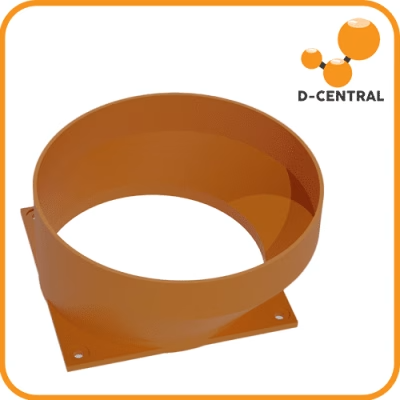
D-Central has been building custom space heater configurations around the S19 series since these machines first entered the used market. Our Loki Edition and Space Heater Edition builds integrate noise reduction, duct adapters, and underclocking profiles designed specifically for residential deployment. Browse our full line of Bitcoin Space Heaters to see what is possible.
Custom Firmware: Unlocking the Full Potential
Stock Bitmain firmware treats the S19 as a single-profile machine: plug it in, point it at a pool, run at full blast. Aftermarket firmware like BraiinsOS transforms it into a tuneable platform.
With BraiinsOS autotuning, you can:
- Set a target wattage and let the firmware optimize hashrate within that power envelope
- Underclock aggressively for quiet, low-power residential operation (40-60 TH/s at under 1,500W)
- Overclock for maximum output when power is cheap or free (130+ TH/s on a well-cooled Pro)
- Monitor per-chip performance to identify degrading ASIC chips before they cause hashboard failures
This flexibility is what makes the S19 series the go-to platform for the Mining Hacker community. You are not locked into one operating mode. You can adapt the machine to your environment, your electricity rate, your noise tolerance, and your goals.
Maintenance, Repair, and Longevity
Any ASIC miner is a precision piece of hardware running under significant thermal and electrical stress. The S19 series is no exception. Proper maintenance extends the operational life of these machines from the standard 3-5 years to potentially 7+ years.
Preventive Maintenance Checklist
- Compressed air cleaning every 3-6 months. Dust accumulation on heatsinks and between ASIC chips is the number one cause of thermal throttling and premature chip death.
- Fan inspection. Stock fans on the S19 series run at 5,000-6,000 RPM under load. Bearings wear over time. A fan running below spec means reduced airflow and higher chip temperatures across the entire hashboard.
- Thermal paste reapplication. After 2-3 years of continuous operation, the thermal interface material between ASIC chips and heatsinks degrades. Reapplication can drop chip temperatures by 5-10°C.
- Connector inspection. The power connectors on S19 hashboards carry significant current. Loose or corroded connectors create resistance, which generates heat at the connection point — a fire risk in extreme cases.
- Firmware updates. Both stock Bitmain firmware and BraiinsOS receive periodic updates that improve stability and efficiency. Keep your firmware current.
When Repair Makes Sense
A dead hashboard does not necessarily mean a dead miner. The S19 series uses three hashboards per unit. If one fails, the remaining two continue to operate at roughly two-thirds capacity. D-Central’s ASIC repair team handles S19 hashboard repairs daily — from individual chip replacements to full board refurbishment.
Common repair scenarios:
- Single chip failure: One ASIC chip dies, taking out a chain of chips on the board. Repair involves identifying the failed chip via diagnostic software, desoldering it, and replacing it. Cost-effective and usually done within a few days.
- Power domain failure: A voltage regulator or MOSFET fails, cutting power to a section of the hashboard. Requires component-level diagnosis and replacement.
- Connector damage: Hashboard power connectors that have been repeatedly removed and reinserted can develop loose or damaged pins. Connector replacement restores full function.
D-Central has repaired thousands of S19-series hashboards. If your machine is down or running below capacity, get a repair quote from our team.
S19 Series vs. S21 Series: Should You Upgrade?
The inevitable question: if the S21 exists, why consider the S19 at all?
| Factor | S19 Pro | S21 |
|---|---|---|
| Efficiency | ~29.5 J/TH | ~17.5 J/TH |
| Hash Rate | 110 TH/s | 200 TH/s |
| Used Market Price | Low (widely available) | High (current gen) |
| Repair Ecosystem | Mature (parts abundant) | Developing |
| Firmware Support | BraiinsOS, vnish, stock | Stock, BraiinsOS (newer) |
| Home Mining Suitability | Excellent (proven mods) | Good (newer, less community mods) |
| Heat Output | ~3,250 W thermal | ~3,500 W thermal |
The Real Calculus
If your primary goal is maximum mining revenue per dollar of electricity, the S21 wins decisively. Its ~17.5 J/TH efficiency means you produce roughly 40% more hashrate per watt.
If your primary goal is minimum capital outlay for functional mining infrastructure, the S19 series wins. Used S19 units cost a fraction of new S21 hardware. The payback period on cheap used hardware can actually be shorter than on expensive new hardware, depending on your power rate.
If your goal is dual-purpose mining and heating, the S19 series is arguably the better platform today. The modification ecosystem is mature. Shrouds, duct adapters, fan replacements, and noise reduction solutions are all readily available. D-Central’s custom builds like the Antminer S19 Loki Edition demonstrate what is possible when you engineer an S19 specifically for home deployment — running at 40 TH/s on a standard 110V outlet, quiet enough for a living space.
Setting Up Your S19: A Practical Walkthrough
Whether you are deploying a stock S19 or one of D-Central’s custom builds, the setup process follows the same fundamental steps.
Power Requirements
A stock S19-series miner draws approximately 3,000-3,250 watts. This requires:
- A dedicated 240V circuit rated for at least 20 amps (240V x 20A = 4,800W capacity, providing adequate headroom)
- An APW12 power supply or equivalent high-amperage PSU
- A C19/C20 power cord rated for the appropriate amperage
For D-Central’s underclocked editions (Loki, Slim, Pivotal), power requirements are significantly reduced — some models run on standard 110V/15A household circuits.
Network and Pool Configuration
- Connect the miner to your network via Ethernet cable (no WiFi on stock S19 units).
- Identify the miner’s IP address via your router’s DHCP client list or a network scanner.
- Access the web interface at the miner’s IP address in your browser.
- Configure your mining pool URL, worker name, and password under the Miner Configuration page.
- For solo mining, point to a solo mining pool or run your own node with getblocktemplate.
Environment Considerations
Stock S19 miners produce approximately 75 dB of noise — comparable to a vacuum cleaner running continuously. For residential deployment, you need one or more of the following:
- Sound-insulated enclosure — purpose-built boxes or closets with acoustic dampening
- Duct adapter shrouds — redirect exhaust air through ductwork to another room, outdoors, or into your HVAC system
- Aftermarket fans — lower-RPM replacement fans reduce noise at the cost of some cooling capacity (underclock to compensate)
- Custom builds — D-Central’s Loki and Space Heater Editions are pre-engineered for noise-sensitive environments
The Decentralization Argument: Why Running Your Own Miner Matters
Beyond the economics, there is a principled reason to run an S19 — or any ASIC miner — in your home: network decentralization.
As of 2026, the Bitcoin network hashrate exceeds 800 EH/s. The vast majority of that hashrate is concentrated in large-scale facilities operated by a handful of publicly traded companies and private operators. This concentration is a systemic risk to Bitcoin’s censorship resistance. If a government can pressure three or four mining companies, they can influence transaction selection for a meaningful percentage of the network’s block production.
Every S19 running in a home, garage, or workshop is a small but meaningful counterweight to that concentration. You are not going to out-hash a 500MW facility with a single S19. But decentralization is not about individual scale — it is about the aggregate effect of thousands of independent miners making block template construction ungovernable. This is the core mission of what D-Central calls pleb mining, and it is why we believe every hash counts.
Frequently Asked Questions
Is the Antminer S19 series still profitable in 2026?
It depends on your electricity cost. At $0.05/kWh or below, the S19 Pro and S19j Pro remain profitable for mining alone. At higher electricity rates, profitability depends on dual-purpose use cases like home heating, where the heat value offsets the electricity cost. The base S19 (34.5 J/TH) requires even cheaper power to stay profitable on mining revenue alone.
What is the difference between the S19, S19 Pro, and S19j Pro?
The base S19 produces 95 TH/s at ~34.5 J/TH. The S19 Pro produces 110 TH/s at ~29.5 J/TH, using higher-binned chips from the same BM1398 wafer. The S19j Pro produces 104 TH/s at ~29.5 J/TH with a revised board layout that many operators consider more reliable over long deployments. All three use the same physical form factor and PSU.
Can I run an Antminer S19 at home?
Yes, but stock units are loud (~75 dB) and power-hungry (~3,250W at 240V). For residential deployment, you need noise management (shrouds, enclosures, or aftermarket fans) and a dedicated electrical circuit. D-Central’s custom editions (Loki, Slim, Space Heater) are specifically engineered for home use, with underclocking, noise reduction, and 110V compatibility built in.
How long does an Antminer S19 last?
With proper maintenance — regular dust cleaning, fan replacement when bearings degrade, thermal paste reapplication every 2-3 years — an S19 can operate for 5-7+ years. The main failure points are fan bearings, thermal interface degradation, and individual ASIC chip failures, all of which are repairable.
Should I buy an S19 or an S21?
For pure mining efficiency, the S21 (~17.5 J/TH) is superior. For budget-conscious deployments, dual-purpose heating, or home mining with custom firmware, the S19 series offers better value due to its lower used market price, mature modification ecosystem, and abundant repair parts. Many home miners run S19 units underclocked as heaters in winter and switch to current-gen hardware for summer mining.
What firmware should I use on my S19?
BraiinsOS is the most popular aftermarket firmware for the S19 series. It offers autotuning (set target wattage and let the firmware optimize), per-chip monitoring, and fine-grained control over clock speeds and voltages. Stock Bitmain firmware works but lacks the tunability that makes the S19 platform so versatile for home mining.
Does D-Central repair S19 hashboards?
Yes. D-Central’s ASIC repair team handles S19-series hashboard repairs daily, including individual chip replacements, voltage regulator failures, connector repairs, and full board refurbishment. We stock replacement parts for all S19 variants. Visit our ASIC Repair page for details and to request a quote.
What is the current Bitcoin block reward and network hashrate?
As of early 2026, the Bitcoin block reward is 3.125 BTC (set by the April 2024 halving) and the network hashrate exceeds 800 EH/s. The next halving is expected around 2028, which will reduce the reward to 1.5625 BTC.