In the annals of regulatory history, few statements have cut through the noise with as much precision as former SEC Chairman Gary Gensler’s assertion: “Everything other than Bitcoin is a security.” For those of us who have spent years building in the Bitcoin space, this was not a revelation. It was a confirmation. The regulators finally said out loud what Bitcoiners have known since 2009 — there is Bitcoin, and then there is everything else.
At D-Central Technologies, we have operated on this principle since our founding in 2016. We are Bitcoin-only, and the regulatory landscape has only reinforced why that matters. This article examines Gensler’s landmark statement, the Howey Test that underpins it, why Bitcoin stands alone in the regulatory framework, and what this all means for home miners, hardware operators, and anyone who believes in decentralized, censorship-resistant money.
The Statement That Shook the Token Industry
During his tenure as SEC Chairman from 2021 to 2025, Gary Gensler repeatedly stated that Bitcoin was the only digital asset he was comfortable calling a commodity rather than a security. His position was not arbitrary — it was grounded in decades of securities law and a framework that predates digital assets entirely.
Gensler’s reasoning was straightforward: Bitcoin has no central issuer, no founding team collecting proceeds from a token sale, no entity promising returns based on their managerial efforts. It emerged from a pseudonymous whitepaper, was mined into existence by a distributed network, and has no marketing department. There is no “Bitcoin Foundation” selling you tokens and promising a roadmap.
This distinction matters enormously. When regulators classify something as a security, it triggers registration requirements, disclosure obligations, and investor protection mandates under the Securities Act of 1933 and the Securities Exchange Act of 1934. Every other digital token project — with their venture capital rounds, foundation treasuries, developer teams, and token unlock schedules — walks squarely into the definition of an investment contract.
Bitcoin does not.
The Howey Test: Why Bitcoin Passes and Tokens Fail
The legal framework that determines whether something is a security comes from the 1946 Supreme Court case SEC v. W.J. Howey Co. The resulting “Howey Test” defines an investment contract as a transaction where a person:
- Invests money
- In a common enterprise
- With the expectation of profits
- Derived primarily from the efforts of others
Let us apply this to Bitcoin versus the token industry:
| Howey Criterion | Bitcoin | Token Projects |
|---|---|---|
| Investment of money | Can be earned through mining (proof of work), not just purchased | Typically acquired through ICOs, IEOs, or VC-funded token sales |
| Common enterprise | No central entity — fully decentralized, no corporate structure | Central teams, foundations, DAOs with treasury management |
| Expectation of profits | Bitcoin is money — a medium of exchange and store of value | Tokens are marketed with price appreciation narratives |
| Efforts of others | No management team, no roadmap promises, no corporate development | Success depends on founding team execution, partnerships, upgrades |
Bitcoin fails the Howey Test for securities classification at nearly every prong. There is no “common enterprise” because there is no central team. There is no expectation of profits “from the efforts of others” because no entity is responsible for making Bitcoin more valuable. Satoshi Nakamoto disappeared. The protocol runs on mathematics, not marketing.
This is not a legal technicality. It is the fundamental reason Bitcoin has been recognized as a commodity by both the SEC and the Commodity Futures Trading Commission (CFTC). In January 2024, the SEC approved spot Bitcoin ETFs — a move that would be legally impossible if Bitcoin were classified as a security. That approval put a regulatory stamp on what Bitcoiners already knew: Bitcoin is different. Not because we say so, but because the math says so.
From Gensler to Atkins: The Regulatory Landscape in 2025-2026
Gensler resigned as SEC Chairman in January 2025, and Paul Atkins took over the role. The shift in leadership has brought a different regulatory tone, but Bitcoin’s status has only been further cemented. Under the current administration, several developments have reinforced Bitcoin’s unique position:
| Development | Year | Significance for Bitcoin |
|---|---|---|
| Spot Bitcoin ETFs approved | 2024 | SEC officially treats Bitcoin as commodity, not security |
| US Strategic Bitcoin Reserve executive order | 2025 | Federal government recognizes Bitcoin as strategic reserve asset |
| Paul Atkins confirmed as SEC Chair | 2025 | Pro-innovation stance, continued Bitcoin commodity classification |
| FIT21 Act progress | 2024-2025 | Congressional framework formally assigns Bitcoin to CFTC oversight |
| State-level Bitcoin reserve bills | 2025-2026 | Multiple US states proposing Bitcoin-specific treasury allocations |
The trajectory is clear. Bitcoin is moving from being merely tolerated by regulators to being actively recognized as a legitimate asset class at both the federal and state levels. The US Strategic Bitcoin Reserve executive order signed in early 2025 was a watershed moment — the federal government not only acknowledged Bitcoin as an asset worth holding, but signaled to the world that nation-state Bitcoin accumulation is now part of geopolitical strategy.
Meanwhile, the token industry continues to face enforcement actions. The SEC’s lawsuits against major token projects have resulted in billions of dollars in settlements and a chilling effect on the entire altcoin sector. The message is consistent: if your token had a pre-mine, a foundation, a venture capital raise, or a team controlling its development, it looks like a security.
Why This Matters for Bitcoin Miners
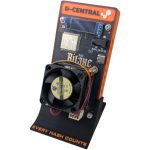
If you are running Bitcoin mining hardware — whether it is a Bitaxe solo miner on your desk or an Antminer S21 in your garage — you are not dealing in securities. You are performing proof of work to secure a decentralized monetary network. This distinction has real, practical implications:
No Securities Registration Required
Mining Bitcoin and selling the proceeds does not trigger securities registration obligations. You are earning a commodity through computational work, not receiving tokens from an investment contract. This is fundamentally different from participating in a token presale or staking scheme where returns depend on a development team’s performance.
Clearer Tax Treatment
Bitcoin’s commodity classification provides clearer tax guidance. In both the United States and Canada, mined Bitcoin is treated as income at fair market value upon receipt, then as a capital asset when disposed of. The rules are well-established because Bitcoin has been classified consistently for over a decade.
Banking and Financial Access
The regulatory clarity around Bitcoin has made it easier for miners to access banking services, business accounts, and financial infrastructure. Banks that were previously hesitant to work with anything labeled “crypto” are increasingly comfortable with Bitcoin-specific businesses because the regulatory framework is settled.
Hardware is Not a Security
Your mining hardware — ASIC miners, power supplies, cooling equipment — is industrial equipment. Buying, selling, and operating mining hardware has no securities implications. Compare this to purchasing a token that might later be deemed an unregistered security by the SEC. With Bitcoin mining, your legal standing is straightforward.
Bitcoin’s Unique Properties: Why Decentralization Is the Differentiator
The reason Bitcoin escapes securities classification is not a legal loophole. It is a direct consequence of Bitcoin’s architecture. Consider the properties that make Bitcoin fundamentally different:
No pre-mine. Every single bitcoin in existence was mined through proof of work. No insider received tokens before the network launched. Satoshi mined the first blocks using the same software available to everyone else.
No central issuer. There is no Bitcoin Inc., no Bitcoin Foundation with meaningful power, no entity that can alter the monetary policy. The protocol is governed by consensus rules enforced by every node operator on the network.
Immutable monetary policy. The 21 million supply cap is enforced by mathematics, not promises. No board of directors can vote to increase the supply. No emergency meeting can alter the issuance schedule. The halving events happen on a predetermined, transparent schedule — the most recent halving in April 2024 reduced the block reward to 3.125 BTC.
Permissionless mining. Anyone can mine Bitcoin. You do not need permission from a foundation, a DAO vote, or a validator staking threshold. Plug in a miner, point it at the network, and start hashing. This is why home mining with devices like the Bitaxe is so philosophically important — it embodies the permissionless nature of Bitcoin itself.
Creator disappeared. Satoshi Nakamoto has not been active since 2011. There is no founder collecting a salary, making promises, or guiding development from a position of asymmetric information. The protocol speaks for itself.
The Canadian Perspective: Regulatory Clarity North of the Border
While much of the securities debate plays out in the United States, Canadian miners benefit from similar regulatory clarity. The Canadian Securities Administrators (CSA) have generally aligned with the view that Bitcoin itself is not a security, while applying securities regulations to many other digital tokens.
Canada has been a pioneer in Bitcoin regulatory infrastructure. The country approved the first spot Bitcoin ETF (Purpose Bitcoin ETF) in February 2021, nearly three years before the United States followed suit. Canadian Bitcoin miners operate under clear guidelines from the Canada Revenue Agency regarding mining income, capital gains, and business expenses.
For D-Central’s customers across Canada, this regulatory environment provides confidence. When you purchase a Bitcoin miner, set it up in your home, and begin hashing, you are operating within a well-defined legal framework. Your activity is the technological equivalent of running a small manufacturing operation — converting electricity into digital sound money.
Proof of Work vs. Proof of Stake: The Regulatory Divide
One of the most significant regulatory implications of Gensler’s framework is the divide between proof-of-work and proof-of-stake systems. When a network uses staking, participants lock up tokens with the expectation of earning returns — this looks remarkably like an investment contract under the Howey Test. You are investing capital (tokens), in a common enterprise (the network), expecting profits (staking rewards), derived from the efforts of others (validators, development teams).
Bitcoin’s proof-of-work mechanism avoids this entirely. Mining is active work. It requires energy, hardware, and operational expertise. The rewards come from computational effort, not from passive capital deployment. This is not a subtle distinction — it is the fundamental reason why Bitcoin mining has never been targeted by securities regulators.
| Characteristic | Bitcoin Proof of Work | Proof of Stake Systems |
|---|---|---|
| Participation mechanism | Active computation (energy + hardware) | Passive capital lockup |
| Reward source | Block subsidy + transaction fees for work performed | Yield from staked tokens |
| Securities risk | None — commodity production | High — resembles investment contract |
| Barrier to entry | Hardware acquisition (permissionless) | Token accumulation (often plutocratic) |
| Centralization pressure | Geographic distribution, energy-seeking | Capital concentration (rich get richer) |
This regulatory divide reinforces a core truth: Bitcoin’s energy expenditure is not a bug. It is the feature that gives Bitcoin its legal clarity, its security model, and its decentralization. Every watt consumed by a Bitcoin miner is a watt that separates Bitcoin from the legal quagmire facing the rest of the digital asset industry.
What This Means for Home Miners and Pleb Miners
For the home miner, the individual running a Bitaxe on their desk or an S19 in their basement, this regulatory framework is empowering. You are not participating in an unregistered securities scheme. You are not relying on a development team to deliver value. You are doing real work — converting energy into the most secure monetary network ever created.
This is the core of the D-Central mission. Since 2016, we have been taking institutional-grade mining technology and hacking it into accessible solutions for home miners. We believe that decentralization of every layer of Bitcoin mining — from hashrate distribution to hardware access to knowledge sharing — strengthens the entire network.
When you solo mine with a Bitaxe, you are casting your own vote on the network. Every hash counts. You are not delegating your participation to a corporation, a foundation, or a staking pool. You are a sovereign participant in the most important monetary experiment in human history.
The regulatory clarity that Gensler’s framework established — and that subsequent administrations have reinforced — means you can do this with confidence. Bitcoin mining is legal, well-understood by regulators, and increasingly recognized as a legitimate activity that contributes to both network security and energy innovation.
The Road Ahead: Regulatory Trends Favoring Bitcoin
Looking forward, several regulatory trends continue to reinforce Bitcoin’s unique status:
Institutional adoption accelerating. With spot Bitcoin ETFs now managing hundreds of billions in assets, institutional adoption creates a feedback loop of regulatory legitimacy. Every pension fund, endowment, and sovereign wealth fund that allocates to Bitcoin reinforces its commodity classification.
Energy regulation intersection. As Bitcoin mining increasingly integrates with energy grids — stabilizing demand, monetizing stranded energy, and providing demand response — the regulatory conversation shifts from financial regulation to energy policy. This further distances Bitcoin mining from securities law.
International recognition. El Salvador’s Bitcoin legal tender law in 2021 was the first domino. Multiple nations are now exploring or implementing Bitcoin-specific legislation. The global regulatory trend recognizes Bitcoin as a distinct asset class, not a subset of “crypto securities.”
Mining-specific legislation. In both the US and Canada, proposed legislation increasingly treats Bitcoin mining as an industrial activity subject to energy and environmental regulation, not financial regulation. This is the correct framework — miners are manufacturers, not securities dealers.
Frequently Asked Questions
Why did the SEC classify Bitcoin differently from other digital tokens?
Bitcoin lacks the characteristics of a security under the Howey Test. It has no central issuer, no pre-mine, no founding team promising returns, and no corporate entity controlling its development. The SEC and CFTC both classify Bitcoin as a commodity because its value is not derived from the efforts of a management team but from the decentralized proof-of-work process and its monetary properties as a fixed-supply digital asset.
Is Bitcoin mining considered a securities activity by regulators?
No. Bitcoin mining is classified as commodity production, similar to gold mining. Miners perform computational work (proof of work) to secure the network and earn block rewards. This is active production, not a passive investment contract. Neither the SEC nor the CFTC has ever suggested that Bitcoin mining constitutes a securities activity. You do not need to register as a securities dealer to operate mining hardware.
What was Gensler’s exact position on Bitcoin versus other tokens?
During his tenure as SEC Chairman (2021-2025), Gary Gensler repeatedly stated that Bitcoin was the only digital asset he was comfortable classifying as a commodity rather than a security. He argued that most other digital tokens meet the criteria of investment contracts under the Howey Test because they involve investment in a common enterprise with the expectation of profits from the efforts of identifiable development teams.
How does the Howey Test apply to digital assets?
The Howey Test determines whether a transaction qualifies as an investment contract (and therefore a security). It requires: (1) an investment of money, (2) in a common enterprise, (3) with an expectation of profits, (4) derived primarily from the efforts of others. Most token projects fail this test because they involve centralized teams selling tokens to fund development, with buyers expecting the team’s work to increase token value. Bitcoin avoids this because it has no central team, no token sale, and no entity responsible for generating value.
What are the tax implications of Bitcoin mining in Canada?
In Canada, Bitcoin mining income is treated as either business income or a hobby depending on the scale and regularity of operations. Mined Bitcoin is valued at fair market value at the time of receipt and reported as income. When the Bitcoin is later sold or exchanged, any difference between the sale price and the original fair market value is treated as a capital gain or loss. Business miners can deduct expenses including electricity, hardware depreciation, and facility costs. Consult a tax professional for advice specific to your situation.
Did the spot Bitcoin ETF approval confirm Bitcoin is not a security?
Yes, effectively. The SEC’s approval of spot Bitcoin ETFs in January 2024 was a de facto confirmation that Bitcoin is a commodity, not a security. If Bitcoin were classified as a security, the SEC would regulate it under a completely different framework and spot ETFs structured as commodity trusts would not be the appropriate vehicle. The approval established a legal precedent that reinforces Bitcoin’s unique regulatory status among all digital assets.
How does proof of work protect Bitcoin from securities classification?
Proof of work is an active, energy-intensive process that produces Bitcoin as a commodity output. Unlike proof-of-stake systems where participants lock up capital and passively earn returns (which resembles an investment contract), proof-of-work mining requires real-world resources — electricity, hardware, and operational effort. This active production model does not fit the Howey Test definition of an investment contract, which is why Bitcoin mining has never been targeted by securities regulators.
What does the US Strategic Bitcoin Reserve mean for miners?
The 2025 executive order establishing a US Strategic Bitcoin Reserve signals that the federal government views Bitcoin as a strategic asset worth accumulating and holding. For miners, this provides additional regulatory legitimacy and demonstrates that the highest levels of government recognize Bitcoin mining as producing a valuable commodity. It also suggests that future regulation will continue to treat Bitcoin mining favorably as a domestic production activity that contributes to national strategic interests.