ASIC chips are the beating heart of Bitcoin’s security model. Without them, the network’s hashrate — now surpassing 800 EH/s — would be a fraction of what it is today, and the decentralized monetary system that millions depend on would be orders of magnitude more vulnerable. But ASICs didn’t appear overnight. They evolved through decades of semiconductor design, arriving at Bitcoin’s doorstep at exactly the right moment to transform mining from a hobbyist pursuit on commodity hardware into a specialized discipline that secures over $1 trillion in value.
This article breaks down what ASIC chips actually are, how they evolved to dominate Bitcoin mining, why they matter beyond hashrate numbers, and how D-Central Technologies — Canada’s Bitcoin Mining Hackers — puts this technology directly into the hands of home miners and sovereign operators who refuse to outsource their participation in the network.
What Is an ASIC Chip?
An Application-Specific Integrated Circuit (ASIC) is a semiconductor chip engineered to perform one task — and one task only — with maximum efficiency. Unlike a CPU, which is a general-purpose Swiss Army knife designed to handle everything from spreadsheets to video rendering, an ASIC strips away every transistor that isn’t essential to its designated function. The result is raw, focused computational power that no general-purpose processor can touch.
In Bitcoin mining, that single task is computing SHA-256 hashes — trillions of them per second — to find valid blocks and earn the block reward (currently 3.125 BTC after the April 2024 halving). Every unnecessary circuit is eliminated. Every gate is optimized. What remains is a silicon predator, purpose-built for one hunt.
ASIC vs. CPU vs. GPU vs. FPGA
To appreciate what ASICs bring to the table, consider the evolution of mining hardware:
- CPUs (2009–2010): Satoshi mined with a CPU. It worked when difficulty was negligible and the network hashrate measured in megahashes. A modern CPU might achieve 20–50 MH/s on SHA-256 — laughably irrelevant against today’s network.
- GPUs (2010–2013): Graphics cards offered parallel processing, pushing hashrates into the hundreds of MH/s range. Miners stacked multi-GPU rigs in basements and garages. It was the Wild West era.
- FPGAs (2011–2013): Field-Programmable Gate Arrays offered a bridge — reconfigurable chips that could be tuned for SHA-256 with better energy efficiency than GPUs. They were a stepping stone, not a destination.
- ASICs (2013–present): Purpose-built silicon. No compromise. Modern ASIC miners deliver performance measured in hundreds of terahashes per second (TH/s), with efficiency below 20 joules per terahash (J/TH). That’s roughly 100,000x more efficient per watt than the best GPU ever was at SHA-256.
The jump from GPU to ASIC wasn’t incremental — it was a paradigm shift. Once ASICs arrived, every other mining method became economically extinct for Bitcoin’s SHA-256 algorithm.
The Evolution of ASIC Mining Hardware
ASIC development for Bitcoin mining has been a relentless arms race driven by semiconductor physics, competitive pressure, and the halving cycle’s unforgiving economics.
First Generation: Proof of Concept (2013–2015)
The earliest Bitcoin ASICs — from companies like Avalon, Butterfly Labs, and KnCMiner — proved that purpose-built silicon could obliterate general-purpose hardware. These first chips used 130nm to 55nm process nodes, delivering single-digit TH/s with power consumption that would make your breaker panel weep. They were crude by today’s standards, but they changed mining forever. The hobbyist GPU era was over.
Second Generation: Industrial Scale (2016–2019)
Bitmain’s Antminer S9, released in 2016 on a 16nm process, became the defining miner of its era — and arguably the most important ASIC miner ever built. At roughly 13.5 TH/s and ~100 J/TH, the S9 struck a balance of cost, efficiency, and reliability that made it the workhorse of the industry for years. Millions were manufactured. Many are still running today, repurposed as Bitcoin Space Heaters that mine while heating homes — proof that good hardware, in the right hands, has a second life.
MicroBT emerged as a serious competitor during this period with its Whatsminer line, breaking Bitmain’s near-monopoly and pushing the entire industry toward better performance and pricing.
Third Generation: The Efficiency Wars (2020–2024)
The move to 7nm and 5nm process nodes unlocked a new tier of performance. Bitmain’s S19 series pushed past 100 TH/s, while the S21 generation delivered 200+ TH/s at under 18 J/TH. MicroBT’s M50S and M60S series kept pace. Every generation squeezed more hashes from every watt, because post-halving economics demand it — when the block reward drops from 6.25 to 3.125 BTC, only the most efficient machines survive.
Current Generation: Sub-15 J/TH and Beyond (2025–2026)
Today’s flagship miners — machines like the Antminer S21 XP and its competitors — operate at efficiencies approaching 13–15 J/TH, with hashrates exceeding 250 TH/s per unit. The network’s total hashrate has blown past 800 EH/s, a figure that would have seemed absurd five years ago. This exponential growth is driven entirely by ASIC advancement: better chips, better packaging, better thermal management.
But here’s what matters most: this technology isn’t locked behind data center doors. Every generation of ASIC — from the venerable S9 to the latest S21 — can be deployed at home, in a garage, in a basement. The hardware doesn’t care whether it lives in a megawatt facility or a shed in Saskatchewan. That’s the opportunity, and that’s what D-Central exists to enable.
Why ASIC Chips Matter for Bitcoin’s Security
Let’s be direct: ASIC mining is not about getting rich. It’s about securing the most important monetary network ever created. Every hash computed by an ASIC miner contributes to the proof-of-work that makes Bitcoin transactions irreversible and the ledger immutable.
The Thermodynamic Shield
Bitcoin’s security model is thermodynamic. To attack the network — to reverse a transaction or double-spend — an adversary must outpace the cumulative hashrate of every honest miner on the planet. At 800+ EH/s, that means marshaling more computational power (and energy) than most nation-states could deploy. ASICs are the reason that bar keeps rising.
Every home miner running a machine in their basement adds to this shield. Every terahash matters. The more distributed the hashrate, the more resilient the network becomes against coordinated attacks from state actors, corporate interests, or anyone else who might want to censor transactions.
Decentralization Demands Accessible Hardware
Here’s the uncomfortable truth about Bitcoin mining: if only large corporations can afford to participate, the network becomes centralized by default. The whole point of proof-of-work was to create a system where anyone with hardware and electricity can participate in consensus. ASICs don’t inherently centralize mining — restricted access to ASICs does.
That’s exactly why D-Central’s mission matters. We take institutional-grade mining technology and hack it into solutions that work for the individual. Custom firmware. Noise-reduced builds. Space heaters that mine bitcoin. Open-source miners like the Bitaxe that let anyone solo mine with hardware they fully control. The ASIC itself is neutral — it’s how you deploy it that determines whether mining centralizes or decentralizes.
ASIC Chips Beyond Bitcoin Mining
While Bitcoin mining remains the most prominent use case for ASICs, the underlying principle — purpose-built silicon for specific workloads — has exploded across the technology landscape.
Artificial Intelligence and Machine Learning
The AI industry has discovered what Bitcoiners knew a decade ago: general-purpose chips can’t keep up with specialized workloads. Google’s Tensor Processing Units (TPUs) are ASICs designed specifically for neural network inference and training. Every major cloud provider now deploys custom AI accelerators — purpose-built silicon that handles matrix multiplication and tensor operations with efficiency that GPUs can’t match.
The ASIC design philosophy is the same whether you’re hashing SHA-256 or running large language models: identify the bottleneck computation, strip everything else away, and optimize relentlessly.
Networking and Telecommunications
ASICs have powered network switches and routers for decades. Companies like Broadcom, Marvell, and Cisco design custom chips that handle packet processing at line rate — billions of packets per second with deterministic latency. Every time you load a webpage, your data passes through dozens of ASIC-powered network devices.
Automotive and Autonomous Systems
Self-driving vehicles demand real-time processing of sensor data — lidar, radar, cameras — with zero tolerance for latency. Custom ASICs handle sensor fusion and decision-making at speeds that general-purpose chips cannot guarantee. When milliseconds determine whether a car brakes or doesn’t, you want purpose-built silicon, not a CPU juggling a hundred other tasks.
The Common Thread
Every one of these applications follows the same logic that drives Bitcoin mining ASICs: when a workload is critical enough and well-defined enough, purpose-built hardware will always outperform general-purpose alternatives. Bitcoin miners were early adopters of this principle. The rest of the tech industry is catching up.
Home Mining with ASICs: The D-Central Approach
At D-Central Technologies, we’ve been in the ASIC game since 2016 — before most people had heard the word “hashrate.” We’re Canada’s Bitcoin Mining Hackers, and our mission is simple: take the same technology that powers industrial mining operations and make it work for you, at home, on your terms.
Full-Spectrum ASIC Solutions
We don’t just sell boxes. We provide a complete ecosystem:
- New and refurbished ASIC miners — from entry-level machines to current-generation flagships, sourced and tested in-house.
- Open-source solo miners — the Bitaxe lineup, NerdAxe, NerdQAxe, and more. Hardware you can verify, modify, and trust.
- Bitcoin Space Heaters — refurbished ASICs engineered into heating units. Mine bitcoin while heating your home. Two outputs from one energy input.
- Custom builds — Slim Edition, Pivotal Edition, Loki Edition Antminers. Noise-reduced, form-factor-optimized machines designed for residential deployment.
- Parts and accessories — hashboards, control boards, fans, PSUs, cables, shrouds. Everything you need to build, maintain, or repair your operation.
Canada’s Premier ASIC Repair Centre
ASICs are complex machines. Chips fail. Hashboards degrade. Fans seize. When that happens, most miners are stuck — either they ship hardware overseas and wait months, or they throw it away. Neither option is acceptable.
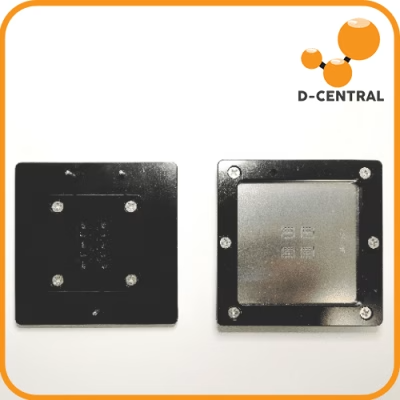
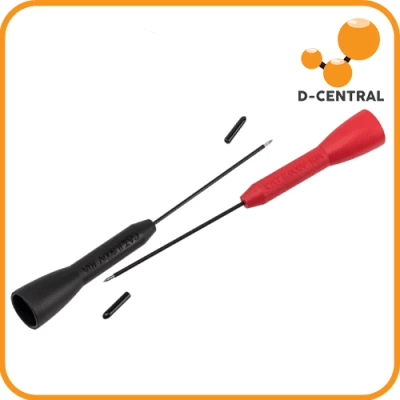
D-Central operates one of the most comprehensive ASIC repair facilities in North America, with diagnostic and repair capabilities covering Bitmain Antminers, MicroBT Whatsminers, Canaan Avalon miners, and more. Our technicians work at the component level — reballing BGA chips, replacing MOSFETs, diagnosing signal integrity issues on hashboard traces. We don’t swap boards and call it a day. We fix them.
With 40+ model-specific repair pages on our site and years of hands-on experience, we’ve built a repair knowledge base that no competitor in the Western hemisphere can match. Whether you’ve got an S9 with a dead hashboard or an S21 XP throwing temperature errors, we’ve seen it and we’ve fixed it.
Mining as Heating: The Dual-Purpose Revolution
Every watt consumed by an ASIC miner is converted to heat. That’s physics — not waste, but opportunity. In a country like Canada, where heating is a non-negotiable expense for most of the year, Bitcoin Space Heaters represent a genuine paradigm shift: you’re going to spend that electricity on heat anyway, so why not earn bitcoin in the process?
D-Central pioneered this concept with Space Heater editions built on the S9, S17, S19, and L3+ platforms. Each unit is engineered for residential use — appropriate noise levels, standard electrical connections, and thermal output calibrated for real rooms in real homes.
The Open-Source ASIC Movement
The most exciting development in ASIC technology isn’t happening in corporate R&D labs — it’s happening in the open-source community. Projects like the Bitaxe have proven that custom ASIC mining hardware can be designed, manufactured, and deployed by individuals, without asking permission from any corporation.
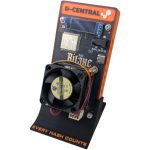
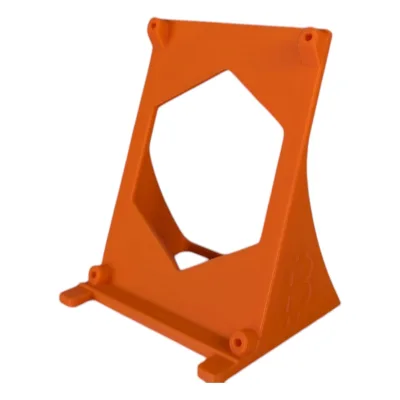
D-Central was a pioneer in the Bitaxe ecosystem from the beginning. We created the original Bitaxe Mesh Stand — the first company to manufacture it. We developed leading heatsink solutions for both the standard Bitaxe and the Bitaxe Hex. We stock every variant: Supra, Ultra, Hex, Gamma, GT, along with the full Nerd/open-source lineup — NerdAxe, NerdNOS, Nerdminer, NerdQAxe, and more.
These devices won’t make you rich. A Bitaxe running at 500+ GH/s has astronomical odds against finding a solo block. But that’s not the point. The point is sovereignty — running your own miner, connected to your own node, validating your own transactions, contributing your own hashrate to the network’s security. Every hash counts.
The Road Ahead: ASIC Technology in 2026 and Beyond
The ASIC industry is far from finished innovating. Several trends are shaping the next generation of mining hardware:
Process Node Shrinks
The move to 3nm and eventually 2nm fabrication processes will continue to improve efficiency. Each node shrink reduces the energy required per hash, which directly translates to lower operating costs and extended hardware viability — especially critical as block rewards continue to halve.
Immersion and Advanced Cooling
Liquid immersion cooling is enabling ASIC chips to run at higher clock speeds without thermal throttling, extracting more performance from the same silicon. For home miners, this technology is beginning to trickle down into smaller, more accessible form factors.
System-on-Chip Integration
Future ASIC designs are moving toward tighter integration — combining hashing cores, power management, networking, and control logic onto a single die. This reduces board complexity, improves reliability, and could dramatically lower the cost of entry-level mining hardware.
The Decentralization Imperative
As Bitcoin’s hashrate concentrates geographically and corporately, the need for accessible, affordable ASIC hardware becomes more urgent — not less. Open-source projects, home mining solutions, and companies like D-Central that prioritize individual sovereignty over institutional scale are essential to Bitcoin’s long-term health.
The ASIC chip isn’t just a piece of silicon. It’s a tool for economic sovereignty. How it’s deployed — by whom, for whom — will determine whether Bitcoin fulfills its promise as a truly decentralized monetary network, or becomes another system controlled by a handful of powerful entities.
Frequently Asked Questions
What exactly is an ASIC chip, and how does it differ from a regular processor?
An Application-Specific Integrated Circuit (ASIC) is a chip designed to perform a single computational task with maximum efficiency. Unlike a CPU or GPU — which are built to handle thousands of different operations — an ASIC strips away everything unrelated to its target function. In Bitcoin mining, that means computing SHA-256 hashes at speeds and efficiencies that general-purpose processors cannot approach. A modern ASIC miner is roughly 100,000x more efficient at SHA-256 than the best GPU.
Why did Bitcoin mining shift from GPUs to ASICs?
Economics. As Bitcoin’s network difficulty increased, GPU mining became unprofitable — the electricity cost exceeded the value of mined bitcoin. ASICs deliver dramatically higher hashrates at a fraction of the energy cost per hash. Once purpose-built ASIC miners appeared in 2013, they rendered GPU mining economically nonviable for Bitcoin’s SHA-256 algorithm within months. The efficiency gap was simply too large.
Can I mine Bitcoin at home with an ASIC miner?
Absolutely. Home mining is not only possible — it’s essential for Bitcoin’s decentralization. Machines range from open-source solo miners like the Bitaxe (low power, lottery-style mining) to full ASIC units that can be integrated into your home as Bitcoin Space Heaters, converting electricity into both hashrate and usable heat. D-Central specializes in making ASIC mining accessible for residential environments with custom builds, noise reduction, and appropriate form factors.
What is a Bitcoin Space Heater, and how does it work?
A Bitcoin Space Heater is a refurbished ASIC miner engineered for dual-purpose operation: it mines bitcoin while its exhaust heat warms your living space. Every watt an ASIC consumes is converted to heat — that’s thermodynamics. In cold climates like Canada, this means your heating bill becomes your mining operation’s electricity cost. You’re spending the energy on heat either way; Space Heaters let you earn bitcoin in the process.
How efficient are modern ASIC miners compared to older models?
The improvement is dramatic. The Antminer S9 (2016) operates at roughly 100 J/TH. Current-generation machines like the S21 XP achieve under 15 J/TH — approximately 7x more efficient. This means modern ASICs produce 7x more hashrate per watt of electricity consumed. Use D-Central’s ASIC Miner Comparison Tool to evaluate specific models side by side.
What happens when my ASIC miner breaks down?
D-Central operates one of North America’s most comprehensive ASIC repair facilities, with component-level diagnostic and repair capabilities for Bitmain, MicroBT, Canaan, and other manufacturers. Our technicians repair at the chip level — reballing BGA packages, replacing failed MOSFETs, tracing signal integrity issues on hashboards. We cover 40+ specific miner models and have years of hands-on repair experience.
Are ASIC chips used for anything besides Bitcoin mining?
Yes. The ASIC design principle — purpose-built silicon for specific workloads — is used across multiple industries. Google’s TPUs are ASICs for AI inference. Network switches use ASICs for packet processing. Autonomous vehicles rely on ASICs for real-time sensor fusion. The core concept is identical to Bitcoin mining: when a workload is well-defined and performance-critical, custom silicon outperforms general-purpose chips by orders of magnitude.
What is the Bitaxe, and why does D-Central support open-source miners?
The Bitaxe is an open-source, solo Bitcoin mining device that anyone can build, verify, and operate. D-Central was a pioneer in the Bitaxe ecosystem — we created the original Bitaxe Mesh Stand and developed leading heatsink solutions. We support open-source mining because it aligns with Bitcoin’s core ethos: permissionless participation, verifiable hardware, and individual sovereignty. These devices let you contribute to network security on your own terms, without trusting any third party.