
Bitaxe overclocking is the process of increasing the core voltage and clock frequency of the BM1366, BM1368, or BM1370 ASIC chip inside a Bitaxe solo miner beyond its factory settings, increasing hashrate by 30–80% without additional hardware. A stock Bitaxe Gamma produces approximately 1.0 TH/s at 12 watts; overclocked to 1.8 TH/s at 18 watts, the same device nearly doubles its probability of solo-mining a full Bitcoin block. This guide covers verified overclocking settings for every Bitaxe model — Supra, Ultra, Hex, Gamma, and GT — with tested voltage, frequency, and thermal data from D-Central’s workshop.
Why Overclock Your Bitaxe
Solo mining is a numbers game. Your Bitaxe is hashing against the entire Bitcoin network — roughly 800+ EH/s of combined computational power. Every hash your device computes is a ticket in the block reward lottery. At stock settings, a single-chip Bitaxe produces somewhere between 400 GH/s and 1.2 TH/s depending on the model. Those are real hashes solving real SHA-256 puzzles against the real Bitcoin network. But the math is unforgiving: more hashrate means more tickets, and more tickets mean better odds.
Let’s put it in concrete terms. The probability of a solo miner finding a block in any given time period is calculated as:
P = (your_hashrate / network_hashrate) x blocks_per_period
At 1.0 TH/s, your Bitaxe Gamma has roughly a 1 in 800,000,000 chance of finding any given block. Bitcoin produces about 144 blocks per day, so your daily probability works out to approximately 1 in 5.5 million. Over a full year, that becomes roughly 1 in 15,000. Small? Absolutely. Zero? Never. And that is the entire point of solo mining.
Now consider what happens when you overclock that same Gamma from 1.0 TH/s to 1.8 TH/s. You have just increased your lottery tickets by 80%. Your annual odds improve proportionally. You did not buy new hardware. You did not add another device to your shelf. You simply unlocked performance that was already sitting inside that ASIC chip, waiting to be released.
This is what overclocking is about for solo miners: squeezing every possible gigahash out of your hardware because every hash counts. The block reward at current subsidy is 3.125 BTC. The cost of overclocking is a few extra watts on your power bill and some time spent tuning. The potential payoff is life-changing. That asymmetry is what makes solo mining with an overclocked Bitaxe one of the most compelling propositions in Bitcoin.
Overclocking a Bitaxe for solo mining is not about ROI spreadsheets or daily profitability calculations. It is about maximizing your contribution to Bitcoin’s decentralized hashrate while giving yourself the best possible shot at a full block reward. You are not renting hashrate from a pool — you are running your own operation. That is sovereignty in action.
Bitaxe Model Reference
Before you start turning dials, you need to know exactly what you are working with. Each Bitaxe model uses a different ASIC chip with different characteristics, different stock settings, and different overclocking headroom. The table below covers every current Bitaxe variant with its factory specifications.
| Model | ASIC Chip | Chips | Stock Hashrate | Stock Power | Power Input |
|---|---|---|---|---|---|
| Ultra (200 series) | BM1366 | 1 | 400–500 GH/s | ~12W | 5V barrel jack (5.5×2.1mm) |
| Supra (400 series) | BM1368 | 1 | 400–600 GH/s | ~12W | 5V barrel jack (5.5×2.1mm) |
| Gamma (600 series) | BM1370 | 1 | 1.0–1.2 TH/s | ~15–18W | 5V barrel jack (5.5×2.1mm) |
| Hex | BM1366 | 6 | ~3 TH/s | ~65–75W | 12V XT30 connector |
| GT (800 series) | BM1370 | 2 | ~2.5 TH/s | ~40–45W | 12V XT30 connector |
Key things to note from this table: the BM1370 (used in Gamma and GT) is the newest and most efficient chip in the lineup, pulled from Bitmain’s Antminer S21 Pro. It offers the best efficiency at ~15 J/TH and has the most overclocking headroom. The BM1366 (Ultra and Hex) comes from the Antminer S19 XP and is still a strong performer with proven overclocking potential. The BM1368 (Supra) is from the Antminer S21 family and sits between the two in terms of efficiency.
All single-chip models (Ultra, Supra, Gamma) use the same 5V DC barrel jack connector — not USB-C. The multi-chip models (Hex, GT) step up to 12V with an XT30 connector to handle the higher power demands.
ASIC chips are subject to silicon lottery — manufacturing variations mean your specific chip may overclock better or worse than identical models. The settings in this guide are starting points based on community-tested averages. Your results will vary. Always tune for your specific unit.
Understanding the Variables
Overclocking a Bitaxe is fundamentally about manipulating three interconnected variables: frequency, core voltage, and temperature. Understanding how these interact at the silicon level will make you a better overclocker and help you avoid the mistakes that brick boards or degrade chips.
Core Voltage (mV)
Core voltage — often labeled vCore in AxeOS — is the electrical potential supplied directly to the ASIC die. At the transistor level, voltage determines how quickly the gates can switch between states. Higher voltage means faster switching, which enables higher operating frequencies. But voltage has a dark side: power consumption scales with the square of voltage. Double the voltage and you quadruple the power draw (and heat generation).
The BM-series ASIC chips in Bitaxe devices use a Maxim DS4432U+ current DAC that allows digital adjustment of the core voltage, typically in a range from roughly 1100 mV to 1300 mV for safe operation. The stock voltage for most models sits around 1150–1200 mV. Going above 1300 mV significantly increases the risk of chip degradation over time.
Frequency (MHz)
Frequency is the clock speed at which the ASIC chip performs hash computations. Each clock cycle, the chip processes a portion of the SHA-256 algorithm. Higher frequency means more hash computations per second — more hashrate. The relationship between frequency and hashrate is roughly linear: double the frequency, double the hashrate (assuming voltage can keep up and thermals are managed).
In AxeOS, frequency is adjusted in MHz. Stock settings vary by chip: the BM1370 defaults to around 525 MHz, while the BM1366 typically starts near 485 MHz. The practical ceiling for each chip depends on voltage support, cooling capability, and silicon quality.
Temperature — The Limiting Factor
Temperature is where theory meets reality. Every watt of power consumed by the ASIC chip becomes heat. That heat must be dissipated through the heatsink and fan, or the chip temperature climbs. As temperature rises, several bad things happen:
- Increased error rates — The ASIC starts producing invalid hashes, which show up as rejected shares or ASIC errors in AxeOS
- Thermal throttling — AxeOS will automatically reduce frequency to protect the chip when temperatures exceed safe thresholds
- Accelerated degradation — Running a chip at high temperatures continuously shortens its operational lifespan through electromigration
- Thermal shutdown — At extreme temperatures, the device will shut down entirely to prevent permanent damage
The target operating window for Bitaxe ASIC chips is:
| Temperature Zone | Range | Status |
|---|---|---|
| Optimal | 40–55 °C | Full performance, maximum chip longevity |
| Acceptable | 55–65 °C | Safe for continuous 24/7 operation with monitoring |
| Caution | 65–75 °C | Short-term acceptable, not recommended for sustained operation |
| Danger | 75–85 °C | Thermal throttling likely, chip degradation risk |
| Critical | 85+ °C | Automatic shutdown, risk of permanent damage |
The Efficiency Curve — Diminishing Returns
Here is the part most overclocking guides gloss over: the relationship between frequency, voltage, and power consumption is not linear. At lower frequencies, modest increases yield nearly proportional hashrate gains with minimal extra power. But as you push higher, each additional MHz requires disproportionately more voltage, which generates disproportionately more heat, which demands better cooling. You hit a point of diminishing returns where the last 10% of hashrate costs you 30% more power.
For solo miners, this tradeoff is usually worth it — you are optimizing for maximum hashrate, not efficiency. A few extra watts on your power bill is trivial compared to the value of a block reward. But you should understand the curve so you can make informed decisions about where to set your targets.
The rough relationship looks like this:
| Overclock Level | Hashrate Gain | Power Increase | Efficiency Impact |
|---|---|---|---|
| Stock | Baseline | Baseline | Best efficiency (J/TH) |
| Conservative (+10–20%) | +10–20% | +15–30% | Slight decrease |
| Aggressive (+30–50%) | +30–50% | +50–80% | Noticeable decrease |
| Extreme (+60–90%) | +60–90% | +100–200% | Significant decrease |
For solo mining, chasing maximum hashrate is almost always the right call. You are playing the lottery, and every ticket matters. The question is not “is this efficient?” but “is this stable and safe for my hardware?”
Pre-Overclocking Checklist
Before you touch a single setting in AxeOS, make sure your foundation is solid. Overclocking on a shaky setup — weak power supply, poor thermal contact, unstable WiFi — will give you nothing but headaches and misleading results. Run through this checklist first.
1. Power Supply Requirements
Your power supply is the backbone of a stable overclock. An underpowered or noisy PSU will cause voltage ripple that the ASIC chip interprets as instability, leading to errors, reboots, and false readings that make tuning impossible.
| Model | Connector | Minimum PSU (Stock) | Recommended PSU (OC) |
|---|---|---|---|
| Ultra / Supra / Gamma | 5V barrel jack (5.5×2.1mm) | 5V / 4A (20W) | 5V / 6A (30W) or higher |
| Hex | 12V XT30 | 12V / 8A (96W) | 12V / 10A (120W) |
| GT | 12V XT30 | 12V / 5A (60W) | 12V / 8A (96W) |
The single-chip Bitaxe models use a 5V DC barrel jack — not USB-C. A phone charger physically will not connect. Use a quality regulated power supply. Industrial-grade units like the Mean Well LRS-50-5 are excellent choices: stable 5V output, adjustable trim pot for fine-tuning voltage to 5.10–5.20V, and 10A capacity that gives you massive headroom for overclocking. D-Central stocks compatible PSUs for every Bitaxe model.
2. Thermal Solution
The stock heatsink and fan that ship with most Bitaxe units are designed for stock settings. They will handle a conservative overclock, but if you plan to push past 20–30% above stock, you should consider upgrading your cooling.
- Thermal paste quality matters. If your Bitaxe shipped with a thermal pad, consider replacing it with high-quality thermal paste (Thermal Grizzly Kryonaut or equivalent with 10+ W/mK conductivity). This alone can drop temperatures by 5–10 °C.
- Heatsink surface area matters. D-Central’s custom heatsinks for Bitaxe and Bitaxe Hex are specifically designed for overclocked operation with larger fin arrays and better thermal contact.
- Fan airflow matters. Make sure your Bitaxe is positioned with adequate clearance around the heatsink. Do not bury it in a pile of cables behind your monitor.
- Ambient temperature matters. A Bitaxe sitting in a 30 °C room starts with a 30 °C baseline. The same unit in a 15 °C Canadian basement has 15 degrees of extra thermal headroom — that translates directly to higher stable overclocks.
3. Stable WiFi Connection
Your Bitaxe connects to its mining pool over WiFi (2.4 GHz). An unstable connection means dropped shares, which distort your monitoring data and make it impossible to tell whether hash errors are from your overclock or from network issues. Before overclocking:
- Confirm your Bitaxe has a strong, stable WiFi signal (check the RSSI value in AxeOS — above -60 dBm is good, above -50 dBm is excellent)
- Place the device within reasonable range of your router
- Avoid channels congested by other devices
4. Baseline Benchmark
This step is critical and most people skip it. Run your Bitaxe at completely stock settings for a full 24 hours before changing anything. Record:
- Average hashrate over 24 hours (not the peak — the average)
- ASIC temperature at steady state
- Fan speed percentage
- Power consumption (if you have a watt meter — highly recommended)
- Total shares accepted and rejected
- ASIC error count
These numbers are your baseline. Every overclock attempt will be measured against them. Without a baseline, you are tuning blind.
5. AxeOS Firmware
Make sure you are running the latest stable version of AxeOS. Firmware updates often include improvements to thermal management, voltage regulation, and hash computation efficiency. Check the ESP-Miner GitHub releases page for the latest version. If you need help updating firmware, see our Bitaxe Firmware Update Guide.
A plug-in watt meter (like a Kill-A-Watt) costs a few dollars and is invaluable for overclocking. It lets you measure actual power draw at the wall, which tells you exactly how much your overclock is costing in real electricity. Pair it with your hashrate to calculate your true J/TH efficiency at each setting.
Step-by-Step Overclocking Process
With your baseline recorded and your prerequisites checked, it is time to start tuning. The process is methodical: small changes, careful observation, patience. Resist the urge to crank everything to maximum on the first try. The miners who get the best results are the ones who take their time.
Step 1: Access the AxeOS Web Interface
Open a browser on any device connected to the same WiFi network as your Bitaxe. Navigate to your Bitaxe’s IP address (you can find this in your router’s connected devices list, or by checking the OLED display on the device if equipped). The AxeOS dashboard will load, showing your current hashrate, temperature, frequency, voltage, and other operating parameters.
Step 2: Locate the Tuning Settings
In AxeOS, navigate to the Settings page. You will find two critical fields:
- Frequency (MHz) — The clock speed of the ASIC chip
- Core Voltage (mV) — The voltage supplied to the ASIC die
You may also see fan speed controls and temperature thresholds on this page. Note the current values — they should match your baseline.
Step 3: Increase Frequency in Small Steps
Start by increasing the frequency by 25 MHz from stock. Do not change the voltage yet. Save the settings and let the Bitaxe restart with the new configuration.
Wait at least 15–20 minutes for the device to stabilize at the new frequency. During this time, monitor:
- Hashrate — Is it higher than your baseline? It should be.
- Temperature — Has it increased significantly? A few degrees is expected.
- ASIC errors — Are errors climbing? If the error count is increasing noticeably, the chip cannot sustain this frequency at the current voltage.
- Rejected shares — A rejection rate above 1% indicates instability.
If everything looks stable, increase by another 25 MHz and repeat. Continue this process until you see instability (rising errors, reboots, or thermal throttling).
Step 4: Adjust Voltage When Needed
When you hit a frequency where the chip becomes unstable at the current voltage, you have two options:
- Back off the frequency by 25 MHz and call it your sweet spot at this voltage — this is the conservative approach
- Increase core voltage by 25–50 mV and try again — this unlocks higher frequencies but increases power and heat
If you choose to raise voltage, increase by 25 mV at a time. Each voltage bump should let you push the frequency a bit higher. After each voltage change, repeat the 15–20 minute stability observation.
For all BM-series ASIC chips in Bitaxe devices, do not exceed 1300 mV core voltage for 24/7 operation. Running above this level significantly increases the risk of long-term chip degradation through electromigration. Brief testing at higher voltages is possible, but sustained daily use should stay at or below 1300 mV.
Step 5: Finding Your Sweet Spot
The sweet spot is the highest frequency your specific chip can sustain with:
- Stable hashrate (no sudden drops or fluctuations beyond normal variance)
- ASIC temperature below 65 °C sustained
- Rejection rate below 1%
- Minimal ASIC errors (check the error counter in AxeOS)
- No reboots or disconnects over a 24-hour period
Once you find a setting that meets all these criteria, let it run for at least 24 hours — preferably 48–72 hours — before considering it a stable overclock. Hashrate can look great for the first hour and then fall apart overnight as temperatures change.
Step 6: Extended Validation
After your 24-hour test, record your final overclocked metrics and compare against your baseline:
- What is the hashrate gain in percentage?
- What is the power increase in watts?
- What is your new J/TH efficiency?
- Is the temperature stable and within the acceptable zone?
- Is the share rejection rate still below 1%?
If everything checks out, congratulations — you have a stable overclock. Write down your settings somewhere safe so you can restore them after firmware updates or resets.
Model-Specific Overclocking Profiles
The settings below are community-tested starting points for each Bitaxe chip type. Your specific chip may perform better or worse due to silicon lottery. Always use these as starting points and tune for your individual unit.
The hashrate, temperature, and power values listed below are typical ranges based on community reports and our own testing at D-Central. Your results depend on your specific chip (silicon lottery), ambient temperature, cooling solution, and power supply quality. Treat these as educated starting points, not guarantees.
BM1366 — Bitaxe Ultra
The BM1366 from the Antminer S19 XP is a mature, well-understood chip with good overclocking headroom. It responds well to frequency increases and is relatively forgiving at moderate voltage bumps.
| Profile | Frequency | Core Voltage | Expected Hashrate | Expected Temp | Power Draw |
|---|---|---|---|---|---|
| Stock | 485 MHz | 1200 mV | 400–500 GH/s | 45–55 °C | ~12W |
| Conservative | 525 MHz | 1200 mV | 500–575 GH/s | 50–60 °C | ~14W |
| Aggressive | 575 MHz | 1250 mV | 575–650 GH/s | 55–65 °C | ~18W |
| Extreme | 625+ MHz | 1300 mV | 650–750+ GH/s | 60–70+ °C | ~22W+ |
Notes: Many BM1366 chips can reach 525–550 MHz without any voltage increase from stock. The chip is efficient and thermally manageable at conservative overclocks. Extreme overclocking above 600 MHz requires upgraded cooling — the stock heatsink will not keep up. Consider a D-Central heatsink upgrade.
BM1368 — Bitaxe Supra
The BM1368 from the Antminer S21 family is a slightly newer design than the BM1366. It offers good efficiency at stock and responds well to overclocking, though the headroom varies more between individual chips.
| Profile | Frequency | Core Voltage | Expected Hashrate | Expected Temp | Power Draw |
|---|---|---|---|---|---|
| Stock | 490 MHz | 1200 mV | 400–600 GH/s | 45–55 °C | ~12W |
| Conservative | 550 MHz | 1200 mV | 550–650 GH/s | 50–60 °C | ~15W |
| Aggressive | 600 MHz | 1250 mV | 650–750 GH/s | 55–65 °C | ~19W |
| Extreme | 700+ MHz | 1300 mV | 750–900+ GH/s | 60–70+ °C | ~25W+ |
Notes: The BM1368 can often reach 550 MHz at stock voltage on good chips. The Argon THRML cooler has been reported to enable stable operation at 600 MHz with temperatures maxing at 55 °C, allowing some units to push toward 900 GH/s. Cooling quality is the primary bottleneck for this chip.
BM1370 — Bitaxe Gamma (Single-Chip)
The BM1370 from the Antminer S21 Pro is the star of the current Bitaxe lineup. It has exceptional efficiency at stock (~15 J/TH) and the widest overclocking range of any Bitaxe chip. Community miners have pushed single-chip Gamma units past 2 TH/s — nearly double the stock hashrate.
| Profile | Frequency | Core Voltage | Expected Hashrate | Expected Temp | Power Draw |
|---|---|---|---|---|---|
| Stock | 525 MHz | 1150 mV | 1.0–1.2 TH/s | 45–50 °C | ~18W |
| Conservative | 625 MHz | 1250 mV | 1.2–1.3 TH/s | 52–58 °C | ~25W |
| Aggressive | 750 MHz | 1250 mV | 1.5–1.6 TH/s | 58–63 °C | ~30W |
| Extreme | 900+ MHz | 1250–1300 mV | 1.8–2.0+ TH/s | 62–68 °C | ~35W+ |
Notes: The BM1370 is remarkable because many chips can handle frequencies up to 900–1000 MHz at 1250 mV without needing a voltage increase beyond that level — assuming you have sufficient cooling. The key bottleneck on the Gamma is thermal: the VRM (voltage regulator module) and surrounding MOSFETs can overheat before the ASIC chip itself. Adding small MOSFET heatsinks at frequencies above 800 MHz is strongly recommended. The stock fan may need to run at 70–80% to maintain safe temps at aggressive overclocks.
BM1366 x6 — Bitaxe Hex
The Hex runs six BM1366 chips in parallel on a single board. Overclocking principles are the same as the Ultra, but the thermal and power considerations are multiplied by six. The 12V XT30 power delivery is more robust than the single-chip 5V systems, which helps with stability.
| Profile | Frequency | Core Voltage | Expected Hashrate | Expected Temp | Power Draw |
|---|---|---|---|---|---|
| Stock | 485 MHz | 1200 mV | ~3.0 TH/s | 50–58 °C | ~70W |
| Conservative | 525 MHz | 1200 mV | ~3.3 TH/s | 55–62 °C | ~80W |
| Aggressive | 575 MHz | 1250 mV | ~3.7 TH/s | 58–66 °C | ~100W |
| Extreme | 625+ MHz | 1300 mV | ~4.0+ TH/s | 62–70+ °C | ~120W+ |
Notes: With six chips generating heat simultaneously, cooling is paramount on the Hex. The device has a more substantial heatsink and fan assembly than single-chip models, but aggressive overclocking may still require supplemental airflow (a desk fan pointed at the device, or a dedicated enclosure with active ventilation). The D-Central Hex heatsink is designed specifically for overclocked operation. Monitor individual chip temperatures if your firmware version supports it — one hot chip can throttle the entire board.
BM1370 x2 — Bitaxe GT
The GT (Gamma Turbo) doubles up with two BM1370 chips on the same board, delivering over 2.5 TH/s at stock. The 12V power delivery and enhanced cooling design make it the best-equipped Bitaxe for aggressive overclocking out of the box.
| Profile | Frequency | Core Voltage | Expected Hashrate | Expected Temp | Power Draw |
|---|---|---|---|---|---|
| Stock | 525 MHz | 1150 mV | ~2.5 TH/s | 48–55 °C | ~40W |
| Conservative | 600 MHz | 1200 mV | ~2.9 TH/s | 52–60 °C | ~50W |
| Aggressive | 750 MHz | 1250 mV | ~3.5 TH/s | 58–65 °C | ~65W |
| Extreme | 900+ MHz | 1250–1300 mV | ~4.0+ TH/s | 62–70+ °C | ~80W+ |
Notes: The GT benefits from the same BM1370 overclocking headroom as the Gamma, but with two chips sharing the thermal load across a larger heatsink and 60mm fan. The 12V input also provides cleaner power delivery than the 5V systems, which helps stability at high frequencies. The GT was designed with overclocking in mind — its enhanced cooling system is there for a reason. Take advantage of it.
Advanced Techniques
Once you have mastered the basics of frequency and voltage tuning, there are several advanced strategies that experienced Bitaxe operators use to extract more performance or improve efficiency.
Undervolting for Efficiency
Not every situation calls for maximum hashrate. Undervolting is the opposite approach: reducing core voltage below stock to minimize power consumption while maintaining (or only slightly reducing) hashrate. This makes sense when:
- You are running multiple Bitaxe units and want to minimize total power draw
- Your ambient temperature is high and you need to keep thermals in check
- You want the longest possible chip lifespan
- Your power supply is marginal and you want to reduce load
To undervolt, reduce core voltage by 25 mV increments from stock while keeping frequency at stock. If the chip remains stable (no increase in errors or rejected shares), you have found free efficiency. Some chips can drop 50–100 mV below stock voltage while maintaining full stock hashrate.
Seasonal Overclocking
Ambient temperature directly affects your overclocking ceiling. Smart operators adjust their profiles seasonally:
- Winter: Crank it up. If your Bitaxe sits in a Canadian basement at 10–15 °C ambient, you have massive thermal headroom. Push aggressive or extreme profiles and enjoy the extra hashrate while your miner doubles as a space heater.
- Summer: Back it off. When ambient temps climb to 25–30 °C, your cooling system loses 10–15 degrees of headroom. Drop to conservative profiles to maintain stability and protect your hardware.
This is one of the hidden advantages of mining in Canada. Our winters give us months of free thermal headroom that miners in warmer climates cannot match. Make it count.
Custom Fan Curves in AxeOS
AxeOS allows you to set a target temperature and maximum fan speed. For overclocking, consider these adjustments:
- Set the target temperature to 55–60 °C for aggressive overclocks. This tells the firmware to ramp the fan harder to maintain that target.
- Allow the fan speed to reach 80–100% if needed. A louder fan is better than a throttled chip.
- If noise is a concern, upgrade to a Noctua fan — they move more air more quietly than stock fans. The NF-A4x10 or NF-A4x20 are popular replacements for single-chip Bitaxe models.
Monitoring ASIC Errors vs. Accepted Shares
AxeOS reports two important metrics that tell you about the health of your overclock:
- ASIC errors — These are computation errors from the chip. Some are normal even at stock settings. A high or rapidly increasing error count indicates the chip is being pushed beyond its stable operating point at the current voltage and temperature.
- Share rejection rate — This is the percentage of submitted shares that the pool rejects as invalid. Target below 1%. Anything above 2% means your overclock is likely producing too many bad hashes.
The relationship between these metrics and your overclock is straightforward: if errors or rejections climb after a frequency increase, either raise voltage or back off frequency. If they climb after a voltage increase, your cooling cannot keep up and you need better thermals.
The open-source community has developed auto-tuning scripts that use the AxeOS API to automatically find optimal settings for your specific chip. Projects like bitaxe-gamma-oc-script and BitaxePID use algorithms to incrementally adjust frequency and voltage while monitoring hashrate and temperature. These can be useful for finding your chip’s sweet spot without manual babysitting, but always verify the final settings with your own 24-hour stability test.
Cooling Solutions for Overclockers
Cooling is not optional for overclocking — it is the fundamental constraint. Every overclocking ceiling you hit is a thermal wall. Break through that wall with better cooling and you unlock more hashrate. This section covers everything from stock to extreme cooling solutions.
Stock Heatsink Limitations
The heatsink and fan that ship with most Bitaxe units are designed for stock operation. They work fine at factory settings in a room-temperature environment. But push beyond conservative overclocking and you will hit the stock cooling ceiling — typically around 550–600 MHz on BM1366/BM1368 chips and 625–700 MHz on BM1370 chips before temperatures exceed safe sustained limits.
D-Central Custom Heatsinks
We designed our custom heatsinks for Bitaxe and Bitaxe Hex specifically with overclockers in mind. Larger fin arrays, better thermal contact surfaces, and optimized airflow channels allow these heatsinks to dissipate significantly more heat than the stock options. Users typically report 10–15 °C lower temperatures compared to stock cooling at the same overclock settings — that translates directly to higher stable frequencies or longer chip lifespan at the same frequency.
Aftermarket Fan Upgrades
The stock fan on most Bitaxe units is small and optimized for cost, not performance. Upgrading to a Noctua fan (the gold standard for quiet, high-performance cooling) makes a real difference:
- Noctua NF-A4x10 — 40mm, 10mm thick. Drop-in replacement for most single-chip Bitaxe models. Better airflow and significantly quieter than stock.
- Noctua NF-A4x20 — 40mm, 20mm thick. Even more airflow if your case/mount has clearance. Excellent for aggressive overclocks.
- Noctua NF-A6x25 — 60mm fan for the Bitaxe GT and Hex. Higher CFM for multi-chip heat dissipation.
3D Printed Fan Ducts and Airflow Optimization
The open-source community has created a variety of 3D printed accessories that improve cooling performance. Fan ducts and shrouds direct airflow precisely over the heatsink fins rather than letting it disperse into the room. Combined with an upgraded fan, a well-designed duct can drop temperatures by another 3–5 °C.
D-Central offers 3D printed stands and mounts designed for optimal airflow positioning. The original Bitaxe Mesh Stand — which D-Central pioneered — elevates the device for natural convection airflow underneath while directing the fan exhaust upward and away.
Ambient Temperature Considerations
Your Bitaxe’s cooling system can only dissipate heat down to ambient room temperature. The math is simple:
ASIC Temp = Ambient Temp + Temperature Rise from Power Dissipation
If your cooling system adds 30 °C above ambient at a given overclock level:
- In a 15 °C Canadian basement: ASIC temp = 45 °C (optimal zone)
- In a 22 °C living room: ASIC temp = 52 °C (acceptable zone)
- In a 30 °C summer room: ASIC temp = 60 °C (caution zone)
Placement matters. Position your Bitaxe in the coolest spot available with good airflow. Avoid enclosed cabinets, direct sunlight, or locations near heat sources. If you are running multiple units, space them apart so they are not preheating each other’s intake air.
Thermal Paste Replacement
If your Bitaxe shipped with a thermal pad between the ASIC chip and heatsink, replacing it with quality thermal paste is one of the single biggest cooling improvements you can make. Here is how:
- Power off and unplug the Bitaxe completely. Let it cool to room temperature.
- Remove the heatsink — carefully unscrew or unclip it from the PCB. Note the mounting orientation.
- Clean the surfaces — remove the old thermal pad or paste from both the ASIC chip surface and the heatsink base using isopropyl alcohol (90%+) and a lint-free cloth or coffee filter.
- Apply new thermal paste — place a small grain-of-rice-sized dot of quality thermal paste (Thermal Grizzly Kryonaut, Arctic MX-6, or equivalent with 10+ W/mK conductivity) in the center of the ASIC chip.
- Remount the heatsink — press it firmly and evenly onto the chip. The paste will spread under pressure. Do not over-tighten the mounting screws — snug is enough.
- Power on and verify — check AxeOS temperatures. You should see a noticeable improvement (typically 5–10 °C drop at the same settings).
At frequencies above 800 MHz on the BM1370 (and similar aggressive overclocks on other chips), the voltage regulator module (VRM) and surrounding MOSFETs can overheat even when the ASIC chip itself is fine. AxeOS typically does not report VRM temperature. If your Bitaxe reboots unexpectedly at high overclocks despite low ASIC temperatures, VRM overheating is a likely culprit. Small adhesive aluminum heatsinks on the VRM components can help. This is an advanced modification — proceed carefully.
Troubleshooting Overclocking Issues
Overclocking does not always go smoothly. Here are the most common issues and how to resolve them.
ASIC Not Found After Overclock
Symptom: After saving aggressive settings, the Bitaxe reboots and AxeOS shows “ASIC not found” or the hashrate is zero.
Cause: The frequency/voltage combination is too aggressive for the chip. The ASIC cannot initialize at the requested settings.
Fix:
- Power cycle the Bitaxe (unplug for 10 seconds, then replug)
- If the device boots back to AxeOS with the bad settings, quickly navigate to the settings page and reduce frequency back to stock
- If AxeOS is not accessible, you may need to reflash the firmware using USB to reset settings to defaults. See our Bitaxe Firmware Update Guide
- In most firmware versions, holding the boot button during power-on will reset to safe defaults
High Rejection Rate
Symptom: Hashrate looks normal but the share rejection rate exceeds 2–3%.
Cause: The frequency is too high for the current voltage, causing the ASIC to produce invalid hash results that the pool rejects.
Fix:
- Increase core voltage by 25 mV — this may stabilize the chip at the current frequency
- If voltage is already at 1300 mV, reduce frequency by 25 MHz instead
- Monitor for 30 minutes after the change to confirm the rejection rate drops
Thermal Throttling
Symptom: Hashrate is lower than expected or drops periodically. Temperature readings show 70+ °C and the fan is running at maximum.
Cause: The cooling system cannot dissipate the heat generated at the current overclock level. AxeOS is reducing frequency to protect the chip.
Fix:
- Reduce frequency to a level where temperatures stay below 65 °C
- Improve cooling: better thermal paste, upgraded heatsink, better fan, improved airflow, lower ambient temperature
- Only increase the overclock again after addressing the thermal limitation
WiFi Disconnects Under Load
Symptom: The Bitaxe drops off the network periodically, especially at higher overclocks. AxeOS becomes unreachable and the device may restart.
Cause: Higher power draw creates more electrical noise on the board, which can interfere with the ESP32-S3’s WiFi radio. Poor PSU quality amplifies this issue.
Fix:
- Use a higher-quality power supply with better voltage regulation and filtering
- Move the Bitaxe closer to your WiFi router
- Reduce interference from other 2.4 GHz devices
- Check your power supply voltage with a multimeter — if it droops below 4.9V under load, it is inadequate
Hashrate Fluctuates Wildly
Symptom: Hashrate swings between full speed and near-zero every few minutes.
Cause: The overclock is on the edge of stability. Slight temperature fluctuations push the chip in and out of stable operation.
Fix:
- Reduce frequency by 25–50 MHz to give yourself a stability margin
- Alternatively, increase core voltage by 25 mV to stabilize at the current frequency (watch temperatures)
- Ensure ambient temperature is stable — a window draft or HVAC cycling can cause this
Reverting to Safe Settings
If things go wrong and you need to get back to a known-good state:
- Through AxeOS: Navigate to Settings and change frequency and voltage back to stock values for your model (refer to the model reference table above)
- Hard reset: Some firmware versions support holding the boot button during power-on to reset to factory defaults
- Firmware reflash: As a last resort, reflash AxeOS firmware via USB which will restore all default settings
Before every overclock attempt, write down the current working settings. If something goes wrong, you can always revert to the last known good configuration. Keep a simple log: date, frequency, voltage, average hashrate, average temperature, and any notes about stability.
Frequently Asked Questions
Does overclocking void my Bitaxe warranty?
It depends on the seller. Bitaxe is open-source hardware designed to be modified and tuned — overclocking is a core feature of AxeOS, not a hack. D-Central understands that overclockers push their hardware, and we provide support based on the issue. Physical damage from extreme voltage or obvious thermal abuse is a different story than a chip that was reasonably overclocked within documented parameters. Contact us at d-central.tech/contact if you have concerns about a specific situation.
What is the maximum safe temperature for BM1366 and BM1370 chips?
For sustained 24/7 operation, keep BM1366 and BM1370 chips below 65 °C. Short-term operation up to 70 °C is acceptable during tuning. Thermal throttling typically begins around 75–80 °C, and automatic shutdown occurs near 85–90 °C depending on firmware version. Prolonged operation above 70 °C accelerates electromigration and reduces chip lifespan. The BM1368 follows similar thermal guidelines.
Can I permanently damage my Bitaxe by overclocking?
Yes, but it is difficult to do accidentally if you follow the guidelines in this manual. The most common risk is long-term chip degradation from sustained high temperatures or excessive voltage (above 1300 mV). Acute damage — actually killing the chip — would require extreme voltage far beyond normal adjustment ranges or catastrophic cooling failure where the chip runs above 100 °C. The AxeOS firmware includes thermal protection that shuts down the device before it reaches damaging temperatures. The biggest real-world risk is a marginal power supply that cannot handle the increased load, causing voltage instability and repeated reboots.
How much hashrate gain is realistic from overclocking?
With stock cooling: expect 10–25% improvement. With upgraded cooling (better heatsink + thermal paste + fan): 30–50% is achievable on most chips. With extreme cooling solutions and a lucky chip: 60–90% gains have been documented by community members, particularly on the BM1370 (Gamma) where 1.2 TH/s stock chips have been pushed past 2 TH/s. Silicon lottery plays a significant role — some chips simply overclock better than others.
Should I overclock my Bitaxe for solo mining?
Absolutely. Solo mining is a probability game where every additional gigahash per second improves your odds of finding a block. The cost of the extra electricity from overclocking is trivial compared to the 3.125 BTC block reward. If you are solo mining, you should be running the maximum stable hashrate your cooling will support. That is the entire philosophy: every hash counts.
My Bitaxe was running fine for weeks and now it’s unstable. What happened?
Most likely, your ambient temperature changed. If you tuned your overclock in winter at 15 °C ambient and it is now spring at 22 °C, your ASIC temperature increased by 7 °C — enough to push a marginal overclock into instability. Re-tune for the new ambient conditions. This is why seasonal adjustment is important.
Is it better to run one Bitaxe overclocked or two at stock settings?
Two at stock. Every additional device adds its own independent probability of finding a block, and the total hashrate from two stock devices will almost certainly exceed one overclocked device (2.4 TH/s from two stock Gammas vs. ~2.0 TH/s from one extreme-overclocked Gamma). That said, if you already have one device and want to maximize it before buying another, overclocking is absolutely the right move. Do both: buy more devices AND overclock all of them.
Do I need to overclock if I’m pool mining instead of solo mining?
Pool mining with a Bitaxe produces very small payouts regardless of overclock level. The hashrate difference is meaningful for solo mining odds but negligible for pool rewards at the scale of a single Bitaxe. If you are pool mining, optimize for efficiency (undervolt) rather than raw hashrate. Solo mining is where overclocking really makes strategic sense.
Can I use the same overclock settings I see posted online?
Use them as starting points only. Every ASIC chip is unique due to manufacturing variations (silicon lottery). Settings that are stable on someone else’s BM1370 at 900 MHz / 1250 mV might be unstable on yours. Always tune incrementally for your specific chip and validate with your own 24-hour stability test.
What is the best Bitaxe model for overclocking?
The Bitaxe Gamma (BM1370) offers the best overclocking headroom relative to stock performance. Community results show consistent gains of 60–90% above stock with proper cooling, and the BM1370’s efficiency means the power draw remains manageable even at high frequencies. The Bitaxe GT doubles this with two BM1370 chips and better cooling out of the box. Both are available from D-Central’s open-source miner collection.
Why D-Central for Your Bitaxe Overclocking Journey
D-Central Technologies has been embedded in the Bitaxe ecosystem since its earliest days. We did not just start selling Bitaxe units when they became popular — we were there at the beginning, contributing to the ecosystem and building solutions that the community needed before anyone else.
- We created the original Bitaxe Mesh Stand — the first commercially manufactured stand for Bitaxe devices, designed for optimal airflow and stability
- We developed custom heatsinks for both the single-chip Bitaxe and the Bitaxe Hex, engineered specifically for overclocked operation
- We stock every Visit our comprehensive Bitaxe Hub for everything you need to know. variant — Supra, Ultra, Gamma, Hex, GT — plus the complete open-source miner lineup (NerdAxe, NerdNOS, Nerdminer, NerdQAxe, and more)
- We carry every accessory you need for overclocking: quality power supplies, thermal paste, replacement fans, 3D printed mounts, and complete cooling upgrade kits
- We are ASIC repair specialists — if you push a chip too hard, we have the tools, parts, and expertise to bring it back to life
D-Central is not a reseller that slapped Bitaxe units on a Shopify page. We are Bitcoin Mining Hackers — a Canadian team of engineers, technicians, and miners who take institutional-grade technology and make it accessible to every home miner. We have been doing this since 2016, and everything we do is driven by a single mission: the decentralization of every layer of Bitcoin mining.
When you buy your Bitaxe, accessories, and cooling solutions from D-Central, you are buying from people who have personally soldered BM1370 chips, who have pushed every model to its limits on our own test benches, and who will answer the phone when you need help at 1-855-753-9997.
Browse our complete Bitaxe accessories collection for heatsinks, power supplies, stands, and cooling upgrades designed for overclockers. Or check out our full lineup of Bitaxe and open-source miners if you are ready to add more hashrate to your operation. Need help with your overclock? Contact our support team — we speak miner.
Every hash counts. Make yours count more.
D-Central Technologies — Bitcoin Mining Hackers since 2016
d-central.tech | 1-855-753-9997
Does overclocking void my Bitaxe warranty?
It depends on the seller. Bitaxe is open-source hardware designed to be modified and tuned — overclocking is a core feature of AxeOS, not a hack. D-Central understands that overclockers push their hardware, and we provide support based on the issue. Physical damage from extreme voltage or obvious thermal abuse is a different story than a chip that was reasonably overclocked within documented parameters. Contact us at d-central.tech/contact if you have concerns about a specific situation.
What is the maximum safe temperature for BM1366 and BM1370 chips?
For sustained 24/7 operation, keep BM1366 and BM1370 chips below 65 °C. Short-term operation up to 70 °C is acceptable during tuning. Thermal throttling typically begins around 75–80 °C, and automatic shutdown occurs near 85–90 °C depending on firmware version. Prolonged operation above 70 °C accelerates electromigration and reduces chip lifespan. The BM1368 follows similar thermal guidelines.
Can I permanently damage my Bitaxe by overclocking?
Yes, but it is difficult to do accidentally if you follow the guidelines in this manual. The most common risk is long-term chip degradation from sustained high temperatures or excessive voltage (above 1300 mV). Acute damage — actually killing the chip — would require extreme voltage far beyond normal adjustment ranges or catastrophic cooling failure where the chip runs above 100 °C. The AxeOS firmware includes thermal protection that shuts down the device before it reaches damaging…
How much hashrate gain is realistic from overclocking?
With stock cooling: expect 10–25% improvement. With upgraded cooling (better heatsink + thermal paste + fan): 30–50% is achievable on most chips. With extreme cooling solutions and a lucky chip: 60–90% gains have been documented by community members, particularly on the BM1370 (Gamma) where 1.2 TH/s stock chips have been pushed past 2 TH/s. Silicon lottery plays a significant role — some chips simply overclock better than others.
Should I overclock my Bitaxe for solo mining?
Absolutely. Solo mining is a probability game where every additional gigahash per second improves your odds of finding a block. The cost of the extra electricity from overclocking is trivial compared to the 3.125 BTC block reward. If you are solo mining, you should be running the maximum stable hashrate your cooling will support. That is the entire philosophy: every hash counts.
My Bitaxe was running fine for weeks and now it’s unstable. What happened?
Most likely, your ambient temperature changed. If you tuned your overclock in winter at 15 °C ambient and it is now spring at 22 °C, your ASIC temperature increased by 7 °C — enough to push a marginal overclock into instability. Re-tune for the new ambient conditions. This is why seasonal adjustment is important.
Is it better to run one Bitaxe overclocked or two at stock settings?
Two at stock. Every additional device adds its own independent probability of finding a block, and the total hashrate from two stock devices will almost certainly exceed one overclocked device (2.4 TH/s from two stock Gammas vs. ~2.0 TH/s from one extreme-overclocked Gamma). That said, if you already have one device and want to maximize it before buying another, overclocking is absolutely the right move. Do both: buy more devices AND overclock all of them.
Do I need to overclock if I’m pool mining instead of solo mining?
Pool mining with a Bitaxe produces very small payouts regardless of overclock level. The hashrate difference is meaningful for solo mining odds but negligible for pool rewards at the scale of a single Bitaxe. If you are pool mining, optimize for efficiency (undervolt) rather than raw hashrate. Solo mining is where overclocking really makes strategic sense.
Can I use the same overclock settings I see posted online?
Use them as starting points only. Every ASIC chip is unique due to manufacturing variations (silicon lottery). Settings that are stable on someone else’s BM1370 at 900 MHz / 1250 mV might be unstable on yours. Always tune incrementally for your specific chip and validate with your own 24-hour stability test.
What is the best Bitaxe model for overclocking?
The Bitaxe Gamma (BM1370) offers the best overclocking headroom relative to stock performance. Community results show consistent gains of 60–90% above stock with proper cooling, and the BM1370’s efficiency means the power draw remains manageable even at high frequencies. The Bitaxe GT doubles this with two BM1370 chips and better cooling out of the box. Both are available from D-Central’s open-source miner collection.
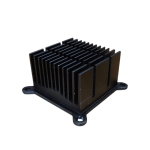 Nerdaxe Gamma / Supra / Ultra — Silent Operation & Stable Overclocking" width="80" height="80" loading="lazy" style="width:80px;height:80px;object-fit:contain;border-radius:6px;background:#1A1A1A;flex-shrink:0;">
Shop Heatsinks
Nerdaxe Gamma / Supra / Ultra — Silent Operation & Stable Overclocking" width="80" height="80" loading="lazy" style="width:80px;height:80px;object-fit:contain;border-radius:6px;background:#1A1A1A;flex-shrink:0;">
Shop Heatsinks
