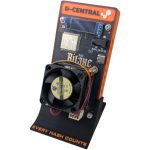
Bitcoin mining is not a passive financial activity. It is an act of sovereignty — a deployment of computational force that secures the most resilient monetary network in human history. Every ASIC miner humming in a basement, every Bitaxe solo miner blinking on a shelf, every hashboard repaired and returned to duty is a soldier in a digital war for decentralized money. If you do not understand Bitcoin mining through the lens of strategic power, you are not paying attention.
This is not hyperbole. Nation-states are already treating hashrate as a national security asset. The battleground is not hypothetical — it is measured in exahashes per second, and the stakes are nothing less than who controls the future of money.
Proof-of-Work: The Engine of Digital Sovereignty
At the core of Bitcoin’s security model is proof-of-work (PoW) — a consensus mechanism that converts real-world energy into unforgeable digital property rights. This is not a design choice that can be swapped out for something “greener” without destroying the very properties that make Bitcoin valuable. Proof-of-work is the mechanism through which physical reality anchors digital truth.
Every block mined requires the expenditure of electricity — a cost that cannot be faked, reversed, or politically manipulated. This is what separates Bitcoin from every other digital system on the planet. Central bank digital currencies (CBDCs), proof-of-stake chains, and traditional databases all rely on trusted third parties. Bitcoin relies on physics.
The implications for national security are profound. A country that controls significant hashrate has:
- Censorship resistance — the ability to ensure transactions are processed regardless of political pressure
- Economic sovereignty — a monetary system not subject to foreign sanctions or currency manipulation
- Infrastructure resilience — a distributed network with no single point of failure
- Energy monetization — a way to convert stranded or surplus energy into a universally accepted digital asset
This is why the hashrate race is not just a competition between mining companies. It is a geopolitical contest.
The Global Hashrate Arms Race
Bitcoin’s network hashrate now exceeds 800 EH/s (exahashes per second) — a staggering figure that represents more computational power than any other system in existence. This hashrate is not evenly distributed, and the geography of mining is a map of strategic advantage.
| Factor | Strategic Significance | Key Players |
|---|---|---|
| Energy Cost | Lower $/kWh = higher margins = more hashrate deployed | Canada (hydro), USA (natural gas), Paraguay, Ethiopia |
| Regulatory Climate | Hostile regulation pushes hashrate to friendlier jurisdictions | El Salvador (pro), China (ban led to mass exodus) |
| Hardware Access | Control over ASIC supply chain = control over mining capacity | Bitmain, MicroBT, Canaan (all China-based manufacturers) |
| Climate | Cold climates reduce cooling costs, improving efficiency | Canada, Nordic countries, Russia |
| Grid Stability | Miners as flexible load can stabilize grids and monetize curtailment | Texas (ERCOT), Canada (hydro provinces) |
China’s 2021 mining ban was the most dramatic demonstration of hashrate as a geopolitical weapon. Overnight, roughly 50% of the global hashrate went offline. But the network did exactly what it was designed to do — difficulty adjusted, blocks kept coming, and the hashrate migrated to North America, Central Asia, and other regions. The ban did not kill Bitcoin. It decentralized it further.
Canada sits in an exceptionally strong position in this landscape. Abundant hydroelectric power, cold climate for natural cooling, stable rule of law, and a technically skilled workforce make this country one of the best places on Earth to mine Bitcoin. At D-Central’s hosting facility in Quebec, miners operate year-round on clean hydro power — a strategic advantage that most jurisdictions cannot match.
Mining as Cyber Defense Infrastructure
The relationship between Bitcoin mining and cybersecurity is deeper than most people realize. The Bitcoin network is the most secure computing network ever built, and its security comes directly from the energy expended by miners.
To successfully attack Bitcoin (a 51% attack), an adversary would need to control more than half of the network’s hashrate — currently over 400 EH/s. The cost of such an attack, accounting for hardware acquisition, energy consumption, and the economic incentives working against it, is measured in the tens of billions of dollars. No state actor has attempted it, and the economic game theory makes it increasingly irrational to try as the network grows.
This security model has implications beyond Bitcoin itself:
- Timestamping and data integrity — Bitcoin’s blockchain provides an immutable, publicly verifiable record that can anchor other systems
- Decentralized identity — Self-sovereign identity systems can use Bitcoin’s infrastructure as a trust anchor
- Settlement finality — Unlike traditional financial systems where settlements can be reversed, Bitcoin transactions achieve true finality
- Censorship-resistant communication — Protocols built on Bitcoin (like Nostr) leverage its infrastructure for uncensorable messaging
For nation-states, the calculus is becoming clear: it is better to participate in the network than to fight it. Countries that mine Bitcoin contribute to network security and gain a strategic stake in the system. Countries that attempt to ban it lose their citizens’ hashrate to other jurisdictions.
The Home Miner as Decentralization’s Last Line of Defense
Here is where this stops being abstract geopolitics and becomes personal. The greatest threat to Bitcoin’s censorship resistance is not a state-sponsored 51% attack — it is the concentration of hashrate in a handful of large, publicly traded mining companies subject to regulatory capture.
If 80% of the hashrate runs in corporate data centers controlled by companies that answer to shareholders and regulators, those entities can be pressured to censor transactions, comply with blacklists, or participate in chain reorganizations. The network remains technically secure but practically captured.
This is why home mining matters. Every home miner running a Bitaxe, a NerdAxe, or even an Antminer S9 space heater in their basement is contributing to the geographic and institutional decentralization of the network. These miners may represent a small fraction of total hashrate individually, but collectively, they are the guerrilla force that keeps Bitcoin truly decentralized.
At D-Central, this is not a marketing slogan — it is the entire mission. We exist to put mining hardware into the hands of individuals. We were among the first to stock and support the Bitaxe family of open-source solo miners, and we continue to develop accessories, heatsinks, and solutions that make home mining practical.
| Mining Approach | Decentralization Impact | Regulatory Risk |
|---|---|---|
| Large corporate farms | Low — concentrated, identifiable, subject to pressure | High — publicly traded, must comply |
| Mid-size private operations | Medium — less concentrated but still few operators | Medium — can be targeted by energy regulation |
| Home miners (ASICs) | High — distributed across thousands of locations | Low — indistinguishable from normal residential load |
| Solo miners (Bitaxe, NerdAxe) | Maximum — individual sovereignty, open-source hardware | Minimal — tiny power draw, no regulatory footprint |
Energy: The Ammunition of Digital Warfare
Every geopolitical analysis of Bitcoin mining eventually arrives at the same conclusion: energy is the ammunition. The countries, regions, and individuals who can access cheap, reliable energy will dominate the hashrate landscape.
This is why the environmental narrative around Bitcoin mining is so critical — and so frequently misrepresented. Bitcoin mining does not “waste” energy. It monetizes energy. The distinction matters enormously.
Stranded natural gas that would otherwise be flared? Bitcoin miners convert it into hashrate. Surplus hydroelectric capacity during spring runoff? Bitcoin mining absorbs it. Excess wind and solar generation that would otherwise be curtailed? Mining provides a buyer of last resort.
In Canada, where hydroelectric generation produces massive seasonal surpluses, Bitcoin mining is not an environmental problem — it is an economic solution. Miners in Quebec operate on some of the cleanest and cheapest power on the planet. D-Central’s Bitcoin space heaters take this logic even further: they convert mining energy directly into home heating, achieving near-100% energy utilization. Every joule of electricity becomes both hashrate and BTUs.
This is dual-purpose mining, and it fundamentally changes the economics. When your miner is also your heater, the “cost” of mining is offset by the heating you would have paid for anyway. In a Canadian winter, this is not a novelty — it is a rational economic decision.
The ASIC Supply Chain: A Hidden Vulnerability
One of the most underappreciated aspects of Bitcoin mining’s national security implications is the hardware supply chain. The vast majority of ASIC mining chips are manufactured by three Chinese companies: Bitmain, MicroBT, and Canaan. This concentration creates a strategic vulnerability.
If geopolitical tensions escalated to the point where ASIC exports were restricted, countries dependent on Chinese hardware would see their hashrate growth stall. This is one reason why open-source mining hardware like the Bitaxe is so strategically important — it represents a path toward supply chain independence.
The Bitaxe uses the same ASIC chips found in commercial miners but packages them in an open-source design that anyone can manufacture, modify, and improve. D-Central was among the pioneers in the Bitaxe ecosystem, creating the original Bitaxe Mesh Stand and developing heatsink solutions for both the standard Bitaxe and the Bitaxe Hex. This is Mining Hacker philosophy in action: take institutional-grade technology and make it accessible to everyone.
The ASIC repair ecosystem is another critical layer of resilience. When hardware breaks, the default in the industry is to ship it back to the manufacturer — often in China — and wait months for repair or replacement. D-Central’s repair facility in Laval, Quebec, provides North American miners with a local alternative: expert diagnostics, hashboard repair, and component-level service that keeps existing hardware operational rather than sending it to a landfill or back across an ocean.
Nation-State Adoption: The Strategic Calculus
The strategic landscape shifted decisively when El Salvador adopted Bitcoin as legal tender in 2021 and began mining with geothermal energy from the Chichontepec volcano. Whatever one thinks of the implementation details, the signal was clear: a sovereign nation recognized Bitcoin mining as a tool of economic sovereignty.
Since then, the strategic calculus has only intensified:
- United States — Multiple states have passed pro-mining legislation; the Strategic Bitcoin Reserve concept has entered mainstream political discourse
- Russia — Despite initial hostility, has recognized Bitcoin mining as a legitimate industry and uses it to monetize surplus energy
- UAE and Saudi Arabia — Gulf states are positioning for a post-petroleum economy with significant mining investments
- Ethiopia and Kenya — African nations with hydroelectric capacity are attracting mining operations as economic development
- Canada — Provincial-level support, particularly in Quebec and Alberta, for mining as an energy industry complement
The pattern is unmistakable. Countries with energy surpluses are converting those surpluses into Bitcoin. This is not speculation or ideology — it is rational economic behavior by sovereign actors.
The Cypherpunk Imperative: Why This Matters to You
This article has discussed nation-states, exahashes, and geopolitical strategy. But the entire point of Bitcoin is that it does not require permission from any of these actors. The protocol does not care whether you are a nation-state or a solo miner with a Bitaxe on your desk. Every hash counts.
The digital battleground is real, and participation is open to anyone willing to convert energy into hashrate. Whether you are running a full ASIC farm, heating your home with a Bitcoin space heater, or solo mining with a Bitaxe in pursuit of that 3.125 BTC block reward, you are a participant in the most significant monetary experiment in human history.
At D-Central, we have been arming home miners since 2016. We are the Bitcoin Mining Hackers — taking institutional-grade technology and making it work for individuals. From our repair bench in Laval to the Bitaxe accessories we pioneered, every product we ship and every miner we repair is a contribution to the decentralization of Bitcoin’s hashrate.
The question is not whether Bitcoin mining is a digital battleground. It is. The question is which side of the hash war you want to be on.
FAQ
What makes Bitcoin mining a national security issue?
Bitcoin mining secures the most robust monetary network in existence through proof-of-work — the conversion of energy into unforgeable digital property rights. Countries that control significant hashrate gain censorship resistance, economic sovereignty, and infrastructure resilience. With the network exceeding 800 EH/s, the hashrate distribution has become a genuine geopolitical factor, with nation-states actively positioning for strategic advantage.
How does proof-of-work protect the Bitcoin network from attack?
Proof-of-work requires miners to expend real energy solving cryptographic puzzles. To attack the network (a 51% attack), an adversary would need to control more than half the global hashrate — currently over 400 EH/s. The hardware cost, energy expense, and economic incentives working against such an attack make it practically impossible and increasingly irrational as the network grows. No state actor has successfully attempted it.
Why does home mining matter for Bitcoin’s security?
Home mining contributes to the geographic and institutional decentralization of hashrate. If mining becomes concentrated in large corporate data centers, those facilities can be regulated, pressured, or shut down by governments. Thousands of individual home miners — running Bitaxe solo miners, NerdAxe devices, or Antminer space heaters — create a distributed hashrate that is nearly impossible to target or censor.
Is Bitcoin mining bad for the environment?
Bitcoin mining does not waste energy — it monetizes it. Miners actively seek the cheapest available energy, which is often stranded, curtailed, or surplus renewable energy. In Canada, miners operate on clean hydroelectric power. Bitcoin space heaters achieve near-100% energy utilization by converting electricity into both hashrate and home heating simultaneously, eliminating the “waste” argument entirely.
Why is the ASIC supply chain a strategic concern?
Three Chinese companies — Bitmain, MicroBT, and Canaan — manufacture the vast majority of Bitcoin mining ASICs. This concentration creates a supply chain vulnerability similar to semiconductor dependencies in other industries. Open-source hardware like the Bitaxe represents a strategic alternative, enabling decentralized manufacturing and reducing reliance on any single country’s export policies.
What is Canada’s advantage in Bitcoin mining?
Canada offers a unique combination of abundant hydroelectric power (especially in Quebec), cold climate for natural cooling, stable regulatory environment, and technically skilled workforce. These factors make Canada one of the most efficient and sustainable locations for Bitcoin mining globally. D-Central operates from Laval, Quebec, providing Canadian miners with local hardware, repair services, and hosting since 2016.
How can I start mining Bitcoin at home?
Entry points range from solo miners like the Bitaxe (which draws about 15W and mines via a 5V barrel jack power supply) to full ASIC miners like the Antminer series. For beginners, a Bitaxe offers a low-cost, low-power way to participate in solo mining. For those wanting both heat and hashrate, Bitcoin space heaters convert an existing heating expense into mining revenue. D-Central stocks all major options and provides setup support.