Bitcoin mining has moved from garage operations and speculative side projects into corporate boardrooms. In 2026, publicly traded miners operate at gigawatt scale, energy companies integrate mining into load-balancing strategies, and small businesses deploy ASIC hardware to monetize stranded power. The question is no longer whether companies should mine Bitcoin — it is how they should architect their operations for maximum efficiency, sovereignty, and long-term viability.
But here is the part most corporate mining analyses miss: Bitcoin mining is not primarily a financial play. It is an infrastructure play. Companies that understand mining as a technological capability — a way to convert energy into the hardest money ever created, secure the most resilient network on Earth, and build operational independence — are the ones building durable advantages. Those chasing short-term profit margins are the ones who capitulate after every halving.
This guide breaks down what companies need to know about Bitcoin mining in 2026: the economics, the hardware, the energy strategies, the regulatory landscape, and the operational models that separate sustainable operations from expensive experiments.
The State of Bitcoin Mining in 2026
The Bitcoin mining landscape in 2026 looks fundamentally different from even two years ago. The April 2024 halving cut the block subsidy from 6.25 BTC to 3.125 BTC, immediately eliminating miners operating on thin margins with inefficient hardware. This was by design — Bitcoin’s difficulty adjustment and halving schedule are the most elegant economic mechanisms ever deployed, relentlessly forcing the industry toward greater efficiency.
Network Hash Rate and Difficulty
Global hash rate has continued its relentless climb, pushing past 800 EH/s in early 2026. The difficulty adjustment — Bitcoin’s self-regulating thermostat — ensures that mining remains competitive regardless of how much hash power comes online. For companies, this means one thing: efficiency is everything. The era of plugging in any ASIC and printing sats is long gone.
Hardware Generations
The current generation of ASIC miners represents a quantum leap in efficiency. Bitmain’s Antminer S21 series delivers around 15-17 J/TH, while next-generation chips are pushing toward sub-15 J/TH territory. Compare this to the venerable S9 at roughly 80 J/TH — a five-fold improvement in just a few hardware generations. Companies entering the space today benefit from hardware that would have been science fiction in 2020.
But efficiency gains are plateauing. The low-hanging fruit of semiconductor improvements has been picked. Future gains will come less from chip design and more from operational excellence: power procurement, cooling innovation, heat recovery, and maintenance expertise. This is where companies like D-Central Technologies provide critical value — keeping hardware running at peak performance through expert ASIC repair and maintenance.
The Post-Halving Reality
Every halving is a stress test. The 2024 halving was no exception: inefficient operators shut down, hash rate temporarily dipped, difficulty adjusted downward, and efficient miners captured a larger share of blocks. Companies that survived — and thrived — shared common characteristics: low energy costs, modern hardware, diversified revenue streams (transaction fees, heat recovery, demand response), and strong operational discipline.
The Economics: What Companies Actually Need to Know
Corporate mining economics boil down to a simple equation with complex inputs: revenue from block rewards and transaction fees minus total operational costs. Let us break down each variable.
Revenue Drivers
Block subsidy: At 3.125 BTC per block (post-April 2024 halving), the subsidy remains the primary revenue source. At current Bitcoin prices, each block is worth a significant amount — but this number halves again around 2028. Companies must model their operations against future halvings, not just current conditions.
Transaction fees: The emergence of Ordinals, BRC-20 tokens, and increased on-chain activity has made transaction fees a more meaningful component of miner revenue. During peak demand periods, fees can rival or even exceed the block subsidy. This trend benefits miners and adds a variable but growing revenue stream.
Ancillary revenue: Forward-thinking companies generate additional value from mining beyond raw BTC output. Heat recovery for industrial processes or building heating, demand response payments from grid operators, and infrastructure-as-a-service models all contribute to the bottom line.
Cost Structure
Energy (60-80% of operating costs): Electricity is the dominant variable. At $0.05/kWh, a modern S21-class miner is comfortably profitable. At $0.10/kWh, margins compress significantly. At $0.15/kWh, profitability depends almost entirely on Bitcoin’s price. Canadian operations, particularly in Quebec with its abundant hydroelectric power, maintain a structural advantage with rates that consistently undercut many global competitors.
Hardware (major capital expenditure): Current-generation miners like the Antminer S21 series represent significant upfront investment. Companies must amortize this cost over the expected operational lifetime of the hardware — typically 3-5 years for well-maintained equipment. This is where professional ASIC repair services become critical: extending hardware life by even one year dramatically improves return on investment.
Facility and infrastructure: Racking, cooling, networking, security, and facility costs vary enormously depending on the deployment model. A purpose-built facility costs more upfront but delivers better efficiency. Colocation at a hosting facility reduces capital requirements but introduces counterparty risk and ongoing hosting fees.
Maintenance and labor: ASIC miners are industrial equipment that operates 24/7 in demanding thermal conditions. Hash boards fail. Fans degrade. Power supplies develop faults. Companies that neglect maintenance see their effective hash rate — and revenue — decline steadily. Those that invest in maintenance expertise or partner with specialized repair operations maintain higher uptime and extract more value from their hardware fleet.
The Profitability Equation
A company deploying 100 Antminer S21 units (roughly 20 PH/s total) at $0.05/kWh with proper maintenance can expect to mine a meaningful quantity of BTC per month. Whether that BTC covers costs and generates profit depends on the interplay between hash rate, difficulty, Bitcoin’s exchange rate, and operational discipline. The math is straightforward — the execution is where most companies struggle.
Operational Models: How Companies Deploy Hash Power
There is no single correct way for a company to mine Bitcoin. The optimal model depends on the company’s existing infrastructure, energy access, technical expertise, and strategic objectives.
Self-Hosted Operations
Companies with access to cheap power — particularly energy producers, industrial facilities with waste heat applications, or businesses in regions with favorable electricity rates — can build and operate their own mining infrastructure. This model offers maximum control and the best unit economics but requires significant capital expenditure and operational expertise.
Best for: Energy companies, industrial operators with excess power capacity, companies with existing data center infrastructure.
Colocation and Hosting
For companies that want exposure to Bitcoin mining without building and operating their own facility, colocation offers a middle path. The company owns the hardware; a hosting provider supplies the power, cooling, and physical infrastructure. D-Central operates hosting facilities in Quebec, offering companies access to low-cost hydroelectric power without the overhead of facility management.
Best for: Companies entering the space, those without existing facility infrastructure, businesses seeking geographic diversification of hash power.
Home and Small Office Mining
Not every company needs a megawatt-scale operation. Small businesses, particularly those with unused electrical capacity or heating needs, can deploy one to ten ASIC miners as dual-purpose devices. Bitcoin space heaters — ASIC miners configured to replace traditional electric heating — turn what would be a pure energy cost (heating) into a productive process that generates Bitcoin while keeping the space warm.
Best for: Small businesses with heating needs, home offices, retail locations in cold climates, companies wanting to start small and learn the technology.
Open-Source and Solo Mining
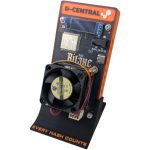
Companies aligned with Bitcoin’s decentralization ethos can deploy open-source mining hardware like the Bitaxe for solo mining. While the probability of finding a block solo is low with small hash power, the educational value and sovereignty benefits are significant. Every hash contributes to network decentralization — and when a solo miner finds a block, the full 3.125 BTC reward goes to a single operator. Every hash counts.
Best for: Companies motivated by Bitcoin’s mission, educational deployments, businesses that want to contribute to decentralization without massive capital outlay.
Energy Strategy: The Core Competitive Advantage
Energy is not just a cost line item for Bitcoin miners — it is the strategic variable that determines whether an operation thrives or dies. Companies that treat energy procurement as a core competency, rather than an afterthought, build durable competitive advantages.
Canada’s Structural Advantage
Canada, and Quebec in particular, offers some of the most compelling conditions for Bitcoin mining on the planet. Abundant hydroelectric power provides clean, affordable, and reliable electricity. Cold ambient temperatures reduce cooling costs for much of the year — in many Canadian deployments, outside air alone handles cooling for 6-8 months annually. The regulatory environment, while evolving, remains more favorable than many jurisdictions.
Renewable Energy Integration
Bitcoin mining is uniquely suited to renewable energy sources because it is location-independent and interruptible. A mining operation can be deployed wherever energy is cheapest, and it can be curtailed instantly when the grid needs that power for other uses. This makes miners ideal partners for wind farms, solar installations, and hydroelectric facilities that need flexible load to manage intermittent generation.
Companies deploying mining as a complement to renewable energy installations are not just mining Bitcoin — they are building infrastructure that improves grid stability and accelerates renewable energy adoption. This is the narrative that should dominate the conversation, not the tired claims about mining’s environmental impact.
Heat Recovery: Mining as a Heating System
An ASIC miner converts essentially 100% of its electrical input into heat. That is not waste — that is a feature. Companies that recover and utilize this heat effectively are mining Bitcoin for free in economic terms, because the energy cost is already justified by the heating requirement.
D-Central’s Bitcoin space heater line exemplifies this approach: purpose-built units that replace conventional electric heaters while generating Bitcoin. For businesses in cold climates — which describes most of Canada — this dual-purpose approach fundamentally changes the mining economics equation.
The Technology Stack: Hardware and Software Decisions
Companies deploying mining operations face a matrix of hardware and software decisions. Getting these right determines operational efficiency for years to come.
ASIC Selection
The ASIC market in 2026 is dominated by a few key manufacturers: Bitmain (Antminer series), MicroBT (Whatsminer series), and Canaan (Avalon series). Within each manufacturer’s lineup, models span a wide range of efficiency, hash rate, and price points. The optimal choice depends on the specific deployment scenario:
- Maximum efficiency (lowest J/TH): Current-generation flagships like the S21 series — best for operations where energy cost is the primary concern
- Best value (lowest cost per TH): Previous-generation models that have dropped in price — viable where energy is very cheap
- Specialized deployments: Modified units like D-Central’s custom Antminer editions (Slim, Pivotal, Loki) optimized for specific use cases like home mining, noise-sensitive environments, or heat recovery applications
Open-Source Hardware
The open-source mining hardware movement — led by projects like Bitaxe, NerdAxe, NerdQAxe, and NerdMiner — represents something philosophically important for companies that understand Bitcoin’s ethos. These devices will not compete with industrial ASICs on raw hash power, but they serve critical functions: education, decentralization, sovereignty, and proof-of-concept for mining programs.
D-Central is a pioneer in the Bitaxe ecosystem, having created the original Bitaxe Mesh Stand and developed leading accessories including heatsinks and custom cases. For companies exploring Bitcoin mining as a technology initiative rather than a pure profit center, open-source hardware provides an accessible entry point.
Mining Pools vs. Solo Mining
Most corporate mining operations connect to a mining pool, which aggregates hash power from many miners and distributes rewards proportionally. This provides predictable, steady income rather than the all-or-nothing lottery of solo mining. Major pools include Foundry USA, AntPool, F2Pool, and ViaBTC.
However, pool concentration raises centralization concerns. Companies committed to Bitcoin’s decentralization mission should consider directing at least some hash power to smaller pools or solo mining. Diversifying pool selection is a simple step that strengthens the network without sacrificing meaningful revenue.
Regulatory and Legal Landscape in 2026
The regulatory environment for Bitcoin mining has matured significantly. Companies entering the space today face a more defined — if still evolving — legal framework than in previous years.
Canadian Regulatory Environment
Canada treats Bitcoin mining as a legitimate business activity. Mining revenue is taxable as business income, and mined Bitcoin is treated as inventory or capital property depending on the taxpayer’s circumstances. Provincial regulations vary, particularly around energy allocation — Quebec, for example, has periodically adjusted its policies around energy allocation for mining operations.
Companies should engage qualified tax professionals and legal counsel familiar with both federal and provincial cryptocurrency regulations. The CRA (Canada Revenue Agency) has issued guidance on cryptocurrency taxation, but the specifics of mining operations often require expert interpretation.
Global Regulatory Trends
Globally, the trend is toward regulation rather than prohibition. The United States has seen a shift toward pro-mining policies at the federal level, with several states actively competing for mining operations. The EU’s MiCA framework provides clearer rules for crypto-related activities. Meanwhile, countries like El Salvador and the UAE have embraced mining as economic development strategy.
The key risk for companies is regulatory uncertainty — rules that change mid-deployment can alter the economics of an operation overnight. Geographic diversification and conservative financial modeling help mitigate this risk.
Financial Reporting
Accounting standards for Bitcoin and mining operations have improved but remain complex. Companies must address asset classification (Bitcoin held on balance sheet), revenue recognition (block rewards and fees), hardware depreciation schedules, and energy cost allocation. The FASB’s fair value accounting standard for crypto assets, effective in 2025, has simplified Bitcoin accounting for US-reporting companies — a positive development that is influencing international standards.
Why Bitcoin — and Only Bitcoin
This article is about Bitcoin mining, not “cryptocurrency mining.” The distinction matters. Bitcoin is the only network with the security guarantees, decentralization, and monetary properties that justify the energy expenditure of proof-of-work mining. Ethereum moved to proof-of-stake in 2022. Most other “mineable” coins lack the network effects, security budget, and monetary soundness to justify corporate investment in dedicated mining hardware.
Companies should be wary of analyses that lump “crypto mining” together as a single category. Bitcoin mining is a specific technological and economic activity with its own dynamics. Conflating it with altcoin mining leads to poor decision-making and wasted capital.
D-Central Technologies has been a Bitcoin-focused company since 2016. This is not a matter of convenience — it is a matter of conviction. Bitcoin is the only truly decentralized, censorship-resistant monetary network. Mining it is not just a business activity; it is an act of supporting the most important technological infrastructure of our time.
Getting Started: A Practical Roadmap for Companies
For companies ready to move beyond analysis and into deployment, here is a practical framework:
Phase 1: Assessment and Education
- Conduct an energy audit — what power is available, at what cost, with what reliability?
- Define objectives — is this a profit center, a heating solution, an R&D initiative, or a strategic Bitcoin accumulation strategy?
- Educate key stakeholders on Bitcoin mining fundamentals, not just the financial projections
- Engage with experienced operators like D-Central for consultation on hardware selection, deployment models, and operational requirements
Phase 2: Pilot Deployment
- Start with a small deployment (1-10 units) to build operational competency
- Test thermal management, noise mitigation, network configuration, and monitoring
- Validate financial models against real-world performance data
- Evaluate different hardware configurations for the specific deployment environment
Phase 3: Scale
- Expand based on pilot results and validated economics
- Consider diversifying across self-hosted and colocation models
- Establish maintenance and repair partnerships to maximize hardware uptime
- Implement proper financial tracking and tax compliance from day one
Phase 4: Optimize
- Continuously evaluate hardware fleet — retire inefficient units, deploy newer models
- Explore heat recovery and dual-purpose applications
- Negotiate energy contracts and explore demand response programs
- Contribute to network decentralization through pool diversification and solo mining experiments
D-Central Technologies: Your Mining Infrastructure Partner
D-Central Technologies has been building Bitcoin mining infrastructure since 2016 — long before it was fashionable, and through multiple market cycles that tested the resolve of every operator in the industry. As Canada’s leading Bitcoin mining technology company, we do not just sell hardware. We provide the full operational stack that companies need to mine successfully.
- ASIC Repair and Maintenance: Our repair center handles everything from hash board diagnostics to chip-level repair across all major ASIC manufacturers. Extending hardware life is the single most impactful thing a company can do to improve mining ROI.
- Custom Mining Solutions: From Bitcoin space heaters for small business heating applications to custom Antminer configurations (Slim Edition, Pivotal Edition, Loki Edition) optimized for specific deployment scenarios, we build solutions that match real-world requirements.
- Hosting Services: Our Quebec facility provides access to clean hydroelectric power with full operational management, giving companies enterprise-grade mining without the overhead of building and staffing their own facility.
- Open-Source Hardware: As a pioneer in the Bitaxe ecosystem and a supplier of the full open-source mining lineup (Bitaxe, NerdAxe, NerdQAxe, NerdMiner, and more), we equip companies that want to start small, learn the technology, and contribute to decentralization.
- Consultation: Our team has seen every deployment scenario, every hardware failure mode, and every market cycle. We help companies avoid expensive mistakes and build operations that endure.
Bitcoin mining is not a get-rich-quick scheme. It is a long-term infrastructure investment in the hardest money humanity has ever created. Companies that approach it with technical rigor, operational discipline, and a genuine understanding of what Bitcoin represents will build something far more valuable than a profit center — they will build sovereignty.
Ready to deploy hash power? Contact D-Central Technologies to start the conversation.
Frequently Asked Questions
Is Bitcoin mining still profitable for companies in 2026?
Yes, but profitability depends heavily on energy costs, hardware efficiency, and operational discipline. Companies with access to electricity at or below $0.06/kWh running current-generation hardware (sub-20 J/TH) can operate profitably at current network difficulty and Bitcoin price levels. The 2024 halving eliminated marginal operators, but efficient miners continue to generate positive returns. The key is treating mining as a long-term infrastructure investment, not a short-term speculation.
What is the minimum investment to start a corporate Bitcoin mining operation?
A meaningful pilot deployment (5-10 current-generation ASIC miners) requires a hardware investment in the range of $15,000 to $50,000 USD depending on the models selected, plus electrical infrastructure, networking, and cooling. Colocation hosting reduces upfront capital requirements by eliminating facility costs. For companies exploring the technology with minimal commitment, a single Bitcoin space heater or a Bitaxe solo miner can serve as an educational proof-of-concept for under $1,000.
How does the Bitcoin halving affect corporate mining profitability?
The halving cuts the block subsidy — the BTC reward miners receive for each block — in half approximately every four years. The April 2024 halving reduced the subsidy from 6.25 to 3.125 BTC per block. Historically, Bitcoin’s price has appreciated significantly in the 12-18 months following each halving, more than compensating for the reduced subsidy. However, companies should not rely on price appreciation and should model operations that remain viable even without it. Transaction fees provide a growing supplementary revenue stream that partially offsets halving impacts.
What are the best ASIC miners for corporate deployments in 2026?
For maximum efficiency, the Bitmain Antminer S21 series and MicroBT Whatsminer M60 series lead the market at 15-17 J/TH. For heat recovery and dual-purpose applications, D-Central’s custom Antminer editions are purpose-built for integration with heating systems. For companies with very low energy costs, previous-generation models like the S19 XP can still be profitable and offer better cost-per-terahash economics. The optimal choice depends on the specific deployment scenario — energy cost, cooling infrastructure, noise constraints, and intended use case all factor into the decision.
Can Bitcoin mining serve as a heating solution for businesses?
Absolutely. ASIC miners convert nearly 100% of electrical input into heat. For any business that uses electric heating — offices, warehouses, retail spaces, workshops, greenhouses — replacing conventional heaters with Bitcoin mining hardware effectively makes the heating free (or even profitable) since the hardware generates BTC while producing the same thermal output. D-Central’s Bitcoin space heater line is specifically designed for this use case, providing building heating with Bitcoin mining as a beneficial byproduct.
What are the tax implications of corporate Bitcoin mining in Canada?
In Canada, mined Bitcoin is generally treated as business income at fair market value at the time of receipt. The mining hardware qualifies for capital cost allowance (depreciation). Electricity and operational costs are deductible business expenses. GST/HST may apply depending on the province and the nature of the mining activity. The CRA has issued guidance, but the specifics can be complex — companies should work with a tax professional experienced in cryptocurrency taxation to ensure proper compliance and optimize their tax position.
How does Bitcoin mining contribute to renewable energy development?
Bitcoin mining is a flexible, interruptible electrical load that can be deployed wherever energy is available. This makes it an ideal demand-side partner for renewable energy projects that face intermittency challenges (solar, wind) or stranded energy situations (remote hydro, flared natural gas). By providing guaranteed demand for otherwise wasted energy, mining operations improve the economics of renewable projects and can accelerate their development. In Canada, miners leveraging excess hydroelectric capacity are already demonstrating this model at scale.
Should companies solo mine or join a mining pool?
Most corporate operations join mining pools for predictable, steady revenue. Pools aggregate hash power from many participants and distribute block rewards proportionally, smoothing out the variance inherent in solo mining. However, companies with a strong commitment to Bitcoin’s decentralization mission should consider directing some hash power to solo mining or smaller pools. Solo mining with even modest hash power contributes to network decentralization, and the potential reward — a full 3.125 BTC block — makes it a compelling proposition for companies that can absorb the variance.
What ongoing maintenance does corporate mining equipment require?
ASIC miners operate 24/7 under demanding thermal conditions and require regular maintenance to sustain optimal performance. This includes fan replacement (typically every 12-18 months), dust cleaning and air filter maintenance, thermal paste reapplication, hash board diagnostics, and firmware updates. Companies should plan for 2-5% of their fleet being offline for maintenance at any given time. Partnering with a specialized ASIC repair service like D-Central can significantly reduce downtime and extend hardware lifespan, directly improving return on investment.
How can companies get started with Bitcoin mining without building their own facility?
Colocation hosting is the most common path for companies that want to mine without operating their own facility. D-Central offers hosting services at its Quebec facility, where companies own their hardware while D-Central provides the power infrastructure, cooling, physical security, and operational monitoring. This model eliminates the need for facility buildout, reduces operational complexity, and provides access to competitive hydroelectric power rates. Companies can start with as few as a handful of units and scale based on results.
{
“@context”: “https://schema.org”,
“@type”: “FAQPage”,
“mainEntity”: [
{
“@type”: “Question”,
“name”: “Is Bitcoin mining still profitable for companies in 2026?”,
“acceptedAnswer”: {
“@type”: “Answer”,
“text”: “Yes, but profitability depends heavily on energy costs, hardware efficiency, and operational discipline. Companies with access to electricity at or below $0.06/kWh running current-generation hardware can operate profitably at current network difficulty and Bitcoin price levels. The 2024 halving eliminated marginal operators, but efficient miners continue to generate positive returns.”
}
},
{
“@type”: “Question”,
“name”: “What is the minimum investment to start a corporate Bitcoin mining operation?”,
“acceptedAnswer”: {
“@type”: “Answer”,
“text”: “A meaningful pilot deployment (5-10 current-generation ASIC miners) requires a hardware investment in the range of $15,000 to $50,000 USD, plus electrical infrastructure, networking, and cooling. For companies exploring with minimal commitment, a single Bitcoin space heater or Bitaxe solo miner can serve as an educational proof-of-concept for under $1,000.”
}
},
{
“@type”: “Question”,
“name”: “How does the Bitcoin halving affect corporate mining profitability?”,
“acceptedAnswer”: {
“@type”: “Answer”,
“text”: “The halving cuts the block subsidy in half approximately every four years. The April 2024 halving reduced the subsidy from 6.25 to 3.125 BTC per block. Historically, Bitcoin’s price has appreciated significantly following each halving, but companies should model operations that remain viable even without price appreciation.”
}
},
{
“@type”: “Question”,
“name”: “What are the best ASIC miners for corporate deployments in 2026?”,
“acceptedAnswer”: {
“@type”: “Answer”,
“text”: “For maximum efficiency, the Bitmain Antminer S21 series and MicroBT Whatsminer M60 series lead the market at 15-17 J/TH. For heat recovery applications, D-Central’s custom Antminer editions are purpose-built for heating integration. The optimal choice depends on energy cost, cooling infrastructure, noise constraints, and intended use case.”
}
},
{
“@type”: “Question”,
“name”: “Can Bitcoin mining serve as a heating solution for businesses?”,
“acceptedAnswer”: {
“@type”: “Answer”,
“text”: “Absolutely. ASIC miners convert nearly 100% of electrical input into heat. For any business using electric heating, replacing conventional heaters with Bitcoin mining hardware effectively makes heating free or even profitable since the hardware generates BTC while producing the same thermal output.”
}
},
{
“@type”: “Question”,
“name”: “What are the tax implications of corporate Bitcoin mining in Canada?”,
“acceptedAnswer”: {
“@type”: “Answer”,
“text”: “In Canada, mined Bitcoin is generally treated as business income at fair market value at the time of receipt. Mining hardware qualifies for capital cost allowance, and electricity and operational costs are deductible. Companies should work with a tax professional experienced in cryptocurrency taxation.”
}
},
{
“@type”: “Question”,
“name”: “How does Bitcoin mining contribute to renewable energy development?”,
“acceptedAnswer”: {
“@type”: “Answer”,
“text”: “Bitcoin mining is a flexible, interruptible electrical load ideal for renewable energy projects facing intermittency challenges. By providing guaranteed demand for otherwise wasted energy, mining operations improve the economics of renewable projects and can accelerate their development.”
}
},
{
“@type”: “Question”,
“name”: “Should companies solo mine or join a mining pool?”,
“acceptedAnswer”: {
“@type”: “Answer”,
“text”: “Most corporate operations join mining pools for predictable revenue. However, companies committed to decentralization should consider directing some hash power to solo mining or smaller pools. Solo mining with even modest hash power contributes to network decentralization.”
}
},
{
“@type”: “Question”,
“name”: “What ongoing maintenance does corporate mining equipment require?”,
“acceptedAnswer”: {
“@type”: “Answer”,
“text”: “ASIC miners require regular maintenance including fan replacement every 12-18 months, dust cleaning, thermal paste reapplication, hash board diagnostics, and firmware updates. Companies should plan for 2-5% fleet downtime for maintenance. Partnering with a specialized ASIC repair service can significantly reduce downtime.”
}
},
{
“@type”: “Question”,
“name”: “How can companies get started with Bitcoin mining without building their own facility?”,
“acceptedAnswer”: {
“@type”: “Answer”,
“text”: “Colocation hosting is the most common path. D-Central offers hosting at its Quebec facility where companies own their hardware while D-Central provides power, cooling, security, and monitoring. Companies can start with a few units and scale based on results.”
}
}
]
}