Home Bitcoin mining is the practice of running ASIC mining hardware from your own residence to earn BTC, secure the network, and — if you do it right — recover heat and hedge against inflation. The hard parts are noise, heat, electrical load, and economics. This guide covers all of it: getting started, choosing equipment, silencing your miner, managing heat, sizing your circuits, running the profitability math, securing your network, and understanding why a plebs-first, decentralized hashrate base actually matters. No corporate fluff — this is the playbook D-Central has been refining since 2016.
Mining from home used to mean a screaming data-center box in a spare bedroom and a hydro bill that made your spouse hate Bitcoin. That era is over. Open-source hardware like the Bitaxe and purpose-built residential rigs have made it genuinely livable to run a miner next to your living space. But “livable” is not “automatic.” You still have to engineer it. This is the complete reference — bookmark it, and jump to the section you need.
- Getting Started: What Home Mining Actually Is
- Choosing Your Equipment
- Noise Management: Making a Miner Livable
- Cooling & Ventilation
- Heat Recovery: Mining as Home Heating
- Power & Electrical Systems
- Profitability & Economics
- Networking & Security
- Why Home Mining Matters: Decentralization
- Home Mining as a Family & Learning Project
- Frequently Asked Questions
Getting Started: What Home Mining Actually Is
Bitcoin mining is the process of bundling pending transactions into a block and competing to find a valid proof-of-work hash for it. Win the race, and you append the block to the chain and collect the block reward plus fees. The network re-targets difficulty every 2,016 blocks (~two weeks) so that blocks keep arriving roughly every ten minutes regardless of how much hashrate is online. That is the whole game: you point computational work at the network, and the network pays the work that finds blocks.
Home mining just means doing that from your house instead of a warehouse. You are not going to out-hash a Texas megafarm — and you do not need to. With a small home rig you are either pool mining (joining your hashrate with thousands of others and earning a steady, proportional trickle of BTC) or solo mining / lottery mining (pointing your miner at a solo pool and taking a long-shot swing at an entire block reward). Both are legitimate. Both contribute hashrate. The difference is variance, not virtue.
The evolution matters here. Bitcoin was CPU-mined in 2009, GPU-mined by 2010–2013, and has been an ASIC game ever since. Application-Specific Integrated Circuits do one thing — SHA-256 hashing — and do it orders of magnitude more efficiently than general-purpose silicon. Every serious home rig today is an ASIC. The skill is not “can I mine?” It is “can I run an ASIC in a house without it ruining the house?”
If you are brand new and want a guided, step-by-step path before you spend a satoshi, start with our Start Here onboarding. If you want the deep dive specifically on the at-home process, read How to Mine Bitcoin at Home. This pillar is the reference; those are the on-ramps.
The Four Real Constraints
Every home mining problem reduces to one of four constraints. Internalize these and the rest of this guide clicks into place:
- Noise — a stock data-center ASIC runs 70–80 dB. That is a vacuum cleaner that never turns off. Unmanaged, it ends your home mining career fast.
- Heat — a miner converts essentially 100% of the electricity it draws into heat. That is a liability in July and an asset in January.
- Power — ASICs are continuous high-amperage loads. Your home’s electrical system was sized for intermittent loads, not a 24/7 space-heater-equivalent.
- Economics — electricity is the dominant ongoing cost. If your power rate is high and you ignore heat recovery, the math can go negative.
Choosing Your Equipment
There is no single “best” home miner — there is the best miner for your noise tolerance, your electrical capacity, your budget, and your goals. Broadly, home-friendly hardware falls into three tiers, and D-Central stocks all of them. Cross-reference real specs across the full lineup in our miner database before you buy.
Tier 1: Open-Source Solo Miners (Bitaxe & the Nerd Lineup)
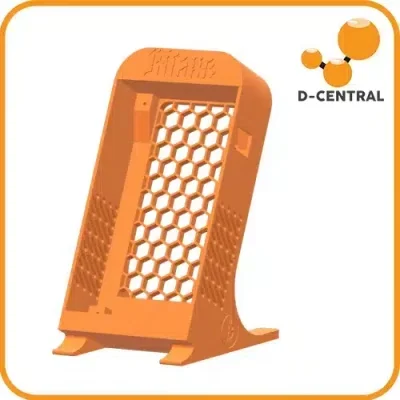
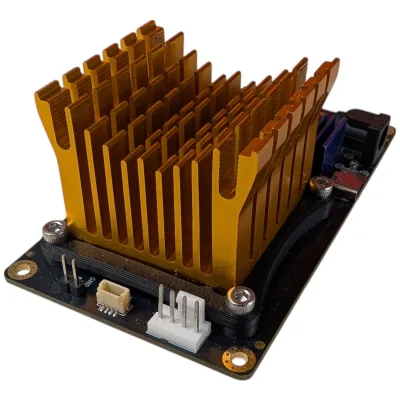
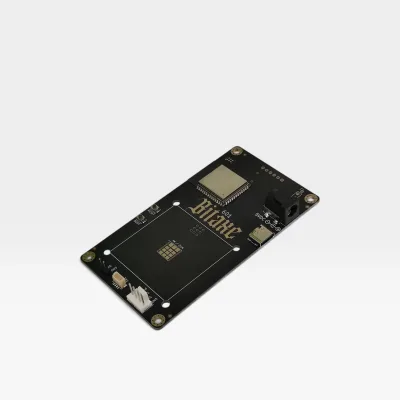
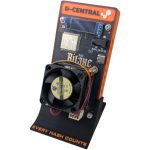
The Bitaxe is the single best entry point into home mining, full stop. It is an open-source, single-chip (or multi-chip, in the Hex) Bitcoin miner that sips 10–20W, runs near-silent, sits on a desk, and connects over WiFi. D-Central is a pioneer in this ecosystem — we manufactured the original Bitaxe Mesh Stand, developed heatsinks for the Bitaxe and Bitaxe Hex, and stock every variant: Supra, Ultra, Hex, Gamma, and GT, plus the PSUs, stands, and cases that go with them. We also carry the full open-source Nerd family — NerdMiner, NerdAxe, NerdNOS, and NerdQAxe — with more on the way.
A Bitaxe will not pay your mortgage. What it will do is teach you the entire stack — pool config, firmware, monitoring, thermals — for the price of a nice dinner, while giving you a real, non-trivial shot at solo-mining a block. It is the cleanest hardware on this page from a noise, heat, and electrical standpoint. To go all-in on this category — every model, every accessory, setup guides, overclocking, troubleshooting — the Bitaxe Hub is the definitive resource.
C5 note for the record: a Bitaxe is a solo miner and a teaching tool. It is not a space heater — at 10–20W it produces a rounding error of heat. Anyone marketing a Bitaxe as a heating appliance is selling you a story. If heat recovery is your goal, you want Tier 3.
Tier 2: Residential ASICs (Slim, Loki & Pivotal Editions)
When you want real terahash but still need to live in the building, you want a miner that was re-engineered for a house instead of a warehouse. D-Central’s Antminer Slim Edition is exactly that: a single-hashboard build in a custom 3D-printed chassis, running 26–44 TH/s at 860–930W, on universal 110–240V power, with Noctua cooling and our proprietary SilentMiner cable bringing it down to roughly 38 dB. The Loki Edition steps up to dual-hashboard performance with similar livability engineering. These are the workhorses for someone who wants meaningful hashrate without converting a bedroom into a server closet.
Tier 3: Full ASICs & Bitcoin Space Heaters
A stock Antminer S19 or S21 is a beast: tens of terahash, thousands of watts, and noise that demands a dedicated space. Run as-is, a full ASIC belongs in a garage, shed, or shop with proper ventilation and soundproofing. But there is a smarter path — D-Central’s Bitcoin Space Heater editions (S9, L3, S17, S19 builds) re-purpose that thermal output deliberately, turning the miner into a dual-purpose appliance that heats a room while it mines. This is the only category on the page where “it’s a heater” is an honest claim, because these builds are specifically engineered and tuned for it. See the full ASIC catalog for the complete range.
Match the Tier to the Goal
- “I want to learn and take a solo shot” → Tier 1 (Bitaxe / Nerd lineup)
- “I want real hashrate but I live here” → Tier 2 (Slim / Loki Edition)
- “I want to heat my home and mine at the same time” → Tier 3 (Space Heater editions)
- “I have a garage/shed and want max TH/s per dollar” → Tier 3 (full stock ASICs)
Noise Management: Making a Miner Livable
Noise is the number-one reason home mining setups get dismantled. A stock ASIC’s cooling fans run 70–80 dB — loud enough to disrupt sleep, raise stress, strain relationships with neighbors, and in some jurisdictions, breach municipal noise bylaws. The good news: noise is an engineering problem, and engineering problems have solutions. You attack it on three fronts.
1. Start With Quieter Hardware
The cheapest decibel is the one you never generate. A Bitaxe is effectively silent. A purpose-built residential rig like the Slim Edition runs around 38 dB out of the box — quieter than a normal conversation — because the noise reduction is designed in, not bolted on. If quiet is your top priority, buying the right tier (see above) does 80% of the work before you touch a single accessory. Our full breakdown of the quietest options lives in Best Quiet Bitcoin Miners for Home Use.
2. Replace the Fans
Stock ASIC fans are chosen for static pressure and cost, not acoustics. Swapping them for premium units from Noctua or Arctic — which run as low as 20 dBA and produce far less vibration — is the highest-leverage upgrade you can make. Pair the fan swap with custom firmware that lets you tune fan curves, and you can hold safe temperatures at dramatically lower RPM. The miner stays cool; your house stays quiet.
3. Contain the Sound
For anything louder than a residential rig, you contain it. Soundproof enclosures with acoustic insulation and integrated ventilation can knock 20–40 dB off a miner — the catch is that an enclosure that traps sound also traps heat, so it must be engineered with proper airflow or you will cook the hardware. Lower-effort tactics still help: a dedicated mining room, acoustic panels, sealing gaps around doors and windows, decoupling the miner from hard surfaces to kill vibration transfer, and integrating quiet inline duct fans (more on those next). For the complete tactical playbook, see our ASIC Noise Reduction Guide.
Cooling & Ventilation
Cooling is not optional and it is not just about preventing failures — it is a profitability lever. An ASIC held at a stable, moderate temperature hashes at peak efficiency and lasts longer. An ASIC that runs hot throttles, wastes power, ages its components prematurely, and eventually dies. Heat is the enemy of every chip; ventilation is how you defeat it.
Airflow Is a System, Not a Fan
ASICs are front-to-back airflow devices: cool air in one end, hot air out the other. The mistake beginners make is treating the miner as the whole cooling system. It is not. The system is the path — where cool air comes from, how it gets to the intake, and where the exhaust goes. If hot exhaust recirculates back to the intake, you have built an oven. Effective home cooling means deliberately routing that air.
Shrouds and Duct Fans
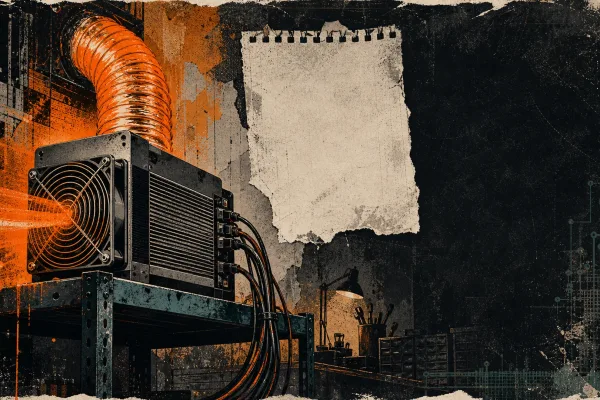
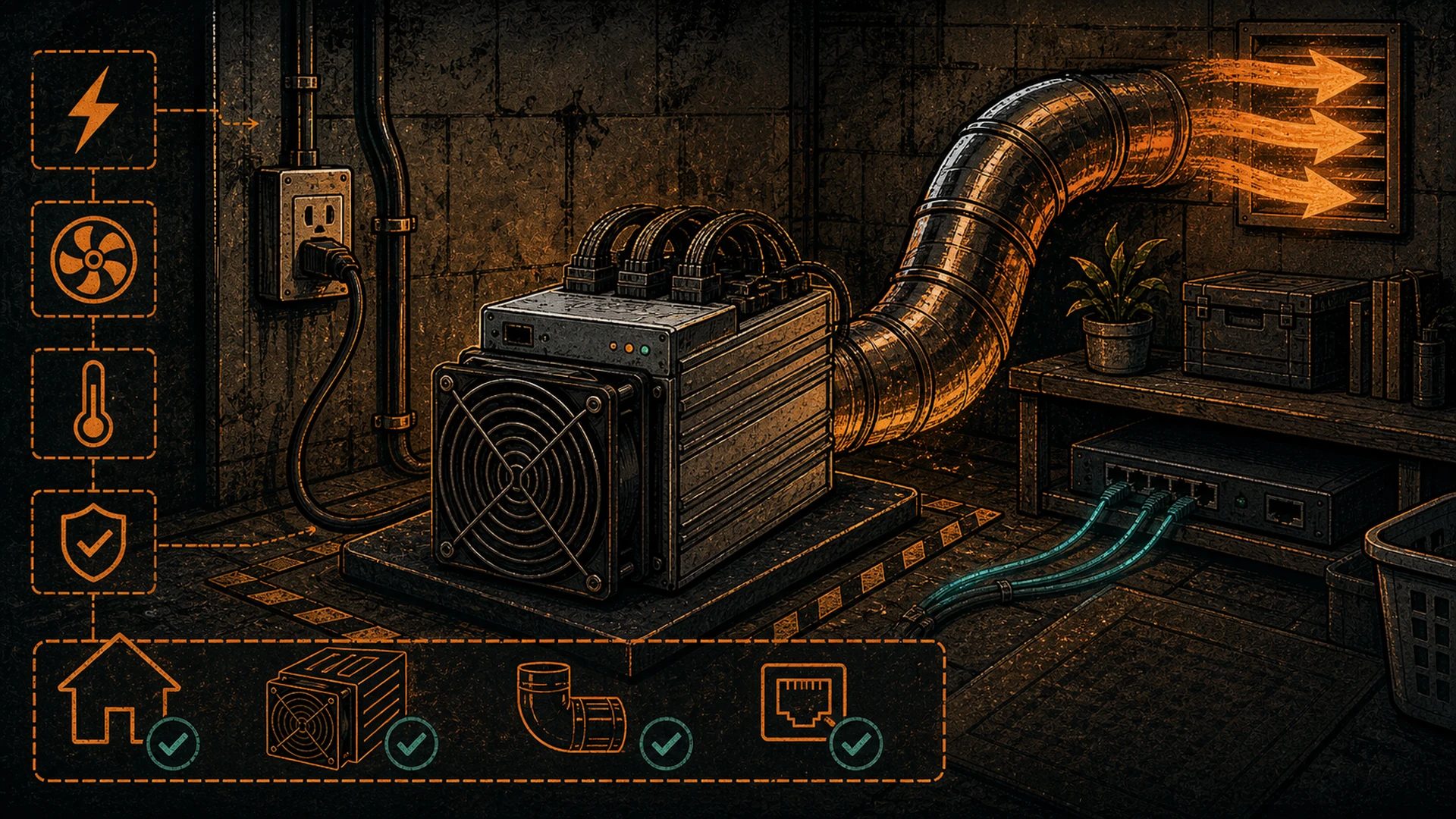
The practical toolkit is shrouds and inline duct fans. A shroud is a fitted adapter — D-Central makes PETG shrouds, in black or orange, for popular Antminer models — that channels exhaust from the miner into a 6″ or 8″ duct. From there, a quiet inline duct fan (AC Infinity Cloudline-class units with EC-motor technology and temperature/humidity controls) moves that air wherever you want it: outside in summer, into another room in winter, or into an HVAC return. This is the single most important ventilation concept in home mining — once you can route the heat, you control both your thermals and, as the next section covers, your heating bill. Browse shrouds and duct fans in the accessories catalog.
Beyond Air: Immersion and Liquid
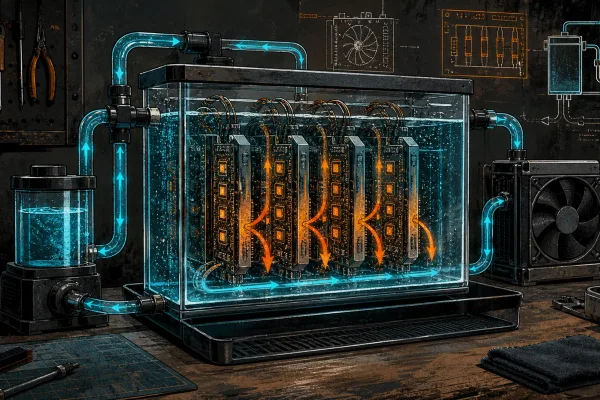
For larger home setups, immersion cooling (submerging hardware in non-conductive dielectric fluid) and liquid cooling transfer heat far more efficiently than air and run dramatically quieter as a bonus. They are more involved to set up and maintain, so they are not a first-rig recommendation — but if you scale past a couple of machines, they are worth understanding.
Heat Recovery: Mining as Home Heating
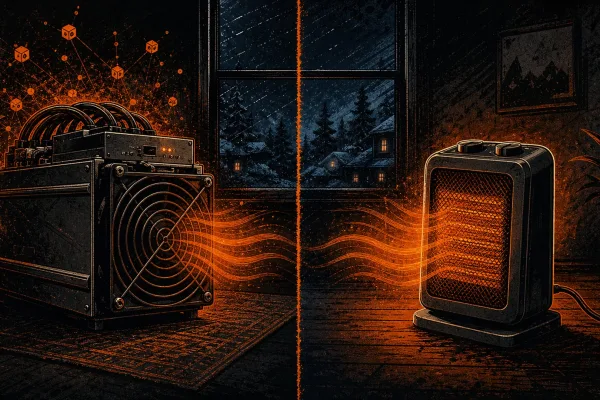
Here is the thermodynamic fact that changes the entire economic picture of home mining: a miner converts essentially 100% of the electricity it consumes into heat. So does your electric baseboard heater. So does your toaster. The difference is that your baseboard heater produces heat and nothing else, while a miner produces the exact same heat plus Bitcoin. If you live somewhere with a real heating season — like, say, most of Canada — this is not a gimmick. It is a rebate on a bill you were going to pay anyway.
The logic is simple. During heating months, every watt your miner draws is a watt you would otherwise have spent on a furnace or baseboard. That portion of your mining electricity cost is effectively free — you were buying that heat regardless. Your true cost of mining drops to whatever you spend beyond your normal heating load, and any BTC earned is upside on top of warmth you already needed.
How to Actually Recover the Heat
- Direct space heating — place a residential rig or a Space Heater edition in the room you want warm. The exhaust is the heat source.
- Ducted distribution — use a shroud and inline duct fan (see the cooling section) to push exhaust into adjacent rooms, a basement, or an HVAC return so one miner warms a wider area.
- Heat exchangers — transfer miner heat into other zones of the home without moving the noisy hardware itself.
- Seasonal switching — recover heat indoors in winter; duct it outside in summer. Same hardware, opposite airflow destination.
This is D-Central’s Bitcoin Space Heater thesis in one sentence: stop throwing away the most valuable byproduct of mining. The S9, L3, S17, and S19 Space Heater editions are built specifically for this — tuned thermals, livable noise, designed to be a heating appliance first. For the full economics, model comparisons, and BTU-by-room sizing, see our complete heater guide. And to be precise about the C5 boundary one more time: this section is about hardware that genuinely produces meaningful heat. A 15W Bitaxe is not a heater — it is a solo miner that happens to be warm to the touch.
Power & Electrical Systems
Your home’s electrical system was designed for intermittent loads — a microwave for five minutes, a hair dryer for ten. A mining ASIC is a continuous high-amperage load that runs 24/7/365. Treating it like a hair dryer is how you trip breakers, overheat wiring, and create genuine fire risk. This section is the one you do not skip, and when in doubt, you hire a licensed electrician. Bitcoin is sovereignty; it is not worth your house.
Circuit Sizing and the 80% Rule
The foundational electrical rule for continuous loads: never run a continuous load above 80% of the circuit’s rated capacity. A standard 15A/120V circuit should not carry more than 12A continuous — about 1,440W. A 20A/120V circuit tops out around 1,920W continuous. This is why a single residential rig pulling ~900W is fine on a dedicated 120V circuit, why two of them on the same circuit is not, and why higher-power miners are often run on 240V. Add up the continuous wattage of everything on a circuit, apply the 80% ceiling, and if you are over it, you need another circuit — not an extension cord and optimism.
120V vs. 240V
At the same wattage, 240V draws half the amperage of 120V, which means less heat in the wiring, less voltage drop, and more headroom per circuit. Many residential miners — the Slim Edition included — accept universal 110–240V input. If you are running anything beyond a single light-duty rig, a dedicated 240V circuit (the same kind of circuit that feeds a dryer or an EV charger) is the cleaner, safer foundation.
Power Quality: Harmonics and Power Factor
Switch-mode power supplies — what every ASIC uses — can introduce harmonic distortion into your home’s electrical current. Harmonics cause excess heating in wiring, waste energy with no productive output, can interfere with other electronics, and degrade the power quality on your local grid segment. Related is power factor: a measure of how effectively you are using the power you draw. A poor power factor means your electrical system supports fewer miners than its raw rating suggests, can cause voltage drops that hurt miner performance, and in some utility territories triggers penalty charges. Quality PSUs — D-Central’s APW-series and Bitaxe-specific units — are engineered for cleaner power delivery. This is not exotic theory; it is why cheap power supplies cost you money downstream.
The Electrical Checklist
- Run miners on dedicated circuits — do not share with other major loads.
- Respect the 80% continuous-load ceiling on every circuit.
- Use 240V for anything beyond a single light-duty rig.
- Buy quality PSUs — power factor and harmonics are real costs.
- Use heavy-gauge, properly rated cabling and adapters — never undersized extension cords. See cables and power accessories.
- When the load is significant or you are unsure, hire a licensed electrician. Full stop.
Profitability & Economics
Whether home mining “makes money” depends on a handful of variables, and the honest answer is: it depends on yours. Let’s break down the real inputs instead of hand-waving.
The Cost Side
- Upfront hardware — a Bitaxe is the price of a dinner; a residential ASIC is hundreds of dollars; a full ASIC runs from several hundred into the thousands.
- Electricity — the dominant ongoing cost, and the single biggest determinant of profitability. Your rate per kWh decides almost everything.
- Pool fees — typically 1–3% of rewards on a standard pool; solo pools charge similar small cuts.
- Maintenance — cleaning, fans, the occasional repair. Real, but modest if you buy quality.
The Revenue Side — and the Variables That Move It
Your BTC earnings are a function of your hashrate, the total network difficulty, the current block subsidy (which halves roughly every four years), transaction fees, and the BTC price. You control your hashrate and your efficiency; you control nothing else. That is why static “you’ll earn $X/month” claims are worthless — difficulty and price move constantly.
Run your own numbers. Our mining profitability calculator takes your specific hardware, your electricity rate, and current network conditions and gives you a real estimate instead of a marketing fantasy. Use it before you buy, not after.
The Two Things That Change the Math
First, heat recovery. As covered above, during heating season the portion of your power cost that displaces furnace or baseboard heat is effectively zero — you were spending it anyway. Factor that in and a setup that looks marginal on paper can be solidly positive in practice.
Second, the inflation-hedge frame. Bitcoin has a hard cap of 21 million coins and a supply schedule no central bank can alter. Fiat does not. Home mining is a way to accumulate a scarce, monetary-policy-proof asset at a steady drip — converting depreciating energy-dollars into a fixed-supply asset on an automated schedule. Whether that is “profitable” in next month’s fiat terms is the wrong question for a lot of miners. The question is whether you would rather hold the dollars or the BTC. Plenty of plebs mine at a slight fiat loss on purpose, because they are stacking the asset, not the currency.
Solo vs. Pool Economics
Pool mining gives you small, frequent, predictable payouts proportional to your share of the pool’s hashrate — low variance, low drama. Solo / lottery mining gives you nothing, nothing, nothing, and then potentially an entire block reward — extreme variance, lottery-ticket odds. Neither is “smarter.” A Bitaxe pointed at a solo pool is a cheap, fun, legitimate swing at a life-changing block; a residential rig on a standard pool is a steady stacking machine. Many home miners run both.
Networking & Security
Mining is bandwidth-light but uptime-critical. Your miner needs a stable connection to its pool — not a fast one. Bitcoin mining traffic is tiny; the data moving between your ASIC and the pool is a trickle, not a flood. What kills earnings is not low bandwidth, it is dropped connections. Every minute your miner cannot reach the pool is a minute of hashrate you paid for and earned nothing from.
Network Setup That Actually Helps
- Prefer wired Ethernet — lower latency, no interference, more consistent than WiFi. If your miner supports both (the Slim Edition does), wire it.
- Use WiFi deliberately, not by default — a Bitaxe’s WiFi is a feature for placement flexibility, but keep it on a strong signal and a stable band.
- Enable QoS on your router — prioritize miner traffic so a Netflix binge never starves your hashrate.
- Keep router firmware current — for both performance and security patches.
- A dedicated connection is overkill for one rig and reasonable for a serious multi-miner setup.
Security: You Are Now a Target
Running mining hardware connected to the internet makes you a small but real target. The threats are concrete: DDoS attacks against your equipment, malware that hijacks mining resources, phishing aimed at your pool credentials, man-in-the-middle attacks on unsecured connections, and — the big one — theft of mined BTC through compromised wallets.
Baseline defenses: change every default password on every device, segment your miners onto their own VLAN or guest network away from your personal devices, keep firmware updated, and — most importantly — mine to a wallet you control, ideally with payouts swept to cold storage. A VPN adds an encrypted tunnel that masks your IP, hardens you against man-in-the-middle attacks, and can stabilize routing; it is a reasonable layer for security-conscious miners, though not strictly required. The non-negotiable is the wallet: never mine to an address whose keys you do not hold.
Why Home Mining Matters: Decentralization
Everything above is the how. This is the why — and for D-Central, it is the whole point. Home mining is not just a hobby or a side income. It is the mechanism by which Bitcoin stays Bitcoin.
Hashrate Distribution Is the Ballgame
Bitcoin’s security does not come from a company or a government — it comes from proof-of-work hashrate being spread across enough independent participants that no single entity can rewrite history or censor transactions. When hashrate concentrates into a handful of industrial operations in a handful of jurisdictions, that security assumption weakens. Every home miner — every Bitaxe on a desk, every residential rig in a basement — is a vote against concentration. You are not a rounding error. You are a node of resilience.
Network Security
Home miners contribute real computational work to the proof-of-work consensus mechanism. That work validates transactions, generates new blocks, and raises the cost of attacking the chain. A 51% attack requires out-hashing the honest network; the more honest hashrate is distributed across thousands of homes in dozens of countries, the more absurd and uneconomical that attack becomes. Distributed home hashrate is double-spend insurance paid in electricity by people who care.
Governance and Antifragility
Bitcoin governance is not a boardroom. It is a rough consensus among miners, node operators, developers, and users — nobody is in charge, and that is the feature. A diverse base of home miners (many of whom also run their own full nodes) is a check on any single group capturing the protocol’s direction. It keeps the decision-making grassroots instead of corporate.
This is also where Bitcoin’s antifragility comes from — Nassim Taleb’s term for systems that get stronger under stress. A network whose hashrate spans thousands of independent operators across many regions, climates, and regulatory regimes does not have a single point of failure. Regional crackdown? Hashrate routes around it. Regulatory pressure in one country? The network barely notices. Every home setup adds miner diversity, and miner diversity is what lets Bitcoin absorb shocks and come out tougher. Home miners also tend to be the people pioneering new approaches — heat recovery, microgrid integration, demand-response participation — pushing the whole industry forward.
Energy, Grids, and Sovereignty
Home miners are uniquely positioned to do things industrial farms cannot. A miner is an interruptible, location-flexible load — which makes it a powerful tool for the grid, not just a drain on it. Home miners can pair with renewable microgeneration (solar, wind, micro-hydro) to monetize energy that would otherwise be curtailed or wasted. They can integrate with battery storage to soak up excess generation and balance supply against demand. They can participate in demand-response programs, throttling down during peak grid stress in exchange for utility incentives — turning your miner into a grid-stability asset. And paired with local microgrids, home mining becomes a building block of genuine energy independence.
This is the Mining Hackers thesis in full: institutional-grade technology, hacked into accessible solutions, deployed at the edge by individuals — decentralizing not just Bitcoin’s hashrate, but the energy systems that power it. You mining in your basement is sovereignty, antifragility, and grid resilience, all running off one circuit.
Home Mining as a Family & Learning Project
One underrated reason to mine at home: it is one of the best hands-on education tools in existence. Setting up a Bitaxe with your kids is a crash course in computer hardware, networking, cryptography, energy and efficiency, and real-world economics — all wrapped in a project with a tangible, exciting payoff. Troubleshooting a miner builds genuine problem-solving skill. Watching difficulty adjust and rewards halve teaches monetary policy better than any textbook. And there is nothing quite like a family checking the solo-mining odds together, knowing that every share is a real lottery ticket.
For tech enthusiasts, a home rig is a permanent sandbox — firmware to flash, fan curves to tune, dashboards to build, overclocks to chase. For families, it is a shared project that teaches financial literacy and technical confidence at the same time. The Bitaxe’s low cost and near-silent, low-heat operation make it the obvious starting point. Begin at the Bitaxe Hub, and if you want a structured first-timer path, the Start Here guide will walk you through it.
Frequently Asked Questions
Is home Bitcoin mining still worth it?
It depends on your electricity rate, your hardware, and your goals. If you have moderate power costs, recover the heat during winter, and treat accumulated BTC as a long-term inflation hedge rather than a monthly paycheck, home mining is very much worth it. Run your specific numbers through our mining profitability calculator before deciding.
How loud is a home Bitcoin miner?
A stock data-center ASIC runs 70–80 dB — too loud for living space. But a Bitaxe is near-silent, and a purpose-built residential rig like the Antminer Slim Edition runs around 38 dB, quieter than normal conversation. With fan swaps and enclosures, even louder hardware can be tamed. See our ASIC Noise Reduction Guide.
Will mining overload my home’s electrical system?
It can, if you ignore the rules. ASICs are continuous loads — run them on dedicated circuits, never exceed 80% of a circuit’s rated capacity, and use 240V for anything beyond a single light-duty rig. For significant loads, hire a licensed electrician. This is the one area where you do not improvise.
Can a Bitcoin miner really heat my home?
Yes — a miner converts essentially 100% of its electricity into heat, the same as an electric space heater, but it earns BTC while doing it. This works with residential ASICs and purpose-built Bitcoin Space Heater editions. It does not work with a Bitaxe — at 10–20W, a Bitaxe is a solo miner, not a heating appliance.
Should I solo mine or join a pool?
Pool mining gives small, steady, predictable payouts. Solo (lottery) mining gives nothing until you potentially hit an entire block reward — extreme variance, lottery odds. A Bitaxe pointed at a solo pool is a cheap, fun swing; a residential rig on a standard pool is a steady stacking machine. Many home miners run both.
What if my miner breaks?
Hardware fails — hashboards, control boards, PSUs. D-Central runs Canada’s leading ASIC repair service, with model-specific repair expertise across every major manufacturer. A dead miner is usually a fixable miner.
Where do I start?
Start small and learn the stack. Get a Bitaxe, follow the Start Here guide, and use the Bitaxe Hub as your reference. Once you understand pools, firmware, thermals, and monitoring on a low-stakes device, scaling up to a residential ASIC is a straightforward next step — and you will do it without ruining your house, your sleep, or your hydro bill.
Explore the decentralized stack
Mining is one layer of owning your own infrastructure. The same energy, hardware, and sovereignty thinking extends to AI, compute, communications, and identity.