Why You Need a Dedicated Mining Space
An ASIC miner on your desk sounds like standing next to a leaf blower. An ASIC miner in a properly built mining closet sounds like a distant hum. That is the difference between a mining operation that lasts three days before your family rebels and one that runs for years.
A dedicated mining space solves the four fundamental challenges of Read our complete guide on how to mine Bitcoin at home. simultaneously: noise isolation (75+ dB down to conversational levels), heat management (channeling 3,000+ watts of thermal output where you actually want it), electrical safety (dedicated circuits instead of overloaded power strips), and operational optimization (stable temperatures, clean airflow, remote monitoring). It transforms mining from a nuisance into infrastructure.
This guide covers everything you need to convert a closet, utility room, garage corner, or basement alcove into a proper mining enclosure. We are talking real builds with real materials, real CFM calculations, real wire gauges, and real cost breakdowns. No hand-waving. No “just put it in the garage.” Actual engineering for the home miner.
Choosing Your Space
Not every room in your house is a candidate for a mining closet. You need three things that are non-negotiable: access to ventilation (a path to move air outside or into your HVAC system), adequate electrical capacity (a nearby panel or the ability to run a dedicated circuit), and enough physical space to maintain airflow around your equipment.
Minimum Space Requirements
| Setup Size | Minimum Dimensions | Minimum Volume | Notes |
|---|---|---|---|
| 1 miner | 3′ x 3′ x 4′ (0.9m x 0.9m x 1.2m) | 36 cu ft (1.0 m³) | Tight but workable with proper ducting |
| 2-3 miners | 4′ x 4′ x 7′ (1.2m x 1.2m x 2.1m) | 112 cu ft (3.2 m³) | Standard closet or utility room corner |
| 4-6 miners | 6′ x 6′ x 8′ (1.8m x 1.8m x 2.4m) | 288 cu ft (8.2 m³) | Dedicated room, large closet, or garage section |
Space Options Ranked
Utility/Laundry Room (Best). Usually has exterior wall access for ventilation, existing 240V circuits for dryers, floor drains for condensation, and is already acoustically isolated from living spaces. If your dryer runs on 240V/30A, you may already have the electrical infrastructure you need.
Basement (Excellent). Naturally cool temperatures reduce cooling load. Concrete walls provide sound isolation. Often has existing HVAC ductwork you can tie into. Access to electrical panel is typically nearby. The primary concern is moisture — run a dehumidifier if relative humidity exceeds 60%.
Garage (Very Good). Plenty of space, easy ventilation through existing vents or walls, and noise is less of a concern. In Canada, the cold climate is a massive advantage from October through April — your miners get free cooling from ambient air. The challenge is summer heat in some regions and dust/debris ingestion. Use filtered intakes.
Walk-in Closet (Good). Works well for 1-2 miners if you can route ducting to an exterior wall or attic. Closets share walls with living spaces, so noise isolation is critical. The advantage is that closets are already enclosed — you just need to manage airflow.
Attic (Conditional). Can work in cooler climates, but attics in summer can exceed 50°C (122°F), which will throttle or damage your miners. Only viable if you have excellent ventilation and your attic stays below 35°C during peak operation. Canadian attics are viable roughly September through May.
Canadian Climate Advantage
If you are in Canada, you have a structural advantage that miners in Texas or Florida would kill for: cold air is free cooling. For roughly seven months of the year (October through April in most provinces), outside air temperatures are below 15°C — well within optimal ASIC operating range. Your ventilation system can pull in frigid outside air directly, eliminating any need for active cooling. In summer, you exhaust heat outside. In winter, you redirect that hot exhaust into your living space. Your miner becomes a space heater that pays you in Bitcoin. This is not a gimmick — it is thermodynamics.
Ventilation Design
Ventilation is the single most critical system in your mining closet. Get this wrong and everything else fails — your miners overheat, throttle their hashrate, and eventually die. Get it right and your miners run at optimal temperatures year-round, your noise stays contained, and your heat goes exactly where you want it.
The Fundamental Principle
Every watt your miner consumes becomes heat. A 3,250W Antminer S19 produces 3,250 watts of thermal energy — equivalent to a large space heater. That heat must go somewhere. Your ventilation system’s job is simple: pull cool air IN through one side, push hot air OUT through the other side, and do it quietly.
Airflow Architecture
ASIC miners are designed as wind tunnels. Cool air enters the intake side, passes over the hashboards, and exits the exhaust side as hot air (typically 15-25°C hotter than intake). Your mining closet should mirror this architecture:
- Cool air intake — positioned LOW on the wall, on the opposite side from the exhaust. Cool air is denser and naturally settles low.
- Miner positioning — intake side faces the cool air source, exhaust side faces the hot air exit. Never let hot exhaust recirculate back to the intake.
- Hot air exhaust — positioned HIGH on the wall or ceiling. Hot air rises naturally, so work with physics, not against it.
- Negative pressure — your exhaust fan should move slightly more air than your intake allows in. This creates negative pressure inside the closet, which prevents hot air (and noise) from leaking out through gaps in the door and walls.
CFM Calculations
CFM (Cubic Feet per Minute) tells you how much air your ventilation system moves. Here is how to size it correctly:
Formula: CFM = (Total Watts × 3.41) ÷ (Temperature Rise × 1.08)
Where “Temperature Rise” is the maximum acceptable temperature increase from intake to exhaust, in degrees Fahrenheit. A good target is 20°F (11°C) — meaning if your intake air is 20°C, exhaust air should not exceed 31°C.
| Miner | Power (W) | Heat Output (BTU/hr) | Required CFM (20°F rise) | Recommended Fan CFM |
|---|---|---|---|---|
| Antminer S9 | 1,350W | ~4,600 BTU/hr | ~213 CFM | 300+ CFM |
| Antminer S19 | 3,250W | ~11,100 BTU/hr | ~513 CFM | 700+ CFM |
| Antminer S19k Pro | 2,760W | ~9,400 BTU/hr | ~435 CFM | 600+ CFM |
| Antminer S21 | 3,500W | ~11,900 BTU/hr | ~552 CFM | 750+ CFM |
| Bitaxe Hex | ~90W | ~307 BTU/hr | ~14 CFM | Passive or small fan |
| 2x S19 (common setup) | 6,500W | ~22,200 BTU/hr | ~1,026 CFM | 1,400+ CFM |
Inline Duct Fans
The workhorse of any mining closet ventilation system is an inline duct fan. These mount inside the ductwork itself, pulling air through the system. For mining applications, you want fans rated for continuous duty — they will run 24/7/365.
| Fan Size | Typical CFM Range | Best For | Example Models |
|---|---|---|---|
| 6″ (150mm) | 350-450 CFM | 1 miner (S9 class or smaller) | AC Infinity CLOUDLINE S6, VIVOSUN 6″ |
| 8″ (200mm) | 600-800 CFM | 1 miner (S19/S21 class) | AC Infinity CLOUDLINE T8, Can-Fan Max 8″ |
| 10″ (250mm) | 800-1,100 CFM | 2 miners (S19 class) | AC Infinity CLOUDLINE T10 |
| 12″ (300mm) | 1,100-1,500+ CFM | 3-4 miners or high-heat setups | AC Infinity CLOUDLINE T12, industrial inline |
The AC Infinity CLOUDLINE series is the gold standard for home mining ventilation. Their controllers include built-in temperature and humidity monitoring, programmable speed settings, and auto-shutoff at configurable temperature thresholds. The T-series (with integrated controller) is worth the premium over the S-series for mining applications.
Ducting: Rigid vs. Flexible
Rigid ducting (galvanized steel or aluminum) provides the best airflow with the least resistance. Use it for straight runs. Every foot of rigid duct loses roughly 0.01-0.03 inches of static pressure.
Flexible ducting (insulated aluminum flex duct) is easier to install around corners and through tight spaces but creates significantly more airflow resistance due to its corrugated interior. Use it for short runs and connections only. Every foot of flex duct loses roughly 2-3x more static pressure than rigid.
Insulated ducting is critical for two reasons: it reduces noise transmission through the ductwork (sound travels through metal ducts like a megaphone) and it prevents condensation in cold climates. In a Canadian winter, warm exhaust air hitting cold ductwork will produce condensation that drips back into your mining equipment. Use R-6 or R-8 insulated flex duct for any runs through cold spaces.
ASIC Shrouds: The Bridge Between Miner and Ductwork
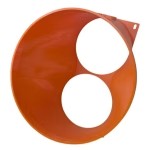
An ASIC shroud is an adapter that connects your miner’s fan output to standard round ductwork. Without one, you are blowing hot air into an open room and hoping your exhaust fan catches it. With one, the hot air goes exactly where you direct it — into your duct system, through your silencer, and out of your house.
D-Central manufactures a complete line of Universal ASIC Shrouds — the first company to develop them for the home mining market. Our shrouds connect your miner’s 120mm fans directly to 6″ or 8″ duct systems, creating a sealed air channel that maximizes cooling efficiency and enables proper noise isolation.
| Shroud Model | Fan Connection | Duct Size | Compatibility |
|---|---|---|---|
| Universal Dual 120mm to 8″ | Dual 120mm fans | 8″ duct | Antminer S19/S21 series, most modern ASICs |
| Universal Dual 120mm to 6″ | Dual 120mm fans | 6″ duct | Antminer S19/S21 series, smaller duct runs |
| Universal Single 120mm to 6″ | Single 120mm fan | 6″ duct | S9/S17 series, older models with single fans |
| Antminer Ultimate 120mm to 8″ | 120mm | 8″ duct | Antminer-optimized fit |
| Modular Dual ASIC + PSU to 8″ | Dual 120mm + PSU | 8″ duct | Captures both ASIC and PSU heat in one channel |
Built from heat-resistant PETG rated to 80°C, D-Central shrouds install with the stock screws that come with your miner — no extra hardware needed. They work for both intake and exhaust sides, and they connect directly to standard Cloudline fans, HVAC ducting, and inline silencers.
Seasonal Ventilation: Winter Mode vs. Summer Mode
The smartest mining closet designs have a dual-mode ventilation system that switches between seasons:
Winter Mode (Heat Recovery): Your miner’s hot exhaust air is ducted INTO your living space instead of outside. A 3,250W Antminer S19 produces approximately 11,100 BTU/hr of heat — equivalent to a large space heater. In a Canadian winter, this is not waste heat; it is your heating system. Route the exhaust duct to a floor register, hallway, or adjacent room. You mine Bitcoin AND heat your house for the same electricity cost.
Summer Mode (Heat Exhaust): The same exhaust duct is redirected outside through a wall or window vent. The hot air leaves your house entirely. Cool intake air can be pulled from a shaded north-facing wall, a basement, or a crawlspace for natural cooling.
How to switch: Install a simple Y-junction (wye) or blast gate in your exhaust duct. One branch leads to an interior register, the other leads outside. Open one, close the other. A motorized blast gate (available for ~$40-60) can be automated with a thermostat or smart home controller. When your house thermostat calls for heat, the blast gate opens the interior branch. When the house is warm enough, it switches to the exterior exhaust.
Noise Isolation
A stock Antminer S19 produces approximately 75 dB at one meter — louder than a vacuum cleaner and comparable to standing next to a highway. Running one in your house without noise treatment is a non-starter for anyone who values their sanity, their relationships, or their hearing.
The good news: with proper isolation techniques, you can reduce perceived noise by 30-40 dB, bringing a screaming ASIC miner down to the level of a quiet conversation or a refrigerator hum. Here is how.
Understanding Sound Transmission
Sound travels through three paths: through the air (airborne noise from fans), through structures (vibrations transmitted through shelves, walls, and floors), and through openings (any hole, gap, or duct that connects your mining space to your living space). Effective noise isolation addresses all three.
Airborne Noise: Wall and Door Treatment
Mass-Loaded Vinyl (MLV) is the single most effective material for blocking sound transmission through walls and doors. It is a thin, dense, flexible sheet that adds mass to surfaces without adding bulk. A single layer of 1 lb/sq ft MLV adds approximately 25-27 STC (Sound Transmission Class) points to a standard wall.
- Apply MLV to the mining-closet side of all shared walls (walls between the closet and living spaces)
- Apply MLV to the inside of the closet door
- Overlap seams by at least 2″ and seal with acoustic caulk
- Cost: approximately $1.50-2.50 per square foot
Acoustic foam panels absorb sound reflections inside the closet, reducing the overall noise energy bouncing around. They do NOT block sound transmission through walls — that is MLV’s job. Acoustic foam reduces echo and reverberation inside the space.
- Apply 2″ thick acoustic foam to interior walls and ceiling of the closet
- Pyramid or wedge profiles are most effective
- Fire-rated foam only — never use packing foam or egg cartons (fire hazard)
- Cost: approximately $1.00-2.00 per square foot
Combined approach (MLV + foam): MLV on the wall surface first (blocks transmission), then acoustic foam over the MLV (absorbs reflections inside the closet). This layered approach can achieve 30+ dB reduction through walls.
Structural Noise: Vibration Isolation
ASIC miners vibrate. Those vibrations transfer through shelves and floors into the building structure, where they resonate and amplify — a phenomenon called “structure-borne noise.” This is why you can sometimes hear a miner through the floor even when the door is sealed.
- Anti-vibration pads: Place rubber or sorbothane pads under each miner. 1/2″ thick, 70-durometer rubber pads work well. Cost: ~$10-20 per miner.
- Anti-vibration mounts: For shelf-mounted miners, use spring isolators or rubber grommets at each mounting point.
- Decoupling: Never place miners directly on a hollow wooden shelf — the shelf acts as a speaker diaphragm. Use a solid, heavy surface (concrete paver, thick MDF with rubber feet) to add mass and break the vibration path.
- Floating shelf: For maximum isolation, build a shelf that sits on rubber isolators, decoupled from the wall studs. The miner vibrates the shelf, but the vibrations do not transfer to the wall framing.
Sound Leakage: Sealing the Gaps
Sound behaves like water — it finds every gap, crack, and opening. A perfectly treated room with a 1/4″ gap under the door loses most of its isolation through that single gap.
- Door seal: Install a door sweep (bottom) and weatherstripping foam tape (sides and top). The door should seal like a refrigerator when closed.
- Duct penetrations: Where ducts pass through walls, seal around the duct with fire-rated acoustic caulk or fire-stop putty. No daylight should be visible around any penetration.
- Electrical outlets: Outlets on shared walls are sound leaks. Install acoustic putty pads behind outlet boxes on the mining-closet side.
- HVAC vents: If the closet has existing HVAC vents, either seal them completely (the miner has its own ventilation now) or install inline duct silencers on them.
Duct Silencers
Your ducts are open pipes connecting your mining closet to the outside or to your living space. Sound travels through them efficiently. Duct silencers (also called duct mufflers) are lined sections of ductwork designed to absorb sound while allowing air to pass through.
| Silencer Type | dB Reduction | Airflow Impact | Cost |
|---|---|---|---|
| Inline duct silencer (36″) | 15-25 dB | Moderate (10-20% CFM loss) | $30-60 |
| Insulated flex duct (6′ run) | 8-12 dB | Moderate (higher static pressure) | $20-40 |
| DIY baffle box | 15-20 dB | Low-Moderate | $40-80 in materials |
| Two silencers in series | 25-35 dB | High (size up your fan) | $60-120 |
DIY baffle box: Build a plywood box (2′ x 2′ x 3′) lined with MLV and acoustic foam. Install two duct connections on opposite ends, but offset them — the air path inside the box must make at least two 90-degree turns. Sound energy is absorbed at each turn, but air flows through with manageable resistance. This is the most cost-effective silencer for mining applications.
Noise Reduction Strategy by Budget
| Investment Level | Techniques | Expected Reduction | Cost |
|---|---|---|---|
| Basic ($50-100) | Door seal + anti-vibration pads + insulated flex duct | 10-15 dB | $50-100 |
| Standard ($150-300) | Above + MLV on door + inline silencer + ASIC shroud | 20-25 dB | $150-300 |
| Premium ($300-600) | Above + MLV on all shared walls + acoustic foam + DIY baffle box | 30-35 dB | $300-600 |
| Maximum ($600+) | Above + double-layer MLV + solid-core door upgrade + dual silencers + floating shelf | 35-40+ dB | $600+ |
Electrical Setup
Bad electrical work kills mining operations and starts house fires. This is the section where cutting corners has real consequences. If you are not comfortable working with electricity, hire a licensed electrician. The cost of a proper installation is trivial compared to the cost of a house fire or fried equipment.
Power Requirements by Miner
| Miner | Power Draw | Voltage | Amperage | Minimum Circuit |
|---|---|---|---|---|
| Bitaxe Supra/Gamma | 15-25W | 5V USB | <1A | Any USB port or adapter |
| Bitaxe Hex | ~90W | 12V DC | ~7.5A | Any 15A household circuit |
| NerdQAxe | ~80W | 12V DC | ~6.7A | Any 15A household circuit |
| Antminer S9 | 1,350W | 220-240V | ~6.5A | Dedicated 15A/240V |
| Antminer S17 | 2,520W | 220-240V | ~12A | Dedicated 20A/240V |
| Antminer S19 | 3,250W | 220-240V | ~14.2A | Dedicated 20A/240V |
| Antminer S19k Pro | 2,760W | 220-240V | ~12.7A | Dedicated 20A/240V |
| Antminer S21 | 3,500W | 220-240V | ~15.2A | Dedicated 20A/240V |
120V vs. 240V
120V (standard North American outlet): Fine for open-source miners (Bitaxe, NerdAxe, NerdQAxe) and small devices. A standard 15A/120V circuit provides 1,800W maximum, but the NEC (National Electrical Code) and CEC (Canadian Electrical Code) limit continuous loads to 80% of circuit rating — so your actual safe limit is 1,440W on a 15A circuit or 1,920W on a 20A circuit. A single Antminer S9 at 1,350W fits, but barely. Modern ASIC miners (S19, S21) draw 2,700-3,500W and cannot run on 120V in stock configuration.
240V (dryer/range outlets): Required for any serious ASIC miner. 240V circuits deliver twice the power at the same amperage, meaning less current through the wires, less heat in the conductors, and more headroom on the circuit. A 20A/240V circuit provides 4,800W maximum (3,840W at 80% continuous rating) — enough for a single S19 or S21 with headroom. A 30A/240V circuit provides 7,200W max (5,760W at 80%) — enough for two S19k Pro units.
Dedicated Circuits
Every ASIC miner should run on a dedicated circuit — a breaker in your electrical panel that serves only your mining equipment. This is non-negotiable for three reasons:
- Safety: ASIC miners are continuous loads (running 24/7 at near-maximum draw). Sharing a circuit with other appliances risks overheating the wiring.
- Reliability: A tripped breaker means downtime, lost hashrate, and potential damage to your miner during unexpected shutdowns.
- Code compliance: Both the NEC and CEC require dedicated circuits for continuous loads exceeding certain thresholds.
Wire Gauge Selection
| Circuit Type | Breaker | Wire Gauge (Copper) | Outlet/Receptacle | Max Continuous Load (80%) |
|---|---|---|---|---|
| 120V / 15A | Single-pole 15A | 14 AWG (minimum) | NEMA 5-15R | 1,440W |
| 120V / 20A | Single-pole 20A | 12 AWG | NEMA 5-20R | 1,920W |
| 240V / 20A | Double-pole 20A | 12 AWG | NEMA 6-20R | 3,840W |
| 240V / 30A | Double-pole 30A | 10 AWG | NEMA L6-30R (locking) | 5,760W |
| 240V / 50A | Double-pole 50A | 6 AWG | NEMA 6-50R or 14-50R | 9,600W |
Power Distribution Units (PDUs)
If you are running multiple miners, a PDU (Power Distribution Unit) is the proper way to distribute power from a single high-amperage circuit. A PDU is essentially an industrial-grade power strip designed for continuous-duty data center loads.
- Metered PDUs show real-time power consumption per outlet — invaluable for monitoring individual miner performance
- Switched PDUs allow remote on/off control of individual outlets — useful for remote restarts without physical access
- Look for PDUs rated for your circuit amperage with the correct inlet plug (L6-30P for 30A/240V is the most common for home mining)
- Budget: $80-200 for a basic metered PDU, $200-500 for switched/monitored
Surge Protection
Power surges destroy ASIC miners. A lightning strike, grid fluctuation, or compressor startup on the same circuit can send a voltage spike through your miner’s PSU and fry the control board or hashboards.
- Install a whole-house surge protector at your electrical panel ($100-200 installed). This catches the big spikes.
- Use a point-of-use surge protector or a PDU with built-in surge protection at the miner level. This catches the smaller transients.
- In areas with frequent power fluctuations, consider a line conditioner or UPS (Uninterruptible Power Supply) to clean the power signal. Note: a UPS for a 3,250W miner is expensive — this is mainly for smaller setups or for protecting your network equipment.
Network and Monitoring
Your miner is a networked computer that needs a stable, low-latency connection to its mining pool. Network issues cause rejected shares, stale work, and lost revenue. Monitoring lets you catch problems before they cost you hashrate.
Wired Ethernet (Non-Negotiable for ASICs)
Full-size ASIC miners should always use wired Ethernet. WiFi adds latency, drops connections, and introduces variable performance that degrades mining efficiency. Run a CAT6 Ethernet cable from your router or switch to your mining closet.
- Use CAT6 or CAT6a cable for runs up to 100 meters (328 feet)
- If you cannot run a cable, use a pair of powerline Ethernet adapters — they use your existing electrical wiring to create a wired network bridge. Not as good as direct Ethernet, but far better than WiFi for mining
- Install a small unmanaged gigabit switch in your mining closet if you have multiple miners (e.g., TP-Link TL-SG105, Netgear GS305 — $15-25)
- WiFi is acceptable for open-source miners (Bitaxe, NerdAxe) where the low hashrate makes the occasional stale share inconsequential
Remote Monitoring
You do not want to open your noisy mining closet every time you want to check on your equipment. Remote monitoring lets you observe temperatures, hashrates, error rates, and power consumption from your phone or computer.
| Monitoring Method | What It Monitors | Cost | Complexity |
|---|---|---|---|
| Pool dashboard | Hashrate, shares, earnings | Free | None — built into every pool |
| Miner web interface | Temp, hashrate, fan speed, errors | Free | Access via local IP address |
| Smart plug with energy monitoring | Power consumption, on/off control | $15-30 per plug | Plug-and-play |
| WiFi temperature/humidity sensor | Ambient temp, humidity in closet | $20-40 | App setup required |
| Foreman.mn / Awesome Miner | Multi-miner fleet management | Free tier available | Moderate setup |
| Grafana + Prometheus | Custom dashboards for everything | Free (self-hosted) | Advanced — requires server |
Temperature Alerts and Auto-Shutdown
Your mining closet should have automated protection against overheating. If your exhaust fan fails, your intake gets blocked, or a miner malfunctions, temperatures can spike dangerously within minutes.
- AC Infinity controllers (paired with their CLOUDLINE fans) have built-in high-temperature alerts and auto-speed adjustment. Set the alarm threshold at 40°C (104°F) and the auto-shutdown at 45°C (113°F).
- Smart plugs with temperature triggers (e.g., SwitchBot, Shelly) can cut power to miners when a paired temperature sensor exceeds your threshold.
- ASIC firmware (Braiins OS+, LuxOS, VNish) includes built-in thermal protection — the miner will throttle or shut down if chip temperatures exceed safe limits (typically 85-95°C depending on generation). This is your last line of defense, not your first.
Heat Recovery Integration
This is where home mining in a cold climate transforms from “hobby with a noise problem” into “genius infrastructure decision.” Every watt your miner consumes becomes heat. In a Canadian winter, that heat replaces the electricity or gas you would otherwise burn for heating. Your miner is not consuming energy — it is converting energy into both Bitcoin and warmth.
The Math
1 watt of electrical power = 3.41 BTU/hr of heat output. This is a law of thermodynamics — it is 100% efficient because all electrical energy ultimately becomes heat.
| Miner | Power (W) | Heat Output (BTU/hr) | Equivalent Heating |
|---|---|---|---|
| Antminer S9 | 1,350W | ~4,600 BTU/hr | Small space heater |
| Antminer S19 | 3,250W | ~11,100 BTU/hr | Large space heater, heats a room |
| Antminer S21 | 3,500W | ~11,900 BTU/hr | Large space heater, heats a room |
| 2x S19 setup | 6,500W | ~22,200 BTU/hr | Heats 500-800 sq ft space |
| 4x S19 setup | 13,000W | ~44,300 BTU/hr | Full home heating for medium house |
A typical Canadian home needs 40,000-60,000 BTU/hr of heating capacity in winter (varies by insulation, climate zone, and square footage). Three to four S19-class miners produce enough heat to serve as primary heating for a well-insulated 1,500 sq ft home in southern Canada.
Duct-to-Living-Space Integration
The simplest heat recovery setup routes your miner’s hot exhaust duct directly to the room you want to heat:
- From the ASIC exhaust, attach a shroud (D-Central Universal Shroud) to capture the hot air into 8″ ductwork
- Run the duct through the wall or ceiling to the adjacent room, hallway, or living space
- Terminate with a floor register or ceiling diffuser to distribute the warm air
- Use a blast gate or motorized damper at a Y-junction to switch between interior (winter) and exterior (summer) exhaust paths
For multi-room distribution, tie the exhaust duct into your existing HVAC system’s return air plenum. The furnace blower then distributes the mining heat throughout the house via your existing ductwork. Consult an HVAC technician before connecting to existing systems — you need to ensure proper pressure balancing and avoid backdrafting any combustion appliances.
D-Central Bitcoin Space Heaters
D-Central’s Bitcoin Space Heater editions are purpose-built for heat recovery. Available in S9, L3, S17, and S19 editions, these units are pre-configured with optimized fan profiles for lower noise, shroud-ready airflow paths, and operating parameters tuned for residential deployment. They are designed from the factory to be mining heaters — not miners that happen to produce heat.
When you purchase a D-Central Space Heater, you are getting a machine that has been built and tested for the specific use case of heating your home while mining Bitcoin. The fan curves, firmware settings, and physical configuration are all optimized for the dual-purpose role that a stock ASIC is not designed for.
Thermostat-Controlled Automation
The most sophisticated setups use thermostat control to automate the winter/summer switching:
- Connect a smart thermostat (Ecobee, Nest, or a simple relay thermostat) to a motorized damper on the exhaust Y-junction
- When the thermostat calls for heat, the damper opens the interior duct and closes the exterior exhaust
- When the set temperature is reached, the damper switches — hot air goes outside, cool air continues flowing through the miner
- The miner runs 24/7 regardless. Only the exhaust destination changes.
Advanced users can also modulate miner power consumption (via Braiins OS+ or LuxOS auto-tuning) based on heating demand — higher wattage when it is cold, lower wattage when milder. Your mining rig becomes a variable-output heating system that earns Bitcoin.
Safety Considerations
Mining equipment draws significant power continuously, generates substantial heat, and runs unattended 24/7. That combination demands respect. A well-built mining closet is safe. A poorly built one is a fire risk.
Fire Safety
- Smoke detector: Install a photoelectric smoke detector inside your mining closet. Photoelectric type is preferred over ionization type because ASIC miners produce some dust that can cause false alarms with ionization detectors. Test monthly.
- Fire-rated materials: All acoustic treatment materials must be fire-rated. Never use packing foam, egg cartons, carpet padding, or any material that is not rated for fire resistance. Fire-rated acoustic foam is clearly labeled — if it does not say fire-rated, do not use it.
- Clear space around miners: Maintain at least 6 inches of clearance on all sides of every miner. Never stack combustible materials near miners. Keep the mining closet clean — dust accumulation on miners increases operating temperatures and is itself a fire fuel.
- Fire extinguisher: Keep an ABC-rated fire extinguisher within reach of the mining closet (but outside it — you do not want to be reaching into a fire to grab an extinguisher). A 5 lb extinguisher is sufficient for a home mining setup.
- Never block ventilation: If your exhaust vent gets blocked (snow, ice, debris, a bird nest), heat builds up rapidly. Use a vent cap with a pest screen on any exterior penetration, and check it regularly in winter.
Carbon Monoxide
If your mining closet is near any gas appliance (furnace, water heater, dryer), install a CO detector. Your exhaust fan creates negative pressure in the closet, which can potentially pull combustion exhaust from nearby gas appliances in a phenomenon called backdrafting. This is especially relevant in basements near gas furnaces. If your home has any combustion appliances, consult an HVAC technician to verify your mining ventilation does not create a backdrafting risk.
Emergency Shut-Off
You should be able to kill power to all mining equipment from outside the mining closet without opening the door:
- Simplest: Label the breaker in your electrical panel. A labeled breaker switch is an instant emergency shut-off.
- Better: Install a disconnect switch outside the closet door — a clearly labeled switch that cuts all power to the mining circuits.
- Smart: Use smart plugs or a switched PDU that you can control from your phone. If you get a temperature alert at 3 AM, you can cut power remotely without getting out of bed.
Insurance
This is the uncomfortable topic nobody wants to discuss. Most residential homeowner insurance policies do not explicitly cover cryptocurrency mining equipment or the commercial/business use of residential space.
- Review your homeowner or renter policy. Look for exclusions related to “business use of premises,” “commercial equipment,” or “computer equipment” limits.
- Contact your insurer and disclose your mining operation. Get written confirmation (not a phone call) that your coverage is not voided by home mining activities.
- Consider a business equipment rider or endorsement to cover your mining hardware against theft, fire, and power surge damage.
- Document everything: receipts for miners, photos of your electrical installation, records of professional electrician work, and model/serial numbers of all equipment.
- If your insurer will not cover it, specialized cryptocurrency insurance exists but is typically more expensive.
Example Builds
Three real-world mining closet configurations, from budget-friendly to full custom. All prices in CAD are approximate and will vary by region and supplier.
Build 1: The Starter Closet ($200-350 CAD)
Setup: 1 Antminer S9 (or D-Central S9 Space Heater) in a hall closet, ducted to an exterior wall.
| Component | Product | Approximate Cost |
|---|---|---|
| Exhaust fan | AC Infinity CLOUDLINE S6 (6″, 402 CFM) | $100 |
| ASIC shroud | D-Central Universal Single 120mm to 6″ | $40 |
| Ducting | 6′ insulated flex duct (6″) | $25 |
| Exterior vent cap | 6″ louvered vent with pest screen | $15 |
| Door seal kit | Weatherstripping + door sweep | $15 |
| Anti-vibration pads | Rubber isolation pads (4 pack) | $12 |
| Smoke detector | Photoelectric smoke detector | $15 |
| Total | ~$220 |
Noise result: ~55-60 dB outside closed door (down from 75 dB open).
What you need: Existing closet near an exterior wall, access to a 240V circuit (or use the S9 on a dedicated 120V/15A circuit at reduced power), drill for wall penetration, duct tape and clamps.
Build 2: The Home Miner Standard ($500-800 CAD)
Setup: 2 Antminer S19k Pro units in a utility room or large closet, dual-mode ventilation with winter heat recovery.
| Component | Product | Approximate Cost |
|---|---|---|
| Exhaust fan | AC Infinity CLOUDLINE T10 (10″, 1,065 CFM) | $200 |
| ASIC shrouds (x2) | D-Central Universal Dual 120mm to 8″ (x2) | $100 |
| Ducting | 10′ rigid duct (8″) + 6′ insulated flex + Y-junction | $60 |
| Inline duct silencer | 8″ x 36″ inline silencer | $50 |
| MLV (door + 1 wall) | Mass-Loaded Vinyl, 1 lb/sq ft, 30 sq ft | $70 |
| Door seal kit | Weatherstripping + automatic door sweep | $25 |
| Blast gate (seasonal switch) | 8″ manual blast gate for Y-junction | $20 |
| Anti-vibration pads | Sorbothane isolation pads (8 pack) | $30 |
| Network switch | TP-Link 5-port gigabit switch | $20 |
| Smart plug (2x) | Energy-monitoring smart plugs (240V compatible) | $40 |
| Smoke/CO detector | Combination smoke/CO detector | $35 |
| Electrical (if needed) | Licensed electrician: 2x 240V/20A dedicated circuits | $300-600 |
| Total (excl. electrical) | ~$650 |
Noise result: ~40-45 dB outside closed door — quiet conversation level.
Heat recovery: ~18,800 BTU/hr available for home heating in winter — replaces a large space heater or supplements your furnace.
Key features: Dual-mode exhaust (winter heat recovery / summer exterior exhaust), inline silencer for noise reduction, remote monitoring via smart plugs and miner web interfaces.
Build 3: The Dedicated Mining Room ($1,000-2,000+ CAD)
Setup: 4-6 Antminer S19/S21 class miners in a dedicated basement room or insulated garage section. Full noise isolation, automated heat recovery, fleet monitoring.
| Component | Product | Approximate Cost |
|---|---|---|
| Exhaust fan (primary) | AC Infinity CLOUDLINE T12 (12″, 1,489 CFM) | $280 |
| Exhaust fan (secondary) | AC Infinity CLOUDLINE T10 (backup/summer boost) | $200 |
| ASIC shrouds (x4-6) | D-Central Modular Dual ASIC + PSU to 8″ (x4-6) | $240-360 |
| Ducting system | Rigid trunk line (10-12″) + branch lines (8″) + insulated flex | $150 |
| Dual inline silencers | 12″ x 36″ inline silencer (x2, in series) | $120 |
| MLV (all walls + ceiling) | Mass-Loaded Vinyl, 1 lb/sq ft, 150+ sq ft | $300 |
| Acoustic foam | 2″ pyramid panels, 100 sq ft | $100 |
| Solid-core door | Pre-hung solid-core interior door with gasket seal | $200 |
| Motorized damper | 12″ motorized blast gate + thermostat relay | $80 |
| PDU | Metered 240V PDU with L6-30P inlet | $150 |
| Rack/shelving | Industrial wire rack (holds 4-6 miners) | $80 |
| Network | 8-port managed switch + CAT6 patch cables | $50 |
| Monitoring | Temp/humidity sensors + Foreman.mn subscription | $50 |
| Safety | Smoke/CO detector + fire extinguisher + emergency disconnect | $80 |
| Electrical | 240V/50A sub-panel feed + 4-6 dedicated 240V/20A circuits | $800-1,500 |
| Total (excl. electrical) | ~$2,000-2,200 |
Noise result: ~35-40 dB outside the room — barely audible. Background hum level.
Heat recovery: 37,000-44,000+ BTU/hr — primary heat source for a medium-sized home in winter.
Key features: Full noise isolation (MLV + foam + solid door + dual silencers), automated seasonal damper switching, fleet monitoring with alerts, metered PDU for power tracking, redundant exhaust capacity, dedicated sub-panel with properly sized circuits.
Canadian-Specific Tips
If you are mining in Canada, you have advantages that miners in most other countries do not. Lean into them.
Cold Climate = Free Cooling
From October through April (and often into May), ambient temperatures across most of Canada are below 15°C. This is ideal ASIC operating temperature. Your ventilation system pulls in cold outside air, your miners heat it up to 35-50°C, and you duct that heat into your house. You are not “wasting” electricity on mining — you are mining Bitcoin AND heating your home with the same electrons. The economics are dramatically better than in warm climates where cooling is an additional cost.
Electricity Rates
Electricity rates vary significantly across Canada. Your mining economics depend heavily on what you pay per kWh:
| Province | Approximate Residential Rate (CAD/kWh) | Mining Viability |
|---|---|---|
| Quebec | $0.06-0.08 | Excellent — among the cheapest in North America |
| British Columbia | $0.09-0.12 | Good — especially with heat recovery offset |
| Manitoba | $0.09-0.10 | Good — low rates from Manitoba Hydro |
| Alberta | $0.10-0.18 (variable) | Depends on rate — deregulated market, shop around |
| Ontario | $0.08-0.17 (time-of-use) | Mine during off-peak hours for best rates |
| Saskatchewan | $0.15-0.17 | Marginal without heat recovery offset |
| Atlantic Read our comprehensive guide to Bitcoin mining in Canada. | $0.12-0.18 | Marginal to viable with heat recovery |
Electrical Permits and Building Code
In most Canadian provinces, adding a new 240V circuit to your electrical panel requires an electrical permit and must be done by a licensed electrician (or inspected if you are a homeowner doing the work in some provinces). This is not optional — it is required by the Canadian Electrical Code (CEC) and provincial regulations.
- Quebec: Governed by the Quebec Construction Code, Chapter V – Electricity (based on CSA C22.10). Hydro-Quebec’s Standard E.21-10 applies to service modifications. A licensed electrician (maitre electricien) is required for all electrical work.
- Ontario: Homeowners can do their own electrical work but must obtain a permit from the ESA (Electrical Safety Authority) and pass inspection.
- Alberta: Homeowners can do their own electrical work on their primary residence but must obtain a permit and pass inspection.
- British Columbia: Homeowners can do their own electrical work but must obtain a permit from the local authority.
The cost of a permit and inspection is typically $50-200 — trivial compared to the cost of improper wiring. Get the permit. Get it inspected. Sleep well.
Winter Ventilation Considerations
- Frost on exterior vents: Hot, moist exhaust air hitting -20°C outside air creates condensation that freezes. Use a vent cap designed for cold climates (with a drip edge and wide louvers that resist icing). Check your vent after heavy snowfall or freezing rain.
- Condensation in ductwork: Use insulated ducting (R-6 minimum) for any runs through cold spaces (attic, crawlspace, exterior wall cavity). Uninsulated duct in a cold attic will drip condensation back into your miner.
- Snow buildup: If your exterior vent is near ground level, ensure snow cannot block it. Position vents at least 18″ above maximum expected snow line, or use a wall-mounted vent well above grade.
Frequently Asked Questions
How much heat does an ASIC miner actually produce?
Every watt of electricity your miner consumes becomes heat — physics guarantees this at 100% efficiency. An Antminer S19 drawing 3,250W produces 3,250 watts of heat, which equals approximately 11,100 BTU/hr. For reference, a typical portable space heater produces 5,100 BTU/hr (1,500W). A single S19 outputs the heat of two large space heaters. Two S19s can heat a well-insulated apartment. Four can serve as primary heating for a medium-sized Canadian home in winter.
How much does it cost to build a mining closet?
A basic single-miner closet setup (exhaust fan, shroud, ducting, door seal) can be built for $200-350 CAD. A mid-range 2-3 miner setup with noise isolation and heat recovery runs $500-800 CAD plus electrical work. A premium 4-6 miner room with full sound treatment, automated dampers, and a PDU costs $1,500-2,500 CAD plus electrical. Electrical work (dedicated circuits) adds $300-1,500 depending on scope and your distance from the panel. These costs are one-time investments that last the life of your mining operation.
How quiet can I realistically make it?
A stock Antminer S19 produces approximately 75 dB at one meter. With a properly sealed closet, door treatment, MLV on shared walls, inline duct silencers, and anti-vibration pads, you can realistically achieve 40-45 dB outside the closed door — the level of a quiet conversation or library. Getting below 40 dB requires significant investment (solid-core door, double MLV layers, dual silencers in series, floating shelf) and meticulous sealing of every gap. For most home miners, 40-45 dB is the practical target that makes mining livable.
Do I need an electrician?
If you are adding a new 240V circuit, yes — you need a licensed electrician in most Canadian provinces and many US states. Even where homeowner work is permitted, an electrical permit and inspection are typically required. For 120V setups running only small miners (Bitaxe, NerdAxe, single S9 on reduced power), you can use existing circuits without electrical work. The electrician visit is not just about code compliance — it verifies your panel has capacity, your wiring is correctly sized, and your installation is safe for 24/7 continuous load.
Is there a fire risk?
The fire risk from properly installed mining equipment on properly sized, dedicated circuits is very low — comparable to running any other continuous-load appliance (electric water heater, kiln, server rack). The fire risk from improperly installed equipment — daisy-chained power strips, undersized wiring, no dedicated circuit, flammable acoustic materials, blocked ventilation — is real and has caused house fires. The difference between safe and dangerous is entirely about installation quality. Follow the electrical guidelines in this guide, use fire-rated materials, install a smoke detector, and keep a fire extinguisher nearby.
Can I build a mining closet in an apartment?
Technically possible for small, quiet miners (Bitaxe, NerdAxe, NerdQAxe) that run on USB or standard 120V outlets and produce minimal noise. For full ASIC miners, apartment mining is generally impractical due to noise (neighbors will complain), electrical limitations (no ability to add 240V circuits), ventilation restrictions (cannot cut holes in rental walls), and lease terms (most leases prohibit modifications and high-power commercial equipment). If you are set on mining in an apartment, stick to open-source solo miners that draw under 100W and produce under 50 dB.
What about humidity and condensation?
Humidity above 60% is a concern for electronics reliability. Basements and spaces with cold-air intake in humid climates need attention. Use insulated ducting to prevent condensation inside ductwork. Run a dehumidifier in the mining space if ambient humidity is consistently above 60%. In winter, cold intake air is typically very dry — humidity is rarely a problem. In summer with exterior intake, humid air can be an issue in some regions. Monitor humidity with a $20-30 WiFi sensor and set up alerts at 65% relative humidity.
Built by Bitcoin Mining Hackers
D-Central Technologies has been building, repairing, modifying, and hacking Bitcoin mining equipment since 2016. We are not a dropshipper with a website. We are a team of engineers, technicians, and miners in Laval, Quebec, who have had our hands inside more ASIC miners than we can count.
We created the original Bitaxe Mesh Stand — the first company to manufacture it. We developed the Universal ASIC Shroud line that connects your miners to ductwork. We build Bitcoin Space Heaters that are purpose-engineered for home heating integration. We stock every Bitaxe variant, every open-source miner, repair parts for every major ASIC manufacturer, and the accessories that make home mining work.
Our mission is the decentralization of every layer of Bitcoin mining. Every mining closet you build, every ASIC you plug in at home, every hash you contribute from your basement or garage — that is one more node of resistance against mining centralization. The network gets stronger with every home miner who takes the time to do it right.
D-Central stocks everything you need: Universal ASIC Shrouds (6″ and 8″), Bitcoin Space Heaters (S9, L3, S17, S19 editions), every Bitaxe variant, NerdAxe, NerdQAxe, full ASIC miners, replacement parts, and all accessories. Pioneer Bitaxe manufacturer since the beginning. 2,500+ miners repaired. Based in Laval, Quebec. Call us at 1-855-753-9997.
Shop Mining Hardware & Accessories →How much heat does an ASIC miner actually produce?
Every watt of electricity your miner consumes becomes heat — physics guarantees this at 100% efficiency. An Antminer S19 drawing 3,250W produces 3,250 watts of heat, which equals approximately 11,100 BTU/hr. For reference, a typical portable space heater produces 5,100 BTU/hr (1,500W). A single S19 outputs the heat of two large space heaters. Two S19s can heat a well-insulated apartment. Four can serve as primary heating for a medium-sized Canadian home in winter.
How much does it cost to build a mining closet?
A basic single-miner closet setup (exhaust fan, shroud, ducting, door seal) can be built for $200-350 CAD. A mid-range 2-3 miner setup with noise isolation and heat recovery runs $500-800 CAD plus electrical work. A premium 4-6 miner room with full sound treatment, automated dampers, and a PDU costs $1,500-2,500 CAD plus electrical. Electrical work (dedicated circuits) adds $300-1,500 depending on scope and your distance from the panel. These costs are one-time investments that last the life…
How quiet can I realistically make it?
A stock Antminer S19 produces approximately 75 dB at one meter. With a properly sealed closet, door treatment, MLV on shared walls, inline duct silencers, and anti-vibration pads, you can realistically achieve 40-45 dB outside the closed door — the level of a quiet conversation or library. Getting below 40 dB requires significant investment (solid-core door, double MLV layers, dual silencers in series, floating shelf) and meticulous sealing of every gap. For most home miners, 40-45 dB is…
Do I need an electrician?
If you are adding a new 240V circuit, yes — you need a licensed electrician in most Canadian provinces and many US states. Even where homeowner work is permitted, an electrical permit and inspection are typically required. For 120V setups running only small miners (Bitaxe, NerdAxe, single S9 on reduced power), you can use existing circuits without electrical work. The electrician visit is not just about code compliance — it verifies your panel has capacity, your wiring is correctly…
Is there a fire risk?
The fire risk from properly installed mining equipment on properly sized, dedicated circuits is very low — comparable to running any other continuous-load appliance (electric water heater, kiln, server rack). The fire risk from improperly installed equipment — daisy-chained power strips, undersized wiring, no dedicated circuit, flammable acoustic materials, blocked ventilation — is real and has caused house fires. The difference between safe and dangerous is entirely about installation…
Can I build a mining closet in an apartment?
Technically possible for small, quiet miners (Bitaxe, NerdAxe, NerdQAxe) that run on USB or standard 120V outlets and produce minimal noise. For full ASIC miners, apartment mining is generally impractical due to noise (neighbors will complain), electrical limitations (no ability to add 240V circuits), ventilation restrictions (cannot cut holes in rental walls), and lease terms (most leases prohibit modifications and high-power commercial equipment). If you are set on mining in an apartment,…
What about humidity and condensation?
Humidity above 60% is a concern for electronics reliability. Basements and spaces with cold-air intake in humid climates need attention. Use insulated ducting to prevent condensation inside ductwork. Run a dehumidifier in the mining space if ambient humidity is consistently above 60%. In winter, cold intake air is typically very dry — humidity is rarely a problem. In summer with exterior intake, humid air can be an issue in some regions. Monitor humidity with a $20-30 WiFi sensor and set…