
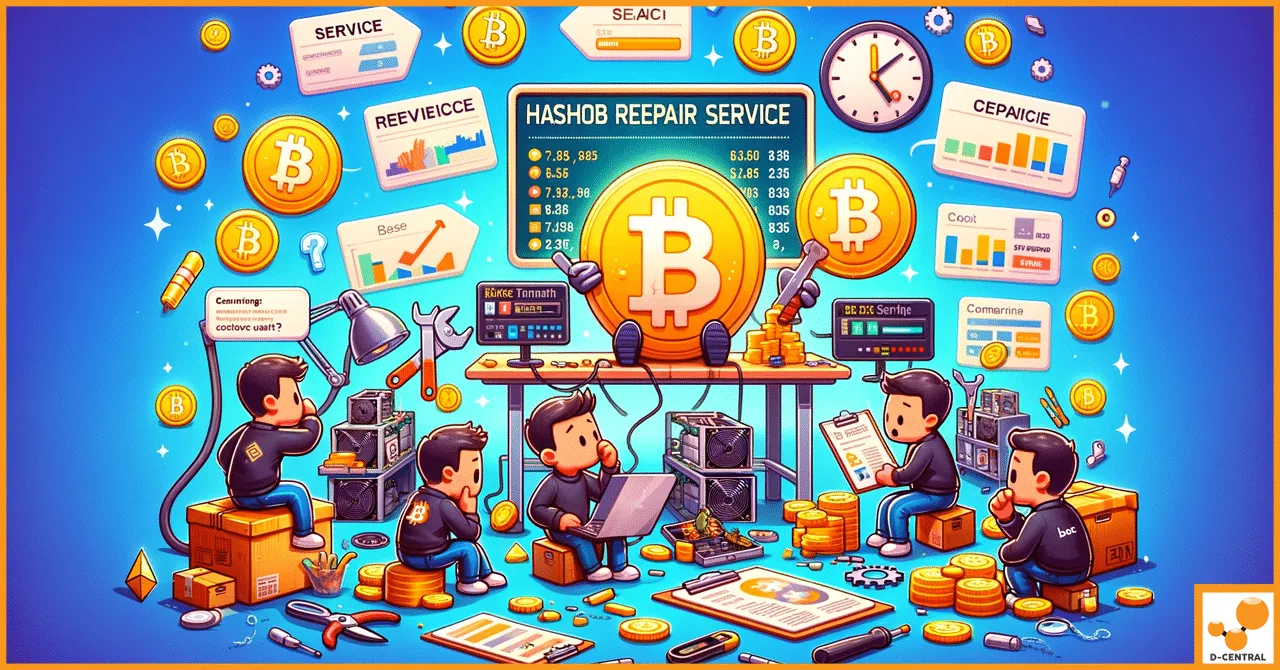
Your ASIC miner is a precision instrument. Hundreds of BGA-soldered chips, microscopic solder joints, voltage regulators operating at the edge of thermal limits — all working in concert to push hashes toward the Bitcoin network. When a hashboard fails, your entire operation bleeds. Every hour of downtime is hashing power you never get back. In a network pushing past 800 EH/s with difficulty above 110 trillion, you cannot afford a botched repair from someone who learned soldering from YouTube.
Choosing the right hashboard repair service is not a shopping decision — it is an operational security decision. The wrong shop can turn a $200 fix into a $2,000 paperweight. The right one extends the productive life of your hardware by years and keeps your hash rate contributing to the decentralization of Bitcoin mining.
D-Central Technologies has been repairing ASIC miners since 2016. With 38+ model-specific repair pages covering Bitmain, MicroBT, Innosilicon, Canaan, and Halong hardware, we have seen every failure mode in the book — and invented fixes for problems most shops have never encountered. This guide distills that experience into actionable criteria so you can evaluate any repair service, including ours, with clear eyes.
What a Hashboard Actually Is (And Why Repairs Are Not Trivial)
A hashboard is the core computational module inside an ASIC miner. It is a multi-layer printed circuit board (PCB) populated with dozens to hundreds of custom ASIC chips — the BM1366 in an Antminer S19 XP, the BM1370 in an S21, the MK-A1066 in a Whatsminer M30S. Each chip is a purpose-built silicon die that does one thing: compute SHA-256 hashes at extraordinary speed.
These chips are connected in a serial chain. Power is delivered through voltage domains regulated by buck converters. Temperature sensors, clock signal lines, and data buses tie everything together. A single open solder joint, one failed ASIC chip, or a blown voltage regulator can take the entire hashboard offline — or worse, cause it to draw power while producing zero hashes.
Common Hashboard Failure Modes
| Failure Type | Root Cause | Symptoms | Repair Complexity |
|---|---|---|---|
| Dead ASIC chip | Thermal cycling, voltage spike, manufacturing defect | Missing chips in chain, reduced hash rate, ASIC count mismatch | Moderate — requires BGA rework station |
| Blown voltage regulator | Power surge, sustained overclock, inadequate PSU | Board powers on but no hashing, voltage domain reads zero | Moderate — component-level replacement |
| Cold solder joint | Thermal expansion/contraction cycles | Intermittent hash drops, board works when cold but fails hot | Low to moderate — reflow or reball |
| Corroded traces | Humidity, condensation, liquid immersion failure | Erratic behavior, multiple chip failures in one area | High — trace repair and chip replacement |
| Temperature sensor failure | Component degradation, physical damage | Board reports abnormal temps, firmware shuts down board | Low — sensor replacement |
| Connector / ribbon damage | Improper handling, forced insertion, oxidation | Board not detected by control board, communication errors | Low — connector replacement or cleaning |
The point is straightforward: hashboard repair is not consumer electronics repair. It is industrial-grade PCB rework that demands specialized equipment (BGA rework stations, thermal cameras, oscilloscopes, programmable power supplies), genuine replacement components, and deep familiarity with the specific ASIC architecture involved. A shop that repairs phones is not qualified to reball a BM1397.
Why DIY Hashboard Repair Is a Trap (For Most People)
We respect the DIY ethos. The founder of D-Central built this company on the principle that Bitcoin mining technology should be accessible to everyone. We publish training resources and sell replacement parts precisely because we believe in empowering home miners.
But there is a hard line between replacing a fan or swapping a control board — tasks any competent home miner can handle — and performing BGA rework on a hashboard. Here is why:
- BGA soldering requires precision equipment. ASIC chips use Ball Grid Array packaging. The solder balls underneath the chip are invisible once placed. Proper rework requires a dedicated BGA rework station with programmable thermal profiles, flux application, and alignment systems. A hot air gun from Amazon is not sufficient.
- ESD damage is cumulative and invisible. Electrostatic discharge can weaken ASIC chips without immediately killing them. The chip passes testing, you reassemble the miner, and it fails three weeks later. Without proper ESD-safe workstations, grounding straps, and controlled environments, every touch is a gamble.
- Diagnostic skill matters more than repair skill. Knowing how to solder is only half the equation. Knowing which component failed — and why — requires the ability to read voltage domains, trace signal paths, and interpret diagnostic data from the control board. Replacing the wrong chip wastes time, money, and potentially damages the board further.
- One mistake can cascade. Applying too much heat during rework can damage adjacent chips. Lifting a PCB pad is often irreversible. Using the wrong flux can leave corrosive residue. These mistakes turn a repairable board into scrap.
If you have the equipment, training, and controlled environment — go for it. We will sell you the chips and cheer you on. But if you are working on a kitchen table with a heat gun, send it to a professional. The math does not lie: a $300 professional repair that restores full hash rate beats a $50 DIY attempt that destroys the board.
Eight Criteria for Evaluating a Hashboard Repair Service
Whether you are evaluating D-Central or any other repair provider, these are the factors that separate legitimate repair operations from parts-swappers and scam shops.
1. Model-Specific Expertise
This is the single most important criterion. ASIC miners are not generic — an Antminer S19j Pro hashboard has a fundamentally different architecture than a Whatsminer M50S or an Avalon A1466. The voltage domain layout, chip chain configuration, connector pinout, and diagnostic protocols are all model-specific.
Ask any prospective repair shop: which specific models have you repaired? How many units of this particular model? A shop that gives vague answers (“we repair all miners”) is waving a red flag. A credible shop can tell you exactly which ASIC chip your model uses, what the expected voltage readings are per domain, and what the common failure patterns are for that generation of hardware.
D-Central maintains dedicated repair pages for 38+ specific models — not because it looks good on a website, but because each model genuinely requires distinct diagnostic procedures and repair techniques.
2. Diagnostic Capability
A repair is only as good as the diagnosis. The best repair shops invest as much in diagnostic equipment and procedures as they do in rework stations. Look for:
- Thermal imaging — identifies hot spots from shorted or overloaded chips before they fail catastrophically
- Oscilloscope analysis — verifies clock signals, data bus integrity, and power rail stability
- Programmable power supply testing — allows controlled power-up to isolate which voltage domain is failing
- Chip-level testing — the ability to test individual ASIC chips in isolation, not just “plug it in and see what the dashboard says”
If a shop’s diagnostic process consists entirely of plugging the board into a miner and reading the web interface, they are not equipped for component-level repair. They are guessing.
3. Component Quality and Sourcing
Counterfeit ASIC chips are a real problem in this industry. A chip that looks like a BM1366 but is actually a remarked or defective die will pass initial testing and fail within weeks. Reputable repair services source components directly from authorized distributors or verified surplus channels.
Questions to ask:
- Where do you source your replacement ASIC chips?
- Do you use OEM-equivalent components for voltage regulators and capacitors?
- Can you provide documentation on component provenance if requested?
Cheap parts make cheap repairs. If a shop’s quote is dramatically lower than competitors, ask yourself what they are cutting corners on.
4. Warranty on Repairs
Any shop confident in their work will back it with a warranty. The warranty terms tell you everything about how the shop views its own quality:
- 30-day warranty — minimal confidence. Covers only immediate re-failure.
- 90-day warranty — standard for competent shops. Covers workmanship issues that manifest under normal operation.
- 6-month+ warranty — strong confidence. Indicates the shop trusts their diagnosis was correct and the repair will hold.
Also verify: does the warranty cover the same failure mode only, or does it cover the repaired board generally? Does it require you to ship the unit back at your expense, or does the shop cover return shipping? These details matter.
5. Turnaround Time and Communication
With the Bitcoin block reward at 3.125 BTC and network difficulty above 110 trillion, every day your miner sits on a repair bench is lost revenue. A credible repair service should provide:
- An estimated turnaround time at intake
- Updates if that estimate changes (parts on backorder, additional issues found)
- A clear process for approving additional work beyond the original diagnosis
Beware of shops that go silent after receiving your hardware. Communication discipline is a proxy for operational discipline. If they cannot answer an email, they are probably not meticulous with your hashboard either.
6. Transparent Pricing
Repair pricing should be quoted after diagnosis, not before — because the cost depends entirely on what is actually wrong. But the pricing structure itself should be transparent:
- Is there a diagnostic fee? Is it waived if you proceed with the repair?
- Are ASIC chip replacements priced per chip or per domain?
- Is there a flat rate for common repairs, or is everything custom-quoted?
- What happens if the board is deemed unrepairable? Do you still pay the diagnostic fee?
Shops that refuse to discuss pricing structure before you ship your hardware are not worth the risk.
7. Facility and Equipment
If possible, look for evidence of the shop’s actual facility. Photos or videos of the repair environment tell you more than any marketing copy. You want to see:
- Dedicated BGA rework stations (not improvised hot-air setups)
- ESD-safe workbenches with proper grounding
- Organized component storage (not bins of mixed parts)
- Clean, well-lit workspace
- Thermal imaging and test equipment visible
D-Central’s repair facility in Laval, Quebec is purpose-built for ASIC repair. We are not operating out of a garage. Our technicians work on dedicated stations with the full complement of diagnostic and rework equipment required for component-level hashboard repair.
8. Track Record and Reputation
In an industry full of fly-by-night operations, longevity matters. How long has the shop been operating? Do they have a physical address? Can you find real customer reviews (not just testimonials on their own website)?
Check mining forums, Reddit communities (r/BitcoinMining, r/ASICmining), and Discord servers. The Bitcoin mining community is tight-knit — if a shop burns customers, word travels fast. Conversely, shops that consistently deliver quality work build reputations that speak for themselves.
D-Central has been in continuous operation since 2016 — through multiple halvings, bear markets, and hardware generations. That kind of longevity in the mining industry is not accidental.
The Hidden Cost of Choosing the Wrong Repair Service
Let us quantify what a bad repair actually costs, because the sticker price of the repair is the smallest number in the equation.
| Scenario | Direct Cost | Indirect Cost | Total Impact |
|---|---|---|---|
| Competent repair, first attempt | $200–$500 | 7–14 days downtime | Repair cost + minor lost revenue |
| Bad repair, needs second repair | $400–$1,000 (two repair fees + double shipping) | 30–60 days downtime | 2x repair cost + significant lost revenue |
| Bad repair destroys board | $200–$500 (repair fee for nothing) + $500–$2,000 (replacement board) | 45–90 days until replacement sourced and installed | Total hardware loss + extended downtime |
| DIY attempt damages board beyond repair | Parts cost + replacement board ($500–$2,000+) | Indefinite until replacement found | Total loss of original investment |
For a miner running an Antminer S21 at ~200 TH/s, every day of downtime is a day your share of the 3.125 BTC block reward goes to someone else. Multiply that across multiple machines, and the cost difference between a competent repair service and a cheap one becomes trivially obvious.
Beyond Repair: What a Good Service Provider Should Offer
The best repair services are not just fix-it shops — they are partners in keeping your mining operation running at peak efficiency. Look for providers that offer:
- Preventive diagnostics. When you send in a miner for one hashboard repair, a good shop will check the other boards and flag potential issues before they fail. This proactive approach prevents future downtime.
- Firmware guidance. Running outdated or inappropriate firmware can cause hashboard failures or reduce efficiency. A knowledgeable repair service will advise on optimal firmware for your hardware and use case — whether that is stock firmware, Braiins OS, or a custom variant.
- Operational advice. Ambient temperature, airflow configuration, power supply quality, and even altitude affect hashboard longevity. Experienced technicians can look at your failure pattern and identify environmental causes.
- Parts availability. A repair service that also stocks replacement parts — hashboards, control boards, fans, power supplies, ASIC chips — can reduce turnaround time and offer you options when full repair is not cost-effective.
- Training and knowledge transfer. At D-Central, we believe in the open-source ethos. We offer mining training because an educated miner is a better customer and a stronger contributor to the decentralized network.
Why Home Miners Need Repair Services More Than Institutional Operations
Large mining farms have on-site technicians, spare inventory, and vendor contracts. When a hashboard fails, they swap it out in hours and send the dead board to a batch repair queue. Downtime per unit is measured in minutes.
Home miners do not have that luxury. Your Antminer S19 in the garage or your Bitcoin space heater warming your workshop is a single point of failure. When it goes down, you have zero redundancy. This makes your choice of repair service even more critical:
- You need a shop that treats a single-unit retail repair with the same seriousness as a 100-unit institutional batch
- You need clear communication, because you are not a fleet manager — you are an individual who needs to know exactly what is happening with your miner
- You need a provider that understands the home mining context: power constraints, noise concerns, heat recovery applications, and the unique value proposition of running your own hash
D-Central was built for exactly this segment. While other repair shops chase institutional volume, our ASIC repair service is designed for retail customers — the home miner, the small-scale operator, the Bitcoin enthusiast who runs a few machines and treats every terahash as a vote for decentralization.
The D-Central Approach to Hashboard Repair
We are not going to pretend this section is not about us. If you are reading an article on our website about how to choose a repair service, you should know exactly what we offer and how we measure up against the criteria above:
- Model-specific expertise: 38+ dedicated repair pages covering Antminer (S9 through S21), Whatsminer (M20 through M60), Avalon, Innosilicon, and more. Our technicians are specialists, not generalists.
- Full diagnostic suite: BGA rework stations, thermal imaging, oscilloscope analysis, programmable power supplies, and chip-level testing capability.
- Genuine components: We source ASIC chips and components through verified channels and stock them in our online store for DIY miners as well.
- Transparent process: Diagnostic assessment before any work begins. Approval required for any additional work beyond the original scope. No surprises on the invoice.
- Canadian location: Our repair facility is in Laval, Quebec. No shipping hardware overseas. No customs delays for Canadian customers.
- Since 2016: We have been operating continuously through every market cycle. We are not going anywhere.
We also provide mining consulting for operators who want to optimize their entire setup — not just fix what is broken, but prevent breakdowns from happening in the first place. And for miners who need colocation in Canada, our hosting facility in Quebec offers clean hydroelectric power and the cold climate that ASIC miners thrive in.
A Quick Diagnostic Checklist Before You Ship
Before sending your miner to any repair service, run through these steps. A good shop will ask you for this information anyway, and having it ready speeds up the process:
- Document the symptoms. Which hashboard is failing? (Boards are typically numbered 0, 1, 2.) What does the dashboard show? Missing ASIC chips? Zero hash rate? Abnormal temperature readings?
- Note the error codes. Screenshot the miner’s web interface showing kernel logs or error messages. These are invaluable for remote pre-diagnosis.
- Record the model and firmware. Exact model number (e.g., S19j Pro, not just “S19”) and current firmware version.
- Check the basics first. Reseat the hashboard ribbon cables. Inspect for visible damage (burnt components, swollen capacitors, corrosion). Try the hashboard in a different slot if your miner has multiple.
- Photograph the board. Both sides, close-up of any visible damage. This helps the repair shop prepare the right components before your unit even arrives.
- Package properly. Hashboards are sensitive electronics. Anti-static bags, foam padding, rigid outer box. Do not wrap a hashboard in newspaper and toss it in a FedEx envelope.
Frequently Asked Questions
What is the typical cost of a hashboard repair?
Costs range from $150 to $600+ depending on the model, the specific failure, and the number of components that need replacement. Simple fixes like temperature sensor replacements are on the low end; multi-chip BGA rework on current-generation boards is on the higher end. A reputable shop will provide a quote after diagnosis, not before.
How long does a hashboard repair usually take?
Typical turnaround is 7 to 21 days including shipping. Diagnostic assessment is usually completed within 1 to 3 business days after receipt. Actual repair time depends on parts availability and the complexity of the failure. Shops with large parts inventories can turn repairs around faster.
Can all hashboard failures be repaired?
No. Some failures — particularly extensive corrosion damage, multiple lifted PCB pads, or catastrophic power events that damage the board substrate — render a hashboard unrepairable. A good repair service will be honest about this and only charge a diagnostic fee rather than attempting a repair that will not hold.
Is it worth repairing older miners like the Antminer S9?
It depends on your use case. If you are running an S9 as a Bitcoin space heater for home heating, the repair math works differently than pure profitability calculations. The heating value of the waste heat offsets the reduced mining revenue. For pure mining profitability, newer hardware is more efficient — but repair can still make sense if the cost is low relative to replacement.
Should I send just the hashboard or the entire miner?
Ask your repair service. Some shops prefer the full unit so they can test the repaired board in the original miner and verify the control board and power supply are not contributing to the failure. Others accept individual hashboards to reduce shipping costs. At D-Central, we can work with either approach.
How do I know if my hashboard needs repair or replacement?
Start with diagnostics. If only one or two ASIC chips have failed on an otherwise sound board, repair is almost always more cost-effective than replacement. If the board has extensive damage or the model is very old, replacement may make more sense. A proper diagnostic assessment — not guesswork — should drive this decision.
What makes D-Central different from other hashboard repair services?
Three things: retail focus (we treat single-unit repairs with the same priority as batch orders), model-specific expertise (38+ dedicated repair pages reflecting deep per-model knowledge), and ecosystem breadth (we do not just repair — we sell parts, provide consulting, offer hosting, and publish educational content). We have been operating since 2016 and our repair facility is in Laval, Quebec.
Do you repair Bitaxe or other open-source miners?
Our ASIC repair service focuses on industrial ASIC miners (Antminer, Whatsminer, Avalon, etc.). For open-source miners like the Bitaxe, the troubleshooting approach is different — these are simpler single-chip or small multi-chip boards where component-level repair is often within reach of a skilled hobbyist. Check our Bitaxe Hub for troubleshooting guides and resources.
Every hash you produce is a vote for a more decentralized Bitcoin network. Keeping your hardware running is not just good economics — it is good for Bitcoin. Choose your repair partner accordingly.
 Nerdaxe Gamma / Supra / Ultra — Silent Operation & Stable Overclocking" width="80" height="80" loading="lazy" style="width:80px;height:80px;object-fit:contain;border-radius:6px;background:#1A1A1A;flex-shrink:0;">
Shop Heatsinks
Nerdaxe Gamma / Supra / Ultra — Silent Operation & Stable Overclocking" width="80" height="80" loading="lazy" style="width:80px;height:80px;object-fit:contain;border-radius:6px;background:#1A1A1A;flex-shrink:0;">
Shop Heatsinks
