GPU mining is dead. Ethereum moved to proof-of-stake in September 2022, and every other GPU-minable coin is a rounding error in hashrate and security compared to Bitcoin. If you are serious about mining in Canada, you are mining Bitcoin with purpose-built ASIC hardware — or you are wasting electricity.
This guide cuts through the outdated “crypto mining rig” noise. We will cover the actual hardware categories that matter for Canadian home miners in 2025 and beyond: full-scale ASIC miners, open-source solo miners like the Bitaxe, and dual-purpose Bitcoin space heaters that turn your mining operation into a home heating system. No GPU hopium. No altcoin distractions. Just Bitcoin.
Why Canada Is Built for Bitcoin Mining
Canada is not just a good place to mine Bitcoin — it is one of the best on Earth. The reasons are structural and they compound on each other.
Cold climate as a competitive advantage. ASIC miners generate enormous heat. In warmer climates, that heat is a liability — you pay twice, once for the miner’s electricity and again for cooling. In Canada, sub-zero winters mean free cooling for roughly six months of the year. For the other six months, your miners heat your home, replacing or supplementing your existing heating system. This dual-purpose mining model is not a gimmick — it fundamentally changes the economics.
Low electricity rates. Quebec delivers some of the cheapest electricity in North America, largely from hydroelectric generation. Alberta and British Columbia also offer competitive industrial and residential rates. When your input cost (electricity) is lower, your break-even hashprice drops and your operational margin widens.
Regulatory clarity. Canada treats Bitcoin mining as a legitimate business activity. There is no federal ban, no ambiguous enforcement actions, no hostile regulatory posture. You can operate as a sole proprietor, incorporate, or run a home mining setup without legal uncertainty.
Renewable energy abundance. Over 67% of Canada’s electricity comes from renewable sources — primarily hydro. Mining Bitcoin with renewable energy is not a marketing claim here; it is the default grid composition. This matters both ethically and practically as energy sourcing becomes a larger part of the public discourse around proof-of-work.
| Factor | Canada | United States (avg) |
|---|---|---|
| Residential Electricity (CAD/kWh) | $0.07 – $0.13 | $0.12 – $0.20 USD |
| Average Winter Temperature | -5C to -25C | Varies widely |
| Renewable Grid Mix | 67%+ (hydro-dominant) | ~21% |
| Mining Regulatory Status | Legal, clear framework | State-by-state variance |
| Heating Offset Value | High (long winters) | Moderate (regional) |
Bitcoin Mining Hardware Categories: What Actually Matters
Forget the outdated “ASIC vs GPU” framing. For Bitcoin mining in 2025, there are three hardware categories worth your attention, each serving a different use case and philosophy.
1. Full-Scale ASIC Miners
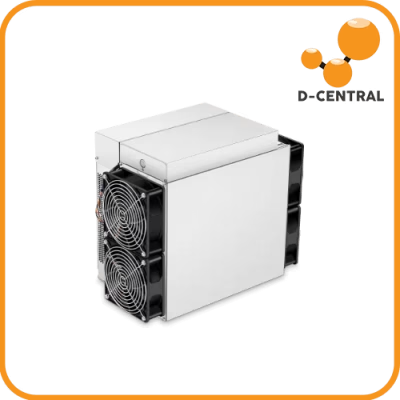
These are the workhorses — purpose-built machines running SHA-256 at terahash-scale speeds. They are loud, they are power-hungry, and they are the most efficient way to convert electricity into Bitcoin hashrate.
Current generation leaders:
| Miner | Hashrate | Power Draw | Efficiency (J/TH) | Best For |
|---|---|---|---|---|
| Antminer S21 XP | 270 TH/s | ~3645W | 13.5 | Maximum efficiency, dedicated space |
| Antminer S21 | 200 TH/s | ~3500W | 17.5 | High performance, proven reliability |
| Antminer S19k Pro | 120 TH/s | ~2760W | 23.0 | Budget-friendly, solid ROI at low power cost |
| Whatsminer M60S | 186 TH/s | ~3441W | 18.5 | MicroBT alternative, strong track record |
| Antminer S9 (refurb) | 13.5 TH/s | ~1350W | 100 | Space heater conversions, ultra-low entry cost |
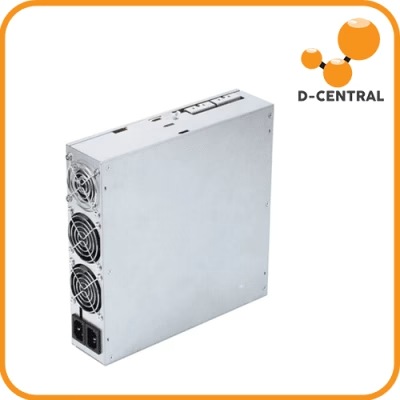
The reality check: Full-scale ASICs produce 70-80 dB of noise — comparable to a vacuum cleaner running continuously. They require 220V/30A circuits (NEMA 14-30 or 6-30) for most models, and a dedicated space like a garage, basement, or outbuilding. They are not “plug into a bedroom outlet” machines.
For Canadian home miners, the sweet spot is often a mid-generation miner (S19k Pro, S19j Pro+) paired with a Bitcoin space heater enclosure that manages noise and redirects heat into your living space. This approach converts the miner’s “waste” heat into functional home heating.
2. Open-Source Solo Miners (Bitaxe, NerdAxe, and Friends)
This is where the mining hacker spirit lives. Open-source miners like the Bitaxe are not competing with industrial ASICs on hashrate — they are built for a completely different mission: decentralization, education, sovereignty, and the thrill of solo mining.
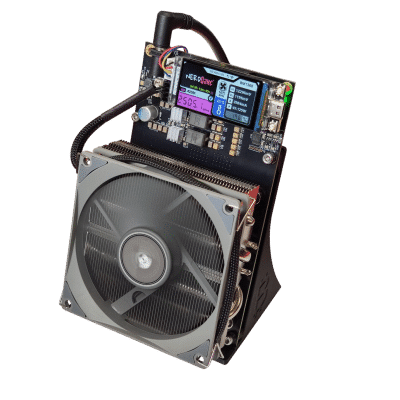
The Bitaxe family: The Bitaxe is an open-source, single-chip ASIC miner. It runs a single BM1366, BM1368, BM1370, or BM1397 chip (depending on the variant) at roughly 0.5-1.2 TH/s, consuming around 12-15 watts. It is powered by a 5V barrel jack (5.5×2.1mm DC) — not USB-C. The USB-C port is for firmware flashing and serial communication only.
Why solo mine with a Bitaxe? At current network difficulty (~800+ EH/s total network hashrate), a single Bitaxe hitting a block (3.125 BTC reward) is statistically unlikely — but not impossible. Solo miners have hit blocks with as little as a few terahash. Every hash counts. More importantly, every Bitaxe running on the network is another node of decentralized hashrate that no government or corporation controls.
| Open-Source Miner | Hashrate | Power | Connector | Use Case |
|---|---|---|---|---|
| Bitaxe Supra / Ultra | ~0.5-0.7 TH/s | ~12-15W | 5V barrel jack (5.5×2.1mm) | Solo mining, desk miner, decentralization |
| Bitaxe Gamma | ~1.0-1.2 TH/s | ~12-15W | 5V barrel jack (5.5×2.1mm) | Higher hashrate solo mining |
| Bitaxe Hex | ~3.0-3.6 TH/s | ~60-75W | 12V DC XT30 | Serious solo mining, multi-chip board |
| NerdAxe | ~0.5 TH/s | ~12W | 5V barrel jack (5.5×2.1mm) | Education, display unit, solo lottery |
| NerdQAxe++ | ~2.0 TH/s | ~40W | 12V DC XT30 | Quad-chip open-source mining |
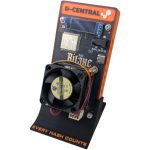
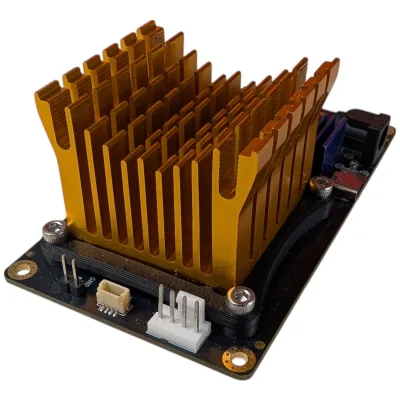
D-Central Technologies is a pioneer in the Bitaxe ecosystem, involved since its earliest days. We created the original Bitaxe Mesh Stand — the first company to manufacture it — and have developed leading accessories including custom heatsinks for the Bitaxe and Bitaxe Hex, cases, and mounting solutions. We stock every Bitaxe variant plus the full Nerd lineup.
3. Bitcoin Space Heaters (Dual-Purpose Mining)
This is where Canada’s cold climate becomes a genuine unfair advantage. A Bitcoin space heater takes a standard ASIC miner, encloses it in a noise-reducing case, and redirects the exhaust heat into your living space. During Canadian winters — which can last six months or more — your miner is not just producing hashrate. It is your heater.
The economics are straightforward: you were already going to spend money heating your home with natural gas, electric baseboard heaters, or a heat pump. A Bitcoin space heater replaces some or all of that spend. The Bitcoin you earn is effectively subsidized by the heating value your miner provides. In some configurations, the heating offset makes mining profitable even when raw hashprice calculations say it should not be.
D-Central’s Bitcoin Space Heater lineup includes models built around the Antminer S9, S17, and S19 series — covering a range from entry-level to high-performance home heating solutions.
Choosing the Right Mining Rig: A Decision Framework
Stop asking “what is the best mining rig?” Start asking “what is the right rig for my situation?” The answer depends on four variables:
1. Your electricity cost. This is the single biggest factor in mining economics. At $0.07/kWh (Quebec hydro), an older S19j Pro is still profitable. At $0.15/kWh, you need current-gen efficiency (sub-20 J/TH) or the heating offset model to make the numbers work. Use D-Central’s Bitcoin Mining Profitability Calculator to model your specific scenario.
2. Your available electrical infrastructure. A full-scale ASIC needs 220V/30A service. If you do not have a dedicated circuit available, you are either calling an electrician or looking at the 120V-compatible options — which mostly means open-source miners and very small units.
3. Your noise tolerance and living situation. Running a bare Antminer S21 in an apartment is a non-starter. A Bitaxe on your desk is silent enough to sleep next to. A space heater build is somewhere in between — manageable in a basement or utility room. Be honest with yourself about what your household can tolerate.
4. Your philosophy. Are you optimizing for maximum sats-per-dollar? Go with the most efficient current-gen ASIC you can afford. Are you mining for decentralization, sovereignty, and the thrill of solo block hunting? A Bitaxe fleet is your move. Are you trying to offset heating costs while stacking sats? Space heater conversion.
Setting Up Your Mining Rig in Canada: Practical Considerations
Electrical Requirements
Most full-scale ASICs ship with C13/C14 power connectors and require a dedicated 220-240V circuit. In Canadian homes, your dryer outlet (NEMA 14-30) is typically the closest existing 240V source, but sharing it with your dryer means you cannot run both simultaneously. The proper approach is a dedicated circuit installed by a licensed electrician. Budget $200-$500 CAD for the circuit installation depending on your panel’s capacity and the run distance.
For open-source miners (Bitaxe, NerdAxe), you need only a 5V/6A DC power supply plugged into a standard 120V outlet. Total power draw is under 15 watts — less than a lightbulb.
Noise Management
ASIC noise management in a Canadian home typically follows one of three paths:
- Dedicated outbuilding: Garage, shed, or workshop. Best isolation. Run an ethernet cable or use a WiFi bridge.
- Space heater enclosure: Reduces noise by 15-25 dB while directing heat into living spaces. The best of both worlds for home miners.
- Basement placement with ducting: Route exhaust heat through your home’s existing ductwork or a dedicated vent. Keeps the noise isolated while capturing the thermal value.
Internet and Network
Mining rigs require minimal bandwidth — a stable connection matters far more than speed. A 1 Mbps connection with low latency is sufficient for any ASIC miner. Wired ethernet is always preferred over WiFi for reliability. Most modern ASICs and all Bitaxe variants include WiFi capability, but ethernet eliminates a potential failure point.
Optimizing Your Mining Operation
Firmware and Software
Custom firmware can improve efficiency by 10-30% on many ASIC models. Options like Braiins OS+ (formerly Slush Pool firmware) enable autotuning that dynamically adjusts chip frequency and voltage to find the optimal efficiency point for your specific unit. D-Central offers firmware downloads and can assist with firmware configuration as part of our support services.
Pool Selection
For full-scale ASICs, pool mining provides consistent payouts proportional to your hashrate contribution. Choose pools that align with decentralization values — avoid pools controlling more than 25% of total network hashrate. Pools like OCEAN, Braiins Pool, and others offer transparent payout models.
For Bitaxe and open-source miners, solo mining through Solo CKPool or similar services is the standard approach. You are not mining for consistent payouts — you are rolling the dice for a full 3.125 BTC block reward. The probability is low, but the potential reward is asymmetric, and you are contributing to network decentralization with every hash.
Maintenance and Longevity
Canadian environments bring specific maintenance considerations. Dust, humidity (particularly in coastal BC), and temperature cycling between heated indoor spaces and cold outdoor intake air all affect ASIC longevity. Compressed air cleaning every 3-6 months, checking fan bearings annually, and monitoring hashboard temperatures through the miner’s web interface will extend your hardware’s productive life.
If something does go wrong, D-Central operates Canada’s most comprehensive ASIC repair service with model-specific expertise across Bitmain, MicroBT, Canaan, and Innosilicon hardware. We have repaired thousands of units since 2016.
The Real Cost of Mining in Canada: Beyond the Rig Price
The sticker price of the miner is not your total cost. A realistic budget for a Canadian home mining setup includes:
| Cost Category | Range (CAD) | Notes |
|---|---|---|
| ASIC Miner (full-scale) | $2,000 – $15,000+ | Model and generation dependent |
| Open-Source Miner (Bitaxe) | $100 – $800 | Variant and accessories dependent |
| Electrical Circuit Install | $200 – $500 | 240V dedicated circuit, licensed electrician |
| Space Heater Enclosure | $300 – $1,200 | Noise reduction + heat direction |
| Monthly Electricity (1 ASIC) | $150 – $350/month | Depends on rate and miner model |
| Networking (ethernet/switch) | $30 – $100 | One-time, if not already available |
Factor in the heating offset during winter months. If your miner replaces $200/month in heating costs for five or six months, that is $1,000-$1,200 CAD in annual savings that directly improves your mining ROI.
Decentralization Is Not Optional
Here is the part most “crypto mining guides” skip entirely: why you should mine at all.
The Bitcoin network’s security comes from its distributed hashrate. When mining is concentrated in a handful of large facilities controlled by a few companies, the network becomes vulnerable — not just to attacks, but to regulatory pressure, infrastructure failures, and corporate decisions that may not align with Bitcoin’s values.
Every home miner running a rig in their basement — whether it is a 200 TH/s Antminer or a 0.5 TH/s Bitaxe — is another independent node of hashrate that strengthens the network. You are not just mining for yourself. You are mining for Bitcoin.
This is what D-Central means by “decentralization of every layer.” Not just running a node. Not just holding your own keys. Running your own hashrate, on your own terms, with hardware you physically control. That is sovereignty.
Frequently Asked Questions
What is the best Bitcoin mining rig for beginners in Canada?
For absolute beginners, a Bitaxe solo miner is the ideal entry point. It costs under $200 CAD, runs on a standard wall outlet via a 5V barrel jack power supply, produces zero noticeable noise, and teaches you the fundamentals of mining (pool configuration, wallet setup, hashrate monitoring) without any risk of electrical issues or noise complaints. For those ready to invest more and who have the electrical infrastructure, an Antminer S19k Pro offers strong performance at a competitive price point.
Can I mine Bitcoin with a GPU in 2025?
Technically yes, but practically no. GPU Bitcoin mining is so inefficient compared to ASIC miners that you will spend far more on electricity than you will ever earn in Bitcoin. GPUs were viable for Bitcoin mining in 2011. They have been obsolete for this purpose for over a decade. Some guides still recommend GPUs because they conflate Bitcoin mining with altcoin mining — but Ethereum moved to proof-of-stake in 2022, eliminating the largest GPU mining use case entirely.
How much does it cost to mine Bitcoin at home in Canada?
Electricity is your primary ongoing cost. A modern ASIC miner drawing 3,000 watts at Quebec’s average residential rate of ~$0.07/kWh costs approximately $150-$160 CAD per month. At Ontario’s average of ~$0.13/kWh, the same miner costs roughly $280-$300 CAD per month. Your mining revenue depends on Bitcoin’s price and the current network difficulty, but at current levels a modern-gen machine can generate meaningful returns at Canadian electricity rates, especially when factoring in winter heating offset.
What electrical setup do I need for an ASIC miner?
Most full-scale ASIC miners require a dedicated 220-240V circuit rated for at least 20-30 amps (typically a NEMA 14-30 or NEMA 6-30 outlet). This is similar to what powers your clothes dryer or electric stove. A licensed electrician can install a dedicated circuit for $200-$500 CAD. Open-source miners like the Bitaxe only need a standard 120V outlet with a 5V/6A DC power supply — no special electrical work required.
Is Bitcoin mining legal in Canada?
Yes. Bitcoin mining is fully legal in Canada at both the federal and provincial level. There are no permits required for residential-scale mining. For larger operations, you may need to comply with local noise ordinances and electrical code requirements. Income from mining is taxable — consult a Canadian tax professional familiar with digital assets for your specific reporting obligations.
How loud are Bitcoin miners and how do I manage noise?
Full-scale ASIC miners produce 70-80 dB of noise — roughly equivalent to a vacuum cleaner. This is not livable in a shared space. Solutions include: placing the miner in a dedicated room, garage, or outbuilding; using a Bitcoin space heater enclosure that reduces noise by 15-25 dB while directing heat into living spaces; or running noise-reduced custom firmware that lowers fan speeds (at the cost of some hashrate). Open-source miners like the Bitaxe are nearly silent at under 40 dB.
What is the Bitaxe and why does it matter?
The Bitaxe is an open-source, single-chip Bitcoin ASIC miner designed for solo mining and decentralization. It produces 0.5-1.2 TH/s (depending on variant) at roughly 12-15 watts. The magic is not in the hashrate — it is in the principle. Every Bitaxe running on the network represents independent, sovereign hashrate that no corporation or government controls. Solo mining with a Bitaxe gives you a small but real chance of finding a full block (3.125 BTC) while actively strengthening Bitcoin’s decentralization. D-Central has been a pioneer in the Bitaxe ecosystem since its earliest days.
Can I use a Bitcoin miner to heat my home in Canada?
Absolutely — and Canada is the ideal place to do it. ASIC miners convert nearly 100% of their electrical input into heat (the laws of thermodynamics guarantee this). A 3,000-watt ASIC miner produces the equivalent of a 3,000-watt electric space heater. With a proper enclosure that manages noise and directs airflow, your miner replaces or supplements your home heating system while simultaneously earning Bitcoin. During Canadian winters, this dual-purpose approach can offset $150-$300+/month in heating costs.
Where can I get my ASIC miner repaired in Canada?
D-Central Technologies operates Canada’s most comprehensive ASIC repair service from our facility in Montreal, Quebec. We have model-specific repair expertise across Bitmain (Antminer S9 through S21 series), MicroBT (Whatsminer M20 through M60 series), Canaan (Avalon), and Innosilicon hardware. We have been repairing miners since 2016 and have serviced thousands of units. Visit our ASIC Repair page for details on supported models and our repair process.