The difference between a miner who breaks even and one who stacks sats consistently comes down to one thing: efficiency. Not just buying the shiniest ASIC on the market, but understanding every watt, every degree, every firmware toggle that separates a profitable operation from an expensive space heater you did not plan on running.
This is not a guide written by people who read whitepapers and called it research. At D-Central Technologies, we have been building, repairing, modifying, and deploying mining hardware since 2016. We are Bitcoin Mining Hackers — we take institutional-grade technology and make it work for home miners, garage operators, and anyone who believes that decentralizing hashrate matters more than any quarterly earnings report.
Let us break down exactly how to maximize your mining efficiency in 2025 and beyond.
Why Mining Efficiency Is the Only Metric That Matters
Hashrate gets all the glory. Everyone wants to talk about terahashes. But hashrate without efficiency is just burning money with extra steps.
Mining efficiency is measured in joules per terahash (J/TH). It tells you how much electrical energy your machine consumes to produce each unit of computational work. A lower J/TH means you are getting more hashing power per watt — and that directly translates to lower operating costs and higher margins.
Consider the math. The Bitcoin network currently operates above 800 EH/s. The block reward sits at 3.125 BTC after the April 2024 halving. Competition for that reward is fierce. If your machine burns 40 J/TH while your competitor runs at 20 J/TH, they can afford to mine profitably at electricity rates that would put you underwater.
Efficiency is not optional. It is survival.
Hardware Selection: The Foundation of Everything
Your choice of mining hardware determines your efficiency ceiling. No amount of firmware tuning or cooling optimization can fix a fundamentally inefficient machine.
ASIC Miners: The Only Serious Option for SHA-256
GPUs had their moment. CPUs were relevant for about five minutes in 2009. For Bitcoin mining in 2025, Application-Specific Integrated Circuits (ASICs) are the only hardware worth running. They are purpose-built silicon designed to do one thing — compute SHA-256 hashes — and they do it orders of magnitude better than general-purpose processors.
Here is how the current landscape breaks down:
| Generation | Example Models | Efficiency (J/TH) | Best Use Case |
|---|---|---|---|
| Legacy (2018–2020) | Antminer S9, S17 | 80–100+ J/TH | Space heater conversions, free/very cheap power only |
| Mid-Gen (2020–2022) | Antminer S19, S19j Pro | 29–34 J/TH | Home mining with moderate power costs |
| Current Gen (2023–2025) | Antminer S21, S21 Pro | 15–17 J/TH | Maximum efficiency, serious operations |
| Open-Source Solo | Bitaxe Supra, Ultra, Gamma, Hex | Varies (solo mining focus) | Solo mining, decentralization, education, lottery blocks |
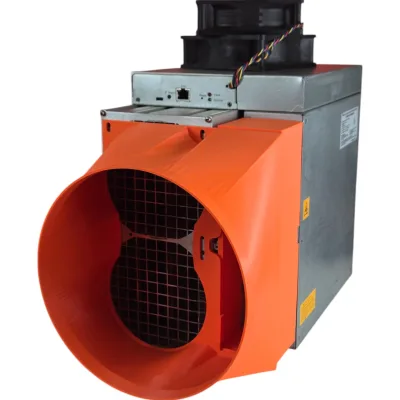
A critical point: older machines are not automatically worthless. An Antminer S9 running at 80+ J/TH is terrible for pure mining profitability — but converted into a Bitcoin Space Heater, it offsets your heating costs while stacking sats. That is efficiency through a different lens entirely.
Open-Source Miners: The Decentralization Play
If you believe — as we do — that Bitcoin’s security depends on distributed hashrate, then open-source solo miners like the Bitaxe deserve a permanent spot in your setup. The Bitaxe is not competing with an S21 on raw efficiency. It is competing on sovereignty.
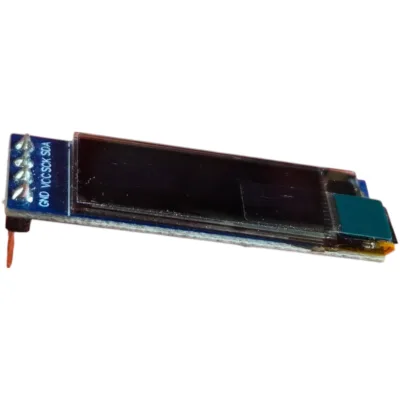
Every Bitaxe running solo against the network is a vote for decentralization. Every hash counts. And at 5 watts on a Supra or Ultra (powered via a 5V barrel jack — not USB-C, which is for firmware flashing only), the cost of that vote is practically nothing.
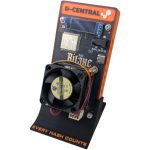
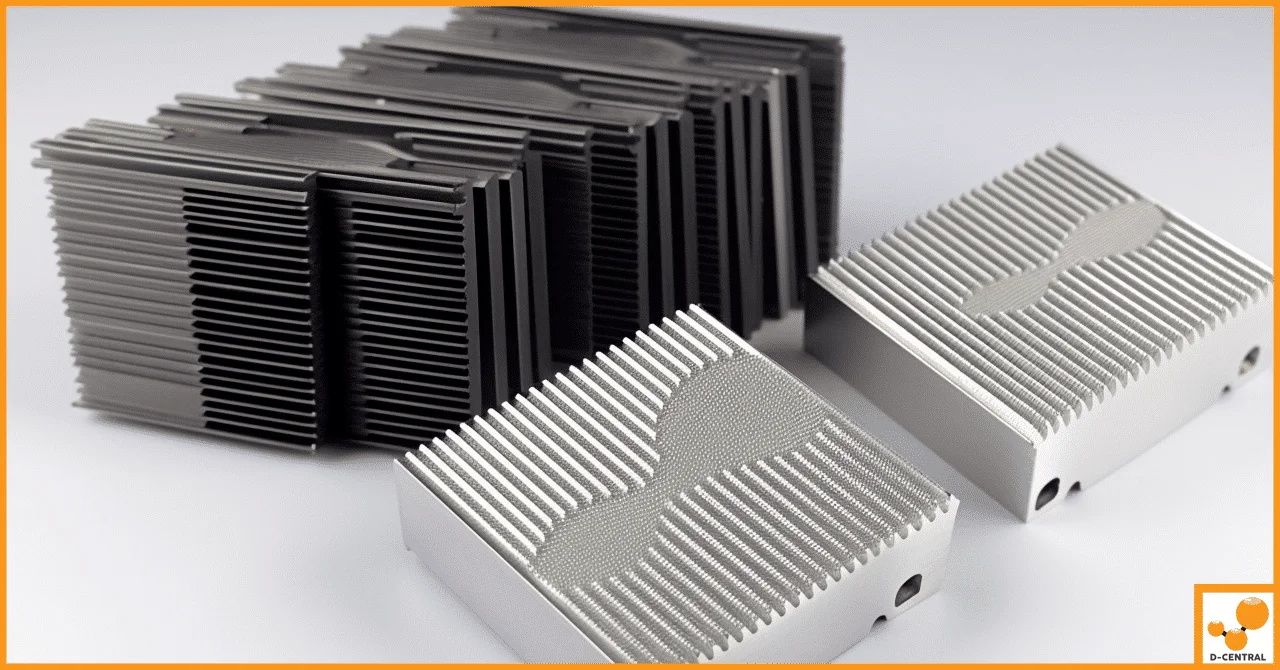
D-Central has been a pioneer in the Bitaxe ecosystem since its earliest days. We created the original Bitaxe Mesh Stand and developed leading accessories including heatsinks for both standard Bitaxe and Hex models. Our Bitaxe Hub is the most comprehensive resource for every variant — Supra, Ultra, Hex, Gamma, GT — along with setup guides, overclocking tips, and troubleshooting.
Firmware and Software Optimization
Your ASIC ships with stock firmware. Stock firmware is designed to be safe and generic. It is not designed to squeeze every last hash out of your specific unit in your specific environment.
Custom Firmware
Third-party firmware options like Braiins OS+ and VNish unlock features that manufacturers leave on the table:
- Autotuning: The firmware tests each ASIC chip individually, finding the optimal frequency and voltage for your specific unit. Two identical S19j Pros can have meaningfully different optimal settings.
- Underclocking/Undervolting: Running chips below their rated frequency at reduced voltage can dramatically improve J/TH. You sacrifice some hashrate, but the efficiency gain often makes the trade worthwhile — especially at higher electricity rates.
- Power Capping: Set a maximum wattage for the entire unit. The firmware distributes power intelligently across chips to maximize hashrate within your power budget.
- DevFee Transparency: Some custom firmware charges a development fee (1–2% of hashrate). Factor this into your efficiency calculations.
Pool Selection
Your mining pool choice affects your effective efficiency. Pools with higher orphan rates, worse luck, or extractive fee structures reduce your actual yield per hash. Look for:
- Transparent fee structures (PPS+, FPPS, or PPLNS — understand the trade-offs)
- Low stale/reject rates from servers geographically close to you
- Stratum V2 support for better decentralization of block template construction
For the sovereignty-minded, solo mining via your own node is the ultimate play. The probability of hitting a block solo is low with a single machine, but when the network is your adversary and 3.125 BTC is the prize, some miners consider it worth the variance.
Power and Cooling: Where Money Is Actually Made or Lost
Hardware and firmware set your efficiency ceiling. Power and cooling determine whether you actually reach it.
Power Cost Optimization
| Strategy | Description | Typical Impact |
|---|---|---|
| Time-of-use rates | Run during off-peak hours, curtail during peak | 20–40% cost reduction |
| Dedicated circuits | 240V circuits reduce amperage, less line loss | 2–5% efficiency gain |
| Renewable integration | Solar, hydro, or wind to offset grid costs | Variable — can reach near-zero marginal cost |
| Heat recapture | Use miner exhaust for space/water heating | Offsets heating bill, effectively subsidizes mining |
| Hosting colocation | Professional facility with bulk power rates | $0.04–0.07/kWh vs residential $0.08–0.15+/kWh |
In Canada, we have a distinct advantage. Cold winters mean free cooling for roughly half the year. Hydro-electric power in Quebec delivers some of the cheapest electricity on the continent. D-Central operates hosting facilities in Quebec specifically to leverage these advantages — and we pass those savings to our clients.
Cooling and Airflow
An ASIC running hot is an ASIC running inefficiently. Chip degradation accelerates above 75°C, and most miners will throttle themselves to prevent damage. Proper cooling is not a luxury — it is a direct efficiency multiplier.
Key principles:
- Intake/exhaust separation: Never let hot exhaust air recirculate into intake. Use ducting, shrouds, or dedicated rooms to maintain clean airflow paths.
- Ambient temperature matters: Every degree cooler on intake air translates to lower chip temperatures and potentially higher sustainable clock speeds.
- Fan maintenance: Dust buildup on fans and heatsinks is an efficiency killer. Clean your machines regularly. Replace degraded fans before they cause thermal throttling.
- Immersion cooling: For serious operations, dielectric fluid immersion eliminates fan noise and enables higher overclocking while maintaining lower chip temperatures. The upfront cost is significant, but the efficiency gains are real.
Maintenance: The Hidden Efficiency Multiplier
A neglected miner is an inefficient miner. Over time, thermal paste dries out, fans degrade, dust accumulates, and hashboards develop issues. Regular maintenance keeps your machines running at their designed efficiency — or better.
Preventive Maintenance Schedule
| Interval | Task | Why It Matters |
|---|---|---|
| Monthly | Compressed air cleaning, visual inspection | Prevents dust-related thermal throttling |
| Quarterly | Fan RPM check, hashrate variance analysis | Catches degrading fans and chipset issues early |
| Annually | Thermal paste replacement, deep clean, connector inspection | Restores factory thermal performance |
| As needed | Hashboard diagnostics and repair | Fixes chip-level failures before they cascade |
When a hashboard does go down or chips start failing, professional repair is almost always more cost-effective than replacement. D-Central has repaired thousands of ASIC miners across every major manufacturer — Bitmain, MicroBT, Canaan, Innosilicon. Our ASIC Repair service covers 38+ specific models with diagnostics, chip-level repair, and hashboard restoration. We see machines come in running at 60% of rated hashrate due to failed chips that could have been caught and fixed months earlier.
Dual-Purpose Mining: The Canadian Efficiency Advantage
Here is a concept that fundamentally changes the efficiency equation: if the heat your miner produces replaces heat you would have generated anyway, the effective cost of mining drops dramatically.
In Canada, we heat our homes for six to eight months of the year. A Bitcoin Space Heater — an ASIC miner configured to safely exhaust hot air into your living space — converts 100% of its electrical input into heat (all electricity becomes heat, this is thermodynamics, not marketing). That means during heating season, your mining electricity cost is effectively subsidized by your heating savings.
A single Antminer S9 Space Heater Edition produces roughly 1,400 watts of heat — comparable to a standard electric space heater — while simultaneously hashing and earning Bitcoin. You were going to spend that electricity on heat anyway. Now it does double duty.
This is what we mean by Mining Hackers. We do not just run machines. We rethink the entire equation.
Hosting vs. Home Mining: Finding Your Efficiency Sweet Spot
Not every miner has the infrastructure, noise tolerance, or electrical capacity to run ASICs at home. This is where professional hosting enters the picture.
| Factor | Home Mining | Professional Hosting |
|---|---|---|
| Power Cost | Residential rates ($0.08–0.15+/kWh) | Bulk industrial ($0.04–0.07/kWh) |
| Cooling | DIY ducting, seasonal advantage | Purpose-built, year-round optimized |
| Noise | Significant — 70–80 dB per unit | Not your problem |
| Uptime | Depends on your availability | 24/7 monitoring and response |
| Sovereignty | Full physical control | Trust-based relationship |
| Heat Recapture | Direct home heating integration | Not available |
The right answer depends on your situation. Many of our clients run a Bitaxe or small miner at home for the sovereignty and education value, while hosting their larger units at our Quebec facility for the economic advantage. It is not either-or.
Putting It All Together: The Efficiency Checklist
Mining efficiency is not a single decision. It is the compound result of dozens of decisions, each contributing marginal gains that stack up:
- Choose hardware with the best J/TH your budget allows. Current-gen ASICs if you are optimizing for pure efficiency. Open-source miners if you are optimizing for sovereignty and decentralization.
- Install custom firmware and autotune for your specific environment and power cost.
- Optimize your power infrastructure. 240V circuits, time-of-use rates, renewable integration where possible.
- Engineer your cooling. Proper ducting, intake/exhaust separation, regular cleaning.
- Maintain relentlessly. Monthly cleaning, quarterly fan checks, annual deep maintenance.
- Recapture heat during cold months to subsidize your electricity costs.
- Consider hosting for machines that do not fit your home setup.
- Monitor continuously. Track hashrate, power draw, temperatures, and reject rates. Catch problems before they cost you money.
D-Central: Your Partner in Mining Efficiency
We are not a faceless retailer dropshipping miners from Shenzhen. D-Central Technologies is a Canadian company that has been in the trenches of Bitcoin mining since 2016. We repair what others throw away. We build solutions that institutional players ignore. We hack mining hardware to work for the people who actually care about Bitcoin’s mission.
Whether you need mining consulting to plan your setup, hardware from our shop, professional ASIC repair, or a hosting spot in Quebec — we are here to help you mine smarter, not just harder.
Every watt optimized is a step toward a more decentralized, more resilient Bitcoin network. And that is what this is really about.
Frequently Asked Questions
What is the most efficient Bitcoin miner available in 2025?
The Antminer S21 and S21 Pro currently lead in efficiency at around 15–17 J/TH. However, “most efficient” depends on your goals. If you factor in heat recapture for home heating, even older models like the S9 become remarkably efficient from a total energy cost perspective when configured as Bitcoin Space Heaters.
Is home Bitcoin mining still profitable in Canada?
Yes, particularly in provinces with low hydro-electric rates like Quebec and British Columbia. Canadian winters also provide free cooling for roughly half the year, and dual-purpose mining (heating + hashing) can offset your heating costs entirely. The combination of cheap power, cold climate, and heat recapture gives Canadian home miners a meaningful edge.
Does custom firmware really make a difference in mining efficiency?
Absolutely. Autotuning firmware like Braiins OS+ can improve your J/TH by 10–25% compared to stock firmware by optimizing voltage per domain and frequency per chip. On a machine consuming 3,000+ watts, that difference translates to hundreds of dollars in annual savings.
What is the difference between the Bitaxe and a full ASIC miner?
A full ASIC miner like the Antminer S21 runs at 200+ TH/s and consumes 3,000+ watts. A Bitaxe runs a single ASIC chip at roughly 500 GH/s to 1.2 TH/s on about 5 watts. The Bitaxe is designed for solo mining, education, and supporting network decentralization — not for competing on hashrate. It uses a 5V barrel jack (5.5×2.1mm) for power, not USB-C. Think of it as your personal vote for a decentralized Bitcoin network.
How often should I clean and maintain my ASIC miner?
Monthly compressed air cleaning is the minimum. Quarterly fan RPM and hashrate checks help catch issues early. Annually, you should replace thermal paste and do a deep inspection. If you notice hashrate drops, increased chip temperatures, or unusual fan noise between scheduled maintenance, address it immediately — small issues compound into expensive repairs when ignored.
Should I mine at home or use a hosting facility?
It depends on your electricity rate, noise tolerance, and infrastructure. Home mining gives you full sovereignty and the option to recapture heat. Hosting gives you bulk power rates ($0.04–0.07/kWh vs residential), professional monitoring, and zero noise at home. Many miners do both — a Bitaxe or quiet miner at home, larger units at a hosting facility.