Every watt matters. Every hash counts. In Bitcoin mining, the line between profitable and unprofitable is drawn by efficiency — and the miners who understand this are the ones still standing after every halving, every difficulty adjustment, every bear market.
At D-Central Technologies, we have been optimizing Bitcoin mining hardware since 2016. We have tuned thousands of ASICs, repaired hashboards that other shops declared dead, and helped home miners across Canada turn their basements into sovereign hashrate operations. This guide distills everything we know about maximizing mining efficiency into actionable techniques you can apply today.
This is not a theoretical overview. This is a field manual from the workbench.
Why Efficiency Is the Only Metric That Matters
The Bitcoin network currently operates above 800 EH/s of total hashrate. The block reward sits at 3.125 BTC after the April 2024 halving. Competition for that reward is fiercer than ever — and it will only intensify.
In this environment, raw hashrate alone does not determine profitability. What determines profitability is joules per terahash (J/TH) — the amount of energy your hardware consumes per unit of work performed. A miner pulling 3,000 watts at 100 TH/s (30 J/TH) is fundamentally less competitive than a miner pulling 2,100 watts at 100 TH/s (21 J/TH), even though they produce identical hashrate.
This principle applies at every scale — from a single Bitaxe solo miner on your desk to a fleet of Antminer S21s in a dedicated facility.
The Efficiency Equation
| Variable | What It Measures | Why It Matters |
|---|---|---|
| J/TH (Joules per Terahash) | Energy consumed per unit of hashing work | The single most important efficiency metric — lower is better |
| Hashrate (TH/s) | Computational output per second | Determines your share of network rewards |
| Power Draw (Watts) | Total electrical consumption at the wall | Your largest ongoing operational cost |
| Electricity Rate ($/kWh) | Cost per kilowatt-hour from your provider | Varies by region — Canadian hydro rates are a major advantage |
| Uptime (%) | Percentage of time your miner is actually hashing | Downtime = zero revenue while fixed costs continue |
Optimizing efficiency means attacking every variable in this equation simultaneously. Let us walk through each one.
Hardware Selection: Choosing the Right ASIC
For SHA-256 Bitcoin mining, ASICs (Application-Specific Integrated Circuits) are the only viable hardware class. GPUs and CPUs have been irrelevant for Bitcoin mining for over a decade. The question is not whether to use an ASIC — it is which ASIC, and how to configure it.
Current-Generation ASIC Efficiency Comparison
| Miner | Hashrate | Power Draw | Efficiency (J/TH) | Best For |
|---|---|---|---|---|
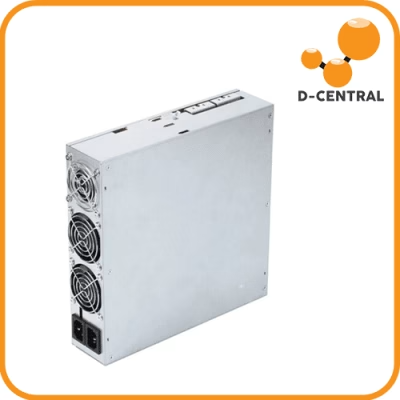
| Antminer S21 | 200 TH/s | 3,500 W | 17.5 J/TH | Industrial and hosted operations |
| Antminer S19k Pro | 120 TH/s | 2,760 W | 23 J/TH | Balanced price-to-performance |
| Antminer S19j Pro | 100 TH/s | 3,050 W | 30.5 J/TH | Budget mining or space heater conversion |
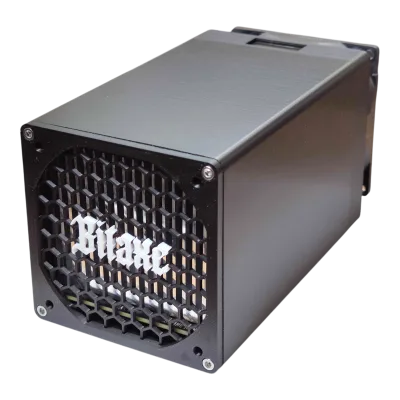
| Bitaxe Supra / Ultra / Gamma | 0.5–1.2 TH/s | 10–25 W | ~20 J/TH | Solo mining, education, decentralization |
| Bitaxe Hex | ~3 TH/s | ~60 W | ~20 J/TH | Serious solo mining with open-source hardware |
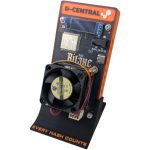
Notice something interesting: open-source miners like the Bitaxe achieve J/TH efficiency ratios competitive with latest-generation industrial ASICs. The difference is scale, not efficiency. A Bitaxe on your desk is doing the same caliber of work per watt as the machines in a warehouse — it is simply doing less of it. That is the beauty of open-source mining hardware. D-Central has been a pioneer in the Bitaxe ecosystem since its earliest days, manufacturing the original Bitaxe Mesh Stand and developing leading accessories like custom heatsinks and cases.
Important hardware note: Bitaxe Supra, Ultra, and Gamma models use a 5V barrel jack (5.5×2.1mm DC) for power — not USB-C. The USB-C port is for firmware flashing and serial communication only. The Bitaxe GT and Hex use a 12V DC XT30 connector. Getting this wrong can damage your hardware.
Firmware Tuning: Underclocking and Undervolting
The most impactful efficiency gains come not from buying new hardware but from tuning what you already own. This is the Mining Hacker approach — squeezing maximum value from existing equipment through intelligent configuration.
Underclocking
Underclocking reduces the clock frequency of your ASIC chips. You sacrifice some hashrate, but the power savings are disproportionately larger. A 15% reduction in frequency can yield a 25-35% reduction in power consumption. The J/TH ratio improves because power drops faster than hashrate.
This is particularly effective on older-generation machines like the S19j Pro or S17. An S19j Pro underclocked from 100 TH/s to 75 TH/s might drop from 3,050W to around 1,900W — transforming a barely-profitable miner into an efficient workhorse, especially on Canadian hydro rates.
Undervolting
Undervolting reduces the voltage supplied to the ASIC chips. This directly decreases power consumption and heat output. Many custom firmware options (such as Braiins OS+ or VNish) enable granular voltage control per hashboard, letting you dial in the sweet spot where each board runs stably at minimum voltage.
The combination of underclocking and undervolting is the single most cost-effective optimization available to home miners. No hardware purchase required — just knowledge, patience, and careful testing.
Overclocking: When Speed Beats Efficiency
Overclocking pushes your hardware beyond factory specifications for higher hashrate. This reduces J/TH efficiency but increases total output. Overclocking makes sense in specific scenarios:
- Your electricity rate is very low (under $0.04/kWh)
- You have excess cooling capacity
- You are maximizing hashrate for a hosted operation with fixed power costs
- You have access to professional ASIC repair if something goes wrong
For most home miners, underclocking and undervolting yield better returns than overclocking. Push for efficiency, not raw speed — unless your electricity is essentially free.
Thermal Management: Heat Is the Enemy of Efficiency
ASIC chips operate less efficiently as they get hotter. Elevated temperatures increase electrical resistance, which means more energy wasted as heat rather than converted to useful computation. Keeping your miners cool is not just about preventing damage — it directly improves J/TH efficiency.
Cooling Strategies by Scale
| Scale | Cooling Method | Key Considerations |
|---|---|---|
| Desktop (Bitaxe, NerdAxe) | Passive heatsink + small fan | Ensure adequate airflow around the device; upgraded heatsinks available from D-Central |
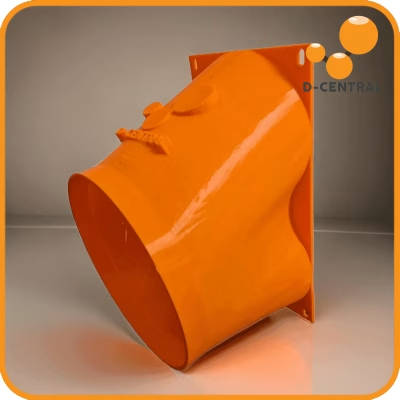
| Single ASIC (home) | Duct/shroud to window or exterior | Channel hot exhaust outside; cool intake from opposite side of room |
| Multiple ASICs (garage/basement) | Inline fans + ducting + temperature monitoring | Separate hot and cold aisles; monitor ambient and chip temps remotely |
| Space Heater conversion | Enclosed chassis with directed airflow | Heat becomes the product — 100% of electrical input converts to heat and hashrate |
| Facility-scale | Immersion cooling or large-volume air handling | Immersion eliminates dust and enables extreme density; higher upfront cost |
The Canadian Advantage
Canada’s cold climate is a structural advantage for Bitcoin mining. During six or more months of the year, ambient air temperatures provide free cooling for mining operations. In many Canadian homes, the heat generated by ASICs directly offsets heating costs — your miner is simultaneously producing Bitcoin and warming your living space. This is the core concept behind D-Central’s Bitcoin Space Heater line: mining hardware purpose-built to function as home heating units. Every watt of electricity consumed by a miner becomes heat. In a cold climate, none of that energy is wasted.
Power Infrastructure and Electrical Optimization
Electrical efficiency starts at the wall, not the ASIC chip.
Power Supply Unit (PSU) Efficiency
Your PSU converts AC power from the wall to DC power for the miner. This conversion is never 100% efficient — some energy is lost as heat in the PSU itself. A high-quality PSU rated 80 Plus Gold or Platinum wastes less energy in this conversion, meaning more of the electricity you pay for actually reaches the ASIC chips.
For ASIC miners, always use the manufacturer-specified PSU or a verified equivalent. Underpowered or low-quality power supplies cause voltage instability, which leads to hash errors, reduced efficiency, and potential hardware damage.
Electrical Circuit Considerations for Home Miners
- Dedicated circuits: Run each large ASIC on a dedicated 240V circuit where possible. 240V operation is more efficient than 120V for the same power draw due to lower current and reduced resistive losses in wiring.
- Wire gauge: Ensure your wiring gauge matches the expected current draw with safety margin. Undersized wiring wastes energy as heat and presents a fire risk.
- Avoid extension cords: Every additional connection and length of cord adds resistance. Plug directly into a properly rated outlet.
- Monitor at the wall: Use a kill-a-watt meter or smart plug to measure actual power consumption. Dashboard readings from the miner itself may not account for PSU losses.
Mining Pool Selection and Network Configuration
Your pool selection and network configuration affect efficiency in ways that are easy to overlook.
Stratum V2 and Efficient Protocols
Modern mining protocols like Stratum V2 reduce the overhead of communication between your miner and the pool. Less bandwidth, faster job updates, and reduced stale share rates all translate to more of your hashrate being productively applied to finding blocks.
Pool Selection Criteria
- Payout structure: FPPS (Full Pay Per Share) provides the most predictable income but typically charges higher fees. PPLNS (Pay Per Last N Shares) can yield higher long-term returns but with more variance.
- Fee transparency: A 2% pool fee on a 30 J/TH miner is equivalent to worsening your efficiency by 0.6 J/TH. Factor fees into your efficiency calculations.
- Latency: Choose a pool with servers geographically close to your operation. Higher latency means more stale shares — work you performed that arrived too late to count.
- Decentralization: From a network health perspective, avoid pointing all your hashrate at the largest pools. The Bitcoin network is strongest when hashrate is distributed. Consider pools like OCEAN, Braiins Pool, or CK Pool that actively promote decentralization.
Solo Mining: Every Hash Counts
For those running open-source hardware like the Bitaxe, solo mining is not about expected value calculations — it is about sovereignty, decentralization, and the thrill of the hunt. A single Bitaxe has a low probability of finding a block, but that probability is never zero. When it hits, the reward is the full 3.125 BTC block subsidy plus transaction fees. Multiple Bitaxe solo miners have found blocks, and each find strengthens the case for decentralized mining. Check out the Bitaxe Hub for setup guides, overclocking tips, and block find trackers.
Maintenance: The Forgotten Efficiency Lever
A dirty miner is an inefficient miner. Dust accumulation on heatsinks and fans restricts airflow, increases operating temperatures, and forces the miner to work harder for the same output. Regular maintenance is one of the simplest and most overlooked ways to maintain peak efficiency.
Maintenance Schedule
| Interval | Task | Impact |
|---|---|---|
| Monthly | Compressed air blowout of fans and heatsinks | Prevents thermal throttling and maintains airflow |
| Quarterly | Inspect fan bearings and replace worn fans | Failed fans cause immediate overheating and shutdown |
| Quarterly | Check all power connections for corrosion or looseness | Loose connections cause arcing, resistance, and fire risk |
| Bi-annually | Re-apply thermal paste on heatsinks (if applicable) | Dried thermal paste degrades heat transfer significantly |
| Annually | Full hardware diagnostic — hashboard health, chip temps, error rates | Identifies degrading chips before they fail entirely |
When a hashboard develops problems — dead chips, failing ASIC domains, or abnormal error rates — professional repair can restore it to full efficiency at a fraction of the replacement cost. D-Central’s ASIC repair service has restored thousands of hashboards that were written off as dead, and we stock replacement parts for all major ASIC models.
Dual-Purpose Mining: Eliminating Waste Energy
The ultimate efficiency hack is eliminating the concept of “waste heat” entirely. Every ASIC miner is a 100% efficient electric heater — all electrical energy input is converted to heat. The question is whether you capture that heat or vent it outside.
In cold-climate regions like Canada, Bitcoin miners can replace conventional electric heaters during heating season. An Antminer S19 consuming 3,050W produces the same heat output as a 3,050W electric space heater — but the miner also produces Bitcoin while it heats your space. Your heating bill becomes your mining budget.
D-Central’s Bitcoin Space Heater editions are purpose-built for this use case, with noise-dampened enclosures and directed airflow designed for residential environments. During heating season, the effective electricity cost of mining approaches zero, because you would have spent that energy on heating regardless.
This is the Mining Hacker philosophy in action: taking industrial-grade technology and adapting it for the home miner, turning an expense into an income stream.
Hosting: When Home Mining Hits Its Limits
Not every miner can or should operate from home. Noise constraints, electrical capacity limits, or cooling challenges may push you toward hosted mining. D-Central operates a hosting facility in Quebec, where miners benefit from some of the lowest electricity rates in North America thanks to Quebec’s abundant hydroelectric power.
Hosted mining trades some sovereignty for operational convenience. You own the hardware, D-Central handles power, cooling, maintenance, and uptime. For miners running multiple machines or high-wattage next-gen ASICs, hosting often delivers better economics than a home setup — especially during summer months when waste heat is a liability rather than an asset.
Monitoring and Continuous Optimization
Efficiency is not a one-time configuration — it is an ongoing discipline. Set up monitoring for these key metrics and review them regularly:
- Actual wall power vs. dashboard power: Discrepancies reveal PSU inefficiency or measurement errors
- Chip temperature trends: Rising temps over time indicate dust buildup or degrading thermal paste
- Hash error rate: Increasing errors signal instability — back off your overclock or check hardware health
- Stale share rate: Rising stale rates indicate network latency issues with your pool
- Uptime percentage: Track total uptime rigorously — every hour of downtime is lost revenue
Tools like Braiins OS+ dashboard, VNish monitoring, or Foreman provide these metrics. For Bitaxe and open-source miners, AxeOS provides a built-in web interface for monitoring chip temperature, hashrate, and power consumption in real time.
The Bottom Line: Efficiency Compounds
Each of these optimizations delivers a small improvement on its own. Stacked together, they compound dramatically. A miner who selects efficient hardware, tunes firmware for optimal J/TH, maintains clean airflow, runs on 240V with a quality PSU, picks the right pool, and monitors performance continuously will outperform a miner with the same equipment who ignores these details — by a wide margin.
Bitcoin mining rewards accrue to the patient and the disciplined. The miners who survive halvings are not the ones with the most machines — they are the ones with the best efficiency. Since 2016, D-Central has been helping Canadian miners build operations that are built to last. Whether you are setting up your first Bitaxe or scaling to a full hosting deployment, the fundamentals remain the same: minimize joules per terahash, maximize uptime, and never stop optimizing.
Every watt matters. Every hash counts.
FAQ
What is the most important metric for Bitcoin mining efficiency?
Joules per terahash (J/TH) is the gold standard efficiency metric. It measures how much energy your hardware consumes per unit of hashing work. Lower J/TH means less electricity spent per unit of hashrate, directly improving profitability. Current-generation ASICs achieve 15-25 J/TH, while older models like the S19j Pro sit around 30 J/TH.
Is underclocking or overclocking better for home miners?
For most home miners, underclocking combined with undervolting delivers better results. While overclocking increases raw hashrate, it also increases power consumption and heat disproportionately. Underclocking reduces power draw faster than it reduces hashrate, improving your J/TH ratio. Overclocking only makes economic sense when your electricity rate is extremely low (under $0.04/kWh).
Can I use a Bitaxe for profitable Bitcoin mining?
Bitaxe miners are designed for solo mining, where profitability is measured differently than pool mining. A Bitaxe produces a small amount of hashrate (0.5-3 TH/s depending on model), so the expected daily revenue from pool mining is minimal. However, solo mining offers the chance to find a full block reward of 3.125 BTC. Multiple Bitaxe miners have successfully found blocks. Beyond profitability, Bitaxe mining supports network decentralization and gives you hands-on experience with open-source mining hardware.
How does Canada’s climate benefit Bitcoin miners?
Canada’s cold winters provide free cooling for mining operations for six or more months of the year. More importantly, the heat generated by ASIC miners can directly replace conventional home heating — meaning the electricity cost of mining is effectively offset by heating savings. Quebec’s hydroelectric power also provides some of the lowest electricity rates in North America, further improving mining economics.
What power supply does a Bitaxe need?
Bitaxe Supra, Ultra, and Gamma models require a 5V power supply with a 5.5×2.1mm DC barrel jack connector, rated at 5V/6A. The Bitaxe GT and Bitaxe Hex use a 12V DC XT30 connector. The USB-C port on these devices is for firmware flashing and serial communication only — it does not deliver sufficient power to operate the miner.
How often should I clean my ASIC miner?
At minimum, blow out fans and heatsinks with compressed air monthly. Inspect fan bearings quarterly and replace any fans showing signs of wear. Check power connections quarterly for corrosion or looseness. Re-apply thermal paste bi-annually if your miner uses heatsink-mounted chips. Perform a full diagnostic annually to catch degrading chips before they fail. A clean miner runs cooler, more efficiently, and lasts longer.
Should I mine at home or use a hosting service?
It depends on your situation. Home mining works well for 1-3 machines, especially during heating season when waste heat offsets your heating costs. If you have noise constraints, electrical capacity limits, or want to run more machines than your home can handle, hosting provides professional power, cooling, and maintenance. D-Central offers hosting in Quebec with access to low-cost hydroelectric power.
What is the best mining pool for decentralization?
Pools like OCEAN, Braiins Pool, and CK Pool actively promote network decentralization and transparent operations. Avoid concentrating hashrate in the two or three largest pools — this creates centralization risk for the Bitcoin network. For solo miners, pointing your Bitaxe or NerdAxe at a solo mining pool like CK Solo gives you a chance at the full block reward while contributing to hash rate distribution.