Mining Bitcoin with Solar Panels in Canada: The Complete Guide
Your roof is producing electricity. Your utility is buying it back at a fraction of its value. Meanwhile, somewhere on the Bitcoin network, a miner is converting that same electricity into the hardest money ever created — and keeping the full economic value of every watt consumed. Something does not add up.
Solar-powered Bitcoin mining is one of the most compelling energy arbitrage opportunities available to Canadian homeowners. Canada already has some of the best solar economics in the world: generous net metering programs, federal incentives, high grid reliability, and a cold climate that keeps miners running cool and efficient. But almost nobody is talking about the intersection of solar panels and Bitcoin mining — especially in a Canadian context. The few guides that exist are written for Arizona sun and Texas power grids. They do not address Canadian winters, provincial net metering rules, the 4.5-5.0 peak sun hours reality of southern Canada, or the fact that your miner’s waste heat — channeled through a Bitcoin space heater — is worth more than the electricity it consumes for six months of the year.
This guide changes that. We break down exactly how to combine solar panels with Bitcoin mining in Canada — from a single Bitaxe on a balcony panel to a full rooftop array powering an Antminer S19 that heats your house all winter. We cover the system sizing math, the grid-tied versus off-grid decision, provincial net metering programs, seasonal strategies that treat your miner as a load-shifting tool, the financial analysis, and the real-world scenarios. This is the definitive solar mining guide for Canadians, written by a Canadian company that has been solving home mining problems since 2016.
Canadian homeowners who either already have solar panels (or are considering them) and want to mine Bitcoin, or current Bitcoin miners looking to reduce their electricity costs with solar. No prior solar or mining experience required — we cover the fundamentals of both. If you are brand new to mining hardware, start with our How to Mine Bitcoin at Home guide for setup basics, then return here for the solar integration strategy.
Why Solar + Bitcoin Mining Makes Sense
The core argument for solar Bitcoin mining is simple economics. Solar panels produce electricity. That electricity has value. But the value you capture depends entirely on what you do with it.
The Net Metering Problem
Most Canadian provinces offer net metering programs that let you sell excess solar production back to the grid. On paper, this sounds like free money. In practice, the economics are mediocre. Here is why:
- You sell low, buy high. Most net metering programs credit you at the retail rate — but that rate is often the lowest tier of time-of-use pricing. In Ontario, you sell back at $0.065/kWh during off-peak (when solar is producing the most) and buy back at $0.158/kWh during on-peak. The grid is paying you pennies for electricity worth considerably more.
- Credits expire. Most provinces do not carry credits indefinitely. Ontario credits expire annually. Alberta credits expire monthly. Your summer surplus does not survive the winter in most programs.
- No cash payouts. You accumulate credits, not cash. If your system produces more than you consume over the billing period, you get a credit on your next bill — not a cheque in the mail.
- System payback is slow. A typical residential solar installation in Canada takes 10-15 years to pay for itself through net metering savings alone. That is a long time to wait for ROI on a depreciating asset.
Bitcoin as an Alternative Load
Bitcoin mining offers a fundamentally different value proposition for your solar electricity. Instead of selling excess kilowatt-hours back to the grid for credit, you convert them directly into bitcoin — a bearer asset that you control, that appreciates in value on a long time horizon, and that represents the full thermodynamic value of the electricity consumed.
The math is compelling. A kilowatt-hour of solar electricity sold back to the grid in Ontario earns you roughly $0.065-0.10 in credit. That same kilowatt-hour, consumed by an efficient Bitcoin miner, produces bitcoin with a market value that fluctuates but — using a modern ASIC like the Antminer S21 at 17.5 J/TH — is often worth more than the grid credit. The exact value depends on network difficulty, bitcoin price, and your miner’s efficiency. But the structural advantage is clear: you are converting electricity into an asset that has historically appreciated, rather than a credit that buys you more of the same electricity.
And here is the part that matters for Canadians specifically: your miner’s waste heat is valuable for half the year. From October through April, every watt your ASIC consumes becomes heat for your home. That is not a byproduct — it is a feature. A 1,350W S9 Space Heater puts out the same BTUs as a 1,350W electric space heater, because physics. You are heating your home AND mining bitcoin with solar electricity that would otherwise be sold to Hydro-Quebec for a fraction of its value.
When you mine Bitcoin with solar power in a Canadian winter, you are capturing value three ways: (1) free electricity from the sun, (2) bitcoin from mining, and (3) free home heating from the miner’s waste heat. No other use of solar electricity offers this triple return. The net metering alternative gives you one thing: a credit on your power bill.
How Solar Bitcoin Mining Works
Before we get into Canadian-specific details, you need to understand the two fundamentally different approaches to solar-powered mining. The choice between them affects everything — your equipment, your costs, your strategy, and your expectations.
Grid-Tied Solar Mining
In a grid-tied setup, your solar panels feed into your home’s electrical system through an inverter. Your home draws power from the panels first, and any excess goes to the grid (earning net metering credits). Your miner plugs into a standard outlet and draws from the same household power. From the miner’s perspective, it does not know or care whether the electrons came from a solar panel or the grid — it just hashes.
The strategy with grid-tied solar mining is load shifting. During peak solar production hours (typically 10 AM to 4 PM), your panels are producing more power than your house consumes. Instead of exporting that surplus to the grid at low credit rates, your miner absorbs it. At night and on cloudy days, your miner draws from the grid at regular rates — or you shut it down, or you run it on a schedule that matches solar production.
This is the approach most Canadian solar miners should take. Grid-tied systems are simpler, cheaper, more reliable, and let you use the grid as a free infinite battery. You do not need to buy a single battery cell.
Off-Grid Solar Mining
Off-grid solar mining means your miner runs entirely on solar power stored in batteries. No grid connection. No utility bill. Complete energy sovereignty. It sounds beautiful in theory. In practice — especially in Canada — it is expensive, complex, and only makes sense in specific scenarios (remote cabins, properties without grid access, or ideological commitment to full off-grid living).
Off-grid systems require batteries to store solar energy for nighttime and cloudy periods. Batteries are the most expensive component of any off-grid solar system. A battery bank capable of running an Antminer S19 overnight would cost more than the miner itself. For most Canadian home miners, off-grid is not the right play. We will cover it in detail later, but the recommendation is clear: grid-tied is the practical choice for the vast majority of Canadian solar miners.
The Hybrid Approach: Grid-Tied with Smart Scheduling
The most sophisticated approach — and the one we recommend for serious Canadian solar miners — is grid-tied with intelligent load scheduling. You run your miner at full power during peak solar production, reduce hashrate (or switch to a low-power miner) during grid-draw hours, and leverage your miner as a space heater during winter months when solar production drops but heating demand rises.
This is not just theoretical optimization. Firmware like Braiins OS+ and VNish allows you to create scheduled power profiles — run at 3,000W from 10 AM to 4 PM, drop to 1,500W from 4 PM to 10 PM, and shut down overnight. Your miner’s power consumption follows your solar production curve. We cover the exact firmware commands in our Braiins OS+ Setup Guide.
Canadian Solar Potential: Province by Province
There is a persistent myth that Canada does not get enough sun for solar to be worthwhile. This is flatly wrong. Southern Canada receives comparable solar irradiance to Germany — which leads Europe in solar installations. The difference is seasonal: Canadian summers deliver excellent solar production, while winters are significantly reduced. Understanding this seasonal swing is essential for planning your solar mining strategy.
Solar Irradiance by Province
Solar potential is measured in peak sun hours (PSH) per day — the number of hours where solar irradiance equals 1,000 W/m². This is the key number for sizing your system.
Average Peak Sun Hours by Province (South-Facing, Fixed Tilt)
| Province | Annual Average | Summer (Jun-Aug) | Winter (Dec-Feb) | Best City |
|---|---|---|---|---|
| Alberta | 4.8 PSH | 6.2 PSH | 2.8 PSH | Calgary / Medicine Hat |
| Saskatchewan | 4.7 PSH | 6.5 PSH | 2.5 PSH | Regina / Swift Current |
| Ontario | 4.2 PSH | 5.8 PSH | 2.2 PSH | Windsor / Ottawa |
| Quebec | 4.0 PSH | 5.5 PSH | 2.0 PSH | Montreal / Quebec City |
| Manitoba | 4.5 PSH | 6.0 PSH | 2.5 PSH | Winnipeg / Brandon |
| British Columbia | 3.8 PSH | 5.5 PSH | 1.5 PSH | Kelowna / Kamloops |
| Nova Scotia | 3.9 PSH | 5.2 PSH | 2.0 PSH | Halifax |
| New Brunswick | 3.8 PSH | 5.0 PSH | 2.0 PSH | Fredericton / Moncton |
The standout provinces are Alberta and Saskatchewan, which rival many US states for solar potential. Calgary averages more sunny days per year than any other major Learn more about Bitcoin mining in Canada. city. Southern Ontario and Quebec are solidly viable — Montreal at 4.0 PSH annual average is comparable to Munich, Germany (3.8 PSH), where rooftop solar is ubiquitous. British Columbia’s coast gets less sun (Vancouver’s cloud cover is legendary), but the interior (Kelowna, Kamloops) is excellent.
The Seasonal Reality
Canada’s seasonal swing is dramatic and you must plan for it. A system that produces 6.2 peak sun hours in July delivers only 2.8 peak sun hours in January — less than half. This means your solar mining strategy must be seasonal:
- Summer (May-September): Peak solar production. Your panels produce more than your house consumes. This is prime time for mining at maximum hashrate with free electricity. Long days — 15+ hours of daylight — mean extended production windows.
- Shoulder seasons (March-April, October-November): Moderate solar production. Enough to partially offset mining costs. Miner heat starts becoming valuable in fall, becomes less needed in spring.
- Winter (December-February): Reduced solar production. Short days, low sun angle, potential snow coverage on panels. But this is where the Canadian miner advantage kicks in — your miner becomes a space heater, and the “cost” of mining is offset by heating savings.
Snow accumulation on solar panels is a real concern in Canada but less catastrophic than you might think. Panels are installed at an angle (typically 30-45 degrees in Canada), and dark panel surfaces warm in sunlight, causing snow to slide off naturally. Light dustings clear within hours. Heavy snowfalls may require manual clearing with a soft roof rake. Most Canadian solar owners report losing 5-15% of potential winter production to snow — frustrating, but not a dealbreaker. Some owners report that ground-reflected sunlight from snow cover actually boosts production on clear days.
System Sizing: How Many Panels for Your Miner
This is the most practical question in solar mining: how many panels do you actually need? The answer depends on your miner’s power draw, your province’s solar irradiance, and whether you want to fully offset mining electricity or just subsidize it.
The Sizing Formula
The calculation is straightforward:
# Daily energy consumed by miner (kWh)
Miner_kWh = Miner_Watts x 24 hours / 1000

# Required solar array size (kW)
Array_kW = Miner_kWh / (Peak_Sun_Hours x System_Efficiency)

# System efficiency factor: 0.80 (accounts for inverter loss,
# wiring loss, temperature derating, dust/snow, and degradation)

# Number of panels (at 400W per panel)
Panels = Array_kW / 0.400

# Example: Antminer S9 Space Heater in Montreal
Miner_kWh = 1350W x 24h / 1000 = 32.4 kWh/day
Array_kW  = 32.4 / (4.0 PSH x 0.80) = 10.1 kW
Panels    = 10.1 / 0.400 = ~26 panels (for 24/7 full offset)
That is the formula for full 24/7 offset — producing enough solar energy annually to cover every kilowatt-hour your miner consumes, averaged across the entire year. For most miners, especially larger ASICs, full offset requires a significant array. But here is the insight most guides miss: you do not need to fully offset your miner to make solar mining profitable. Even partial offset — covering your miner’s daytime consumption — dramatically improves your economics.
Panels Required by Miner Type
The following table assumes 400W panels (the current standard for residential installations) and uses Quebec solar irradiance (4.0 PSH annual average) as the baseline. For Alberta, subtract 15-20% from panel count. For BC coast, add 10-15%.
Solar Panels Required by Miner (Quebec Baseline, Annual Offset)
| Miner | Bitaxe Supra | Bitaxe Hex | Antminer S9 | Antminer S19 | Antminer S21 |
|---|---|---|---|---|---|
| Power Draw | 15W | 90W | 1,350W | 3,250W | 3,500W |
| Daily Consumption | 0.36 kWh | 2.16 kWh | 32.4 kWh | 78 kWh | 84 kWh |
| Panels for Full Offset | 1 panel | 1 panel | 26 panels | 62 panels | 66 panels |
| Panels for Daytime Only | 1 panel | 1 panel | 5-6 panels | 10-12 panels | 11-13 panels |
| Panels for Summer Offset | 1 panel | 1 panel | 4-5 panels | 8-10 panels | 9-11 panels |
| Array Size (Daytime) | 0.4 kW | 0.4 kW | 2.0-2.4 kW | 4.0-4.8 kW | 4.4-5.2 kW |
| Practical Rating | Trivial | Trivial | Achievable | Serious install | Serious install |
The key takeaway: open-source miners are trivially solar-powered. A single 400W panel produces more than enough energy to run a Bitaxe 24/7 year-round, even in the darkest Canadian winter. For ASIC miners, the realistic goal for most homeowners is daytime offset — covering your miner’s consumption during peak solar hours with 5-12 panels, which is a standard residential installation size. Full 24/7 offset for a large ASIC requires a very large array that exceeds typical residential roof capacity.
Already have solar panels? You can start mining today. A Bitaxe Supra draws 15W — your existing array almost certainly has that much surplus, even in winter. No additional panels needed. Just plug in and start solo mining. The best solar mining strategy is incremental: start small, learn the patterns, and scale up as the economics prove themselves on your specific system.
Equipment Needed for Solar Bitcoin Mining
The equipment list depends entirely on whether you are building a grid-tied or off-grid system. Grid-tied is simpler and cheaper. We cover both.
Grid-Tied System Components
Grid-Tied Solar Mining Equipment List
| Component | Purpose | Typical Cost (CAD) | Notes |
|---|---|---|---|
| Solar Panels (400W ea.) | Convert sunlight to DC electricity | $250-400/panel | Monocrystalline, 20-25 year warranty, Canadian Solar or similar |
| Grid-Tie Inverter | Convert DC from panels to AC for household use | $1,500-4,000 | String inverter (Fronius, SMA) or microinverters (Enphase) |
| Mounting Hardware | Secure panels to roof or ground | $500-1,500 | Roof mount, ground mount, or ballasted flat-roof |
| Bi-Directional Meter | Track import/export for net metering | $0-200 | Usually provided/installed by utility |
| Wiring & Disconnects | AC/DC cabling, rapid shutdown, breakers | $300-800 | CEC compliant, properly sized conductors |
| Monitoring System | Track production, consumption, export | $0-300 | Often included with inverter (e.g., Enphase Enlighten, Fronius Solar.web) |
| Bitcoin Miner | Convert electricity to bitcoin | $100-5,000+ | Bitaxe ($100-550), S9 Space Heater ($300-600), S19 ($800-3,000) |
| Smart Plug (optional) | Schedule miner on/off based on solar production | $20-50 | TP-Link Kasa or similar, with scheduling or solar-triggered automation |
A grid-tied system is functionally a standard residential solar installation. Your miner just becomes another load in the house. The critical difference is your intent: instead of sizing the system to offset general household consumption, you size it to offset household consumption plus mining consumption. This means a larger array than a typical residential install, but the components are identical.
Off-Grid System Components (Additional)
Off-grid adds significant complexity and cost:
Additional Off-Grid Components
| Component | Purpose | Typical Cost (CAD) | Notes |
|---|---|---|---|
| Battery Bank (LiFePO4) | Store solar energy for nighttime/cloudy days | $5,000-20,000+ | LiFePO4 preferred for cycle life; lead-acid is cheaper but shorter-lived |
| Charge Controller (MPPT) | Regulate charging from panels to batteries | $300-1,200 | MPPT type essential (not PWM) for efficiency |
| Off-Grid Inverter | Convert battery DC to AC for miner | $1,500-5,000 | Must be pure sine wave; modified sine can damage PSUs |
| Battery Monitor (BMS) | Track state of charge, protect batteries | $100-400 | Victron BMV series or similar |
ASIC miner power supplies require pure sine wave AC power. Modified sine wave inverters (cheaper and common in off-grid kits) produce a stepped waveform that can cause ASIC PSUs to overheat, produce audible buzzing, draw more current than rated, or fail prematurely. This is especially true for Bitmain APW series power supplies. Always use a pure sine wave inverter rated for at least 120% of your miner’s peak draw to handle startup surges.
Grid-Tied Solar Mining: The Practical Approach
For the vast majority of Canadian solar miners, grid-tied is the answer. You avoid the massive expense of batteries, you use the grid as a free backup, and your system pays for itself faster because every kilowatt-hour either powers your miner (earning bitcoin) or gets exported (earning credits). There is no waste.
Net Metering Programs by Province
Understanding your province’s net metering rules is essential for optimizing your solar mining strategy. The rules determine whether it is more profitable to sell excess solar to the grid or consume it with your miner.
Provincial Net Metering Programs (2025-2026)
| Province | Program | Credit Rate | System Limit | Credit Expiry |
|---|---|---|---|---|
| Ontario | Net Metering | Retail rate (TOU) | 500 kW | Annual (12 months) |
| Quebec | Mesurage net (Hydro-Québec) | Retail rate | 50 kW | Annual (April reset) |
| Alberta | Micro-generation | Retail rate | 5 MW | Monthly (no carry-over) |
| British Columbia | BC Hydro Net Metering | $0.1072/kWh | 100 kW | Annual (April reset) |
| Saskatchewan | Net Metering | Retail rate | 100 kW | Annual |
| Manitoba | Net Metering (Manitoba Hydro) | Retail rate | 200 kW | Annual |
| Nova Scotia | Net Metering | Retail rate | 100 kW | Annual |
| New Brunswick | Net Metering | Retail rate | 100 kW | Annual |
When to Mine vs. When to Export
The decision to run your miner or export solar power depends on which option captures more value from each kilowatt-hour. This is the core optimization of grid-tied solar mining.
Mine when: The bitcoin value of a kWh (based on your miner’s efficiency and current network difficulty) exceeds the net metering credit rate. This is generally true when bitcoin’s price is strong relative to difficulty, and especially true when you factor in winter heating value.
Export when: Your miner is offline for maintenance, network difficulty has spiked making mining temporarily unprofitable at your efficiency, or during time-of-use peak pricing windows where export credits are worth more than mining revenue.
In practice, for most Canadian miners running reasonably efficient hardware: mine during the day with solar, and mine at night if your grid rate is low enough to be profitable. Quebec’s electricity rates ($0.0735/kWh for the first 40 kWh/day, $0.1134/kWh above) are among the lowest in North America. At those rates, mining is often profitable around the clock regardless of solar — the solar just makes it more profitable.
Alberta’s micro-generation program resets credits monthly — the most restrictive in Canada. You cannot bank summer credits for winter. This makes Alberta the strongest case for solar mining over net metering: instead of losing excess summer production to monthly credit resets, run a miner that absorbs every surplus kilowatt-hour and converts it to bitcoin that never expires. Alberta also has the best solar irradiance in Canada. The math works.
Off-Grid Solar Mining: The Sovereign Path
Off-grid solar mining is the ultimate expression of the cypherpunk ethos: produce your own energy, run your own miner, custody your own bitcoin. No utility company, no grid dependency, no third party. Full sovereignty over every step of the value chain from photon to satoshi.
It is also the most expensive and challenging approach. Let us be honest about the tradeoffs.
Battery Sizing for Mining
The battery bank is the make-or-break component of off-grid mining. Miners run 24/7, so you need enough stored energy to power the miner through every hour that the sun is not shining.
A Bitaxe drawing 15W needs 0.18 kWh to run for 12 hours overnight. A single 1 kWh battery handles this with massive headroom. An Antminer S9 drawing 1,350W needs 16.2 kWh for 12 hours — that is a $8,000-15,000 battery bank at current LiFePO4 prices, and you should only discharge to 80% depth to preserve battery life, so you actually need ~20 kWh of nameplate capacity.
For an Antminer S19 at 3,250W, the overnight battery requirement is 39 kWh (nameplate ~49 kWh at 80% DoD). That is a Tesla Powerwall and a half, costing $20,000-40,000+. The battery alone costs more than the miner, the panels, and two years of grid electricity combined. This is why off-grid mining with full-size ASICs rarely makes financial sense unless you have no grid access at all.
Realistic Off-Grid Scenarios
Off-grid solar mining makes sense in three scenarios:
- Low-power miners (Bitaxe, NerdAxe): A single 400W panel, a small charge controller, a 1-2 kWh LiFePO4 battery, and a Bitaxe. Total additional cost beyond the miner: $800-1,500. This is achievable, affordable, and a beautiful expression of sovereign mining.
- Remote cabin/off-grid property: You already have (or are building) an off-grid solar system for the cabin. Adding a low-to-mid-power miner to the existing system is marginal cost. The miner heats the cabin in winter and mines bitcoin year-round.
- Daytime-only mining: Skip the battery entirely. Run the miner only when the sun is shining, using a direct solar-to-miner setup with a charge controller and appropriately sized inverter. You mine 6-8 hours per day in summer, less in winter. No overnight hashing, but no battery cost either.
Best Miners for Solar-Powered Operations
Not all miners are created equal for solar applications. The ideal solar miner has low power consumption, high efficiency (joules per terahash), runs reliably on variable power, and — in Canada — produces useful heat in winter. Here is the lineup ranked for solar suitability.
Tier 1: Perfect for Solar (Under 100W)
These miners can run on a single solar panel year-round, even in a Canadian winter. They are the gateway to solar mining.
Low-Power Miners for Solar
| Miner | Bitaxe Supra | Bitaxe Gamma | NerdAxe | NerdQAxe++ | Bitaxe Hex |
|---|---|---|---|---|---|
| Power Draw | ~15W | ~15-25W | ~15W | ~40W | ~90W |
| Hashrate | ~0.6 TH/s | ~1.2 TH/s | ~0.5 TH/s | ~2 TH/s | ~3.6 TH/s |
| Panels Needed | 1 | 1 | 1 | 1 | 1 |
| Off-Grid Viable? | Yes | Yes | Yes | Yes | Yes (larger battery) |
| Solar Rating | Perfect | Perfect | Perfect | Excellent | Excellent |
Bitaxe & Open-Source Miners
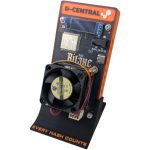
D-Central stocks all Bitaxe variants (Supra, Ultra, Gamma, GT, Hex), NerdAxe, NerdQAxe, NerdOctaxe, and Nerdminer. Pioneer manufacturer since the beginning of the Bitaxe ecosystem — we created the original Bitaxe Mesh Stand. Every unit tested before shipping. The perfect pairing for a solar panel: one panel, one miner, sovereign sats from sunlight.
Tier 2: Excellent for Grid-Tied Solar (1,000-1,500W)
These miners pair well with a mid-size residential solar array (4-8 panels for daytime offset). They double as space heaters in winter, which is critical for Canadian solar miners.
- Antminer S9 Space Heater Edition — 1,350W, the gold standard for dual-purpose solar mining. Runs on 120V, produces meaningful heat, and the S9’s mature firmware (Braiins OS+) supports power scheduling. D-Central builds these specifically for home miners.
- S9 with custom firmware (underclocked) — Run at 800-1,000W during low-solar periods, full power during peak solar. Braiins OS+ autotuning handles this gracefully.
- BitChimney — Compact, purpose-built for home integration. Lower noise profile than a standard S9 conversion.
Tier 3: For Large Arrays Only (3,000W+)
The S19, S21, and modern high-efficiency ASICs produce the most hashrate per watt — which means the most bitcoin per solar kilowatt-hour. But they require large arrays, 240V power, and produce significant heat that needs managing in summer. Only suitable for grid-tied systems with 10+ panels and a dedicated 240V circuit.
The efficiency advantage is real: an S21 at 17.5 J/TH produces roughly 3x more bitcoin per kilowatt-hour than an S9 at ~80 J/TH. If you have the solar capacity, newer hardware is more profitable per watt — but the S9 wins on accessibility, 120V compatibility, and dual-purpose heating value.
Financial Analysis: Does Solar Mining Pay?
Numbers do not lie. Let us work through the real economics of solar mining in Canada with three representative scenarios. All figures use 2025-2026 Canadian dollar estimates and conservative bitcoin mining assumptions.
Base Assumptions
Financial Analysis Parameters
| Solar Panel Cost (installed) | $2.50-3.50/W after incentives (varies by province and installer) |
|---|---|
| Grid Electricity Rate | $0.07-0.15/Calculate your mining power costs per kWh. (varies by province; QC $0.07-0.11, ON $0.065-0.158, AB $0.10-0.18) |
| Solar Degradation | 0.5%/year (25-year panel warranty standard) |
| Mining Revenue | Variable — use your preferred calculator; we use conservative estimates |
| Heat Credit (Winter) | $0.07-0.15/kWh — every watt of mining heat offsets electric heating costs |
| System Lifetime | 25+ years (panels), 5-10 years (inverters), 3-7 years (miners) |
Scenario Comparison: Solar Mining vs. Grid Mining vs. Net Metering Only
For a 5 kW solar array in Quebec (20 kWh/day average production, $15,000 installed before incentives):
5-Year Economics: Three Strategies Compared (Quebec, 5 kW Array)
| Strategy | Net Metering Only | Grid Mining Only | Solar + Mining (Hybrid) |
|---|---|---|---|
| Upfront Cost | $15,000 | $600 (S9 Space Heater) | $15,600 |
| Annual Solar Savings | $600-900/yr | $0 | $600-900/yr |
| Annual Mining Revenue (sats) | $0 | Variable (market-dependent) | Variable (market-dependent) |
| Annual Electricity Cost for Mining | $0 | ~$870/yr (QC rate) | ~$435/yr (50% solar offset) |
| Winter Heating Credit | $0 | ~$400/yr | ~$400/yr |
| Net Annual Cost of Mining | N/A | ~$470/yr | ~$35/yr |
| Solar Payback Period | 17-25 years | N/A | 12-18 years (before bitcoin appreciation) |
| Sovereignty Score | Low (utility dependent) | Medium (grid dependent) | High (energy + money) |
The hybrid solar + mining strategy wins on every metric that matters. Your solar system pays off faster because the miner captures kilowatt-hours at bitcoin value (higher than net metering credits). Your mining costs drop dramatically because half your electricity is free from the sun. And your winter heating bill drops because the miner’s waste heat replaces your electric heater. The compounding effect of these three value streams is what makes solar mining in Canada uniquely attractive.
Note that we have deliberately not projected bitcoin price appreciation. If you believe — as we do — that bitcoin trends upward on a multi-decade time horizon, then the sats you accumulate with free solar electricity today become dramatically more valuable over time. But even at today’s prices, the economics work. That is the honest analysis.
Bitcoin mining income is taxable in Canada — whether you mine with solar or grid power. The electricity cost (including the imputed cost of solar electricity) is deductible as a mining expense. Solar panel installation may also have capital cost allowance (CCA) implications if used for a business activity like mining. For a complete breakdown of Canadian mining tax rules, see our Bitcoin Mining Tax Guide for Canada.
Seasonal Strategies for Canadian Solar Miners
The Canadian solar miner’s calendar is divided into two distinct seasons, each with its own optimal strategy. This is where Canada’s climate goes from disadvantage to advantage.
Summer Strategy (May – September): Maximum Hashrate
Summer in Canada is solar mining paradise. Long days (15-16 hours of daylight at summer solstice in most of southern Canada), high sun angle, peak panel production. Your array is producing its maximum output, and your house needs zero heating. This is the season to mine aggressively.
- Run miners at full power during daylight hours — Your solar panels are producing 5-6+ kWh per kW of capacity. Absorb every surplus watt with your miner.
- Consider adding a second miner for summer months if your array has significant surplus beyond your primary miner’s consumption.
- Manage heat output — This is the season where miner heat is a liability, not an asset. Vent hot exhaust air outdoors through a window or duct. Run the miner in a garage, basement, or shed where heat is tolerable. For smaller miners (Bitaxe, NerdAxe), heat is negligible and not a concern.
- Schedule for solar peak — If using firmware with power scheduling (Braiins OS+, VNish), set maximum hashrate during 9 AM – 6 PM and reduced hashrate at night when you are drawing from the grid.
Winter Strategy (October – April): Heat Mining
This is Canada’s secret weapon. While solar miners in Arizona have to fight miner heat with expensive cooling, Canadian miners want that heat. In winter, your miner is not just a bitcoin machine — it is a space heater that pays you to run it.
- Run the miner 24/7 — even though solar production is low, the heating value of the miner justifies grid power consumption. You are spending the same money you would have spent on electric heating, but you are getting bitcoin as a bonus.
- Position the miner to heat living spaces — Move it from the garage/basement to a living area (or use ducting to direct warm exhaust into the house). D-Central’s Space Heater editions are purpose-built for this, with 3D-printed enclosures that direct warm air into the room.
- Factor heating offset into economics — If your electric heating costs $150/month in winter and your miner produces the same heat for the same electricity cost while also mining bitcoin, the effective cost of mining is $0. The bitcoin is pure profit on top of heating you would have paid for anyway.
- Maintain panels — Clear snow after heavy falls. A roof rake with a soft edge is the standard tool. Even 2-3 hours of clear-panel production per day reduces your grid draw during daylight.
Bitcoin Space Heaters
Purpose-built for the Canadian solar miner’s winter strategy. S9, S17, and BitChimney editions with custom 3D-printed enclosures, optimized airflow for room heating, and quiet fan profiles. Heat your home while mining Bitcoin — powered by your solar panels in the day, the grid at night. Designed and assembled in Canada by D-Central.
Shoulder Season Transitions
March-April and October-November are the transition periods where your strategy shifts. Watch two variables:
- Solar production vs. miner consumption: As production ramps up in spring, you can increase hashrate or add miners. As it drops in fall, scale back to what your array supports and let heating value justify the rest.
- Indoor temperature: When you stop needing the miner’s heat (typically late April/May in southern Canada), it is time to reposition the miner away from living spaces or reduce power to limit unwanted heat. When the first frost hits (typically late September/October), bring it back inside.
Canadian Regulations and Incentives
Canada has a favourable regulatory environment for both solar energy and Bitcoin mining. Here is what you need to know.
Federal and Provincial Solar Incentives
Canadian Solar Incentives (2025-2026)
| Incentive | Details | Value | Status |
|---|---|---|---|
| Canada Greener Homes Grant | Federal grant for home energy improvements including solar panels | Up to $5,000 for solar PV | Check current availability (program funding varies) |
| Canada Greener Homes Loan | Interest-free loan for energy retrofits | Up to $40,000 (10-year term) | Check current availability |
| Ontario: Save on Energy | Various utility rebate programs | Varies by utility | Active — check local utility |
| Alberta: Clean Energy Improvement Program | Property-assessed financing for solar | Up to $50,000 repaid via property tax | Available in participating municipalities |
| Nova Scotia: Solar Homes Program | Income-based rebates for residential solar | $3,000-6,000 | Active (income-qualified) |
| Saskatchewan: Net Metering | Interconnection incentive | Varies | Active |
| Federal CCA Class 43.1/43.2 | Accelerated depreciation for solar equipment used in business | 30-50% CCA rate | Active — consult accountant |
Government incentive programs open, close, and modify their terms regularly. The Canada Greener Homes Grant has had multiple intake periods with different funding levels. Provincial programs vary widely. Always verify current availability directly with the relevant government website before making purchasing decisions. The figures above are representative but may not reflect current program status. Your solar installer should be up to date on all available incentives in your province.
Building Permits and Electrical Codes
Solar panel installation in Canada requires:
- Building permit: Required in virtually all municipalities. Your installer handles this. Cost: $100-500 depending on municipality.
- Electrical permit: Required for connecting to the grid. Must be done by a licensed electrician. Your solar installer’s electrician handles this.
- CEC compliance: All solar installations must comply with the Canadian Electrical Code (CEC). This covers conductor sizing, grounding, rapid shutdown requirements, and disconnect placement.
- Utility interconnection agreement: Required for net metering. Your utility must approve the connection and install a bi-directional meter. Processing time: 2-8 weeks depending on the utility.
- ESA inspection (Ontario): The Electrical Safety Authority inspects solar installations in Ontario. Other provinces have equivalent inspection bodies.
Bitcoin Mining Regulations
Bitcoin mining in Canada is legal and has no specific regulatory restrictions at the residential level. There are no permits required to operate a Bitcoin miner in your home. However:
- Noise bylaws: Municipal noise bylaws apply. ASIC miners can produce 60-80 dB. This matters for close neighbours. See our ASIC Noise Reduction Guide for mitigation strategies.
- Electrical load: Your home’s electrical panel must support the miner’s load. Running a 3,250W miner on a 100A panel alongside normal household loads may require a panel upgrade.
- Insurance: Inform your home insurance provider about mining equipment if the total value exceeds your policy’s limits for electronics/computer equipment.
- Tax reporting: Mining income must be reported to the CRA. See our Bitcoin Mining Tax Guide for Canada.
Real-World Scenarios: Three Canadian Solar Mining Builds
Theory is useful. Concrete examples are better. Here are three real-world scenarios at different budget levels, each optimized for Canadian conditions.
Scenario 1: The Balcony Miner — Bitaxe on a Single Panel
Budget: $500-900 CAD
Location: Condo balcony, apartment, or small property
Miner: Bitaxe Gamma (~25W, ~1.2 TH/s)
Solar: Single 400W portable solar panel (plug-in microinverter or direct DC)
This is the entry-level build that proves the concept. A portable solar panel on a south-facing balcony or propped in a yard produces enough energy to power a Bitaxe around the clock for most of the year. The Bitaxe is silent, produces negligible heat, and connects to your Wi-Fi for solo mining. No electrical work, no building permits, no utility interconnection. Just a panel, a miner, and sunshine.
Equipment list:
- Bitaxe Gamma — ~$180 CAD
- 400W portable solar panel — ~$300 CAD
- Microinverter (Hoymiles or similar, if grid-feeding) — ~$150 CAD
- OR: Small MPPT charge controller + 12V battery + 12V-to-5V converter (if off-grid) — ~$200 CAD
Expected production: The panel produces ~1.6 kWh/day (annual average, Quebec). The Bitaxe consumes ~0.6 kWh/day. Even in winter, a 400W panel in Quebec produces enough to keep the Bitaxe running during daylight hours. With a grid-tied microinverter, surplus production offsets your electric bill. With a small battery, you can mine overnight off stored solar. Solo mining for sats, powered by the sun. It does not get more sovereign than this.
If you live in an apartment, see our Bitcoin Mining in Apartments Guide for additional considerations on running miners in multi-unit buildings.
Scenario 2: The Solar Space Heater — S9 with Rooftop Array
Budget: $8,000-15,000 CAD (solar) + $300-600 CAD (miner)
Location: House with south-facing roof
Miner: D-Central S9 Space Heater Edition (~1,350W)
Solar: 8-panel (3.2 kW) grid-tied rooftop array
This is the sweet spot for most Canadian homeowners. A modest 8-panel array covers the S9’s daytime consumption during summer (with surplus going to the grid), partially offsets it in shoulder seasons, and feeds the house in winter when the miner’s heat becomes the primary value. The S9 Space Heater replaces an electric space heater from October to April, and mines bitcoin year-round.
Summer operation: The 3.2 kW array produces roughly 17.6 kWh/day in summer (Quebec, 5.5 PSH). The S9 at 1,350W consumes 32.4 kWh/day running 24/7. The array covers roughly half the S9’s daily consumption — the other half comes from the grid. You could run the miner only during peak solar hours (10 AM – 4 PM) to mine almost entirely on solar power, or run 24/7 and accept grid costs at night.
Winter operation: Array produces roughly 6.4 kWh/day (2.0 PSH). The S9 consumes 32.4 kWh/day. Solar covers about 20% of the miner’s draw. But the miner is producing 1,350 watts of continuous heat — equivalent to a large portable electric heater. If your electric heating costs $150-200/month in winter and the miner replaces that heater, the effective mining cost is near zero. You are paying for heating and getting bitcoin as a byproduct.
For 120V outlet details and safety, read our 120V Bitcoin Mining Guide.
Scenario 3: The Off-Grid Cabin — Remote Solar Mining
Budget: $2,000-4,000 CAD (dedicated mining solar system)
Location: Off-grid cabin or rural property without grid access
Miner: Bitaxe Hex (~90W, ~3.6 TH/s) or NerdQAxe++ (~40W, ~2 TH/s)
Solar: 2x 400W panels + MPPT charge controller + 2.5 kWh LiFePO4 battery + pure sine wave inverter
The sovereign miner’s dream. No grid, no utility, no permission required. Two 400W panels on a ground mount or roof, charging a LiFePO4 battery through an MPPT controller, feeding a Bitaxe Hex through a small pure sine wave inverter. The battery stores enough energy for 24+ hours of runtime on the Hex (0.09 kW x 24h = 2.16 kWh, well within the 2.5 kWh battery’s 80% DoD capacity of 2.0 kWh).
The internet question is the main challenge for remote locations. Starlink works. An LTE hotspot with a cell signal works. The Bitaxe uses minimal bandwidth — a few kilobytes per second. Even a marginal data connection is sufficient.
Summer: Panels produce ~4.4 kWh/day (two panels, 5.5 PSH). The Hex consumes ~2.16 kWh/day. The system has massive surplus — enough to power cabin lights, charge devices, and still keep the battery topped off.
Winter: Production drops to ~1.6 kWh/day (2.0 PSH). The Hex needs ~2.16 kWh/day. You are in deficit. Options: switch to the NerdQAxe++ at 40W (0.96 kWh/day — well within winter production), run the Hex only during daylight hours, or accept that the battery drains overnight and the miner restarts each morning when the sun returns. The Bitaxe handles power cycling gracefully — it reconnects to the pool automatically.
Installation Tips for Canadian Solar Miners
Panel Orientation and Tilt
In Canada, optimal panel orientation is due south (180 degrees azimuth) with a tilt angle roughly equal to your latitude. For southern Canada (45-50 degrees latitude), a tilt of 35-45 degrees maximizes annual production. Some installers recommend a steeper tilt (50-55 degrees) for Canadian installations to improve winter production and shed snow faster — this sacrifices some summer output for better year-round consistency. Discuss with your installer based on your priority season.
Winter Panel Maintenance
- Snow clearing: Use a soft-edge roof rake — never a metal shovel, ice scraper, or anything abrasive. Scratched glass reduces panel output permanently. Telescoping roof rakes designed for snow removal are available at Canadian hardware stores for $40-80.
- Ice dams: Ensure adequate attic insulation to prevent ice dam formation at the panel edges. Ice dams block snow sliding and can damage mounting hardware.
- Monitoring: Watch your solar monitoring app. A sudden drop in one panel’s output usually means snow coverage. If all panels drop simultaneously, it is cloud cover (and will resolve itself). If one panel stays low, clear it.
Miner Placement for Seasonal Flexibility
The ideal setup allows you to redirect miner heat seasonally:
- Winter: Miner in a living space or utility room that connects to living areas. Warm exhaust directed into the home via the miner’s fan output or ducting.
- Summer: Miner in a basement, garage, or dedicated room with ventilation to the outdoors. Hot exhaust vented through a window or duct to the exterior.
- Year-round (small miners): Bitaxe and NerdAxe devices produce so little heat (15-90W) that placement is irrelevant from a thermal perspective. Put them wherever your Wi-Fi signal is strong.
Common Mistakes to Avoid
Mistake 1: Oversizing the System for Full 24/7 Offset
Trying to build a solar array that fully offsets a large ASIC miner’s 24/7 consumption is almost always a bad investment. A 66-panel array for an S21 costs $50,000+. A 12-panel array that covers daytime consumption costs $12,000 and captures 80% of the economic benefit at 20% of the cost. Size your system for daytime offset, not total consumption.
Mistake 2: Ignoring the Heating Value
Canadian solar mining guides that only calculate mining revenue and electricity cost are missing the biggest variable in the equation. In a country where heating season runs 6-7 months, the thermal value of your miner is often worth more than the bitcoin it produces. Always factor heating offset into your ROI calculations.
Mistake 3: Buying Batteries for Grid-Tied Mining
If you have grid access, you do not need batteries for solar mining. The grid is a free, infinitely large battery with 99.9% uptime. Batteries add $5,000-20,000+ in cost, require maintenance, degrade over time, and introduce points of failure. Save the money and use it to buy more panels or better mining hardware.
Mistake 4: Running the Wrong Miner for Your Array
A 4-panel array producing 1,600W cannot power an S19 that draws 3,250W. Match your miner to your array — or more precisely, match your daytime mining load to your expected solar production during peak hours. It is better to run a smaller miner fully on solar than a bigger miner mostly on grid power.
Mistake 5: Not Planning for Summer Heat
An S9 producing 1,350W of heat in a 30-degree July is miserable in a Canadian house without AC. Plan your summer ventilation strategy before installation. A window exhaust fan or temporary duct to the outdoors solves this for most setups.
Frequently Asked Questions
How many solar panels do I need to mine Bitcoin?
It depends entirely on your miner. A Bitaxe (15W) needs just 1 panel. An Antminer S9 Space Heater (1,350W) needs 4-6 panels for daytime offset. An Antminer S19 (3,250W) needs 10-12 panels for daytime offset. These numbers assume 400W panels in a Canadian province with average solar irradiance. For full 24/7 offset, multiply by roughly 5x — but we recommend sizing for daytime offset only, which captures most of the economic benefit.
Can I mine Bitcoin with solar in a Canadian winter?
Yes, but with reduced solar contribution. Winter solar production in southern Canada drops to 30-45% of summer levels. However, winter is when your miner’s waste heat becomes most valuable — every watt becomes free home heating. The optimal winter strategy is to run the miner 24/7 as a space heater, with solar covering whatever percentage of the electricity it can. Your effective mining cost drops to near zero because you would have paid for that heating electricity anyway.
Is it better to sell solar power back to the grid or mine Bitcoin with it?
In most Canadian provinces, mining is the better use of surplus solar electricity. Net metering credits are typically valued at $0.065-0.15/kWh depending on province and rate tier. The bitcoin value of that same kWh — using an efficient miner — often exceeds the credit value. Additionally, net metering credits expire (annually in most provinces, monthly in Alberta), while bitcoin does not. The strongest case for mining over net metering is in Alberta, where monthly credit resets mean you lose all surplus summer production.
Do I need batteries for solar Bitcoin mining?
Not if you have grid access. A grid-tied solar system lets you mine on solar during the day and grid power at night (or shut down the miner overnight). Batteries add $5,000-20,000+ to your system cost and are the single biggest expense in off-grid setups. They only make sense for off-grid properties without utility service, or for low-power miners (Bitaxe, NerdAxe) where a small, affordable battery is sufficient for overnight operation.
What is the best miner for a solar setup in Canada?
For pure solar optimization: the Bitaxe lineup (Supra, Gamma, Hex) is unmatched — they run on a single panel and are trivially solar-powered year-round. For the best blend of solar mining + winter heating: the D-Central S9 Space Heater Edition paired with a 3-6 kW solar array. It runs on 120V, produces meaningful heat, supports power scheduling via Braiins OS+, and the S9’s mature ecosystem makes it the most hackable ASIC on the market. For maximum bitcoin per solar kilowatt-hour (if you have a large array): the Antminer S21 at 17.5 J/TH efficiency.
Are there government incentives for solar Bitcoin mining in Canada?
There are incentives for solar panel installation — the Canada Greener Homes Grant (up to $5,000 for solar PV) and various provincial programs. These incentives apply to the solar system itself regardless of what you use the electricity for. There are no specific incentives for Bitcoin mining. However, if your mining operation qualifies as a business, the solar equipment may be eligible for accelerated depreciation (CCA Class 43.1/43.2). Consult an accountant who understands both renewable energy and cryptocurrency taxation.
Can I use a portable solar panel for Bitcoin mining?
Yes — for low-power miners. A single portable 400W panel can power any Bitaxe variant, any NerdAxe variant, or a Nerdminer year-round. Portable panels are perfect for apartment balconies, RVs, and temporary setups where permanent roof mounting is not an option. They do not require permits, electrical work, or utility interconnection. Pair with a grid-tied microinverter (to feed your home circuit) or a small battery + charge controller (for off-grid operation). This is the lowest-cost entry point for solar mining: $300-500 for the panel setup plus the cost of the miner.
How does snow affect solar mining in Canada?
Snow typically reduces Canadian winter solar production by 5-15% beyond the already lower winter irradiance. Panels installed at proper tilt angles (35-45 degrees) shed light snow naturally as the dark panel surface warms in sunlight. Heavy snowfalls require manual clearing with a soft-edge roof rake. Ground-mounted panels are easier to clear than roof-mounted ones. Some Canadian solar owners report that snow-reflected sunlight (albedo effect) actually boosts production on clear days after snowfall, partially compensating for the loss. The bottom line: snow is a nuisance, not a dealbreaker.
What about cloudy days?
Solar panels still produce power on cloudy days — typically 10-25% of their rated capacity under overcast conditions and 25-50% under light cloud cover. A 400W panel might produce 40-100W on a heavily overcast day. For a Bitaxe at 15W, that is still more than enough. For larger miners, cloudy days mean more grid draw. Grid-tied systems handle this seamlessly — you just import more power from the grid. The annual average (peak sun hours) already accounts for cloudy days in the calculation, so if you sized your system correctly, clouds are already factored in.
Is solar mining profitable in Quebec/Ontario/Alberta specifically?
Quebec: Excellent economics. Cheapest grid power in Canada ($0.0735/kWh first 40 kWh/day), decent solar irradiance (4.0 PSH), and annual net metering credit carryover. Mining is often profitable even on grid power alone — solar makes it better. Ontario: Good solar irradiance (4.2 PSH) but higher electricity costs ($0.065-0.158/kWh TOU). Solar is particularly valuable because it produces during expensive on-peak hours. Time-of-use scheduling makes mining during solar hours much more profitable than mining at night. Alberta: Best solar in Canada (4.8 PSH), but monthly net metering credit reset and volatile electricity rates ($0.10-0.18/kWh). The strongest case for solar mining over net metering — convert every excess kWh to bitcoin instead of losing credits at month-end.
Why D-Central for Your Solar Mining Setup
D-Central Technologies has been helping Canadians mine Bitcoin at home since 2016. We are not a foreign dropshipper or an online-only storefront — we are a Canadian company in Laval, Quebec, with a physical workshop, a team of mining engineers, and 2,500+ miners repaired under our belts. We understand Canadian power grids, Canadian weather, and the specific challenges of mining in a country where winter lasts six months and every watt of heat matters.
For solar miners specifically, here is why D-Central is the right partner:
- Open-source mining pioneers: We were there from the beginning of the Bitaxe ecosystem. We created the original Bitaxe Mesh Stand. We stock every Bitaxe variant, every NerdAxe variant, every accessory. These low-power miners are the perfect match for solar panels — and nobody knows them better than we do.
- Bitcoin Space Heaters: We build purpose-designed mining heaters specifically for Canadian homes. The S9 Space Heater Edition, the BitChimney — these are dual-purpose machines that mine bitcoin while heating your home. In winter, they are the most efficient use of your solar electricity.
- Full-service support: We repair miners, source hardware, provide consulting, and offer hands-on training. When your miner needs service, you ship it to Laval — not to Shenzhen.
- Canadian expertise: Our guides, our products, and our advice are built for Canadian conditions. We understand net metering in Quebec, time-of-use in Ontario, micro-generation in Alberta. We speak both official languages. We are the Canadian authority on home mining.
Solar-powered Bitcoin mining in Canada is not a theory — it is a practical, achievable strategy that thousands of homeowners can implement today. Start with a Bitaxe and a single panel. Graduate to a space heater on a rooftop array. Monetize your sunshine, heat your home, and stack sats from the cleanest energy source on the planet. Every hash counts — especially when the sun is paying for it.
Talk to D-Central
Questions about pairing solar with your mining operation? Need help choosing the right miner for your array size? Want advice on seasonal strategies for your province? D-Central’s mining consultants have been helping Canadian home miners since 2016. Get in touch — we are always happy to talk mining.
How many solar panels do I need to mine Bitcoin?
It depends entirely on your miner. A Bitaxe (15W) needs just 1 panel. An Antminer S9 Space Heater (1,350W) needs 4-6 panels for daytime offset. An Antminer S19 (3,250W) needs 10-12 panels for daytime offset. These numbers assume 400W panels in a Canadian province with average solar irradiance. For full 24/7 offset, multiply by roughly 5x — but we recommend sizing for daytime offset only, which captures most of the economic benefit.
Can I mine Bitcoin with solar in a Canadian winter?
Yes, but with reduced solar contribution. Winter solar production in southern Canada drops to 30-45% of summer levels. However, winter is when your miner’s waste heat becomes most valuable — every watt becomes free home heating. The optimal winter strategy is to run the miner 24/7 as a space heater, with solar covering whatever percentage of the electricity it can. Your effective mining cost drops to near zero because you would have paid for that heating electricity anyway.
Is it better to sell solar power back to the grid or mine Bitcoin with it?
In most Canadian provinces, mining is the better use of surplus solar electricity. Net metering credits are typically valued at $0.065-0.15/kWh depending on province and rate tier. The bitcoin value of that same kWh — using an efficient miner — often exceeds the credit value. Additionally, net metering credits expire (annually in most provinces, monthly in Alberta), while bitcoin does not. The strongest case for mining over net metering is in Alberta, where monthly credit resets mean you…
Do I need batteries for solar Bitcoin mining?
Not if you have grid access. A grid-tied solar system lets you mine on solar during the day and grid power at night (or shut down the miner overnight). Batteries add $5,000-20,000+ to your system cost and are the single biggest expense in off-grid setups. They only make sense for off-grid properties without utility service, or for low-power miners (Bitaxe, NerdAxe) where a small, affordable battery is sufficient for overnight operation.
What is the best miner for a solar setup in Canada?
For pure solar optimization: the Bitaxe lineup (Supra, Gamma, Hex) is unmatched — they run on a single panel and are trivially solar-powered year-round. For the best blend of solar mining + winter heating: the D-Central S9 Space Heater Edition paired with a 3-6 kW solar array. It runs on 120V, produces meaningful heat, supports power scheduling via Braiins OS+, and the S9’s mature ecosystem makes it the most hackable ASIC on the market. For maximum bitcoin per solar kilowatt-hour (if you…
Are there government incentives for solar Bitcoin mining in Canada?
There are incentives for solar panel installation — the Canada Greener Homes Grant (up to $5,000 for solar PV) and various provincial programs. These incentives apply to the solar system itself regardless of what you use the electricity for. There are no specific incentives for Bitcoin mining. However, if your mining operation qualifies as a business, the solar equipment may be eligible for accelerated depreciation (CCA Class 43.1/43.2). Consult an accountant who understands both renewable…
Can I use a portable solar panel for Bitcoin mining?
Yes — for low-power miners. A single portable 400W panel can power any Bitaxe variant, any NerdAxe variant, or a Nerdminer year-round. Portable panels are perfect for apartment balconies, RVs, and temporary setups where permanent roof mounting is not an option. They do not require permits, electrical work, or utility interconnection. Pair with a grid-tied microinverter (to feed your home circuit) or a small battery + charge controller (for off-grid operation). This is the lowest-cost entry…
How does snow affect solar mining in Canada?
Snow typically reduces Canadian winter solar production by 5-15% beyond the already lower winter irradiance. Panels installed at proper tilt angles (35-45 degrees) shed light snow naturally as the dark panel surface warms in sunlight. Heavy snowfalls require manual clearing with a soft-edge roof rake. Ground-mounted panels are easier to clear than roof-mounted ones. Some Canadian solar owners report that snow-reflected sunlight (albedo effect) actually boosts production on clear days after…
What about cloudy days?
Solar panels still produce power on cloudy days — typically 10-25% of their rated capacity under overcast conditions and 25-50% under light cloud cover. A 400W panel might produce 40-100W on a heavily overcast day. For a Bitaxe at 15W, that is still more than enough. For larger miners, cloudy days mean more grid draw. Grid-tied systems handle this seamlessly — you just import more power from the grid. The annual average (peak sun hours) already accounts for cloudy days in the…
Is solar mining profitable in Quebec/Ontario/Alberta specifically?
Quebec: Excellent economics. Cheapest grid power in Canada ($0.0735/kWh first 40 kWh/day), decent solar irradiance (4.0 PSH), and annual net metering credit carryover. Mining is often profitable even on grid power alone — solar makes it better. Ontario: Good solar irradiance (4.2 PSH) but higher electricity costs ($0.065-0.158/kWh TOU). Solar is particularly valuable because it produces during expensive on-peak hours. Time-of-use scheduling makes mining during solar hours much more…