Bitcoin mining is not a spectator sport. It is a hands-on discipline that demands real knowledge of real hardware — silicon, solder, thermal compounds, and the SHA-256 algorithm running at billions of hashes per second. If you want to mine Bitcoin effectively, whether with a single Bitaxe on your desk or a rack of Antminers heating your basement, you need to understand what is happening inside these machines at a fundamental level.
ASIC — Application-Specific Integrated Circuit — is the only hardware class that matters for Bitcoin mining in 2026. GPUs lost relevance over a decade ago. CPUs never stood a chance. ASICs are purpose-built to execute SHA-256 and nothing else, and they do it with ruthless efficiency. But that specialization comes with a cost: these are not plug-and-play consumer gadgets. They are precision-engineered industrial tools, and operating them well requires training that goes far deeper than reading a quick-start guide.
At D-Central Technologies, we have been training Bitcoin miners since 2016. We have seen the entire evolution of ASIC hardware — from the early S9 era through the modern S21 and T21 series — and we have repaired, modified, and optimized thousands of units. This guide breaks down why ASIC training is not optional, what you need to learn, and how to build the skills that separate a miner who is just running hardware from one who truly commands it.
Why ASIC Training Is Non-Negotiable
Every ASIC miner is a system of interdependent components: hashboards populated with dozens of custom silicon chips, a control board running embedded firmware, power delivery circuits handling hundreds of amps, and thermal management systems that must dissipate enormous heat loads continuously. When any single element drifts out of specification, performance degrades — or the unit fails entirely.
The miners who skip training pay the price in downtime, wasted electricity, and unnecessary repair bills. The miners who invest in understanding their hardware reap compounding returns: higher uptime, better efficiency (measured in joules per terahash), longer hardware lifespan, and the ability to diagnose and fix problems without shipping units across the country.
Consider the numbers. The Bitcoin network hashrate now exceeds 800 EH/s. The block reward sits at 3.125 BTC. Competition is fierce, and every hour of downtime is revenue permanently lost. Training is not an expense — it is the highest-ROI investment a mining operation can make.
The Core Knowledge Domains
Effective ASIC training covers four interconnected domains. Weakness in any one of them creates blind spots that will eventually cost you.
| Domain | What It Covers | Why It Matters |
|---|---|---|
| Electronics | Circuit analysis, voltage regulation, power delivery, signal integrity, component identification | Every hashboard is a complex PCB. Understanding circuits lets you diagnose faults at the component level instead of guessing. |
| Thermal Management | Heat dissipation, thermal paste application, airflow design, ambient temperature effects, thermal throttling | ASICs generate massive heat. Poor thermal management destroys chips and kills efficiency. In Canada, our cold climate is an advantage — but only if you know how to use it. |
| Firmware & Software | Stock and custom firmware, overclocking/underclocking, pool configuration, network setup, monitoring systems | Firmware controls everything the hardware does. Custom firmware like Braiins OS can unlock major efficiency gains — but misconfiguration can brick a unit. |
| Materials & Chemistry | Solder alloys, flux chemistry, thermal compounds, corrosion prevention, PCB substrate properties | Repair and maintenance require understanding how materials behave under sustained heat and electrical stress. Bad solder joints are the number-one cause of hashboard failure. |
Electronics: Reading the Circuit
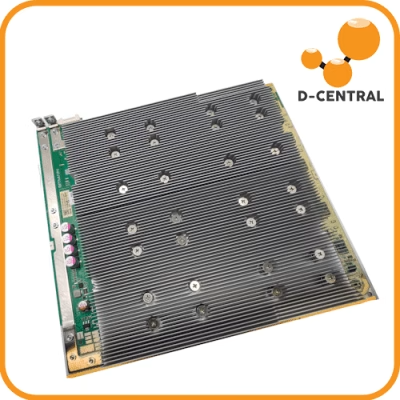
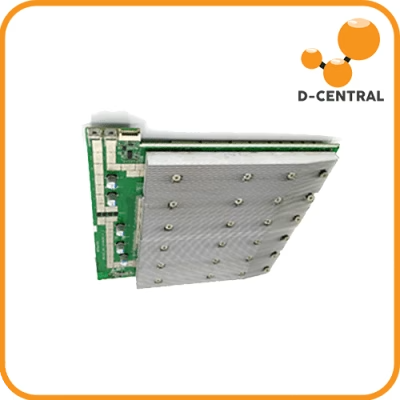
A modern ASIC hashboard is a marvel of engineering density. Take the Antminer S19 series: each hashboard carries 76 BM1397 chips, each performing trillions of SHA-256 computations per second. These chips are fed by a cascading voltage domain architecture where power is stepped down through multiple regulators before reaching each chip.
Training in electronics means you can read a schematic, trace a signal path, use a multimeter and oscilloscope to measure voltages at test points, and identify when a component has failed. Without this knowledge, a dead hashboard is a mystery. With it, you can pinpoint a blown MOSFET, a failed voltage regulator, or a cracked solder joint — and fix it.
This is exactly the kind of hands-on diagnostic work that D-Central’s ASIC repair team performs daily. We have repaired over 2,500 units across every major manufacturer — Bitmain, MicroBT, Canaan, and more. That repair experience feeds directly back into our training programs.
Thermal Management: The Silent Killer
Heat is the enemy of silicon. Every ASIC chip has a thermal design power (TDP) rating, and exceeding it degrades performance and shortens lifespan. A well-cooled miner running at 75 degrees Celsius will outlast an identical unit running at 95 degrees by years.
Training covers the full thermal chain: chip-level heat generation, thermal interface material (TIM) selection and application, heatsink design, fan curves, intake and exhaust airflow patterns, and the relationship between ambient temperature and hash rate.
For Canadian miners, thermal management presents a unique opportunity. Our winters deliver sub-zero ambient temperatures that can dramatically reduce cooling costs — or eliminate them entirely. This is why Bitcoin Space Heaters are such a powerful concept: you turn the “waste” heat from mining into useful home heating, effectively getting paid to stay warm. Understanding the thermal dynamics is what makes this dual-purpose approach work reliably.
Firmware and Software: The Brain of the Operation
Hardware without firmware is inert metal. The control board firmware manages chip initialization, clock frequency, voltage tuning, fan speed, pool communication, and error handling. Understanding firmware is what lets you tune a miner for your specific situation.
Key firmware skills include:
- Underclocking and undervolting — reducing power consumption to improve J/TH efficiency, critical for miners paying higher electricity rates
- Overclocking — pushing hardware beyond stock settings for maximum hashrate when power is cheap
- Custom firmware deployment — installing alternatives like Braiins OS or VNish that offer autotuning, better dashboards, and pool-level optimizations
- Network configuration — proper VLAN setup, static IPs, monitoring integration with tools like Foreman or custom Grafana dashboards
- Recovery procedures — reflashing bricked control boards via SD card or serial connection
For open-source miners like the Bitaxe family, firmware knowledge is even more essential. The Bitaxe runs AxeOS, and understanding how to configure it — from pool settings to fan thresholds to frequency tuning — is the difference between a unit that finds shares consistently and one that stumbles. Note: the Bitaxe Supra, Ultra, and Gamma all use a 5V barrel jack (5.5×2.1mm) for power, not USB-C. The USB-C port is for firmware flashing and serial communication only. The Bitaxe GT and Hex use 12V XT30 connectors. Getting power connections wrong is a common beginner mistake that training eliminates.
The Environment Factor: Location Shapes Strategy
No two mining operations exist in identical conditions. Training must account for the environmental variables that shape every operational decision.
| Environmental Variable | Impact on Mining | Trained Response |
|---|---|---|
| Ambient Temperature | Directly affects cooling load and maximum sustainable hashrate | Adjust fan curves seasonally; use cold air intake in winter; add supplemental cooling in summer |
| Humidity | High humidity causes condensation on cold components, leading to corrosion and short circuits | Monitor dew point; use conformal coating on boards in humid environments; avoid rapid temperature swings |
| Dust & Particulates | Clogs heatsinks, insulates chips, increases thermal load, accelerates fan bearing wear | Implement intake filtration; schedule regular cleaning cycles; use compressed air for heatsink maintenance |
| Electricity Cost | The single largest operating expense; determines whether to overclock, underclock, or shut down | Calculate break-even J/TH at your rate; tune firmware accordingly; consider time-of-use arbitrage |
| Electrical Infrastructure | Undersized circuits cause voltage drops, tripped breakers, and fire risk | Calculate total amperage draw; use dedicated circuits; install proper PDUs with surge protection |
| Noise Regulations | Stock ASIC fans produce 70-80+ dB; residential areas have noise bylaws | Use immersion cooling, custom shrouds, or sound-dampened enclosures; place units in basements or garages |
Canadian miners have distinct advantages here. Hydro-Quebec offers some of the lowest industrial electricity rates in North America. Cold winters provide free cooling for roughly half the year. And for those who want hands-off operation, D-Central’s hosting facility in Laval, Quebec handles all the environmental management for you.
From Training to Self-Sufficiency: The Repair Skillset
The ultimate goal of ASIC training is self-sufficiency. A trained miner does not panic when a hashboard goes offline. They pull the unit, inspect it visually for burn marks or swollen capacitors, check voltages at the test points, run diagnostic firmware, and isolate the fault. If it is a failed chip, they can replace it. If it is a blown voltage domain, they can trace and repair the circuit.
This repair capability transforms the economics of mining. Instead of scrapping a $2,000 machine because one of three hashboards died, a trained miner spends $15 on a replacement component and an hour of labour. Multiply that across a fleet of miners and the savings are enormous.
D-Central has been the leading ASIC repair service in Canada since our founding. Our repair team handles everything from simple fan replacements to complex BGA chip rework under microscope. When we train miners, we teach the same techniques our technicians use daily — because we believe every miner should be capable of maintaining their own hardware. That is the Mining Hacker ethos: sovereignty over your tools, not dependence on a service provider.
The Open-Source Miner Revolution
The rise of open-source mining hardware — Bitaxe, NerdAxe, NerdQAxe, NerdNOS, and the growing family of open-source devices — has created an entirely new training dimension. These devices are designed to be understood, modified, and improved by their operators.
With a Bitaxe, you are not just running a miner. You are engaging with open-source hardware at every level: the PCB design files are public, the firmware source code is on GitHub, and the community actively develops improvements. Training on open-source miners means learning to read schematics, compile firmware from source, tune clock frequencies, and contribute improvements back to the community.
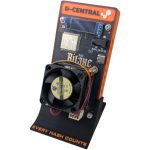
This is decentralization in its purest form — not just distributing hashrate across more nodes, but distributing knowledge across more minds. Every miner who understands their hardware at a deep level is one more node of resilience in the Bitcoin network. D-Central has been a pioneer in the Bitaxe ecosystem since day one, creating the original Bitaxe Mesh Stand and developing leading accessories including heatsinks for the Bitaxe and Bitaxe Hex. Visit the Bitaxe Hub for the complete resource center covering every model, setup guide, and accessory.
Building Your Training Path
There is no single right way to learn ASIC technology, but there is a proven progression that builds skills in the right order:
| Stage | Skills to Develop | Hardware to Practice On |
|---|---|---|
| 1. Fundamentals | Basic electronics (Ohm’s law, voltage/current/resistance), soldering, multimeter use, network basics | Bitaxe or NerdAxe — affordable, open-source, simple enough to understand fully |
| 2. Operation | Firmware configuration, pool setup, monitoring, underclocking/overclocking, thermal management | Antminer S9 (cheap, abundant, well-documented) or a Space Heater build |
| 3. Diagnostics | Test point measurement, log analysis, chip-level fault isolation, oscilloscope use | Faulty hashboards from any generation — practice on broken units before touching production hardware |
| 4. Repair | BGA rework, component replacement, solder reflow, thermal paste reapplication, board-level repair | Current-generation hashboards under guidance from experienced technicians |
| 5. Optimization | Fleet management, custom firmware tuning, power infrastructure design, profitability modeling | Your full operation — apply everything you have learned to maximize efficiency |
Why D-Central for ASIC Training
D-Central Technologies has been in the Bitcoin mining trenches since 2016. We are not academics teaching theory — we are technicians, engineers, and miners who have built, broken, repaired, and optimized thousands of ASIC units. Our training comes from the shop floor, not the lecture hall.
What makes D-Central’s approach different:
- Hands-on, hardware-first — you work on real miners, not simulations
- Repair-integrated — training includes actual diagnostic and repair techniques from our service department
- Open-source aligned — we teach using Bitaxe and open-source platforms alongside commercial hardware
- Canadian-focused — our curriculum addresses the specific advantages and challenges of mining in Canada (cold climate, hydro rates, regulations)
- Sovereignty-minded — the goal is your independence, not your dependence on us
We also offer mining consulting for operations that need strategic guidance beyond training — from site selection and power infrastructure design to fleet optimization and profitability analysis.
The Bigger Picture: Training as Decentralization
Here is the part most training guides skip. When you learn to operate and repair your own ASIC hardware, you are not just improving your personal mining operation. You are strengthening the entire Bitcoin network.
Decentralization is not just about running a node or pointing hashrate at a pool. It is about distributing competence. Every miner who can independently operate, troubleshoot, and repair their hardware is one less miner dependent on centralized service providers, manufacturers, or hosting companies. They cannot be shut down by a single point of failure.
This is why D-Central’s mission is the decentralization of every layer of Bitcoin mining — not just the hashrate distribution, but the knowledge distribution. We train miners not to create customers, but to create sovereign operators. That is the Mining Hacker way.
Bitcoin does not need passive participants. It needs informed, capable, self-reliant miners who understand their machines from the silicon up. Training is how you get there.
Frequently Asked Questions
What is ASIC technology and why is it the only option for Bitcoin mining?
ASIC stands for Application-Specific Integrated Circuit — a chip designed to do exactly one thing. In Bitcoin mining, ASICs execute the SHA-256 hashing algorithm orders of magnitude faster and more efficiently than general-purpose hardware like GPUs or CPUs. A modern ASIC miner like the Antminer S21 delivers over 200 TH/s while consuming around 3,500 watts. No GPU comes close to that efficiency. ASICs became dominant around 2013 and have been the only viable Bitcoin mining hardware ever since.
What skills do I need before starting ASIC training?
Basic electrical safety knowledge and comfort using hand tools are helpful starting points. Understanding Ohm’s law (voltage = current x resistance), knowing how to use a multimeter, and having basic soldering skills will accelerate your learning. No formal engineering degree is required — most successful ASIC technicians are self-taught or learned through hands-on mentorship. Starting with an open-source miner like a Bitaxe is an excellent way to build foundational skills on affordable, well-documented hardware.
How long does it take to become proficient in ASIC repair?
Operational proficiency — configuring, monitoring, and basic troubleshooting — can be achieved in weeks with dedicated study and practice. Diagnostic proficiency — using test points, reading logs, isolating faults to specific components — typically takes 3 to 6 months of regular hands-on work. Full repair proficiency including BGA rework and board-level component replacement usually requires 6 to 12 months of practice under guidance. The learning never truly stops as new hardware generations introduce new architectures and challenges.
Can I learn ASIC repair without formal electronics training?
Yes. Many of the best ASIC technicians in the industry are self-taught or learned through apprenticeship rather than formal education. The key is consistent hands-on practice with real hardware. Start with cheap, older-generation units like the Antminer S9 where mistakes are inexpensive. Watch teardown videos, read schematics, and practice measuring voltages at test points. D-Central’s training programs are designed specifically for people without formal electronics backgrounds — we teach the practical skills you actually need, not academic theory you will never use.
What is the difference between training on commercial ASICs versus open-source miners?
Commercial ASICs (Antminer, Whatsminer, Avalon) are closed-source — you work with the hardware and firmware the manufacturer provides, with limited documentation. Open-source miners like the Bitaxe and NerdAxe provide full schematic files, PCB layouts, firmware source code, and active community support. Training on open-source hardware gives you deeper understanding because nothing is hidden. We recommend starting with open-source platforms to build foundational knowledge, then applying those skills to commercial hardware where the principles are identical but documentation is scarcer.
How does Canada’s climate affect ASIC training and operation?
Canada offers significant natural advantages for Bitcoin mining. Cold winters provide free ambient cooling that reduces electricity costs and extends hardware lifespan. Hydro-Quebec offers some of the lowest electricity rates in North America. However, Canadian miners must also manage humidity control during spring thaw, condensation risks when bringing cold outdoor air into warm spaces, and seasonal adjustments to cooling strategies. D-Central’s training specifically addresses these Canadian conditions because generic training materials written for Texas or Georgia simply do not apply to our climate.
Is ASIC training worth the investment for a small home mining operation?
Absolutely. In fact, small operators benefit disproportionately from training because they cannot afford dedicated technicians or expensive repair services. A single hashboard repair that you perform yourself saves $200 to $500 in service fees. Proper firmware tuning can improve efficiency by 10-20%, which compounds over months and years of operation. And the ability to diagnose problems quickly means less downtime — which at current Bitcoin mining economics translates directly to preserved revenue. Training pays for itself with the first repair you perform.