The Antminer S9 is dead for profitable mining. At 14 TH/s against a network pushing past 800 EH/s and difficulty well above 110 trillion, this machine cannot compete with modern ASICs for block rewards. That is the honest truth, and anyone telling you otherwise is selling something.
But here is the thing: the S9 was never supposed to last this long. Released in 2016, it was built for a world where Bitcoin’s block reward was 12.5 BTC and network hashrate was measured in single-digit exahashes. It has survived three halvings. It has outlived dozens of “S9 killer” machines. And in 2026, a decade after its release, the Antminer S9 remains one of the most important pieces of Bitcoin mining hardware ever manufactured — not because it prints sats efficiently, but because of what it represents and what it can still do when you think like a mining hacker.
The S9 in 2026: An Honest Assessment
Let us be direct about the numbers. The Antminer S9 produces approximately 14 TH/s while consuming around 1,350 watts at the wall. In a post-halving world where the block reward sits at 3.125 BTC, that hashrate is a rounding error against the network total. Your S9 contributes roughly 0.0000000175% of the total network hashrate. Running an S9 purely for mining profit in 2026 requires electricity costs below $0.02/kWh to break even — a rate virtually unavailable to residential miners in North America.
Compare this to current-generation machines:
| Model | Hashrate | Power Draw | Efficiency (J/TH) |
|---|---|---|---|
| Antminer S9 | 14 TH/s | ~1,350W | ~96 J/TH |
| Antminer S19 XP | 140 TH/s | ~3,010W | ~21.5 J/TH |
| Antminer S21 | 200 TH/s | ~3,500W | ~17.5 J/TH |
| Antminer S21 Pro | 234 TH/s | ~3,510W | ~15 J/TH |
The S9 is roughly 6x less efficient per terahash than an S21 Pro. For pure mining profit, it is obsolete. Period. But “obsolete for profit mining” is not the same as “useless,” and this distinction matters enormously for the home mining community.
Why the S9 Still Matters for Decentralization
Bitcoin’s security model depends on decentralized hashrate. Every hash that comes from a home miner instead of a data center in a single jurisdiction strengthens censorship resistance. The S9, available for as little as $30-50 on the secondary market, is the cheapest possible way to contribute real SHA-256 hashrate to the Bitcoin network.
This is not about profit. This is about principle.
When you run an S9 at home, you are telling the network: another independent node of hash power exists outside of institutional control. You cannot put a dollar value on censorship resistance. You cannot calculate an ROI on sovereignty. The S9, at its absurdly low acquisition cost, is arguably the most accessible tool for participating in Bitcoin’s security model with real ASIC-grade hashrate.
The Bitaxe ecosystem has taken this concept further with purpose-built open-source solo miners, but the S9 carved this path first. It was the original “home miner for the plebs” — and it still fills that role for those who want maximum hashrate per dollar of hardware cost, noise and power budget aside.
The S9 as a Bitcoin Space Heater: Where This Machine Truly Shines
Here is where the S9 transforms from an “obsolete miner” into something genuinely brilliant. Every watt consumed by an ASIC miner converts to heat with near-perfect efficiency. The S9 consumes approximately 1,350 watts — equivalent to a standard portable space heater. But unlike a resistive heater that gives you nothing but warmth, the S9 gives you warmth and satoshis.
This is the dual-purpose mining thesis that D-Central has championed since the early days, and it is the reason we build our Bitcoin Space Heater product line.
The Thermodynamic Reality
The laws of physics do not care about mining difficulty. 1,350 watts of electrical energy converts to approximately 4,600 BTU/h of heat output regardless of what the Bitcoin network difficulty is. Whether that S9 is earning one satoshi per hour or one hundred, the heat output is identical. This makes the S9 a perfectly efficient electric heater that also happens to mine Bitcoin.
For Canadian home miners, this changes the economics entirely:
| Scenario | Monthly Power Cost (at $0.08/kWh) | Heating Value Offset | Net Mining Cost |
|---|---|---|---|
| S9 running 24/7 | ~$78 CAD | ~$78 CAD (replaces space heater) | ~$0 + sats earned |
| S9 heating season only (Oct-Apr, ~7 months) | ~$546 CAD | ~$546 CAD | ~$0 + sats earned |
When you were going to spend that electricity on heating anyway, the sats you earn are effectively free. The mining becomes a byproduct of a household necessity. This is not a hypothetical argument — thousands of home miners across Canada and northern climates run this exact setup every winter.
The D-Central S9 Space Heater Edition
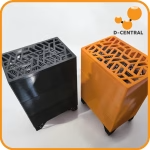
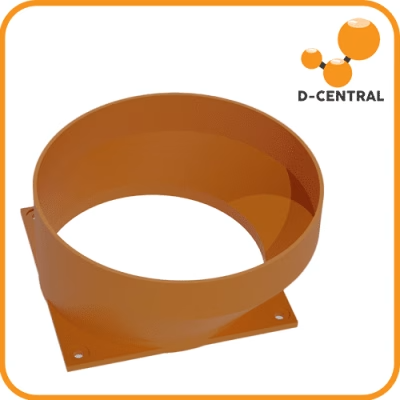
D-Central has engineered purpose-built Bitcoin Space Heater units based on the S9 platform, designed specifically for home deployment. These units address the two biggest complaints about running an S9 at home: noise and airflow management. Our Space Heater Edition configurations route the exhaust heat through ducting-compatible enclosures, dramatically reduce noise levels compared to running a bare S9 on a shelf, and integrate cleanly into a living space.
We offer Space Heater Editions across multiple ASIC platforms — not just the S9, but also L3, S17, and S19-based units — because the principle applies to any ASIC that produces heat (which is all of them). Check the full lineup at our Bitcoin Space Heaters page.
Firmware Optimization: Squeezing Every Last Drop
If you are going to run an S9 in 2026, you should not be running stock firmware. Third-party firmware options have matured significantly and can meaningfully improve the S9’s performance characteristics.
Which of those options is genuinely open — and what "open" is worth on a machine this old — is its own question. The open-source firmware options for an S9 in 2026 walks the S9-specific landscape: what BraiinsOS+ opens and what it keeps closed, where DCENT_OS’s GPL-3.0 public-beta S9 lane actually stands, and where the brick risk sits.
BraiinsOS+
BraiinsOS+ (formerly Braiins OS) is the gold standard for S9 firmware optimization. Key capabilities include:
- Autotuning: Automatically finds the optimal frequency for each individual ASIC chip on each hashboard, with voltage regulated per power domain rather than per chip, maximizing efficiency at the silicon level
- Dynamic Power Target: Set a wattage ceiling and let the firmware automatically adjust hashrate to stay within your power budget — critical for home mining where you may be sharing a circuit
- Stratum V2 Support: Enables advanced mining protocol features including job negotiation, which has direct implications for mining decentralization
- Temperature Management: Intelligent fan control and thermal throttling that protects hardware while maintaining maximum performance within thermal constraints
With BraiinsOS+ autotuning, a well-maintained S9 can achieve efficiency improvements of 10-20% compared to stock firmware, pushing the efficiency closer to 80 J/TH in optimal conditions.
Vnish Firmware
Vnish offers a different approach with a more aggressive feature set:
- Overclocking Profiles: Push beyond stock frequencies for maximum hashrate when power cost is not the primary concern (space heating scenarios)
- Immersion Mode: Optimized profiles for immersion-cooled S9 setups, where thermal constraints are removed and chips can run at higher voltages
- Per-Chain Tuning: Fine-grained control over individual hashboard frequencies and voltages
Underclocking: The Smart Play for Space Heaters
For space heater applications, underclocking is often the optimal strategy. Reducing the S9’s frequency drops both power consumption and hashrate, but the efficiency curve is non-linear — you lose less hashrate per watt saved at lower frequencies. An underclocked S9 running at 800W might produce 8-9 TH/s at significantly better efficiency than the stock 14 TH/s at 1,350W. This means:
- Lower noise levels (fans spin slower)
- Reduced heat output to match smaller rooms
- Better efficiency (more sats per watt)
- Longer hardware lifespan (reduced thermal and electrical stress)
The ability to dial your S9 between 800W and 1,600W gives you a variable-output heater with granular control, something no standard space heater offers.
Maintenance and Repair: Keeping Your S9 Alive
A decade-old mining platform requires proper maintenance. The S9’s BM1387 ASIC chips are remarkably durable, but the supporting components — fans, connectors, thermal compound, and power supply units — need attention.
Essential Maintenance Schedule
- Monthly: Compressed air blowout to clear dust from heatsinks and fan blades. Dust accumulation is the number-one killer of mining hardware
- Quarterly: Inspect all power connectors for signs of heat damage, discoloration, or looseness. The 6-pin PCIe connectors on the hashboards are a common failure point
- Annually: Consider replacing thermal compound between ASIC chips and heatsinks. After years of thermal cycling, the original compound degrades significantly
- As Needed: Replace fans when bearing noise increases or airflow decreases. The stock dual-ball-bearing fans have a typical lifespan of 2-4 years under continuous operation
When Repair Makes Sense
D-Central has repaired thousands of Antminer S9 units over the years. Common failure modes include:
- Dead ASIC chips: Individual BM1387 chips can fail, taking out a chain of chips on the hashboard. Skilled repair involves identifying and bypassing or replacing the failed chip
- Hashboard connector damage: Repeated insertion/removal of hashboard ribbon cables can damage the connectors, causing intermittent hashboard detection failures
- PSU degradation: The APW3++ power supply units that shipped with most S9s degrade over time, losing output capacity and efficiency
- Control board failures: The Beaglebone-based control board can develop SD card corruption or ethernet port failures
Given the S9’s low replacement cost, repair only makes economic sense in specific scenarios: when you have multiple units and want to consolidate working parts, when the failure is minor (fan replacement, PSU swap), or when the unit has sentimental or educational value. For complex hashboard repairs, our ASIC Repair service can diagnose and quote the work, but we will always be honest about when replacement makes more sense than repair.
Alternative Paths: When to Move Beyond the S9
If the S9’s noise level, power consumption, or hashrate no longer fits your needs, the Bitcoin home mining landscape in 2026 offers compelling alternatives.
Open-Source Solo Miners
The Bitaxe family of open-source miners has exploded in popularity. These devices — Bitaxe Supra, Ultra, Hex, Gamma, GT, and more — offer genuine SHA-256 hashrate in tiny, quiet, low-power packages designed specifically for home use. They run on 5V or 12V power, produce minimal noise, and are purpose-built for solo mining and decentralization.
D-Central is a pioneer in the Bitaxe ecosystem, having created the original Bitaxe Mesh Stand and developed leading accessories including heatsinks for Bitaxe and Bitaxe Hex. We stock every Bitaxe variant plus the full Nerd/Open-Source lineup: NerdAxe, NerdNOS, Nerdminer, NerdQAxe, and more. Visit our shop to explore the full range.
The Bitaxe is not a replacement for the S9 in terms of raw hashrate — a single Bitaxe produces 0.5-1.2 TH/s compared to the S9’s 14 TH/s. But for a quiet, always-on solo miner that sips power and sits on your desk, there is nothing better.
Modern ASICs for Serious Home Mining
If you want to scale up your home mining operation, modern ASICs deliver dramatically more hashrate per watt. D-Central offers custom configurations including our Slim Edition, Pivotal Edition, and Loki Edition Antminers, purpose-built for home deployment with noise reduction and form factor improvements. We also provide mining consulting services to help you design a home mining setup that fits your electrical capacity, noise tolerance, and budget.
For those who want institutional-grade hashrate without the home infrastructure challenges, D-Central operates mining hosting in Canada from our facility in Montreal, Quebec — one of the most competitive electricity jurisdictions in North America.
The S9’s Legacy: A Decade of Decentralization
The Antminer S9 shipped more units than perhaps any other ASIC miner in history. Millions of these machines were deployed worldwide between 2016 and 2019, and a significant fraction of them are still running in some capacity in 2026. This single model did more to decentralize Bitcoin’s hashrate than any corporate mining initiative ever has.
The S9 was the machine that made home mining real for ordinary people. Before the S9, ASIC mining was expensive, technically demanding, and largely the domain of industrial operations. The S9’s combination of reasonable price, solid reliability, and straightforward setup brought SHA-256 mining into garages, basements, and spare bedrooms around the world.
That legacy lives on. The open-source mining movement — Bitaxe, NerdAxe, NerdQAxe, and their derivatives — carries forward the same principle: put hashrate in the hands of individuals, not institutions. Every hash counts. Whether it comes from an S9 heating your workshop, a Bitaxe on your desk, or an S21 Pro in a hosted facility, each independent miner strengthens Bitcoin’s censorship resistance.
D-Central has been part of this story since 2016. We have repaired, optimized, repurposed, and sold more S9 units than we can count. We turned them into space heaters before anyone else thought it was a good idea. And we continue to believe that the path to a truly decentralized Bitcoin network runs through the homes and workshops of individual miners everywhere.
If you are just getting started with Bitcoin mining, consider our mining training resources. If you have an S9 collecting dust in a closet, pull it out, flash BraiinsOS+, and point it at a pool — or better yet, convert it into a space heater for next winter. That machine still has work to do.
Frequently Asked Questions
Is the Antminer S9 still profitable in 2026?
For pure mining profit at typical residential electricity rates, no. The S9 produces approximately 14 TH/s at ~1,350W, which cannot generate enough Bitcoin at current network difficulty (110T+) and a 3.125 BTC block reward to cover electricity costs above $0.02/kWh. However, when used as a space heater — where the electricity cost is already budgeted for heating — the sats earned become effectively free income on top of a household necessity.
What is the best firmware for the Antminer S9 in 2026?
BraiinsOS+ is the most widely recommended firmware for the S9, offering autotuning, dynamic power targeting, Stratum V2 support, and efficiency improvements of 10-20% over stock firmware. Vnish firmware is a strong alternative if you need more aggressive overclocking options or immersion-mode profiles. Both are significantly better than running the stock Bitmain firmware.
How much does it cost to run an Antminer S9 per month?
At the stock configuration (~1,350W), running an S9 24/7 costs approximately $78 CAD per month at the Canadian average residential rate of around $0.08/kWh, or roughly $58 USD at the average US rate of $0.06/kWh. Underclocking to 800W reduces this proportionally. In space heater mode, this cost replaces what you would spend on conventional electric heating.
Can I use an Antminer S9 to heat my home?
Yes. The S9 converts all consumed electricity into heat with near-perfect efficiency, producing approximately 4,600 BTU/h at stock settings. This is equivalent to a standard 1,350W portable electric heater. D-Central manufactures purpose-built S9 Space Heater Editions with noise reduction and ducting-compatible enclosures designed for residential deployment. The key consideration is managing the noise — a stock S9 is significantly louder than a conventional space heater.
How loud is the Antminer S9?
A stock Antminer S9 produces approximately 75-80 dB of noise — comparable to a vacuum cleaner running continuously. This makes bare S9 deployment impractical in living spaces. Solutions include purpose-built enclosures (like D-Central’s Space Heater Edition), placing the unit in a basement or garage with heat ducting to living areas, and underclocking with BraiinsOS+ to reduce fan speeds. With proper enclosures and underclocking, noise can be reduced to 50-55 dB — noticeable but manageable.
Should I buy an S9 or a Bitaxe for home mining?
It depends on your goals. The S9 offers roughly 14x more hashrate than a single Bitaxe but consumes significantly more power and produces considerable noise and heat. If you want a quiet, always-on desk miner for solo mining and decentralization, the Bitaxe is the better choice. If you want a dual-purpose space heater that also mines Bitcoin, the S9 is hard to beat at its current secondary market price of $30-50. Many home miners run both — a Bitaxe year-round and an S9 Space Heater during the cold months.
Is it worth repairing a broken Antminer S9?
Given the S9’s low replacement cost ($30-50 for a working used unit), complex repairs like hashboard-level chip replacement are generally not cost-effective unless you have specific reasons (educational value, parts consolidation from multiple units). Simple repairs — fan replacement, PSU swap, connector cleaning — are absolutely worth doing. D-Central’s ASIC Repair service can diagnose your unit and provide an honest assessment of whether repair or replacement makes more sense.