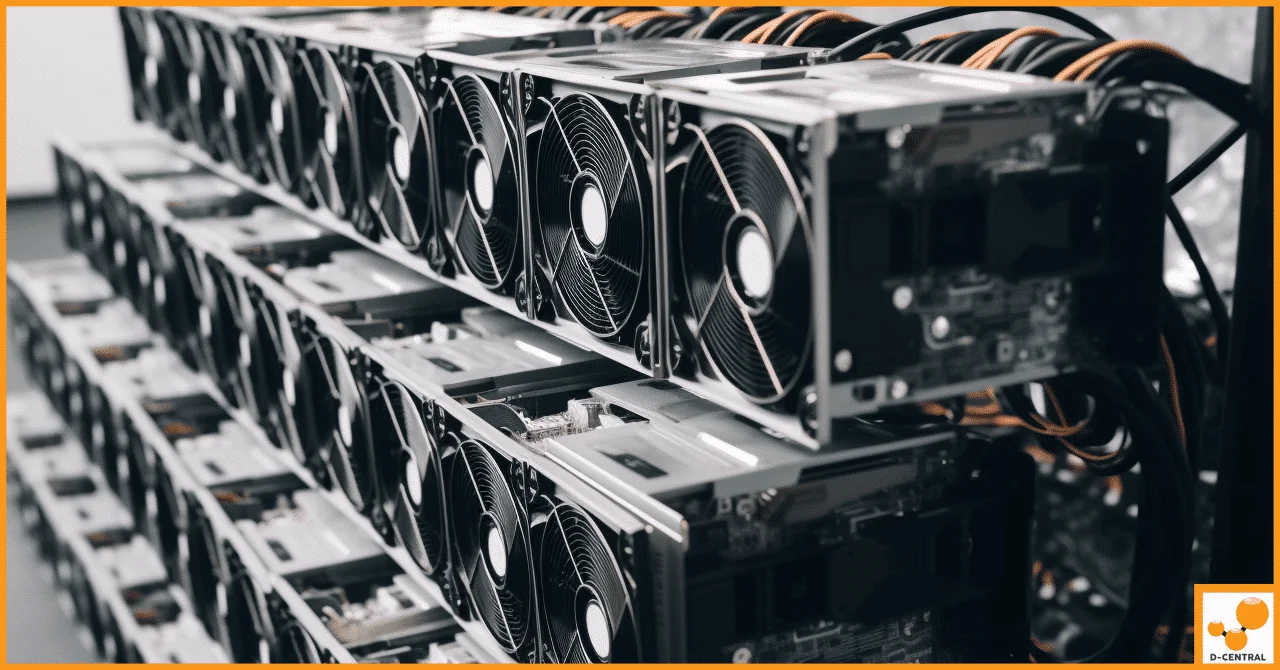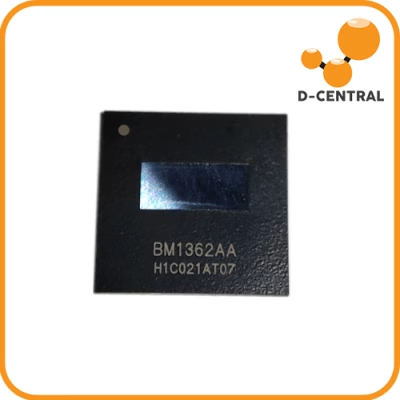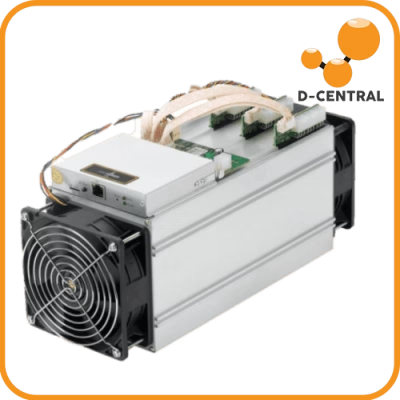
A brand-new Antminer S21 Pro rolls off Bitmain’s production line in Shenzhen, ships to a mining farm in Texas, runs for 14 months, gets replaced by the next generation, and lands on the secondary market. Is it trash? Hardly. That machine still has years of hashing life in it — if someone knows how to properly inspect, repair, and recondition it. That someone is us.
At D-Central Technologies, we have been tearing down, diagnosing, and rebuilding ASIC miners since 2016. We have repaired thousands of Antminers across every generation from the S9 to the S21 series. When we talk about refurbished Antminers, we are not repeating marketing copy from a spec sheet — we are speaking from nearly a decade on the bench, soldering iron in hand, oscilloscope running.
This guide breaks down everything you need to know about buying refurbished Antminers in 2026: what “refurbished” actually means at a technical level, which models deliver the best value, what to inspect before you buy, and why a properly reconditioned miner can be the smartest hardware decision a home miner makes.
What Does “Refurbished” Actually Mean for an Antminer?
The term “refurbished” gets thrown around loosely in the mining hardware market. Some sellers slap a sticker on a dusty S19 and call it refurbished. Others run a full diagnostic, replace degraded components, flash updated firmware, and stress-test for 72 hours before shipping. The difference between those two scenarios is the difference between a paperweight and a reliable mining rig.
A genuine refurbishment process — the kind we run at our ASIC repair facility in Montreal, Quebec — involves multiple stages:
Stage 1: Initial Diagnostic and Assessment
Every unit gets a full power-on test. We check each hashboard individually, measure voltage regularity across ASIC chip domains, inspect fan bearings and RPM consistency, and log the control board firmware version. This initial pass tells us exactly what the machine needs — and whether it is worth reconditioning at all. Units with catastrophic hashboard failures or corroded PCB traces get parted out, not resold.
Stage 2: Deep Cleaning
Mining hardware accumulates dust, debris, and sometimes insect nests depending on where it was deployed. Thermal compound degrades. Heatsink fins clog. We disassemble each unit, clean every component with compressed air and isopropyl alcohol, remove old thermal paste, and reapply fresh compound to ensure proper heat transfer from ASIC chips to heatsinks.
Stage 3: Component Replacement
Worn fans get replaced — not with generic substitutes, but with OEM-spec or better replacements rated for continuous 24/7 operation. Degraded thermal pads on voltage regulators and memory chips get swapped. If a hashboard has dead ASIC chips, we replace them individually using BGA rework stations. Power connectors showing heat damage or oxidation get desoldered and replaced. Every replacement part must meet or exceed original specifications.
Stage 4: Firmware Update and Configuration
Outdated stock firmware gets updated to the latest stable release. For miners heading to home environments, we can also flash custom firmware options like Braiins OS+ or VNish that enable underclocking, power limiting, and per-chip tuning — critical features for running an Antminer at home without tripping breakers or waking the neighbours.
Stage 5: Burn-In and Stress Testing
This is the stage that separates serious refurbishers from fly-by-night resellers. We run every reconditioned unit for an extended burn-in period under full load. We monitor hash rate stability, chip temperatures, power draw, and error rates across every ASIC domain. A miner that cannot hold stable output for the entire test period goes back to the bench for further work. Only units that pass get certified and shipped.
New vs. Refurbished Antminers: An Honest Comparison
Let us cut through the noise with a straightforward comparison. The right choice depends on your situation, your budget, and what you are trying to accomplish with your mining setup.
| Factor | New Antminer | Refurbished Antminer |
|---|---|---|
| Upfront Cost | Full retail price | 30-60% less than new |
| Warranty | Manufacturer warranty (varies) | Seller warranty (30 days to 6 months typical) |
| Lead Time | Weeks to months from Bitmain | Usually in-stock, ships immediately |
| Hash Rate | Factory spec guaranteed | At or near factory spec if properly tested |
| Efficiency (W/TH) | Latest generation available | Depends on model generation |
| Availability of Older Models | Only current gen from manufacturer | Access to discontinued models |
| Custom Firmware Readiness | May void manufacturer warranty | Often pre-flashed with custom firmware |
| Home Mining Suitability | Stock config often too loud/hot | Can be pre-configured for residential use |
The biggest advantage of refurbished is not just cost savings — it is access and flexibility. When Bitmain releases a new generation, the previous one disappears from their store. But models like the S19j Pro, S19 XP, and even the venerable S9 remain highly useful for specific applications. A refurbished S9, for example, is the backbone of many Bitcoin space heater builds because of its low acquisition cost and well-documented modding potential.
Which Refurbished Antminer Models Are Worth Buying in 2026?
Not all Antminer generations age equally. Some models have proven themselves as workhorses with decade-long operational lives. Others had design flaws that make refurbished units risky no matter who reconditions them. Here is a model-by-model breakdown based on our hands-on experience repairing and reconditioning every Antminer generation:
Tier 1: Best Value Refurbished (Recommended)
| Model | Hash Rate | Power Draw | Efficiency | Why It Works Refurbished |
|---|---|---|---|---|
| Antminer S19j Pro | 104 TH/s | ~3,068 W | 29.5 J/TH | Massive install base, abundant parts, proven reliability, excellent custom firmware support |
| Antminer S19 XP | 140 TH/s | ~3,010 W | 21.5 J/TH | Top-tier efficiency in the S19 family, still competitive in 2026 power markets |
| Antminer S21 | 200 TH/s | ~3,500 W | 17.5 J/TH | Current-gen performance at used pricing as farms rotate stock for S21 Pro/XP |
| Antminer S9 | 13.5 TH/s | ~1,350 W | 100 J/TH | Legendary durability, dirt cheap, perfect for space heater conversions and learning |
Tier 2: Solid Picks with Caveats
| Model | Hash Rate | Power Draw | Efficiency | Notes |
|---|---|---|---|---|
| Antminer T21 | 190 TH/s | ~3,610 W | 19 J/TH | Good efficiency, but fewer units in circulation means less parts availability |
| Antminer S19 | 95 TH/s | ~3,250 W | 34.2 J/TH | Good base model, but S19j Pro offers better efficiency for similar used pricing |
| Antminer T19 | 84 TH/s | ~3,150 W | 37.5 J/TH | Budget-friendly 19 series entry, but check PSU compatibility carefully |
Tier 3: Proceed with Caution
| Model | Why Caution Is Warranted |
|---|---|
| Antminer S17 / T17 Series | Known for delaminated ASIC chips — a manufacturing defect that causes progressive hashboard failure. Refurbishment can extend life but the underlying design flaw remains. |
| Antminer S15 / T15 | Short production run, scarce replacement parts, and efficiency that does not justify 2026 electricity costs in most markets. |
For a deep dive on the S17 chip delamination issue, see our technical article: Delaminated Chips in Antminer 17 Series: Causes and Solutions.
The Refurbished Antminer as a Space Heater: D-Central’s Signature Use Case
Here is where it gets interesting for home miners. A refurbished Antminer is not just a cheaper way to hash — it is the foundation of a dual-purpose machine that mines Bitcoin and heats your home simultaneously.
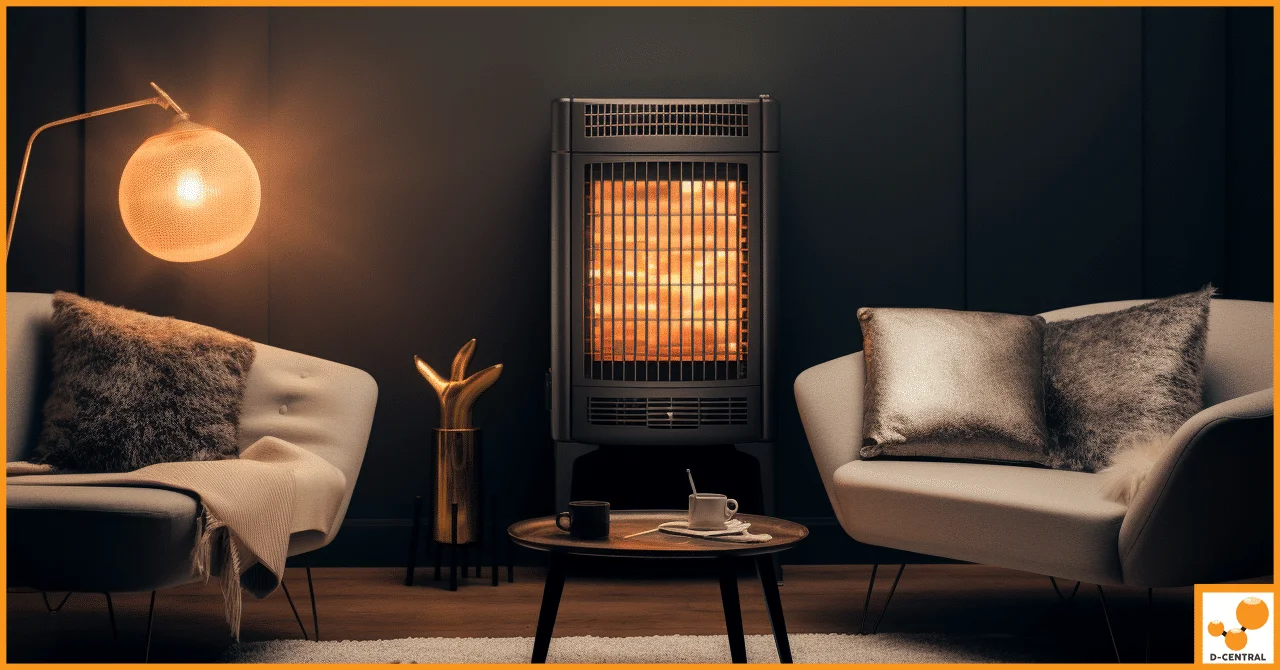
An Antminer S9 pulling 1,350 watts generates approximately 4,600 BTU per hour. That is equivalent to a mid-size portable electric heater. The difference? The electric heater gives you nothing but warmth. The Antminer gives you warmth and Bitcoin. Every watt consumed is converted to heat with 100% efficiency — the laws of thermodynamics guarantee it.
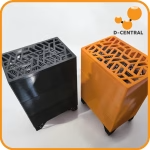
During Canadian winters, a properly enclosed refurbished Antminer offsets heating costs while stacking sats. We build and sell complete Bitcoin Space Heater editions — S9, S19, and L7 units installed in sound-dampened enclosures with duct adapters for directing warm air into living spaces. Many of these builds start with refurbished hardware because the economics make perfect sense: lower hardware cost, identical heat output, and you are mining Bitcoin the entire time.
This is what we mean by “Bitcoin Mining Hackers.” We take institutional-grade hardware that a mining farm retired and hack it into something that heats a Canadian garage, basement, or workshop while contributing hash rate to the Bitcoin network. Every hash counts.
What to Inspect Before You Buy a Refurbished Antminer
Whether you are buying from D-Central or evaluating another seller, here is the technical checklist every buyer should run through before committing:
Hashboard Health
Ask for per-hashboard hash rate data, not just an aggregate number. A healthy S19j Pro should show three hashboards each contributing roughly 34-35 TH/s. If one board is significantly lower, it likely has dead ASIC chips that were not replaced during refurbishment. Also ask about ASIC chip temperature variance — a spread greater than 10-15 degrees Celsius across chips on the same board can indicate failing thermal interfaces or partially dead chip domains.
Fan Condition
Original Antminer fans have a finite bearing life. After 12-18 months of continuous operation, many start developing bearing noise or reduced RPM. Refurbished units should have fan bearings inspected and fans replaced if they do not meet RPM specifications. Ask whether the fans are original or replacements, and what their rated lifespan is.
PSU Inclusion and Condition
Some refurbished listings include the power supply unit (APW series for most Antminers), while others sell the miner only. This matters — a genuine APW12 or APW9+ in good condition adds significant value. If the PSU is included, ask about capacitor health and whether the unit has been load-tested at full draw. If you need a PSU separately, we carry APW12 power supplies and other compatible units.
Firmware Status
What firmware is installed? Stock Bitmain firmware, Braiins OS+, VNish, or LuxOS? Is the control board locked to a specific firmware version? Some refurbished S19 units have been flashed with firmware that restricts pool selection or overclocking — check for this before buying. Our Antminer firmware update guide covers every model and every firmware option.
Physical Condition
Request photos of the hashboard PCBs, power connectors, and heatsink fins. Look for corrosion around connectors, discoloration on PCB traces (indicates previous overheating), bent heatsink fins, and signs of liquid damage. A reputable seller will provide detailed photos without hesitation.
Operational History
Where was the unit deployed? Air-cooled or immersion-cooled? A miner that ran in a clean, temperature-controlled data centre will typically be in better condition than one that operated in a dusty shipping container in the desert. Immersion-cooled units may have residual dielectric fluid that requires cleaning but often have excellent chip health due to consistent thermal management.
Red Flags When Buying Refurbished Mining Hardware
The secondary ASIC market has its share of bad actors. Here are warning signs to watch for:
- No burn-in test data provided. Any seller claiming to refurbish miners should be able to provide hash rate logs from extended testing. “We tested it and it works” is not the same as “Here are 48 hours of continuous hash rate data.”
- Vague component replacement claims. “All worn parts replaced” means nothing without specifics. Which parts? Fans? Thermal pads? ASIC chips? How many? What brands?
- No warranty or returns policy. Even a 30-day warranty signals confidence in the refurbishment quality. Zero warranty means zero accountability.
- Prices that seem impossibly low. A refurbished S21 for half the price of any other listing usually means it has undisclosed hashboard issues, a locked control board, or it is simply a scam.
- Stock photos instead of actual unit photos. You should see photos of the specific unit you are buying, not generic product images from Bitmain’s website.
- Shipping from regions with no return path. If you cannot practically return a defective unit, the warranty is worthless regardless of what it says on paper.
The Economics of Refurbished Antminers in 2026
Post-halving economics have changed the calculus for every miner. With the block subsidy at 3.125 BTC since April 2024, efficiency matters more than ever. But efficiency is not just about joules per terahash — it is about total cost of ownership, which is where refurbished hardware shines.
Consider two scenarios for a Canadian home miner paying $0.08/kWh:
| Scenario | New S21 Pro (270 TH/s) | Refurbished S19j Pro (104 TH/s) |
|---|---|---|
| Hardware Cost | ~$8,000-$10,000 CAD | ~$1,200-$2,000 CAD |
| Power Consumption | ~3,500 W | ~3,068 W |
| Efficiency | ~15 J/TH | ~29.5 J/TH |
| Monthly Power Cost | ~$202 CAD | ~$177 CAD |
| Heat Output for Home | ~11,900 BTU/hr | ~10,400 BTU/hr |
| Space Heater Offset Value* | ~$150-200 CAD/month (winter) | ~$130-180 CAD/month (winter) |
*Heating offset based on displacing electric baseboard heating at comparable rates during a 6-month Canadian heating season.
The new S21 Pro hashes circles around the S19j Pro in raw output. But the refurbished S19j Pro costs a fraction of the price and produces nearly as much heat for your home. If your primary goal is dual-purpose mining — heating and hashing — the refurbished unit delivers a dramatically faster cost recovery because your hardware expense is a fraction of the new unit price.
For miners who want to run the numbers on their own situation, our mining profitability calculator lets you plug in your electricity rate, hardware cost, and hash rate to see projected economics.
Why Refurbished Hardware Matters for Bitcoin Decentralization
This is the part most guides skip, and it is arguably the most important.
Bitcoin’s security depends on hash rate distribution. When only well-funded mining farms can afford the latest-generation hardware, hash rate concentrates in the hands of a few large operators. That concentration is the antithesis of everything Bitcoin was built to achieve.
Refurbished mining hardware is a decentralization tool. It puts functional, profitable hash rate into the hands of home miners, hobbyists, and small operators who would otherwise be priced out of the network. Every refurbished Antminer running in a Canadian basement, a garage in Quebec, or a workshop in Alberta adds another independent node of hash rate to the Bitcoin network.
This is not a side benefit — it is core to D-Central’s mission. We exist to decentralize every layer of Bitcoin mining. Reconditioning hardware and making it accessible to individual miners is one of the most direct ways to accomplish that. When we refurbish an Antminer, we are not just extending the life of a machine — we are extending the reach of the Bitcoin network into places that large-scale industrial mining cannot go.
D-Central’s Approach to Refurbished Antminers
We are not a reseller who sources random units from Alibaba and flips them with a markup. Every refurbished Antminer we sell passes through our repair facility in Montreal, Quebec. We have the diagnostic equipment, the replacement parts inventory, and the technical expertise to properly assess and recondition every unit.
Here is what sets our refurbishment process apart:
- Individual hashboard testing. We do not just power on the unit and check the dashboard. Every hashboard is tested individually with known-good control boards and PSUs to isolate issues.
- Component-level repair capability. If a hashboard has 2 dead chips out of 76, we replace those 2 chips. We do not swap in a “good enough” hashboard from another unit — we fix the board.
- Custom configuration options. Need the unit pre-flashed with Braiins OS+ and underclocked for residential power? We do that. Want it configured for a specific mining pool? Done. Need it fitted into one of our Slim Edition cases for home deployment? We build that too.
- Canadian-based support. When you buy from us, your support comes from technicians in Canada who have actually repaired the hardware you are running. Not a script-reading call centre — real technicians who speak repair.
- Full repair ecosystem. If something goes wrong months later, we do not shrug. We offer ASIC repair services for every Antminer model from the S9 through the S21 series, with model-specific repair pages and transparent processes.
Maintaining Your Refurbished Antminer for Maximum Lifespan
A properly maintained Antminer — refurbished or new — can run for years. Here are the maintenance practices that extend operational life:
Regular Dust Cleaning (Every 3-6 Months)
Compressed air through the heatsink channels and fan blades prevents thermal buildup. If you are running in a dusty environment, increase the frequency. Clogged heatsinks are the number one cause of premature ASIC chip failure.
Fan Monitoring and Replacement
Monitor fan RPM through your miner’s dashboard or firmware interface. Gradually declining RPM indicates bearing wear. Replace fans proactively before they fail completely — a seized fan can cause rapid thermal damage to hashboard components.
Firmware Maintenance
Keep firmware updated to the latest stable release for your chosen firmware platform. Updates often include thermal management improvements, chip tuning optimizations, and security patches. Our firmware comparison guide helps you pick the right platform for your needs.
Power Quality
Run your Antminer on a dedicated circuit with clean, stable power. Voltage sags and spikes stress PSU capacitors and can cause hashboard instability. A basic surge protector is a minimum; a UPS or power conditioner is better for valuable hardware.
Temperature Management
Keep ambient intake temperature below 35 degrees Celsius. ASIC chips are rated for higher temperatures, but longevity drops significantly above 80 degrees Celsius at the chip level. Proper airflow management — intake from cool air, exhaust directed away from the intake — is straightforward but often overlooked in home setups.
Frequently Asked Questions
How long does a refurbished Antminer typically last?
With proper maintenance, a quality refurbished Antminer can operate for 3-5+ additional years. The S9, first released in 2016, is still running in thousands of setups worldwide in 2026. Longevity depends on component quality during refurbishment, operating environment, and maintenance practices. ASIC chips themselves rarely fail — it is the supporting components (fans, thermal interfaces, power connectors) that typically need attention over time.
Is it still worth mining Bitcoin with an older refurbished Antminer like the S9?
For pure profitability against electricity cost alone, the S9’s 100 J/TH efficiency makes it unprofitable in most North American markets at current difficulty levels. However, the S9 remains highly valuable for dual-purpose applications — particularly as a space heater. When you account for the heating value of the 1,350 watts it consumes, the Bitcoin mined becomes a bonus on top of heat you were already going to pay for. This is why we continue to build and sell S9-based Bitcoin Space Heater editions.
What warranty does D-Central offer on refurbished Antminers?
Warranty terms vary by product and condition tier. Each refurbished listing on our store specifies the warranty period and coverage. Regardless of warranty status, we offer paid ASIC repair services for any Antminer model, so you are never left without a repair path. Contact us for specific warranty details on the unit you are considering.
Can a refurbished Antminer be used for solo mining?
Absolutely. Any Antminer — new or refurbished — can be pointed at a solo mining pool. The hash rate determines your probability of finding a block, not the age or condition of the hardware. While the odds are slim with a single unit (and you should understand the probability math before committing), the possibility of hitting a full 3.125 BTC block reward is what makes solo mining appealing to many Bitcoin enthusiasts. Use our solo mining calculator to understand the probabilities for your setup.
Should I buy a refurbished Antminer or a Bitaxe for home mining?
These serve different purposes. A Bitaxe is an open-source, ultra-low-power solo miner — it draws about 15 watts, runs silently, and is a statement about decentralized, censorship-resistant mining. A refurbished Antminer is serious hash power — thousands of times more throughput, but with corresponding power draw, heat, and noise. Many home miners run both: a Bitaxe on the desk for fun solo mining, and a refurbished Antminer in the garage or basement for real hash rate contribution. Check out our Bitaxe Hub to learn more about the open-source mining ecosystem.
How do I know if a refurbished Antminer has been properly reconditioned?
Request burn-in test data showing sustained hash rate over at least 24-48 hours. Ask which specific components were replaced. Ask for photos of the actual unit, not stock images. Check whether the seller has in-house repair capability — a seller who cannot repair a miner is unlikely to properly refurbish one. Look for detailed product descriptions that specify hashboard condition, fan status, firmware version, and any known issues.
Can I convert a refurbished Antminer into a Bitcoin space heater myself?
Yes. We sell DIY conversion kits and enclosures for exactly this purpose. The basic concept is straightforward: enclose the miner in a sound-dampened case and route the exhaust through ductwork into your living space. Our S9 & L3 Space Heater DIY Box and Slim Edition cases are designed specifically for this. You can also start with a fully built Space Heater Edition if you prefer a turnkey solution.
What is the environmental impact of buying refurbished mining hardware?
Significant and positive. Manufacturing a new ASIC miner requires raw materials (silicon, copper, aluminum, rare earth elements), energy-intensive semiconductor fabrication, and global shipping. Refurbishing an existing unit extends its useful life by years while requiring only minor component replacements. The carbon footprint of refurbishment is a fraction of new manufacturing. For miners who care about the environmental angle — and many Bitcoin home miners are running on renewable energy — refurbished hardware aligns with a sustainability-conscious approach to mining.
The Bottom Line: Refurbished Antminers Are the Home Miner’s Edge
The mining industry generates a constant stream of capable hardware that large operations retire when the next generation arrives. That hardware does not become worthless — it becomes accessible. Refurbished Antminers are how home miners compete in a game that the industry tried to make institutional-only.
The key is buying from a source that actually knows the hardware. Not a middleman who never opened the case. Not a marketplace listing with a stock photo and a hope. Buy from people who repair these machines daily, who have the parts on the shelf, who can tell you exactly what was wrong with the unit and what they did to fix it.
That is what D-Central has done since 2016. We are Bitcoin Mining Hackers — we take the hardware that big operations discard and we hack it into tools for the home miner. Whether you are building your first space heater, expanding a small mining operation, or adding hash rate to the network from your Canadian home, a properly refurbished Antminer from a trusted source is one of the smartest moves you can make.
Browse our current inventory of mining hardware, explore our ASIC repair services, or contact our team to discuss your specific requirements. Every hash counts.