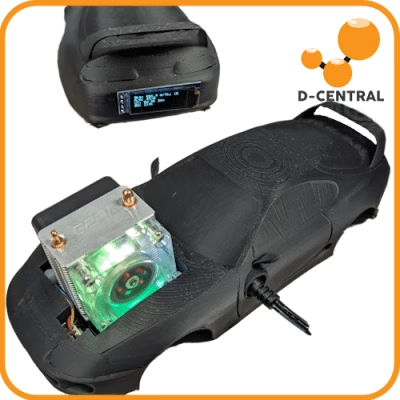
The cypherpunks warned us. Back in the early 1990s, a loose collective of cryptographers, programmers, and privacy advocates laid out a radical vision: use mathematics to dismantle centralized control over money, communication, and identity. They were dismissed as paranoid idealists. Three decades later, with central banks printing trillions at will, surveillance capitalism harvesting every keystroke, and governments weaponizing the financial system against dissenters, the cypherpunk thesis looks less like paranoia and more like prophecy.
Crypto-anarchism is the philosophical engine behind this movement. And Bitcoin, the first truly decentralized digital money, is its most powerful weapon. But here is what most people miss: running a Bitcoin miner is not just an economic activity. It is an act of crypto-anarchist praxis. Every hash your machine computes strengthens the most censorship-resistant monetary network ever built. Every block a home miner validates is a vote against centralized control.
At D-Central Technologies, we have been building the infrastructure for this revolution since 2016. We are Bitcoin Mining Hackers, and we believe that decentralizing every layer of Bitcoin mining is not just good business. It is a moral imperative.
The Roots of Crypto-Anarchism: From Mailing Lists to a Global Movement
Crypto-anarchism did not appear out of thin air. It emerged from the intersection of libertarian philosophy, computer science, and a deep skepticism of institutional power. The term was coined by Timothy C. May in his 1988 “Crypto Anarchist Manifesto,” which predicted that public-key cryptography and anonymous digital cash would fundamentally alter the relationship between individuals and the state.
The core tenets are straightforward:
- Privacy is a right, not a privilege. Individuals should control who sees their financial transactions, communications, and personal data.
- Decentralization over centralization. Power concentrated in governments, banks, and corporations inevitably leads to abuse. Distribute it.
- Code is law. Mathematical protocols enforced by software are more trustworthy than promises enforced by institutions.
- Voluntary exchange. Free people should be able to transact with each other without permission from third parties.
The cypherpunk mailing list of the 1990s was ground zero. Eric Hughes published “A Cypherpunk’s Manifesto” in 1993, declaring that “privacy is necessary for an open society in the electronic age.” Phil Zimmermann released PGP encryption and was investigated by the U.S. government for “exporting munitions.” Adam Back created Hashcash in 1997, a proof-of-work system that would directly inspire Bitcoin’s mining algorithm. Wei Dai proposed b-money. Nick Szabo designed Bit Gold. Each contribution was a brick in the foundation.
Then, in October 2008, Satoshi Nakamoto published the Bitcoin whitepaper. The missing piece, a decentralized consensus mechanism that solved the double-spend problem without a trusted third party, was finally in place. Crypto-anarchism had its killer application.
Bitcoin: Crypto-Anarchism Made Tangible
Bitcoin is not merely a digital currency. It is the most successful implementation of crypto-anarchist principles in human history. Consider what it achieves:
| Traditional Finance | Bitcoin |
|---|---|
| Central banks control money supply | Fixed 21 million cap, enforced by code |
| Banks can freeze your account | Self-custody with private keys |
| Transactions require permission | Permissionless peer-to-peer transfers |
| Inflation erodes savings | Disinflationary issuance schedule (3.125 BTC per block in 2026) |
| KYC/AML surveillance on every transaction | Pseudonymous by default |
| Settlement takes days | Final settlement in ~10 minutes |
| Requires trust in institutions | Verify, don’t trust |
Every one of these properties maps directly to a crypto-anarchist principle. Bitcoin did not just theorize about decentralized money. It shipped it. And the network has been running without a single minute of downtime since January 3, 2009, processing transactions that no government, corporation, or army can censor.
In 2026, Bitcoin’s network hashrate exceeds 800 EH/s, with mining difficulty surpassing 110 trillion. The network is more secure than it has ever been. But security and decentralization are not the same thing. That is where mining comes in, and that is where the crypto-anarchist rubber meets the road.
Why Bitcoin Mining Is the Ultimate Crypto-Anarchist Act
Running your own Bitcoin node validates transactions. Running your own miner goes further: it actively contributes to the security and decentralization of the network’s consensus mechanism. When you mine Bitcoin, you are doing several things simultaneously:
- Securing the network. Your hashpower makes 51% attacks more expensive and difficult.
- Decentralizing block production. More independent miners mean fewer single points of failure or censorship.
- Earning non-KYC Bitcoin. Mined Bitcoin has no transaction history. It is virgin sats, never touched by a centralized exchange.
- Voting with your energy. You are directing real-world resources toward the hardest money humanity has ever created.
The centralization of mining in large industrial facilities is the single greatest threat to Bitcoin’s censorship resistance. When a handful of mining pools control the majority of hashrate, the attack surface grows. Government pressure on these concentrated operations could theoretically lead to transaction censorship, OFAC-compliant block templates, or worse.
The crypto-anarchist response is clear: decentralize mining. Push hashrate to homes, garages, basements, and workshops around the world. Make it impossible to shut down because there is no single target to hit.
Home Mining: Decentralization in Practice
Home mining is where crypto-anarchist philosophy becomes daily practice. You do not need a warehouse or a power purchase agreement. You need hardware, electricity, and conviction.
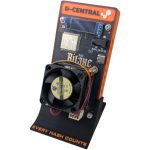
The open-source mining movement has made this more accessible than ever. Devices like the Bitaxe, an open-source solo miner built on publicly available hardware designs, put mining into the hands of anyone with a power outlet and an internet connection. Every Bitaxe running in a bedroom contributes to network decentralization in a way that a thousand machines in a single data center never will.
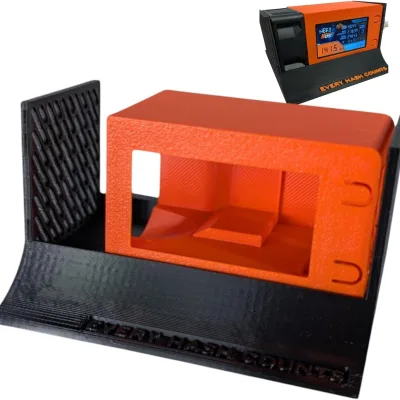
At D-Central, we have been part of the Bitaxe ecosystem since its earliest days. We created the original Bitaxe Mesh Stand, developed custom heatsinks for both the standard Bitaxe and the Bitaxe Hex, and stock every variant from the Supra and Ultra to the Gamma, GT, and Hex. This is not just commerce. It is infrastructure for the decentralization of mining.
Solo Mining: The Lottery That Matters
Solo mining with devices like the Bitaxe is sometimes called “lottery mining” because the odds of finding a block with a single low-hashrate device are small. But consider what you are actually doing: you are running an independent mining operation that answers to no pool, no coordinator, and no central authority. If you find a block, you receive the full 3.125 BTC reward (plus transaction fees) directly to your wallet. No intermediary. No KYC. Pure peer-to-peer.
Every hash counts. And every independent miner strengthens the network.
Dual-Purpose Mining: Heat Your Home, Secure the Network
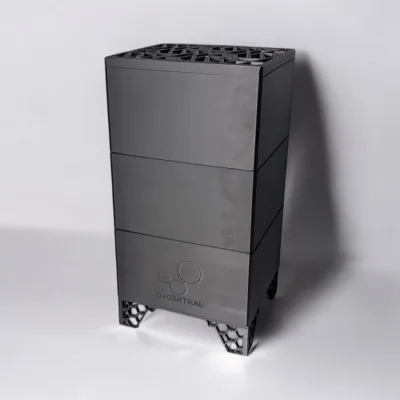
One of the most practical applications of home mining is using the heat output productively. ASIC miners convert electricity to heat at nearly 100% efficiency, the same as any electric heater, but they also produce Bitcoin in the process. Bitcoin space heaters take this concept and make it plug-and-play, turning Antminer S9s, S17s, and S19s into functional home heating units.
In Canada, where heating season stretches from October through April, this is not a gimmick. It is rational economics. You are going to spend money heating your home regardless. Why not route that energy expenditure through the Bitcoin network first? Your miner heats the room. The network gets more hashrate. You stack sats. The cypherpunks would approve.
The Surveillance State Versus the Sovereign Individual
Crypto-anarchism did not develop in a vacuum. It emerged as a direct response to the expanding surveillance capabilities of governments and corporations. In 2026, that surveillance is more pervasive than ever:
- Central Bank Digital Currencies (CBDCs) are being piloted worldwide, offering governments programmable money with built-in surveillance and spending controls.
- Financial deplatforming has become a routine political tool, with banks closing accounts based on ideological alignment rather than criminal activity.
- Chain analysis firms track Bitcoin transactions, attempting to strip away the pseudonymity that Satoshi designed into the protocol.
- Travel rules and expanded KYC regulations force exchanges to collect and share ever more personal data.
The crypto-anarchist toolkit for resisting this surveillance starts with Bitcoin but extends across multiple layers:
| Layer | Crypto-Anarchist Tool | Purpose |
|---|---|---|
| Money | Bitcoin (self-custody) | Permissionless, censorship-resistant value transfer |
| Mining | Home mining / solo mining | Non-KYC Bitcoin acquisition, network decentralization |
| Privacy | CoinJoin, PayJoin, Lightning | Break chain analysis heuristics |
| Communication | PGP, Signal, Nostr | Encrypted, censorship-resistant messaging |
| Network | Tor, VPN, mesh networks | Anonymize internet traffic |
| Hardware | Open-source miners, hardware wallets | Verify, don’t trust the hardware |
Mining sits at a critical intersection in this stack. It is the only way to acquire Bitcoin without interacting with a centralized exchange, without submitting identification, and without creating a paper trail. For the sovereignty-focused Bitcoiner, mining is not optional. It is essential.
Open-Source Hardware: Trust No One, Verify Everything
The crypto-anarchist principle of trustlessness extends beyond software. If your mining hardware is a black box designed by a single manufacturer with opaque firmware, you are trusting that manufacturer not to include backdoors, phone-home capabilities, or hashrate-skimming code. That trust has been violated before.
Open-source mining hardware like the Bitaxe family solves this problem. The hardware designs are published openly. The firmware is auditable. Anyone can manufacture, modify, and improve these devices. This is the cypherpunk ethos applied to silicon and solder: don’t trust, verify.
D-Central stocks the full range of open-source mining devices, from the Bitaxe lineup to the NerdAxe, NerdMiner, NerdQAxe, and NerdOctaxe. We also provide ASIC repair services for traditional mining hardware, because keeping existing miners running and out of landfills is another form of decentralization. A repaired Antminer in someone’s garage is infinitely more valuable to the network than a scrapped one in a dumpster.
The Canadian Advantage: Cold Climate, Cheap Power, Cypherpunk Values
Canada occupies a unique position in the global mining landscape. Long, cold winters mean that mining heat output is productive for six months or more of the year. Hydroelectric power in Quebec provides some of the cheapest electricity on the continent. And Canadian regulatory frameworks, while imperfect, have not yet descended into the outright hostility seen in some other jurisdictions.
D-Central operates from Montreal, Quebec, and has been serving Canadian home miners since 2016. We understand the specific challenges and opportunities of mining in this climate: the need for proper ventilation management in summer, the beautiful efficiency of mine-heated homes in winter, and the regulatory landscape that shapes how Canadians can participate in the network.
For miners who need more power or space than a home setup can provide, D-Central’s hosting facility in Quebec offers an alternative that keeps hashrate in Canadian hands rather than shipping it overseas.
Challenges and Criticisms of Crypto-Anarchism
No honest discussion of crypto-anarchism would be complete without addressing its criticisms. Critics raise several points:
The Illicit Use Argument
Governments frequently argue that privacy-preserving technologies enable criminal activity. This is technically true, in the same way that highways enable getaway cars and the postal service enables mail fraud. The question is whether you design systems around the assumption that citizens are criminals, or around the assumption that privacy is a fundamental right. Crypto-anarchists choose the latter. The data supports them: Chainalysis estimates that illicit activity accounts for less than 1% of all Bitcoin transactions.
The Energy Argument
Bitcoin mining consumes significant energy. Crypto-anarchists argue that this energy expenditure is the cost of trustless, decentralized consensus, and that the alternative (trusting central banks and governments with monetary policy) has proven far more costly to human freedom and prosperity. Furthermore, Bitcoin mining increasingly operates on stranded, curtailed, or renewable energy that would otherwise go unused. Home miners using their ASIC heat for space heating achieve near-zero energy waste.
The Scalability Question
Can decentralized systems scale to serve billions of people? The Lightning Network, Bitcoin’s layer-two payment channel network, demonstrates that scalability and decentralization are not mutually exclusive. Layer-one remains the immutable settlement layer. Layer-two handles the coffee purchases.
Getting Started: From Philosophy to Practice
If the principles of crypto-anarchism resonate with you, here is how to start putting them into practice:
- Run a Bitcoin full node. This is step one. Verify the blockchain yourself. Trust no one else’s copy.
- Start mining at home. A Bitaxe solo miner is an affordable entry point that contributes to network decentralization from day one.
- Self-custody your Bitcoin. Not your keys, not your coins. Move your Bitcoin off exchanges and into a hardware wallet you control.
- Use privacy tools. Learn about CoinJoin, run your transactions through the Lightning Network, and minimize your chain analysis footprint.
- Heat with hashrate. If you live in a cold climate, a Bitcoin space heater turns your heating bill into sats.
- Learn to repair. Understanding your hardware means you do not depend on anyone else to keep your miner running. D-Central’s repair services can help when you hit a wall, and we are always happy to share knowledge.
- Support open source. Choose open-source hardware and software whenever possible. Audit the code. Contribute if you can.
The Road Ahead: Crypto-Anarchism in 2026 and Beyond
The battle between centralized control and individual sovereignty is intensifying. CBDCs threaten to create the most comprehensive financial surveillance systems in history. Expanded travel rules and chain analysis are eroding Bitcoin’s pseudonymity at the exchange level. Regulatory pressure on mining operations is increasing in many jurisdictions.
But the tools of resistance are also getting stronger. The Lightning Network is maturing. Privacy-preserving transaction techniques are improving. Open-source mining hardware is becoming more powerful and accessible. And the global community of sovereign individuals running nodes and miners from their homes continues to grow.
The cypherpunks did not just predict this future. They built the tools to navigate it. Bitcoin is their greatest creation, and mining is how we keep it alive, decentralized, and free.
At D-Central Technologies, we believe that every home miner is a node of resistance in a network that no authority can shut down. We have been equipping Canadian and global miners with the hardware, knowledge, and consulting expertise to participate in this revolution since 2016. Whether you are setting up your first Bitaxe or scaling a fleet of ASICs, we are here to help you mine your own future.
Because in the end, crypto-anarchism is not about destroying systems. It is about building better ones. Systems where individuals control their own money, their own data, and their own destiny. Systems secured by mathematics rather than authority. Systems that work for everyone, not just those who hold the keys to the printing press.
Every hash counts. Start mining.
Frequently Asked Questions
What is crypto-anarchism and how does it relate to Bitcoin?
Crypto-anarchism is a political philosophy that advocates using cryptography and decentralized technology to protect individual privacy and limit centralized power. Bitcoin is the most successful implementation of crypto-anarchist principles: a permissionless, censorship-resistant monetary network that operates without banks, governments, or any central authority. Mining Bitcoin directly supports these principles by decentralizing block production and network security.
How does home Bitcoin mining advance crypto-anarchist goals?
Home mining decentralizes hashrate away from large industrial operations, making the network more resistant to censorship and government pressure. It also allows miners to earn non-KYC Bitcoin (coins with no exchange-linked transaction history), which preserves financial privacy. Every independent miner running from a home, garage, or workshop strengthens Bitcoin’s censorship resistance.
Can I realistically mine Bitcoin at home in 2026?
Yes. Open-source solo miners like the Bitaxe family are designed specifically for home use. They run quietly, consume minimal power (5V via a barrel jack connector), and let you solo mine Bitcoin from your desk. For more serious home mining, ASIC miners can be converted into Bitcoin space heaters that heat your home while earning sats. With Bitcoin’s hashrate above 800 EH/s, solo mining is a long-odds proposition, but every hash contributes to decentralization.
What is the difference between solo mining and pool mining from a crypto-anarchist perspective?
Pool mining combines your hashrate with other miners and shares rewards proportionally, but it introduces a centralized coordinator (the pool operator) who decides which transactions go into block templates. Solo mining means you construct your own block templates with zero external control. From a crypto-anarchist perspective, solo mining is the purest form because it eliminates all intermediaries between your hardware and the Bitcoin network.
Why does D-Central focus on open-source mining hardware?
Open-source hardware aligns with the cypherpunk principle of “don’t trust, verify.” When hardware designs and firmware are publicly auditable, users can verify there are no backdoors, hashrate-skimming code, or phone-home capabilities. D-Central has been a pioneer in the Bitaxe ecosystem since its early days, creating the original Mesh Stand and developing custom heatsinks and accessories. We stock every Bitaxe variant and the full Nerd/open-source lineup because we believe transparent, verifiable mining hardware is essential for a decentralized future.
How do Bitcoin space heaters connect to the crypto-anarchism philosophy?
Bitcoin space heaters convert ASIC miners into functional home heating units. Since miners convert electricity to heat at nearly 100% efficiency (the same as any electric heater), you get dual value: home heating plus Bitcoin mining. This makes mining economically rational even in regions with moderate electricity costs, lowering the barrier to home mining and distributing more hashrate to residential locations. More home miners equals a more decentralized, censorship-resistant network.
Is Bitcoin mining legal in Canada?
Yes. Bitcoin mining is legal in Canada. The country offers significant advantages for miners, including cold climates that reduce cooling costs, abundant hydroelectric power (especially in Quebec), and a relatively supportive regulatory environment compared to some other jurisdictions. D-Central has been operating from Montreal, Quebec since 2016, serving Canadian home miners and offering hosting services for those who need more capacity.