
The Upgrade Decision: Keep Your S19 or Buy an S21?
This is the question that keeps home miners up at night. You are running an S19-series miner — maybe an S19 Pro you bought in 2021, maybe an S19j Pro you picked up used last year, maybe an S19 XP that still feels relatively modern. It is hashing. It is earning sats. It is heating your basement. And then you see Bitmain’s S21 lineup: 200 TH/s at 17.5 J/TH. The S21 Pro at 234 TH/s. The S21 XP at a staggering 270 TH/s and 13.5 J/TH. Numbers that make your S19 look like a relic from a different era of Bitcoin mining.
So do you sell the old machine, eat the depreciation, and buy the new generation? Or do you keep running what you have, stack sats at a lower efficiency, and wait for the next generation to make the S21 look dated?
The answer is not as simple as “newer is better.” It depends on your electricity rate, your available circuits, your heating needs, your budget, your risk tolerance, and your timeline. An S19j Pro at $0.04/kWh in Quebec is a fundamentally different proposition than an S19j Pro at $0.15/kWh in California. An S21 makes sense for a miner building a new operation from scratch but might not justify the capital expenditure for someone who already owns paid-off S19 hardware.
This guide lays out the complete picture. Every specification, every efficiency number, every dollar of electricity cost, every repair consideration, every resale data point. We sell both generations. We repair both generations. We have deployed both generations in our hosting facility in Laval, QC. We are not here to push you toward the more expensive option — we are here to give you the data so you can make the right decision for your situation.
Complete Specifications: Side by Side
Before we analyze anything, you need the raw numbers. The S19 series spans five major variants released between 2020 and 2022, while the S21 series covers three variants released in 2024-2025. The chip generation leap — from BM1398/BM1366 to BM1368/BM1370 — is the single biggest factor driving the performance gap.
Antminer S19 Series
| Specification | S19 | S19 Pro | S19j Pro | S19k Pro | S19 XP |
|---|---|---|---|---|---|
| Hashrate | 95 TH/s | 110 TH/s | 104 TH/s | 120 TH/s | 140 TH/s |
| Power Consumption | 3,250W | 3,250W | 3,068W | 2,760W | 3,010W |
| Efficiency | 34.2 J/TH | 29.5 J/TH | 29.5 J/TH | 23.0 J/TH | 21.5 J/TH |
| ASIC Chip | BM1398 | BM1398 | BM1398 | BM1366 | BM1366 |
| Hashboards | 3 | 3 | 3 | 3 | 3 |
| Voltage Input | 220-277V AC | 220-277V AC | 220-277V AC | 220-277V AC | 220-277V AC |
| Noise Level | 75 dB | 75 dB | 75 dB | 75 dB | 75 dB |
| Dimensions | 400 x 195 x 290 mm | 400 x 195 x 290 mm | 400 x 195 x 290 mm | 400 x 195 x 290 mm | 400 x 195 x 290 mm |
| Weight | ~14.4 kg | ~14.4 kg | ~14.2 kg | ~14.2 kg | ~14.4 kg |
| Release Year | 2020 | 2020 | 2021 | 2022 | 2022 |
| PSU | Integrated (APW12) | Integrated (APW12) | Integrated (APW12) | Integrated (APW12) | Integrated (APW12) |
Antminer S21 Series
| Specification | S21 | S21 Pro | S21 XP |
|---|---|---|---|
| Hashrate | 200 TH/s | 234 TH/s | 270 TH/s |
| Power Consumption | 3,500W | 3,510W | 3,645W |
| Efficiency | 17.5 J/TH | 15.0 J/TH | 13.5 J/TH |
| ASIC Chip | BM1368 | BM1370 | BM1370 |
| Hashboards | 3 | 3 | 3 |
| Voltage Input | 220-277V AC | 220-277V AC | 220-277V AC |
| Noise Level | 75 dB | 75 dB | 75 dB |
| Dimensions | 400 x 195 x 290 mm | 400 x 195 x 290 mm | 400 x 195 x 290 mm |
| Weight | ~15.0 kg | ~15.0 kg | ~15.2 kg |
| Release Year | 2024 | 2024 | 2025 |
| PSU | Integrated | Integrated | Integrated |
The numbers tell a clear story at the silicon level. The S21 series uses two chips: the BM1368 in the base S21 and the BM1370 — Bitmain’s most advanced SHA-256 ASIC — in the S21 Pro and S21 XP. The S19 series spans two chip generations: the older BM1398 (S19, S19 Pro, S19j Pro) and the BM1366 (S19k Pro, S19 XP). The BM1370 achieves roughly 40-60% better efficiency than BM1398-based machines and 19-37% better efficiency than BM1366-based machines. That gap is entirely about semiconductor physics — smaller transistors switching faster at lower voltages.
But specifications alone do not tell you whether to buy one over the other. For that, you need context.
Efficiency Analysis: Joules Per Terahash Explained
Efficiency — measured in joules per terahash (J/TH) — is the single most important number for any miner operating at residential electricity rates. It tells you how much energy your miner consumes to produce one terahash of computational work per second. Lower is better. Always.
Here is why it matters so much: at any given difficulty level and BTC price, every miner on the network earns the same amount of bitcoin per terahash. The only variable you control is how much electricity each terahash costs you. A miner at 17.5 J/TH (S21) uses half the electricity per terahash as a miner at 34.2 J/TH (base S19). Same hashrate contribution to the network, half the electric bill.
Efficiency Comparison: All Variants
| Model | Efficiency (J/TH) | vs S21 Base | vs S21 XP | Relative Rating |
|---|---|---|---|---|
| S21 XP | 13.5 J/TH | 23% better | Baseline | Best-in-class |
| S21 Pro | 15.0 J/TH | 14% better | 11% worse | Excellent |
| S21 | 17.5 J/TH | Baseline | 30% worse | Very good |
| S19 XP | 21.5 J/TH | 23% worse | 59% worse | Good (best S19) |
| S19k Pro | 23.0 J/TH | 31% worse | 70% worse | Acceptable |
| S19 Pro | 29.5 J/TH | 69% worse | 119% worse | Marginal at high rates |
| S19j Pro | 29.5 J/TH | 69% worse | 119% worse | Marginal at high rates |
| S19 (base) | 34.2 J/TH | 95% worse | 153% worse | Heating only at most rates |
The practical impact: if you are running an S19 Pro at 29.5 J/TH and replace it with an S21 at 17.5 J/TH, you get 82% more hashrate (200 vs 110 TH/s) while consuming only 8% more power (3,500W vs 3,250W). That is the magic of a generational chip improvement — dramatically more work per watt.
Hashrate Comparison: Raw Performance in Context
Raw hashrate — measured in terahashes per second (TH/s) — determines your share of the network’s total mining reward. More hashrate means more sats, assuming the same electricity cost per hash. Here is how the two generations stack up in terms of pure computational power.
| Model | Hashrate | vs Lowest (S19) | vs Highest (S21 XP) |
|---|---|---|---|
| S19 (base) | 95 TH/s | Baseline | 35% of S21 XP |
| S19j Pro | 104 TH/s | +9% | 39% of S21 XP |
| S19 Pro | 110 TH/s | +16% | 41% of S21 XP |
| S19k Pro | 120 TH/s | +26% | 44% of S21 XP |
| S19 XP | 140 TH/s | +47% | 52% of S21 XP |
| S21 | 200 TH/s | +111% | 74% of S21 XP |
| S21 Pro | 234 TH/s | +146% | 87% of S21 XP |
| S21 XP | 270 TH/s | +184% | Baseline |
The jump is massive. A single S21 XP produces nearly as much hashrate as three base S19 units — while drawing only about 12% more power than a single S19. For miners constrained by circuit capacity (which is most home miners), this density advantage is enormous. You can point 270 TH/s at the network from a single 20A 240V circuit instead of needing three circuits for three S19 units.
But context matters. Bitcoin’s network difficulty adjusts every 2,016 blocks (roughly every two weeks) to maintain the ten-minute block interval. As more efficient hardware comes online globally, difficulty rises, and each terahash earns proportionally less bitcoin. The S21’s hashrate advantage is real, but it is competing against a global fleet that is also upgrading. Your share of the network is what determines your income — not your raw TH/s number in isolation.
The S19j Pro at 104 TH/s represented roughly 0.000014% of the network when difficulty was 50T in 2022. Today, with difficulty above 110T, that same machine represents about 0.0000064%. The hashrate did not change — the network grew around it. An S21 at 200 TH/s against today’s difficulty gives you roughly 0.000012% — better, but still a shrinking share as difficulty climbs.
This is why efficiency matters more than raw hashrate for long-term profitability. The machine that survives the next difficulty increase is the one that costs the least to operate per hash.
Power Consumption and Electrical Requirements
Both the S19 and S21 series are hungry machines. They draw between 2,760W and 3,645W at the wall, running 24/7/365. That is not a lamp you plug into a spare outlet. That is a dedicated circuit, a dedicated breaker, and proper wiring. Getting this wrong is how house fires start.
Circuit Requirements by Model
| Model | Wattage | Current @ 240V | Min. Breaker (80% rule) | Recommended Circuit |
|---|---|---|---|---|
| S19k Pro | 2,760W | 11.5A | 15A (14.4A continuous max) | 20A / 240V |
| S19 XP | 3,010W | 12.5A | 16A (15.6A continuous max) | 20A / 240V |
| S19j Pro | 3,068W | 12.8A | 16A (16.0A continuous max) | 20A / 240V |
| S19 / S19 Pro | 3,250W | 13.5A | 17A (16.9A continuous max) | 20A / 240V |
| S21 Pro | 3,510W | 14.6A | 19A (18.3A continuous max) | 20A / 240V |
| S21 | 3,500W | 14.8A | 19A (18.5A continuous max) | 20A / 240V |
| S21 XP | 3,645W | 15.2A | 19A (19.0A continuous max) | 20A / 240V (tight) |
The Canadian Electrical Code (CEC) and U.S. National Electrical Code (NEC) require that continuous loads (running 3+ hours) stay below 80% of the circuit breaker rating. A 20A breaker means 16A maximum continuous. The S21 XP at 15.2A on a 20A circuit is operating at 76% — tight but compliant. The S21 and S21 Pro are also tight at 74% and 73% respectively. If your home wiring has any additional load on the circuit, you need a dedicated 30A / 240V circuit for any S21-series machine. See our Space Heater Electrical Guide for complete wiring requirements.
Here is the critical takeaway: both generations require 240V. There is no running an S19 or S21 on a standard 120V/15A household outlet. If you do not already have 240V circuits available (dryer outlet, workshop, EV charger outlet), you will need an electrician to install one. Budget $200-600 CAD depending on your panel capacity and distance to the installation point.
The S21 series draws slightly more power than most S19 variants, but not dramatically more. An S19 Pro at 3,250W versus an S21 at 3,500W is only 250W of difference — roughly the gap between two light bulbs. The S19k Pro is the most electrical-friendly of the entire lineup at 2,760W, drawing only 11.5A at 240V. If your circuits are constrained, the S19k Pro’s efficiency-to-power ratio makes it an interesting value proposition.
Monthly Electricity Cost Comparison
The real number that matters: what does each machine cost you per month in electricity? Here is the math at three representative electricity rates.
| Model | Watts | $0.04/kWh (QC Hydro) | $0.12/kWh (US Avg) | $0.20/kWh (Expensive) |
|---|---|---|---|---|
| S19 | 3,250W | $93.60 | $280.80 | $468.00 |
| S19 Pro | 3,250W | $93.60 | $280.80 | $468.00 |
| S19j Pro | 3,068W | $88.36 | $265.08 | $441.79 |
| S19k Pro | 2,760W | $79.49 | $238.46 | $397.44 |
| S19 XP | 3,010W | $86.69 | $260.06 | $433.44 |
| S21 | 3,500W | $102.24 | $306.72 | $511.20 |
| S21 Pro | 3,510W | $101.09 | $303.26 | $505.44 |
| S21 XP | 3,645W | $104.98 | $314.93 | $524.88 |
At cheap Quebec hydroelectric rates ($0.04/kWh), the monthly electricity cost difference between an S19j Pro and an S21 is only about $14/month. At expensive rates ($0.20/kWh), it is about $70/month. The absolute electricity cost difference between generations is small because the wattage is similar. The S21’s advantage comes from producing far more hashrate per watt — not from drawing less power overall.
Heat Output and Space Heater Potential
Every watt of electricity your miner consumes is converted into heat. This is not a byproduct — it is physics. An ASIC miner is a 100% efficient space heater that also happens to mine bitcoin. A 3,250W S19 Pro produces 11,092 BTU/hr of heat. A 3,500W S21 produces 11,942 BTU/hr. For comparison, a typical portable electric space heater runs at 1,500W (5,118 BTU/hr). Your ASIC miner is two space heaters in one box.
Heat Output by Model
| Model | Watts | BTU/hr | Equivalent Space Heaters | Heats Approx. |
|---|---|---|---|---|
| S19k Pro | 2,760W | 9,419 BTU/hr | 1.8x | ~350-450 sq ft |
| S19 XP | 3,010W | 10,272 BTU/hr | 2.0x | ~400-500 sq ft |
| S19j Pro | 3,068W | 10,470 BTU/hr | 2.0x | ~400-500 sq ft |
| S19 / S19 Pro | 3,250W | 11,092 BTU/hr | 2.2x | ~400-550 sq ft |
| S21 Pro | 3,510W | 11,979 BTU/hr | 2.3x | ~450-600 sq ft |
| S21 | 3,500W | 12,116 BTU/hr | 2.4x | ~450-600 sq ft |
| S21 XP | 3,645W | 12,440 BTU/hr | 2.4x | ~500-650 sq ft |
For heating purposes, the S19 and S21 produce nearly identical heat output because they draw nearly identical wattage. The difference is what you get alongside that heat: 200 TH/s of hashrate instead of 95-110 TH/s. The S21 is a better space heater not because it produces more heat — it does not, meaningfully — but because it mines significantly more bitcoin while heating the same room.
That said, if you are buying hardware primarily for heating, the used S19 market offers dramatically better value. A used S19j Pro can be purchased for a fraction of an S21’s price, produces nearly the same heat, and mines enough bitcoin to meaningfully offset (or fully offset, at cheap electricity rates) the energy cost. We built the D-Central Bitcoin Space Heater line on this exact principle — repurposing older-generation ASICs as dual-purpose heating and mining appliances.
Noise Levels: Living with Your Miner
On paper, both the S19 and S21 series are rated at approximately 75 dB at stock settings. That is roughly the volume of a vacuum cleaner running continuously. In practice, the actual noise level depends on ambient temperature, firmware settings, fan condition, and whether you are running at stock or undervolted.
Real-World Noise Expectations
| Condition | S19 Series | S21 Series | Notes |
|---|---|---|---|
| Stock firmware, cool room (18-22C) | 68-72 dB | 68-72 dB | Fans at moderate speed, tolerable in a basement |
| Stock firmware, warm room (28-35C) | 75-80 dB | 75-80 dB | Fans at full speed, jet-engine territory |
| Undervolted (Braiins/VNish), cool room | 55-62 dB | 60-65 dB | S19 has more firmware support for aggressive undervolting |
| Immersion cooled | <45 dB | <45 dB | Fan-less, pump noise only |
A critical difference: the S19 series has far more third-party firmware options for noise reduction. Braiins OS+, VNish, and LuxOS all support aggressive undervolting and fan curve customization on S19 models, allowing you to cut fan speed dramatically at the cost of some hashrate. The S21, being newer, has fewer aftermarket firmware options as of early 2026. This matters enormously for home miners who need to manage noise levels for daily livability.
If quiet operation is your top priority, the S19j Pro on Braiins OS+ undervolted to 60-70% power is currently the best option for a balance of hashrate, heat, and noise that a human can coexist with. The S21 will get there as firmware support matures, but it is not there yet.
Profitability Analysis: The Numbers That Matter
This is the section everyone skips to. Fair enough. Let us run the numbers.
Mining profitability depends on four variables: hashrate, electricity cost, network difficulty, and BTC price. We cannot predict the future of difficulty or BTC price, so we will calculate what each machine earns and costs today, and you can adjust for your own expectations.
Daily Revenue and Cost at Three Electricity Rates
| Model | Daily BTC Revenue (est.) | Daily USD Revenue | Daily Cost @ $0.04 | Daily Cost @ $0.12 | Daily Cost @ $0.20 |
|---|---|---|---|---|---|
| S19 (95 TH/s) | ~0.0000397 | $3.77 | $3.12 | $9.36 | $15.60 |
| S19j Pro (104 TH/s) | ~0.0000435 | $4.13 | $2.95 | $8.84 | $14.73 |
| S19 Pro (110 TH/s) | ~0.0000460 | $4.37 | $3.12 | $9.36 | $15.60 |
| S19k Pro (120 TH/s) | ~0.0000502 | $4.76 | $2.65 | $7.95 | $13.25 |
| S19 XP (140 TH/s) | ~0.0000585 | $5.56 | $2.89 | $8.67 | $14.45 |
| S21 (200 TH/s) | ~0.0000836 | $7.94 | $3.41 | $10.22 | $17.04 |
| S21 Pro (234 TH/s) | ~0.0000978 | $9.29 | $3.37 | $10.11 | $16.85 |
| S21 XP (270 TH/s) | ~0.0001129 | $10.72 | $3.50 | $10.50 | $17.50 |
The Profitability Verdict
At $0.04/kWh (Quebec hydroelectric): Every single model is profitable. The base S19 earns $0.65/day profit. The S21 XP earns $7.22/day profit. At cheap electricity, even the least efficient machine makes money. The question is not if you profit but how fast you recover your hardware cost.
At $0.12/kWh (US average): The picture changes dramatically. The base S19 is running at a $5.59/day loss. The S19j Pro loses $4.71/day. The S19k Pro loses $3.19/day. The S19 XP loses $3.11/day. Meanwhile, the S21 series is still losing money at this rate: the S21 at -$2.28/day, the S21 Pro at -$0.82/day, and only the S21 XP approaches break-even at +$0.22/day. At average US electricity prices, mining is difficult for any hardware.
At $0.20/kWh (expensive markets): Nothing is profitable. The S21 XP loses $6.78/day. The base S19 loses $11.83/day. At this rate, mining only makes sense as a space heater replacement during winter months — and even then, only with the mental model that you are paying for heat and the bitcoin is a partial rebate.
Mining profitability is not static. BTC price moves constantly, difficulty adjusts every ~2 weeks, and transaction fee revenue varies block by block. These calculations represent a snapshot. A 20% BTC price increase flips several models from unprofitable to profitable. A 20% difficulty increase does the opposite. The relative comparison between models remains stable — the S21 will always be ~40-50% more efficient than the S19 Pro regardless of external conditions. Use these numbers to compare models against each other, not as guaranteed earnings projections.
Repairability: Parts, Cost, and Longevity
This is where D-Central’s experience as Canada’s leading ASIC repair service gives us a perspective that no spec sheet can provide. We have repaired over 2,500 miners since 2016. We have seen what breaks, how often it breaks, and what it costs to fix. The repairability difference between the S19 and S21 is significant and should factor into your purchase decision.
S19 Series: The Repair-Friendly Workhorse
The S19 series has been in the field since 2020. Five-plus years of global deployment means:
- Abundant replacement parts: BM1398 chips, hashboards, control boards, fans, and PSU components are widely available. Both new-old-stock and salvaged parts are on the market. Hashboard prices have dropped significantly as more units get decommissioned from large farms.
- Well-documented failure patterns: The repair community knows exactly what fails on S19 units and why. Temperature sensor issues on S19 Pro hashboards, power delivery failures on S19j Pro units, and fan bearing wear are all well-characterized with established repair procedures.
- Abundant repair documentation: Schematics, diagnostic guides, and repair videos are widely available. The S19 is one of the most-documented miners in ASIC repair history.
- Third-party firmware support: Braiins OS+, VNish, and LuxOS all fully support S19-series hardware, enabling undervolting that reduces thermal stress and extends component lifespan.
- Lower repair costs: A typical hashboard repair on an S19j Pro runs $150-400 CAD depending on the failure. Control board replacements are $100-250 CAD. These are reasonable repair costs relative to the machine’s value.
S21 Series: The New Kid with Growing Pains
The S21 series is still in its early field life. This means:
- Limited replacement parts: BM1370 chips are expensive and harder to source. Hashboards are rarely available outside of Bitmain’s direct warranty channel. Salvage parts barely exist because few S21 units have been decommissioned yet.
- Developing failure patterns: The repair community is still learning what fails on S21 hardware. With the same 3-hashboard design and a denser BM1368/BM1370 chip layout, there are more components that can fail. The failure modes are being documented in real-time.
- Fewer repair resources: Schematics are less widely available. Repair guides are scarce. Most independent repair shops are still building their S21 expertise.
- Limited firmware options: Stock Bitmain firmware is the primary option for most S21 users. Third-party firmware support is developing but not mature.
- Higher repair costs: When S21 repairs are possible, they tend to be significantly more expensive. BM1370 chip replacements cost more, diagnostic time is longer due to less documentation, and parts sourcing adds lead time. Expect $300-700+ CAD for hashboard-level repairs.
Professional ASIC Repair Service
D-Central repairs both S19 and S21 series miners. Board-level diagnostics, chip replacement, firmware recovery, and full refurbishment. Over 2,500 miners repaired since 2016. Ship your machine to our Laval, QC facility and we will diagnose it for free before quoting the repair.
Repair Cost Comparison
| Repair Type | S19 Series (est.) | S21 Series (est.) | Reason for Difference |
|---|---|---|---|
| Fan replacement | $30-60 CAD | $40-80 CAD | Similar parts, limited S21 fan market |
| Control board replacement | $100-250 CAD | $200-400 CAD | S21 boards less available, newer design |
| Hashboard repair (chip-level) | $150-400 CAD | $300-700+ CAD | BM1370 chips expensive, fewer documented repairs |
| Hashboard replacement | $200-500 CAD | $500-1,200+ CAD | Used S19 boards available; S21 boards rare |
| PSU repair/replacement | $100-300 CAD | $200-500 CAD | APW12 widely available; S21 PSU less so |
| Full refurbishment | $400-800 CAD | $800-1,500+ CAD | Parts cost + diagnostic complexity |
The bottom line: the S19 is a mature, repairable machine. When something breaks, fixing it is straightforward and affordable. The S21 is still in its “new car” phase — parts are expensive, expertise is developing, and a major failure can be economically devastating relative to the machine’s value. This gap will narrow over the next 2-3 years as the S21 install base grows and the repair ecosystem catches up.
Resale Value and Depreciation
ASIC miners are depreciating assets. New, more efficient hardware is always coming. Understanding depreciation curves helps you make better purchase timing decisions and evaluate the true cost of ownership.
Historical Depreciation Patterns
The S19 series provides a well-documented depreciation case study:
- S19 Pro at launch (2020): ~$2,500-3,500 USD
- S19 Pro during 2021 bull market: ~$8,000-12,000 USD (yes, above launch price)
- S19 Pro post-2022 crash: ~$1,500-2,500 USD
- S19 Pro in 2024 (post-halving): ~$800-1,500 USD
- S19 Pro today (2026): ~$400-800 USD depending on condition and seller
That is roughly an 80-85% depreciation from launch price over five years. BTC price movements can temporarily inflate used hardware prices (as we saw in 2021), but the long-term trend is relentless downward as newer, more efficient hardware makes older machines less competitive.
The S21 is still early in its depreciation curve. New S21 units sell for a premium today. Within 2-3 years, expect the same pattern: prices will decline as the next generation (S23 or whatever Bitmain names it) arrives. This is the nature of technology assets in a rapidly advancing field.
Resale Strategy Implications
| Factor | S19 Series | S21 Series |
|---|---|---|
| Current resale value | Low — near floor | High — still near launch pricing |
| Future depreciation risk | Low — already heavily depreciated | High — significant depreciation ahead |
| Buy-in capital risk | Low — cheap entry point | High — premium pricing |
| Payback period | Short (low purchase price) | Long (high purchase price) |
| End-of-life scenario | Space heater conversion, parts salvage | Years of competitive mining ahead |
| Liquidity | Good — large market of buyers | Good — high demand for latest gen |
Here is a contrarian take: buying a used S19j Pro today at $500-700 USD might be a better investment than buying an S21 at $3,000+ USD — if your electricity is cheap. The S19j Pro at $0.04/kWh earns back its purchase price in a few months. The S21 at $0.04/kWh takes considerably longer to reach payback, and during that time it is depreciating. The S19 has already taken its depreciation hit. You are buying near the floor.
The counterargument: the S21 will remain competitive for years longer. It will survive difficulty increases that push the S19 below profitability. If BTC price rises substantially, the S21 earns proportionally more. And when you eventually sell the S21, it will retain more residual value than the S19 would have.
Both arguments have merit. The right answer depends on your time horizon and risk preference.
Space Heater Conversion Potential
D-Central pioneered the Bitcoin space heater concept — taking ASIC miners and converting them into dual-purpose heating and mining appliances for Canadian homes. This is where the S19 vs S21 comparison gets interesting, because the two generations serve different roles in a space heater deployment.
The S19 as a Space Heater: The Value Champion
The S19 series — particularly the S19 and S19j Pro — is the ideal space heater candidate for several reasons:
- Low acquisition cost: Used S19j Pro units can be purchased for $500-700 USD. If the machine’s primary job is heating, the low buy-in makes the economics irresistible.
- Excellent heat output: 3,068-3,250W of heat output is equivalent to two standard electric space heaters. Enough to heat a large room, garage, or workshop.
- Proven reliability: Five years of field data means you know exactly what to expect. These machines are workhorses.
- Undervolting flexibility: With Braiins OS+ or VNish, you can dial the power down to 1,500-2,000W for shoulder-season heating when you do not need full blast. This also drops noise to livable levels.
- Repair-friendly: When something breaks (and it will eventually), parts are cheap and available.
- Bitcoin offset: Even at moderate efficiency, the bitcoin mined during heating season meaningfully offsets the electricity cost. In Quebec at $0.04/kWh, an S19j Pro running as a heater during a 6-month heating season costs roughly $530 in electricity and mines roughly $750 worth of bitcoin at current rates. Your heater pays you.
The S21 as a Space Heater: Overkill (For Now)
Using an S21 as a space heater is like using a Ferrari as a pizza delivery car. It works, but you are massively overpaying for the capability you actually need. The heat output is similar to the S19 (because wattage is similar), but you are paying 4-5x more for the hardware. The additional hashrate efficiency of the S21 does earn more bitcoin per watt, but that advantage does not justify the capital premium when the primary use case is heating.
That said, in 3-4 years when the S21 has depreciated to S19-level pricing, it will become the superior space heater candidate — more efficient mining while producing the same heat.
Bitcoin Space Heaters — All Models
D-Central’s Bitcoin Space Heater line converts proven ASIC hardware into dual-purpose heating and mining appliances. Available in S9, S17, and S19 editions. Heat your home, mine bitcoin, reduce your heating bill. Engineered for Canadian winters since 2016.
Who Should Buy Which? Decision Matrix
Enough data. Here is the direct advice, broken down by miner profile.
The New Miner (First ASIC Purchase)
Budget under $1,000: Buy a used S19j Pro or S19k Pro. Learn how mining works, get familiar with pool configuration, noise management, and electrical requirements without risking serious capital. If you decide mining is not for you, you are out a few hundred dollars, not thousands.
Budget $1,500-3,000: This is the decision zone. If your electricity is under $0.06/kWh, the S21 is the right machine — you will earn back the premium through superior efficiency over its multi-year lifespan. If your electricity is above $0.10/kWh, buy the cheaper S19-series machine and invest the savings in better electrical infrastructure, noise management, or more machines.
Budget $3,000+: Buy the S21 Pro. It is the sweet spot of the S21 lineup — better efficiency than the base S21, lower price than the S21 XP, and enough hashrate to make a meaningful contribution to your chosen pool.
The Existing S19 Owner (Upgrade Decision)
Electricity under $0.06/kWh: Keep your S19 running AND buy an S21 if you have the circuit capacity. The S19 is still profitable at cheap rates — there is no reason to sell it. Add the S21 as incremental hashrate.
Electricity $0.06-0.12/kWh: Consider selling the S19 and buying an S21. The S19 is barely profitable or unprofitable at these rates, while the S21 has better margins. The sale proceeds from the S19 partially offset the S21 cost.
Electricity above $0.12/kWh: Do not upgrade — exit mining or relocate your operation. Neither the S19 nor S21 is profitable at these rates unless you are using the heat. If you are using the heat, keep the S19 as a space heater and skip the S21 entirely.
The Home Miner / Heater Operator
Primary goal is heating: Buy a used S19j Pro and run it through a D-Central Space Heater enclosure. The bitcoin is a bonus. Do not overspend on hardware when the primary output is heat.
Primary goal is mining + heating bonus: Buy the S21. You get maximum hashrate efficiency, and the heat is a welcome byproduct during winter. Budget for noise management — even in a basement, 75 dB is loud.
The Farm Operator (Multiple Units)
Expanding a facility: S21 series only. When you are buying 10+ units, the efficiency difference compounds dramatically. Ten S21 units produce 2,000 TH/s at 35,500W. To match that hashrate with S19j Pro units, you need approximately 20 machines drawing 61,360W — nearly twice the power infrastructure. The S21’s per-unit premium pays for itself through reduced electrical buildout costs.
Replacing decommissioned units: S21 Pro or S21 XP. When you are cycling out old hardware, always replace with the best efficiency available. The per-terahash cost of electricity is the dominant operating expense at scale.
Quick Decision Summary
| Scenario | Recommendation | Why |
|---|---|---|
| First miner, tight budget | Used S19j Pro | Low risk, learn the ropes |
| Cheap electricity, long-term miner | S21 or S21 Pro | Best efficiency, longest competitive lifespan |
| Expensive electricity | Neither (or S19 as heater only) | Mining is unprofitable above $0.12-0.15 |
| Space heater replacement | Used S19j Pro + Space Heater kit | Best value per BTU + bitcoin bonus |
| Maximum hashrate, one circuit | S21 XP | 270 TH/s on a single 20A/240V circuit |
| Quiet home operation | S19j Pro + Braiins OS (undervolted) | Best firmware support for noise reduction |
| Farm buildout (10+ units) | S21 Pro | Efficiency compounds at scale, less infrastructure |
| Already own S19, cheap power | Keep S19 + add S21 | S19 still profitable, add hashrate incrementally |
Firmware and Software Ecosystem
The firmware running on your miner determines its real-world performance — hashrate, power consumption, noise levels, and fan behavior. This is an area where the S19 series has a decisive advantage today.
S19 Firmware Options
- Bitmain Stock Firmware: Default, no customization. Runs at full power, no undervolting, aggressive fan curves. Works, but suboptimal for home miners.
- Braiins OS+: The gold standard for S19 optimization. Autotuning, undervolting, custom fan curves, and Stratum V2 support. Can reduce power by 20-40% while retaining 70-85% of hashrate. Free for Braiins pool users, paid license for other pools.
- VNish: Popular alternative with excellent S19 support. Aggressive autotuning, per-chip optimization, immersion mode profiles. Licensed per machine.
- LuxOS: Another solid option with S19 support. Good UI, reliable autotuning, managed service model.
S21 Firmware Options
- Bitmain Stock Firmware: Currently the primary option for most S21 operators. Bitmain’s stock firmware on the S21 is more refined than older generations, with better thermal management out of the box.
- Braiins OS+: S21 support is available but still maturing. Not all autotuning features are as refined as on the S19 platform. Improving with each release.
- VNish / LuxOS: S21 support in various stages of development as of early 2026. Check vendor websites for current compatibility.
For home miners who rely on undervolting and custom fan curves to make mining livable, the S19 series currently offers a significantly better firmware ecosystem. This advantage will erode as third-party firmware catches up with S21 support, but as of today, it is a real and meaningful difference. See our Antminer Undervolting Guide for specific instructions on configuring third-party firmware for home use.
Installation and Basic Diagnostics
Both the S19 and S21 follow the same basic installation process. The differences are minor but worth noting. Here is a quick diagnostic check you can run on either generation once the machine is online.
# Connect to your miner via SSH (default password: root)
ssh root@MINER_IP_ADDRESS

# Check miner status and hashrate
cat /tmp/freq
cat /tmp/hashrate

# View kernel log for errors (chip failures, temp warnings)
dmesg | tail -50

# Check fan speeds (RPM)
cat /tmp/fan_speed

# View chip temperatures
cat /tmp/temp

# Check network connectivity
ping -c 3 stratum.braiins.com

# View uptime
uptime
The key difference: Both S19 and S21 units have 3 hashboards. When checking diagnostic output, expect 3 board entries, the same as S19. A healthy S19 should show 3 boards with temperatures in the 50-75C range. A healthy S21 should show 3 boards in the same temperature range. Any board showing 0 TH/s or temperatures above 90C indicates a problem requiring investigation.
Both S19 and S21 miners operate with high-voltage DC on the hashboards. Never open the enclosure, touch internal components, or disconnect hashboard cables while the miner is powered on. Power off completely and wait 30 seconds before any physical inspection. Hashboard capacitors retain charge briefly after power-off.
The Bigger Picture: Mining Decentralization
At D-Central, we talk about the decentralization of every layer of Bitcoin mining. This comparison guide would be incomplete without addressing what your hardware choice means for the network.
The S19 series represents the largest installed base of any mining generation in Bitcoin’s history. Millions of these machines are deployed globally. Many are in large institutional farms, but a significant and growing number are in homes, garages, basements, and workshops — run by individuals who care about Bitcoin’s decentralization.
When home miners buy used S19 hardware at depreciated prices and put it to work, they are redistributing hashrate from centralized facilities to decentralized locations. Every S19j Pro running in a Canadian basement is hashrate that is not concentrated in a single facility controlled by a single entity. This matters for Bitcoin’s censorship resistance, geographic distribution, and political resilience.
The S21 series will eventually reach the same stage — affordable enough for home miners to deploy widely. Until then, the S19 serves a crucial role in the decentralization mission. Do not underestimate the value of an “old” machine that puts hashrate in the hands of individuals instead of institutions.
This is what we mean by “Bitcoin Mining Hackers.” Taking institutional-grade hardware and hacking it into accessible solutions for the sovereign individual. Whether that hardware is a $500 used S19j Pro or a $3,000 new S21, the mission is the same: decentralize hashrate, strengthen the network, stack sats. Every hash counts.
Frequently Asked Questions
Is the Antminer S19 still worth buying in 2026?
Yes, under the right conditions. If your electricity costs are below $0.06/kWh, a used S19j Pro or S19k Pro can still mine profitably. If you are using it as a space heater during winter, the economics are even more favorable because the electricity cost is offset by heating value. The S19 is no longer competitive in expensive electricity markets, but at Quebec hydro rates or similar, it remains a solid earner with a very low entry cost and fast payback period.
How much more efficient is the S21 compared to the S19?
The base S21 at 17.5 J/TH is roughly 41% more efficient than the S19 Pro/S19j Pro at 29.5 J/TH, and about 49% more efficient than the base S19 at 34.2 J/TH. Compared to the S19 XP at 21.5 J/TH, the base S21 is about 19% more efficient. The S21 XP at 13.5 J/TH is 54% more efficient than the S19 Pro — more than half the electricity for the same hashrate.
Can I run an S19 or S21 on 120V household power?
No. Both the S19 and S21 series require 240V AC input. They cannot operate on standard North American 120V/15A household circuits. You need a dedicated 240V circuit — typically a 20A or 30A circuit installed by a licensed electrician. Common options include a NEMA 6-20 outlet (20A) or NEMA L6-30 outlet (30A). If you have a dryer outlet, EV charger outlet, or workshop with 240V, you may be able to use existing infrastructure. See our Space Heater Electrical Guide for complete wiring details.
Which S19 model is the best value for money right now?
The S19j Pro offers the best balance of price, efficiency, and reliability in the used market. It is widely available, well-documented, has excellent third-party firmware support (Braiins OS+, VNish), and its 29.5 J/TH efficiency is decent for the price point. The S19k Pro is also excellent if you can find one — its BM1366 chip gives it 23 J/TH efficiency at only 2,760W, making it the most electrical-friendly option. Avoid the base S19 (34.2 J/TH) unless you are getting it very cheap for heating purposes only.
How long will the S19 remain profitable?
This depends entirely on your electricity rate and BTC price. At $0.04/kWh (Quebec hydro), the S19j Pro could remain profitable through multiple difficulty increases. At $0.08/kWh, it is already marginal. At $0.12/kWh, it is unprofitable today. A significant BTC price increase extends the lifespan of all hardware. Historically, each miner generation remains profitable at cheap electricity rates for 4-6 years after release. The S19 Pro launched in 2020, so it is already 6 years old — approaching end of competitive life at all but the cheapest rates. The S19 XP and S19k Pro, being more efficient, have longer remaining lifespans.
Should I sell my S19 to buy an S21?
Only if your electricity cost is in the $0.06-0.12/kWh range where the S19 is marginal but the S21 would be profitable. If your electricity is below $0.06, keep the S19 running (it is still profitable) and buy the S21 as additional capacity if you have the circuit space. If your electricity is above $0.12, neither machine is a good pure-mining investment — consider the space heater use case instead. Selling a paid-off S19 to buy an S21 resets your payback clock, so only do it if the efficiency gain justifies the new capital outlay.
How many hashboards does each series have?
The S19 series has 3 hashboards. The S21 series has 3 hashboards, the same as the S19 series. Both generations use the standard 3-board design (Chain0, Chain1, Chain2). A single board failure reduces your hashrate by 33% on either series.
Can D-Central repair both S19 and S21 miners?
Yes. D-Central Technologies has been repairing ASIC miners since 2016 and has repaired over 2,500 units. We perform board-level diagnostics, chip replacement, firmware recovery, and full refurbishment on both S19 and S21 series. S19 repairs are generally faster and more affordable due to parts availability and established repair procedures. S21 repairs are available but may take longer and cost more while the parts supply chain matures. Contact us for a free diagnostic quote.
Is the S19 a good Bitcoin space heater?
Excellent. The S19 series produces 9,400-11,100 BTU/hr depending on the variant — equivalent to 1.8-2.2 standard electric space heaters. Combined with the low used-market price, the S19 is the ideal candidate for a dual-purpose heating and mining setup. D-Central offers purpose-built Bitcoin Space Heater enclosures for several ASIC models. The key: in a heating use case, the bitcoin mined is effectively “free” because you were going to spend the electricity on heat anyway.
What is the break-even electricity rate for each model?
Break-even depends on BTC price and difficulty. At current conditions (~$95K BTC, ~110T difficulty), approximate break-even rates are: S19 base: ~$0.05/kWh. S19 Pro / S19j Pro: ~$0.055/kWh. S19k Pro: ~$0.07/kWh. S19 XP: ~$0.075/kWh. S21: ~$0.09/kWh. S21 Pro: ~$0.105/kWh. S21 XP: ~$0.12/kWh. These shift with BTC price — a doubling of BTC price roughly doubles the break-even rate. The S21 XP survives at rates that would bankrupt every S19 model.
Which ASIC chip is in each model?
The S19, S19 Pro, and S19j Pro use the BM1398 chip (7nm optimized). The S19k Pro and S19 XP use the BM1366 chip (5nm enhanced). The base S21 uses the BM1368 chip (5nm), while the S21 Pro and S21 XP use the BM1370 chip (5nm cutting-edge). The BM1370 represents roughly a 2x efficiency improvement over the BM1398 and a 30-37% improvement over the BM1366. For a deep dive on chip evolution, see our ASIC Chip Evolution Guide.
Why D-Central for Your S19 or S21
D-Central Technologies has been in the Bitcoin mining business since 2016. We are not a faceless online store that ships you a box and disappears. We are a full-service mining operation based in Laval, Quebec, Canada, with a team that lives and breathes Bitcoin mining every day.
Here is what we bring to the S19/S21 decision:
- We sell both generations. New S21 units and used/refurbished S19 units. We will tell you which one is right for your situation — even if the cheaper option is the right answer.
- We repair both generations. Over 2,500+ miners repaired since 2016. Board-level diagnostics, chip replacement, firmware recovery. If your machine breaks, we fix it.
- We host miners. Our facility in Laval, QC runs on cheap Quebec hydroelectric power. If home mining is not viable in your area, we can host your machine at competitive rates.
- We build space heaters. The D-Central Bitcoin Space Heater line was designed and built in Canada for Canadian winters. We pioneered this concept.
- We consult. Not sure what to buy? Our mining consulting service will evaluate your electrical setup, budget, goals, and electricity rate to recommend the right hardware and configuration.
- We are Bitcoin Mining Hackers. We take institutional-grade technology and hack it for the individual. Our mission is the decentralization of every layer of Bitcoin mining. Every hash counts — whether it comes from a veteran S19 or a brand new S21.
ASIC Miners — All Models
Browse D-Central’s complete selection of ASIC miners including S19-series, S21-series, and other SHA-256 hardware. New, used, and refurbished units available. Ships from Canada. Full warranty and repair support on everything we sell.
Questions? Call us at 1-855-753-9997 or contact us online. We respond to every inquiry.
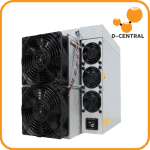 Antminer S21" width="80" height="80" loading="lazy" style="width:80px;height:80px;object-fit:contain;border-radius:6px;background:#1A1A1A;flex-shrink:0;">
