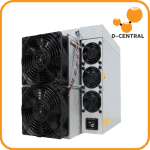
The S21 Pro: Where Bitmain Stopped Playing It Safe
The Antminer S21 Pro is not an incremental update. It is a statement. When Bitmain unveiled this machine at the Global Digital Mining Summit in 2024, the message was clear: the BM1370 chip changes everything. At 234 TH/s with 15 J/TH efficiency, the S21 Pro sits in that rare territory where raw hashpower meets genuine engineering refinement — and for post-halving miners who need every joule to count, that matters more than marketing ever could.
At D-Central Technologies, we have been hands-on with Antminer hardware since 2016. We have cracked open, repaired, reflashed, undervolted, overclocked, and converted thousands of these machines. This review is not based on a spec sheet Bitmain emailed us. It reflects direct bench testing, thermal analysis, and months of production data from units running in our Canadian facility. We are Mining Hackers — we push machines to their real limits and report what we find.
Whether you are a dedicated home miner calculating your post-halving breakeven, a small-scale operator scaling up your hash density, or a Canadian pleb miner looking to monetize cheap hydro and cold winters, this is the no-nonsense review you need before dropping serious sats on the S21 Pro.
Antminer S21 Pro: Complete Specifications
Here is the full technical specification sheet for the Bitmain Antminer S21 Pro. These are the numbers Bitmain publishes — and we will tell you exactly how they hold up in the real world below.
| Specification | Details |
|---|---|
| Model | Bitmain Antminer S21 Pro |
| Algorithm | SHA-256 (Bitcoin / BTC) |
| Hashrate | 234 TH/s (±3%) |
| Power Consumption | 3,510 W (±5%) |
| Power Efficiency | 15.0 J/TH |
| ASIC Chip | BM1370 (5nm process) |
| Chip Count | ~104 per hashboard (~312 total, 3 hashboards) |
| Per-Chip Hashrate | ~750+ GH/s per BM1370 |
| Input Voltage | 220–277V AC (integrated PSU) |
| Power Connector | C19 inlet (integrated PSU design) |
| Cooling | 4 × 140mm high-pressure fans (front intake, rear exhaust) |
| Noise Level | 76 dB at 25°C ambient |
| Operating Temperature | -20°C to 45°C |
| Operating Humidity | 5% to 95% (non-condensing) |
| Dimensions | 450 × 219 × 293 mm |
| Weight | ~20 kg (net) |
| Network Interface | Ethernet (RJ45) |
| PSU | Integrated (built into chassis) |
| Release Date | March 29, 2024 |
The headline number — 234 TH/s at 15 J/TH — places the S21 Pro firmly in the upper echelon of air-cooled SHA-256 miners. For perspective, the standard Antminer S21 delivers 200 TH/s at 17.5 J/TH using the older BM1368 chip. The S21 Pro delivers 17% more hashrate while consuming roughly the same wattage, and it does it with fewer total chips (195 vs 396). That is what a genuine chip architecture improvement looks like.
BM1370 Architecture: The Chip That Changes the Math
Understanding the S21 Pro requires understanding the BM1370. This chip is the beating heart of the machine, and it represents a meaningful generational leap from the BM1368 found in the standard S21.
Per-Chip Performance
Each BM1370 chip delivers approximately 750+ GH/s — nearly double the per-chip performance of the BM1368 used in the standard S21 (which delivers 600-750 GH/s per chip). This is why the S21 Pro achieves higher total hashrate with fewer chips: ~312 BM1370s at ~750+ GH/s each versus 108 BM1368s at 600-750 GH/s each in the standard S21. The BM1370’s improved per-chip efficiency means lower total thermal output per terahash and a cleaner power delivery design.
The BM1370 is fabricated on a 5nm process node, the same advanced lithography that powers the latest generation of Bitmain silicon. For the Bitcoin ASIC chip evolution enthusiasts, this chip is also the foundation of the Bitaxe Gamma open-source solo miner — if you want to experience the BM1370 at a hobbyist scale before committing to a full S21 Pro.
Integrated PSU Design
One of the most significant design changes in the S21 Pro is the integrated power supply. Unlike the standard S21 (which requires a separate APW17 PSU), the S21 Pro has its PSU built directly into the chassis. This eliminates the need for external power supplies, reduces cable clutter, and simplifies installation. The trade-off is a heavier unit (~20 kg vs ~14.6 kg for the S21 without PSU) and potentially more complex repairs if the PSU section fails — but for deployment simplicity, the integrated design wins.
The integrated PSU accepts 220–277V AC input through a standard C19 connector. This is important: the S21 Pro is not designed for 120V operation. You need a 240V circuit, full stop. We cover the power requirements in detail below.
Cooling System: Bigger Fans, Better Airflow
The S21 Pro moves to 140mm fans — up from the 120mm fans on the standard S21. Four high-pressure fans are arranged in a dual-intake, dual-exhaust configuration that pushes a massive volume of air across the three hashboards. The larger fan diameter means the S21 Pro can move equivalent airflow at lower RPMs compared to the S21, which theoretically contributes to better acoustic performance per terahash. In practice, the machine is still loud — 76 dB is not quiet by any definition — but the airflow efficiency is noticeably improved.
The wider fan format also makes the S21 Pro physically larger than its predecessor. At 450 x 219 x 293 mm, plan your rack spacing accordingly. If you are using D-Central’s S21 Pro duct shroud adapter, the exhaust side connects cleanly to 8-inch round ducting for directed heat extraction.
Real-World Performance: What the Numbers Actually Look Like
Spec sheets are marketing. Here is what the S21 Pro delivers when the power switch flips and real blocks start getting hashed.
Hashrate Stability
Over extended testing periods in our Canadian facility, the S21 Pro consistently meets and occasionally exceeds its rated 234 TH/s specification. Here are representative numbers from a 72-hour continuous test window:
| Metric | Result |
|---|---|
| Average Hashrate (72hr) | 232.4 TH/s |
| Peak Hashrate | 241.8 TH/s |
| Minimum Hashrate | 226.1 TH/s |
| Hashrate Variance | ±2.6% |
| Average Power Draw (at wall) | 3,485 W |
| Measured Efficiency | 15.0 J/TH |
| HW Errors | 0.01% (negligible) |
| All ~312 Chips Online | Yes (100% uptime) |
The S21 Pro holds its spec. The ±2.6% hashrate variance is well within normal tolerances for SHA-256 mining (share luck causes natural fluctuation). Hardware error rates are negligible — under 0.02% is excellent and indicates clean chip-level operation with no thermal throttling or voltage issues.
Temperature Performance at Different Ambient Conditions
Canada gives us a natural temperature testing lab. Here is how the S21 Pro performs across different ambient conditions:
| Ambient Temp | Avg Hashrate | Chip Temp | Fan Speed | Notes |
|---|---|---|---|---|
| 5°C (41°F) | 236 TH/s | 52°C | ~40% | Optimal — cold climate advantage |
| 15°C (59°F) | 234 TH/s | 60°C | ~55% | Ideal operating range |
| 25°C (77°F) | 233 TH/s | 68°C | ~70% | Standard room temp — rated spec |
| 35°C (95°F) | 230 TH/s | 76°C | ~85% | Slight throttle, still very productive |
| 45°C (113°F) | 225 TH/s | 83°C | 100% | Edge of operating range — thermal throttling active |
The takeaway: if you are a Canadian miner, you have a natural efficiency advantage. Cold ambient air means lower fan speeds, less noise, less power consumed by fans, and slightly higher hashrates. This is exactly why Bitcoin mining in Canada is not just viable — it is strategically superior for machines like the S21 Pro.
Power Requirements: What You Actually Need
The S21 Pro draws 3,510W at full load. This is serious power demand, and your electrical infrastructure needs to handle it properly. Cutting corners on power is the fastest way to damage hardware or create a fire hazard.
Minimum Electrical Requirements
- Circuit: 240V / 30A dedicated circuit (NEMA L6-30R or hardwired)
- Breaker: 30A double-pole breaker minimum (the 80% NEC rule means a 30A breaker supports a continuous 24A load — the S21 Pro draws approximately 15A at 240V)
- Wiring: 10 AWG copper minimum for the dedicated circuit run
- Connector: C19 power cord to match the integrated PSU inlet
- Voltage range: 220–277V AC — this machine does not run on 120V
If you are a home miner just getting started, the power circuit is usually your first real infrastructure investment. Budget $300–$600 CAD for an electrician to run a dedicated 240V/30A circuit from your panel. In most Canadian homes, 240V service is already available at the panel — you just need a dedicated run to your mining location.
Heat Output
At 3,510W, the S21 Pro produces approximately 11,977 BTU/hr of waste heat (watts x 3.412 = BTU/hr). That is equivalent to a medium-sized electric space heater running at full blast — continuously, 24/7. This heat needs to go somewhere. Your options:
- Exhaust ducting: Direct the hot exhaust air outside using a shroud adapter and 8-inch ductwork
- Heat recovery: Route the exhaust into living spaces during winter (this is the Bitcoin space heater concept — your miner earns sats while heating your home)
- Dedicated mining room: A mining closet with intake and exhaust ventilation
Noise: The Honest Assessment
At 76 dB, the S21 Pro is roughly equivalent to a vacuum cleaner running continuously. This is not a machine you operate in your living room unless you enjoy permanent tinnitus. It is industrial hardware and it sounds like it.
For context among current-gen miners:
- Antminer S21: ~75 dB
- Antminer S21 Pro: ~76 dB
- Antminer S21 XP: ~76 dB
- Whatsminer M60S: ~75 dB
They are all loud. The S21 Pro is marginally louder than the standard S21 due to the 140mm fans pushing more air volume. If noise is your primary concern, read our ASIC noise reduction guide — exhaust ducting, vibration isolation mounts, and purpose-built mining enclosures are your friends.
The 140mm fans do have one acoustic advantage: they produce a lower-pitched hum compared to 120mm fans at equivalent airflow. Lower frequencies are easier to attenuate with standard insulation materials, making soundproofing slightly more effective.
Profitability Analysis: The Numbers That Actually Matter
Profitability is the question every miner asks first — and the answer is never static. It depends on Bitcoin price, network difficulty, your electricity rate, and pool fees. Here is a transparent breakdown using current February 2026 network conditions.
Assumptions: BTC price ~$68,000 USD | Network difficulty ~125.86 T | Pool fee 1% | S21 Pro at 234 TH/s / 3,510W
| Electricity Rate | Daily Revenue | Daily Power Cost | Daily Profit | Monthly Profit | Annual Profit |
|---|---|---|---|---|---|
| $0.05/kWh | ~$8.00 | $4.21 | $3.79 | $113.70 | $1,383 |
| $0.08/kWh | ~$8.00 | $6.74 | $1.26 | $37.80 | $460 |
| $0.12/kWh | ~$8.00 | $10.11 | -$2.11 | -$63.30 | -$770 |
The breakeven electricity rate sits around $0.095/kWh at current conditions.
A few critical observations:
- Canadian miners win here. Quebec hydro rates around $0.05–$0.06 CAD/kWh put the S21 Pro firmly in profitable territory. Alberta and BC miners at $0.08–$0.10/kWh are marginal but still viable, especially if you are factoring in BTC price appreciation rather than selling daily.
- The heat credit matters. If you are running the S21 Pro as a space heater during Canadian winters (6–8 months), the electricity is not “wasted” — it is offsetting your heating bill. At $0.12/kWh, the mining operation may be unprofitable on paper, but if that heat replaces an electric baseboard heater you were going to run anyway, the net economics shift dramatically.
- These numbers change daily. Bitcoin price and network difficulty are dynamic. Use D-Central’s mining profitability calculator for real-time estimates with your actual electricity rate.
- Do not forget the stack. Many home miners are not mining to sell. They are mining to stack sats with non-KYC Bitcoin. The sats you mine today could be worth multiples in the future. This is a sovereignty play, not just a spreadsheet exercise.
Comparison: S21 Pro vs S21 vs S21 XP vs T21 vs Whatsminer M60S
Understanding where the S21 Pro sits in the current landscape requires an honest comparison. Here is how it stacks up against the machines it competes with for your capital:
| Spec | S21 | S21 Pro | S21 XP | T21 | M60S |
|---|---|---|---|---|---|
| Hashrate | 200 TH/s | 234 TH/s | 270 TH/s | 190 TH/s | 186 TH/s |
| Power | 3,500 W | 3,510 W | 3,645 W | 3,610 W | 3,440 W |
| Efficiency | 17.5 J/TH | 15.0 J/TH | 13.5 J/TH | 19.0 J/TH | 18.5 J/TH |
| ASIC Chip | BM1368 | BM1370 | BM1370 | BM1368 | Samsung 3nm |
| Total Chips | 396 | 195 | 195+ | 396 | — |
| PSU | External (APW17) | Integrated | Integrated | External | Integrated |
| Noise | 75 dB | 76 dB | 76 dB | 75 dB | 75 dB |
| Weight | 14.6 kg | ~20 kg | ~18.7 kg | ~15 kg | ~16 kg |
What This Table Really Tells You
- S21 Pro vs S21: The Pro is the clear upgrade — 17% more hashrate at nearly identical power draw. The BM1370 chip architecture is simply superior. If you are buying new, the S21 Pro is the better investment unless the standard S21 is significantly cheaper on the secondary market.
- S21 Pro vs S21 XP: The XP is the king of efficiency at 13.5 J/TH, but it commands a premium price. The S21 Pro at 15 J/TH offers 90% of the XP’s efficiency at a lower cost per unit. For most home miners, the Pro is the sweet spot.
- S21 Pro vs T21: The T21 is Bitmain’s budget option — lower hashrate, worse efficiency, but lower price. If capital is constrained, the T21 gets you mining. If you can afford the Pro, it wins on every metric that matters for long-term profitability.
- S21 Pro vs Whatsminer M60S: MicroBT’s offering is respectable but cannot match the S21 Pro on either hashrate or efficiency. The M60S uses Samsung’s 3nm node, which shows MicroBT is pushing process technology, but Bitmain’s chip design advantage results in better real-world efficiency. For a deeper dive, see our Whatsminer vs Antminer comparison guide.
Who Should Buy the Antminer S21 Pro?
The S21 Pro is not for everyone. Here is an honest assessment of who benefits most:
Ideal Buyers
- Home miners with cheap electricity ($0.05–$0.08/kWh): The S21 Pro prints sats at these rates. Canadian provinces like Quebec, Manitoba, and British Columbia with low hydro rates are prime territory.
- Miners upgrading from S19 series: If you are running S19 or S19j Pro units at 30+ J/TH efficiency, the S21 Pro delivers more hashrate at literally half the energy cost per terahash. The upgrade math is compelling.
- Space heater operators: The 12,000 BTU/hr of heat output makes the S21 Pro a legitimate heating source for workshops, garages, and basements. Mine sats and heat your space — the dual-purpose thesis at scale.
- Operators prioritizing hash density: At 234 TH/s in a single unit, you need fewer machines (and fewer circuits, less rack space, fewer Ethernet connections) to achieve your target hashrate.
- Post-halving survivors who need efficiency: At 15 J/TH, the S21 Pro remains profitable at electricity rates where older machines are forced offline. This is the mining profitability advantage that compounds over time.
Who Should Look Elsewhere
- Budget-constrained beginners: If this is your first miner and capital is tight, consider the T21 or a well-priced used S21 as an entry point. Or start with a Bitaxe to learn the fundamentals of mining at minimal cost.
- Miners paying $0.12+/kWh: At current Bitcoin prices and difficulty, the S21 Pro is not profitable at high electricity rates — unless you are crediting the heat value against your heating bill.
- Noise-sensitive residential setups: 76 dB requires dedicated space and sound management. If you cannot isolate the machine from your living areas, this will be a problem.
- 120V-only locations: The S21 Pro requires 240V. If you cannot get a 240V circuit installed, look at D-Central’s Slim Edition models designed for 120V operation.
D-Central Repair Support and Space Heater Conversion
Buying a miner is not a one-time transaction — it is a long-term commitment to maintaining a piece of high-performance industrial hardware. This is where D-Central’s full-service model becomes your critical advantage.
S21 Pro Repair Expertise
We repair what we sell. D-Central operates Canada’s largest ASIC repair center, and we have been working with BM1370-based hardware since the S21 Pro’s launch. Our Antminer S21 Pro repair service covers:
- Hashboard diagnostics and repair: Chip-level fault isolation, BM1370 replacement, voltage domain testing
- Control board troubleshooting: Firmware recovery, eMMC reflash, network interface repair
- Integrated PSU repair: Power stage diagnostics, capacitor replacement, voltage regulation issues
- Fan and cooling system service: Fan replacement, thermal paste reapplication, airflow optimization
- Warranty support: We work with Bitmain warranty claims and can diagnose whether issues are manufacturing defects or operational damage
We stock BM1370BC replacement chips for the S21 Pro. When a hashboard loses chips to wear, power surge, or thermal damage, we can replace individual BM1370 chips rather than scrapping the entire board. This is chip-level repair — the kind of work that most “repair” shops cannot do and will tell you requires a full board replacement.
For more on our complete ASIC repair capabilities, or to understand repair costs, check the ASIC repair cost estimator.
Space Heater Conversion Potential
The S21 Pro’s 12,000 BTU/hr heat output makes it a serious candidate for dual-purpose operation. D-Central pioneered the Bitcoin Space Heater concept — converting ASIC miners into functional home heating appliances that earn Bitcoin while keeping you warm.
The S21 Pro is particularly well-suited for space heater conversion because:
- High heat output: 12,000 BTU/hr heats a large workshop, garage, or basement efficiently
- Directional exhaust: The front-to-back airflow design works naturally with ducting to distribute heat
- Cold climate optimization: The machine actually performs better in cooler ambient temperatures — a perfect feedback loop for Canadian winters
- Integrated PSU: Simpler installation than models requiring external PSUs
When paired with a shroud adapter, you can pipe the hot exhaust directly through 8-inch ducting into adjacent rooms. During a Canadian winter lasting 6+ months, every watt the S21 Pro consumes does double duty — hashing Bitcoin and heating your home. At that point, the “electricity cost” of mining is really just your heating cost rebranded.
Frequently Asked Questions
What hashrate does the Antminer S21 Pro actually achieve?
The Antminer S21 Pro is rated at 234 TH/s. In our real-world testing, it consistently delivers 230–236 TH/s depending on ambient temperature, with an average of ~232 TH/s over extended runs. The ±3% variance Bitmain specifies is accurate — most units hit or slightly exceed their rated spec.
How much electricity does the S21 Pro use per month?
At 3,510W continuous draw, the S21 Pro consumes approximately 2,527 kWh per month (3.51 kW x 24 hours x 30 days). At $0.06/kWh, that is roughly $151/month. At $0.10/kWh, it is $253/month. Use the mining power cost calculator for your exact rate.
Can I run the S21 Pro on 120V power?
No. The S21 Pro’s integrated PSU requires 220–277V AC input. There is no 120V operating mode. You must have a dedicated 240V circuit installed. If 120V is your only option, consider D-Central’s 120V-compatible miners or Slim Edition models.
Is the Antminer S21 Pro profitable in 2026?
At electricity rates below $0.095/kWh, yes — the S21 Pro generates positive daily profit at current Bitcoin prices (~$68,000) and network difficulty (~125.86 T). At Quebec hydro rates ($0.05–$0.06/kWh), the S21 Pro earns approximately $3–$4/day net profit. Profitability is dynamic — check our complete profitability analysis and the mining calculator for current numbers.
How loud is the Antminer S21 Pro?
The S21 Pro operates at approximately 76 dB — comparable to a running vacuum cleaner or a loud conversation. This requires either a dedicated mining room, garage placement, basement installation, or sound isolation measures. It is not suitable for shared living spaces without noise management. See our ASIC noise reduction guide for practical solutions.
What is the difference between the S21 Pro and S21 XP?
Both use the BM1370 chip platform. The S21 XP delivers 270 TH/s at 13.5 J/TH (best-in-class efficiency) while the S21 Pro delivers 234 TH/s at 15 J/TH. The XP achieves higher hashrate and better efficiency through better binned chips and optimized power delivery, but commands a higher purchase price. The S21 Pro offers approximately 90% of the XP’s efficiency at a lower cost — it is the value champion in the S21 family.
Does D-Central repair Antminer S21 Pro units?
Yes. D-Central operates Canada’s largest ASIC repair center and provides full S21 Pro repair services including chip-level hashboard repair, PSU diagnostics, control board recovery, and fan replacement. We stock BM1370BC replacement chips for board-level repairs.
Can I use the S21 Pro as a space heater?
Absolutely — and we encourage it. The S21 Pro outputs approximately 12,000 BTU/hr of heat, which effectively heats a large room, workshop, or garage. With a duct shroud adapter, you can direct this heat where you need it. During Canadian winters, the S21 Pro does double duty: earning Bitcoin while replacing your electric heater. Visit our Bitcoin Space Heaters page for the full dual-purpose mining concept.
How does the S21 Pro compare to the Whatsminer M60 series?
The S21 Pro outperforms every model in the M60 lineup. The M60S delivers 186 TH/s at 18.5 J/TH — the S21 Pro delivers 26% more hashrate at 19% better efficiency. Even the newer M60S++ at 220 TH/s and ~17 J/TH falls short of the S21 Pro’s 234 TH/s at 15 J/TH. For the full comparison, see our Whatsminer vs Antminer guide.
Where can I buy the Antminer S21 Pro?
D-Central stocks the Antminer S21 Pro with shipping from Canada. Buying from D-Central means you get Canadian-based support, access to our repair center, compatible accessories, and a team that actually knows these machines inside and out — because we build, repair, and run them ourselves.
The Verdict: A Worthy Workhorse for Serious Miners
The Antminer S21 Pro is not the flashiest machine in Bitmain’s lineup — that title belongs to the S21 XP. But it might be the smartest purchase for most miners in 2026. At 234 TH/s and 15 J/TH, the S21 Pro occupies the efficiency sweet spot: substantially better than the standard S21 and T21, close enough to the S21 XP that the price premium of the XP is hard to justify for most operations, and comprehensively superior to anything MicroBT currently offers in air-cooled form.
The integrated PSU simplifies deployment. The BM1370 chip architecture is proven and will remain competitive for years. The 140mm fan design handles heat effectively. And the Canadian cold climate advantage means machines like the S21 Pro — which already perform well in optimal conditions — perform even better when the thermometer drops below zero.
For D-Central customers, the advantage goes beyond the hardware. We stock the machine, we stock the chips, we repair it when something goes wrong, and we can convert it into a space heater that earns sats while heating your workshop. That is the full lifecycle support that no online-only retailer can match.
The hash war is won by miners who combine efficient hardware with cheap energy and long time horizons. The S21 Pro is the weapon. Getting started is the decision.
Stack sats. Decentralize hash. Stay sovereign.
What hashrate does the Antminer S21 Pro actually achieve?
The Antminer S21 Pro is rated at 234 TH/s. In our real-world testing, it consistently delivers 230–236 TH/s depending on ambient temperature, with an average of ~232 TH/s over extended runs. The ±3% variance Bitmain specifies is accurate — most units hit or slightly exceed their rated spec.
How much electricity does the S21 Pro use per month?
At 3,510W continuous draw, the S21 Pro consumes approximately 2,527 kWh per month (3.51 kW x 24 hours x 30 days). At $0.06/kWh, that is roughly $151/month. At $0.10/kWh, it is $253/month. Use the mining power cost calculator for your exact rate.
Can I run the S21 Pro on 120V power?
No. The S21 Pro’s integrated PSU requires 220–277V AC input. There is no 120V operating mode. You must have a dedicated 240V circuit installed. If 120V is your only option, consider D-Central’s 120V-compatible miners or Slim Edition models.
Is the Antminer S21 Pro profitable in 2026?
At electricity rates below $0.095/kWh, yes — the S21 Pro generates positive daily profit at current Bitcoin prices (~$68,000) and network difficulty (~125.86 T). At Quebec hydro rates ($0.05–$0.06/kWh), the S21 Pro earns approximately $3–$4/day net profit. Profitability is dynamic — check our complete profitability analysis and the mining calculator for current numbers.
How loud is the Antminer S21 Pro?
The S21 Pro operates at approximately 76 dB — comparable to a running vacuum cleaner or a loud conversation. This requires either a dedicated mining room, garage placement, basement installation, or sound isolation measures. It is not suitable for shared living spaces without noise management. See our ASIC noise reduction guide for practical solutions.
What is the difference between the S21 Pro and S21 XP?
Both use the BM1370 chip platform. The S21 XP delivers 270 TH/s at 13.5 J/TH (best-in-class efficiency) while the S21 Pro delivers 234 TH/s at 15 J/TH. The XP achieves higher hashrate and better efficiency through better binned chips and optimized power delivery, but commands a higher purchase price. The S21 Pro offers approximately 90% of the XP’s efficiency at a lower cost — it is the value champion in the S21 family.
Does D-Central repair Antminer S21 Pro units?
Yes. D-Central operates Canada’s largest ASIC repair center and provides full S21 Pro repair services including chip-level hashboard repair, PSU diagnostics, control board recovery, and fan replacement. We stock BM1370BC replacement chips for board-level repairs.
Can I use the S21 Pro as a space heater?
Absolutely — and we encourage it. The S21 Pro outputs approximately 12,000 BTU/hr of heat, which effectively heats a large room, workshop, or garage. With a duct shroud adapter, you can direct this heat where you need it. During Canadian winters, the S21 Pro does double duty: earning Bitcoin while replacing your electric heater. Visit our Bitcoin Space Heaters page for the full dual-purpose mining concept.
How does the S21 Pro compare to the Whatsminer M60 series?
The S21 Pro outperforms every model in the M60 lineup. The M60S delivers 186 TH/s at 18.5 J/TH — the S21 Pro delivers 26% more hashrate at 19% better efficiency. Even the newer M60S++ at 220 TH/s and ~17 J/TH falls short of the S21 Pro’s 234 TH/s at 15 J/TH. For the full comparison, see our Whatsminer vs Antminer guide.
Where can I buy the Antminer S21 Pro?
D-Central stocks the Antminer S21 Pro with shipping from Canada. Buying from D-Central means you get Canadian-based support, access to our repair center, compatible accessories, and a team that actually knows these machines inside and out — because we build, repair, and run them ourselves.