Bitcoin is not just money. It is not just a protocol. Bitcoin is speech — pure, executable, censorship-resistant speech. Every transaction you broadcast, every block your miner hashes, every node you run is an act of expression. And in the United States, speech is protected by the First Amendment.
This distinction is not academic. It is the legal bedrock that separates Bitcoin from every other asset class regulators have tried to shove into existing frameworks. When the state attempts to regulate Bitcoin transactions, it is not merely regulating financial activity — it is potentially restricting constitutionally protected expression. For Bitcoiners, miners, and anyone running open-source code, understanding this argument is not optional. It is essential.
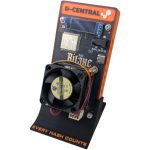
At D-Central Technologies, we have operated at the intersection of Bitcoin mining technology and individual sovereignty since 2016. As Canada’s Bitcoin Mining Hackers, we see the First Amendment argument not as a legal curiosity but as a foundational pillar of why decentralized mining matters. Every hash your Bitaxe produces, every block template your node constructs — these are acts of speech. And they deserve protection.
Code Is Speech: The Legal Precedent
The argument that code qualifies as protected speech is not theoretical. It was established in U.S. federal court more than two decades ago, and it has never been overturned.
In Bernstein v. U.S. Department of Justice (1996-1999), mathematician and cryptographer Daniel J. Bernstein challenged the U.S. government’s International Traffic in Arms Regulations (ITAR), which classified his encryption source code as a munition and prohibited its export. The Ninth Circuit Court of Appeals ruled that source code is a means of expression protected by the First Amendment. The court recognized that code, like mathematical formulas and written language, communicates ideas between humans and machines.
This ruling was reinforced in Junger v. Daley (2000), where the Sixth Circuit similarly held that encryption source code is expressive speech. The court noted that “because computer source code is an expressive means for the exchange of information and ideas about computer programming, we hold that it is protected by the First Amendment.”
These cases established a principle that resonates through every line of Bitcoin’s codebase: writing, distributing, and executing code is a constitutionally protected activity.
Bitcoin Transactions as Protected Expression
A Bitcoin transaction is a digitally signed message. At its core, it is a structured data packet containing inputs, outputs, amounts, and a cryptographic signature proving authorization. When you broadcast a transaction to the Bitcoin network, you are transmitting a message — a piece of text — across a peer-to-peer communication network.
Consider the anatomy of what happens when you send Bitcoin:
| Component | What It Is | Why It Is Speech |
|---|---|---|
| Transaction data | Serialized text (hex-encoded bytes) | Text-based message, same as email or written correspondence |
| Digital signature | ECDSA cryptographic proof | Mathematical expression identical to Bernstein’s encryption code |
| Script (Bitcoin Script) | Stack-based programming language | Executable code — protected under Bernstein precedent |
| OP_RETURN data | Arbitrary data embedded in the blockchain | Literal text messages permanently recorded on a public ledger |
| Network broadcast | Peer-to-peer message propagation | Communication between willing participants |
Every element of a Bitcoin transaction fits squarely within the legal definition of expressive conduct. The transaction communicates intent (a transfer of value), contains code (Bitcoin Script), employs cryptography (digital signatures), and is transmitted as text across a network. If encryption source code is speech, then Bitcoin transactions — which are built from encryption, code, and text — are speech too.
This is not a stretch. It is the logical extension of established precedent.
Mining as Speech: Why Every Hash Matters
If transactions are speech, then mining is the act of publishing that speech. Miners collect transactions, assemble them into blocks, and compete to solve the proof-of-work puzzle that adds the block to the permanent record. This is analogous to a publisher printing and distributing a newspaper — except the “newspaper” is an immutable, globally distributed, censorship-resistant ledger.
When your Bitaxe solo miner hashes away at the current ~800+ EH/s network, it is doing more than chasing the 3.125 BTC block reward. It is participating in a decentralized publishing system. It is validating transactions, enforcing consensus rules, and contributing to the most robust censorship-resistant communication network ever built.
This framing has profound implications for mining regulation:
- Banning mining is equivalent to banning a form of publication
- Requiring mining licenses is equivalent to requiring a license to speak or publish
- Restricting mining hardware is equivalent to restricting printing presses
- Mandating transaction filtering is equivalent to government-imposed censorship of published content
For those of us in the mining community, this is not abstract legal theory. It is the reason why decentralized, home-based mining operations matter. When mining is concentrated in a few large facilities, it becomes an easy target for regulatory pressure. When mining is distributed across thousands of home miners running Bitaxes, NerdAxes, and repurposed ASICs turned into Bitcoin space heaters, it becomes as difficult to censor as speech itself.
The Regulatory Landscape: Where Speech Meets Finance
The tension between Bitcoin-as-speech and Bitcoin-as-regulated-asset plays out across multiple U.S. regulatory bodies, each claiming jurisdiction from a different angle:
| Regulator | Classification | First Amendment Conflict |
|---|---|---|
| CFTC | Commodity | Commodity regulations do not typically restrict expressive conduct |
| IRS | Property | Tax reporting on speech acts raises compelled-speech concerns |
| SEC | Attempted security classification (for tokens, not BTC) | Securities laws restricting code distribution conflict with Bernstein |
| FinCEN | Money transmission | KYC/AML requirements on peer-to-peer speech raise privacy and expression concerns |
| OFAC | Sanctions enforcement | Prohibiting code execution (e.g., Tornado Cash) directly restricts speech |
The most striking recent example of this conflict is the Tornado Cash case. In 2022, the U.S. Treasury’s Office of Foreign Assets Control (OFAC) sanctioned Tornado Cash, an open-source smart contract protocol. This was not a sanction against a person or an organization — it was a sanction against code. Multiple legal scholars and organizations, including the Electronic Frontier Foundation (EFF) and Coin Center, argued that sanctioning immutable, open-source code violates the First Amendment.
The implications are direct: if the government can sanction code, it can sanction any software. It can sanction Bitcoin Core. It can sanction the firmware running on your mining hardware. It can sanction the open-source designs behind the Bitaxe. The precedent matters.
Running a Node Is Speech. Running a Miner Is Publishing.
Let us be precise about the different forms of Bitcoin participation and their speech equivalents:
- Writing Bitcoin software = authoring speech (clearly protected under Bernstein)
- Running a full node = receiving, validating, and relaying speech (protected association and communication)
- Broadcasting a transaction = speaking (transmitting a signed message)
- Mining a block = publishing (selecting, ordering, and permanently recording speech)
- Running open-source mining firmware = exercising the right to use protected code
Every layer of the Bitcoin stack maps cleanly to established categories of First Amendment protection. This is not a coincidence. Bitcoin was designed by cypherpunks who understood that code is speech, and who built a system that weaponizes that protection against censorship.
Why This Matters for Home Miners
If you are mining Bitcoin at home — whether with a Bitaxe on your desk, an Antminer in your garage turned into a space heater, or a full mining rack in your basement — you are not just a hobbyist. You are a participant in a constitutionally protected communication network.
This matters practically in several ways:
| Scenario | Without Speech Protection | With Speech Protection |
|---|---|---|
| Local mining ban | Municipality prohibits mining operations | Ban must survive strict scrutiny as a restriction on expressive conduct |
| Transaction filtering mandate | Miners forced to exclude certain transactions | Compelled censorship of speech — prior restraint violation |
| Hardware restrictions | Government limits mining hardware sales | Restricting tools of expression (equivalent to banning printing presses) |
| Mandatory KYC for miners | Identity verification to operate mining equipment | Licensing requirement for speech — unconstitutional prior restraint |
| Open-source firmware ban | Prohibition on custom mining firmware | Direct restriction on creating and using protected code |
The decentralization of mining is not just a technical objective — it is a civil liberties imperative. The more distributed the hash rate, the harder it becomes for any jurisdiction to impose censorship on the network. This is why we at D-Central are so passionate about home mining solutions — from solo miners to space heaters to ASIC repair services that keep older hardware operational and hashing.
The Canadian Perspective
While the First Amendment is a U.S. constitutional protection, the underlying principle — that code is expression — resonates globally. In Canada, Section 2(b) of the Canadian Charter of Rights and Freedoms protects “freedom of thought, belief, opinion and expression, including freedom of the press and other media of communication.” Canadian courts have interpreted this broadly, and the argument that Bitcoin code and transactions constitute expression is equally applicable under the Charter.
Canada has an additional advantage for miners defending their right to operate: abundant hydroelectric power, cold climates that reduce cooling costs, and a regulatory environment that has generally been more welcoming to Bitcoin mining than many U.S. jurisdictions. At D-Central, our hosting facilities in Quebec leverage these natural advantages while operating within a legal framework that respects individual rights.
For Canadian home miners, the speech argument adds another layer of protection. Mining is not just energy consumption — it is the exercise of expressive and communicative rights using open-source technology. Any attempt to restrict it must be weighed against Charter protections.
What Cypherpunks Understood
The cypherpunk movement of the 1990s — the intellectual ancestors of Bitcoin — understood the speech argument intuitively. They deliberately distributed cryptographic code as printed text in books, on T-shirts, and in academic papers specifically to invoke First Amendment protection. Phil Zimmermann published PGP as a printed book to circumvent export restrictions. The “Crypto Wars” of that era were fundamentally about whether individuals had the right to use strong encryption — the same encryption that now secures every Bitcoin transaction.
Bitcoin is the culmination of the cypherpunk vision: a system where the act of transacting is inseparable from the act of speaking. Satoshi Nakamoto did not just create a payment system. Satoshi created a speech system that happens to transfer value. The distinction matters enormously for its legal protection.
This is why open-source hardware matters. This is why the Bitaxe project matters. This is why D-Central builds, repairs, and supports mining hardware — because access to the tools of Bitcoin mining is access to the tools of free expression.
The Road Ahead
The legal battles over Bitcoin’s status as speech are far from settled. Key developments to watch include:
- Tornado Cash appeals — the outcome will set precedent for whether immutable code can be sanctioned
- State-level mining bans — several U.S. municipalities have attempted moratoriums on mining, which could face First Amendment challenges
- Transaction censorship mandates — any requirement for miners to filter transactions based on government directives would be a direct test of the speech argument
- Self-custody restrictions — attempts to limit non-custodial wallets implicate the right to use cryptographic code
- Open-source hardware regulations — any restrictions on building or using open-source mining hardware would face Bernstein-style challenges
As Bitcoiners, our job is not just to watch these battles unfold. Our job is to make censorship technically infeasible by decentralizing hash rate, running our own nodes, using open-source hardware, and supporting the infrastructure that makes individual sovereignty possible.
Whether you are running a solo Bitaxe on your desk or a fleet of ASICs in your garage, you are not just mining Bitcoin. You are exercising your right to speak, to publish, and to participate in a censorship-resistant network that no government can shut down. Every hash counts.
What is the legal basis for Bitcoin being considered speech?
The foundational case is Bernstein v. U.S. Department of Justice (1999), in which the Ninth Circuit Court of Appeals ruled that software source code is protected speech under the First Amendment. Since Bitcoin transactions are composed of code, cryptographic signatures, and text-based messages, they fall under the same protection. This was further supported by Junger v. Daley (2000), which confirmed that encryption source code is expressive speech.
Does the First Amendment protect Bitcoin mining?
Mining is the act of selecting transactions, assembling them into blocks, and publishing them to the blockchain — functionally equivalent to publishing. Under First Amendment precedent, publishing is protected speech. Any government attempt to ban or restrict mining must survive strict scrutiny, the highest standard of judicial review applied to restrictions on fundamental rights.
How does the Tornado Cash case affect Bitcoin?
In 2022, OFAC sanctioned Tornado Cash, an open-source smart contract. This set a dangerous precedent by treating immutable, self-executing code as a sanctionable entity. If upheld, this logic could be extended to sanction Bitcoin Core, mining firmware, or any open-source Bitcoin software. Multiple legal organizations have challenged this on First Amendment grounds, and the outcome will significantly impact Bitcoin’s legal landscape.
Is running a Bitcoin node protected by the First Amendment?
Running a full node involves receiving, validating, and relaying transaction messages across a peer-to-peer network. This is a form of communication and association protected under the First Amendment. A node operator is exercising the right to run open-source code (protected under Bernstein) and to communicate with willing peers.
Why does decentralized mining strengthen Bitcoin’s speech protections?
When mining is concentrated in a few large operations, regulators can pressure those operators to filter transactions — effectively censoring speech. When mining is distributed across thousands of independent home miners, censorship becomes technically infeasible. This is why home mining with devices like the Bitaxe, open-source ASICs, and Bitcoin space heaters is not just a hobby — it is a civil liberties practice.
Does Canada have similar protections for Bitcoin as speech?
Yes. Section 2(b) of the Canadian Charter of Rights and Freedoms protects freedom of expression, including “freedom of the press and other media of communication.” Canadian courts have interpreted this broadly. The argument that Bitcoin code and transactions constitute protected expression applies under the Charter, giving Canadian miners a strong legal foundation for their operations.