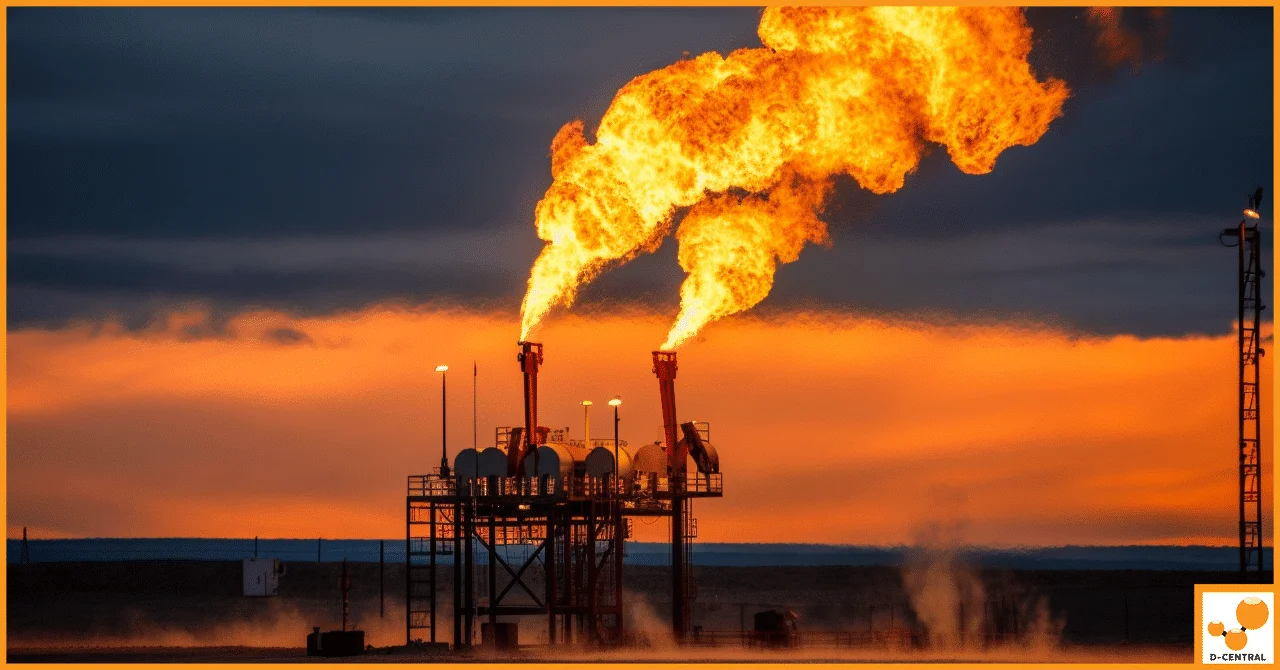
Every year, the global oil and gas industry flares or vents roughly 140 billion cubic metres of natural gas — enough energy to power every Bitcoin miner on the planet several times over. That gas is burned at the wellhead, dumped into the atmosphere as raw methane, or simply wasted because the economics of pipeline infrastructure don’t pencil out for remote wells. Bitcoin mining doesn’t just offer a use for that stranded energy; it transforms an environmental liability into a tool for decarbonisation. And if that sounds too good to be true, the physics and the economics both check out.
For those of us in the Bitcoin mining community, this isn’t a new thesis. We’ve been saying it for years: Bitcoin mining is the buyer of last resort for stranded energy. It’s location-agnostic, instantly deployable, interruptible on demand, and monetises energy that literally nobody else wants. When that energy is methane that would otherwise be flared or vented, Bitcoin mining doesn’t just avoid emissions — it actively reduces them. This is the reality the legacy media still refuses to grasp, but the oil majors figured out years ago.
The Methane Problem: Why Flaring Exists
Natural gas flaring is not some careless oversight — it’s a structural feature of oil extraction. When crude oil is brought to the surface, associated gas comes along with it. In remote locations — think the Bakken in North Dakota, the Permian Basin in Texas, or northern Alberta — the cost of building pipeline infrastructure to capture and transport that gas often exceeds its market value. So operators burn it in flare stacks as a “safety measure” rather than vent raw methane, which has roughly 80 times the warming potential of CO2 over a 20-year horizon.
The World Bank launched its Zero Routine Flaring by 2030 Initiative to address this. Over 50 governments and 40+ oil companies have endorsed it. Progress has been real but slow — global flaring volumes dropped from roughly 150 bcm in 2019 to around 139 bcm by 2024, according to World Bank satellite data. The fundamental economic problem remains: stranded gas has negative value when the cost of capture exceeds the revenue from sale.
This is precisely where Bitcoin mining enters the equation.
How Bitcoin Mining Converts Waste Gas to Value
The concept is elegantly simple. Instead of building a pipeline to a distant market, you bring the data centre to the gas. A shipping container outfitted with generators and ASIC miners parks at the wellhead. The stranded gas powers the generators, which power the miners, which convert electricity into bitcoin — a globally liquid asset that can be transmitted anywhere on earth via the internet.
| Parameter | Flaring (Status Quo) | Bitcoin Mining (Gas-to-Hash) |
|---|---|---|
| Methane Destruction | ~92-98% (incomplete combustion in open flares) | ~99.5%+ (enclosed combustion in generators) |
| Revenue Generated | $0 (gas is a waste product) | Bitcoin revenue at marginal energy cost |
| Carbon Credits Eligible | No | Yes (verified methane destruction credits) |
| Deployment Time | N/A (existing infrastructure) | Days to weeks (modular, containerised) |
| Grid Connection Required | No | No (off-grid, on-site generation) |
| Demand Flexibility | N/A | 100% curtailable (miners shut off instantly) |
The critical detail is combustion efficiency. Open flare stacks — the standard in the industry — achieve only 92-98% methane destruction. Some estimates put real-world efficiency even lower when wind conditions cause incomplete burns. Enclosed generators powering Bitcoin miners achieve 99.5%+ destruction rates. Bitcoin mining literally burns the gas more cleanly than flaring does. Every cubic metre of gas routed through a mining operation instead of a flare stack results in measurably lower emissions.
The Pioneer: ConocoPhillips in the Bakken
ConocoPhillips was among the first oil majors to publicly acknowledge Bitcoin mining as a methane mitigation tool. Their pilot project in North Dakota’s Bakken formation — one of America’s most prolific oil fields — began selling stranded gas to on-site Bitcoin mining operators rather than flaring it. The company had already committed to zero routine flaring and endorsed the World Bank’s initiative, but the economic reality of remote wells made achieving that target difficult through conventional means alone.
The Bitcoin mining approach solved multiple problems simultaneously: it eliminated the flaring emissions, generated revenue from a waste stream, and did so without requiring pipeline construction or regulatory permits for gas transport. By 2024, multiple operators across the Bakken and Permian Basin had replicated the model, and the practice has only expanded since.
2026: The Flare-to-Hash Ecosystem Has Matured
What started as a handful of pilot projects has evolved into a substantial segment of the Bitcoin mining industry. In 2026, with Bitcoin’s network hashrate exceeding 800 EH/s and mining difficulty above 110 trillion, the competition for cheap energy is fierce. Flare gas operations have become a strategic advantage because the energy cost is near zero — the gas is literally unwanted.
| Bitcoin Network Metric (2026) | Value |
|---|---|
| Network Hashrate | 800+ EH/s |
| Mining Difficulty | 110T+ |
| Block Reward | 3.125 BTC (post-April 2024 halving) |
| Global Flaring Volume | ~139 bcm annually |
| Estimated Flare-Mining Capacity | 2+ GW deployed at wellheads globally |
Companies like Crusoe Energy, Giga Energy, and numerous smaller operators have built entire businesses around the flare-to-hash model. Some have expanded beyond Bitcoin mining into general-purpose computing, using the same stranded gas infrastructure to power AI inference workloads. But the core thesis remains: stranded methane is the cheapest energy source on the planet, and Bitcoin mining is the only industry that can economically consume it at the point of production.
The Canadian Angle: Why This Matters for Home Miners Too
Canada is one of the world’s largest natural gas producers, and Alberta alone flares billions of cubic metres annually. The same principles that apply to industrial flare gas operations apply at smaller scales — and that’s where the home mining philosophy connects.
At D-Central, we’ve always believed that mining infrastructure should be decentralised across as many locations and energy sources as possible. The flare-gas-to-mining model proves that Bitcoin mining is not an energy “waster” — it is an energy optimizer. It goes wherever energy is cheapest, most abundant, or most wasted, and it converts that energy into the hardest money ever created.
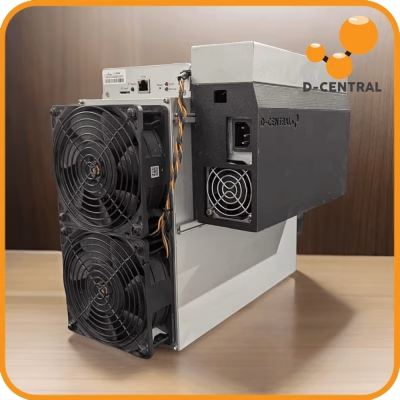
The same logic applies to your home. If you’re heating your house in a Canadian winter — and you’re going to spend that energy on heat regardless — why not route it through a Bitcoin Space Heater and stack sats while you stay warm? The energy isn’t wasted; it’s dual-purposed. A methane well operator monetises waste gas with an Antminer in a shipping container. You monetise your heating bill with a Space Heater Edition miner in your living room. Different scale, same principle: put every joule to work.
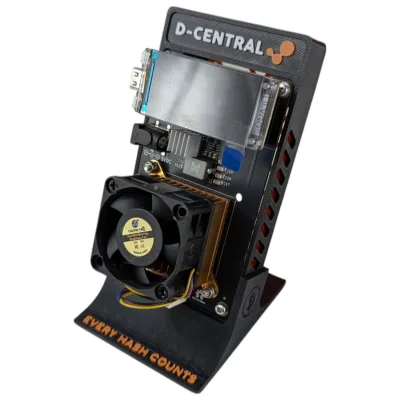
For those who want to participate in Bitcoin mining at the smallest, most sovereign scale possible, open-source solo miners like the Bitaxe let you contribute hashrate to network decentralisation while running on less power than a light bulb. Every hash counts — whether it comes from a wellhead in the Bakken or a Bitaxe on your desk in Montreal.
Environmental Impact: The Numbers Don’t Lie
The environmental case for mining on flare gas is not theoretical. Published research and operator data show consistent results:
- Methane destruction efficiency improves from ~95% (open flare) to 99.5%+ (enclosed generator) — a massive reduction in methane slip
- Each megawatt of flare-gas mining eliminates roughly 5,800 tonnes of CO2-equivalent emissions per year compared to venting, and still reduces emissions significantly compared to flaring
- Modular mining units deploy in days, not the months or years required for pipeline construction
- Mining operations are 100% curtailable — if the grid needs power or the well stops producing, miners shut off instantly at zero cost
This demand flexibility makes Bitcoin mining uniquely suited as a “transition load” for energy infrastructure. No other industry can economically absorb multi-megawatt loads, operate off-grid, require no customers or physical output, and shut down instantaneously when conditions change.
Beyond Flaring: Heat Recovery and the Full Energy Stack
Flare gas mining addresses the supply side — using waste energy as input. But Bitcoin mining’s energy story doesn’t end there. The heat output from ASIC miners is not waste either; it is a recoverable resource.
Industrial operations use mining exhaust heat for greenhouse agriculture, district heating, and industrial processes. At the home scale, D-Central’s Bitcoin Space Heaters capture 100% of the thermal output for residential heating. And for miners needing professional maintenance to keep their machines running at peak efficiency, D-Central’s ASIC repair service has been operating since 2016 with model-specific expertise across all major manufacturers.
The full energy stack looks like this: waste energy in (flare gas, excess renewables, curtailed hydro) goes through Bitcoin mining (SHA-256 proof-of-work) which produces bitcoin output (sound money, network security) plus heat output (space heating, agriculture, industrial process heat). Every stage produces value. Nothing is wasted.
What This Means for Decentralisation
The flare-gas mining model isn’t just an environmental story — it’s a decentralisation story. When mining operations are distributed across thousands of remote wellheads instead of concentrated in a few massive data centres, the Bitcoin network becomes more resilient. Hashrate that’s geographically dispersed across oil fields, homes, and small operations is hashrate that no single government, corporation, or adversary can easily shut down.
This is why D-Central exists. Whether you’re consulting with us on setting up your first home mining operation, browsing our full range of mining hardware, or exploring the Bitaxe ecosystem for sovereign solo mining, the mission is the same: decentralise every layer of Bitcoin mining.
The methane-to-mining story is proof that this mission is not just idealistic — it’s economically rational and environmentally beneficial. Bitcoin miners are the cleanup crew the energy industry didn’t know it needed, and the decentralised security layer that the Bitcoin network demands.
FAQ
How does Bitcoin mining reduce methane emissions from oil and gas operations?
Instead of flaring stranded natural gas in open flare stacks (which achieve only 92-98% methane destruction), the gas is routed to enclosed generators that power ASIC miners. These generators achieve 99.5%+ methane destruction efficiency, significantly reducing the amount of unburned methane released into the atmosphere. The Bitcoin produced provides revenue that makes the operation economically self-sustaining.
What is the World Bank’s Zero Routine Flaring Initiative?
Launched by the World Bank, this initiative brings together governments, oil and gas companies, and development institutions with a shared goal of eliminating routine flaring by 2030. Over 50 governments and 40+ companies have endorsed it. While global flaring volumes have decreased, the initiative recognises that novel approaches — including gas-to-mining — are needed to close the gap.
Why can’t oil companies just capture the gas and sell it normally?
In many cases, the wells producing associated gas are too remote for pipeline infrastructure to be economically viable. Building a pipeline can cost millions of dollars and take years of permitting. Bitcoin mining operations, by contrast, are modular and can be deployed at the wellhead in days. They monetise the gas on-site, eliminating the need for transport infrastructure entirely.
Is flare-gas Bitcoin mining actually profitable?
Yes. With the current block reward at 3.125 BTC (post-April 2024 halving) and stranded gas costs near zero, flare-gas mining operations achieve some of the lowest energy costs in the industry. The economics are particularly compelling because the gas has negative value to the producer — they would otherwise pay regulatory penalties or flare it at a loss.
How does this relate to home Bitcoin mining?
The same principle applies at every scale: put wasted or underutilised energy to work. At the industrial scale, that means using stranded methane. At the home scale, it means using your heating energy budget to mine Bitcoin with a Space Heater Edition miner. In both cases, the energy isn’t wasted — it’s dual-purposed for both its primary function and Bitcoin mining.
Can Bitcoin mining help stabilise energy grids?
Absolutely. Bitcoin miners are the ultimate flexible load — they can ramp up when energy is abundant and cheap, and shut off instantly when the grid needs that capacity. This demand response capability makes Bitcoin mining a valuable tool for grid operators managing intermittent renewable energy sources like wind and solar.
What is D-Central’s role in the Bitcoin mining energy ecosystem?
D-Central is a Canadian Bitcoin mining company focused on decentralising every layer of mining. We provide mining hardware including Bitcoin Space Heaters for home heat recovery, the full Bitaxe open-source ecosystem for solo mining, ASIC repair services, and mining consulting. We believe Bitcoin mining should be accessible to everyone, not just industrial operators.