Bitcoin mining does not require a six-figure budget. The institutional miners want you to believe that only the latest-generation hardware matters, that anything older than two years belongs in a landfill. That narrative serves their interests, not yours. The reality is that second-hand ASIC miners — particularly older Antminer models like the S9, S17, and even early S19 units — remain powerful tools for home miners who understand how to deploy them strategically.
At D-Central Technologies, we have been refurbishing, repairing, and deploying used mining hardware since 2016. We are Bitcoin Mining Hackers. We take institutional-grade technology and hack it into accessible solutions for pleb miners across Canada and beyond. This guide breaks down everything you need to know about mining on a budget with second-hand Antminers in 2026 — from selecting the right hardware to maximizing your return through dual-purpose mining, energy optimization, and proper maintenance.
Why Second-Hand Antminers Still Make Sense in 2026
The Bitcoin network hashrate now exceeds 800 EH/s, difficulty sits above 110 trillion, and the block reward following the April 2024 halving stands at 3.125 BTC. These numbers intimidate newcomers. They should not.
Here is the fundamental truth that budget miners need to internalize: profitability is not determined by hashrate alone. It is determined by the ratio between your cost of operation and the value of the Bitcoin you accumulate. A used Antminer S19 running on cheap Canadian hydroelectric power at $0.04/kWh can still stack sats profitably — especially when that same machine is heating your home or workshop during our long northern winters.
Second-hand Antminers offer several concrete advantages over buying new:
- 70-85% lower upfront cost — A used S19j Pro that once sold for $10,000+ can now be sourced for $500-$1,500 depending on condition and hashrate
- Proven reliability — Units that have survived 2-3 years of operation have already passed their early-failure window. The weak components have failed; what remains is hardened hardware
- Dual-purpose value — Older miners produce more heat per terahash, making them superior candidates for Bitcoin space heater conversions
- Faster ROI timeline — Lower acquisition cost means you reach breakeven faster, reducing your financial risk exposure
- Reduced e-waste — Extending the operational life of existing hardware is fundamentally aligned with responsible resource use
Choosing the Right Used Antminer for Your Budget
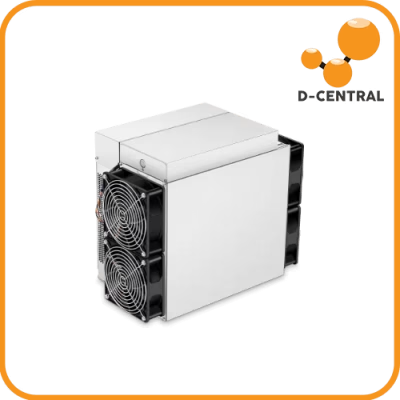
Not all second-hand miners are created equal. Your choice should be driven by three variables: your electricity cost, your available power capacity, and whether you plan to use the miner for heat recovery. Here is how the most common budget-friendly Antminer models stack up in 2026:
| Model | Hashrate | Power Draw | Efficiency (J/TH) | Used Price Range | Best Use Case |
|---|---|---|---|---|---|
| Antminer S9 | 13.5 TH/s | ~1,350W | ~100 J/TH | $50-$150 | Space heater, learning |
| Antminer S17+ | 73 TH/s | ~2,920W | ~40 J/TH | $200-$500 | Budget mining + heat |
| Antminer S19 | 95 TH/s | ~3,250W | ~34 J/TH | $300-$700 | Serious budget mining |
| Antminer S19j Pro | 104 TH/s | ~3,068W | ~29.5 J/TH | $500-$1,500 | Best budget efficiency |
| Antminer S19 XP | 140 TH/s | ~3,010W | ~21.5 J/TH | $1,000-$2,500 | Top-tier used performance |
The sweet spot for most budget miners in 2026 is the S19j Pro. It delivers strong efficiency at a fraction of its original price, runs on a standard 240V/20A circuit, and has well-understood firmware options including custom firmware that can improve efficiency or allow underclocking for noise reduction.
The D-Central Advantage: Inspected, Tested, and Ready to Hash
Buying a used miner from a random marketplace listing is a gamble. Buying from D-Central is not. Every second-hand Antminer we sell goes through a rigorous multi-point inspection process:
- Visual inspection — PCB damage, corrosion, burned components, fan condition, heatsink integrity
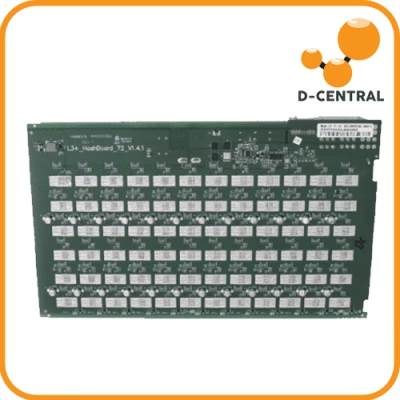
- Hashboard testing — Each hashboard is tested individually for ASIC chip functionality and error rates
- Thermal testing — Full thermal cycling under load to identify chips that fail under sustained heat
- Power supply verification — PSU output voltage stability, ripple testing, connector integrity
- Firmware validation — Clean firmware flash, verified boot, network connectivity testing
- Burn-in period — Extended run time to catch intermittent failures before the unit ships to you
Our ASIC repair team has serviced thousands of miners since 2016. We know these machines inside and out — literally. We have repaired hashboards at the chip level, replaced thermal paste on thousands of ASIC chips, and reflowed solder joints under microscope. When we say a used miner is ready to hash, we mean it.
Dual-Purpose Mining: Your Miner Is Also a Heater
This is where budget mining with used Antminers becomes genuinely brilliant, and it is central to the D-Central philosophy.
Every watt your miner consumes is converted to heat. Not some of it — all of it. A 3,000W Antminer produces approximately 10,200 BTU/h of heat. That is equivalent to a large electric space heater, except this one is also mining Bitcoin while it warms your space.
For Canadian home miners, this changes the economics entirely. During our 6-8 month heating season, your electricity cost is not a pure mining expense — it is a heating expense that happens to also produce Bitcoin. If you were going to spend that money on electric heat anyway, the Bitcoin you mine is essentially free.
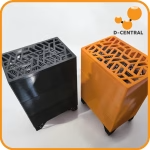
D-Central pioneered the Bitcoin Space Heater concept with custom builds based on Antminer S9, S17, and S19 hardware. These units are enclosed in sound-dampened cases with ducting to direct warm air where you need it. A used Antminer S9 might not be the most efficient pure miner in 2026, but as a space heater that also mines Bitcoin? It is unbeatable.
| Heating Method | Heat Output | Monthly Cost (est.) | Bitcoin Earned | Net Heating Cost |
|---|---|---|---|---|
| Electric baseboard (1,500W) | 5,100 BTU/h | ~$110 CAD | $0 | $110 CAD |
| Antminer S9 Space Heater (1,350W) | 4,600 BTU/h | ~$100 CAD | Varies (sats daily) | Reduced by BTC earned |
| Antminer S19 Space Heater (3,250W) | 11,000 BTU/h | ~$240 CAD | Varies (more sats daily) | Significantly reduced |
This is the Mining Hacker mindset. We do not look at used Antminers as obsolete technology. We see them as multi-purpose tools that the market has undervalued.
What to Inspect Before Buying a Used Antminer
Whether you buy from D-Central (where we handle all inspection for you) or source elsewhere, here is what to check on any used Antminer:
Hardware Inspection Checklist
- Hashboards — Confirm all 3 hashboards are present and reporting full chip counts. Missing or underperforming boards are the most common issue with used units
- Fan condition — Fans should spin freely without grinding or wobbling. Replacement fans are cheap, but seized fans at the point of sale indicate poor maintenance history
- PSU health — Check for swollen capacitors, burnt smell, or corroded connectors. A failing PSU can damage hashboards
- Heatsink attachment — Verify heatsinks are firmly seated. Loose heatsinks cause thermal throttling and premature chip failure
- Control board — Ensure the miner boots, connects to network, and reaches its pool. Test the web interface for responsiveness
- Error rates — Run the miner for at least 24 hours and check for hardware errors (HW errors) in the miner dashboard. Acceptable rate is under 0.1%
Seller Verification
- Buy from established Bitcoin mining companies with physical addresses and repair capabilities
- Avoid generic marketplace listings with stock photos
- Ask for hashrate screenshots from actual testing, not manufacturer specs
- Verify the seller offers some form of warranty or return window
- Check if the seller has ASIC repair capabilities — this indicates they actually understand the hardware they are selling
Power and Infrastructure Requirements
Budget mining does not mean cutting corners on electrical infrastructure. Used Antminers have the same power requirements as new ones, and getting this wrong can be dangerous and expensive.
Electrical Requirements
| Requirement | Details |
|---|---|
| Voltage | 240V recommended (more efficient than 120V, lower amperage for same wattage) |
| Circuit | Dedicated 240V/20A or 240V/30A circuit per miner (do NOT share circuits) |
| Outlet | NEMA 6-20R (20A) or NEMA 6-30R (30A), or hardwired PDU |
| Grounding | Proper ground required — never bypass for ASIC equipment |
| Electrician | Always hire a licensed electrician for 240V circuit installation |
Cooling and Noise Management
Antminers are loud. An S19 at full speed produces 75+ dB — comparable to a vacuum cleaner running continuously. Budget miners need a plan for this:
- Dedicated room — Basement, garage, or workshop with adequate ventilation
- Intake and exhaust — Fresh air in, hot air out. Use dryer-style duct vents for exhaust
- Sound dampening — D-Central’s space heater enclosures significantly reduce noise while directing heat usefully
- Custom firmware — Underclocking reduces noise dramatically (and improves efficiency at the cost of some hashrate)
- Fan replacement — Aftermarket quieter fans can reduce noise by 10-15 dB
Electricity Costs: The Make-or-Break Variable
Your electricity rate determines whether budget mining with used hardware is profitable, marginal, or a losing proposition. This is non-negotiable math.
Canada has some of the lowest electricity rates in North America, particularly in Quebec (hydro), Manitoba (hydro), and British Columbia. This is a structural advantage that Canadian home miners should exploit aggressively.
| Electricity Rate | Viability for Budget Mining | Recommended Strategy |
|---|---|---|
| Under $0.05/kWh | Highly profitable | Run any used S19-series unit 24/7 |
| $0.05-$0.08/kWh | Profitable with efficient hardware | S19j Pro or better, consider underclocking older units |
| $0.08-$0.12/kWh | Marginal for pure mining | Only viable with heat recovery (space heater mode) |
| Over $0.12/kWh | Heat recovery essential | Heating season only, or use renewable/off-grid power |
If your electricity cost is above $0.08/kWh, the dual-purpose heating strategy is not optional — it is the key to making used Antminers work for you. When you factor out the heating value of the energy consumed, even relatively expensive power rates become workable.
Maintenance: Extending the Life of Used Hardware
A well-maintained used Antminer can run for years beyond its original deployment. Here is the maintenance schedule we recommend at D-Central:
Monthly
- Blow out dust with compressed air (power off first)
- Check fan speeds and listen for bearing noise
- Review miner dashboard for increasing HW error rates
- Verify hashrate is stable and matching expected output
Quarterly
- Deep clean heatsinks and fan blades
- Inspect power connectors for heat discoloration or looseness
- Check ambient temperature and ensure cooling is adequate
- Update firmware if new stable releases are available
Annually
- Replace thermal paste on hashboard ASIC chips (significant performance improvement)
- Replace fans proactively — they are cheap and the most common point of failure
- Full electrical inspection of dedicated circuits and connections
- Consider professional service — D-Central’s ASIC repair service can perform comprehensive maintenance and diagnostics
Pool Selection for Budget Miners
With used hardware producing modest hashrate compared to industrial operations, pool selection matters. Budget miners should consider:
- Low or zero-fee pools — Every percent saved on pool fees goes directly to your bottom line
- FPPS payout method — Full Pay Per Share ensures steady, predictable income regardless of pool luck
- Decentralized pools — Pools like OCEAN and CK Pool align with the decentralization ethos and prevent mining centralization
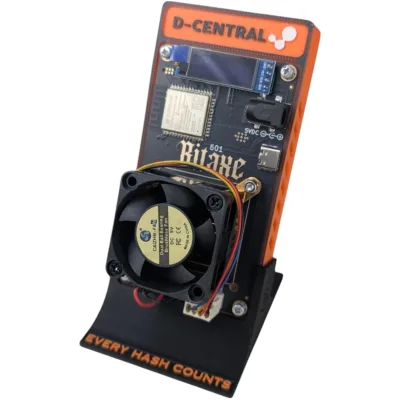
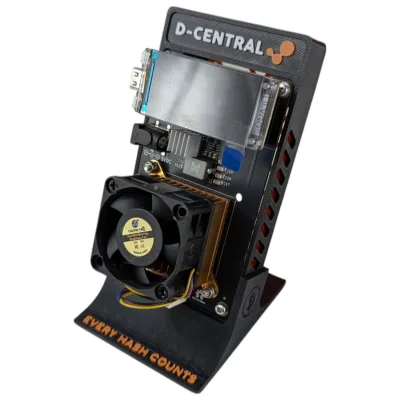
- Solo mining — For the ultimate cypherpunk move, point your miner at a solo pool and chase a full 3.125 BTC block reward. The odds are long, but every hash counts. Check out our Bitaxe Hub for dedicated solo mining hardware
When Budget Mining Does Not Make Sense
Honesty is a core value at D-Central. Budget mining with used Antminers is not for everyone. Here are scenarios where it may not be the right move:
- Electricity over $0.15/kWh with no heat recovery use — The math simply does not work. You will spend more on power than you mine in Bitcoin
- No dedicated electrical circuit — Running an Antminer on a shared household circuit is a fire risk. The cost of proper electrical work must be factored in
- Noise-sensitive living situation — If you cannot isolate the miner from living spaces, the noise will drive you (or your family) to shut it down
- Expecting immediate returns — Mining is a long-term Bitcoin accumulation strategy, not a get-rich-quick scheme. If you need the money back next month, this is not for you
For those cases, consider open-source solo miners like the Bitaxe — silent, low-power devices that let you participate in Bitcoin mining and chase a solo block without the noise, heat, or electrical requirements of a full ASIC.
Getting Started: Your Budget Mining Action Plan
Ready to start mining on a budget? Here is your step-by-step action plan:
- Calculate your electricity cost — Check your utility bill for your actual $/kWh rate including delivery charges and taxes
- Assess your infrastructure — Do you have (or can you install) a dedicated 240V circuit? Do you have a suitable location for noise and heat?
- Determine your heat recovery potential — If you pay for electric heating during winter, a mining space heater can offset or eliminate that cost
- Set your budget — Include the miner, PSU (if not included), electrical work, and any ducting or enclosure materials
- Source your hardware — Browse D-Central’s shop for inspected, tested, and warranty-backed used Antminers
- Choose your pool — Select a pool aligned with your values and payout preferences
- Configure and deploy — Set up your miner, point it at your pool, and start stacking sats
- Monitor and maintain — Follow the maintenance schedule above to maximize your hardware’s lifespan
Why D-Central for Used Mining Hardware
D-Central Technologies has been in the Bitcoin mining business since 2016. We are not a faceless reseller dropshipping miners from Shenzhen. We are a Canadian company with a physical repair facility in Montreal, Quebec, staffed by technicians who repair ASIC miners at the component level every single day.
When you buy a used Antminer from D-Central:
- Every unit is inspected, tested, and burned in before shipping
- You get real support from people who actually understand the hardware
- We offer ASIC repair services if anything goes wrong down the road
- We ship from Canada — no customs surprises, no weeks-long international shipping
- We can convert your miner into a Bitcoin Space Heater with custom enclosures and ducting
Budget mining is not about buying the cheapest thing you can find. It is about buying smart, deploying strategically, and stacking sats with conviction. That is the Mining Hacker way.
Frequently Asked Questions
Is it still profitable to mine Bitcoin with used Antminers in 2026?
Yes, if your electricity rate is competitive (under $0.08/kWh for pure mining, or higher if you leverage heat recovery). With the block reward at 3.125 BTC and network difficulty above 110 trillion, efficiency matters more than ever. Used S19-series units offer the best balance of acquisition cost and mining efficiency for budget miners. The key insight is that profitability depends on your specific electricity cost and whether you can use the heat output productively.
What is the best used Antminer to buy on a budget?
The Antminer S19j Pro is the current sweet spot for budget miners. It offers ~104 TH/s at approximately 29.5 J/TH efficiency, and used units can be sourced for $500-$1,500. For pure heating applications where mining is a bonus, the Antminer S9 remains a viable ultra-budget option at $50-$150. For the best used-market efficiency, look at the S19 XP at ~21.5 J/TH, though these command higher prices.
How long do used Antminers typically last?
With proper maintenance — regular dust cleaning, fan replacement, thermal paste renewal, and stable power — a well-built Antminer can run for 5-7+ years total. Many S9 units from 2017 are still operational in 2026. The most common failure points are fans (cheap and easy to replace), PSU capacitors, and thermal interface degradation on ASIC chips. All of these are serviceable, especially through a professional ASIC repair service.
How much electricity does a used Antminer consume?
It varies by model. An S9 draws approximately 1,350W, an S19 about 3,250W, and an S19j Pro about 3,068W. At $0.07/kWh, an S19j Pro costs roughly $5.15 CAD per day to operate. Always run your specific numbers before committing — your utility rate, including all delivery charges and taxes, is the critical variable.
Can I run a used Antminer at home?
Yes, but you need to address three things: power (dedicated 240V circuit installed by a licensed electrician), noise (dedicated room or sound-dampened enclosure), and ventilation (intake and exhaust for the hot air). Many home miners successfully run units in basements, garages, or workshops. D-Central’s Bitcoin Space Heater enclosures are specifically designed to make home deployment practical by managing noise and directing heat usefully.
What is dual-purpose mining?
Dual-purpose mining means using your ASIC miner as both a Bitcoin miner and a space heater. Since 100% of the electrical energy consumed by a miner is converted to heat, your miner is functionally identical to an electric heater — except it also mines Bitcoin. During heating season, this effectively reduces your net mining cost to near zero, since you would have spent that electricity on heating anyway.
Does D-Central offer warranty on used Antminers?
D-Central tests and inspects every used miner before sale. Contact us for current warranty terms on specific units. Beyond warranty, our ASIC repair service is available for any issues that arise throughout the life of your miner — we repair at the component level, not just board swaps.
Should I solo mine or join a pool with a used Antminer?
For consistent income with used hardware, pool mining with FPPS payouts is the practical choice. Solo mining with a single S19 against 800+ EH/s of network hashrate has astronomically low odds of hitting a block. However, if you are a conviction Bitcoiner who wants to support decentralization and is comfortable with lottery odds, solo mining is a valid philosophical choice. For dedicated solo mining, also consider purpose-built devices like the Bitaxe, which are designed specifically for solo block hunting.