On this page
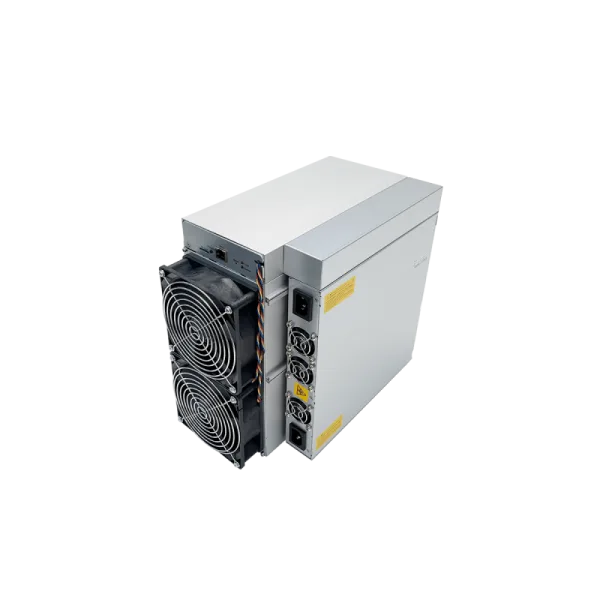
Antminer S19j
Budget S19 variant at 90 TH/s. Widely available on secondary market at low cost. Standard S19 form factor.
Quick answer
The Antminer S19j is a Bitcoin miner rated about 90 TH/s at roughly 3,100 W (about 34.44 J/TH), built on 126× BM1398. An industrial-class unit — loud and power-hungry, best suited to a dedicated mining space, not living areas.
DCENT_OS Compatible
DCENT_OS is custom firmware developed by D-Central Technologies specifically for home miners. It transforms this miner with whisper-quiet fan profiles, 120V North American outlet support, auto-tuning for maximum efficiency, heater mode integration, and a clean web dashboard for monitoring.
Miners running DCENT_OS score higher on our Home Mining Assessment because the firmware is purpose-built to make industrial hardware livable in residential spaces.
Learn More About DCENT_OS →Professional-Grade Miner
This miner draws 3,100W and produces 75 dB of noise — it is designed for dedicated mining environments, not living spaces. Professional-grade miners deliver the highest hashrate and revenue per unit but require proper infrastructure: a 240V circuit, adequate ventilation or exhaust ducting, and a space where noise is not a concern (garage, basement, warehouse, or outdoor enclosure).
However, this miner is compatible with DCENT_OS — D-Central's custom firmware that adds whisper-quiet fan profiles and 120V North American outlet support. With DCENT_OS installed, this industrial miner can be transformed for home use.
Heater-Class Miner
At 3,100W, this miner outputs approximately 10577.2 BTU/hr of heat — equivalent to a standard electric space heater. Every watt consumed by an ASIC miner is converted to heat with 100% efficiency, making it a space heater that also mines Bitcoin.
During heating season, miner heat can offset part of the heat a room would otherwise need from another electric heater. The economics depend on your electricity rate, room heat demand, BTC price, network difficulty, and noise constraints.
Profitability Calculator
| Period | Revenue | Electricity Cost | Profit |
|---|---|---|---|
| Daily | $2.85 | $5.21 | $-2.36 |
| Weekly | $19.95 | $36.46 | $-16.51 |
| Monthly | $85.48 | $156.24 | $-70.76 |
| Yearly | $1,040.06 | $1,900.92 | $-860.86 |
Heating offset estimates the value of heat replacing an electric space heater during heating season (~6 months/year in Canada). Actual savings depend on your heating setup and climate.
Where to Buy the Antminer S19j
D-Central Technologies
CanadaBitcoin Mining Hackers since 2016. Ships from Laval, Quebec.
Shop all Bitcoin mining productsASIC Miner Market
United StatesWide selection of new and used ASIC miners. US-based shipping.
Shop NowFull Specifications
| Model | Antminer S19j |
|---|---|
| Model Number | S19j |
| Manufacturer | Bitmain |
| Algorithm | SHA-256 |
| Coins Mined | Bitcoin (BTC) |
| Hashrate | 90 TH/s |
| Power Consumption | 3,100 W |
| Efficiency | 34.44 J/TH |
| Noise Level | 75 dB |
| Chip Model | BM1398 |
| Chip Count | 126 |
| Cooling | Air |
| Voltage Range | 200-240V AC |
| Operating Temperature | 5-40°C |
| Dimensions | 400x195x290 |
| Weight | 13 |
| Interface | Ethernet |
| BTU Output | 10577.2 BTU/hr |
| Equivalent Heater | Equal to a 3,100W space heater |
| Daily Power Cost | $5.21/day |
| Monthly Power Cost | $156.24/mo |
| Circuit Requirement | 240V circuit required |
| Release Date | 2021-06-01 |
| MSRP | $2,000.00 |
| Status | Active |
Home Mining Assessment
Budget S19 variant at 90 TH/s. Widely available on secondary market at low cost. Standard S19 form factor.
The Antminer S19j is Bitmain’s budget-tier SHA-256 ASIC: 90 TH/s for roughly 3,100 W at the wall, about 34.4 J/TH. It runs on the same 7 nm BM1398 silicon as the original S19, air-cooled at around 75 dB. Cheap on the secondary market, it earns its keep where power is inexpensive or its heat is reused.
Chip and hashboard architecture
The S19j is built on Bitmain’s BM1398 ASIC, the refined 7 nm (TSMC DUV) SHA-256 engine that also powers the original Antminer S19, S19 Pro, T19 and S19a. This matters: the “j” suffix on the base S19j does not denote the 5 nm chip. The more efficient Antminer S19j Pro is the model that moved to the 5 nm BM1362, which is why the Pro lands near 29.5 J/TH while the base S19j sits in the 7 nm efficiency band at ~34.4 J/TH. Any spec sheet that lists the base S19j as “BM1362” has confused it with the Pro.
The machine carries 126 BM1398 ASICs spread across three hashboards. On every hashboard the chips are wired in long series chains — command and clock signals propagate from the first chip to the last, and nonce results return up the same daisy-chain. Drop a single chip and the entire downstream section of that chain goes dark, which is the root of most “low ASIC count” faults on this platform.
Voltage domains, not per-chip control
Like the rest of the S19 family, the S19j regulates power per voltage domain, never per individual chip. Chips are clustered into series-wired domains, and each domain is fed by its own LDO or buck regulator that steps the boosted board rail (the S19 line boosts the ~12–14 V input up toward 19–20 V) down to the fraction of a volt each chip group needs. For reference, the original S19 hashboard runs 76 chips across 38 domains (two chips per domain) and the S19 Pro runs 114 chips across the same 38 domains (three per domain); the S19j follows the same domain-regulation scheme on its BM1398 boards. A dsPIC/PIC-class controller on each board drives those regulators over I²C, reads the on-board temperature sensors, and runs a heartbeat watchdog that cuts voltage if the control board stops talking to it.
The cost-reduced control board
The biggest hardware difference between the S19j and its S19 siblings is the brain. The original S19, S19 Pro and S19j Pro use a Xilinx Zynq control board (a dual Cortex-A9 at 667 MHz paired with an Artix-7 FPGA that handles time-critical ASIC communication in hardware). The base S19j, built from late 2021 onward, instead ships on a cost-reduced BeagleBone-class TI AM335x board — a single Cortex-A8 with no FPGA, talking to the hashboards over software-driven UART and booting from an SD card inside the unit. It is a cheaper, simpler design that does the same job with more CPU effort, and it is the main reason the S19j undercut the S19 on price. (Some later S19j production also appears on Amlogic-based boards, so always confirm your exact control board before any firmware or repair work.)
Real-world power and efficiency
The 3,100 W figure is the nameplate rating, measured at the rated ~25–30 °C ambient. Real wall draw varies by roughly ±5% with PSU efficiency, ambient temperature and grid voltage, so expect anywhere from about 2,950 W to 3,250 W in practice. At 90 TH/s that works out to the rated 34.4 J/TH and roughly 10,577 BTU/h of heat — enough to noticeably warm a small room. The unit runs on 200–240 V AC; it is not a 120 V-native machine, so plan for a 240 V circuit.
That 34.4 J/TH is firmly previous-generation by today’s standards, but the BM1398 platform has real tuning headroom. On third-party autotuning firmware, BM1398 hashboards underclock gracefully for efficiency or push harder for output. Documented BM1398 power curves show the silicon dropping into the 24–32 J/TH range when underclocked (one S19 BM1398 profile reaches roughly 67 TH at ~1,630 W — about a 29% efficiency gain over stock), or climbing past 100 TH at the cost of efficiency when overclocked. The exact stable curve depends on chip binning and cooling, so treat tuning as a per-unit calibration rather than a fixed table. Our ASIC power-profiles database lists the measured frequency/voltage/efficiency points for the S19 family so you can pick the operating point that fits your electricity rate.
Firmware compatibility
Out of the box the S19j runs Bitmain’s stock firmware — a CGMiner-derived “bmminer” build with the familiar web dashboard and CGMiner API on port 4028. It mines reliably but exposes no real tuning, no per-domain telemetry and no Stratum V2.
The S19-family is broadly served by third-party firmware. BraiinsOS+ is notable as the only firmware that natively supports Stratum V2, and the major autotuners calculate per-domain frequency and voltage at runtime from live chip feedback — these are computed targets, not preset values baked into the image. The important caveat for the S19j specifically is the control board: because the base model can ship on a BeagleBone AM335x (and occasionally Amlogic) board rather than the Zynq used by the S19/S19 Pro, third-party support is more board-dependent than on the FPGA models. Always match the firmware build to your exact control board before flashing.
For miners who want a sovereign, auditable option, DCENT_OS is D-Central’s own open-source (GPL-3.0) Antminer firmware. It is currently in closed beta with a public release targeted for summer 2026, and S19-class control boards are on the supported-hardware roadmap. If you want to run your S19j on firmware you can read and own, talk to us about your specific unit.
Common faults and troubleshooting
The S19j fails in the same well-understood ways as the rest of the BM1398 line:
- Reduced or zero ASIC count on a chain — a single open chip breaks the series signal chain and makes every chip after it invisible. The web UI reports fewer chips than expected or “0 ASIC found” on that board.
- Voltage-domain short — a shorted chip or LDO collapses the voltage across its domain, the boost circuit trips for protection, and the whole board drops offline.
- Over-temperature shutdowns — dust-clogged heatsink fins, a failed fan, or dried-out thermal pads let chip temperatures climb until the firmware throttles or halts. The S19j is a four-fan, air-cooled machine; one dead fan is enough to trigger protection.
- PIC / EEPROM errors — a hashboard that won’t initialize or reports an EEPROM read error usually has a controller or identity-chip fault rather than a dead ASIC.
- PSU faults — the high-current APW-series supply degrades with age and is a frequent cause of intermittent restarts under load.
Work through symptoms systematically with our ASIC fault finder, which maps error messages and behaviour to the most likely failed component before you open the case.
Repair and longevity
D-Central has repaired Antminer hardware in-house in Laval, Québec since 2016, and the 7 nm S19j is one of the more repairable machines we see. Mature BM1398 boards respond well to chip-level work: domain-by-domain diagnosis to isolate the failed cluster, BGA reball or chip replacement, regulator and LDO repair, control-board swaps, PSU rebuilds and fan/thermal service. Because the BM1398 is a high-volume chip, donor parts and replacement ASICs remain readily available — a dead hashboard on an S19j is usually economical to fix rather than scrap. Send us the unit and our technicians will diagnose it at the component level. See our ASIC repair service for turnaround and what we cover.
Who the S19j is for
This is a value play, not an efficiency leader. With a home-mining score of 84/100, the S19j makes sense when you have inexpensive electricity, when you can put its ~10,577 BTU/h of waste heat to work warming a space, or when you simply want maximum terahash per dollar of hardware on the used market. Where it does not make sense is an efficiency-first farm paying retail power — there a 5 nm machine like the S19j Pro or a current-generation S21 will earn more per kilowatt-hour. And if your goal is the smallest, quietest possible way to learn the protocol or stack sats solo, a Bitaxe open-source miner is the better entry point. Browse current S19-class stock and pricing in our ASIC miner catalog.
Generational context
The S19j belongs to Bitmain’s 7 nm BM1398 generation (2020–2021), the bridge between the 7 nm S17 line (BM1397) and the 5 nm era that followed. The “j” was a deliberate cost-down of the S19: a cheaper control board and a trimmed bill of materials traded a little hashrate (90 TH/s versus the S19’s 95 TH/s) for a lower price, at essentially the same efficiency. Everything after it got more efficient — the S19j Pro (5 nm BM1362), the S19 XP (5 nm BM1366) and the S21 (BM1368) each roughly halved J/TH in turn — but those gains came with higher purchase prices. The table below puts the S19j in context against its closest relatives.
| Model | ASIC (process) | Hashrate | Power | Efficiency | Control board |
|---|---|---|---|---|---|
| Antminer S19j | BM1398 (7 nm) | 90 TH/s | ~3,100 W | ~34.4 J/TH | BeagleBone AM335x |
| Antminer S19 | BM1398 (7 nm) | 95 TH/s | ~3,250 W | ~34.2 J/TH | Zynq (FPGA) |
| Antminer S19j Pro | BM1362 (5 nm) | ~100–104 TH/s | ~3,050 W | ~29.5 J/TH | Zynq am2 (FPGA) |
| Antminer S19 XP | BM1366 (5 nm) | ~140 TH/s | ~3,010 W | ~21.5 J/TH | Amlogic / Zynq |
Treat the headline numbers as nameplate references — real-world hashrate and wall draw shift with ambient temperature, firmware and tuning, and every used unit has its own history. If you want the exact behaviour of a specific S19j, its repairability, or whether it is the right machine for your power situation, that is precisely the kind of question D-Central’s technicians answer every day.
Broken miner? Get a real quote.
Tell us the symptom and get an instant repair-tier estimate ($95 / $145 / $195 CAD). Mail-in from across Canada, bench in Laval, Quebec.
Send it to D-Central — start a repair →Antminer S19j Pro specs, repair, and parts
Use the S19j cluster for specs, buying options, the correct BM1362 chip part, troubleshooting, and repair support. The S19j family runs BM1362 ASICs, not the BM1398 used in the original S19, S19 Pro, and T19.
Frequently Asked Questions
What are the current mining economics for the Antminer S19j?
At $0.07/kWh, the Antminer S19j currently shows an estimated daily net cost of $2.36 before pool fees and hardware cost. Lower electricity rates, network changes, BTC price changes, or useful heat recovery can change the result.
Can I mine Bitcoin at home with the Antminer S19j?
The Antminer S19j has a home mining score of 8/100. With 75 dB noise and 3,100W power draw, it may require a dedicated space like a garage, basement, or outdoor enclosure. Consider noise insulation and proper ventilation.
Can the Antminer S19j heat my home?
The Antminer S19j outputs approximately 10577.2 BTU/hr of heat. For reference, a typical space heater produces 5,000-5,500 BTU/hr. All electrical energy consumed by the miner is converted to heat, making it 100% efficient as a heater. D-Central offers Bitcoin Space Heater builds designed specifically for home heating integration.
Does D-Central repair the Antminer S19j?
Yes, D-Central provides professional repair services for the Antminer S19j. Services include hashboard repair, control board diagnostics, fan replacement, and full refurbishment. Ship your miner to our Laval, Quebec facility for diagnosis and repair.
What power supply does the Antminer S19j need?
The Antminer S19j draws 3,100W of power. You need a power supply rated for at least 3,410W with appropriate voltage (200-240V AC). D-Central stocks compatible power supplies in our shop. Always use a quality PSU from a reputable manufacturer to protect the miner and wiring.
