Skip to content

Bitcoin accepted at checkout  |  Ships from Laval, QC, Canada  |  Expert support since 2016

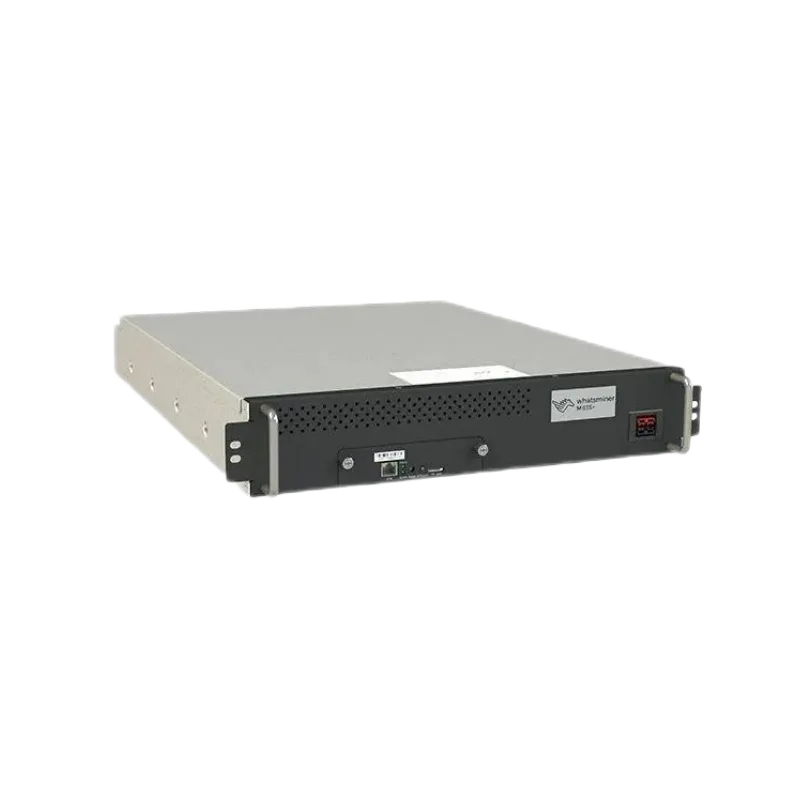
Whatsminer M63S+ ASIC miner specifications and profitability image
Active MicroBT SHA-256 PRO Hydro

Whatsminer M63S+

Top-bin M63 hydro at 450 TH/s. 4U rack chassis with sealed water loop and 3-phase PSU. Enterprise/datacenter grade.

Hashrate 450 TH/s
Power 7,650 W
Efficiency 17 J/TH
Noise 50 dB

Quick answer

The Whatsminer M63S+ is a Bitcoin miner rated about 450 TH/s at roughly 7,650 W (about 17 J/TH), built on the WM3610 ASIC. An industrial-class unit — loud and power-hungry, best suited to a dedicated mining space, not living areas.

Hydro-Cooled Miner

This miner uses a closed-loop liquid cooling system (hydro cooling) instead of traditional air cooling. Water or coolant circulates through internal channels to absorb heat from the ASIC chips, then transfers it to an external radiator or facility cooling loop.

Hydro-cooled miners run significantly quieter than air-cooled models since they eliminate or minimize fan noise. They also achieve higher hashrates and better efficiency because the chips can be driven harder while staying within safe thermal limits. The trade-off: hydro miners require compatible water infrastructure — inlet/outlet connections, a cooling distribution unit (CDU), and proper plumbing.

Hydro cooling is ideal for professional mining operations and data centers where water infrastructure already exists, or for home miners building a dedicated water-cooled setup to eliminate noise completely.

Professional-Grade Miner

This miner draws 7,650W and produces 50 dB of noise — it is designed for dedicated mining environments, not living spaces. Professional-grade miners deliver the highest hashrate and revenue per unit but require proper infrastructure: a 240V circuit, adequate ventilation or exhaust ducting, and a space where noise is not a concern (garage, basement, warehouse, or outdoor enclosure).

For home miners looking for a quieter alternative, consider our Bitcoin Space Heater builds or explore open-source miners like the Bitaxe that are purpose-built for residential environments.

Circuit Requirement 240V dedicated circuit

Profitability Calculator

$62,380
Daily BTC Mined --
Breakeven Electricity $0.0769/kWh
Cost to Mine 1 BTC --
Network Hashrate Share --
Break-even Estimate --
Estimated mining profitability by period at current network conditions.
Period Revenue Electricity Cost Profit
Daily $14.12 $12.85 $1.27
Weekly $98.87 $89.96 $8.91
Monthly $423.75 $385.56 $38.19
Yearly $5,155.58 $4,690.98 $464.60

Where to Buy the Whatsminer M63S+

Official

D-Central Technologies

Canada

Bitcoin Mining Hackers since 2016. Ships from Laval, Quebec.

Shop all Bitcoin mining products
Partner

ASIC Miner Market

United States

Wide selection of new and used ASIC miners. US-based shipping.

Shop Now
Partner

MinersDeals

United States

Competitive prices on new ASIC miners with coupon codes.

Shop Now

BT-Miners

United States

Large inventory of ASIC miners. US-based.

Shop Now

Coin Mining Central

United Kingdom

UK-based mining hardware retailer. Ships worldwide.

Shop Now

CryptoMinerBros

United States

Established US retailer with repair services.

Shop Now

Full Specifications

Full technical specifications for this miner.
Model Whatsminer M63S+
Model Number M63S+
Manufacturer MicroBT
Algorithm SHA-256
Coins Mined Bitcoin (BTC)
Hashrate 450 TH/s
Power Consumption 7,650 W
Efficiency 17 J/TH
Noise Level 50 dB
Chip Model WM3610
Cooling Hydro
Voltage Range 380-480V 3-phase
Operating Temperature 5-45°C
Dimensions 86x483x663
Weight 27.5
Interface Ethernet
BTU Output 26101.8 BTU/hr
Equivalent Heater Equal to a 7,650W space heater
Daily Power Cost $12.85/day
Monthly Power Cost $385.56/mo
Circuit Requirement 240V circuit required
Release Date 2024-06-01
MSRP $14,000.00
Status Active

Home Mining Assessment

32 /100
Poor
Noise 50 dB
Audible - best in a separate room
Heat Output 7,650W / 26101.8 BTU
High heat - requires ventilation or duct system
Power Draw 7,650W (7.7kW)
240V dedicated circuit required

Top-bin M63 hydro at 450 TH/s. 4U rack chassis with sealed water loop and 3-phase PSU. Enterprise/datacenter grade.

The Whatsminer M63S+ is MicroBT’s hydro-cooled, three-phase SHA-256 ASIC for Bitcoin: roughly 450 TH/s at about 7,650 W on the wall, or near 17 J/TH. Built on the M6x-generation K-series silicon inside a sealed 4U water-loop chassis, it is a hashcenter-class machine — not a home miner.

Chip and hashboard architecture

The M63S+ runs on the same family of silicon D-Central catalogs as the WM3610 — MicroBT’s M6x-generation K-series SHA-256 die. MicroBT designs its own ASICs, and its lineage is a genuine engineering pedigree worth crediting: the M3x series shipped on Samsung 8 nm, the M5x series moved to 5 nm, and the M6x generation (2023–2024) is the refinement that followed. We deliberately do not quote a hard process node for this specific die. MicroBT does not publish a per-chip datasheet, and it ships M6x firmware fully encrypted (OP-TEE TrustZone plus dm-crypt), so the exact die shrink and the precise per-board chip count are not publicly verifiable. Where the Bible has a number, we use it; where it does not, we stay honest rather than invent a spec.

Per-domain voltage, not per-chip

Like every modern Bitcoin ASIC, the M63S+ regulates voltage by power domain, not by individual chip. A domain is a group of series-connected chips sharing one regulated rail; the control board sets the rail voltage for the whole domain, and frequency is trimmed across that group. There is no per-chip voltage knob on this hardware — a detail that matters the moment you start tuning or diagnosing a weak board.

Control board: ARM, no FPGA

The brain is an Allwinner H616 SoC — a 64-bit, quad-core ARM Cortex-A53 on MicroBT’s CB6-class control board. This is the architectural fork that separates Whatsminer from Antminer. Bitmain drives its hashboards through a Xilinx Zynq (ARM + FPGA) midstate engine; MicroBT has no FPGA and talks to the hashboards directly over SPI/UART from the ARM cores. The practical consequences:

  • Boards are not cross-compatible. A Whatsminer hashboard cannot run on an Antminer control board, or vice versa — different SoC, different ASIC bus, different EEPROM format, different power delivery.
  • Mining software is btminer, MicroBT’s proprietary daemon, not the open cgminer/BOSminer stack that Antminers descend from.
  • The hydro chassis is sealed. The hashboards sit in a coolant jacket fed by quick-connect couplers; there are no high-RPM fans on the unit itself, which is why its rated acoustic figure is a modest ~50 dB — the real noise lives in your external cooling-distribution unit (CDU) or dry cooler.

Real-world power and efficiency

Nameplate is roughly 450 TH/s for about 7,650 W, which works out to ~17 J/TH. Two things temper that number in the field. First, this is a three-phase machine — it expects a 380–480 V three-phase feed, not a single 240 V circuit — so it belongs on facility power, not a garage outlet. Second, hydro units carry pump and PSU overhead, so sustained draw at the wall tracks the nameplate closely rather than coming in under it.

There is tuning headroom. Stock btminer exposes Low / Normal / High power modes plus a power-percentage setpoint and target-frequency control. Importantly, the autotuner is runtime-calculated: it computes per-domain frequency and voltage live against silicon quality and coolant temperature — these are not fixed factory presets baked into a table. Because MicroBT encrypts the M6x power tables, we cannot republish per-bin frequency/voltage figures for this exact model the way we can for older, decrypted Whatsminer presets. For the models where we do hold verified tuning data, see our ASIC power profiles database.

At ~17 J/TH the M63S+ sits squarely in the current-generation efficiency tier (roughly 13–19 J/TH for modern SHA-256 hardware). It trails its own top-bin sibling, the M63S++ (~15.5 J/TH), and the newer M7x hydro line (~13.5–14.5 J/TH), but it is far ahead of the air-cooled M5x generation it descends from.

Where the heat goes

The M63S+ rejects on the order of 26,100 BTU/h — but unlike an air-cooled S19 or M30S, that heat leaves through the coolant loop, not a wall of hot air. That makes it a strong candidate for water-side heat recovery in a Hashcenter: pre-heating process water, feeding hydronic radiators, or dumping to a dry cooler in winter. Do not plan to “duct” a hydro miner into a room — capture the heat at the loop instead.

Firmware compatibility

Stock. The M63S+ ships MicroBT’s btminer on a hardened OpenWrt build. The BTMiner API listens on TCP 4028 (V2 — read commands open by default, write commands disabled until you enable them with WhatsMinerTool) and the newer V3 API on 4433; the web UI is on ports 80/443. There is no SSH shipped, and the root filesystem is dm-crypt encrypted with keys held in the SoC’s OP-TEE secure world. This is a noticeably more locked-down platform than a stock Antminer.

Third-party reality (honest). The aftermarket-firmware scene for Whatsminer is thinner than Antminer’s, and it is thinnest on the newest hydro M6x units. Third-party builds have historically targeted the air-cooled M20–M60 line; coverage of a unit like the M63S+ lags and is not guaranteed. Two hard rules apply: verify your exact model is supported before flashing anything, and never flash an air-cooled image onto a hydro unit — that mismatch trips the water-vs-air firmware fault (see Whatsminer error 810/820). Replacement control boards exist for older M3x/M5x machines, but not for this generation.

Braiins and Stratum V2. BraiinsOS does not run on Whatsminer at all — it is Antminer-only. And because only BraiinsOS+ natively supports Stratum V2, the M63S+ has no native Stratum V2 firmware path; on stock it mines Stratum V1. Plan your pool setup accordingly.

DCENT_OS. D-Central has been reverse-engineering the H616 / K-series platform toward a DCENT_OS Whatsminer port — one more layer of owner control over a box the manufacturer ships sealed. It is closed beta and GPL-3.0, with a public beta targeted for summer 2026. We are not going to over-promise here: the encrypted boot chain is a real obstacle, and we will ship it when it is genuinely ready.

Common faults and troubleshooting

A hydro M63S+ inherits every electrical failure mode of a high-power ASIC and adds the plumbing ones. Start at the ASIC fault finder and error-code database and match the symptom:

Hydro / cooling-loop faults

Electrical / hashboard faults

Repair and longevity

D-Central has repaired ASIC miners in-house in Laval, Québec since 2016, and the M63S+ is squarely in scope. Hydro hardware actually rewards a repair-first owner: the water loop is a serviceable subsystem, not a throwaway. Our bench handles leak and coupler service, O-ring and seal replacement, airlock purging, hashboard chip-level diagnosis and rework, PSU repair, and control-board replacement. A unit that drops a board or throws a coolant alarm is almost always worth fixing rather than scrapping — which is the whole point of keeping hashrate decentralized in the hands of the people who own it. Start a repair at our ASIC repair service.

Who it is for, and buying

Be honest with yourself about the infrastructure. The M63S+ wants three-phase power and a water-side heat-rejection loop (a dry cooler or a heat-reuse circuit). That is why its home-mining score lands at 44/100 — it is an enterprise and Hashcenter machine, not a basement or garage unit. If you are a home miner or a pleb who wants to mine sovereignly at the kitchen counter, this is the wrong tool; look at a Bitaxe or a small air-cooled unit instead. If you are scaling a facility with proper power and cooling, the M63S+ is a strong mid-tier hydro workhorse, and we build and hand-check units to order at the D-Central shop.

Generational context and how it compares

MicroBT’s M6x generation slots between the air-cooled 5 nm M5x line (2022) and the M7x generation (2025, pushing toward ~13.5 J/TH). On the hydro side specifically, the lineage runs from the M53 (2023) through the M63 family (2024) and on to the M73 (2025). The M63S+ — released around June 2024 — is the high-bin middle child of the M63 hydro line:

Model Cooling Hashrate Wall power Efficiency Year
Whatsminer M53 Hydro, 3-phase ~230 TH/s ~6,670 W ~29 J/TH 2023
Whatsminer M63S Hydro, 3-phase ~390 TH/s ~7,020 W ~18 J/TH 2024
Whatsminer M63S+ (this page) Hydro, 3-phase ~450 TH/s ~7,650 W ~17 J/TH 2024
Whatsminer M63S++ Hydro, 3-phase ~464 TH/s ~7,200 W ~15.5 J/TH 2024
Whatsminer M73 Hydro, 3-phase ~512 TH/s ~7,420 W ~14.5 J/TH 2025

Read that table as a tuning map as much as a shopping list: the M63S+ buys you density and ~17 J/TH today, the M63S++ trades a little hashrate headroom for better efficiency, and the M73 is where the next die step lands. Against Bitmain’s hydro S21-class machines it competes on efficiency rather than crushing them — a fair fight, and exactly the kind of hardware that keeps Bitcoin’s hashrate spread across more than one vendor’s silicon.

Broken miner? Get a real quote.

Tell us the symptom and get an instant repair-tier estimate ($95 / $145 / $195 CAD). Mail-in from across Canada, bench in Laval, Quebec.

Send it to D-Central — start a repair →

Frequently Asked Questions

What are the current mining economics for the Whatsminer M63S+?

At $0.07/kWh electricity, the Whatsminer M63S+ currently shows an estimated $1.27 daily net result before pool fees and hardware cost. Results depend on your electricity rate and Bitcoin network conditions. Use the calculator above with your actual electricity rate.

Can I mine Bitcoin at home with the Whatsminer M63S+?

The Whatsminer M63S+ has a home mining score of 32/100. With 50 dB noise and 7,650W power draw, it may require a dedicated space like a garage, basement, or outdoor enclosure. Consider noise insulation and proper ventilation.

Can the Whatsminer M63S+ heat my home?

The Whatsminer M63S+ outputs approximately 26101.8 BTU/hr of heat. For reference, a typical space heater produces 5,000-5,500 BTU/hr. All electrical energy consumed by the miner is converted to heat, making it 100% efficient as a heater. D-Central offers Bitcoin Space Heater builds designed specifically for home heating integration.

Does D-Central repair the Whatsminer M63S+?

Yes, D-Central provides professional repair services for the Whatsminer M63S+. Services include hashboard repair, control board diagnostics, fan replacement, and full refurbishment. Ship your miner to our Laval, Quebec facility for diagnosis and repair.

What power supply does the Whatsminer M63S+ need?

The Whatsminer M63S+ draws 7,650W of power. You need a power supply rated for at least 8,415W with appropriate voltage (380-480V 3-phase). D-Central stocks compatible power supplies in our shop. Always use a quality PSU from a reputable manufacturer to protect the miner and wiring.