Every serious Bitcoin miner eventually hits the same wall: you started with one ASIC in a spare room, then two, then five — and now you are staring at a tangle of power cables, overloaded circuits, and machines generating more heat than your ventilation can handle. Scaling rack space for a Bitcoin mining operation is not just about buying more shelves. It is an engineering problem that touches electrical infrastructure, thermal management, network architecture, and physical security. Get it right and you build a resilient, expandable operation that compounds hashrate over years. Get it wrong and you burn circuits, void warranties, and lose uptime.
Since 2016, D-Central Technologies has helped thousands of Canadian miners scale from single-unit home setups to multi-rack deployments. This guide distills what we have learned about rack space planning into a practical framework — whether you are filling your first 42U rack or designing a dedicated mining room.
Why Rack Space Planning Matters for Bitcoin Mining
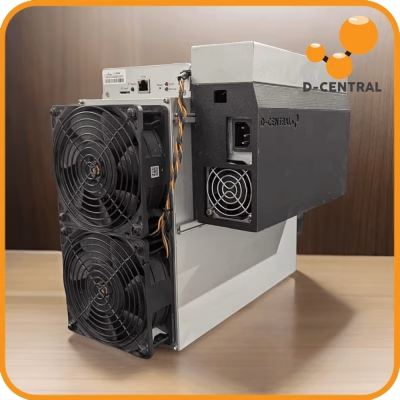
Bitcoin mining hardware is not generic IT equipment. An Antminer S21 draws roughly 3,500 watts and pushes hot exhaust air at 60-70 degrees Celsius. A standard 42U server rack designed for enterprise IT might handle 5-10 kW total. Fill that rack with ASICs and you are looking at 15-30 kW of continuous thermal load — three to six times what the rack was designed for. This mismatch between mining hardware requirements and conventional rack infrastructure is the root cause of most scaling failures.
Proper rack space planning addresses three interdependent constraints simultaneously:
- Electrical capacity — Total wattage per rack, circuit sizing, and upstream panel capacity
- Thermal dissipation — Removing heat at the rate it is generated, consistently, 24/7/365
- Physical density — Fitting the maximum number of operational units into the minimum footprint
Ignore any one of these and the other two become irrelevant. A rack with plenty of space but insufficient power sits half-empty. A rack with adequate power but poor cooling throttles itself into reduced hashrate. Planning all three together is what separates professional mining operations from expensive science experiments.
Assessing Your Current Capacity
Before adding a single rack, audit what you already have. This baseline assessment prevents the most common scaling mistake: building new infrastructure that is incompatible with existing systems.
Electrical Audit
Start at the electrical panel and work forward. Document the main service amperage (100A, 200A, 400A residential or commercial), the voltage (120V, 240V, or three-phase 208V/480V), and how many circuits are already allocated. For each circuit, measure actual draw under load using a clamp meter — not the nameplate rating, the real consumption. ASICs often draw 5-15% above nameplate depending on firmware, ambient temperature, and power supply efficiency.
| Service Type | Typical Amperage | Max Mining Load (80% Rule) | Approx. ASIC Capacity |
|---|---|---|---|
| Residential 240V Single-Phase | 200A | ~38 kW (after household load) | 8-12 mid-tier ASICs |
| Commercial 208V Three-Phase | 400A | ~115 kW | 30-40 current-gen ASICs |
| Industrial 480V Three-Phase | 800A+ | ~530 kW+ | 150+ current-gen ASICs |
The 80% continuous load rule from the National Electrical Code (and Canadian Electrical Code) is non-negotiable. A 30A circuit at 240V provides 7,200 watts theoretical but only 5,760 watts continuous. Plan for this from the start.
Thermal Audit
Measure ambient temperature in your mining space under full load during the hottest part of the day. If you are already running machines, check inlet and exhaust temperatures. Most ASICs operate within spec up to 40 degrees Celsius ambient — some newer models tolerate 45 degrees. If your current space hits 35 degrees with existing equipment, adding more machines without upgrading cooling will push you past thermal limits.
Physical Space Audit
Measure the actual floor space available, ceiling height, and distances to exterior walls (for exhaust routing). A standard 42U rack has a 600mm x 1000mm footprint but needs a minimum of 900mm clearance in front and behind for airflow and access. Factor in aisle width for maintenance — you need to be able to pull a machine out of the rack without dismantling the one above it.
Choosing the Right Rack Infrastructure
Not all racks are created equal, and mining-specific requirements diverge significantly from standard IT deployments.
Open Frame vs. Enclosed Racks
For Bitcoin mining, open-frame racks almost always outperform enclosed cabinets. ASICs are designed with high-velocity fans that push enormous volumes of air front-to-back. Enclosed racks restrict this airflow unless fitted with expensive active cooling doors or ducting. Open frames allow unrestricted air movement and cost 40-60% less than comparable enclosed racks.
The exception is immersion cooling setups, where racks are irrelevant — machines sit in fluid-filled tanks instead. But for air-cooled operations, which still represent the vast majority of deployments in 2026, open frames are the practical choice.
Rack Depth and Width Considerations
Standard ASIC miners vary significantly in form factor. An Antminer S21 is roughly 400mm x 195mm x 290mm. A Whatsminer M60S is about 390mm x 148mm x 226mm. These do not follow standard 19-inch rack mount conventions. Purpose-built mining shelves or adjustable rails are essential. Many operators build custom shelf units from slotted angle steel — functional, cheap, and infinitely adjustable.
Weight Loading
A fully loaded mining rack can weigh 200-400 kg depending on the number of units and power supply configurations. Verify that your floor can handle the point load, especially in residential settings or upper floors of commercial buildings. Distribute weight across the rack footprint and consider anti-vibration pads — ASICs produce significant vibration from their high-speed fans.
Electrical Infrastructure for Scale
Electrical design is where most scaling projects either succeed or fail. Mining operations demand sustained, continuous power at levels that stress residential and light commercial infrastructure.
Circuit Design
Dedicate circuits to mining — never share circuits with other loads. Each circuit should serve a known number of machines with documented draw. Use 240V wherever possible; it halves the current for the same wattage, reducing cable costs, voltage drop, and heat generation in the wiring.
For operations beyond 10-15 units, consider a sub-panel dedicated to mining. This isolates the mining load from the rest of the building’s electrical system, simplifies monitoring, and makes it easier to add circuits as you scale. A qualified electrician should size the sub-panel feeder with at least 25% headroom above your initial planned load.
Power Distribution Units (PDUs)
Rack-mounted PDUs are the backbone of organized power distribution. For mining, prioritize:
- Metered PDUs — Per-outlet or per-branch metering lets you monitor actual consumption per machine, catch failing power supplies early, and verify that circuits are balanced
- High-amperage ratings — Standard 15A PDUs are inadequate. Use 30A or 60A PDUs rated for continuous mining loads
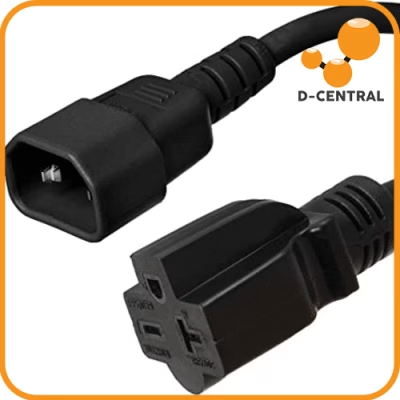
- C19/C20 outlets — Most ASIC power supplies use C13/C14 connectors, but some high-wattage units require C19/C20. Mixing outlet types on a single PDU provides flexibility
Voltage Drop and Cable Sizing
Over long cable runs, voltage drop becomes a real problem. A 3% drop on a 240V circuit means the ASIC sees 232.8V — potentially below the minimum input range of the power supply. The Canadian Electrical Code limits voltage drop to 5% total (3% feeder + 2% branch or vice versa). Use a voltage drop calculator for any run exceeding 15 meters and upsize conductors as needed.
Thermal Management at Scale
Heat is the defining challenge of dense Bitcoin mining deployments. Every watt consumed by an ASIC becomes a watt of heat that must be removed from the space. There are no exceptions to thermodynamics.
Airflow Architecture
The most effective approach for air-cooled mining is the hot aisle / cold aisle configuration borrowed from data center design. All racks face the same direction. Cool intake air enters from the front (cold aisle), passes through the machines, and exits as hot exhaust into a dedicated hot aisle. The hot aisle is then exhausted to the exterior or into a heat recovery system.
This requires disciplined rack placement. If machines face random directions, hot exhaust from one rack becomes intake air for another, creating a thermal cascade that degrades performance across the entire operation.
Ventilation Calculations
Mining ventilation is measured in CFM (cubic feet per minute). A single Antminer S21 moves approximately 250-300 CFM through its fans. For a rack holding 8 machines, that is 2,000-2,400 CFM of hot air that must be replaced with cooler air. Size your intake and exhaust openings accordingly — a common rule is 1 square foot of free area per 700 CFM of airflow.
| Cooling Method | Capacity | Best For | Considerations |
|---|---|---|---|
| Passive Ventilation (Intake/Exhaust) | Up to ~20 kW | Small home setups, cold climates | Free, but weather dependent. Excellent in Canadian winters |
| Active Exhaust Fans | 20-100 kW | Garage and basement operations | Industrial fans (12-24 inch) at $200-800 each. Noise is a factor |
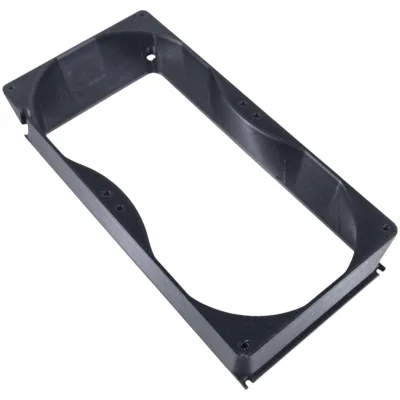
| Ducted ASIC Shrouds | Per-machine | Directed exhaust in shared spaces | D-Central sells universal ASIC shrouds for most popular models |
| Evaporative Cooling | 50-500 kW | Dry climates, large operations | Not ideal for humid environments. Low operating cost |
| Immersion Cooling | Virtually unlimited | High-density, noise-sensitive | High upfront cost. Eliminates fan noise entirely |
Heat Recovery: Turning Waste Into Value
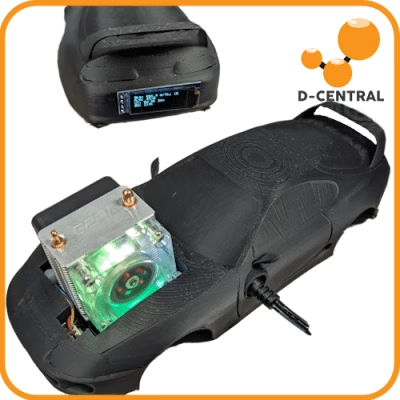
In Canada, where heating season spans 6-8 months in most provinces, mining heat is not waste — it is a resource. Bitcoin Space Heaters are the most direct expression of this principle: ASIC miners repackaged as functional space heaters. At scale, operators duct mining exhaust into adjacent living or working spaces, greenhouses, or even grain dryers. Every BTU captured from mining exhaust is a BTU you do not pay your utility company to generate. This dual-purpose approach fundamentally changes the economics of mining — especially at Canadian electricity rates.
Network Infrastructure for Multi-Rack Deployments
Network requirements for Bitcoin mining are modest compared to general data center workloads — each ASIC uses minimal bandwidth. However, reliability is everything. A network outage means zero hashrate, and zero hashrate means lost revenue every second.
Network Design Principles
- Wired connections preferred — Ethernet is more reliable than WiFi for stationary equipment. A simple unmanaged gigabit switch handles dozens of miners
- VLAN segmentation — Isolate mining traffic from general network traffic. This improves security and makes monitoring easier
- Static IP or DHCP reservations — Know which IP belongs to which machine. This is essential for remote monitoring and firmware management
- Redundant uplinks — For operations where downtime costs are significant, a secondary ISP connection with automatic failover pays for itself quickly
Monitoring and Management
At scale, manual checking of individual miner dashboards becomes impractical. Centralized monitoring tools — whether open-source options like Foreman or commercial platforms — aggregate hashrate, temperature, fan speed, and error data across your entire fleet. Set alerts for:
- Hashrate drops exceeding 10% on any individual machine
- Chip temperatures exceeding manufacturer limits
- Fan failures (RPM drops to zero)
- Network disconnections lasting more than 5 minutes
Catching a failing fan before it causes a thermal shutdown saves the cost of a hashboard replacement. At current hardware prices, that is thousands of dollars saved by a $5 sensor alert.
Scaling Strategies: Phased Growth vs. Full Build-Out
There are two schools of thought on scaling, and the right approach depends on your capital situation and risk tolerance.
Phased Growth
Build infrastructure in modular increments. Start with electrical capacity and cooling for one rack, fill it, optimize it, then add the next rack. This approach minimizes upfront capital, lets you learn from mistakes at small scale, and generates revenue at each phase that funds the next expansion.
The downside is that phased growth often results in suboptimal layout decisions — the second rack goes where it fits rather than where it should go for ideal airflow. Planning the eventual full layout from day one, even if you build incrementally, avoids this trap.
Full Build-Out
Design and build the complete infrastructure for your target capacity, then fill it over time. This is more capital-intensive upfront but produces a cleaner, more efficient result. Electrical, cooling, and network infrastructure designed as a unified system outperforms piecemeal additions.
For most home miners and small-to-medium operators, a hybrid approach works best: design for your 12-24 month target capacity, build the electrical and cooling infrastructure to that spec, but install racks and miners incrementally as budget allows.
Common Scaling Mistakes and How to Avoid Them
Having serviced thousands of mining operations since 2016, D-Central sees the same failure patterns repeatedly:
| Mistake | Consequence | Prevention |
|---|---|---|
| Undersizing electrical service | Tripped breakers, inability to add machines | Install 25-50% more capacity than initial plan requires |
| Ignoring voltage drop on long runs | PSU instability, reduced hashrate, premature failure | Calculate voltage drop for every circuit and upsize wire gauge |
| Inadequate exhaust ventilation | Thermal throttling, reduced ASIC lifespan | Match exhaust CFM to total machine airflow plus 20% margin |
| No monitoring system | Failures go undetected for hours or days | Deploy centralized monitoring before adding the third machine |
| Mixing machine orientations | Hot exhaust recirculation, cascading thermal issues | Enforce uniform front-to-back airflow across all racks |
| Using residential-grade components | Component fatigue under 24/7 load | Use commercial/industrial rated breakers, wire, and connectors |
The Canadian Advantage: Climate as Infrastructure
Canada offers structural advantages for scaling Bitcoin mining operations that most other jurisdictions cannot match. Cold winters provide months of essentially free cooling — outside air at -20 degrees Celsius is the most efficient coolant available anywhere, and it costs nothing. Several provinces offer electricity rates well below the North American average. Quebec’s hydroelectric surplus, Alberta’s deregulated market, and Manitoba’s low industrial rates all create viable mining economics at different scales.
D-Central operates its hosting facility in Montreal, Quebec, leveraging Quebec’s abundant hydroelectric power. For operators who need more rack space than their home or business can support, colocation hosting provides professionally managed infrastructure without the capital cost of building your own facility.
The regulatory environment in Canada is also more stable than many alternatives. Bitcoin mining is legal, mining income has clear tax treatment under CRA guidelines, and there are no federal restrictions on ASIC ownership or operation. This regulatory clarity makes long-term infrastructure investment significantly less risky than in jurisdictions where mining faces political uncertainty.
When to Consider Colocation Hosting
Scaling rack space at home or in a small commercial space has practical limits. When you hit any of these thresholds, it is time to evaluate colocation:
- Electrical service maxed out — Upgrading from 200A to 400A residential service costs $10,000-30,000+ and may require utility infrastructure upgrades
- Noise complaints — Even with shrouds and ducting, 10+ ASICs generate industrial noise levels. Bylaw complaints can shut down home operations
- Cooling costs exceed savings — If you are running air conditioning to cool your mining space in summer, the electricity cost of cooling can erase mining margins
- Insurance concerns — Home insurance policies may not cover losses related to high-density electrical equipment. Commercial hosting facilities carry appropriate coverage
- Uptime requirements — Professional facilities offer generator backup, redundant network, and 24/7 monitoring that is impractical to replicate at home
D-Central’s hosting service handles the infrastructure so you can focus on strategy — selecting hardware, managing pools, optimizing firmware, and planning expansion. It is the difference between being an infrastructure operator and being a miner.
Maintenance Planning for Scaled Operations
More machines means more maintenance. Establish procedures before you need them, not after a failure cascade teaches you the hard way.
Preventive Maintenance Schedule
- Weekly — Visual inspection of all machines (LED indicators, fan operation, unusual sounds). Check monitoring dashboard for anomalies
- Monthly — Compressed air cleaning of machine intakes and exhausts. Verify PDU readings match expected values. Check ambient temperatures at multiple rack locations
- Quarterly — Thermal imaging scan of electrical connections (loose connections generate heat before they fail). Firmware audit and updates. Network infrastructure review
- Annually — Full electrical inspection by a qualified electrician. Deep clean all machines. Review and replace any aging power supplies or cables
Spare Parts Strategy
At scale, a failed machine waiting weeks for a replacement part is lost hashrate and lost revenue. Maintain a spare parts inventory proportional to your fleet size. For every 10 machines of the same model, keep at minimum: one spare power supply, one spare fan set, and one spare control board. D-Central stocks replacement parts for all major ASIC brands and offers professional repair services for failures that exceed DIY capabilities — from hashboard-level component repair to full machine refurbishment.
Future-Proofing Your Infrastructure
Bitcoin mining hardware evolves rapidly. The machines you buy today will be outperformed by next year’s generation. Your infrastructure should accommodate this evolution without requiring complete rebuilds.
- Over-spec electrical by 25-50% — Next-generation ASICs consistently increase power consumption per unit, even as efficiency (J/TH) improves
- Design cooling for worst-case — Size ventilation for full rack density at peak summer temperatures, not average conditions
- Use modular power distribution — PDUs and circuits that can be reconfigured as hardware changes
- Standardize rack layouts — Consistent shelf spacing and power connections across all racks simplifies hardware rotation
- Document everything — Electrical diagrams, network maps, circuit assignments, and maintenance logs. When you expand or troubleshoot, documentation saves hours
The operators who build mining infrastructure with a 3-5 year horizon consistently outperform those who optimize for today’s hardware alone. Bitcoin mining rewards patience and planning — in both protocol design and physical infrastructure.
Frequently Asked Questions
How many ASIC miners can fit in a standard 42U server rack?
It depends on the miner form factor and shelf configuration. Most current-generation ASICs (Antminer S21, Whatsminer M60) can be arranged 2 per shelf on standard 19-inch shelves. With custom mining shelves and tight spacing, a 42U rack can hold 8-14 machines. However, the real limit is usually electrical capacity and cooling, not physical space. A rack of 10 Antminer S21s draws approximately 35 kW — far beyond what a single household circuit can deliver.
What is the minimum electrical service needed to run a home mining rack?
For a single rack of 4-6 mid-tier ASICs drawing 12-20 kW total, you need at minimum a 200A, 240V residential service with dedicated circuits for mining. A 100A service is insufficient for any meaningful multi-machine deployment. Always apply the 80% continuous load rule: a 30A/240V circuit provides 5,760 watts continuous, not the theoretical 7,200 watts.
Do I need three-phase power for a multi-rack mining setup?
Not necessarily for small operations (1-3 racks), but three-phase power becomes strongly advantageous beyond 30-40 kW total load. Three-phase provides better power factor, balanced loading, and higher density per circuit. Most commercial and industrial spaces already have three-phase service. Residential three-phase upgrades are possible in some areas but expensive — often $15,000-50,000 depending on distance to the transformer.
How do I manage heat from multiple mining racks in a residential setting?
The most effective approach is ducted exhaust: channel hot air from the back of all racks into a common duct that exits through an exterior wall or roof penetration. In Canadian winters, this exhaust heat can be redirected into living spaces for free heating. In summer, ensure the exhaust exits directly outside and that fresh intake air is drawn from the coolest available source (north-facing wall, shaded intake, or underground). D-Central’s universal ASIC shrouds help direct individual machine exhaust into ductwork.
What is the difference between open-frame and enclosed racks for mining?
Open-frame racks allow unrestricted airflow, which is critical for ASIC miners that use high-velocity front-to-back cooling. Enclosed racks restrict this airflow and can cause thermal recirculation unless fitted with high-CFM exhaust fans or active cooling doors. For air-cooled Bitcoin mining, open-frame racks are almost always the better choice — they cost less and perform better thermally. Enclosed racks are only preferred in environments where dust, debris, or physical security require containment.
How much does it cost to build a dedicated mining room or closet?
Costs vary enormously based on scale and existing infrastructure. A basic dedicated closet for 2-4 ASICs (insulation, ventilation, dedicated circuits) might cost $2,000-5,000. A purpose-built mining room for 10-20 machines with sub-panel, industrial ventilation, and proper ducting typically runs $10,000-30,000. At larger scales, the per-unit infrastructure cost drops significantly — this is why colocation hosting at facilities like D-Central’s becomes economically attractive for many operators.
Should I use 120V or 240V circuits for Bitcoin mining?
Always use 240V when possible. At 240V, a 30A circuit delivers 5,760 watts continuous versus only 2,880 watts on a 120V/30A circuit. The 240V circuit also produces less heat in the wiring (half the current for the same wattage), suffers less voltage drop over distance, and uses the same wire gauge. Almost all modern ASIC power supplies accept 200-240V input. There is no practical reason to run mining equipment on 120V unless 240V is genuinely unavailable.
When should I consider colocation hosting instead of scaling at home?
Consider colocation when you hit any of these limits: electrical service is maxed out and upgrade costs exceed $10,000; noise levels generate complaints or violate local bylaws; summer cooling costs significantly erode margins; your home insurance does not cover high-density electrical equipment; or you need uptime levels (generator backup, redundant network) that are impractical at home. D-Central offers hosting at its Quebec facility with professional infrastructure and competitive electricity rates.