The Landscape of Bitcoin Mining
Bitcoin mining, since its inception, has witnessed a dramatic evolution in its methodologies and scale. Initially, it was a domain where individual enthusiasts could participate using just their personal computers. However, as Bitcoin gained prominence and the mining difficulty surged, the landscape began to shift. Traditional Mining: Traditional Bitcoin mining is often synonymous with grandeur. Imagine vast warehouses, filled to the brim with server racks, each housing powerful computers. These facilities, often located in regions with cheap electricity, operate 24/7, humming incessantly as they crunch numbers and validate transactions. Miners in these setups pool their computational resources, working collectively to solve the mathematical puzzles that underpin the Bitcoin network. The rewards, when a block is successfully mined, are then distributed among the participants based on their contributed computational power. This method, while resource-intensive, increases the likelihood of earning consistent returns, making it the preferred choice for many. Solo Lottery Mining: On the other end of the spectrum lies solo lottery mining. Eschewing the might and collaboration of pooled mining, these miners operate on a principle of chance. Often using compact, portable devices, solo lottery miners aim to solve blocks on their own. The devices, which can range from dedicated solo mining hardware like the Bitaxe to specialized gadgets like the Nerdminer, are a far cry from the behemoth setups of traditional mining. The odds of discovering a block solo are astronomically low, akin to winning a lottery. Yet, the potential reward is tantalizing: if successful, the miner claims the entire block reward for themselves. It is a game of patience, persistence, and a touch of optimism. In essence, while traditional mining seeks strength in numbers and power, solo lottery mining runs on the indomitable spirit of individual miners, hoping to capture lightning in a bottle.Bitaxe: The Solo Miner That Actually Won
The theoretical discussion of solo mining probabilities became dramatically real in 2024 when a single Bitaxe Ultra miner — consuming just 15 watts and hashing at ~480 GH/s — solo-mined Bitcoin block 853,742 on Public Pool. The miner earned the full block reward of ~3.125 BTC plus transaction fees. This event, dubbed the “FU Pleb Block,” proved beyond any doubt that solo mining is not merely theoretical. A second Bitaxe block win followed in October 2024, with a Bitaxe Gamma mining block 868,790. The pattern is clear: with enough Bitaxe miners running worldwide, block wins will continue to occur.Solo Mining Probability by Device (2026 Network)
Here is a realistic probability analysis for every popular solo mining device, based on ~800 EH/s global network hashrate as of early 2026:| Device | Hashrate | Power | Avg. Time to Block | Annual Probability | Annual Power Cost* |
|---|---|---|---|---|---|
| Bitaxe Ultra | 500 GH/s | 11W | ~1,600 years | 0.06% | ~$10 |
| Bitaxe Gamma | 1.1 TH/s | 16.5W | ~727 years | 0.14% | ~$14 |
| Bitaxe GT | 2.2 TH/s | 33W | ~364 years | 0.27% | ~$29 |
| Bitaxe Hex (Gamma) | 6 TH/s | 90W | ~133 years | 0.75% | ~$79 |
| Antminer S19 (solo) | 90 TH/s | 3,250W | ~8.9 years | 10.6% | ~$2,847 |
| Antminer S21 | 200 TH/s | 3,500W | ~4 years | 22.2% | ~$3,066 |
Best Practices for Solo Mining in 2026
- Use a dedicated solo pool: Public Pool and solo.ckpool.org are the most popular. They handle the block template construction so you do not need to run your own full node (though running one is ideal for maximum sovereignty).
- Use your own Bitcoin address: Never mine to an exchange address. Use a wallet where you control the private keys.
- Run multiple devices: Your odds scale linearly with hashrate. Three Bitaxe miners triple your probability. Consider combining a Bitaxe with a Bitaxe Hex for significantly improved odds.
- Keep firmware updated: AxeOS updates often include efficiency improvements. See our AxeOS Guide.
- Monitor your best difficulty: Most solo pools track your highest difficulty share. This is a measure of how “close” you have come to a block. Watching it climb over time is part of the solo mining experience.
- Consider overclocking: More hashrate = better odds. See our Bitaxe Overclocking Manual.
Frequently Asked Questions About Solo Mining
Is solo mining with a Bitaxe profitable?
In expected-value terms, solo mining with a Bitaxe is not “profitable” in the traditional sense — the electricity cost will almost certainly exceed the probability-weighted reward. However, profitability is the wrong lens. Solo mining with a Bitaxe costs about $10/year in electricity and gives you a non-zero chance at a $300,000+ block reward. Many miners view it as the best asymmetric bet available in Bitcoin.
Last updated: February 2026
What happens if my Bitaxe finds a block?
If your Bitaxe finds a valid block, the full block reward (currently 3.125 BTC plus transaction fees) is sent to the Bitcoin address you configured in your mining pool settings. On Public Pool, the reward goes directly to your address with zero pool fee. You keep everything.
Should I solo mine or join a pool?
It depends on your goals. If you want consistent, predictable income, join a pool with your full-sized ASIC. If you want to participate in the lottery for a full block reward while contributing to network decentralization, solo mine with a Bitaxe. Many miners do both: run their S19/S21 on a pool for income, and run a Bitaxe on solo for the lottery ticket.
How many Bitaxe miners are solo mining worldwide?
Exact numbers are unknown, but Public Pool alone shows thousands of connected devices at any given time, and the Bitaxe community estimates tens of thousands of units in operation globally. The collective hashrate of all Bitaxe miners gives the swarm a meaningful aggregate probability of finding blocks.
Related Reading
- Solo Bitcoin Mining: The Complete Guide
- Bitaxe Block Wins: The FU Pleb Block Story
- Bitaxe Hub
- Solo Mining vs Pool Mining
- Bitaxe Buying Guide
D-Central Technologies: Pioneers in Bitcoin Mining
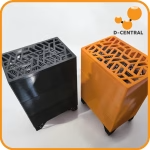
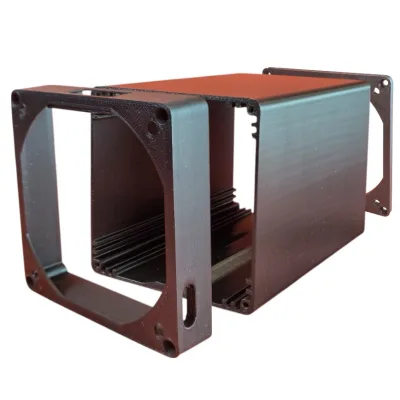
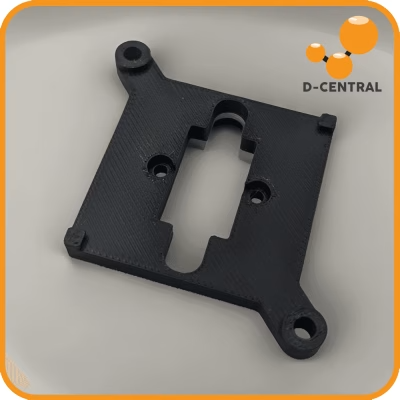
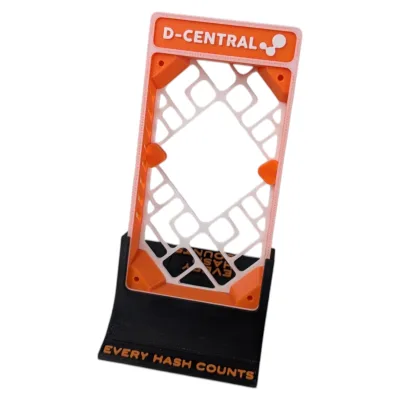
In Bitcoin mining, few names stand out as prominently as D-Central Technologies. Established as a beacon of expertise and innovation, D-Central has carved a niche for itself, offering a comprehensive suite of services tailored to the needs of both novice and seasoned miners. Overview of D-Central Technologies: D-Central Technologies is not just another name in the Bitcoin mining industry; it is a brand synonymous with excellence and reliability. As Canada’s leading Bitcoin mining company, D-Central offers an array of services that cater to every facet of Bitcoin mining. Whether it is consultation for newcomers eager to dive into the world of cryptocurrency, sourcing top-tier mining hardware, or providing ASIC repairs, D-Central has it all. Their holistic approach extends to hosting mining operations and even offering maintenance training. Their commitment to customer satisfaction is evident in their tailored solutions, ensuring that every client receives unparalleled support. The Company’s Contribution to the Bitcoin Mining Ecosystem: Beyond their services, D-Central Technologies has played a pivotal role in shaping the Bitcoin mining landscape in Canada and beyond. As a pioneer manufacturer of the Bitaxe, D-Central was among the first companies to manufacture the Bitaxe Mesh Stand and develop specialized heatsinks and accessories for the entire Bitaxe ecosystem. Their expertise has been instrumental in ensuring the longevity and efficiency of mining operations. By fostering a community of informed and empowered miners, D-Central has championed the cause of decentralization, echoing the very ethos of Bitcoin.Understanding Solo Lottery Mining
In Bitcoin mining, where large-scale operations dominate the landscape, a daring and audacious subculture thrives. They are the solo lottery miners, the digital prospectors who venture into the unknown with the hope of striking gold, or in this case, Bitcoin. To comprehend this intriguing facet of cryptocurrency mining, it is imperative to dig into the essence of “lottery mining.” The Concept of “Lottery Mining”: At its core, “lottery mining” is akin to purchasing a lottery ticket, but with a remarkable twist. Instead of relying on sheer luck alone, solo miners take a different approach. They venture solo, without the camaraderie of a mining pool, and attempt to solve an entire block by themselves. This approach hinges on the principles of chance and persistence. How Solo Miners Aim to Solve the Entire Block by Chance: Imagine Bitcoin mining as a digital lottery ticket. Miners compete to solve complex mathematical puzzles, racing to be the first to find the “nonce” that, when hashed with the block’s data, results in a specific pattern. In traditional pooled mining, miners collectively contribute their computational power, increasing the chances of discovering this nonce. However, solo miners forgo this collective strength. They rely on a single device, often compact and portable, to churn through countless combinations in the hope of finding that elusive nonce. The odds are akin to finding a needle in a cosmic haystack, but the rewards, when they do strike gold, are exceptionally enticing. The Potential Rewards vs. the Odds: It is essential to recognize that solo lottery mining is not for the faint-hearted. The odds of successfully solving an entire block solo are astronomically low. Yet, the allure lies in the potential rewards. When solo miners do beat the odds, they claim the entire block reward for themselves, along with the transaction fees. It is a gamble of epic proportions, one that requires unwavering patience and a belief in the extraordinary.Updated Solo Mining Probability Analysis (2025)
Understanding the mathematics behind solo mining is essential for anyone considering this approach. The probability is straightforward: your chance of finding any given block equals your hashrate divided by the total network hashrate. In early 2025, the Bitcoin network hashrate stood at approximately 750 EH/s (750 exahashes per second); by 2026 it crossed 1 ZH/s (one zettahash — 1,000 EH/s). The block reward following the April 2024 halving stands at 3.125 BTC per block, plus transaction fees that typically add 0.1 to 0.5 BTC per block.Expected Time-to-Block by Hashrate Tier
The following table shows the average (expected) time it would take a solo miner to find one block at various hashrate levels. Remember that “expected” is a statistical average — actual results are completely random.| Hashrate Tier | Example Device | Expected Time to Block | Daily Win Probability |
|---|---|---|---|
| 50 KH/s | Nerdminer (ESP32) | ~29.4 million years | 0.0000000000001% |
| 500 GH/s | Bitaxe Supra | ~28,500 years | 0.0000096% |
| 1.2 TH/s | Bitaxe Gamma 601 | ~11,900 years | 0.0000230% |
| 3 TH/s | Bitaxe Hex (Ultra) | ~4,760 years | 0.0000576% |
| 4.2 TH/s | Bitaxe Hex (Supra) | ~3,400 years | 0.0000806% |
| 140 TH/s | Antminer S19 XP | ~102 years | 0.00269% |
| 335 TH/s | Antminer S21 Hyd | ~42.6 years | 0.00643% |
| 1 PH/s | Small mining farm | ~14.3 years | 0.0192% |
| 10 PH/s | Medium mining operation | ~1.43 years | 0.192% |
Solo Mining vs. Traditional Lottery: A Surprising Comparison
One of the most compelling arguments for solo mining comes from comparing its odds to traditional lotteries. The results might surprise you.| Comparison | Traditional Lottery | Bitaxe Gamma Solo Mining (1 Year) |
|---|---|---|
| Odds per “ticket” | 1 in 14 million (Lotto 6/49) | ~1 in 11,900 per year |
| Cost per year (2 tickets/week) | ~$312 CAD | ~$18 CAD (electricity) |
| Annual probability | ~0.00074% (104 tickets) | ~0.0084% |
| Jackpot value | $5-50 million (variable) | ~$400,000-$500,000 CAD |
| Odds better than lottery? | Baseline | ~11x better per year |
| Cost per % of probability | $42,162 per 0.001% | $2,143 per 0.001% |
| Residual value | $0 (ticket is consumed) | Hardware has resale value |
| Additional benefits | None | Bitcoin education, network security, tiny heater |
Success Stories: When Lightning Strikes
Solo mining is not just theoretical. Real miners with tiny devices have found real blocks for real rewards. These stories have electrified the Bitcoin community and inspired thousands of new solo miners.The Original Bitaxe FU Block (July 2024)
The most famous solo mining event in recent memory. A single Bitaxe Supra running at approximately 480 GH/s on Solo CKPool found Block #853,742 on July 24, 2024. The reward: 3.125 BTC plus transaction fees, worth approximately $292,553 CAD at the time. The Bitcoin community dubbed it the “FU Pleb Block” and it became a rallying cry for decentralization advocates. For the full story, see our Bitaxe Block Wins: Complete History & Hall of Fame.Subsequent Bitaxe Block Wins
The FU Block was not a one-time event. Additional Bitaxe devices have found blocks in the months following the original, proving that the mathematics of probability continue to work in favor of persistent solo miners. Each win validates the core thesis: with enough devices running over enough time, solo block discovery is inevitable. The community tracks these wins, and the excitement around each new discovery continues to grow.Solo CKPool and Public Pool Wins
Beyond the Bitaxe, Solo CKPool regularly sees blocks found by individual miners with various hardware. Miners running old Antminer S9s, small collections of USB miners, and other modest hardware have all been recorded finding blocks independently. These pools make solo mining accessible by handling the Stratum connection and block template construction while ensuring the full reward goes to the individual miner.Spotlight on Popular Solo Lottery Miners
The world of solo lottery Bitcoin mining is populated with a fascinating array of devices. Let us explore the most noteworthy options: Bitaxe:- The gold standard for solo mining. The Bitaxe is a fully open-source Bitcoin ASIC miner available in multiple models: Supra (500 GH/s), Ultra (580 GH/s), Gamma 601 (1.2 TH/s), and the Hex line (3-4.2 TH/s). Manufactured by D-Central Technologies, the Bitaxe features WiFi connectivity, AxeOS firmware, and ultra-low power consumption (15-90W).
- Proven results: Multiple Bitaxe devices have successfully mined full Bitcoin blocks. No other solo mining device category has this track record.
- Entry-level open-source miners. The Nerdminer uses an ESP32 microcontroller and provides hashrates in the kilohash range — far too low for realistic block discovery, but excellent as an educational tool and conversation piece. The NerdAxe and NerdQAxe use actual ASIC chips for significantly higher hashrates.
- Community favorites: These devices have built a passionate community of builders, hackers, and Bitcoin enthusiasts who value the educational and decentralization aspects over any financial returns.
- Higher hashrate solo mining. Older ASIC miners like the Antminer S9 (14 TH/s) or S17 (56 TH/s) can be pointed at Solo CKPool for lottery mining. These devices draw significantly more power (1,300-2,800W) but provide dramatically higher hashrates that substantially improve solo mining odds.
- Dual-purpose option: D-Central’s Bitcoin Space Heater Editions convert these ASICs into home heating solutions, making the electricity cost productive whether or not a block is ever found.
The Technical Side of Solo Mining
While solo lottery Bitcoin mining may have an aura of unpredictability and chance, it is, at its core, a deeply technical endeavor. To truly appreciate the intricacies of this pursuit, we must look at the technical side of solo mining: The Role of Nonce in Mining: At the heart of Bitcoin mining lies a puzzle, one that miners race to solve with each new block. This puzzle is constructed by the Bitcoin network and includes a unique, randomly generated number known as the “nonce.” Miners, whether operating solo or within a pool, must find a nonce that, when combined with the current block’s data and hashed, produces a result that meets specific criteria. The miner who discovers this magic combination is granted the privilege of adding the next block to the blockchain and reaps the rewards. In solo mining, this quest for the elusive nonce takes on an individualistic tone, as miners tirelessly cycle through nonce values in pursuit of success. Understanding Mining Difficulty and Its Impact on Success Rates: The Bitcoin network operates on a principle of self-regulation. To maintain a consistent block production rate of approximately one block every 10 minutes, the network adjusts the difficulty of the mining puzzle every 2,016 blocks (roughly every two weeks). If miners are solving blocks too quickly, the puzzle becomes more challenging; if too slowly, it becomes easier. This dynamic difficulty adjustment ensures that the network remains secure and resilient. In the realm of solo mining, this means that the odds of successfully finding a block are directly influenced by the current state of network difficulty. As network hashrate grows, individual solo miners face longer expected times between block discoveries. The Significance of Hash Rates: Hash rate, measured in hashes per second (H/s), is a pivotal metric in Bitcoin mining. It signifies the computational power a miner contributes to the network. The higher the hash rate, the more attempts a miner can make to find the correct nonce and solve a block. In solo mining, where individual miners operate with limited resources, hash rates vary widely — from kilohashes (Nerdminer) to terahashes (Bitaxe Hex and full ASICs). This variation directly impacts the likelihood of successful mining.The Economics of Solo Lottery Mining
Let us cut through the hype and examine the real costs and potential returns of solo lottery mining with actual numbers.Annual Cost to Run Different Solo Mining Devices
| Device | Power Draw | Annual Electricity ($0.12/kWh) | Hardware Cost | Year 1 Total Cost | Potential Block Reward |
|---|---|---|---|---|---|
| Nerdminer | ~1W | ~$1.05 | ~$50-80 | ~$51-81 | ~$400K+ (virtually impossible) |
| Bitaxe Supra | ~15W | ~$15.77 | ~$150-250 | ~$166-266 | ~$400K+ |
| Bitaxe Gamma 601 | ~17W | ~$17.87 | ~$150-250 | ~$168-268 | ~$400K+ |
| Bitaxe Hex (Ultra) | ~60W | ~$63.07 | ~$300-500 | ~$363-563 | ~$400K+ |
| Bitaxe Hex (Supra) | ~90W | ~$94.61 | ~$400-600 | ~$495-695 | ~$400K+ |
| S9 Space Heater | ~1,350W | ~$1,419 | ~$200-400 | ~$1,619-1,819 | ~$400K+ (heat offsets cost) |
The Economic Argument for Bitaxe Solo Mining
Here is the key insight that makes solo lottery mining with a Bitaxe economically rational, even when the expected value is negative:- The cost is negligible. Running a Bitaxe Gamma costs $18/year in electricity. Most people spend more on streaming services they barely use.
- The hardware retains value. Bitaxe devices hold their resale value well in the mining community. Your “lottery ticket” has residual value.
- The upside is asymmetric. A $268 total investment (hardware + year of electricity) gives you a shot at $400,000+. That is a 1,500x potential return.
- The entertainment and education value. Watching your Bitaxe hash in real time teaches you more about Bitcoin proof-of-work than any book or course.
- Dual-purpose with Space Heaters. If you use a Bitcoin Space Heater, the electricity cost is offset by the heating value during cold months — effectively making your solo mining free.
The Future of Solo Lottery Mining
As we navigate the captivating world of solo lottery Bitcoin mining, it is imperative to cast our gaze toward the horizon and envision what lies ahead. The future of solo mining is a realm of both potential and uncertainty, marked by predictions, trends, and the promise of innovation. Predictions and Trends for the Future: The trajectory of solo lottery mining is shaped by several factors. The continued development of increasingly efficient open-source ASIC miners like the Bitaxe means that solo miners will continue to get more hashrate per watt and per dollar. The Bitaxe Gamma 601 with its BM1370 chip already delivers 1.2 TH/s at 17W — dramatically better than the original Bitaxe models. Future chip generations will push this efficiency even further. Network Hashrate Growth: As Bitcoin’s network hashrate continues to grow, individual solo miners face proportionally lower odds. However, the community of solo miners is growing even faster. Solo CKPool and Public Pool have seen consistent growth in connected hashrate, with thousands of individual miners contributing to a collectively significant share of the network. The Halving Impact: The April 2024 halving reduced the block reward to 3.125 BTC. The next halving (expected ~2028) will reduce it further to 1.5625 BTC. However, if Bitcoin’s price appreciates as it has historically done, and if transaction fees grow with increasing network usage, the total fiat value of a block may remain attractive. Solo miners play a long game. How Innovations Might Change the Solo Mining Landscape: Innovation is the lifeblood of the cryptocurrency industry, and solo mining is no exception. The development of more efficient ASIC chips, lower-power designs, and creative form factors like D-Central’s Space Heater Editions are making solo mining more accessible and practical than ever. The integration of solar power with Bitaxe mining is another growing trend, as miners seek to reduce or eliminate their electricity costs entirely.Getting Started with Solo Lottery Mining
If the allure of solo mining has captured your imagination, here is your roadmap to getting started:- Choose your device. For pure solo lottery mining, the Bitaxe is the gold standard. Start with a Gamma for efficiency or a Hex for maximum odds.
- Select a solo mining pool. Solo CKPool (solo.ckpool.org) and Public Pool (public-pool.io) are the two main options. See our Mining Pool Comparison Guide for details.
- Set up a Bitcoin wallet. You need a wallet address to receive your block reward if you win. Use a self-custodial wallet for maximum sovereignty.
- Configure and start mining. Follow our setup guides: Bitaxe Gamma Setup or Bitaxe Hex Setup.
- Be patient. Solo mining is a marathon, not a sprint. Set it and forget it — your Bitaxe will quietly hash away, buying you lottery tickets every second of every day.
Conclusion
The world of Bitcoin mining is an intricate mix of technology, chance, and boundless human determination. Within this landscape, solo lottery mining emerges as a unique and audacious adventure. It is not about guaranteed returns or predictable income. It is about participating in Bitcoin’s security, supporting decentralization, and yes — rolling the dice for a life-changing block reward. The mathematics are clear: your odds are low but non-zero, your costs are minimal, and the potential upside is enormous. Multiple Bitaxe devices have already proven that solo block discovery is not just theoretical — it happens. Every hash counts. Whether you choose a modest Bitaxe Gamma or stack a wall of Hex miners, you are contributing to the most important network in the world. You are a node of hashrate that no government, corporation, or pool operator controls. You are a solo miner. And somewhere out there, the next block is waiting to be found. Browse Bitaxe miners and solo mining hardware at D-Central TechnologiesFAQ
What is Bitcoin lottery mining?
Bitcoin lottery mining (also called solo lottery mining) is the practice of mining Bitcoin independently, without joining a traditional mining pool. Instead of receiving small, regular payouts, solo miners compete for the entire block reward (currently 3.125 BTC + fees). The odds of finding a block are very low for any individual miner, but the reward is the full block — hence the “lottery” comparison.
What is the best device for Bitcoin lottery mining?
The Bitaxe is widely considered the best device for solo lottery mining. It is open-source, low-power (15-90W), WiFi-connected, and has a proven track record — multiple Bitaxe devices have actually found full Bitcoin blocks. The Bitaxe Gamma 601 offers the best single-chip efficiency, while the Bitaxe Hex provides the highest hashrate in the Bitaxe family.
What are the odds of winning a Bitcoin block solo?
Your odds depend on your hashrate relative to the total network hashrate. A Bitaxe Gamma (1.2 TH/s) against a 750 EH/s network has roughly a 1 in 11,900 chance of finding a block per year. A Bitaxe Hex (3-4.2 TH/s) has roughly a 1 in 3,400-4,760 chance per year. These odds are dramatically better than traditional lotteries per dollar spent.
How much does it cost to run a solo mining device?
A Bitaxe Gamma costs approximately $18 CAD per year in electricity at $0.12/kWh. A Bitaxe Hex costs approximately $63-95 CAD per year. Hardware costs range from $150-600 depending on the model. After the initial hardware purchase, your ongoing cost is just the electricity.
Has anyone actually won a Bitcoin block with a small miner?
Yes. The most famous example is the “FU Pleb Block” — a Bitaxe Supra running at ~480 GH/s that found Block #853,742 on July 24, 2024, winning 3.125 BTC (~$292,553 CAD). Multiple additional Bitaxe block wins have been recorded since then. See our Bitaxe Block Wins tracker for the complete history.
Is solo mining better than pool mining for a Bitaxe?
For most Bitaxe owners, solo mining makes more economic sense than pool mining. In a pool, a Bitaxe would earn fractions of a penny per day — not enough to ever reach minimum payout thresholds. Solo mining transforms that same hashrate into a lottery ticket with a $400,000+ potential payout. The expected value is technically negative in both cases, but solo mining offers the asymmetric upside that makes the small electricity cost worthwhile.
What is Solo CKPool?
Solo CKPool (solo.ckpool.org) is a mining pool specifically designed for solo miners. Unlike traditional pools that distribute rewards across all participants, Solo CKPool ensures that if your miner finds a block, you receive the full block reward minus a small 2% fee. It is the most popular pool for Bitaxe solo mining. Public Pool (public-pool.io) is an alternative with 0% fees.
Can I improve my solo mining odds?
Yes. You can run multiple Bitaxe devices simultaneously, overclock your Bitaxe for more hashrate, or upgrade to higher-hashrate models like the Bitaxe Hex. You can also use repurposed ASICs as Bitcoin Space Heaters to add significant hashrate while heating your home. Every additional hash improves your odds.
Where can I buy solo mining hardware?
D-Central Technologies stocks all Bitaxe variants (Supra, Ultra, Gamma, Hex), Nerdminer/NerdAxe devices, Bitcoin Space Heaters, and all related accessories. D-Central is a pioneer Bitaxe manufacturer and ships worldwide from Canada.
What happens when Bitcoin halves again?
The next halving (expected ~2028) will reduce the block reward from 3.125 BTC to 1.5625 BTC. This will reduce the fiat value of solo-mined blocks unless Bitcoin’s price increases proportionally. However, growing transaction fees and Bitcoin’s historical price appreciation suggest that solo mining will remain an attractive proposition for years to come. Every hash counts.