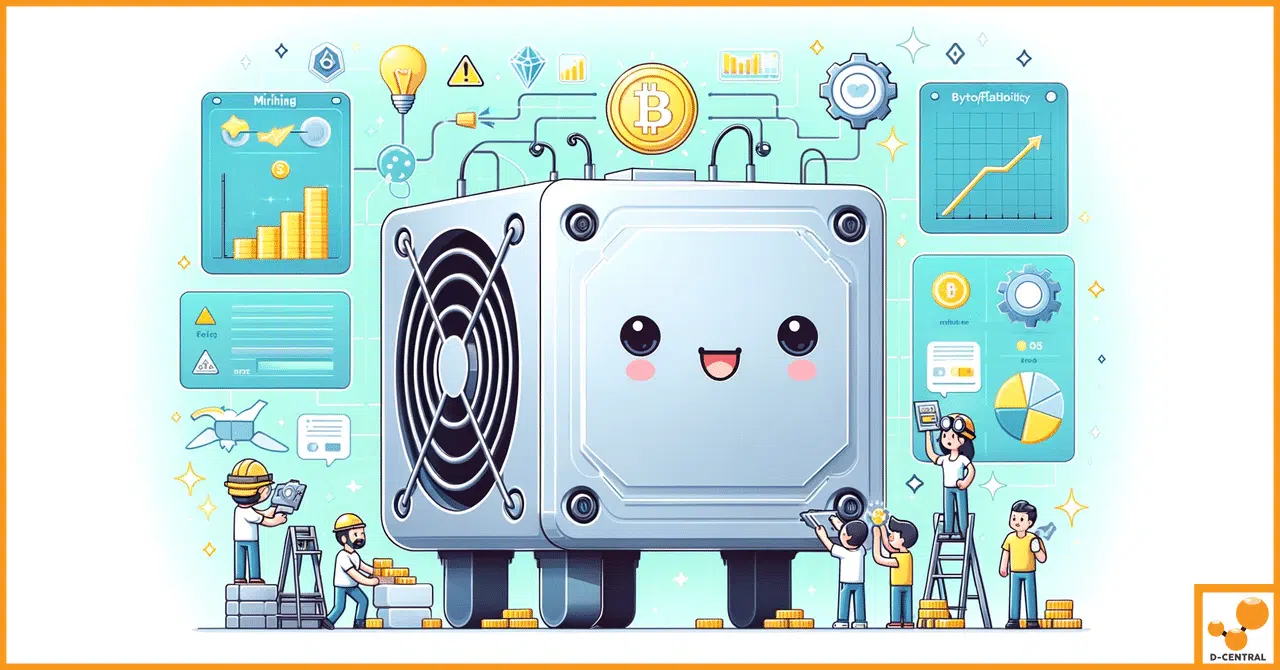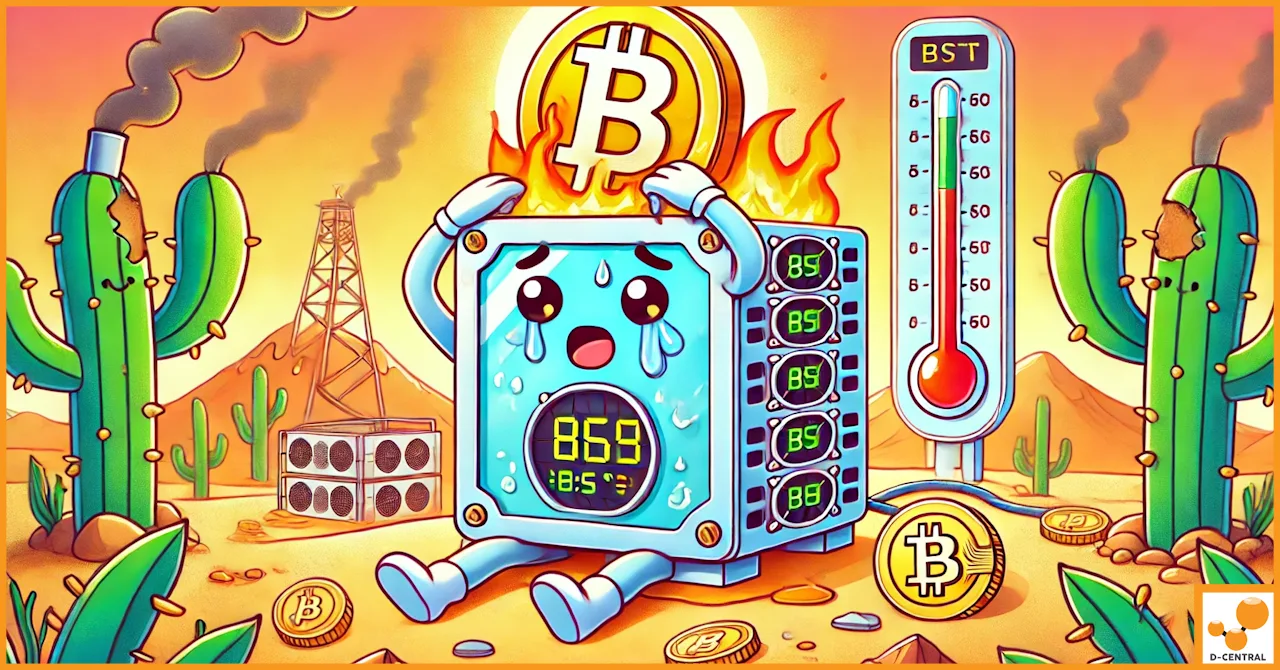
Every summer, the same story plays out across North America: temperatures spike, power grids buckle, and Bitcoin miners scramble. Massive warehouse operations in Texas and the southern United States watch their machines overheat, their hashrate plummet, and their margins evaporate. Meanwhile, up here in Canada, we keep hashing.
This is not a hypothetical scenario. It is a structural advantage baked into geography, climate, and energy infrastructure. And it is exactly why D-Central Technologies built its operations in Quebec — where cold air is abundant, hydroelectric power flows cheap, and Bitcoin mining runs year-round without breaking a sweat.
Let us break down how North American heatwaves impact Bitcoin mining, why cold-climate operations dominate, and how you can turn thermal physics into your competitive edge — whether you are running a facility or mining from your living room.
The Thermal Reality of ASIC Mining
ASIC miners are purpose-built silicon furnaces. A modern Antminer S21, for example, pulls around 3,500 watts and converts every single watt into heat. That is the equivalent of running two space heaters at full blast, 24 hours a day, seven days a week. At the chip level, junction temperatures sit between 75-85 degrees Celsius under normal conditions. Push those chips past their thermal envelope and bad things happen fast.
| Metric | Safe Range | Danger Zone |
|---|---|---|
| ASIC Junction Temp | 65-80°C | >85°C |
| Ambient Intake Air | 5-30°C | >35°C |
| Exhaust Air Delta | +10-15°C over intake | >+20°C (recirculation) |
| Fan Speed | 60-80% duty cycle | 100% sustained (wear) |
When ambient temperatures climb past 35 degrees Celsius — which happens routinely in Texas, Arizona, and the southern United States every summer — the math stops working. Cooling systems that were designed for moderate climates cannot shed heat fast enough. Fans spin at maximum RPM, drawing more power and wearing out faster. Chip temperatures spike. Hashboards start throwing errors. And operators face a brutal choice: throttle down, shut off, or watch their hardware cook itself to death.
This is not edge-case theory. This is what happens every single summer to a significant portion of North America’s mining capacity.
The Summer Hashrate Dip: A Recurring Pattern
Bitcoin’s network hashrate in 2026 sits above 800 EH/s, with difficulty pushing past 110 trillion. These numbers represent an enormous amount of computational power secured by miners around the world. But that number is not static — it fluctuates with the seasons, and summer heatwaves create a predictable annual pattern.
Every year, as North American temperatures peak between June and September, network hashrate dips by 5-15%. Large-scale operations in hot climates are forced to curtail. Some participate in demand response programs where they contractually agree to reduce power consumption during grid stress events. Others simply cannot keep their machines cool enough to run safely.
| Factor | Hot Climate (Texas, 40°C+) | Cold Climate (Quebec, 20°C avg) |
|---|---|---|
| Summer Uptime | 60-80% (curtailment) | 95-100% |
| Cooling Overhead | 30-40% of power budget | 5-15% of power budget |
| Grid Stability | Rolling blackouts, demand response | Stable hydro baseload |
| Energy Cost (avg) | $0.06-0.10/kWh (volatile) | ~$0.05/kWh (stable hydro) |
| Hardware Lifespan | Reduced (thermal stress cycles) | Extended (consistent temps) |
| Annual Hash Production | ~85-90% of theoretical max | ~95-98% of theoretical max |
For miners operating in cold climates, this seasonal dip is not a problem — it is an opportunity. When competitors go offline, difficulty adjusts downward. Every hash you produce during a difficulty dip is worth proportionally more. Cold-climate miners effectively get a bonus for simply staying online while others cannot.
Canada’s Structural Mining Advantage
Canada — and Quebec in particular — sits at the intersection of every advantage a Bitcoin miner could want. This is not marketing fluff. It is physics and economics.
Cheap, clean hydroelectric power. Quebec generates over 95% of its electricity from hydroelectric dams. Hydro-Quebec’s rates for industrial consumers sit around $0.05 CAD per kilowatt-hour — among the lowest in the world. This is not natural gas that spikes when demand surges, and it is not wind or solar that fluctuates with weather. It is baseload power from water flowing through turbines, available 24/7/365.
Natural cooling for half the year. Canadian winters routinely hit -20 to -40 degrees Celsius. During these months, mining facilities can use direct outside air for cooling, eliminating the need for energy-hungry HVAC systems entirely. Even in summer, Quebec averages 20-25 degrees Celsius — mild enough that basic ventilation keeps ASICs well within thermal limits. Compare that to Texas, where ambient temperatures regularly exceed 40 degrees Celsius and cooling becomes the single largest operational expense.
Grid stability. Quebec’s hydro-dominated grid does not experience the demand-response curtailments that plague miners on the ERCOT grid in Texas. There are no rolling blackouts, no spot-price electricity spikes to $9,000/MWh, and no pressure to shut down during peak residential demand. You plug in, you hash, you stay online.
This is why D-Central Technologies runs its hosting operations out of Quebec — in Laval, where the combination of hydro power, cold climate, and infrastructure reliability creates an environment purpose-built for mining.
The Home Mining Angle: Turn Heat Into an Asset
Here is where things get interesting for the home miner. The same thermal output that plagues large operations in hot climates becomes a genuine asset in a cold-climate home.
Every watt your ASIC consumes is converted to heat with near-perfect efficiency. A miner pulling 1,400 watts produces the same thermal output as a 1,400-watt electric space heater — because it functionally is one. The difference is that while a regular heater just burns electricity, a Bitcoin miner burns electricity AND produces bitcoin. You are heating your home AND stacking sats. Simultaneously.
D-Central’s Bitcoin Space Heater editions are built around exactly this concept. Using proven Antminer hardware in custom enclosures designed for residential environments, these units replace conventional electric heaters while running mining firmware. During Canadian winters — which last roughly five to six months — your heating costs become mining revenue. The heat is not waste; it is the primary product. The bitcoin is the bonus.
This dual-purpose approach flips the heatwave narrative entirely. Southern miners struggle to get rid of heat. Northern miners harvest it. Same machines, radically different economics.
Protecting Your Hardware: Practical Heat Management
Whether you run one machine at home or a rack in a facility, thermal management determines the lifespan and profitability of your operation. Heat does not just reduce hashrate — it actively destroys hardware. Blown capacitors, delaminated hashboard layers, degraded ASIC chips, and cracked solder joints are all consequences of sustained thermal abuse.
Here is what actually works:
Ventilation over air conditioning. Proper intake and exhaust airflow is more effective and far cheaper than trying to air-condition a mining space. Use duct adapters and shrouds to channel hot exhaust air out of the room or building. D-Central sells universal ASIC shrouds and duct adapters designed exactly for this purpose.
Underclocking during heat events. Most modern ASIC firmware allows you to reduce clock speeds and voltage, cutting power consumption and heat output by 20-40% while maintaining a proportional hashrate. A machine running at 70% capacity all summer produces more bitcoin than one that fries its hashboard in July.
Nighttime scheduling. In warm climates, running miners during the cooler overnight hours (typically 10 PM to 8 AM) can keep chip temperatures 10-15 degrees lower than peak afternoon operation.
Dust management. Clogged heatsinks and dust-packed fans are the silent killers of mining hardware. Clean your machines regularly. A can of compressed air every two weeks costs pennies and can prevent hundreds of dollars in repairs.
Temperature monitoring. Use your miner’s firmware dashboard to track chip temperatures in real time. Set alerts for anything above 80 degrees Celsius. If you see sustained temps above 85 degrees, shut down immediately — the repair bill for a cooked hashboard is far more expensive than the lost mining revenue.
And if heat does take its toll on your hardware, D-Central’s ASIC repair service handles everything from hashboard diagnostics to chip-level rework. We have been repairing miners since 2016 and have fixed thousands of machines — many of them casualties of exactly the kind of thermal damage we are discussing here.
The Bigger Picture: Decentralization Needs Cold Climates
There is a network-level argument for cold-climate mining that goes beyond individual profitability. Bitcoin’s security model depends on a geographically distributed hashrate. When the majority of mining is concentrated in hot-climate regions that are vulnerable to the same seasonal disruptions, the network becomes fragile during those disruptions.
Every miner operating in a cold climate — whether it is a facility in Quebec or a Bitaxe running on your desk in Alberta — contributes to geographic decentralization. You are not just mining bitcoin. You are hardening the network against correlated failures. You are making Bitcoin more resilient, more censorship-resistant, and more robust.
This is the D-Central thesis: decentralization of every layer of Bitcoin mining. From the ASIC chips, to the firmware, to the physical locations where hashing happens. Cold-climate mining is not just economically superior — it is philosophically aligned with what Bitcoin is supposed to be.
Frequently Asked Questions
How do heatwaves affect Bitcoin mining operations?
Heatwaves force ASIC miners beyond their thermal limits (typically 75-85 degrees Celsius junction temperature). When ambient air exceeds 35 degrees Celsius, cooling systems cannot maintain safe operating temps. Miners must throttle hashrate, shut down machines, or face permanent hardware damage including blown capacitors, delaminated hashboards, and degraded ASIC chips.
Why is Canada better for Bitcoin mining than the southern United States?
Canada offers sub-zero winter temperatures for free cooling five to six months per year, abundant hydroelectric power (especially in Quebec at approximately $0.05/kWh), mild summers averaging 20-25 degrees Celsius, and stable grid infrastructure. Southern US states like Texas face 40 degrees Celsius and above heatwaves, grid instability, and cooling costs that can consume 30-40% of operational budgets.
Can Bitcoin miners be used as space heaters?
Yes. Every watt consumed by an ASIC miner is converted to heat with near-100% efficiency. A Bitcoin Space Heater repurposes that thermal output for home heating, effectively subsidizing your energy bill with mining revenue. D-Central builds dedicated Space Heater editions using Antminer hardware in custom enclosures designed for residential use.
What happens to Bitcoin network hashrate during summer heatwaves?
Network hashrate typically dips 5-15% during extreme heat events as large-scale operations in hot climates throttle or shut down. This temporarily lowers mining difficulty, creating a window of opportunity for miners in cooler regions who can maintain full uptime. Cold-climate operations effectively gain a competitive edge during summer months.
How can home miners protect their ASICs during hot weather?
Key strategies include: ensuring adequate airflow with proper intake and exhaust ventilation, underclocking firmware to reduce thermal output, running miners during cooler nighttime hours, using duct adapters and shrouds to direct hot air outside, monitoring chip temperatures via firmware dashboards, and keeping machines clean of dust buildup. If a hashboard fails from heat damage, D-Central’s ASIC repair service can diagnose and fix the issue.
What is the best climate for Bitcoin mining?
Cold climates with access to cheap, stable electricity are ideal. Regions like Quebec, Scandinavia, and Iceland combine low ambient temperatures (reducing or eliminating cooling costs) with abundant renewable energy. Quebec specifically offers hydroelectric power at approximately $0.05/kWh with exceptional grid reliability — no demand-response curtailments or rolling blackouts.
Does D-Central offer Bitcoin mining hosting in Canada?
Yes. D-Central operates a hosting facility in Laval, Quebec, powered by Hydro-Quebec’s hydroelectric grid. The facility offers year-round uptime, natural cold-air cooling for most of the year, and competitive energy rates. This is purpose-built infrastructure for miners who want the advantages of Canadian climate without managing their own facility.
 Nerdaxe Gamma / Supra / Ultra — Silent Operation & Stable Overclocking" width="80" height="80" loading="lazy" style="width:80px;height:80px;object-fit:contain;border-radius:6px;background:#1A1A1A;flex-shrink:0;">
Shop Heatsinks
Nerdaxe Gamma / Supra / Ultra — Silent Operation & Stable Overclocking" width="80" height="80" loading="lazy" style="width:80px;height:80px;object-fit:contain;border-radius:6px;background:#1A1A1A;flex-shrink:0;">
Shop Heatsinks