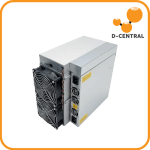
Every ASIC miner is an engineered heat engine. A Bitmain Antminer S19 XP draws roughly 3,000 watts and converts nearly all of it into thermal energy. A Whatsminer M50S does the same at 3,300 watts. Without a deliberate strategy for moving that heat out of the machine and out of the room, you are throttling hashrate, shortening hardware lifespan, and bleeding sats through wasted electricity. ASIC miner shrouds are the simplest, most cost-effective intervention in that chain — and if you are running any serious mining operation, from a single unit in your basement to a multi-rack farm, you need them.
At D-Central Technologies, we have been building, repairing, and optimizing Bitcoin mining hardware since 2016. We 3D-print our own ASIC shrouds in-house, right here in Canada, and every design decision in them comes from running and repairing these machines ourselves — thousands of repairs and builds worth of operational knowledge. In 2026 we went further and engineered a complete in-house shroud system from scratch: shrouds, silencers, duct fittings and accessories, all open source, every part drawn around the exhaust geometry of the machines we repair.
What Is an ASIC Miner Shroud?
An ASIC shroud is a 3D-printed adapter that attaches to the exhaust (or intake) side of an ASIC miner and transitions the airflow into a standard round duct — typically 6-inch or 8-inch diameter. The stock ASIC fan configuration blasts hot air in an uncontrolled spread pattern. A shroud channels that air into a sealed duct, giving you full control over where the heat goes.
Think of it as the difference between an open exhaust pipe and a proper ventilation system. One dumps heat into your room. The other sends it exactly where you want — outside, into a heating duct, or through a Bitcoin Space Heater setup where you are recapturing that thermal energy to heat your home.
Why Shrouds Matter: The Thermal Physics
ASIC chips are silicon. Silicon hates heat. Every degree above optimal operating temperature degrades performance and accelerates wear on the chip junction. When an ASIC thermal-throttles, it automatically reduces clock frequency to prevent damage — and that means lower hashrate for the same power draw. You are paying the same electricity bill for fewer sats.
Here is the chain reaction that a shroud breaks:
- Recirculation eliminated — Without a shroud, exhaust air mixes back into the intake side of the machine. The miner ends up breathing its own hot air. Inlet temperatures climb. Chips throttle. Hashrate drops.
- Back-pressure reduced — A properly designed shroud with smooth internal curves and the right duct diameter actually reduces airflow resistance compared to the stock fan guard. Less resistance means higher CFM through the heatsinks.
- Ambient temperature controlled — By ducting exhaust out of the room entirely, the ambient temperature where your miners operate stays low. Every miner in the room benefits, not just the one with the shroud.
Shroud Types: Matching Hardware to Airflow
Not all shrouds are created equal. The right shroud depends on your ASIC model, your duct size, and your airflow strategy. Here is how D-Central’s lineup maps to common mining hardware:
| Shroud Model | Compatible Miners | Duct Size | Best For |
|---|---|---|---|
| S19 Shroud 6″ | Antminer S19, S19 Pro, S19j Pro, S19 XP | 6-inch | Home setups, shorter duct runs |
| S19 Shroud 8″ | Antminer S19, S19 Pro, S19j Pro, S19 XP | 8-inch | Maximum airflow, long duct runs, farm-scale |
| S21 Pro/XP Shroud 8″ | Antminer S21 Pro, S21 XP | 8-inch | Next-gen S21 series, high-wattage units |
| Universal Dual 120mm to 6″ | Any ASIC with dual 120mm fans (Antminer, Avalon, Innosilicon) | 6-inch | Multi-brand flexibility |
| Universal Dual 120mm to 8″ | Any ASIC with dual 120mm fans | 8-inch | Farm-scale, maximum CFM |
| Whatsminer M3x to T8 | Whatsminer M30S, M30S+, M30S++, M3x series | 8-inch (AC Infinity T8) | Whatsminer-specific, paired with inline fan |
| S19 Flexible Duct Adapter 6″ | Antminer S19 series | 6-inch flexible | Tight spaces, flexible routing |
| S19 Flexible Duct Adapter 8″ | Antminer S19 series | 8-inch flexible | Tight spaces, maximum flow with flex duct |
6-Inch vs 8-Inch Ducts: Which One?
This is the most common question we get. The answer depends on your setup:
| Factor | 6-Inch Duct | 8-Inch Duct |
|---|---|---|
| Airflow volume (CFM) | Good for most single-unit setups | ~78% more cross-sectional area = significantly higher CFM |
| Back-pressure | Higher on long runs (>15 ft) | Lower, handles long duct runs better |
| Noise | Slightly louder due to higher air velocity | Quieter — lower velocity for the same CFM |
| Space needed | Compact, easier to route | Requires more clearance |
| Best use case | Home miners, short duct runs, space-constrained | Farm-scale, high-wattage miners, long exhaust routes |
Rule of thumb: If you are running a single miner at home with a short window exhaust, 6-inch is fine. If you are running multiple units, have long duct runs, or are using high-wattage next-gen ASICs (S21 XP, etc.), go 8-inch. The reduced back-pressure pays for itself in sustained hashrate.
Installation: 10 Minutes, Zero Modifications
Every D-Central shroud is designed for tool-free or minimal-tool installation:
- Remove the stock fan guard — Pop off the protective metal grille from the exhaust side of your miner. Keep the screws.
- Mount the shroud — Align the shroud over the fan openings and secure it using the original fan screws. No drilling, no modifications to the miner.
- Attach your duct — Slide a 6-inch or 8-inch flexible or rigid duct onto the shroud outlet. Secure with a hose clamp if needed.
- Route exhaust — Send the duct to a window, into your HVAC system, or outside. For space heater builds, route the hot air into the room you want to heat.
The entire process takes under 10 minutes. The shroud is fully reversible — you can remove it and return the miner to stock configuration at any time.
Home Mining: Where Shrouds Become Essential
For the home miner — the pleb miner running an S9, an S19, or even a solo miner like the Bitaxe — shrouds are not optional. They are the difference between a workable home setup and an unlivable noise/heat disaster.
Heat Recovery
In Canada and northern climates, ASIC exhaust heat is not waste — it is free heating. A single Antminer S19 outputs roughly 10,000 BTU/hr. That is equivalent to a large space heater. With a shroud and duct, you can direct that heat into your living space during winter months, offsetting your heating bill while stacking sats. This is the core philosophy behind D-Central’s Bitcoin Space Heater line — dual-purpose mining where the byproduct is warmth, not waste.
Noise Reduction
ASIC miners are loud. An S19 at stock can hit 75+ dB — louder than a vacuum cleaner. Much of that noise comes from turbulent, undirected airflow bouncing off walls and obstacles. A shroud channels that airflow into a sealed duct, containing the noise path. Pair it with an inline duct fan (like the AC Infinity Cloudline series) and you can drop perceived noise significantly, even without replacing the stock ASIC fans.
Summer Exhaust
Heat recovery is great in winter. In summer, you need the opposite — get that heat OUT of your house as fast as possible. A shroud-to-window exhaust setup lets you dump 3,000 watts of thermal energy directly outside. Without a shroud, that heat radiates into your room and your air conditioning fights against it. You end up paying twice — once for the miner’s electricity, and again for the AC to remove the heat.
Farm-Scale Airflow Management
At farm scale, shrouds enable proper hot-aisle/cold-aisle separation — the same airflow architecture used in data centres. The concept is straightforward:
- Cold aisle: Fresh intake air is delivered to the front (intake side) of each miner row.
- Hot aisle: Exhaust air is captured by shrouds and ducted into a sealed hot plenum or directly outside.
- No mixing: Hot exhaust never recirculates back to intake. Every miner gets cool, fresh air.
This separation is the single most impactful cooling optimization in any mining facility. Without shrouds, achieving true hot/cold aisle isolation requires expensive custom enclosures or containment curtains. Shrouds with standard HVAC ducting accomplish the same result at a fraction of the cost.
| Metric | Without Shrouds | With Shrouds + Ducting |
|---|---|---|
| Inlet air temperature (typical) | 35-45 C (recirculation) | 20-30 C (fresh air only) |
| Thermal throttling frequency | Common in summer / dense racks | Rare — machines run at full clock |
| Fan speed / noise | Fans spin up to compensate | Fans run at lower RPM = less noise, less power draw |
| Hardware lifespan | Accelerated degradation from heat stress | Extended — chips run within spec temperatures |
| Cooling infrastructure cost | AC units, evaporative coolers, containment | Shrouds + standard HVAC ducting |
Material and Durability
Every shroud, silencer and fitting in the D-Central line is printed in PETG, in black or in D-Central orange. A few things to know about the parts:
- Heat behaviour: PETG holds its shape in a running exhaust stream, which is why the whole line is printed in it. PLA is not in the conversation at all — it is the cheaper print, and the one that softens and droops off a fan face once the machine has been under load for a few hours.
- Two colours: Black or D-Central orange, the same body either way. Orange is our own colour and easy to pick out behind a rack; black disappears into a living space. One material across the system means a run built from a shroud, an elbow and a coupler reads as one object.
- Toughness: Every part is a single continuous body — no glued joints, no fasteners, no bonded seam — so the constant vibration of ASIC fans has nothing to work loose. A bonded shroud fails at the joint; this line has no joint.
- Made in Canada: Every D-Central shroud is printed in our facility in Montreal, Quebec. No overseas sourcing, no mystery materials.
Shrouds and Overclocking
If you are pushing your ASICs beyond stock settings — running custom firmware, increased frequency, higher voltage — cooling becomes even more critical. Overclocked miners generate disproportionately more heat per additional TH/s. A 10% overclock does not produce 10% more heat; it can produce 20-30% more due to the non-linear power scaling of silicon.
Shrouds give you the thermal headroom to overclock safely. By ensuring exhaust heat exits the system completely and intake temperatures stay low, you can push frequency higher without hitting thermal limits. This is free hashrate — you are extracting more work from the same hardware investment.
If your miners are running overclocked firmware and you are NOT using shrouds, you are almost certainly leaving hashrate on the table due to thermal throttling. If you need help with firmware or diagnostics, D-Central’s ASIC repair team can help — we handle everything from hashboard diagnostics to firmware flashing on all major ASIC models.
Pairing Shrouds with Inline Fans
For maximum effect, pair your shroud with an inline duct fan. The most popular choice in the mining community is the AC Infinity Cloudline series (available in 6-inch and 8-inch). Here is why the combination works:
- Negative pressure: The inline fan pulls air through the duct, creating negative pressure at the shroud. This assists the ASIC’s built-in fans and reduces their workload.
- Speed control: Cloudline fans have built-in speed controllers with temperature probes. Set a target temperature and the fan automatically adjusts — hands-off operation.
- Noise containment: The duct itself acts as a noise barrier. Air noise is channeled through the duct and out the exhaust point, not into your room.
Shrouds in the Broader Mining Setup
A shroud is one piece of a well-engineered mining installation. Here is how it fits into the full stack:
| Component | Role | D-Central Solution |
|---|---|---|
| ASIC Miner | Hashes blocks, earns sats | Full ASIC catalog |
| Shroud | Channels exhaust into duct | Shroud catalog |
| Inline duct fan | Pulls exhaust, reduces back-pressure | AC Infinity Cloudline S6/T8 |
| Flexible/rigid duct | Routes hot air to exhaust point | Standard HVAC (6″ or 8″) |
| Power supply | Feeds the ASIC | APW series, matched to miner |
| Repair/maintenance | Keeps hardware running at spec | ASIC Repair Service |
| Hosting (optional) | Offsite operation for those without space/power | Quebec hosting facility |
If you do not have the space, electrical capacity, or noise tolerance to run miners at home, D-Central also operates a mining hosting facility in Quebec, where your hardware runs in a professionally managed environment with industrial-grade airflow — shrouds and all.
Why D-Central Shrouds
There are other shroud manufacturers out there. Here is why miners choose ours:
- Designed and printed in Canada — Our facility in Montreal, Quebec prints every unit. No overseas supply chain delays.
- Tested on our own hardware — We run miners. We repair miners. We know what works because we use these shrouds ourselves, every day.
- Model-specific fitment — We do not sell one-size-fits-all solutions. Each shroud is designed around a specific ASIC model’s fan layout and mounting pattern, and every listing states the fan pitch, screw pattern and collar size it is built to.
- Part of a full ecosystem — Need a shroud, a replacement fan, a hashboard repair, and a firmware flash? We handle the entire stack. No other shroud seller can say that.
- Bitcoin Mining Hackers since 2016 — We have been in the Bitcoin mining hardware business longer than most of our competitors have existed. That experience is built into every product we ship.
Browse the full Adapters and Shrouds catalog, or reach out to our consulting team if you need help designing the airflow for a multi-miner setup.
The 2026 D-Central Shroud System
In 2026 we rebuilt our shroud line from first principles. Instead of a handful of adapters, the new D-Central Shroud System is a complete, interoperating family of parts — every one a single-piece print, every one designed in-house in Montreal, and every one released as an open-source design under CC BY-SA 4.0. You can download the files free and print them yourself, or order the finished part from us and support the next round of designs through dcent fund.
The system covers the whole airflow chain:
- Model-specific shrouds — Antminer S19 / standard S21 dual-120 (plus venturi, offset, bayonet quick-release, hose-clamp and threaded mount styles), S21 Pro dual-140, S19 and S17 full housing wraps, Antminer S9, Whatsminer 140 mm.
- Silencers — expansion-chamber duct silencers and v2 tuned-notch versions. An expansion chamber between the fan face and the duct is the standard way to take the edge off fan tone in a duct run: the chamber volume does the work, with no lining to shed fibres into the airstream. The v2 body adds a quarter-wave side branch sized around the fan’s blade-pass region, executed in the same single printed piece.
- Ducting fittings — couplers, reducers, 45° and 90° elbows (including an 8-inch long-radius low-loss 90°), window vent ports, and Y-splitters for feeding multiple miners into one trunk line.
- Accessories — 120↔140 mm fan adapter plates, intake filter rings, and blank-off caps for idle machines.
Everything is made to order. Because the designs are open source, you never depend on us: if we disappeared tomorrow, the files live on and anyone with a printer can make the parts. That is what buying from the shroud system actually gets you — a part built by people who repair the machines it bolts onto, from a design you can inspect, modify, and reproduce yourself.
Frequently Asked Questions
Do ASIC shrouds void my miner’s warranty?
No. Shrouds attach using the existing fan screws and do not modify the miner in any way. You can remove a shroud and return the machine to stock configuration in under five minutes. No soldering, no drilling, no permanent changes.
What is the difference between 6-inch and 8-inch shrouds?
An 8-inch duct has approximately 78% more cross-sectional area than a 6-inch duct. This means significantly more airflow capacity, lower air velocity (less noise), and reduced back-pressure. For single-miner home setups with short duct runs, 6-inch works fine. For multi-miner setups, long duct runs, or high-wattage next-gen ASICs, 8-inch is the better choice.
Can I use a shroud to heat my home?
Absolutely. This is one of the best use cases. A shroud with a duct lets you direct ASIC exhaust heat into specific rooms. A single Antminer S19 produces roughly 10,000 BTU/hr of heat — enough to warm a large room in winter. Check out D-Central’s Bitcoin Space Heater lineup for purpose-built dual-use mining/heating solutions.
Will the shroud soften from ASIC exhaust heat?
No. These are printed in PETG, which holds its shape in a running exhaust stream — that is the whole reason the line is printed in it and never in PLA, which softens and droops off the fan face under sustained load. Each body is one continuous piece, so there is no bonded joint to creep and no fastener to back out.
Do I need an inline fan with my shroud?
Not necessarily, but it helps significantly. An inline fan (like the AC Infinity Cloudline) creates negative pressure that assists the ASIC’s built-in fans, reducing their RPM and noise output. For window exhaust setups longer than a few feet, an inline fan is strongly recommended to maintain proper airflow.
Which shroud do I need for my miner?
It depends on your ASIC model and duct size. Antminer S19 series machines use our S19-specific shrouds. Antminer S21 Pro and XP use the S21-specific shroud. Whatsminer M3x machines use the Whatsminer shroud. If you have a less common ASIC or are unsure, our Universal Dual 120mm shroud fits any miner with standard 120mm exhaust fans. Contact our consulting team if you need help choosing.
Can I use shrouds in a Bitcoin space heater build?
Yes — shrouds are a core component of any proper space heater build. They allow you to direct and control the hot air output, routing it through ducts into your living space. D-Central’s Bitcoin Space Heaters come with integrated airflow solutions, or you can build your own custom setup using our shrouds and standard HVAC ductwork.
Are D-Central shrouds compatible with aftermarket fans like Noctua?
Yes. Our shrouds are designed for standard 120mm fan mounting patterns. If you have swapped your stock ASIC fans for quieter aftermarket fans (like Noctua NF-F12 iPPC), our shrouds fit the same mounting holes. The Universal shroud is particularly versatile for non-standard fan configurations.