The global Bitcoin hashrate now exceeds 800 EH/s. Institutional miners are deploying warehouses full of next-generation hardware across every continent. And right here in Canada, we have something they will never replicate: cold air, cheap hydro, and a population of stubborn, sovereignty-minded individuals who refuse to let mining become another centralized industry.
If you are reading this, you are probably one of those individuals. You want to run your own ASIC miner — at home, on your terms, contributing your hashes to the most decentralized monetary network ever built. This guide is for you. Not the hedge fund managers shopping for container-loads of hardware. Not the data center operators optimizing for quarterly earnings. This is for the home miner in Canada who wants to buy the right ASIC, plug it in, and start stacking sats while heating their basement.
We have been doing exactly this since 2016. D-Central Technologies is a Canadian Bitcoin mining company — we repair, sell, customize, and deploy ASIC miners. We have seen every generation of hardware, fixed thousands of broken machines, and built custom solutions that no other company in this country offers. Here is everything we have learned about buying ASIC miners in Canada.
What Is an ASIC Miner and Why It Matters for Bitcoin
An Application-Specific Integrated Circuit (ASIC) miner is a purpose-built machine designed to do one thing: compute SHA-256 hashes as fast and efficiently as possible. Unlike a GPU or CPU that can run any software, an ASIC chip is physically wired to execute the Bitcoin mining algorithm. Nothing else. This extreme specialization is what makes ASICs orders of magnitude more efficient than general-purpose hardware.
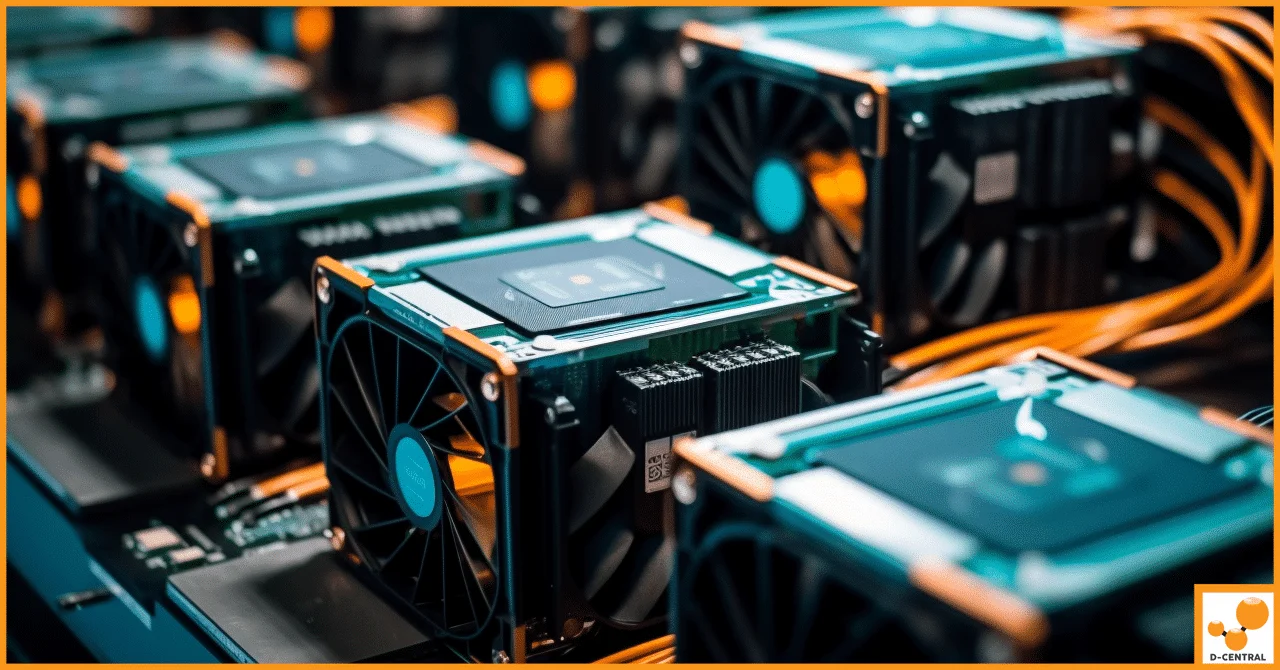
Every ASIC miner consists of three core components: hashboards (the PCBs carrying the actual ASIC chips), a control board (the brain that manages pool connections, firmware, and monitoring), and a power supply unit (converting AC wall power to the DC voltages the chips need). Understanding this architecture matters because when something breaks — and eventually it will — knowing which component failed determines whether your repair costs $50 or $500.
The current block reward is 3.125 BTC per block. Every hash your miner produces is a ticket in a global lottery running 24 hours a day. The more hashes you contribute, the more tickets you hold. That is the fundamental economics, and no amount of marketing language changes it.
ASIC Categories for Canadian Home Miners
Not every ASIC miner belongs in a home. A full-size Antminer S21 pushing 200 TH/s at 3,500 watts sounds impressive until you realize it draws more power than most residential circuits can deliver and produces noise levels comparable to a vacuum cleaner running 24/7. Choosing the right category is the single most important decision a Canadian home miner will make.
| Category | Hashrate | Power Draw | Noise Level | Best For |
|---|---|---|---|---|
| Open-Source Solo Miners (Bitaxe, NerdAxe) | 0.5–3 TH/s | 5–15W | Silent | Desk/shelf solo mining, education, sovereignty signal |
| Mid-Tier / Older Gen (S9, L3+) | 13–16 TH/s | 1,200–1,600W | Loud (75+ dB) | Space heater conversions, dual-purpose mining/heating |
| Current Gen (S19, S21 series) | 90–200+ TH/s | 2,800–3,500W | Very Loud (80+ dB) | Dedicated mining rooms, garages, hosted facilities |
| Bitcoin Space Heaters | 13–90+ TH/s | 1,200–3,000W | Quiet (enclosure dampened) | Living spaces, replacing electric heaters |
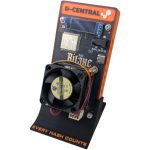
The open-source solo miners — Bitaxe, NerdAxe, NerdQAxe, and friends — deserve special attention. These devices pull 5 to 15 watts from a standard wall outlet, run silently, and give you a legitimate shot at solo-mining a full block (3.125 BTC). The odds are slim on any given day, but the cost to play is nearly zero. D-Central was a pioneer in the Bitaxe ecosystem from the very beginning — we created the original Bitaxe Mesh Stand and developed many of the leading Bitaxe accessories and solutions on the market today.
Important hardware note: The Bitaxe (Supra, Ultra, Gamma variants) uses a 5V barrel jack (5.5×2.1mm DC) for power — NOT USB-C. The USB-C port is for firmware flashing and serial communication only. A 5V/6A power supply is required. The Bitaxe GT and Bitaxe Hex use a 12V DC XT30 connector.
Key Factors When Buying an ASIC Miner in Canada
Efficiency: Joules Per Terahash (J/TH)
This is the single most important specification for any ASIC miner. It tells you how much electrical energy the miner consumes per unit of hashrate. Lower is better. A miner rated at 21 J/TH will earn more profit per kilowatt-hour than one rated at 34 J/TH, assuming identical purchase prices.
In Canada, where electricity rates vary wildly — from $0.04/kWh in Quebec to $0.15+/kWh in Ontario — efficiency directly determines whether your miner is profitable or burning cash. A 34 J/TH machine can print sats in Laval. That same machine might bleed money in Toronto.
Noise and Heat Management
Every single watt your ASIC miner consumes is converted to heat. A 3,000W miner produces the same thermal output as a 3,000W space heater — roughly 10,200 BTU/h. In a Canadian winter, this is not a bug. It is a feature. Many of our customers run Bitcoin Space Heaters that duct the exhaust directly into their living spaces, offsetting their heating bills entirely.
Noise is the harder problem. Stock fans on most ASICs are industrial-grade and extremely loud. Solutions include aftermarket fan replacements, custom shrouds and duct adapters, purpose-built enclosures, or placing miners in basements, garages, or dedicated rooms. D-Central builds custom ASIC configurations specifically designed for residential noise and airflow requirements.
Electrical Requirements
Full-size ASIC miners draw serious current. A single Antminer S19 on a standard 120V/15A circuit is already pushing the safe continuous load limit. Most serious home mining setups in Canada require:
- A dedicated 240V circuit (like a dryer outlet) for full-size miners
- A 20A or 30A breaker depending on the miner’s draw
- Proper grounding and surge protection
- A licensed electrician for any new circuit installations
Open-source miners like the Bitaxe sidestep this entirely — they plug into any standard outlet and draw less power than a desk lamp.
Repairability and Parts Availability
ASICs break. Hashboards fail, fans die, control boards corrupt, and power supplies degrade over time. When your miner goes down, two things determine how fast you get back online: access to replacement parts and access to competent repair services.
This is where buying from a Canadian company matters. D-Central operates a full ASIC repair lab with diagnostics for every major manufacturer — Bitmain, MicroBT, Canaan, Innosilicon. We stock replacement hashboards, control boards, fans, and PSUs. When your miner breaks, you are not shipping it overseas and waiting months. You are shipping it to Laval, Quebec, and getting it back in days.
Why Buying From a Canadian Company Matters
Ordering an ASIC miner from AliExpress or a random overseas reseller might save you a few dollars upfront. It will cost you far more in the long run. Here is the reality:
| Factor | Overseas Reseller | D-Central (Canadian) |
|---|---|---|
| Shipping Time | 2–6 weeks, customs delays | 2–5 business days within Canada |
| Import Duties & GST | Surprise charges at border | Included in price, no surprises |
| Quality Testing | Unknown — ships as-is | Every unit tested and verified before shipping |
| Warranty & Support | Good luck reaching anyone | Canadian support team, repair lab in Laval, QC |
| Repair Access | Ship back overseas, wait months | Local repair with diagnostics for all major brands |
| Currency | USD + conversion fees | CAD pricing, Bitcoin accepted |
Canada’s cold climate is a genuine competitive advantage for mining. In provinces like Quebec, where hydroelectric power keeps rates low and winter temperatures drop well below freezing, cooling costs are essentially zero for six months of the year. Locating your mining operation in Canada is not just patriotic — it is economically rational.
Bitcoin Space Heaters: The Canadian Home Miner’s Secret Weapon
This is the idea that makes non-miners think you are crazy — until they see the math. Every watt consumed by an ASIC miner is converted to heat with near-perfect efficiency. A 1,500W Bitcoin Space Heater produces the same warmth as a 1,500W electric space heater, because physics does not care what the electricity is doing before it becomes heat.
The difference is that the Bitcoin Space Heater is also hashing. It is also earning sats. Your heating bill does not change, but now your heater has a revenue stream.
D-Central builds Bitcoin Space Heaters in multiple configurations — from repurposed S9 units (quiet, efficient, proven) to more powerful S17 and S19 builds. They come with noise-dampened enclosures, residential power cables, and are tested in our Laval facility before shipping.
In a country where heating costs eat a significant portion of household budgets for six to eight months a year, dual-purpose mining is not a gimmick. It is an arbitrage opportunity that only exists because most people have not figured it out yet.
Open-Source Solo Miners: Every Hash Counts
Solo mining with a Bitaxe or NerdAxe is the purest expression of what Bitcoin mining was meant to be. One miner, one node, one lottery ticket per hash — no pool, no custodian, no middleman skimming your rewards. If your device finds a valid block, you receive the full 3.125 BTC reward directly.
The math is straightforward: a Bitaxe running at 500 GH/s against a network doing 800+ EH/s has astronomically long odds on any given day. But the cost to operate is pennies per day. Over months and years, you are buying the cheapest lottery tickets in existence — and unlike government lotteries, the expected value improves every time the Bitcoin price rises relative to your electricity cost.
D-Central stocks every Bitaxe variant — Supra, Ultra, Hex, Gamma, GT — along with NerdAxe, NerdQAxe, Nerdminer, and the full open-source mining ecosystem. We also design and manufacture accessories: heatsinks for Bitaxe and Bitaxe Hex, the original Mesh Stand, custom cases, power supplies, and more.
Maintenance, Repair, and Longevity
An ASIC miner is not a set-and-forget appliance. Dust accumulation on heatsinks reduces cooling efficiency and causes thermal throttling. Fan bearings wear out. Power supply capacitors degrade. Hashboard solder joints can develop micro-cracks from thermal cycling.
A basic maintenance schedule for any home miner should include:
- Monthly: Visual inspection, dust blowout with compressed air, fan noise check
- Quarterly: Thermal paste inspection on critical joints, hashrate deviation analysis, power supply voltage verification
- Annually: Full teardown cleaning, fan replacement assessment, firmware update review
When something does fail, D-Central’s ASIC repair service covers every major manufacturer with model-specific diagnostic expertise across 38+ machine types. We repair at the component level — reflowing BGA chips, replacing individual MOSFETs, diagnosing hashboard signal chain failures — not just swapping entire boards.
Canadian Regulatory Landscape for Home Mining
Bitcoin mining in Canada is legal. There is no licensing requirement for home mining operations. However, there are practical considerations:
Tax obligations: The Canada Revenue Agency (CRA) treats mined Bitcoin as business income at fair market value at the time of receipt. If you are mining as a hobby, it may be treated differently, but the distinction is blurry and CRA interpretation has been inconsistent. Keep detailed records of electricity costs, hardware purchases, and mining output. Consult a tax professional who understands cryptocurrency.
Electrical codes: Any dedicated circuits installed for mining must comply with the Canadian Electrical Code and local building codes. This is not optional — it is a safety requirement.
Noise bylaws: Municipal noise bylaws vary across Canada. If your miner is audible from outside your property, you could face complaints or fines. Proper enclosure, placement, and fan management eliminate this issue entirely.
Strata/condo restrictions: If you live in a strata property, check your bylaws. Some restrict high-power-draw appliances or activities that generate excess heat or noise.
Getting Started: Your Action Plan
- Calculate your electricity rate — Check your utility bill. If you are paying under $0.10/kWh CAD, you are in strong territory. Use a mining profitability calculator to model your costs.
- Choose your category — Silent solo miner for the desk? Space heater for the basement? Full ASIC for the garage? Match the hardware to your space and electrical capacity.
- Buy from a reputable Canadian source — Every miner D-Central ships is tested and verified. Support, repair, and replacement parts are a phone call away.
- Set up monitoring — Use your miner’s web interface or pool dashboard to track hashrate, temperature, and error rates from day one.
- Run a node — If you are going to mine, verify your own blocks. Running a full Bitcoin node alongside your miner is the complete sovereignty stack.
FAQ
What is an ASIC miner and how does it differ from GPU mining?
An ASIC (Application-Specific Integrated Circuit) miner is hardware built exclusively to compute SHA-256 hashes for Bitcoin mining. Unlike GPUs, which are general-purpose processors, ASIC chips are physically designed for one algorithm. This makes them thousands of times more efficient than GPUs for Bitcoin mining. GPU mining is effectively obsolete for Bitcoin — ASICs dominate the network entirely.
How much does it cost to run an ASIC miner in Canada?
Operating costs depend on your electricity rate and the miner’s power consumption. A Bitaxe solo miner draws about 12W and costs roughly $0.50–$1.00/month to run. A full-size Antminer S19 draws around 3,000W and costs $150–$350/month depending on your provincial electricity rate. Quebec offers the lowest rates in Canada (around $0.04–0.07/kWh), making it the most profitable province for mining.
Can I mine Bitcoin at home in Canada legally?
Yes. Bitcoin mining is completely legal in Canada. There are no licensing requirements for home mining. However, you must report mining income to the CRA, comply with local electrical codes for any new circuit installations, and respect municipal noise bylaws. We recommend consulting a cryptocurrency-aware tax professional for your specific situation.
What is the best ASIC miner for a beginner in Canada?
For absolute beginners, a Bitaxe solo miner is the ideal starting point. It runs silently, draws minimal power (5V barrel jack, not USB-C), costs very little to operate, and teaches you the fundamentals of mining — pool configuration, hashrate monitoring, thermal management — without any of the noise, heat, or electrical complexity of full-size ASICs. For those ready to generate meaningful hashrate, a Bitcoin Space Heater provides dual-purpose value during Canadian winters.
Should I join a mining pool or mine solo?
Pool mining provides steady, predictable payouts proportional to your hashrate. Solo mining offers the chance at a full 3.125 BTC block reward but with much longer expected wait times between payouts. For full-size ASICs, pool mining is the practical choice for consistent income. For low-power open-source miners like the Bitaxe, solo mining is the entire point — you are buying the cheapest lottery tickets in existence while supporting network decentralization.
How long do ASIC miners last?
With proper maintenance — regular dust cleaning, adequate cooling, stable power supply — ASIC miners can operate for 3 to 7+ years. The Antminer S9, released in 2017, is still running in thousands of installations worldwide. Hardware longevity is less about the machine wearing out and more about efficiency becoming uneconomical as newer generations launch. In Canada, where miners can double as heaters, even older-generation ASICs remain valuable long after they would be unprofitable in pure-hashrate terms.
Why should I buy an ASIC miner from D-Central instead of overseas?
D-Central tests every unit before shipping, prices in CAD with no hidden import charges, and operates a full ASIC repair lab in Laval, Quebec with diagnostics for all major manufacturers. When your miner needs service, you are shipping it across the country — not across an ocean. We have been in the Bitcoin mining industry since 2016 and have repaired thousands of machines. No overseas reseller offers that kind of lifecycle support.
What is a Bitcoin Space Heater and is it worth it?
A Bitcoin Space Heater is an ASIC miner enclosed in a noise-dampened housing designed for residential use. Since all electrical energy consumed by a miner is converted to heat, a 1,500W space heater miner produces identical warmth to a 1,500W conventional electric heater — but it also mines Bitcoin. In Canada, where heating costs are significant for 6–8 months per year, this effectively turns your heating bill into a mining operation. The heater pays for itself over time while keeping your home warm.
How do I know if my electrical setup can handle an ASIC miner?
Open-source miners like the Bitaxe plug into any standard outlet — no special wiring needed. Full-size ASICs typically require a dedicated 240V circuit (similar to a clothes dryer). Check your breaker panel for available capacity. For any new circuit installation, hire a licensed electrician and ensure compliance with the Canadian Electrical Code. Never run a full-size ASIC on an extension cord or shared circuit.