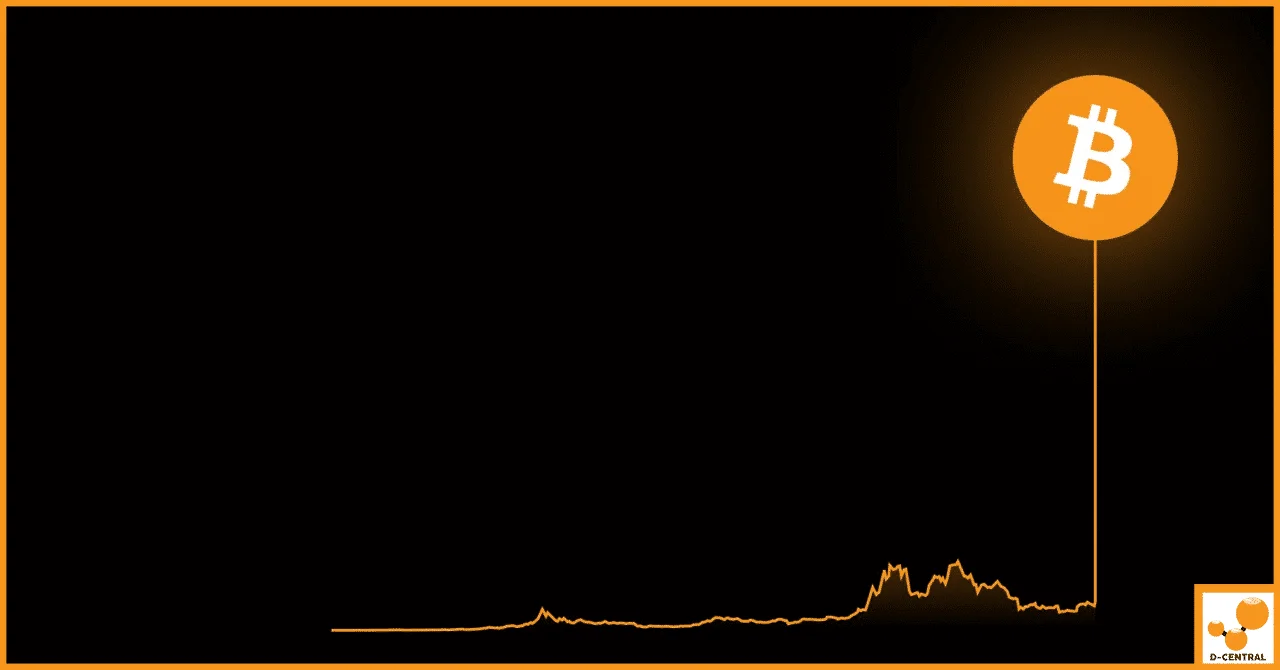
In March 2023, technology entrepreneur Balaji Srinivasan made a $1 million bet that Bitcoin would hit $1M within 90 days, citing an imminent “stealth financial crisis” in the banking system. He called it the BitSignal — an alarm designed to wake people up to what cypherpunks had been saying for over a decade: the traditional banking system is built on fractional reserves, hidden insolvency, and a house of cards that collapses the moment confidence wavers.
Balaji lost the bet on price. But the thesis? The thesis was vindicated within days. Silicon Valley Bank, Signature Bank, and First Republic all collapsed in rapid succession. The Federal Reserve launched emergency lending facilities, and billions in depositor funds were temporarily frozen. The “stealth” part of the crisis became front-page news almost overnight.
For those of us in the Bitcoin mining community, none of this was surprising. We do not mine Bitcoin because we are speculating on price charts. We mine because we understand that a monetary system controlled by central authorities is inherently fragile — and that the only antidote is a decentralized, permissionless, censorship-resistant network secured by proof of work. Bitcoin mining is not an investment strategy. It is an act of technological sovereignty.
What Was the BitSignal, and Why Did It Matter?
Balaji Srinivasan’s BitSignal was more than a flashy bet. It was a crowdsourced intelligence operation. He offered monetary rewards for the best 1,000 tweets containing evidence — charts, graphs, data, memes — proving that the banking system was insolvent. The goal was to pierce through media complacency and force public awareness of the systemic rot hiding behind balance sheets and regulatory negligence.
The core claims were straightforward:
- Banks were using accounting tricks (holding bonds at face value despite massive unrealized losses) to mask insolvency.
- Regulators — the FDIC, the Fed, the OCC — were aware of the problem and chose not to alert depositors.
- The gap between bank assets and liabilities was large enough to trigger cascading failures if depositors demanded their money simultaneously.
These were not conspiracy theories. The FDIC’s own data showed that U.S. banks were sitting on over $620 billion in unrealized losses on securities portfolios at the time. When SVB tried to sell bonds to cover withdrawals, the losses became real, and the bank imploded in 48 hours. A bank that had been deemed “well-capitalized” by regulators was gone in two days.
This is the system that most people trust with their life savings. This is what Balaji was signaling about.
The Banking Crisis of 2023: A Timeline
| Date | Event | Impact |
|---|---|---|
| March 8, 2023 | Silvergate Bank announces voluntary liquidation | Crypto-friendly bank collapses after bank run |
| March 10, 2023 | Silicon Valley Bank seized by FDIC | Largest bank failure since 2008; $209B in assets |
| March 12, 2023 | Signature Bank closed by regulators | $110B in assets; third-largest bank failure in U.S. history |
| March 12, 2023 | Fed launches Bank Term Funding Program (BTFP) | Emergency lending to prevent further contagion |
| March 17, 2023 | Balaji places $1M Bitcoin bet | BitSignal campaign launches to crowdsource evidence |
| May 1, 2023 | First Republic Bank seized and sold to JPMorgan | $229B in assets; second-largest failure in U.S. history |
Three major banks, over $548 billion in combined assets, gone in less than two months. And the response? Print more money, backstop the system, and pretend nothing happened. The very actions that debase the currency further and make Bitcoin’s fixed supply of 21 million coins more critical than ever.
Why Bitcoin Miners Saw This Coming
If you run a Bitcoin miner — whether it is a Bitaxe solo miner on your desk or an Antminer S21 in your basement — you already understand something that most people do not: trustless systems are superior to trust-based systems.
Bitcoin does not ask you to trust a bank’s balance sheet. It does not rely on a regulator’s honesty. Every transaction is verified by the network. Every block is secured by proof of work. The rules are enforced by mathematics, not by institutions that have proven — repeatedly — that they will bend the rules when it suits them.
The 2023 banking crisis proved that:
- Fractional reserve banking is inherently fragile. Banks lend out your deposits and hold a fraction in reserve. When everyone wants their money at once, the system collapses.
- Regulators are not on your side. The FDIC knew about unrealized losses and did nothing. Depositors were the last to know.
- Bail-ins and bailouts socialize losses. Taxpayers and inflation absorb the damage while bankers keep their bonuses.
- “Too big to fail” creates moral hazard. Banks take excessive risks knowing they will be rescued — and they always are.
Bitcoin fixes this. Not with promises, not with regulations, but with code and energy. Every hash computed by every miner on the network makes the system more secure, more resilient, and more resistant to the kind of institutional failures that wiped out SVB.
Self-Custody: The Lesson the Banking Crisis Taught
When Silicon Valley Bank collapsed, depositors could not access their funds for days. Companies could not make payroll. The phrase “your money is safe” rang hollow when the ATMs stopped working.
With Bitcoin, self-custody means your keys, your coins. No bank can freeze your account. No regulator can decide you are last in line. No emergency “bank holiday” can prevent you from sending a transaction. As long as the Bitcoin network has miners producing blocks — and with over 800 EH/s of global hashrate in 2026, it absolutely does — your Bitcoin is accessible 24/7/365.
This is why mining matters at every scale. Every Bitaxe plugged in, every Bitcoin space heater warming a Canadian home, every Antminer humming in a garage — these are not just money-making machines. They are nodes in a decentralized security apparatus that makes self-custody possible.
Bitcoin Mining as Financial Sovereignty
The BitSignal thesis was fundamentally about counterparty risk. When you deposit money in a bank, you are trusting that institution to safeguard it. History shows that trust is frequently misplaced.
Mining Bitcoin eliminates counterparty risk entirely. When you mine, you are:
- Creating new bitcoin directly — no exchange, no bank, no intermediary. At the current block reward of 3.125 BTC per block (post-April 2024 halving), miners collectively earn over 450 BTC per day.
- Securing the network — your hashrate contributes to the over 800 EH/s that makes Bitcoin the most secure computational network in human history.
- Validating transactions — every miner is a participant in the consensus mechanism that makes Bitcoin trustless.
- Converting energy into money — not debt-based fiat, but sound money with a fixed supply cap.
This is especially relevant in Canada, where D-Central has been helping home miners since 2016. Our mining hosting services in Quebec leverage some of the cheapest and cleanest hydroelectric power on the continent. Our ASIC repair services keep machines running longer, reducing waste and maximizing the return on every watt.
The Hyperinflation Question: From Theory to Reality
Balaji’s most provocative claim was that hyperinflation was imminent. While the U.S. has not experienced Weimar- or Zimbabwe-level currency collapse, the trajectory is undeniable:
| Metric | 2020 | 2026 | Trend |
|---|---|---|---|
| U.S. National Debt | $27 trillion | $36+ trillion | Accelerating |
| M2 Money Supply | $15.4 trillion | $21+ trillion | Expanding |
| Cumulative CPI Inflation (2020-2026) | Baseline | ~25% | Persistent |
| Bitcoin Supply Issued | ~18.5M / 21M | ~19.8M / 21M | Programmatic, diminishing |
| Bitcoin Network Hashrate | ~120 EH/s | 800+ EH/s | Exponential growth |
| Bitcoin Mining Difficulty | ~15T | 110T+ | All-time highs |
The dollar buys 25% less than it did six years ago. Meanwhile, Bitcoin’s issuance schedule is immutable — no central bank can print more of it, no emergency lending facility can dilute it. The contrast between fiat monetary policy and Bitcoin’s programmatic scarcity could not be more stark.
You do not need hyperinflation to justify Bitcoin mining. You just need to understand that every dollar saved in a bank account is slowly being debased, while every satoshi mined is governed by rules that no institution can change.
What Balaji Got Right (and What Matters Now)
Nearly three years after the BitSignal, here is what we know:
- The banking system was fragile. Three banks with over half a trillion in assets collapsed in weeks. Balaji was right about the structural weakness.
- Bitcoin survived and thrived. Through the banking crisis, Bitcoin continued producing blocks every ~10 minutes without a single minute of downtime. No bailout needed.
- The response was more printing. The Bank Term Funding Program and subsequent Fed interventions expanded the balance sheet further, reinforcing the very cycle Balaji warned about.
- Mining difficulty hit all-time highs. In 2026, mining difficulty exceeds 110 trillion — a direct readout of the network’s growing security and the conviction of miners worldwide.
- The halving happened. In April 2024, the block reward dropped from 6.25 to 3.125 BTC. The supply shock is real, and it makes every hash more valuable.
The BitSignal was a wake-up call. The question is: what did you do about it?
How to Act on the BitSignal: Start Mining
The most powerful response to a fragile financial system is not panic — it is building an alternative. That is exactly what Bitcoin miners do every single day. Here is how you can start:
Solo Mining with Bitaxe
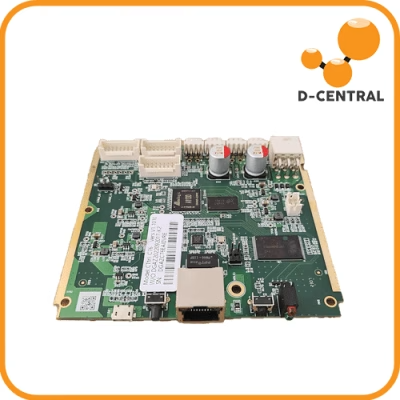
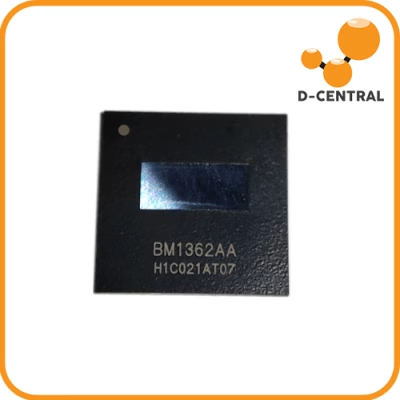
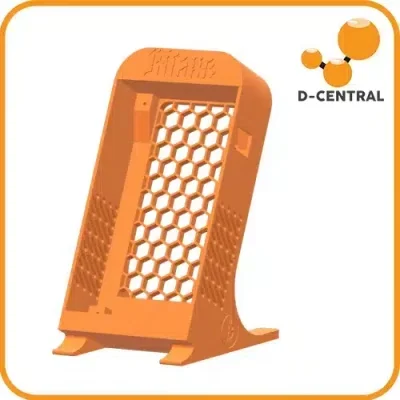
The Bitaxe is the perfect entry point for anyone who wants to participate in Bitcoin’s security. These open-source solo miners are affordable, silent, and small enough to sit on your desk. Every hash you compute is a lottery ticket for a full block reward of 3.125 BTC — and more importantly, it is your contribution to the decentralization of hashrate. D-Central has been a pioneer in the Bitaxe ecosystem since the beginning, manufacturing the original Bitaxe Mesh Stand and developing leading accessories.
Heat Your Home While Mining
Our Bitcoin Space Heaters turn ASIC mining hardware into dual-purpose machines. In Canadian winters, every watt consumed by a miner is a watt you do not pay to your electric heater. You are monetizing your heating bill while securing the Bitcoin network. That is not speculation — that is thermodynamics.
Scale Up with Hosting
For miners who want to operate at scale without the noise and infrastructure challenges, D-Central offers mining hosting in Quebec, powered by clean hydroelectric energy. Competitive rates, professional management, and the cold Canadian climate for natural cooling efficiency.
Keep Your Hardware Running
A miner that is offline is not securing anything. D-Central’s ASIC repair services cover every major ASIC platform across all major manufacturers. We have been repairing miners since 2016, and our retail-focused repair shop is one of the most comprehensive in North America.
Get Expert Guidance
Not sure where to start? Our mining consulting services help home miners and small operations optimize their setup, from hardware selection to power infrastructure to noise management. We are miners ourselves — we hack institutional-grade technology into solutions that work for real people in real homes.
The Cypherpunk Response to Financial Fragility
Balaji’s BitSignal was important not because of the bet, but because of the signal. It forced a conversation about the fundamental fragility of the fiat monetary system. But the cypherpunk community — the builders, the miners, the node operators — already knew. We have been building the alternative since Satoshi published the whitepaper in 2008.
Bitcoin is not a hedge. It is not a “digital gold” portfolio allocation. It is a parallel monetary system that operates without permission, without intermediaries, and without the structural vulnerabilities that caused SVB, Signature, and First Republic to implode.
Every miner running right now — from a tiny Bitaxe computing a few hundred gigahashes to massive industrial facilities — is part of this system. Every hash matters. Every block confirmed is another link in the longest proof-of-work chain in history, making the network more secure and more resistant to the kind of institutional failures that Balaji warned about.
The BitSignal was a fire alarm. Mining is the fire escape.
If the 2023 banking crisis taught us anything, it is that you cannot rely on institutions to protect your wealth. You can only rely on systems that are trustless by design. Bitcoin is that system. Mining is how you participate in it. And at D-Central, we have been making that participation accessible to home miners since 2016 — because we believe that decentralization of every layer of Bitcoin mining is not just good business. It is a necessity.
Browse our full range of mining hardware and take the first step toward financial sovereignty.
What was Balaji Srinivasan’s BitSignal Alert?
The BitSignal was a campaign launched by Balaji Srinivasan in March 2023, coinciding with his $1 million Bitcoin bet. It crowdsourced evidence of a “stealth financial crisis” in the banking system, offering rewards for the best tweets containing charts, graphs, and data proving bank insolvency. The campaign aimed to raise public awareness about systemic risks in traditional banking.
What happened during the 2023 banking crisis?
Between March and May 2023, three major U.S. banks collapsed: Silicon Valley Bank ($209B in assets), Signature Bank ($110B), and First Republic Bank ($229B). The failures were triggered by unrealized losses on bond portfolios and bank runs. The Federal Reserve launched the Bank Term Funding Program (BTFP) to prevent further contagion.
How does Bitcoin mining relate to banking crises?
Bitcoin mining creates new bitcoin without any intermediary or counterparty risk. Unlike bank deposits, mined bitcoin goes directly to the miner’s wallet. Mining also secures the Bitcoin network, which operates 24/7 without relying on any institution. With over 800 EH/s of global hashrate in 2026, Bitcoin is the most secure computational network in existence.
What is the current Bitcoin block reward in 2026?
Following the April 2024 halving, the Bitcoin block reward is 3.125 BTC per block. Blocks are produced approximately every 10 minutes, resulting in around 450 BTC mined per day. The next halving will occur in approximately 2028, reducing the reward to 1.5625 BTC.
How can I start mining Bitcoin at home in Canada?
The easiest entry point is a Bitaxe solo miner, which is quiet, affordable, and plugs into a standard 5V power supply. For those wanting to monetize their heating costs, D-Central’s Bitcoin Space Heaters turn ASIC miners into dual-purpose heating units — ideal for Canadian winters. For larger operations, D-Central offers mining hosting in Quebec with clean hydroelectric power. Visit the Bitaxe Hub or our shop to get started.
Why is Bitcoin mining important for decentralization?
Every independent miner adds to the geographic and organizational diversity of Bitcoin’s hashrate. Concentrated mining in large facilities creates single points of failure. Home miners running Bitaxe units, space heaters, or small ASIC setups distribute hashrate across thousands of locations, making the network more censorship-resistant and more resilient to regulatory or infrastructure disruptions.
Is Bitcoin a safe haven during financial crises?
Bitcoin is not a traditional safe haven — it is a trustless monetary system. Unlike bank deposits, Bitcoin cannot be frozen, diluted through money printing, or lost to bank insolvency. During the 2023 banking crisis, Bitcoin continued producing blocks without interruption while three major banks collapsed. Its fixed supply of 21 million coins and decentralized security model make it fundamentally different from fiat-based financial instruments.
What makes D-Central different from other mining hardware providers?
D-Central has operated since 2016 as Canada’s Bitcoin Mining Hackers — taking institutional-grade mining technology and making it accessible to home miners. We offer the full lifecycle: hardware sales across 150+ SKUs, ASIC repair covering every major ASIC platform, mining hosting in Quebec, consulting services, and pioneering work in the Bitaxe and open-source mining ecosystem. We are miners ourselves, not just retailers.