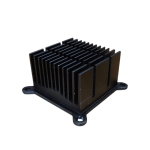
The Complete Bitaxe Accessories Guide
Your Bitaxe is a tiny, open-source piece of Bitcoin mining hardware. Out of the box, it hashes. But with the right accessories, it hashes better — cooler, quieter, more stable, and with the overclocking headroom that separates a stock miner from a tuned machine (see our Bitaxe Overclocking Manual). This guide covers every accessory category in the Bitaxe ecosystem: power supplies, heatsinks, stands, cases, fans, displays, networking, and DIY tools.
D-Central Technologies has been embedded in the Bitaxe ecosystem since its earliest days. We created the original Bitaxe Mesh Stand — the first commercially manufactured stand for any Bitaxe device — and went on to develop custom heatsinks for both the standard Bitaxe and the six-chip Bitaxe Hex, precision thermal sockets, modular cases, and a full range of cooling solutions. When you buy Bitaxe accessories from D-Central, you’re buying from the team that helped define what a Bitaxe accessory even looks like.
Whether you’re setting up your first solo miner or scaling to a shelf of a dozen units, this guide will help you choose the right gear, avoid common mistakes, and get every hash out of your hardware.
1. Power Supplies — The Foundation of Stable Hashing
A Bitaxe without a proper power supply is a Bitaxe that crashes, throttles, and lies to you about its hashrate. Power delivery is the single most important accessory decision you’ll make, and it’s the one most often botched by newcomers. Here’s the critical fact that trips people up:
5V Barrel Jack PSU — For Supra, Ultra, and Gamma
Every single-chip Bitaxe requires a 5V power supply delivering at least 6A (30W) through a 5.5×2.1mm DC barrel jack connector. Here’s why the 6A minimum matters:
- Stock power draw: A Bitaxe Gamma at stock settings pulls approximately 15–25W. A Supra pulls 12–15W. That’s 3–5A at 5V.
- Overclocking headroom: Push a Gamma to 1.5+ TH/s and power draw climbs toward 25–30W. You need a PSU that can deliver that without voltage droop.
- Startup inrush: ASIC chips draw a brief current spike on startup. A PSU rated at exactly the steady-state draw will sag, causing boot failures or instability.
- PSU derating: Many cheap 5V adapters can’t sustain their rated output continuously. A “5A” adapter from a no-name brand might only deliver 4A before overheating. A 6A-rated quality supply gives you real headroom.
D-Central’s 5V 6A Power Supply ($29.99 CAD) is purpose-built for the Bitaxe series. It delivers clean, regulated 5V at up to 6A through the correct 5.5×2.1mm barrel jack — no adapters, no guesswork. It’s the PSU we test every Bitaxe against before it ships.
What to look for in a 5V PSU:
| Specification | Minimum | Recommended |
|---|---|---|
| Output Voltage | 5V DC | 5V DC (regulated) |
| Output Current | 5A | 6A or higher |
| Wattage | 25W | 30W+ |
| Connector | 5.5×2.1mm DC barrel jack (center positive) | |
| Regulation | Basic switching | Tight voltage regulation (±3%) |
| Safety Certification | CE | UL/CSA/CE listed |
12V XT30 PSU — For GT and Hex
The Bitaxe GT (dual BM1370) and Bitaxe Hex (six BM1366/BM1368) are multi-chip boards that run on 12V DC via an XT30 connector. The power requirements scale with the chip count:
| Model | Chips | Stock Power Draw | Recommended PSU |
|---|---|---|---|
| Bitaxe GT 801 | 2x BM1370 | ~35–43W | 12V / 5A (60W) minimum |
| Bitaxe Ultra Hex 300 | 6x BM1366 | ~60W | 12V / 10A (120W) minimum |
| Bitaxe Supra Hex 700 | 6x BM1368 | ~90W | 12V / 10–15A (120–180W) minimum |
The XT30 connector is rated for 30A continuous and is polarized — you physically cannot plug it in backwards, which eliminates a category of user error that has killed mining hardware since the dawn of home mining.
If you already own a quality 12V barrel jack power supply, D-Central’s XT30 Female to DC Power Cable ($6.90 CAD) bridges the gap. It converts a standard 5.5×2.1mm or 5.5×2.5mm barrel jack to the XT30 connector used by the GT and compatible devices. No soldering, no jury-rigging — just a clean adapter cable rated for the current you need.
PSU quality matters — what to avoid:
- Unregulated wall warts: Voltage sags under load, causing ASIC instability and phantom hashrate
- Undersized adapters: Running a PSU at 95%+ of its rated capacity generates excess heat and shortens lifespan
- No-name imports without safety certification: Fire risk. Not worth saving $5.
- Modified ATX power supplies: Unless you know what you’re doing with pinouts and voltage sensing, stick with purpose-built adapters
2. Heatsinks — Turning Thermal Budgets Into Hashrate
Every watt your ASIC chip consumes becomes heat. If that heat isn’t removed efficiently, the chip throttles — reducing frequency and hashrate to protect itself. A good heatsink is not about keeping your Bitaxe alive (the stock heatsink does that). A good heatsink is about unlocking performance that the stock cooling solution leaves on the table.
D-Central develops heatsinks specifically for Bitaxe hardware — not generic 40mm heatsinks repurposed from Raspberry Pi projects, but precision-machined aluminum coolers designed around the thermal profile of ASIC mining chips running 24/7.
D-Central Bitaxe Basic Heatsink
$14.99 CAD — The starting point. A 40x40mm aluminum heatsink designed for stock-speed operation and light overclocking. If you’re running your Bitaxe Gamma at 1.0–1.2 TH/s in a room-temperature environment, this heatsink keeps the ASIC chip comfortably within thermal limits.
- Material: Aluminum alloy
- Footprint: 40x40mm (standard Bitaxe mount)
- Best for: Stock speeds, light overclocking, budget builds
- Includes: Mounting hardware (thermal paste user-applied)
- Compatible with: Bitaxe Gamma, Supra, Ultra, NerdAxe
D-Central Premium Bitaxe Heatsink
$14.90 CAD — High-performance aluminum cooler with an optimized fin design that delivers measurably better heat dissipation than the stock solution. Built for miners who are running 24/7 and want consistent thermal performance without actively managing fan curves.
- Material: High-performance aluminum
- Footprint: 40x40mm (standard Bitaxe mount)
- Best for: 24/7 mining, moderate overclocking
- Compatible with: Bitaxe Gamma, Supra, Ultra, NerdAxe
D-Central Modern Bitaxe Heatsink
$19.99 CAD — Engineered for extreme overclocking. The advanced fin geometry and enhanced thermal conductivity enable stable operation at 1000+ MHz frequencies on the Bitaxe Gamma, delivering up to 10°C temperature reduction versus standard cooling solutions. If you’re pushing a Gamma to 1.5–1.8 TH/s, this is the heatsink that makes it sustainable.
- Material: Precision-machined aluminum with advanced fin design
- Footprint: 40x40mm (standard Bitaxe mount)
- Temperature reduction: Up to 10°C versus stock
- Best for: Aggressive overclocking, maximum hashrate
- Includes: Heatsink, mounting hardware, thermal installation guide
- Compatible with: Bitaxe Gamma, Supra, Ultra, NerdAxe
- Not compatible with: Bitaxe Hex, Bitaxe GT, NerdQAxe
D-Central Bitaxe Hex Heatsink
$19.99 CAD — Six chips means six heat sources. A standard single-chip heatsink physically doesn’t fit the Hex board, and even if it could, it wouldn’t address the distributed thermal load across six ASIC dies. The D-Central Hex Heatsink is a unified, precision-machined aluminum solution with a high-density fin array and a flat-lapped base that makes full contact across all chip positions.
- Material: Carbonized pure aluminum
- Coverage: All six BM1366/BM1368 ASIC chips simultaneously
- Best for: Bitaxe Hex builds (required — no stock heatsink option fits)
- Pairs with: Bitaxe Hex Case and 80mm fan for complete thermal management
- Compatible with: Bitaxe Ultra Hex 300, Supra Hex 700 series
Thermal Sockets and Interfaces
The interface between your ASIC chip and heatsink determines how efficiently heat transfers. A thin layer of air — even microscopic — acts as insulation and sabotages your cooling.
D-Central Bitaxe Argon THRML Socket
$8.99–$9.99 CAD — A precision thermal interface adapter that replaces the stock thermal pad. It sits between the ASIC chip die and the heatsink base, eliminating air gaps and providing consistent clamping force across the entire chip surface. Users typically report 3–8°C temperature reductions compared to standard thermal pads. Unlike thermal pads that degrade over time, this is a reusable mechanical component.
D-Central Bitaxe Argon THRML Noctua Socket
$24.99 CAD — The extreme cooling configuration. This socket enables integration of premium Noctua 60mm fans with the Argon THRML heatsink, delivering the thermal headroom needed to push a Bitaxe to 600 MHz for up to 900 GH/s at an average of 775 GH/s, with ASIC temperatures maxing at a comfortable 55°C. If you’re serious about overclocking, this is the thermal solution that makes it safe.
Thermal Paste Application Guide
Whether you’re using a thermal pad or thermal paste, proper application is the difference between mediocre and excellent thermal transfer.
- Clean the die surface: Use isopropyl alcohol (90%+ concentration) and a lint-free cloth to remove any residual thermal compound from the ASIC chip and the heatsink base.
- Apply thermal paste: Place a small dot (roughly the size of a grain of rice) in the center of the ASIC die. The mounting pressure will spread it evenly. More is not better — excess paste squeezes out the sides and can contact nearby components.
- Mount the heatsink: Lower it straight down onto the chip — don’t slide it, as this creates air bubbles. Secure with the provided mounting hardware, tightening screws in a cross pattern (diagonal corners, not sequential) to ensure even pressure.
- Verify contact: Power on and check ASIC temperature in AxeOS. At stock settings, a properly mounted heatsink with good thermal paste should keep the chip below 60°C at room temperature. If you’re seeing 70°C+, remount.
3. Stands and Mounts — Airflow Engineering for a Tiny Board
A Bitaxe sitting flat on a desk is a Bitaxe suffocating its underside components. The PCB needs airflow on both sides, and the orientation of the board relative to the heatsink and fan determines whether convection helps you or works against you. A proper stand solves this by elevating the board, aligning airflow paths, and providing physical stability.
D-Central Original Bitaxe Mesh Stand
$14.99 CAD — This is the one that started it all. D-Central designed and manufactured the first Bitaxe stand ever produced — the Mesh Stand. It became the iconic, widely-adopted foundation that hundreds of Bitaxe miners worldwide mount their devices on every day.
The mesh ventilation design isn’t decorative — it’s functional. The open mesh pattern allows air to flow freely through and around the Bitaxe PCB from all directions, preventing heat pockets from forming beneath the board. The minimalist form factor takes up minimal desk space while providing a stable, vibration-resistant platform.
- Material: Durable 3D-printed construction
- Design: Open mesh pattern for 360° airflow
- Compatibility: Universal — fits all single-chip Bitaxe variants
- Footprint: Minimal desk space
- OSMU donation: $5 from every sale supports Open Source Miners United
D-Central Modern Bitaxe Stand
$14.99 CAD — The evolution of the Mesh Stand. The Modern Stand adds dual-orientation support (vertical or horizontal), a rear fan shroud for directed airflow, and a mounting position for an optional 40x40mm secondary fan on the back panel. Every unit is 3D-printed with premium-grade filament, featuring clean edges, precisely placed vents, and cutouts that guarantee direct airflow.
Included in the box:
- 1x 3D-printed main enclosure
- 1x Multi-orientation foot (for vertical setup)
- 1x Rear fan shroud (for horizontal setup with optional 40mm fan)
D-Central Bitaxe Minimalist Stand
$13.50–$15.00 CAD — Stripped to the essentials. If you want your Bitaxe elevated with unobstructed airflow and nothing else in the way, the Minimalist Stand delivers exactly that. Compatible with all Bitaxe versions, it provides stable support with a sleek profile that works on any desk, shelf, or mounting surface.
D-Central Bitaxe Infinity Case (2-Pack)
$19.99 CAD — Built for scaling. The Infinity Case uses a modular interlocking design — multiple units clip together to create a compact, space-saving mining station. Running five Bitaxe units? Ten? The Infinity system lets you build organized racks without custom fabrication.
- Material: Biodegradable PLA, 3D-printed
- Design: Honeycomb vent pattern for optimized airflow
- Scalability: Unlimited — units clip together in any direction
- Designed by: GoBrrr.me, manufactured by D-Central Technologies
Multi-Unit Rack Configurations
Once you’re running more than three or four Bitaxe units, a dedicated rack setup starts making sense. Here are the approaches, from simple to advanced:
- Infinity Case stacking: The modular clip system naturally creates organized columns. Start with two packs and expand as your fleet grows.
- Shelf mounting: A wire shelf rack (like a kitchen utility rack) provides multiple tiers with built-in ventilation. Mount Bitaxe units on Mesh Stands on each shelf tier, with a single fan at the bottom or top creating convective flow through the entire rack.
- 3D-printed rack frames: The community has designed custom rack frames for 4, 6, and 8-unit Bitaxe arrays. D-Central publishes several designs on Thingiverse and Printables — search “DCentralTech” for our open-source files.
- Wall-mounting: Vertical wall panels with Bitaxe mounts keep your mining fleet off the desk entirely. Convection naturally draws air upward across the boards, providing passive cooling assistance.
4. Cases and Enclosures — Protection Without Choking Airflow
An enclosure for a Bitaxe has to solve two competing problems: protect the exposed PCB from dust, accidental contact, and cable clutter, while still allowing the 15–25W of heat the ASIC chip generates to escape efficiently. Get this balance wrong, and your “protective” case becomes an oven.
Open-Air vs. Enclosed: The Thermal Trade-Off
| Configuration | Pros | Cons | Best For |
|---|---|---|---|
| Open-Air (Stand Only) | Maximum airflow, lowest temperatures, easiest maintenance | Exposed components, dust accumulation, less stable | Dedicated mining areas, single units, overclockers |
| Vented Enclosure | Dust protection, directed airflow, cleaner aesthetics | Slightly higher temps (+2–5°C), requires fan integration | Living spaces, multi-unit setups, everyday environments |
| Sealed Enclosure | Maximum protection, noise reduction | Significantly higher temps, requires active forced-air cooling | Dusty/industrial environments (not recommended for most users) |
For most home miners, a vented enclosure is the sweet spot — and every D-Central case is designed with ventilation as a first principle, not an afterthought.
D-Central Bitaxe Hex Case
$14.99–$19.99 CAD — A precision PETG enclosure designed exclusively for the Bitaxe Hex mining board. PETG (not PLA) was chosen specifically for its superior heat resistance — it won’t warp near PSU heat zones, fan exhausts, or during extended runtime at elevated ambient temperatures.
- Material: PETG (heat-resistant, impact-resistant)
- Fan mount: 80mm compatible (Arctic P8 80mm fan)
- Hardware: 8x M3 hex screws included
- Protection: Guards against dust, accidental shorts, and wire clutter
- Noise: Eliminates open-air vibration noise, channels airflow cleanly
- Compatibility: Bitaxe Hex 300 series (6x BM1366 or 6x BM1368)
- Designed and manufactured: Entirely in Canada by D-Central Technologies
Darth Validator Case for Bitaxe
$130.00 CAD — The premium, statement-piece enclosure. Crafted from high-quality PETG with a vented design for optimal cooling and snap-fit joints for tool-free installation. Custom openings accommodate power jacks, USB connections, and ESP32 antennas. Compatible with all single-chip Bitaxe models including the Supra.
Designed by GoBrrr.me, fulfilled by D-Central.
D-Central Bitaxe Mini Miner DIY Kit
$39.90 CAD — This isn’t just a case — it’s a complete enclosure and cooling upgrade kit that transforms any single-chip Bitaxe into a miniature industrial-looking mining rig. The PETG enclosure features directed intake-to-exhaust airflow modeled after full-size ASIC miners, with a fan duct that channels cooling air directly across the heatsink.
Includes: enclosure body, fan duct, mounting hardware, screws, and a step-by-step assembly guide. You supply the Bitaxe, heatsink, and power supply.
D-Central Bitaxe Minimalist Cover
$9.00–$10.00 CAD — A lightweight dust cover that protects the PCB without enclosing it. Ideal for miners using a stand who want basic physical protection without any thermal compromise.
3D Printable Case Files
D-Central publishes multiple Bitaxe stand and case designs as free, open-source STL files on Thingiverse and Printables. If you own a 3D printer, you can download and print your own:
- Bitaxe Stand v2 — Classic standing case with mesh back for v204-205, v400-401 boards
- Bitaxe Stand v2-04 — Updated for the latest hardware with relocated DC jack and retracted ESP module
- Bitaxe Standing Case v1 — The original minimalist design
Search “DCentralTech” on Thingiverse or Printables to find all available models. Print in PETG for heat resistance — PLA softens at the temperatures a running Bitaxe can reach in enclosed configurations.
5. Fans and Cooling — From Silent to Serious
Every Bitaxe ships with a small onboard fan. At stock speeds in a room-temperature environment, it’s adequate. But “adequate” has a ceiling, and you’ll hit it the moment you overclock, the ambient temperature climbs above 25°C, or you put the board inside an enclosure.
When You Need Active Cooling Upgrades
- Overclocking: Pushing a Gamma past 1.2 TH/s generates proportionally more heat. Without additional cooling, the chip thermally throttles back to a frequency where the stock fan can keep up — defeating the purpose of overclocking.
- Enclosed cases: Any enclosure restricts natural convection. A directed fan inside the enclosure replaces the convective cooling you’ve blocked.
- High ambient temperature: Running a Bitaxe in a room that’s 28°C+ in summer means the stock fan is fighting against a reduced thermal gradient. A better fan moves more air.
- Multi-unit setups: When Bitaxe units are stacked or racked, the exhaust heat from one unit becomes the intake air for the next. Supplemental fans break this cycle.
Fan Recommendations by Model
| Bitaxe Model | Stock Fan | Upgrade Path | Recommended for Overclocking |
|---|---|---|---|
| Gamma / Supra / Ultra | Small onboard 40mm fan | 40mm 5V PWM replacement or Argon THRML with Noctua 60mm | D-Central Argon THRML Noctua Socket |
| GT 801 | 60mm x 25mm fan | Higher-CFM 60mm replacement (Noctua NF-A6x25) | Quality 60mm fan + upgraded heatsink |
| Hex 300/700 | 2x 80mm fans | Higher-quality 80mm PWM fans (Arctic P8 or Noctua NF-A8) | D-Central Hex Case + premium 80mm fans |
D-Central Ice Cooler Low-Profile Tower
$19.99 CAD — An aluminum tower heatsink with a copper heatpipe and top-mounted fan, built on 52pi Ice Tower cooling technology with a custom D-Central socket. The low-profile design fits inside cases and setups with limited vertical clearance, while the copper heatpipe rapidly transfers heat from the ASIC die to the fin stack. Power draws directly from the Bitaxe board header — no separate power supply needed.
- Compatible with: Bitaxe Gamma (601), Supra (400 series), Ultra (200 series)
- Not compatible with: Bitaxe Hex, NerdAxe
- Performance: 8–10°C reduction versus stock heatsink, enabling 15–20% overclocking headroom
Quiet Fans for Living Spaces
One of the Bitaxe’s greatest advantages over full-size ASICs is that it can run in a bedroom, office, or living room without driving everyone out. To maintain this advantage while improving cooling:
- Noctua fans are the gold standard for quiet performance. The NF-A4x10 (40mm) and NF-A6x25 (60mm) deliver excellent CFM-to-noise ratios.
- PWM control lets the fan speed adjust automatically based on temperature. At idle or low loads, the fan spins slowly and silently. Under heavy load, it ramps up as needed.
- Rubber mounting and anti-vibration pads eliminate the buzzing that cheap fans transmit through the case and desk surface.
- Rule of thumb: A larger, slower fan moves more air with less noise than a smaller, faster fan. If your case supports it, go bigger.
6. Networking Accessories
The Bitaxe connects to your mining pool (or solo mining node) over WiFi — specifically 2.4 GHz 802.11 b/g/n via the onboard ESP32-S3 chip. For most home setups, the built-in PCB antenna works fine. But in certain situations, signal issues cause share submission failures, disconnections, and wasted hashing.
WiFi Signal Optimization
Unlike some open-source mining devices (such as certain Nerd* family boards that include a u.FL connector for external antennas), most standard Bitaxe models rely on the PCB-trace antenna built into the ESP32 module. This means hardware antenna upgrades aren’t straightforward — instead, focus on the environment:
- Place the Bitaxe within line-of-sight to your router if possible. Each wall, floor, or major appliance between the device and router attenuates the signal.
- Avoid placing the Bitaxe inside metal enclosures or near large metal objects. The heatsink itself is a chunk of aluminum that can partially shield the antenna trace.
- Ensure the ESP32 antenna area (the end of the PCB opposite the barrel jack) faces toward the router, not toward a wall or inside a tight case cavity.
- Use a WiFi extender or mesh node close to your mining setup if signal strength is below -65 dBm (check in AxeOS system info).
- Assign a static IP or DHCP reservation to your Bitaxe to prevent IP conflicts that can masquerade as connectivity issues.
Ethernet Considerations
The standard Bitaxe does not have an onboard Ethernet port — it’s WiFi-only by design (the ESP32-S3 chip doesn’t natively support Ethernet). Some community-developed variants and fork boards have experimented with Ethernet connectivity, but for all official Bitaxe hardware, WiFi is the connection method. If you need wired reliability, the best approach is a dedicated WiFi access point or mesh node within a few meters of your mining setup.
7. Display and Monitoring
Every Bitaxe includes a small onboard OLED display (0.96″ SSD1306, 128×64 pixels) that shows real-time hashrate, temperature, and network status. It’s one of the things that makes the Bitaxe uniquely satisfying as a piece of hardware — you can glance at it and see your contribution to the Bitcoin network in real time.
OLED Display Replacement
The OLED display is a known wear item. Over months or years of continuous operation, OLED pixels can dim or develop burn-in from static content. D-Central’s Bitaxe Replacement OLED Display (Pack of 3) ($14.99 CAD) gives you spares on hand. These are standard SSD1306 I2C OLED modules (128×64, 0.96″) that drop into the existing header — no soldering required on most Bitaxe revisions.
Remote Monitoring Setup
The OLED is great for walk-by checks, but for serious fleet management you’ll want remote monitoring:
- AxeOS Web Interface: Every Bitaxe runs AxeOS, which serves a web dashboard accessible from any device on the same network. Navigate to the Bitaxe’s IP address in a browser to see hashrate, temperature, shares submitted, uptime, and pool connection status.
- Pool dashboards: Most solo mining pools (public-pool.io, ocean.xyz, etc.) provide real-time worker statistics. Bookmark your worker page for a cloud-accessible view of your hashrate history.
- Grafana + InfluxDB: For power users running multiple units, the community has developed scripts that poll AxeOS API endpoints and push metrics into InfluxDB for Grafana dashboards. This gives you historical trending, alerting, and multi-device views.
- Mobile apps: Several third-party mobile apps can monitor Bitaxe units via the AxeOS API, providing push notifications for disconnections or temperature alerts.
8. DIY and Maker Accessories
The Bitaxe is open-source hardware — schematics, PCB layouts, firmware, and BOM are all published. This means the DIY community doesn’t just use Bitaxe; they build, modify, and hack it. D-Central supports this ethos with DIY kits and the tools needed to bring a Bitaxe to life from components.
Bitaxe DIY Kit
D-Central offers a Bitaxe DIY Kit that includes all essential components needed to build a fully operational Bitaxe miner — the ASIC chip (BM1397, BM1366, or BM1368 depending on variant), supporting electronics, PCB, and an LCD screen for performance monitoring. Available in Max, Ultra, or Supra variants.
What you need to provide:
- Soldering station (temperature-controlled, ideally with hot air for BGA/QFN rework)
- Solder (leaded 63/37 recommended for easier flow, lead-free if you prefer)
- Flux (no-clean flux pen or paste)
- Fine-tip tweezers for SMD component placement
- Magnification (loupe or USB microscope for inspecting solder joints)
- Power supply (5V 6A, purchased separately)
Programming Cables and Tools
The Bitaxe uses a USB-C port for firmware flashing and serial communication (separate from the power connector). You’ll need:
- USB-C data cable: Ensure it’s a data cable, not a charge-only cable. Many cheap USB-C cables lack data lines. If your computer doesn’t detect the Bitaxe in device manager, try a different cable.
- CP2102/CH340 driver: The ESP32-S3 uses USB-serial, but some Bitaxe revisions use an external USB-UART bridge that requires driver installation on Windows.
- Web flasher: AxeOS supports webflashing through the browser at flasher.bitaxe.org — no software installation required on most platforms.
9. Accessory Compatibility Matrix
Not every accessory fits every Bitaxe. The single-chip models share a common form factor and 5V power input, while the GT and Hex have their own specifications. Use this matrix to verify what works with your specific hardware before purchasing.
| Accessory | Supra | Ultra | Gamma | GT | Hex |
|---|---|---|---|---|---|
| D-Central 5V 6A PSU | Yes | Yes | Yes | No | No |
| 12V XT30 PSU (via adapter cable) | No | No | No | Yes | Varies* |
| XT30 to DC Barrel Adapter Cable | No | No | No | Yes | No |
| Basic Heatsink (40mm) | Yes | Yes | Yes | No | No |
| Premium Heatsink (40mm) | Yes | Yes | Yes | No | No |
| Modern Heatsink (40mm OC) | Yes | Yes | Yes | No | No |
| Hex Heatsink (multi-chip) | No | No | No | No | Yes |
| Argon THRML Socket | Yes | Yes | Yes | No | No |
| Argon THRML Noctua Socket | Yes | Yes | Yes | No | No |
| Ice Cooler Tower | Yes | Yes | Yes | No | No |
| Mesh Stand (Original) | Yes | Yes | Yes | Check** | No |
| Modern Stand | Yes | Yes | Yes | Check** | No |
| Infinity Case | Yes | Yes | Yes | Check** | No |
| Hex Case (PETG) | No | No | No | No | Yes |
| Mini Miner DIY Kit | Yes | Yes | Yes | No | No |
| Darth Validator Case | Yes | Yes | Yes | Check** | No |
| Replacement OLED Display | Yes | Yes | Yes | Yes | Yes |
* The Bitaxe Hex power connector varies by model revision — check your specific board.
** The GT has a larger PCB than standard single-chip Bitaxe models. Verify physical dimensions before purchasing single-chip stands and cases.
Frequently Asked Questions
Can I power a Bitaxe Gamma with a USB-C charger?
No. The Bitaxe Gamma (and all single-chip Bitaxe models: Supra, Ultra, Gamma) uses a 5V DC barrel jack (5.5×2.1mm connector), not USB-C. The USB-C port on the Bitaxe is for firmware flashing and serial communication only — it does not deliver enough power to run the ASIC chip. You need a dedicated 5V/6A barrel jack power supply. D-Central’s 5V 6A PSU ($29.99 CAD) is specifically designed for this purpose.
Do I need to upgrade the heatsink if I’m not overclocking?
At stock frequencies in a room-temperature environment (~20–22°C), the stock heatsink or the D-Central Basic Heatsink is sufficient. However, if your ambient temperature exceeds 25°C, if the Bitaxe is inside an enclosure, or if you want long-term reliability insurance, a Premium or Modern heatsink will provide lower temperatures and a quieter fan (because the fan doesn’t need to spin as fast). Think of a heatsink upgrade as cheap insurance against thermal throttling — the cost of a better heatsink is far less than the hashrate you lose when the chip throttles.
What’s the difference between the Mesh Stand and the Modern Stand?
The Mesh Stand is the original D-Central Bitaxe stand — a minimalist, open-mesh design focused on maximum passive airflow and a small footprint. The Modern Stand adds dual-orientation support (vertical or horizontal), a multi-orientation foot, and a rear fan shroud with a mounting position for an optional 40mm secondary fan. If you want simplicity and maximum openness, go Mesh. If you want enclosed airflow direction and the option to add a fan later, go Modern.
Can I use a Bitaxe Hex heatsink on a single-chip Bitaxe?
No. The Hex heatsink is a large, multi-die solution designed to span all six ASIC chip positions on the Hex board. It doesn’t physically mount on a single-chip Bitaxe PCB, and its mounting holes don’t align. Single-chip models use 40mm heatsinks; the Hex has its own dedicated heatsink. Always match the heatsink to your specific model.
I’m getting WiFi disconnections. Will an external antenna help?
Most Bitaxe models use a PCB-trace antenna on the ESP32 module and do not have a u.FL connector for external antennas. Instead of hardware modifications, optimize your environment: move the Bitaxe closer to your router, ensure the antenna end of the PCB faces the router (not buried against a wall or inside a metal enclosure), use a WiFi mesh extender near your mining setup, and assign a static IP or DHCP reservation. If signal strength is consistently below -65 dBm, a dedicated access point close to your mining area is the most reliable solution.
Should I use thermal paste or a thermal pad?
Thermal paste provides better thermal conductivity than most pads (typically 8–12 W/mK for quality paste vs. 3–6 W/mK for standard pads). The trade-off is that paste requires careful application and creates a messier removal experience when swapping heatsinks. For permanent installations where you’ll mount the heatsink once and leave it, use paste. For builds where you plan to experiment with different cooling solutions, a high-quality thermal pad or the D-Central Argon THRML Socket (a reusable mechanical interface) provides convenience with minimal thermal penalty.
What’s the best accessory setup for a quiet bedroom Bitaxe?
For silent or near-silent operation: D-Central Modern Heatsink (maximum passive dissipation) + Argon THRML Noctua Socket (premium fan with class-leading noise performance) + a stand with open airflow (Mesh Stand or Minimalist Stand). Keep the Bitaxe at stock frequencies or a mild overclock — the higher you push the frequency, the harder the fan works and the louder it gets. At stock settings with a good heatsink and Noctua fan, a Bitaxe Gamma is virtually inaudible from across a room.
Why D-Central for Bitaxe Accessories
We didn’t discover the Bitaxe ecosystem last month. D-Central Technologies has been involved since the beginning — building, testing, designing, and manufacturing accessories while the Bitaxe community grew from a handful of tinkerers to a global movement of solo miners.
- We created the original Bitaxe Mesh Stand — the first commercially manufactured stand for any Bitaxe device, and still the most widely used.
- We developed custom heatsinks for both the single-chip Bitaxe and the six-chip Hex — not repurposed generics, but purpose-designed thermal solutions.
- We designed the Argon THRML thermal sockets — including the Noctua integration that enables aggressive overclocking with rock-solid thermals.
- We stock every Bitaxe variant — Supra, Ultra, Gamma, GT, Hex — plus the complete NerdAxe, NerdNOS, Nerdminer, and NerdQAxe lineup.
- We publish open-source 3D models on Thingiverse and Printables for the community to use, modify, and improve.
- $5 from every accessory sale supports Open Source Miners United (OSMU) — because the open-source mining ecosystem doesn’t sustain itself.
- We’re based in Canada — all manufacturing and quality control happens at our facility in Laval, Quebec. Every accessory is inspected before it ships.
The Bitaxe is open-source hardware, which means anyone can manufacture it and anyone can sell accessories for it. We compete on one thing: being the team that knows this hardware better than anyone else, because we’ve been building solutions for it longer than anyone else.
Bitcoin decentralization starts at home. Your Bitaxe — properly powered, properly cooled, properly mounted — is a piece of that decentralization story. It’s a node on the network, a voice in the consensus, a lottery ticket for a block reward (new to mining? get started here), and a statement that Bitcoin mining doesn’t belong exclusively to data centers and industrial operations.
Browse the full range of Bitaxe accessories at d-central.tech, or contact our team at 1-855-753-9997 for help choosing the right setup for your hardware.
Can I power a Bitaxe Gamma with a USB-C charger?
No. The Bitaxe Gamma (and all single-chip Bitaxe models: Supra, Ultra, Gamma) uses a 5V DC barrel jack (5.5×2.1mm connector), not USB-C. The USB-C port on the Bitaxe is for firmware flashing and serial communication only — it does not deliver enough power to run the ASIC chip. You need a dedicated 5V/6A barrel jack power supply. D-Central’s 5V 6A PSU ($29.99 CAD) is specifically designed for this purpose.
Do I need to upgrade the heatsink if I’m not overclocking?
At stock frequencies in a room-temperature environment (~20–22°C), the stock heatsink or the D-Central Basic Heatsink is sufficient. However, if your ambient temperature exceeds 25°C, if the Bitaxe is inside an enclosure, or if you want long-term reliability insurance, a Premium or Modern heatsink will provide lower temperatures and a quieter fan (because the fan doesn’t need to spin as fast). Think of a heatsink upgrade as cheap insurance against thermal throttling — the cost of a…
What’s the difference between the Mesh Stand and the Modern Stand?
The Mesh Stand is the original D-Central Bitaxe stand — a minimalist, open-mesh design focused on maximum passive airflow and a small footprint. The Modern Stand adds dual-orientation support (vertical or horizontal), a multi-orientation foot, and a rear fan shroud with a mounting position for an optional 40mm secondary fan. If you want simplicity and maximum openness, go Mesh. If you want enclosed airflow direction and the option to add a fan later, go Modern.
Can I use a Bitaxe Hex heatsink on a single-chip Bitaxe?
No. The Hex heatsink is a large, multi-die solution designed to span all six ASIC chip positions on the Hex board. It doesn’t physically mount on a single-chip Bitaxe PCB, and its mounting holes don’t align. Single-chip models use 40mm heatsinks; the Hex has its own dedicated heatsink. Always match the heatsink to your specific model.
I’m getting WiFi disconnections. Will an external antenna help?
Most Bitaxe models use a PCB-trace antenna on the ESP32 module and do not have a u.FL connector for external antennas. Instead of hardware modifications, optimize your environment: move the Bitaxe closer to your router, ensure the antenna end of the PCB faces the router (not buried against a wall or inside a metal enclosure), use a WiFi mesh extender near your mining setup, and assign a static IP or DHCP reservation. If signal strength is consistently below -65 dBm, a dedicated access point…
Should I use thermal paste or a thermal pad?
Thermal paste provides better thermal conductivity than most pads (typically 8–12 W/mK for quality paste vs. 3–6 W/mK for standard pads). The trade-off is that paste requires careful application and creates a messier removal experience when swapping heatsinks. For permanent installations where you’ll mount the heatsink once and leave it, use paste. For builds where you plan to experiment with different cooling solutions, a high-quality thermal pad or the D-Central Argon THRML Socket (a…
What’s the best accessory setup for a quiet bedroom Bitaxe?
For silent or near-silent operation: D-Central Modern Heatsink (maximum passive dissipation) + Argon THRML Noctua Socket (premium fan with class-leading noise performance) + a stand with open airflow (Mesh Stand or Minimalist Stand). Keep the Bitaxe at stock frequencies or a mild overclock — the higher you push the frequency, the harder the fan works and the louder it gets. At stock settings with a good heatsink and Noctua fan, a Bitaxe Gamma is virtually inaudible from across a room.