
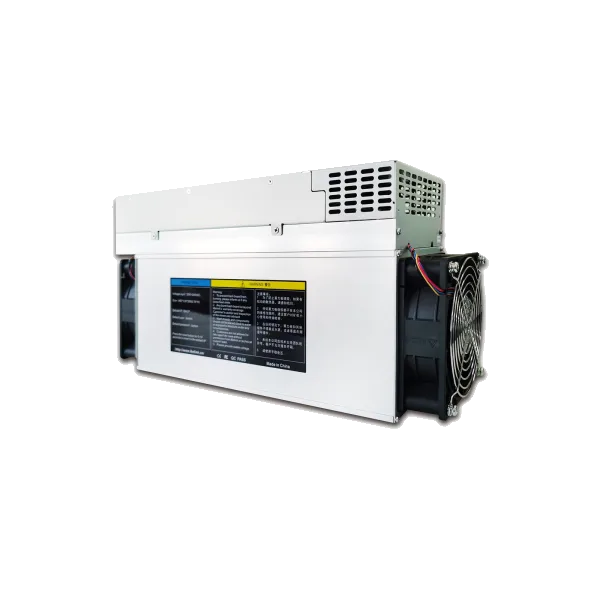
iBeLink BM-K1 Max
Réponse rapide
The iBeLink BM-K1 Max is a Blake2s miner rated about 32 TH/s at roughly 3,200 W. An industrial-class unit — loud and power-hungry, best suited to a dedicated mining space, not living areas.
Professional-Grade Miner
This miner draws 3,200W and produces 75+ dB of noise — it is designed for dedicated mining environments, not living spaces. Professional-grade miners deliver the highest hashrate and revenue per unit but require proper infrastructure: a 240V circuit, adequate ventilation or exhaust ducting, and a space where noise is not a concern (garage, basement, warehouse, or outdoor enclosure).
For home miners looking for a quieter alternative, consider our Bitcoin Space Heater builds or explore open-source miners like the Bitaxe that are purpose-built for residential environments.
Heater-Class Miner
At 3,200W, this miner outputs approximately 10918 BTU/hr of heat — equivalent to a standard electric space heater. Every watt consumed by an ASIC miner is converted to heat with 100% efficiency, making it a space heater that also mines Bitcoin.
During heating season, miner heat can offset part of the heat a room would otherwise need from another electric heater. The economics depend on your electricity rate, room heat demand, BTC price, network difficulty, and noise constraints.
Calculateur de rentabilité
| Period | Revenue | Electricity Cost | Profit |
|---|---|---|---|
| Daily | $0.99 | $5.38 | $-4.39 |
| Weekly | $6.94 | $37.63 | $-30.70 |
| Monthly | $29.73 | $161.28 | $-131.55 |
| Yearly | $361.71 | $1,962.24 | $-1,600.53 |
Heating offset estimates the value of heat replacing an electric space heater during heating season (~6 months/year in Canada). Actual savings depend on your heating setup and climate.
Where to Buy the iBeLink BM-K1 Max
D-Central Technologies is a Bitcoin-only company. For this miner, check out our trusted partner retailers below.
Partner links may earn D-Central a commission at no extra cost to you. Have you considered Bitcoin mining instead? Explore Bitcoin miners →
Full Specifications
| Model | iBeLink BM-K1 Max |
|---|---|
| Model Number | BM-K1 Max |
| Manufacturer | iBeLink |
| Algorithme | Blake2s |
| Coins Mined | Kadena (KDA) |
| Taux de hachage | 32 TH/s |
| Consommation électrique | 3,200 W |
| Efficiency | 100 J/TH |
| Dimensions | 340 x 190 x 293mm |
| Weight | 12.2 |
| BTU Output | 10918 BTU/hr |
| Equivalent Heater | Equal to a 3,200W space heater |
| Daily Power Cost | $5.38/day |
| Monthly Power Cost | $161.28/mo |
| Circuit Requirement | 240V circuit required |
| Release Date | 2022-06-01 |
| MSRP | $1,250.00 |
| État | Active |
Home Mining Assessment
The iBeLink BM-K1 Max is a Kadena (KDA) ASIC miner built for the Blake2S proof-of-work algorithm, not Bitcoin’s SHA-256. It delivers roughly 32 TH/s while drawing about 3,200 W from the wall — close to 100 J/TH on Blake2S — in a self-contained, integrated-PSU box that iBeLink first shipped in mid-2022.
Key specifications at a glance
Every figure below is what we publish on the spec card above, restated here in context so you can see how the numbers relate to real-world operation. The J/TH value is measured against Blake2S terahashes and should never be compared directly to a SHA-256 Bitcoin miner’s efficiency — they are different algorithms and different units of work.
| Specification | BM-K1 Max | What it means in practice |
|---|---|---|
| Algorithm | Blake2S | Mines Kadena (KDA) and other Blake2S coins — not Bitcoin |
| Hashrate | ~32 TH/s | Rated Blake2S throughput; expect minor variance with temperature and tuning |
| Power (nameplate) | ~3,200 W | Plan wall draw a little higher after PSU losses; a 240 V circuit is strongly recommended |
| Efficiency | ~100 J/TH (Blake2S) | Mid-tier for its 2022 generation of Kadena ASICs |
| Heat output | ~10,900 BTU/h | Effectively a 3.2 kW electric heater — plan airflow and exhaust accordingly |
| Dimensions | 340 x 190 x 293 mm | Compact, single-box form factor with the PSU built in |
| Weight | ~12 kg | Light enough for a single person to rack or relocate |
| Cooling | Forced-air, dual axial fans | Loud under load; not a living-room device without sound treatment |
| Release | 2022 | Mature, secondary-market hardware today |
Chip and hashboard architecture
iBeLink, unlike Bitmain or MicroBT, does not publish a chip part number, process node, or per-board chip count for the BM-K1 family. We respect that gap rather than fill it with guesses: the BM-K1 Max runs iBeLink’s own proprietary Blake2S silicon, and the exact die, foundry node, and chain layout are not documented publicly. What we can describe with confidence is the architecture every modern box-style ASIC shares, because the BM-K1 Max is built the same way.
A complete unit is a small Linux control board driving one or more hashboards. Each hashboard carries many identical Blake2S compute dies wired into series strings, and those strings are grouped into voltage domains. Power is regulated per domain, not per individual chip — a point worth understanding because it shapes how the miner fails and how it is repaired. The control board talks to each board over a ribbon/UART chain, distributing work and reading back nonces and temperatures. This daisy-chained, domain-regulated topology is universal across Bitmain, MicroBT, Canaan, and iBeLink alike; only the chip generation and domain counts differ.
The practical takeaway is that the BM-K1 Max behaves like any series-string ASIC: the chips on a board depend on every chip ahead of them in the chain, so a single dead die does not just lose one chip’s worth of hashrate — it can take the rest of that string offline until it is repaired.
Real-world power and efficiency
The 3,200 W nameplate is the figure to design your circuit around, but actual wall draw runs slightly higher once power-supply conversion losses are included, and it drifts with ambient temperature and input voltage. Run the BM-K1 Max on a 200-240 V circuit; like nearly all 3 kW-class ASICs it is far happier on 240 V than on a North American 120 V outlet, where it would be marginal at best.
At roughly 100 J/TH on Blake2S, the BM-K1 Max sat in the middle of the 2022 Kadena-ASIC efficiency band. That number is genuinely useful for comparing Kadena miners to each other, but it is meaningless against a Bitcoin SHA-256 miner — a modern S21-class unit’s « 17.5 J/TH » and this machine’s « 100 J/TH » are measuring completely different proof-of-work, so do not let the larger number read as « worse. » For context on how frequency and voltage tuning trade hashrate against efficiency on ASIC hardware in general, our ASIC power-profile database is the place to start; be honest with your expectations, though — iBeLink’s stock firmware exposes only a limited set of operating modes, so the tuning headroom here is far narrower than on the heavily-modded Bitcoin platforms.
Whatever the economics, the machine turns nearly all 3.2 kW into heat — about 10,900 BTU/h. That waste heat is real and can be ducted into a workshop or garage in winter, but it also means the BM-K1 Max needs the airflow and exhaust planning of a space heater, not a desktop PC.
Firmware compatibility
Out of the box the BM-K1 Max runs iBeLink’s proprietary stock firmware with a simple web dashboard for pool configuration, operating mode, and status/temperature monitoring. That is the firmware you should expect to run for the life of the machine.
Here is the honest third-party reality: the custom-firmware ecosystem that Bitcoin miners know — the projects that unlock autotuning, Stratum V2, and aggressive efficiency curves — was built for SHA-256 Bitmain, MicroBT, and Avalon hardware (and, separately, Scrypt machines). None of it targets iBeLink’s Kadena boards. Of the well-known stacks, only BraiinsOS+ natively speaks Stratum V2, and that is a Bitcoin-only firmware that has no relationship to this miner. D-Central’s own open firmware effort, DCENT_OS, is likewise aimed at Bitcoin SHA-256 ASICs and does not support Blake2S hardware — so it does not apply to the BM-K1 Max, and we would rather tell you that plainly than imply a capability that isn’t there. In practice you run the stock firmware, keep a backup of your configuration, and isolate the miner on a management network segment since these dashboards are not built for internet exposure.
Common faults and troubleshooting
Because the BM-K1 Max uses the same series-string, domain-regulated hashboard design as the rest of the industry, it fails in familiar ways. The most common symptoms and their usual causes:
- A board reports a reduced or zero chip count. A dead or open chip breaks the chain, and every chip downstream of it becomes invisible to the control board. The unit keeps running on the surviving boards but at a fraction of rated hashrate.
- Hashrate sags and hardware-error/reject rates climb. Usually thermal: dried thermal interface material, a clogged heatsink, or weak airflow lets chips overheat and throttle or drop out intermittently.
- The miner won’t power on or trips its breaker. Point first at the PSU and the power stage — an over-current or shorted supply is a frequent end-of-life failure on hard-run units.
- Random reboots or boards dropping in and out. Loose ribbon cables, a marginal connector, or a failing fan triggering a safety shutdown.
First-line checks are low-tech and effective: confirm both fans spin freely and intake/exhaust are unobstructed, verify ambient temperature is reasonable, reseat the signal and power cables, and read the web UI’s logs and per-board temperatures to see which board is misbehaving. For a structured, symptom-by-symptom walkthrough, work through our ASIC fault finder — the diagnostic logic for chain breaks, thermal faults, and PSU failures is the same regardless of which coin the machine mines.
Repair and longevity
D-Central has been repairing ASIC miners in-house since 2016, and a surprising share of « dead » box miners like the BM-K1 Max come back to life with common-part work rather than exotic surgery. Failed fans, a faulty PSU, damaged connectors, a corrupted control board, and dried thermal paste are all routinely serviceable, and addressing them proactively — fresh thermal interface, clean heatsinks, and replacing fans before they seize — is the single best way to extend one of these machines past its warranty.
We will be straight about the harder case: chip-level hashboard repair on a niche Blake2S board is evaluated case by case. Donor chips and documentation for non-Bitmain silicon are scarcer than for mainstream Bitcoin ASICs, so the right move is an honest diagnosis first — we tell you whether a board is economically repairable before any quote, rather than promising a fix on hardware we can’t source parts for. If your BM-K1 Max has stopped earning, start with our ASIC repair service for an evaluation.
Who it’s for and buying advice
The BM-K1 Max is a dedicated Kadena machine, so it suits one audience well: KDA-focused or multi-coin miners with access to cheap power and proper 240 V infrastructure who want a compact, self-contained box. It is emphatically not a Bitcoin miner — if SHA-256 is what you’re after, browse the Bitcoin ASICs in our miner catalog instead.
As 2022 hardware, the BM-K1 Max now trades on the secondary market, which makes condition and remaining hashboard health far more important than the original ~$1,250 sticker. Before buying, model the economics honestly against the current Kadena price, network difficulty, and your real electricity rate; a mid-efficiency altcoin ASIC only makes sense when those three line up. The waste-heat angle — using the unit’s 10,900 BTU/h to offset winter heating in a shop or garage — can tilt a borderline case, but it should be a bonus, not the business plan.
Generational context
The BM-K1 Max arrived during the 2022 wave of purpose-built Kadena ASICs, as iBeLink iterated its BM-K1 line from the original BM-K1 through the K1+ and into this higher-hashrate Max variant before later K3-class hardware. Credit where it’s due: iBeLink was one of the few manufacturers to build dedicated Blake2S machines at a time when Kadena mining was almost entirely GPU-bound, and the BM-K1 Max was a capable, sensibly-packaged unit for its era. Networks and difficulty have moved on since, so treat this page as the durable hardware reference and always re-check live profitability before committing capital — the silicon is mature and well understood, which is exactly what makes it a sound repair-and-run candidate rather than a speculative new purchase.
Broken miner? Get a real quote.
Tell us the symptom and get an instant repair-tier estimate ($95 / $145 / $195 CAD). Mail-in from across Canada, bench in Laval, Quebec.
Send it to D-Central — start a repair →Related Miners
Goldshell KD Lite

Goldshell KD Max
Goldshell KD6-SE
iBeLink BM-K1
Foire aux questions
What are the current mining economics for the iBeLink BM-K1 Max?
At $0.07/kWh, the iBeLink BM-K1 Max currently shows an estimated daily net cost of $4.39 before pool fees and hardware cost. Lower electricity rates, network changes, BTC price changes, or useful heat recovery can change the result.
Can I mine Bitcoin at home with the iBeLink BM-K1 Max?
The iBeLink BM-K1 Max has a home mining score of 8/100. With 0 dB noise and 3,200W power draw, it may require a dedicated space like a garage, basement, or outdoor enclosure. Consider noise insulation and proper ventilation.
Can the iBeLink BM-K1 Max heat my home?
The iBeLink BM-K1 Max outputs approximately 10918 BTU/hr of heat. For reference, a typical space heater produces 5,000-5,500 BTU/hr. All electrical energy consumed by the miner is converted to heat, making it 100% efficient as a heater. D-Central offers Bitcoin Space Heater builds designed specifically for home heating integration.
What power supply does the iBeLink BM-K1 Max need?
The iBeLink BM-K1 Max draws 3,200W of power. You need a power supply rated for at least 3,520W with appropriate voltage (200-240V AC). D-Central stocks compatible power supplies in our shop. Always use a quality PSU from a reputable manufacturer to protect the miner and wiring.