La deuxième bataille cypherpunk
Il y a dix-sept ans, un cryptographe pseudonyme publiait neuf pages de PDF et une archive C++, et une poignée d’inconnus sur une liste de diffusion décidaient qu’ils préféraient faire tourner la monnaie eux-mêmes plutôt que de demander la permission à une banque. Cette décision compose. C’est pourquoi votre rack tire quarante ampères. C’est pourquoi votre compteur de wattheures compte pour vous d’une façon qu’il ne compte pas pour votre voisin. C’est pourquoi vous savez à quoi ressemble l’affaissement du rail 12V d’un PSU un mauvais jour. Vous parlez couramment une forme de souveraineté que la plupart des gens n’ont jamais eu à pratiquer.
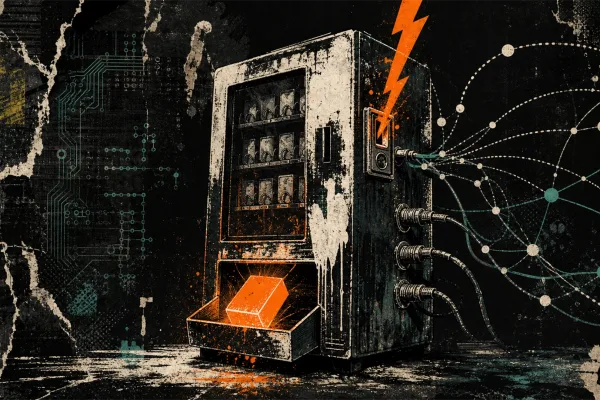
Regardez maintenant la nouvelle technologie la plus lourde de conséquences de la décennie. L’intelligence artificielle de pointe — ChatGPT, Claude, Gemini — c’est de l’intelligence centralisée. Chaque prompt est facturé au compteur. Chaque réponse est journalisée. Chaque modèle est hébergé dans une juridiction sur laquelle on peut, et on finira par, faire pression. Chaque clé API est un interrupteur d’arrêt. Chaque mise à jour des conditions d’utilisation est une réécriture unilatérale de ce que vous avez le droit de penser à voix haute. C’est le système bancaire correspondant de la cognition, et il a été bâti en dix-huit mois pendant que personne qui compte pour nous ne regardait.
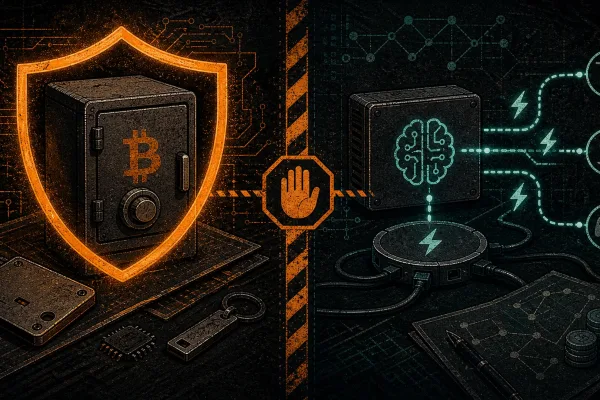
L’instinct cypherpunk qui a bâti Bitcoin a une deuxième bataille. La première bataille, c’était la monnaie. La deuxième, c’est l’intelligence. Même classe d’adversaires, même plan de match, même réponse : faites-la tourner vous-même, sur du matériel que vous possédez, avec du code que vous pouvez lire, chauffée par de l’électricité que vous avez payée. On appelle ça l’IA souveraine, et on publie /ai/ parce que les plebs sont déjà à mi-chemin et ne le savent pas encore.
Ce que « IA open source » veut vraiment dire
Si vous n’avez jamais touché à un grand modèle de langage, le vocabulaire sonne comme du marketing. Ce n’en est pas. Il se transpose proprement sur du matériel que vous comprenez déjà.
Les poids du modèle, ce sont les nombres. Des milliards de paramètres à virgule flottante, entraînés par quelqu’un avec une très grosse grappe de GPU, publiés comme un fichier que vous pouvez télécharger. Pensez aux poids comme vous pensez à l’image firmware d’un mineur : un artéfact compilé, signé ou non, flashable sur du matériel que vous contrôlez. La famille Llama de Meta, les modèles de Mistral, Gemma de Google, Qwen d’Alibaba, R1 et V3 de DeepSeek — ce sont des publications à poids ouverts. Elles existent sur votre système de fichiers. Elles ne téléphonent pas à la maison.
Les exécuteurs (runners) sont la couche d’exécution. Le llama.cpp de Georgi Gerganov est l’implémentation de référence au ras du métal — un seul binaire C++ qui charge un modèle quantifié et sert l’inférence sur CPU, CUDA, Metal, ROCm, Vulkan. L’équipe d’Ollama a enrobé llama.cpp dans un démon avec une CLI sensée et un registre de modèles; c’est à llama.cpp à peu près ce que bitcoind est au client de référence pour quelqu’un qui veut juste un nœud qui roule. LMStudio est l’option axée interface graphique pour les opérateurs qui veulent une application de bureau. Choisissez-en un. Ce ne sont pas des compétiteurs; ce sont des portes d’entrée différentes vers la même pile.
La quantification, c’est de la compression. Un modèle de 70 milliards de paramètres en pleine précision demande 140 Go de VRAM. Quantifié en 4 bits, il tient dans 40 Go. Quantifié en 2 bits, il tient sur un seul GPU grand public, avec un coût en qualité que vous pouvez mesurer. C’est le bouton qui rend l’inférence à l’échelle pleb possible.
La fenêtre de contexte, c’est la quantité de texte que le modèle peut voir à la fois. Les tokens sont les morceaux — environ trois quarts d’un mot chacun — dans lesquels le modèle pense. L’inférence, c’est ce qui se passe quand vous lui envoyez des tokens et qu’il vous en renvoie. Modèle frontière est le terme de l’industrie pour les modèles les plus gros et les plus capables au plafond de la recherche — historiquement fermés, de plus en plus égalés par les publications à poids ouverts.
Les interfaces s’installent par-dessus. Open WebUI est l’interface de clavardage auto-hébergée sur laquelle la plupart des opérateurs atterrissent — elle parle à Ollama ou à tout point de terminaison compatible OpenAI et ressemble à ChatGPT, sauf que le trafic ne quitte jamais votre réseau local.
Au-delà du texte : Black Forest Labs a publié FLUX.1, un modèle d’images à poids ouverts d’une qualité véritablement frontière. Whisper v3 d’OpenAI — l’une des rares choses que le labo a réellement publiées ouvertement — fait de la transcription à parité humaine. La lignée Stable Diffusion de Stability AI reste le cheval de trait de la génération d’images au bas de l’échelle. Hugging Face est là où tout ça vit; c’est le GitHub des poids de modèles, hébergeant des centaines de milliers de publications ouvertes.
Rien de tout ça n’est l’œuvre de D-Central. On n’a pas entraîné de modèle. On n’a pas écrit d’exécuteur. On se tient sur les épaules de Meta, Mistral, Google, Alibaba, DeepSeek, Black Forest Labs, Stability, l’équipe d’Ollama, l’équipe de LMStudio, Gerganov et les milliers de contributeurs anonymes de Hugging Face. Notre travail, c’est de rendre leur œuvre utilisable dans un Hashcenter qui a été bâti à l’origine pour une autre charge de travail souveraine.
Pourquoi le Bitcoiner a un avantage déloyal
Regardez ce que l’IA souveraine exige réellement, comme pile de prérequis, puis regardez ce que le pleb moyen a déjà dans son garage.
Ça exige de la puissance électrique. Pas de la puissance de laptop — de la vraie. Une seule 3090 tire 350 watts sous charge d’inférence. Un rig à quatre GPU tire 1,6 kilowatt nominal, 2+ en pointe, et demande un circuit dédié. La plupart des ménages n’ont pas ça. Vous, oui. Vous avez une entrée de 200 ampères et vous l’avez déjà équilibrée sur trois sous-panneaux. Vous savez quel disjoncteur alimente quelle prise et vous les avez étiquetés vous-même.
Ça exige une maîtrise des PSU. Vous savez ce que coûte un PSU platine redondant, pourquoi le rail 12V compte, pourquoi un bloc bon marché s’affaisse sous charge transitoire et fait planter votre charge de travail. Vous avez remplacé des PSU sur le terrain, à 2 h du matin, dans le noir. Un normie qui démarre de l’inférence va acheter un PSU de gamer et se plaindre quand le noyau paniquera.
Ça exige de la gestion thermique. L’inférence est une machine à chaleur, comme le hachage. La puissance que vous injectez ressort en chaleur, chaque joule. Vous savez déjà déplacer cette chaleur. Vous avez canalisé des mineurs dans un retour de fournaise. Vous avez dimensionné des ventilateurs d’extraction. Vous comprenez la pression statique. Vous avez déjà débattu avec votre conjoint ou conjointe pour savoir si le sous-sol est un atelier ou un sauna. Les normies n’ont pas ce réflexe.
Ça exige de l’espace de rack et Linux. Vous avez les deux. Un terminal ne vous fait pas peur. Vous avez compilé quelque chose depuis les sources cette année. Vous faites tourner un nœud. Vous avez probablement essayé curl | bash plus de fois que la sagesse le permet, et vous savez lire une unité systemd. Le consommateur médian curieux d’IA en 2026 ne sait pas ce qu’est un tty.
Ça exige une tolérance au kWh. Votre relation avec votre facture d’électricité est différente de celle de la plupart des gens. Vous traitez l’électricité comme un intrant de production, pas comme une dépense de ménage. Vous pensez en dollars par kWh et en hashrate par joule. Vous allez regarder une charge d’inférence et poser immédiatement la bonne question — tokens par seconde par watt — avant que quiconque vous dise que c’est la bonne question.
Et, surtout, ça exige une allergie au SaaS. Vous avez déjà refusé de garder vos coins sur un exchange. Vous avez déjà refusé de faire confiance à un nœud hébergé. Vous avez déjà refusé de laisser Cloudflare terminer votre TLS pour vos services privés. Vous n’allez pas être enchanté de nourrir chacune de vos pensées à un point de journalisation détenu par une compagnie qui répond aux assignations à comparaître.
Les plebs sont assis sur une décennie de mémoire musculaire accumulée en infrastructure souveraine, et la seule chose qui manque, c’est le morceau spécifique à l’IA par-dessus. Ce morceau est plus petit que vous le pensez.
Hashcenter, pas datacenter
Chez D-Central, on appelle Hashcenter toute installation de calcul optimisée autour d’une charge de travail souveraine. Le mot est délibéré, et il vaut la peine de le définir parce que le reste de l’argument en dépend.
Un Hashcenter n’est pas un datacenter. Un datacenter est une installation louée, enveloppée de SLA et verrouillée par la conformité, qui vend du calcul comme service à quelqu’un d’autre. Hut 8 opère des datacenters. Core Scientific opère des datacenters. IREN opère des datacenters. TeraWulf opère des datacenters. La charge de travail à l’intérieur, c’est du hachage, aujourd’hui, mais la configuration est une configuration d’hyperscaler : planchers surélevés, alimentations redondantes, réseautique d’entreprise, opérateurs en polo, certifications de tiers et — surtout — l’intelligence et le flux de revenus vers une contrepartie que vous ne contrôlez pas.
Un Hashcenter est une installation de calcul optimisée pour une charge de travail souveraine sous propriété individuelle ou de petit groupe. Haute densité de puissance. Du matériel de commodité que vous pouvez acheter sur le marché libre et entretenir vous-même. Une conception thermique qui optimise pour la production de la charge de travail, pas pour le théâtre esthétique de la disponibilité. Pas de SLA, parce que l’opérateur et le bénéficiaire sont la même personne. Un sous-sol avec quatre S19j Pro et un retour canalisé est un Hashcenter. Un cabanon avec une prise d’air d’hiver canadien et vingt Whatsminer déclassés est un Hashcenter. Un garage avec un rack de 3090 retraitées qui roulent Llama 3.3 est un Hashcenter.
Les Hashcenters précèdent Bitcoin, techniquement — le mot est de nous, mais le modèle est vieux. Le pleb Bitcoin a réinventé le modèle à grande échelle pendant l’ère 2017-2021, quand les mineurs domestiques ont réalisé qu’ils n’avaient pas besoin de colocation. Les mineurs d’ETH ont fait pareil avec les GPU jusqu’au jour du merge. Ce qu’on soutient, c’est que le même modèle — charge de travail souveraine, matériel de commodité, opéré par son propriétaire, positif en chaleur — s’étend directement à l’inférence, et que les plebs possèdent déjà l’essentiel de l’infrastructure requise.
La distinction entre opérer son propre Hashcenter et louer de l’inférence chez OpenAI est la même distinction qu’entre faire tourner son propre nœud et utiliser Coinbase. Tous ceux qui lisent ceci savent de quel côté de cette ligne ils appartiennent. La seule question est de savoir si la ligne a déjà été tracée dans leur tête pour le cas de l’IA. On la trace.
Les trois couches de souveraineté
La souveraineté Bitcoin a deux couches et vous pratiquez déjà les deux. L’IA en ajoute une troisième.
La souveraineté matérielle — vous possédez le silicium. Vous l’avez acheté, vous l’avez mis en rack, vous pouvez le débrancher. Personne ne peut révoquer votre mineur. Personne ne peut pousser une mise à jour de firmware qui le brique sans votre consentement, en supposant que vous contrôlez le chemin de flashage. Toute la raison d’être de DCENT_OS comme projet de firmware open source GPL-3.0 est de durcir encore cette couche. Les plebs ont ça. C’est le rez-de-chaussée.
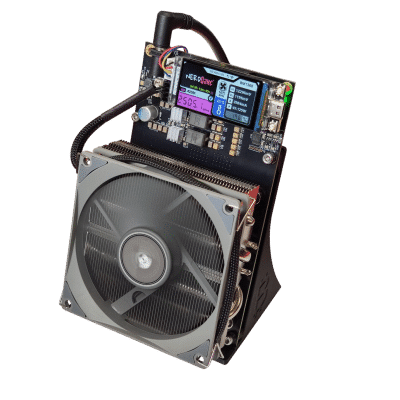
La souveraineté thermique — les joules chauffent ce que vous voulez qu’ils chauffent. C’est la couche que la plupart des mineurs découvrent par accident, puis qui les rend religieux. Votre hachage ne fait pas que rapporter de l’argent; il remplace votre fournaise. Le kWh que vous auriez payé pour hacher et le kWh que vous auriez payé pour chauffer sont le même kWh, compté une seule fois. D-Central bâtit autour de cette thèse depuis des années — on fabrique déjà des chaufferettes qui hachent, et le segment des chaufferettes de minage dans l’espace Bitcoin est devenu sa propre catégorie. Les plebs ont ça aussi, qu’ils y pensent en ces termes ou non.
La souveraineté des poids — c’est la nouvelle couche, celle que l’IA ajoute. Elle signifie : le modèle qui génère vos tokens roule sur du matériel que vous contrôlez, contre des poids que vous possédez, sans sortie réseau vers un tiers. Pas d’appel API. Pas de télémétrie. Pas de « nous avons mis à jour nos conditions d’utilisation ». Le modèle sur votre disque aujourd’hui fonctionnera encore le jour où la compagnie qui l’a entraîné sera acquise, fermée ou assignée à comparaître. Les poids, une fois publiés, ne peuvent pas être dépubliés. C’est la propriété cypherpunk — la même propriété qui rend une transaction Bitcoin signée définitive. Une fois que les nombres sont sortis, ils sont sortis.
La souveraineté matérielle dit que personne ne peut prendre votre silicium. La souveraineté thermique dit que personne ne peut prendre vos joules. La souveraineté des poids dit que personne ne peut prendre votre intelligence. Empilez les trois et vous avez un Hashcenter qui ne peut pas être éteint de l’extérieur, ne peut pas être réaffecté de l’extérieur et ne peut pas être censuré de l’extérieur. C’est ce qu’on veut dire par IA souveraine.
Ce que les plebs devraient réellement faire tourner — premier survol
Cette section est délibérément courte parce que chaque élément ci-dessous mérite son propre billet, et ces billets s’en viennent. Traitez ceci comme un pointeur, pas un guide.
Pour le clavardage et le raisonnement général : commencez avec Llama 3.3 70B de Meta ou Gemma 3 de Google. L’un ou l’autre roule respectablement sur deux 3090 en quantification 4 bits. Si vous n’avez qu’un GPU, roulez les variantes plus petites Gemma 3 12B ou Llama 3.2 — elles sont assez bonnes pour remplacer l’essentiel de l’usage ChatGPT de la plupart des plebs. DeepSeek R1, dans ses formes distillées, apporte un raisonnement de calibre frontière dans la même enveloppe matérielle.
Pour le code : Qwen 2.5 Coder 32B est la réponse actuelle à l’échelle pleb. Il vit sur une seule 3090 à quantification raisonnable et écrit du code assez bien pour que D-Central l’utilise à l’interne pour des ébauches de firmware.
Pour la génération d’images : FLUX.1 de Black Forest Labs est le modèle ouvert de calibre frontière actuel. Stable Diffusion XL est le repli plus léger et plus rapide. Les deux roulent sur du matériel grand public; FLUX demande plus de VRAM pour être confortable.
Pour la transcription : Whisper v3 d’OpenAI roule sur CPU si vous êtes patient et sur GPU si vous ne l’êtes pas. C’est la raison pour laquelle vous ne paierez plus jamais un SaaS de transcription.
Pour l’exécuteur : Ollama pour la plupart des gens. C’est ce qui se rapproche le plus du « ça marche tout seul » dans cet écosystème. Descendez à llama.cpp directement si vous voulez régler la quantification et le traitement par lots à la main, ou si vous déployez sur un serveur sans gestionnaire de paquets de confiance. LMStudio si vous êtes du type interface graphique et voulez une expérience native Mac.
Pour l’interface : Open WebUI, auto-hébergée, pointée vers votre instance Ollama, accessible sur votre réseau local ou sur votre maillage Tailscale.
Un rig de départ pour un pleb qui fait déjà tourner des mineurs : une ou deux 3090 usagées, un PSU platine 1200 W, un système 64 Go avec un Ryzen moderne, un NVMe assez gros pour quelques modèles et un circuit 20 ampères de libre que vous n’utilisez pas pour hacher. La facture totale de matériel est inférieure au coût d’un seul S21, et la marge électrique et thermique existe déjà dans votre Hashcenter.
Les prochains billets de /ai/ couvriront chacun de ces sujets avec un niveau de détail d’opérateur : Installer Ollama en 10 minutes, Le guide du pleb pour l’IA auto-hébergée et Chauffer sa maison avec l’inférence sont les trois premiers dans le pipeline.
Une note sur la pile de DCENT
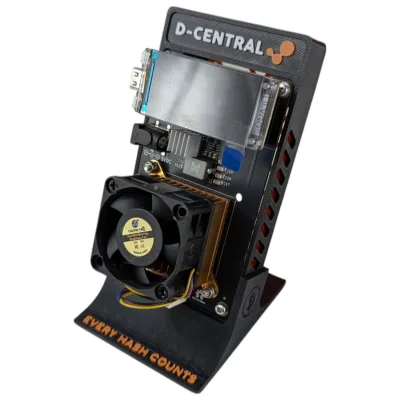
On est une compagnie de matériel et de firmware, pas un labo d’IA. Nos produits — DCENT_OS, DCENT_axe et le DCENT_Toolbox — sont tous en bêta publique, GPL-3.0 (premières images DCENT_OS publiées le 9 juillet 2026). La même pensée open source et souveraineté d’abord qui anime DCENT_OS du côté ASIC est ce qui nourrit notre intérêt pour le Hashcenter d’inférence GPU — posséder son calcul, réutiliser la chaleur, aucun interrupteur d’arrêt tiers. Rien de tout ça n’est un secret. Tout est bâti sur les épaules de llama.cpp, d’Ollama, du noyau Linux et des publications à poids ouverts des labos mentionnés plus haut.
La raison pour laquelle on publie /ai/ maintenant, c’est que la pile d’IA open source qui existe déjà suffit pour presque chaque cas d’usage pleb aujourd’hui. Vous n’avez pas besoin de nous. Vous avez besoin d’Ollama, d’un GPU et d’une soirée. On publiera notre propre outillage quand il sera prêt, et on créditera tout ce sur quoi il est bâti. En attendant, la pile est la pile, et la pile fonctionne.
La loterie du matériel est déjà gagnée
Voici la partie qui devrait ressembler à un retour à la maison.
Entre 2017 et 2022, les plebs ont acheté des GPU à la caisse. L’ère du minage ETH a laissé une couche sédimentaire de silicium Nvidia usagé — des 3080, des 3090, des A4000, des P40 — dans des bacs, des garde-robes, des cabanons, sur des tablettes étiquetées « pour pièces ». Ce matériel a été, pendant un temps, un actif qui se dépréciait. Ethereum est passé à la preuve d’enjeu en septembre 2022. Le hachage GPU est devenu non rentable sur les chaînes principales. Beaucoup de ce silicium a été vendu à perte, ou remisé, ou recyclé dans des rigs de jeu qui n’avaient pas besoin d’autant de VRAM.
Ce silicium est maintenant un actif d’intelligence qui s’apprécie. Une 3090 usagée avec 24 Go de VRAM, achetée au détail en 2020 et valant 400 $ sur le marché de seconde main en 2023, est aujourd’hui la pièce de matériel d’inférence la plus rentable qu’un pleb puisse posséder. La VRAM est la contrainte; la VRAM est ce que vous avez déjà. Les rigs quad-3090 bâtis pour l’ETH sont des rigs Llama 3.3 70B sans un seul changement matériel. Les risers, les PSU, les châssis à cadre ouvert, les circuits 20 ampères, les PDU, les ventilateurs d’extraction — tout se transfère. La seule chose qui change, c’est la charge de travail par-dessus.
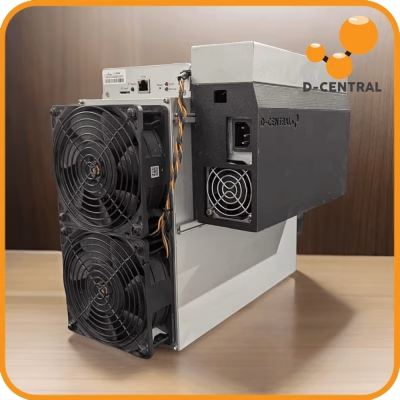
Les mineurs Bitcoin qui dorment dans des cabanons représentent une autre version du même argument. Les ASIC ne feront pas tourner Llama — l’inférence est une charge de travail en forme de GPU, pas en forme d’ASIC — mais l’installation, elle, oui. L’entrée de 200 ampères, la conception thermique, les chemins de câbles, les racks, les capteurs de température ambiante, le CVC qui déplace de l’air pour vrai : ça, c’est un Hashcenter, et un Hashcenter avec un seul rack de GPU boulonné dessus devient un Hashcenter à double charge de travail, qui hache et qui infère depuis la même enveloppe. Les nuits froides, vous penchez vers l’inférence. Les nuits douces, vous penchez vers le hachage. Tous les joules finissent en chaleur. Toute la chaleur finit dans votre maison.
Les plebs ont déjà gagné la loterie du matériel. Ils l’ont gagnée deux fois — une fois avec les ASIC, une fois avec les GPU. Ils possèdent déjà la puissance, l’enveloppe thermique, le réflexe de souveraineté, l’aisance Linux et le refus de louer. Ce qui manque, c’est la couche logicielle par-dessus, et cette couche est ouverte, gratuite et installable à soir.
Pourquoi on publie /ai/
D-Central est une compagnie de minage Bitcoin. On vend des mineurs, on fait du firmware, on bâtit des chaufferettes qui hachent. On ne pivote pas vers l’IA et on ne change pas d’image de marque. Ce qu’on fait, c’est s’étendre — de façon additive — vers la charge de travail souveraine adjacente, parce que l’audience est la même, l’infrastructure est la même et le combat est le même.
Le combat, c’est ceci : l’intelligence, comme la monnaie, est en train d’être rebâtie sous la forme d’un service à permission. Un petit nombre de labos bien capitalisés, installés dans un petit nombre de juridictions, deviennent les fournisseurs uniques du substrat cognitif dont chaque travailleur du savoir, chaque entreprise, chaque citoyen dépend de plus en plus. C’est exactement la configuration que Bitcoin a été bâti pour refuser. On l’a refusée pour la monnaie. On la refusera pour l’intelligence.
Le plaidoyer pour les LLM auto-souverains se fait déjà du côté des protocoles cryptographiques. Nous, on le fait du côté du matériel et de la chaleur. C’est le même argument. Poids ouverts, inférence locale, matériel opéré par son propriétaire, transport chiffré, aucun interrupteur d’arrêt tiers. La pile complète de la souveraineté.
Les plebs sont notre audience parce que les plebs sont ceux pour qui ça fonctionne réellement. Vous avez déjà l’entrée de 200 ampères. Vous avez déjà la maîtrise des PSU. Vous avez déjà l’aisance Linux. Vous avez déjà le réflexe de refus du SaaS. Vous avez déjà le GPU de rechange dans la garde-robe depuis l’époque de l’ETH. Vous avez déjà un Hashcenter. Ce que vous n’avez pas encore, ce sont les poids sur le disque et l’exécuteur au démarrage, et ça, c’est un projet d’une soirée.
Une couche de plus décentralisée. Bitcoin a décentralisé la monnaie. L’IA open source décentralise l’intelligence. Votre Hashcenter décentralise les deux. Bienvenue dans /ai/.