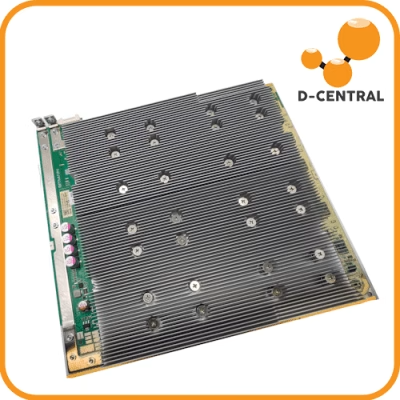
Every dead hashboard tells a story, and after thousands of repairs at our bench in Montreal, Quebec, we can usually read it before the multimeter comes out. Discoloured thermal interface material. Oxidized heatsink fins. A fan bearing with more play than a screen door. BGA solder balls cracked in the corner pattern that repeated expansion and contraction leaves behind. Different machines, different owners, same story: the miner spent its life breathing air it should never have been breathing, cycling through temperature swings it should never have seen.
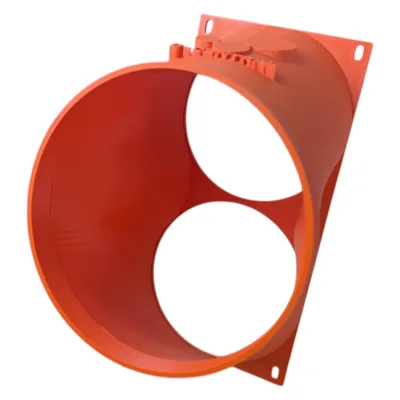
The fix for most of that story costs less than a single hashboard repair. A shroud — the duct adapter that seals your miner’s exhaust into real ducting — is not a performance accessory. It is reliability equipment. This article makes the engineering case: how uncontrolled exhaust actually kills hardware, mechanism by mechanism, and how a controlled airflow path interrupts each one. If you want fitment by model, that is the complete shroud guide and our model-by-model fitment guide; this is the why-your-miner-dies article.
How ASIC Miners Actually Fail
An ASIC miner almost never dies in one catastrophic event. It dies in a chain, and the chain is thermal from end to end:
| Stage | What happens | What it does to the hardware |
|---|---|---|
| 1. Recirculation | Hot exhaust mixes back into the intake air | Intake temperature climbs well above room ambient |
| 2. Throttling and fan strain | Firmware cuts frequency and drives fans harder | Lost hashrate; fan bearings accumulate wear-hours faster |
| 3. Thermal cycling | Temperature swings repeat with every load change, season, and restart | Expansion mismatch fatigues BGA solder joints |
| 4. Chip degradation | Sustained high temperature accelerates electromigration and aging | Rising error rates, sagging efficiency |
| 5. Hashboard failure | A chip or joint lets go and the chain halts | Board offline; the repair bill arrives |
A shroud attacks that chain at stage one, which is why it punches so far above its price. Break recirculation and every downstream stage slows down. Let us walk the mechanisms one at a time.
Recirculation: The Miner Breathing Its Own Exhaust
Set a miner loose in a closed room and it becomes its own worst enemy. The exhaust fans throw hot air into the room; the intake fans, mounted a few hundred millimetres away on the same box, pull room air back in. Within an hour the machine is inhaling a blend of fresh air and its own exhaust, and the intake temperature ratchets upward until the room finds a new, much hotter equilibrium.
The firmware sees the chip temperatures climb and does what it must: spins the fans harder, and if that is not enough, pulls frequency. The arithmetic is not subtle: a miner breathing 35 °C recycled air runs hotter at every point in the thermal stack than one breathing 20 °C fresh air, all day, every day.
A shroud connected to a duct breaks the loop mechanically. The hot air physically leaves — through a wall, into a plenum, or out a window port (the full window install is its own guide: venting a miner through a window). The intake now draws air at true ambient, and the entire failure chain starts from a lower baseline. Of everything on this page, this is the single largest reliability win.
Thermal Cycling: The Slow Fatigue Failure
Steady heat is hard on electronics; changing heat is worse. Every ASIC chip sits on a grid of solder balls between silicon and PCB, and those three materials expand at different rates. Each warm-up and cool-down flexes the joints by a hair. Repeat it thousands of times — restarts, pool outages, curtailment, a garage that swings 25 °C between a January night and a woodworking afternoon — and the flexing becomes fatigue, then micro-cracks, then the intermittent “board disappears when warm” faults that are among the most tedious diagnoses on any repair bench. This is textbook solder-joint fatigue, and we see its signature constantly on boards that lived in uncontrolled spaces.
A ducted machine cannot dodge restarts, but it can stop amplifying them. With exhaust leaving the space and intake drawn from a consistent source, the machine’s thermal environment stops tracking every swing of the room around it. Narrower swings, gentler cycles, slower fatigue. Not immortality — physics does not hand that out — but a measurably calmer life for the solder that holds your hashrate together.
Dust: The Insulating Blanket That Doubles as Sandpaper
Home environments carry orders of magnitude more airborne junk than any filtered hashcenter: pet hair, drywall dust, sawdust, dryer lint, cooking aerosols. An unmanaged miner is an industrial-strength vacuum cleaner with no bag, and everything it inhales lands on heatsink fins and fan hubs. Dust on a heatsink is an insulating blanket; dust in a fan bearing is an abrasive. Both push the machine hotter and the fans harder, feeding straight back into the chain above.
Sealed intake ducting from a clean source is the first defence. The second is filtering at the intake face — our 120 mm intake filter ring holds a foam pre-filter over a single-fan intake so the junk stops at the door instead of settling on the boards. It is the cheapest maintenance-interval extension we sell. The full intake-side story, including what filter media to use and when to clean it, lives in the dust filter guide — the one rule worth repeating here is that a clogged filter is worse than no filter, so check it monthly.
Fan Wear: The Consumable You Can Slow Down
Fans are the only moving parts in an ASIC miner, which makes them both the most likely first failure and the most underrated reliability lever. A fan’s life is finite bearing-hours, and it spends them faster when it runs hot, runs at maximum RPM, and ingests grit. An unducted miner in a warm room does all three at once: the firmware pins the fans high to fight recirculated heat, the bearings soak in that same heat, and the dust does the rest.
Cooler intake air lets the firmware satisfy its temperature targets at lower fan effort. Lower duty means fewer bearing-hours burned per day and less grit swallowed per hour. When a fan does die, it rarely dies alone: a failed exhaust fan on a running board means an immediate thermal excursion, exactly the kind of event stage-three cycling feeds on. Slowing fan wear is cheap insurance against a much more expensive cascade.
Humidity and Condensation: The Garage Problem
Basements and garages cycle through humidity ranges no purpose-built hashcenter tolerates. The dangerous moment is condensation: cold hardware, a warm humid air mass, and moisture films forming on live boards — spring thaw in Quebec is a reliable supplier of exactly those conditions. Controlled ducting helps in both directions: a defined intake source lets you choose drier air rather than whatever the room offers, and a machine that holds a steadier temperature spends less time below the dew point of the air around it. If your miner lives somewhere with a floor drain, this section is for you.
The Controlled-Exhaust System, 2026 Edition
When these articles first ran in 2023, “get a shroud” meant one adapter and a prayer of aluminum tape. The D-Central Shroud System is now a complete airflow stack, designed in-house and printed to order:
- At the machine: the dual-120 shroud for S19/S21-class exhaust faces, or the full housing wrap when you would rather seal the whole panel end than bolt to fan screws.
- Along the run: rigid fittings like the 45-degree elbow — two gentle 45s make a kinder corner than one hard 90, and our duct sizing guide covers when to step up to 8-inch instead.
- At the exit: the window vent port, a rigid plate with a gasket groove and insect-screen rebate for a clean wall or window termination.
- For the ears: the tuned-notch silencer mounts on the same dual-120 interface. An expansion chamber with a quarter-wave side branch does the work, with no lining to shed fibres into the airstream, and the design reasoning is laid out in the silencer guide.
- Other makes: Whatsminer and Avalon have their own geometries and their own guides — Whatsminer ducting and Avalon cooling.
One thing applies to every part above: the designs are free. The STLs live in our 3D models library under CC BY-SA 4.0, free to modify, print and sell. Buying the finished part gets you a made-to-order PETG print from Montreal, Quebec, and funds the next design in the line.
The Heat Is a Feature
Reliability and heat reuse are the same project. A miner pulling 3,250 W emits roughly 11,000 BTU/hr — that is arithmetic, not a product claim — and a ducted machine lets you put that heat where it is useful instead of where it does damage. In a Canadian winter, exhaust ducted into living space is supplemental heating you are paid to run; in summer, the same duct sends it outdoors. Either way the machine itself stays out of the recirculation loop, which is the reliability point. Our Bitcoin space heater builds are this idea taken to its finished form.
What a Shroud Will Not Fix
A shroud will not resurrect a board that is already failing, un-crack fatigued solder, or compensate for a duct run so long and kinked that the fans cannot push through it — a crushed flex duct is a failure mode of its own. It will not silence a miner either; it relocates and manages noise, and the silencer guide covers what a printed chamber does in a duct run. And if your machine is already showing the symptoms this article describes — boards dropping when warm, error rates climbing, a fan screaming at full tilt in a cool room — ducting will slow the damage but not undo it. That is what our repair bench is for, and thousands of repairs into this trade, thermal damage from unmanaged airflow remains one of the most common and most preventable things we see on it.
The Bottom Line
Hashboards are the expensive part of your miner, and heat management is the cheap part of protecting them. Uncontrolled exhaust attacks your hardware through five compounding mechanisms — recirculation, throttling and fan strain, thermal cycling, dust, and humidity — and a sealed shroud with a real duct path interrupts every one of them at the source. That is the whole case. It is not exotic engineering; it is the same discipline every serious hashcenter applies at building scale, shrunk to fit a garage. Start at the shroud system hub, pick the part that matches your exhaust face, and give your boards the airflow path they were designed to have.
Frequently Asked Questions
Do shrouds really extend an ASIC miner’s lifespan?
The mechanisms they interrupt are exactly the ones that kill miners. Sealed, ducted exhaust breaks the recirculation loop, which lowers the machine’s whole thermal baseline; a steadier environment means gentler thermal cycling and slower solder-joint fatigue; cooler intake lets fans satisfy their targets with less effort, stretching bearing life; and controlled intake enables filtering. On the repair bench, thermal damage from unmanaged airflow is among the most common preventable failures we see.
What actually fails first on an overheated miner?
Usually a fan, then a hashboard. Fans are the only moving parts and spend bearing-hours fastest when hot, maxed out, and eating dust. When an exhaust fan dies on a running board, the resulting thermal excursion accelerates the deeper failure mode: fatigue cracking in the BGA solder joints under the ASIC chips, which shows up as boards that vanish when warm and, eventually, chains that will not start at all.
Is recirculation really that serious in a big room?
Room size buys time, not immunity. A miner rejects kilowatts of heat continuously; unless that heat leaves the space, the room temperature ratchets upward until it finds a hotter equilibrium, and the intake follows it. Bigger rooms just reach the bad steady state more slowly. The fix is the same at every room size: duct the exhaust out of the space entirely.
Should I filter the intake side too?
If your miner shares air with a garage, workshop, basement, or pets — yes. Dust on heatsinks insulates, and dust in bearings abrades. A foam pre-filter at the intake face, like our 120 mm filter ring, stops the junk at the door. The one hard rule: check it monthly, because a clogged filter restricts airflow worse than having none at all.
Does ducting help with thermal cycling even though my miner runs 24/7?
Yes, because “24/7” machines still cycle: restarts, pool outages, curtailment, firmware updates, and the daily and seasonal swings of the room itself. A ducted machine drawing intake from a consistent source stops tracking every swing of its environment, so each unavoidable cycle starts from a steadier baseline and flexes the solder joints less. Fewer, gentler cycles is the entire game in fatigue management.
Will a shroud fix a miner that is already throwing errors when warm?
No. Rising error rates and boards that drop out when warm usually mean the thermal damage — typically solder fatigue or degraded chips — has already happened. Ducting will slow further damage but cannot undo it. That is a diagnosis-and-repair situation; our bench in Montreal, Quebec handles exactly this failure pattern constantly.