The Bitcoin network runs on proof of work. Every block, every confirmation, every transaction — secured by computational power distributed across the planet. For most of Bitcoin’s history, the hardware performing this work has been locked behind proprietary designs, closed-source firmware, and corporate gatekeeping. A handful of manufacturers dictated the terms. You bought their box, ran their code, and trusted their silicon blindly.
Open Source Miners United (OSMU) exists to obliterate that paradigm.
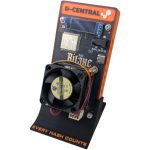
This grassroots collective of engineers, builders, and Bitcoin maximalists is designing and shipping fully open-source mining hardware — schematics you can audit, firmware you can fork, and boards you can manufacture yourself. At the center of it all sits Bitaxe, the project that proved open-source ASIC mining hardware is not only possible but inevitable. D-Central Technologies has been a pioneer in the Bitaxe ecosystem since the beginning, manufacturing the original Bitaxe Mesh Stand and developing leading accessories and solutions for every variant.
This is not hobbyist tinkering. This is infrastructure-level rebellion — and it matters more now than ever.
Why Open-Source Mining Hardware Matters for Bitcoin
Bitcoin’s security model depends on decentralization. The more independent miners there are, the harder it becomes for any single entity to censor transactions or compromise the network. But decentralization of mining is meaningless if every miner on Earth is running the same proprietary firmware from the same manufacturer. That is a single point of failure wearing a decentralization costume.
Open-source mining hardware fixes this at the root. When designs are public:
- Supply chain risk drops. Multiple manufacturers can produce compatible hardware. No single company can choke the pipeline.
- Firmware trust is verifiable. You can audit every line of code running on your miner. No hidden telemetry, no kill switches, no phone-home behavior.
- Innovation accelerates. Anyone can improve the design — better cooling, more efficient voltage regulation, alternative form factors — without waiting for a corporate product cycle.
- Barriers to entry collapse. Home miners and small operations gain access to hardware that was previously gatekept by volume minimums and distributor relationships.
This is why OSMU matters. Not because open-source hardware is a cute project — because it is essential infrastructure for Bitcoin’s long-term survival as a censorship-resistant monetary network.
The Bitaxe Revolution: From BM1397 to BM1370
Bitaxe started as something that was not supposed to work. Take a Bitmain BM1397 ASIC chip — the same silicon that powered the Antminer S17 series — wire it onto a custom PCB with open-source firmware, connect it to WiFi, and point it at a solo mining pool. One chip. One board. One shot at a full 3.125 BTC block reward.
The community called it a lottery miner. The establishment called it a toy. Then a solo Bitaxe miner found a block in July 2024, and the narrative shifted permanently.
Since that original BM1397-based design, the Bitaxe family has expanded aggressively across multiple ASIC generations:
| Bitaxe Variant | ASIC Chip | Hashrate | Power Input |
|---|---|---|---|
| Bitaxe Ultra | BM1366 | ~500 GH/s | 5V barrel jack (5.5×2.1mm DC) |
| Bitaxe Supra | BM1368 | ~600 GH/s | 5V barrel jack (5.5×2.1mm DC) |
| Bitaxe Gamma | BM1370 | ~1.2 TH/s | 5V barrel jack (5.5×2.1mm DC) |
| Bitaxe GT | BM1370 | ~2 TH/s | 12V DC XT30 connector |
| Bitaxe Hex | 6x BM1366 | ~3 TH/s | 12V DC XT30 connector |
Critical hardware note: The Bitaxe Supra, Ultra, and Gamma all use a 5V barrel jack (5.5×2.1mm DC) with a 5V/6A power supply — not USB-C. The USB-C port on these devices is strictly for firmware flashing and serial communication. The GT and Hex models step up to a 12V DC XT30 connector. Getting this wrong can damage your hardware.
Each generation represents a leap in efficiency. The BM1370 chip in the Gamma delivers roughly double the hashrate of the BM1366-based Ultra while maintaining a similar power envelope. This is the trajectory of open-source hardware — rapid iteration driven by community engineering, not corporate product cycles.
Beyond Bitaxe: The Full OSMU Ecosystem
Bitaxe is the flagship, but the OSMU community has spawned an entire ecosystem of open-source mining devices. Each project tackles a different use case, a different scale, a different entry point for home miners:
| Device | Description | Target User |
|---|---|---|
| Nerdminer | ESP32-based solo miner, educational entry point | Absolute beginners, desk display |
| NerdAxe | ASIC-based open-source miner (5V barrel jack, 5V/6A PSU) | Solo miners wanting more hashpower |
| NerdQAxe | Quad-chip open-source miner | Serious home miners, small-scale operations |
| NerdNOS | Mining firmware for open-source hardware | Developers, advanced users |
| NerdOctaxe | 8-chip miner (12V DC XT60, 18-20A PSU) | Power users, max hashrate per device |
| PiAxe | Raspberry Pi-based mining interface | Makers, educators, tinkerers |
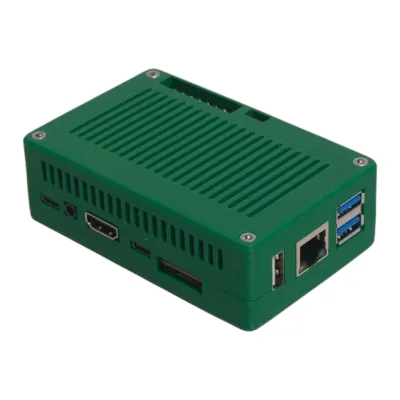
D-Central stocks the full lineup — every Bitaxe variant, every Nerd-series device, plus a complete accessories ecosystem including heatsinks, cases, PSUs, and the original D-Central Bitaxe Mesh Stand. Browse the full collection in our shop.
Solo Mining: Why Every Hash Counts
At ~800+ EH/s network hashrate, a single Bitaxe running at 500 GH/s has astronomically low odds of finding a block on its own. The math is blunt and honest. But this misses the point entirely.
Solo mining with open-source hardware is not a business plan. It is a statement of sovereignty. Every hash your Bitaxe submits to the network is a hash that no mining pool controls, no corporation directs, no government can censor. It is pure, permissionless participation in the most important monetary network ever built.
And sometimes the lottery pays out. Multiple solo Bitaxe miners have found full blocks — each one earning the miner the entire 3.125 BTC block reward. The probability is tiny. The possibility is real. That is the magic of proof of work: it does not care who you are, how big your operation is, or what country you mine from. Every hash counts.
Curious about your odds? Use our Solo Mining Probability Calculator to run the numbers for your specific hardware setup.
Open-Source vs. Closed-Source: The Trust Architecture
Let us be direct about what you are trusting when you run a closed-source miner:
| Concern | Closed-Source | Open-Source (OSMU) |
|---|---|---|
| Firmware transparency | Binary blobs — cannot verify | Full source code on GitHub |
| Hidden dev fees | Documented cases of undisclosed hashrate skimming | Zero — audit the code yourself |
| Remote kill switches | Possible and unverifiable | Impossible — you control the firmware |
| Supply chain dependency | Single manufacturer bottleneck | Multiple builders, anyone can manufacture |
| Repairability | Manufacturer-dependent, often voided by self-repair | Full schematics available, community support |
| Customization | Factory settings only | Overclock, underclock, custom firmware, hardware mods |
The Bitcoin ethos is “don’t trust, verify.” Open-source mining hardware is the only path that makes verification possible at the hardware layer. Everything else requires faith in a corporation — and faith is the antithesis of Bitcoin.
D-Central’s Role: Pioneer Manufacturer and Ecosystem Builder
D-Central Technologies has been embedded in the open-source mining movement since its earliest days. As a Canadian Bitcoin mining company operating since 2016, we were among the first to recognize the significance of the Bitaxe project and commit manufacturing resources to the ecosystem.
Key contributions:
- Original Bitaxe Mesh Stand — D-Central designed and manufactured the first Bitaxe Mesh Stand, now a standard accessory in the ecosystem
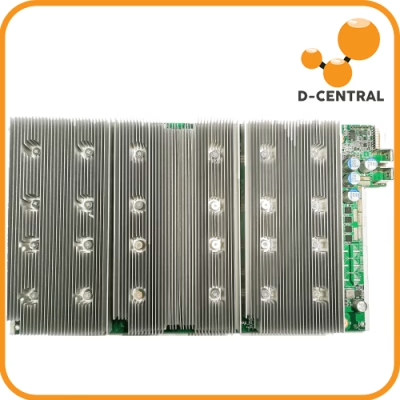
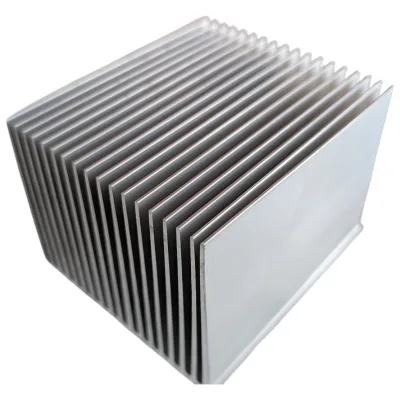
- Custom heatsink solutions — Engineered heatsinks for both single-chip Bitaxe units and the multi-chip Bitaxe Hex
- Complete ecosystem stocking — Every Bitaxe variant (Supra, Ultra, Hex, Gamma, GT), every Nerd-series device, all accessories, PSUs, and cases
- Expert support — Setup assistance, ASIC repair services for open-source and commercial miners alike, and a technical knowledge base built from years of hands-on experience
We are not just a retailer stocking open-source hardware. We are builders, manufacturers, and contributors to the ecosystem. When you buy a Bitaxe from D-Central, you are buying from a team that understands the hardware at the component level — because we build the accessories, test the configurations, and write the setup guides.
The Dual-Purpose Advantage: Mining Meets Heating
One of the most practical applications of home mining in Canada is heat recovery. Every watt your miner consumes becomes heat. In a country where heating season runs six to eight months of the year, that “waste heat” is not waste at all — it is your heating system earning Bitcoin.
D-Central has built an entire product line around this concept. Our Bitcoin Space Heaters take commercial ASIC miners and repackage them into home-friendly enclosures that serve double duty: mining Bitcoin while heating your space. The math works out remarkably well in Canadian climates where electricity costs are reasonable and heating demand is high.
Open-source miners like the Bitaxe fit perfectly into this paradigm at a smaller scale. A Bitaxe running on your desk is generating heat and hashing — contributing to network security while keeping your workspace warm. Scale up to a Hex or a NerdQAxe and you start producing meaningful BTUs alongside meaningful hashrate.
Getting Started with Open-Source Mining
The barrier to entry has never been lower. Here is the practical path from zero to hashing:
- Choose your hardware. For most beginners, a Bitaxe Gamma or Supra is the ideal starting point. Visit the Bitaxe Hub for a complete comparison of every variant.
- Get the right power supply. For Supra/Ultra/Gamma: a 5V/6A barrel jack PSU. For GT/Hex: a 12V XT30 PSU. Do NOT try to power from USB-C — that port is for firmware flashing only.
- Connect to WiFi and configure. The Bitaxe runs its own web interface. Connect to its access point, enter your WiFi credentials, point it at your preferred mining pool (or a solo pool like solo.ckpool.org), and enter your Bitcoin address.
- Monitor and optimize. AxeOS provides real-time monitoring of hashrate, temperature, and power consumption. Adjust clock speeds and voltage to find your optimal efficiency point.
- Stack sats. Whether pooled or solo, your miner is now contributing to the security of the Bitcoin network while earning you satoshis.
Need help? D-Central offers mining consulting services and a detailed Bitaxe Setup Guide covering every model.
The Road Ahead: What OSMU Is Building
The open-source mining movement is not slowing down. Active development across the OSMU community includes:
- Next-generation ASIC integration — As newer, more efficient chips become available, the community reverse-engineers and integrates them into open-source designs at remarkable speed
- Higher chip-count boards — From single-chip Bitaxe to 6-chip Hex to 8-chip NerdOctaxe, the trend is toward more hashpower per open-source device
- Stratum V2 adoption — Open-source miners are leading the adoption of Stratum V2, the next-generation mining protocol that gives individual miners more control over block template construction
- Custom firmware ecosystems — NerdNOS and AxeOS continue to evolve, with community contributors adding features, optimizing performance, and improving usability
- Hardware standardization — Efforts to standardize connectors, form factors, and cooling solutions across the ecosystem, making accessories interchangeable
The trajectory is clear: open-source mining hardware is getting more powerful, more efficient, and more accessible with every iteration. What started as a single chip on a PCB is becoming a parallel hardware ecosystem that exists entirely outside the control of any single manufacturer.
This Is the Future We Mine For
Open Source Miners United is not just building mining hardware. They are building the physical infrastructure layer of a more decentralized Bitcoin network. Every Bitaxe humming on a desk, every NerdAxe running in a garage, every NerdQAxe heating a workshop — these are nodes of resistance against the centralization of hashpower.
D-Central Technologies stands with this movement. We have been Bitcoin Mining Hackers since 2016 — taking institutional-grade technology and hacking it into solutions that work for the individual. The OSMU ecosystem is the purest expression of that mission: open hardware, transparent code, sovereignty at the silicon level.
The revolution is not coming. It is here. It is running on your desk. It is hashing right now.
Browse D-Central’s complete collection of open-source miners, Bitaxe variants, and accessories — and start hashing on your own terms.
Frequently Asked Questions
What is Open Source Miners United (OSMU)?
Open Source Miners United is a community-driven collective of engineers, developers, and Bitcoin enthusiasts who design and build fully open-source Bitcoin mining hardware. All schematics, firmware, and design files are publicly available, allowing anyone to manufacture, modify, or improve the hardware. The community collaborates primarily through Discord and GitHub.
What is the Bitaxe and how does it work?
The Bitaxe is the first fully open-source hardware Bitcoin ASIC miner. It uses commercial ASIC chips (BM1366, BM1368, or BM1370 depending on the variant) on a custom open-source PCB. The device connects to WiFi, runs the AxeOS firmware with a built-in web interface, and can mine Bitcoin either solo or through a mining pool. It is powered via a 5V barrel jack (Supra/Ultra/Gamma) or 12V XT30 connector (GT/Hex) — the USB-C port is strictly for firmware flashing.
Can a Bitaxe actually find a Bitcoin block?
Yes. Multiple solo Bitaxe miners have found full Bitcoin blocks, earning the entire 3.125 BTC block reward. The odds are extremely low given the ~800+ EH/s network hashrate, but proof of work is probabilistic — any valid hash has a chance, regardless of the miner’s size. Use our Solo Mining Probability Calculator to estimate your odds.
What power supply does the Bitaxe need?
The Bitaxe Supra, Ultra, and Gamma require a 5V/6A power supply with a 5.5×2.1mm DC barrel jack — NOT USB-C. The Bitaxe GT and Hex use a 12V DC XT30 connector. Using the wrong power supply or attempting to power via USB-C can damage the device. The USB-C port is for firmware flashing and serial communication only.
Why does D-Central sell open-source hardware if anyone can manufacture it?
Open-source means the designs are free — but quality manufacturing, testing, support, and ecosystem knowledge are not. D-Central has been a pioneer in the Bitaxe ecosystem since its earliest days. We designed the original Bitaxe Mesh Stand, engineered custom heatsinks, and maintain the technical expertise to support every variant. When you buy from D-Central, you get tested hardware backed by a team that builds, repairs, and supports mining equipment full-time from Canada.
Is solo mining with a Bitaxe profitable?
Solo mining with a Bitaxe should not be evaluated as an investment. The electricity cost typically exceeds the expected Bitcoin earnings when averaged over time. However, profitability is the wrong lens. Solo mining with a Bitaxe is about sovereignty, education, contributing to network decentralization, and the non-zero chance of mining a full block. Many miners also use the heat output to offset home heating costs, especially in colder climates like Canada.
What is the difference between Bitaxe, NerdAxe, and NerdQAxe?
All are open-source Bitcoin mining devices from the OSMU ecosystem, but they differ in design and capability. The Bitaxe is the flagship single-chip (or multi-chip in Hex) miner running AxeOS firmware. The NerdAxe is an alternative ASIC-based miner using a 5V barrel jack PSU. The NerdQAxe is a quad-chip design offering significantly more hashpower. D-Central stocks all variants — visit the Bitaxe Hub for detailed comparisons.