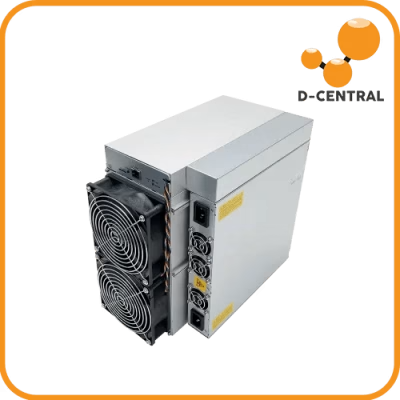
The Antminer is not just a product line. It is the machine that industrialized Bitcoin mining, dragged it out of garages and dorm rooms, and turned proof-of-work into a global infrastructure arms race. Love Bitmain or distrust them, the Antminer brand has shaped more of Bitcoin’s hashrate history than any other single piece of hardware on the planet. If you mine Bitcoin — or if you have ever considered it — you need to understand this lineage.
At D-Central Technologies, we have been repairing, modifying, and deploying Antminers since 2016. We have seen every generation ship, break, get patched, and eventually get replaced by something faster. We have torn down thousands of hashboards, reflowed tens of thousands of ASIC chips, and watched the efficiency curve bend relentlessly downward from 100 J/TH to under 15 J/TH. This is the story of that evolution — told from the workbench, not the press release.
The ASIC Revolution: Why Antminer Exists
Before Bitmain, Bitcoin mining progressed through three distinct hardware eras: CPUs (2009–2010), GPUs (2010–2013), and FPGAs (2011–2013). Each leap delivered roughly a 10x improvement in hash-per-watt. But none of them were purpose-built for SHA-256. They were general-purpose silicon repurposed for a very specific mathematical operation.
Application-Specific Integrated Circuits — ASICs — changed the equation permanently. An ASIC chip does exactly one thing: compute SHA-256 double-hashes as fast as physically possible while burning as few joules as possible. Nothing else. No video rendering, no floating-point math, no operating system overhead. Just raw, relentless hashing.
Bitmain was not the first company to ship a Bitcoin ASIC. Avalon (Canaan) beat them to market in early 2013. But Bitmain, founded by Jihan Wu and Micree Zhan in Beijing that same year, rapidly iterated on chip design, manufacturing partnerships, and supply chain logistics in ways that outpaced every competitor. The Antminer S1, shipping in late 2013, was not the first ASIC miner — but it was the beginning of the brand that would dominate the next decade.
The Early Models: S1 Through S7 (2013–2015)
The Antminer S1 delivered roughly 180 GH/s at about 360W — a spec that looks comically small against modern machines pushing 200+ TH/s. But in 2013, 180 GH/s from a single box was transformative. It meant individual miners could still participate meaningfully in Bitcoin’s security model without renting warehouse space.
Bitmain iterated fast. The S2, S3, S4, and S5 each squeezed more hashes out of fewer watts, driven by die shrinks in the underlying ASIC chip fabrication process. The S5, released in late 2014, hit roughly 1.15 TH/s at ~590W — crossing the terahash barrier for a consumer-grade device. It was efficient enough that miners in regions with cheap electricity could run it profitably for years.
The S7, arriving in mid-2015, pushed to ~4.73 TH/s at about 1,293W using Bitmain’s BM1385 chip on a 28nm process. This was the machine that proved Bitmain’s manufacturing flywheel: design chip, tape out, fab, ship in volume, capture market share, fund next chip design. Rinse, repeat, faster than anyone else.
The Legendary S9: The Machine That Refused to Die (2016)
No discussion of Antminer history is complete without dedicating serious attention to the S9. Released in mid-2016, the Antminer S9 was built on Bitmain’s BM1387 chip — a 16nm FinFET design that delivered a then-staggering 14 TH/s at roughly 1,375W. That is about 98 J/TH, a massive leap from the S7’s ~270 J/TH.
The S9 did not just win its generation. It defined an era. Miners deployed it by the hundreds of thousands worldwide. It became the backbone of Bitcoin’s hashrate through the 2017 bull run, the 2018 bear market, and well beyond. Its reliability was legendary — with proper maintenance, S9 units ran continuously for 5+ years. Some are still hashing today, a full decade after release.
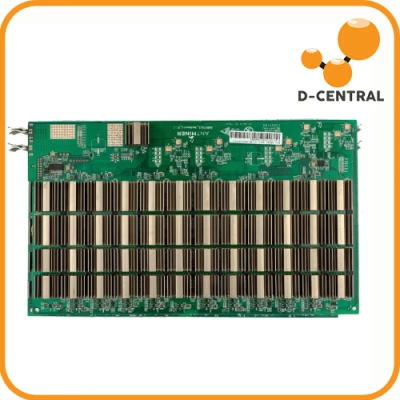
At D-Central, the S9 holds a special place. It is the foundation of our Bitcoin Space Heater line — we take S9 hashboards and integrate them into enclosures that convert 100% of their electrical draw into heat for your home while simultaneously mining Bitcoin. A machine designed in 2016 is still useful in 2026 because its thermal output is a feature, not a bug. That is the definition of sustainable hardware.
The S9 also proved that older-generation ASICs do not simply become “obsolete.” They find new roles in the ecosystem: home heating, hosted mining at ultra-low electricity rates, educational tools for learning mining operations, and solo mining lottery tickets. D-Central has been a pioneer in giving these machines second lives.
The Dark Chapter: S17 and the Reliability Crisis (2019)
After the S9, Bitmain released the S11 and S15 — decent machines that introduced 7nm chip technology — before arriving at the S17 series in 2019. On paper, the S17 was impressive: up to 56 TH/s, efficiency around 40 J/TH, and a dual-mode (normal/low-power) firmware. In practice, it was a disaster.
The S17 series suffered from chronic reliability failures. Hashboard failures, thermal runaway, and tin whisker problems plagued units across the globe. Failure rates were dramatically higher than any previous Antminer generation. Mining farms reported 30–50% failure rates within the first year of operation. Our ASIC repair shop saw an avalanche of S17 boards — cracked BGA solder joints, blown voltage domains, thermal compound degradation.
The S17 crisis taught the mining industry a hard lesson: cutting-edge chip performance means nothing if the hardware cannot survive real-world thermal cycling and 24/7 operation. Bitmain’s reputation took a serious hit. Competitors like MicroBT’s Whatsminer M30 series gained significant market share during this period precisely because they shipped machines that worked.
For repair shops like D-Central, the S17 era was formative. We developed deep expertise in BGA rework, thermal profiling, and hashboard-level diagnostics that still serves our customers today. Every S17 that crossed our workbench made us better at repairing every machine that came after it.
The Redemption Arc: S19 Series (2020–2023)
Bitmain learned from the S17 debacle. The S19 series, launching in 2020, was a return to the reliability standards that made the S9 legendary — combined with dramatically improved performance. The lineup spanned several tiers:
- S19 (2020): 95 TH/s at ~34.5 J/TH — the workhorse baseline
- S19 Pro (2020): 110 TH/s at ~29.5 J/TH — the efficiency champion
- S19j Pro (2021): 104 TH/s at ~29.5 J/TH — the value proposition
- S19 XP (2022): 140 TH/s at ~21.5 J/TH — pushing the 5nm frontier
- S19k Pro (2023): 120 TH/s at ~23 J/TH — optimized cost-per-terahash
The S19 generation restored faith in Bitmain’s manufacturing quality. Failure rates dropped back to acceptable levels. The machines ran cool (by ASIC standards), hashed consistently, and held their value on the secondary market. The S19 Pro, in particular, became the new fleet standard for serious mining operations worldwide.
These are also the machines that power several of our Space Heater editions. The thermal output of an S19-class machine — roughly 3,250W — heats a large room effectively while contributing hashrate to the Bitcoin network. Dual-purpose mining at its finest.
The Current Generation: S21 Series and Beyond (2024–2026)
The S21 series represents Bitmain’s current state of the art, and the numbers are staggering when measured against the brand’s origins:
- S21 (2024): 200 TH/s at ~17.5 J/TH — air-cooled
- S21 Pro (2024): 234 TH/s at ~15 J/TH — air-cooled flagship
- S21 Hydro (2024): 335 TH/s at ~16 J/TH — liquid-cooled
- S21 XP (2025): 270 TH/s at ~13.5 J/TH — the current efficiency king
The introduction of hydro (liquid) cooling in the S21 Hydro marks a significant engineering milestone. Liquid cooling allows Bitmain to push chip clock speeds higher while maintaining thermal stability — something air cooling physically cannot achieve at these power densities. The tradeoff is infrastructure complexity: hydro units require coolant loops, heat exchangers, and plumbing that most home miners cannot easily deploy.
For home miners and smaller operations, the air-cooled S21 and S21 Pro remain the practical choices. At 15–17.5 J/TH, these machines are roughly 6x more efficient than the legendary S9. They represent the bleeding edge of what silicon can deliver for SHA-256 computation in 2026.
With Bitcoin’s network hashrate now exceeding 800 EH/s and difficulty above 110 trillion, only the most efficient hardware survives economically at typical residential electricity rates. The S21 generation is engineered precisely for this reality.
The Efficiency Curve: From 100 J/TH to Under 15 J/TH
The most important metric in Bitcoin mining hardware is energy efficiency, measured in joules per terahash (J/TH). Every joule you waste on heat instead of hashing is money burned. Here is how the Antminer line has bent this curve over a decade:
| Model | Year | Hashrate | Efficiency (J/TH) | Process Node |
|---|---|---|---|---|
| S1 | 2013 | 180 GH/s | ~2,000 | 55nm |
| S5 | 2014 | 1.15 TH/s | ~513 | 28nm |
| S7 | 2015 | 4.73 TH/s | ~273 | 28nm |
| S9 | 2016 | 14 TH/s | ~98 | 16nm |
| S17 Pro | 2019 | 56 TH/s | ~40 | 7nm |
| S19 Pro | 2020 | 110 TH/s | ~29.5 | 7nm |
| S19 XP | 2022 | 140 TH/s | ~21.5 | 5nm |
| S21 Pro | 2024 | 234 TH/s | ~15 | 5nm |
| S21 XP | 2025 | 270 TH/s | ~13.5 | 3nm |
That is a ~150x improvement in energy efficiency over 12 years. No other computing domain has seen this kind of sustained, relentless optimization pressure. The reason is simple: Bitcoin’s difficulty adjustment makes efficiency the single most important variable in mining economics. Inefficient machines get priced out. Efficient machines survive. Evolution by thermodynamic selection.
What the Antminer Story Means for Home Miners
If you are a home miner — the kind of person D-Central exists to serve — the Antminer evolution matters to you in three concrete ways:
1. Older Machines Still Have Value
The S9 is not competitive on a pure hashrate-per-dollar basis anymore. But it is still a perfectly functional Bitcoin miner that converts electricity into heat and hashrate. If you are already paying to heat your home, an S9 Space Heater from D-Central lets you recoup some of that cost in sats. Every hash counts. The same principle applies to S17 and S19 units as they age — there is always a use case at the right electricity price.
2. Repair Extends Machine Life by Years
ASICs are not disposable electronics. A single hashboard repair can bring a dead S19 back to full production for a fraction of replacement cost. D-Central’s ASIC repair service handles everything from basic fan replacements to complex BGA rework on individual ASIC chips. We have repaired machines from every Antminer generation since the S7. Understanding the full Antminer lineage is what makes us effective — we know where each generation’s weaknesses live.
3. The Open-Source Alternative
The Antminer story is also the story of why open-source mining hardware matters. Bitmain controls the firmware, the chip design, the manufacturing, and the supply chain. When they ship a bad batch (S17), miners have no recourse except to wait for repairs or replacements. Open-source miners like the Bitaxe represent a fundamentally different approach: transparent designs, community firmware, and hardware you can actually inspect and modify. D-Central is a pioneer in the Bitaxe ecosystem precisely because we believe decentralization must extend to the hardware layer — not just the network layer.
Bitmain’s Position in 2026
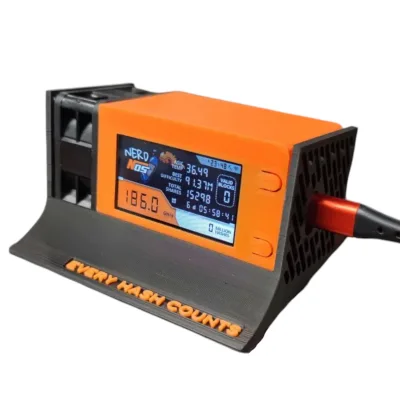
As of early 2026, Bitmain remains the dominant ASIC manufacturer by market share, but the competitive landscape is tighter than ever. MicroBT’s Whatsminer M60 series competes directly with the S21 on efficiency. Canaan’s Avalon A15 series has improved significantly. And the open-source movement — Bitaxe, NerdAxe, NerdQAxe — is carving out a meaningful niche for solo miners and decentralization advocates who refuse to depend on a single Chinese manufacturer for the hardware that secures Bitcoin.
Bitcoin’s block reward now stands at 3.125 BTC following the April 2024 halving. The next halving, expected in 2028, will cut it to 1.5625 BTC. Each halving puts brutal pressure on mining economics, and only the most efficient hardware survives. This is the selection pressure that drives the Antminer efficiency curve ever downward — and it is the same pressure that makes dual-purpose mining (heating your home while hashing) and ultra-low-cost hosting increasingly attractive strategies for individual miners.
D-Central’s Role in the Antminer Ecosystem
Since 2016, D-Central Technologies has been Canada’s leading independent Antminer service provider. We are not a Bitmain dealer pushing new units for commission. We are Bitcoin Mining Hackers — we take institutional-grade mining technology and hack it into solutions that work for home miners, small operations, and sovereign individuals.
Our relationship with the Antminer brand spans the full lifecycle:
- Sales: New and refurbished Antminers in our online shop
- Repair: Model-specific ASIC repair for every Antminer generation from S7 forward
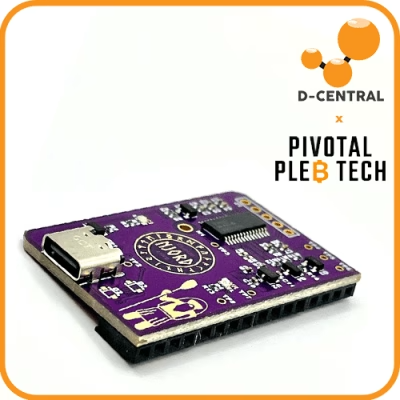
- Modification: Custom builds including our Slim Edition, Pivotal Edition, and Loki Edition Antminers
- Repurposing: Bitcoin Space Heaters built on S9, S17, and S19 hashboards
- Hosting: Managed mining hosting in Quebec for miners who want hands-off operation
We do not worship any manufacturer. We serve the miner. And the miner is best served by understanding exactly what they are buying, what will break, and how to fix it when it does.
Frequently Asked Questions
What was the first Antminer model?
The Antminer S1, released in late 2013, was Bitmain’s first ASIC miner. It delivered approximately 180 GH/s at about 360W. While modest by today’s standards, it was a breakthrough at the time for making ASIC-based Bitcoin mining accessible to individual miners.
Why is the Antminer S9 still relevant in 2026?
The S9’s thermal output — roughly 1,375W of heat — makes it ideal for dual-purpose mining. D-Central’s Bitcoin Space Heater editions use S9 hashboards to heat homes while mining Bitcoin. At the right electricity rate, an S9 still earns sats while displacing heating costs. Its legendary reliability also means many units are still running after nearly a decade of continuous operation.
What went wrong with the Antminer S17?
The S17 series suffered from widespread reliability failures including hashboard defects, thermal management issues, and solder joint failures. Many operations reported 30–50% failure rates within the first year. The problems were traced to manufacturing quality issues and aggressive thermal designs that could not withstand continuous 24/7 operation. Bitmain addressed these issues in the subsequent S19 series.
How efficient is the latest Antminer S21 series?
The S21 XP achieves approximately 13.5 J/TH — roughly 150 times more efficient than the original S1 from 2013. The air-cooled S21 Pro delivers 234 TH/s at about 15 J/TH, while the S21 Hydro uses liquid cooling to reach 335 TH/s at approximately 16 J/TH. These are the most efficient Bitcoin mining machines commercially available as of early 2026.
Can old Antminers be repaired instead of replaced?
Absolutely. ASIC repair is one of D-Central’s core services. A hashboard repair on an S19 can restore full production at a fraction of the cost of a new machine. We handle everything from fan and power supply replacements to complex BGA rework on individual ASIC chips. Repair extends machine life by years, reduces electronic waste, and keeps more hashrate decentralized across independent operators.
How does the Antminer compare to open-source miners like the Bitaxe?
Antminers are industrial-grade machines designed for maximum hashrate and efficiency. The Bitaxe and similar open-source miners prioritize transparency, sovereignty, and the ability to solo mine with hardware you fully control. They operate at much lower hashrates (typically under 2 TH/s) but serve a different purpose: decentralizing the hardware layer of Bitcoin mining. D-Central stocks both Antminers and the full Bitaxe ecosystem because both serve the mission of decentralizing Bitcoin mining.
What is the current Bitcoin network hashrate and difficulty?
As of early 2026, Bitcoin’s network hashrate exceeds 800 EH/s (exahashes per second) with mining difficulty above 110 trillion. The block reward is 3.125 BTC following the April 2024 halving. These numbers mean only the most efficient hardware — like the S21 series — can mine profitably at typical electricity rates, though dual-purpose mining (heating + hashing) changes the economics for home miners.