Bitcoin’s security model depends on one thing above all else: a globally distributed, censorship-resistant network of miners. But here is the uncomfortable truth most people ignore — the hardware that powers that network is manufactured by a shockingly small number of companies. When you trace the supply chain back to its source, the decentralization we celebrate at the protocol layer evaporates at the silicon layer.
This is the ASIC manufacturer decentralization problem, and it is one of the most important — and least discussed — vulnerabilities in Bitcoin’s security architecture. At D-Central, we have been building, repairing, and hacking mining hardware since 2016. We have watched manufacturers rise, fall, and consolidate. We have torn apart every generation of ASICs from every major manufacturer. And we believe that hardware diversity is not just good business — it is essential for Bitcoin’s long-term survival as a censorship-resistant monetary network.
The State of Bitcoin Mining Hardware in 2026
As of early 2026, the Bitcoin network hashrate has surged past 800 EH/s, with difficulty above 110 trillion. The block subsidy sits at 3.125 BTC following the April 2024 halving. These numbers represent an astonishing concentration of computational power — and nearly all of it runs on chips designed and manufactured by a handful of companies.
The ASIC mining hardware market breaks down roughly like this:
| Manufacturer | Headquarters | Key Product Lines | Estimated Market Share |
|---|---|---|---|
| Bitmain | China (Beijing) | Antminer S21, T21, S21+ | ~55-65% |
| MicroBT | China (Shenzhen) | Whatsminer M60, M50 series | ~25-30% |
| Canaan | China (Hangzhou) | Avalon A15 series | ~5-10% |
| Open-Source (Bitaxe, etc.) | Global / Decentralized | Bitaxe, NerdAxe, NerdQAxe | <1% |
Let that sink in. Somewhere between 80% and 95% of all new SHA-256 ASIC hardware originates from Chinese manufacturers. If a single government decides to restrict exports, seize intellectual property, or impose sanctions on these companies, the ability of the global Bitcoin network to add new hashrate could be severely compromised overnight.
This is not hypothetical fear-mongering. China banned Bitcoin mining in 2021 and caused the largest hashrate drop in Bitcoin’s history — a 50% decline in weeks. The network recovered, but only because miners physically relocated their existing hardware. If the supply chain for new hardware is choked off at the source, recovery would look very different.
Why ASIC Manufacturer Diversity Matters
The argument for ASIC manufacturer decentralization rests on three pillars: security, innovation, and sovereignty.
Security: Reducing Single Points of Failure
Bitcoin’s security depends on the assumption that no single entity can control or censor the network. But if one manufacturer dominates hardware supply, that manufacturer becomes a chokepoint. Consider the risks:
- Hardware backdoors: A dominant manufacturer could theoretically embed kill switches, surveillance mechanisms, or hashrate-redirecting firmware into their chips. The more market share a single company holds, the more devastating such a compromise would be.
- Supply chain disruption: Geopolitical tensions, trade wars, or regulatory changes in a single country could halt production, creating artificial scarcity and concentrating hashrate among those who already own hardware.
- Firmware lock-in: Manufacturers can use proprietary firmware to restrict which mining pools operators can point their hashrate at, what efficiency profiles are available, or whether third-party firmware can be installed.
A healthy Bitcoin ecosystem requires multiple independent hardware manufacturers, ideally distributed across different jurisdictions with different regulatory environments. This is not a nice-to-have — it is a security requirement.
Innovation: Competition Drives Efficiency
When Bitmain faced virtually no competition in the early ASIC era, innovation stagnated. It was only when MicroBT’s Whatsminer line emerged as a serious competitor that we saw rapid improvements in efficiency, reliability, and firmware flexibility. Competition works.
More manufacturers means more R&D investment, faster iteration cycles, and more diverse approaches to the engineering challenges of turning electricity into hashrate. Different teams attack the same problem from different angles — some optimize for efficiency (J/TH), others for density, others for noise reduction, and others for home mining use cases.
Sovereignty: Your Hardware, Your Rules
For the cypherpunk ethos to mean anything in mining, operators need hardware they can actually control. That means open firmware, documented interfaces, and the freedom to choose their own pools, overclocking profiles, and operational parameters. Manufacturer diversity pressures companies to be more open — because miners have alternatives.
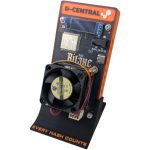
This is exactly why the open-source mining movement matters so much. Projects like Bitaxe, NerdAxe, and NerdQAxe represent the ultimate expression of hardware sovereignty — miners who build, modify, and control every layer of their operation. At D-Central, we have been a pioneer in this ecosystem since the beginning, manufacturing the original Bitaxe Mesh Stand and developing heatsinks, cases, and accessories for the entire open-source mining family.
A History of Challengers: The Fight for ASIC Diversity
The Bitcoin community has long recognized the manufacturer concentration problem. Over the years, several companies have attempted to break Bitmain’s dominance — with mixed results. Understanding this history matters, because it reveals just how difficult the ASIC business is and why every serious attempt deserves attention.
The Early Contenders (2013-2017)
The first wave of ASIC manufacturers included companies like KnCMiner (Sweden), BitFury (Netherlands/Georgia), Spondoolies-Tech (Israel), and Halong Mining (origin disputed). Most failed due to the brutal economics of chip fabrication — designing a competitive ASIC requires hundreds of millions in upfront investment, and each new generation renders the previous one obsolete within 12-18 months.
MicroBT: The Survivor
MicroBT (WhatsMiner) is the only challenger that has successfully sustained competition with Bitmain long-term. Founded by Yang Zuoxing — a former Bitmain chip designer — MicroBT carved out significant market share with reliable hardware and competitive efficiency. But MicroBT is also headquartered in China, which means it does not solve the geographic concentration problem.
Canaan: Publicly Traded, Slowly Fading
Canaan Creative, maker of the Avalon series, was once a top-three player and the first mining hardware company to go public (NASDAQ: CAN). But their market share has eroded significantly as their chip designs have fallen behind Bitmain and MicroBT in efficiency. They remain a player, but a diminishing one.
Intel Blockscale and ePIC: The North American Hope
In 2022, Intel entered the SHA-256 ASIC market with the Blockscale 1000 chip, and Canadian company ePIC Blockchain Technologies built the BlockMiner system around it. This was exciting for several reasons — it represented a North American-designed chip from a major semiconductor company, and ePIC offered features like fine-tuning capabilities and immersion-ready form factors.
For a brief moment, it looked like real geographic and corporate diversity might emerge in the ASIC supply chain. A Canadian company building miners on American-designed silicon — that was a decentralization story worth telling.
But Intel discontinued the Blockscale line in April 2023, citing cost-cutting priorities, and ceased shipping chips by April 2024. Without a silicon partner, ePIC’s hardware roadmap hit a wall. The episode illustrates a painful reality: building ASICs requires massive and sustained investment, and even Intel — one of the largest chip companies on earth — decided the market was not worth the effort.
Auradine: The New Contender
More recently, Auradine (based in Silicon Valley) has emerged with the Teraflux line of Bitcoin mining ASICs designed in the United States. Backed by significant venture capital, Auradine represents perhaps the most credible current North American challenge to Chinese ASIC dominance. Their hardware targets institutional miners, and early deployments have shown competitive efficiency numbers.
Whether Auradine can sustain the punishing economics of multi-generation ASIC competition remains to be seen, but their existence is a positive sign for manufacturer diversity.
Canada’s Strategic Advantage in Bitcoin Mining
At D-Central, we are proudly Canadian — and we believe Canada has unique advantages that make it one of the best places on earth for Bitcoin mining operations and innovation.
- Cold climate: Canada’s northern climate dramatically reduces cooling costs, which are a major operational expense for mining facilities. Our hosting operations in Quebec benefit from year-round cool temperatures.
- Abundant hydroelectric power: Quebec generates massive surpluses of clean, inexpensive hydroelectric power — some of the cheapest electricity in North America. This gives Canadian miners a structural cost advantage.
- Strong rule of law: Canada’s stable legal and regulatory framework provides certainty for businesses making long-term capital investments in mining infrastructure.
- Educated workforce: Canada’s universities produce world-class engineers in electrical, computer, and mechanical engineering — exactly the skills needed for mining hardware innovation.
- Geographic diversification: Mining in Canada contributes to the geographic distribution of hashrate away from any single jurisdiction, strengthening the overall network.
This is why D-Central has always championed Canadian Bitcoin mining. From our repair labs to our hosting facility in Laval, Quebec, to our custom-built Bitcoin space heaters designed for Canadian homes, we are building the infrastructure for a decentralized mining future — right here in the North.
What Miners Can Do to Support Hardware Decentralization
You do not need to wait for a new chip manufacturer to emerge. There are concrete steps every miner can take right now to support ASIC manufacturer decentralization:
1. Buy from Multiple Manufacturers
If you are scaling up, diversify your hardware fleet across Bitmain, MicroBT, and Canaan. Running a mixed fleet provides operational resilience — if one manufacturer’s firmware has a bug or a supply chain disruption occurs, your entire operation is not affected.
2. Support Open-Source Mining Hardware
The Bitaxe ecosystem represents the most radical approach to hardware decentralization: fully open-source ASIC miners that anyone can build, modify, and improve. These devices use repurposed ASIC chips in open hardware designs, giving miners complete sovereignty over their equipment.
D-Central stocks the full lineup — Bitaxe Supra, Ultra, Hex, Gamma, GT, plus NerdAxe, NerdNOS, Nerdminer, and NerdQAxe. We also manufacture accessories including the original Bitaxe Mesh Stand, custom heatsinks for Bitaxe and Bitaxe Hex, cases, and power supplies. Browse the full selection in our shop.
3. Run Open-Source Firmware
Where possible, run open-source firmware on your miners. Projects like Braiins OS and AxeOS (for Bitaxe) give you full control over your hardware’s behavior, including the ability to choose any mining pool, set custom frequency and voltage profiles, and monitor your operations without phoning home to any manufacturer’s servers.
4. Extend Hardware Lifespan Through Repair
Every miner that gets repaired instead of scrapped is a miner that does not need to be replaced by new hardware from the same concentrated set of manufacturers. This is one of the reasons we built D-Central’s ASIC repair service — keeping existing hardware running is not just economically smart, it is a decentralization strategy.
We repair Antminers, Whatsminers, Avalon miners, and more — with 38+ model-specific repair procedures developed over eight years and thousands of units. Board-level diagnostics, hashboard repair, chip replacement, firmware recovery — if it mines Bitcoin, we fix it.
5. Repurpose Older Hardware
Older ASIC miners that are no longer profitable for commercial mining can find new life as space heaters, generating useful heat while contributing hashrate to the network. Our Bitcoin space heater line converts retired Antminers into dual-purpose mining heaters for Canadian homes — turning what would be e-waste into productive, sovereignty-preserving hardware.
6. Educate and Advocate
The ASIC concentration problem does not get enough attention in Bitcoin discourse. Talk about it. Write about it. When you see a new hardware manufacturer enter the market, give them a fair evaluation rather than dismissing them for not being as efficient as Bitmain on day one. Every serious competitor strengthens the ecosystem.
The Open-Source Revolution: Decentralization From the Ground Up
While institutional-scale ASIC manufacturing requires enormous capital, the open-source mining movement has proven that decentralization can start small and build momentum from the bottom up.
The Bitaxe project is the most successful example. By combining repurposed BM1366, BM1368, and BM1397 ASIC chips with open hardware designs, Bitaxe has created a category of solo miners that cost a fraction of a commercial ASIC but give individuals complete sovereignty over their mining operation. No firmware locks. No phone-home telemetry. No manufacturer controlling your hashrate.
Is a single Bitaxe going to compete with an S21 in raw hashrate? Of course not. But that is not the point. The point is that tens of thousands of these devices are now running worldwide, operated by individuals who control their own keys, run their own nodes, and mine their own blocks. That is decentralization in its purest form.
And the ecosystem is growing. NerdAxe, NerdQAxe, NerdOctaxe, PiAxe, StealthMiner — the open-source mining family expands every year, with each project exploring different form factors, chip configurations, and use cases. D-Central has been part of this movement from the start, and our mining consulting services can help you figure out which combination of hardware fits your specific situation.
Looking Ahead: The Path to True Hardware Decentralization
True ASIC manufacturer decentralization — where no single company or country dominates the supply chain — remains an unrealized goal. But the trajectory is encouraging:
- New entrants like Auradine are bringing North American-designed silicon to market with competitive specifications.
- Open-source hardware projects continue to grow in capability and community adoption.
- Firmware diversity is increasing, with projects like Braiins OS providing alternatives to manufacturer firmware even on existing hardware.
- Mining pool diversity has improved significantly, with Ocean, DEMAND, and other decentralization-focused pools gaining share.
- Government awareness is growing, with multiple countries exploring policies to attract and support domestic mining hardware manufacturing.
The path forward requires sustained effort on multiple fronts: supporting new manufacturers, funding open-source development, maintaining and repairing existing diverse hardware, and building communities of miners who understand why hardware diversity matters as much as software diversity.
At D-Central, this is what we mean when we say we are Bitcoin Mining Hackers. We are not just selling mining equipment — we are working to decentralize every layer of Bitcoin mining, from the silicon to the firmware to the pools to the facility. Because a Bitcoin network that depends on a single hardware manufacturer for its security is not truly decentralized. And a network that is not truly decentralized is not truly Bitcoin.
Frequently Asked Questions
Why is ASIC manufacturer decentralization important for Bitcoin?
ASIC manufacturer decentralization reduces single points of failure in Bitcoin’s security model. If one or two companies produce most of the world’s mining hardware, those companies — or the governments that regulate them — gain outsized influence over the network. Hardware backdoors, supply chain disruptions, firmware restrictions, and export bans all become more dangerous when manufacturing is concentrated. Distributing hardware production across multiple companies in multiple jurisdictions makes the network more resilient against all of these threats.
Who are the major Bitcoin ASIC manufacturers in 2026?
The three dominant manufacturers are Bitmain (Antminer series), MicroBT (Whatsminer series), and Canaan (Avalon series), all headquartered in China. Auradine is an emerging North American manufacturer. Additionally, the open-source mining community produces hardware like Bitaxe, NerdAxe, and NerdQAxe, which use repurposed ASIC chips in open designs. D-Central stocks hardware from all of these ecosystems.
What happened to the ePIC BlockMiner and Intel Blockscale?
Canadian company ePIC Blockchain Technologies built the BlockMiner system using Intel’s Blockscale SHA-256 ASIC chip. Intel launched the Blockscale 1000 series in 2022 but discontinued the product line in April 2023 as part of broader cost-cutting measures, with final chip shipments ending in April 2024. Without a silicon supply, ePIC’s hardware roadmap was severely impacted. The episode demonstrates the difficulty of sustaining ASIC competition — even a company as large as Intel exited the market after only one generation.
How can home miners support ASIC decentralization?
Home miners can support decentralization by purchasing open-source mining hardware like Bitaxe, running open-source firmware (such as Braiins OS or AxeOS), repairing existing hardware instead of discarding it, repurposing older miners as space heaters, diversifying hardware across manufacturers, and advocating for hardware diversity in the Bitcoin community. Every hash from independently controlled hardware strengthens the network.
Why is Canada well-positioned for Bitcoin mining?
Canada offers cold climate (reducing cooling costs), abundant clean hydroelectric power (especially in Quebec), strong rule of law, a highly educated engineering workforce, and geographic diversification away from other major mining jurisdictions. D-Central operates from Canada and offers repair services, hosting in Quebec, custom hardware builds, and the full range of open-source mining equipment to support Canadian and global miners.
What is open-source mining hardware and why does it matter?
Open-source mining hardware refers to mining devices with publicly available designs that anyone can build, modify, and improve. The most prominent example is the Bitaxe family of solo miners. These devices give operators complete control — no firmware locks, no manufacturer telemetry, no restrictions on pool choice. While individually small in hashrate, open-source miners collectively represent the most decentralized approach to Bitcoin mining hardware, with tens of thousands of units running globally.