
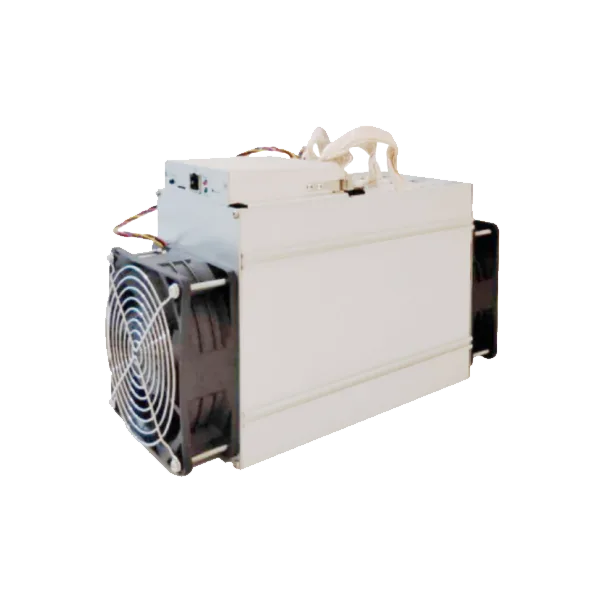
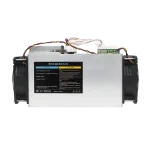
Bitmain Antminer DR3
Réponse rapide
The Bitmain Antminer DR3 is a Blake256r14 miner rated about 7.8 TH/s at roughly 1,410 W. An industrial-class unit — loud and power-hungry, best suited to a dedicated mining space, not living areas.
Heater-Class Miner
At 1,410W, this miner outputs approximately 4811 BTU/hr of heat — equivalent to a standard electric space heater. Every watt consumed by an ASIC miner is converted to heat with 100% efficiency, making it a space heater that also mines Bitcoin.
During heating season, miner heat can offset part of the heat a room would otherwise need from another electric heater. The economics depend on your electricity rate, room heat demand, BTC price, network difficulty, and noise constraints.
Calculateur de rentabilité
| Period | Revenue | Electricity Cost | Profit |
|---|---|---|---|
| Daily | $0.24 | $2.37 | $-2.13 |
| Weekly | $1.68 | $16.58 | $-14.90 |
| Monthly | $7.20 | $71.06 | $-63.86 |
| Yearly | $87.64 | $864.61 | $-776.98 |
Heating offset estimates the value of heat replacing an electric space heater during heating season (~6 months/year in Canada). Actual savings depend on your heating setup and climate.
Where to Buy the Bitmain Antminer DR3
D-Central Technologies is a Bitcoin-only company. For this miner, check out our trusted partner retailers below.
ASIC Miner Market
United StatesWide selection of new and used ASIC miners. US-based shipping.
MagasinerMinersDeals
United StatesCompetitive prices on new ASIC miners with coupon codes.
MagasinerPartner links may earn D-Central a commission at no extra cost to you. Have you considered Bitcoin mining instead? Explore Bitcoin miners →
Full Specifications
| Model | Bitmain Antminer DR3 |
|---|---|
| Model Number | Antminer DR3 |
| Manufacturer | Bitmain |
| Algorithme | Blake256r14 |
| Coins Mined | Unknown |
| Taux de hachage | 7.8 TH/s |
| Consommation électrique | 1,410 W |
| Efficiency | 180.77 J/TH |
| Dimensions | 130 x 187 x 293mm |
| Weight | 4.2 |
| BTU Output | 4811 BTU/hr |
| Equivalent Heater | Half a standard space heater (4,811 BTU/hr) |
| Daily Power Cost | $2.37/day |
| Monthly Power Cost | $71.06/mo |
| Circuit Requirement | Standard 120V 15A |
| Release Date | 2018-09-01 |
| État | Active |
Home Mining Assessment
The Bitmain Antminer DR3 is a 2018 single-algorithm ASIC built for Blake256r14 — the proof-of-work behind Decred (DCR). It delivers about 7.8 TH/s for 1,410 W at the wall, roughly 180.8 J/TH. Today it is a historical and hobbyist machine rather than a profit tool: dedicated Decred silicon that can mine nothing else.
Chip and hashboard architecture
The DR3 is a purpose-built Blake256r14 miner. Its hashing silicon is hardwired for one hash function and cannot be retargeted to SHA-256, Scrypt, or any other algorithm — there is no firmware, flash, or « unlock » that turns a DR3 into a Bitcoin miner. That single-purpose nature is the defining fact of this machine, and it shapes everything from its firmware story to its resale value.
Mechanically and electrically, the DR3 follows the classic Bitmain layout of its era: three hash boards driven by a single control board, fed by an external PSU, and cooled by dual axial fans. The control board runs a small embedded Linux on an ARM core, exposes a web interface over Ethernet, and brokers the high-speed serial link to the chip chains through an FPGA — the same architectural pattern D-Central has serviced across Bitmain’s 2018-generation Antminers since we began ASIC repair in 2016. Each hash board carries a chain of Blake256 ASICs wired in series, with an onboard controller and power-management stage regulating the board.
Voltage domains, not per-chip control
A common misconception about Antminer-class hardware is that each chip is individually tuned. It is not. Chips are grouped into voltage domains — clusters that share one regulated rail. Within a domain the chips are wired in series for core voltage, so the domain voltage equals the per-chip voltage multiplied by the number of chips in that domain. Power and tuning are managed at the domain level, not the chip level. That is why a single failed chip can pull an entire domain — and often the whole board — out of service: the failure mode is shared across the series string, not isolated to one part.
Real-world power and efficiency
The 1,410 W figure is the nameplate draw. At the wall you should budget a little more once PSU conversion losses and fan power are included, and expect the number to drift with ambient temperature and PSU age. The DR3 dissipates essentially all of that energy as heat — on the order of 4,811 BTU/h — which is enough to noticeably warm a small room.
Its rated 180.8 J/TH reads as poor next to a modern miner, but that comparison is misleading: joules-per-terahash is only meaningful within a single algorithm. Blake256 is computationally far lighter than SHA-256, so a Blake256 ASIC produces a much larger raw terahash number per watt than a Bitcoin miner would. The honest way to read DR3 efficiency is in DCR earned per kilowatt-hour against today’s Decred network — and on that scale the machine is firmly in the legacy tier.
There is also very little tuning headroom here. The DR3 predates the autotuning era. Unlike the runtime-calculated power profiles that modern SHA-256 Antminers support, this hardware runs a fixed factory operating point with no meaningful third-party profile ecosystem behind it. If you want to see how tuning works on hardware that genuinely supports it, our ASIC power profiles database documents the per-model frequency and voltage steps available on current machines — but treat the DR3 as a fixed-point device.
Firmware compatibility
Stock firmware is Bitmain’s Antminer image for the DR3 — a cgminer/bmminer-derived Decred build with the familiar Antminer web UI for pools, status, and network configuration. That is effectively where the firmware story ends.
The honest third-party reality: the major aftermarket firmwares — BraiinsOS+, VNish, LuxOS — all target SHA-256 Antminers. A Blake256 Decred miner has essentially no third-party firmware ecosystem, because nobody invested in custom tooling for a niche, now-unprofitable algorithm. Features that mining hackers reach for on modern hardware do not exist here: only BraiinsOS+ natively supports Stratum V2, for example, and that is a SHA-256 world the DR3 was never part of. Our own DCENT_OS work likewise targets modern control boards, not legacy single-algorithm Decred hardware. If you own a DR3, plan around stock firmware and the pools that still accept Blake256r14 work.
Common faults and troubleshooting
After years in service, DR3 failures cluster around a handful of patterns that are familiar from the broader Antminer family:
- Dead or low-hashing board. Usually a voltage-domain fault — a shorted or open domain caused by a failed chip or a damaged power-management component. A short can current-limit the boost stage and take the whole board offline; an open breaks the serial chain so every downstream chip becomes invisible to the controller.
- Fan faults. Worn or seized fans trigger thermal protection and stop the board. Fans are consumables and are usually the easiest fix.
- PSU aging. A decade-old PSU can sag under load, causing instability that masquerades as a board fault.
- Control-board / network issues. Corrupted firmware, dead Ethernet, or a control board that no longer boots.
- Heat and dust. Accumulated dust raises chip temperatures and accelerates failure; clean airflow is the cheapest reliability upgrade.
Diagnosing which board, domain, or component is at fault is exactly the kind of structured triage our ASIC fault finder is built for — start there to narrow a symptom down to a board-level or chip-level cause before opening the unit.
Repair and longevity
D-Central has repaired Bitmain Antminers, including the 2018-generation platform the DR3 belongs to, since 2016. That means board-level work, not just swaps: mapping domain voltages against a known-good baseline, checking chip-chain continuity, reflowing or replacing failed components, and servicing fans, PSUs, and control boards. The single-series-string design of these boards makes disciplined domain measurement the fastest route to a diagnosis.
The honest caveat for a machine this old is parts. Blake256-specific spares for a 2018 Decred miner are scarce, and repair viability depends heavily on the specific fault — a fan or PSU issue is routine, while extensive chip-level damage on an irreplaceable board may not be economical. If you have a DR3 worth keeping running as a heater, bench unit, or collector’s piece, our ASIC repair service can assess it and tell you honestly whether it is worth fixing.
Who the DR3 is for
We will not pretend the DR3 is a buy-for-profit machine. Decred’s network hashrate has grown by orders of magnitude since 2018, so a single 7.8 TH/s unit captures a vanishingly small share of block rewards. As a money-maker, it is obsolete.
Where it still makes sense is honest and narrow: collectors and historians of the ASIC era, hobbyists and learners who want real mining hardware to experiment with, ASIC tinkerers who want a bench unit to probe, and anyone who values it primarily as a space heater that happens to also hash. Just go in clear-eyed — the DCR it earns today is essentially a rounding error, so treat the heat (or the learning) as the real output. If you are shopping for hardware that earns, browse our current lineup in the ASIC miner database instead, and reserve the DR3 for the bench.
Generational context
The DR3 sits among the last of Bitmain’s dedicated Decred ASICs. Decred was one of the few altcoins to attract serious purpose-built silicon during the 2017–2018 ASIC boom, and Bitmain’s Antminer DR line was the company’s answer to it, alongside competitors such as MicroBT’s Decred-targeted D1 and various Innosilicon units. Credit where it is due: that wave of hardware professionalized Blake256 mining and pushed Decred’s security budget up dramatically. It also made single-algorithm ASICs like the DR3 disposable the moment economics turned — the price of specialization. Decred itself remains a Blake256r14 proof-of-work chain, which is why a DR3 still technically hashes today even if the numbers no longer make sense.
Antminer DR3 at a glance
| Specification | Antminer DR3 |
|---|---|
| Manufacturer | Bitmain |
| Algorithm | Blake256r14 (Decred / DCR) |
| Hashrate | 7.8 TH/s |
| Power draw (nameplate) | 1,410 W |
| Efficiency | 180.8 J/TH |
| Heat output | ~4,811 BTU/h |
| Hash boards | 3 (series-wired voltage domains) |
| Power tuning | Fixed factory operating point (pre-autotuner era) |
| Stock firmware | Bitmain Antminer (Decred build) |
| Third-party firmware | None of practical relevance |
| Dimensions | 130 × 187 × 293 mm |
| Weight | 4.2 kg |
| Released | September 2018 |
| Best use today | Collector / learning / supplemental heat |
Broken miner? Get a real quote.
Tell us the symptom and get an instant repair-tier estimate ($95 / $145 / $195 CAD). Mail-in from across Canada, bench in Laval, Quebec.
Send it to D-Central — start a repair →Related Miners
Bitmain Antminer DR5 (34Th)
FFMiner DS19
Halong Mining DragonMint B29
Innosilicon D9 DecredMaster
Comparer le Bitmain Antminer DR3
Foire aux questions
What are the current mining economics for the Bitmain Antminer DR3?
At $0.07/kWh, the Bitmain Antminer DR3 currently shows an estimated daily net cost of $2.13 before pool fees and hardware cost. Lower electricity rates, network changes, BTC price changes, or useful heat recovery can change the result.
Can I mine Bitcoin at home with the Bitmain Antminer DR3?
The Bitmain Antminer DR3 has a home mining score of 22/100. With 0 dB noise and 1,410W power draw, it may require a dedicated space like a garage, basement, or outdoor enclosure. Consider noise insulation and proper ventilation.
Can the Bitmain Antminer DR3 heat my home?
The Bitmain Antminer DR3 outputs approximately 4811 BTU/hr of heat. For reference, a typical space heater produces 5,000-5,500 BTU/hr. All electrical energy consumed by the miner is converted to heat, making it 100% efficient as a heater. D-Central offers Bitcoin Space Heater builds designed specifically for home heating integration.
What power supply does the Bitmain Antminer DR3 need?
The Bitmain Antminer DR3 draws 1,410W of power. You need a power supply rated for at least 1,551W with appropriate voltage (200-240V AC). D-Central stocks compatible power supplies in our shop. Always use a quality PSU from a reputable manufacturer to protect the miner and wiring.