
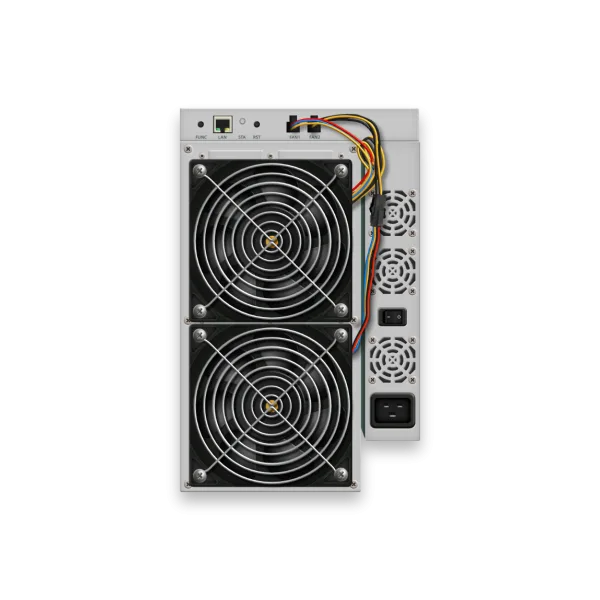
Canaan AvalonMiner 1146 Pro
Réponse rapide
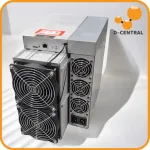
The Canaan AvalonMiner 1146 Pro is a Bitcoin miner rated about 63 TH/s at roughly 3,276 W (about 52 J/TH). An industrial-class unit — loud and power-hungry, best suited to a dedicated mining space, not living areas.
Professional-Grade Miner
This miner draws 3,276W and produces 75+ dB of noise — it is designed for dedicated mining environments, not living spaces. Professional-grade miners deliver the highest hashrate and revenue per unit but require proper infrastructure: a 240V circuit, adequate ventilation or exhaust ducting, and a space where noise is not a concern (garage, basement, warehouse, or outdoor enclosure).
For home miners looking for a quieter alternative, consider our Bitcoin Space Heater builds or explore open-source miners like the Bitaxe that are purpose-built for residential environments.
Heater-Class Miner
At 3,276W, this miner outputs approximately 11178 BTU/hr of heat — equivalent to a standard electric space heater. Every watt consumed by an ASIC miner is converted to heat with 100% efficiency, making it a space heater that also mines Bitcoin.
During heating season, miner heat can offset part of the heat a room would otherwise need from another electric heater. The economics depend on your electricity rate, room heat demand, BTC price, network difficulty, and noise constraints.
Calculateur de rentabilité
| Period | Revenue | Electricity Cost | Profit |
|---|---|---|---|
| Daily | $1.95 | $5.50 | $-3.56 |
| Weekly | $13.62 | $38.53 | $-24.90 |
| Monthly | $58.38 | $165.11 | $-106.73 |
| Yearly | $710.31 | $2,008.84 | $-1,298.53 |
Heating offset estimates the value of heat replacing an electric space heater during heating season (~6 months/year in Canada). Actual savings depend on your heating setup and climate.
Where to Buy the Canaan AvalonMiner 1146 Pro
D-Central Technologies
CanadaBitcoin Mining Hackers since 2016. Ships from Laval, Quebec.
magasiner le materiel de minage BitcoinASIC Miner Market
United StatesWide selection of new and used ASIC miners. US-based shipping.
MagasinerMinersDeals
United StatesCompetitive prices on new ASIC miners with coupon codes.
MagasinerFull Specifications
| Model | Canaan AvalonMiner 1146 Pro |
|---|---|
| Model Number | AvalonMiner 1146 Pro |
| Manufacturer | Canaan |
| Algorithme | SHA-256 |
| Coins Mined | Bitcoin (BTC) |
| Taux de hachage | 63 TH/s |
| Consommation électrique | 3,276 W |
| Efficiency | 52 J/TH |
| Dimensions | 306 x 405 x 442mm |
| Weight | 12.8 |
| BTU Output | 11178 BTU/hr |
| Equivalent Heater | Equal to a 3,276W space heater |
| Daily Power Cost | $5.50/day |
| Monthly Power Cost | $165.11/mo |
| Circuit Requirement | 240V circuit required |
| Release Date | 2020-08-01 |
| MSRP | $1,150.00 |
| État | Active |
Home Mining Assessment
The Canaan AvalonMiner 1146 Pro is a 2020-era, air-cooled SHA-256 ASIC miner for Bitcoin, rated at 63 TH/s for about 3,276 W at the wall, or roughly 52 J/TH. It runs Canaan’s A3206 16nm chips on a Kendryte K210 control board — a legacy industrial machine best understood today as a repairable workhorse and a serious heat source rather than a profit engine.
Chip and hashboard architecture
The 1146 Pro belongs to Canaan’s Avalon A11 series, the 2020 generation that sat between the older Raspberry-Pi-controlled Avalon 8/9 units and the integrated-controller machines that followed. Its hash power comes from the Canaan A3206, a 16nm (TSMC) SHA-256 ASIC that Canaan also used in the Avalon 921 and across the A1126/A1146/A1166 line.
Each hash board carries 72 A3206 chips arranged in a 12×6 grid. The chips are wired in a daisy-chain serial topology — groups of dies connected in series, with those groups run in parallel across the board. A 1146 Pro spreads its A3206 dies across the unit’s hash boards (a three-board layout in the A11 family, on the order of 200+ dies in total), which is why a single failed chip can knock out an entire series group and drag a whole board’s hashrate down.
Communication runs over four signal pairs through the chain — CKin/CKout (clock), Cin/Cout (control), Rin/Rout (reset) and Din/Dout (data) — with a working clock around 4 MHz and a transmission clock near 6.1 MHz. Each board talks to the control board through a 2×7-pin (14-pin) connector carrying both data and power.
Control board: Kendryte K210, not Zynq
Where an Antminer S9 uses a Xilinx Zynq SoC with an on-board FPGA, the A11-generation Avalon is built on Canaan’s own Kendryte K210 — a dual-core 64-bit RISC-V SoC (with FPU and a small neural accelerator) clocked up to 400 MHz on a 28nm process. It carries only 8 MB of on-chip SRAM and runs a bare-metal FreeRTOS environment, not Linux. Two architectural consequences matter for owners and technicians:
- No FPGA. There is no programmable-logic midstate engine between the controller and the boards. The K210 talks to the hash boards directly over SPI (up to ~1 MHz, 40-byte framed packets with CRC16), and work dispatch and nonce checking happen in software.
- No PIC microcontroller. Avalon hash boards do not use the per-board PIC chip that Antminer relies on for voltage control and board identity. Frequency and voltage are commanded straight from the SoC, which removes a whole class of PIC/EEPROM headaches — but also means there is no per-board PIC to interrogate during diagnosis.
On the hash board itself, power is delivered as 12 V from the PSU and boosted internally (to roughly 17.7 V on these designs) to feed the ASIC domains. Voltage control is applied per domain, not per individual chip: the board exposes a variable Vcore, a fixed VTOP at 0.75 V, and VDDIO at 1.8 V. Two NTC 10K thermistors (TH1 and TH2) per board feed the temperature-protection logic.
Real-world power and efficiency
The nameplate figures — 63 TH/s, 3,276 W, ~52 J/TH — are measured at the wall under stock settings in a reasonable ambient. In practice, expect actual draw to drift a few percent above nameplate once you account for PSU conversion loss, warm intake air, and chips that have aged. As the room heats up, the autotune-free stock firmware holds frequency but the boards run hotter, so efficiency degrades rather than the hashrate.
Tuning headroom on this machine is genuinely limited, and it is important to be honest about that. The K210 firmware exposes a coarse work-mode toggle (a normal and a higher-output performance mode) through Canaan’s API, plus a sparsely documented privileged API that can set frequency and voltage at the cost of voiding warranty. There is no community autotuner for the A11 generation — the per-step frequency and voltage tables live encrypted inside the controller firmware. If you want to understand where a unit like this lands against tuned modern hardware, our ASIC power profiles database is the place to compare J/TH across machines; just don’t expect a 16nm A11 to be reshaped the way a BraiinsOS-tuned Antminer can be.
Firmware compatibility and the honest third-party reality
Stock firmware is Canaan’s MM (Miner Manager) stack paired with Canaan’s own fork of CGMiner. You manage the miner through a web dashboard on port 80 (default IP 192.168.168.168 in configuration mode) and a CGMiner API on port 4028 for monitoring and scripted control. Because the K210 build is bare-metal FreeRTOS, there is no SSH and no Linux shell in stock form — only UART debug pins on the board for low-level work.
For third-party firmware, the honest answer is that there is essentially none for this class of Avalon. BraiinsOS+, VNish, LuxOS and ePIC do not support any AvalonMiner, the 1146 Pro included. Monitoring tools such as pyasic (and tooling built on it) can read and steer the unit through its CGMiner API, but that is telemetry and basic control, not a replacement operating system.
D-Central has studied what an open Avalon firmware would take, and we credit Canaan here: of the three big SHA-256 manufacturers it is by far the most open, publishing its CGMiner driver source, MM firmware and API docs publicly. But the A11’s K210 is the hardest possible starting point — 8 MB of SRAM and a bare-metal RTOS leave no room for the Linux-plus-Rust approach we use elsewhere. The realistic near-term path for community Avalon firmware is the newer K230-based home-miner line, not this K210 industrial board. So we won’t oversell it: there is no DCENT_OS or other custom firmware shipping for the 1146 Pro today, and on this model you are running stock.
Common faults and troubleshooting
Most 1146 Pro problems trace back to the hash boards and their power and thermal paths:
- Dead or reduced hashrate on one board. Because the 72 A3206 chips run in series groups, a single failed chip can take out an entire group, so the board reports a fraction of its expected TH/s or nothing at all. Diagnosis means tracing the signal chain (clock, control, reset and data continuity) and checking the voltage domains at their test points.
- Voltage-domain faults. A failed boost stage (the 12 V→~17.7 V conversion) or a Vcore/VTOP/VDDIO rail out of spec will starve a domain and stall the chips on it.
- Thermal shutdowns. A drifted or open NTC 10K thermistor (TH1/TH2) can trigger over-temperature protection even when the boards are actually fine, or mask a real hot spot.
- Connector and cabling. The 14-pin board-to-controller connectors and ribbon cabling are a frequent culprit for intermittent boards — reseat before condemning silicon.
- Fan and PSU faults. Stock firmware will fault out a missing fan; a tired PSU shows up as instability under the machine’s full ~3.3 kW load.
Work a stuck unit methodically with our ASIC fault finder to localise the failure to a board, a domain, or the controller before you open anything up.
Repair and longevity
This is where an older Avalon earns its keep. D-Central has repaired Canaan hardware in-house since 2016 and even publishes a dedicated AvalonMiner 1146 maintenance and repair guide. The 1146 Pro is a friendly machine to service at the bench: the A3206 is a mature, well-understood 16nm part; there is no encrypted PIC to defeat for board identity; and the per-domain power architecture is straightforward to probe. Chip-level work — reflowing or replacing dead A3206 dies, rebuilding a boost stage, or swapping a failed thermistor — brings a dark board back to full hashrate for a fraction of replacement cost.
For longevity, the usual ASIC discipline applies and matters more on a hot-running 16nm unit: keep intake filters clean, hold ambient temperatures sane, and re-pad or re-seat boards that start throttling. When a board does fail beyond a field reset, our ASIC repair service handles Avalon hashboards at the component level rather than writing the unit off.
Who it is for and buying advice
At ~52 J/TH, the 1146 Pro is firmly in the legacy efficiency tier, so the honest framing is that it is not a unit to buy for pure profit unless your power is very cheap or effectively free. Where it makes sense:
- Heat reuse. It dumps on the order of 11,000+ BTU/h, so ducted into a workshop or garage it turns a heating bill into hashrate. It is industrial-loud, though — not a living-room machine.
- Learning and repair platforms. An open, well-documented, end-of-life Avalon is an excellent machine to learn chip-level diagnostics on without risking a flagship.
- Cheap redundancy or solo lottery hashpower. Secondhand A11 units are inexpensive backup capacity, or a low-stakes way to point real hashrate at a solo pool.
If your goal is quiet, low-power solo mining at home rather than industrial throughput, a single-chip open-source miner such as a Bitaxe is a better fit than a 3.3 kW Avalon — different tool, different job. Either way, buy from someone who can stand behind the hardware: D-Central inspects, repairs and tests the Avalon units it sells rather than shipping unverified pulls.
Generational context
The 1146 Pro sits roughly in the middle of Canaan’s SHA-256 timeline. The Avalon project shipped the world’s first Bitcoin ASIC back in 2013, and the lineage ran from the 16nm Avalon 8/9 era through the A11 (2020, A3206 16nm) that this unit belongs to, then onward to 7nm-class parts in the A13/A14 generations and 5nm-class silicon in the A15/A16 machines. Across that span, efficiency fell from this machine’s ~52 J/TH toward the mid-teens of J/TH and below on the newest hardware. That progression is exactly why the 1146 Pro reads as legacy today — and also why it remains a sensible, serviceable machine for heat, learning and low-cost hashpower in the right hands.
AvalonMiner 1146 Pro at a glance
| Attribute | Detail |
|---|---|
| Manufacturer / series | Canaan — Avalon A11 series |
| Algorithm | SHA-256 (Bitcoin) |
| Released | August 2020 |
| Hashrate (nameplate) | 63 TH/s |
| Wall power (nameplate) | ~3,276 W |
| Efficiency (nameplate) | ~52 J/TH |
| ASIC chip | Canaan A3206, TSMC 16nm |
| Chips per hash board | 72 (12×6 grid), daisy-chained |
| Control board SoC | Kendryte K210 (RISC-V, 28nm, FreeRTOS) |
| Hash-board voltage domains | Vcore (variable), VTOP 0.75 V, VDDIO 1.8 V |
| Controller ↔ hash board | SPI over 14-pin (2×7) connector |
| Thermal sensing | 2× NTC 10K thermistors per board |
| Stock firmware | Canaan MM + CGMiner fork (API port 4028) |
| Third-party firmware | None (BraiinsOS/VNish/LuxOS/ePIC unsupported) |
| Weight / dimensions | ~12.8 kg / 306 × 405 × 442 mm |
Canaan SHA-256 generational map
| Series (era) | Representative models | ASIC | Process |
|---|---|---|---|
| Avalon 8 (2018) | 821 / 841 / 851 | A3210 / A3210HP | 16nm |
| Avalon 9 (2019) | 921 | A3206 | 16nm |
| Avalon A11 (2020) | A1126 / A1146 / A1166 | A3206 | 16nm |
| Avalon A12 (2021) | A1246 | A3200 / A3201 | — |
| Avalon A13 (2022) | A1346 / A1366 | A3200 variants | 7nm-class |
| Avalon A14 (2023) | A1466 | A3198 | 7nm refined |
| Avalon A15 (2024) | A1566 | A3197 | 5nm (TSMC) |
Broken miner? Get a real quote.
Tell us the symptom and get an instant repair-tier estimate ($95 / $145 / $195 CAD). Mail-in from across Canada, bench in Laval, Quebec.
Send it to D-Central — start a repair →Related Miners
Bitmain Antminer S17+ (73Th)
Whatsminer M50S+
StrongU STU-U8 Pro
Antminer Pivotal Edition (S9)
Comparer le Canaan AvalonMiner 1146 Pro
Foire aux questions
What are the current mining economics for the Canaan AvalonMiner 1146 Pro?
At $0.07/kWh, the Canaan AvalonMiner 1146 Pro currently shows an estimated daily net cost of $3.56 before pool fees and hardware cost. Lower electricity rates, network changes, BTC price changes, or useful heat recovery can change the result.
Can I mine Bitcoin at home with the Canaan AvalonMiner 1146 Pro?
The Canaan AvalonMiner 1146 Pro has a home mining score of 8/100. With 0 dB noise and 3,276W power draw, it may require a dedicated space like a garage, basement, or outdoor enclosure. Consider noise insulation and proper ventilation.
Can the Canaan AvalonMiner 1146 Pro heat my home?
The Canaan AvalonMiner 1146 Pro outputs approximately 11178 BTU/hr of heat. For reference, a typical space heater produces 5,000-5,500 BTU/hr. All electrical energy consumed by the miner is converted to heat, making it 100% efficient as a heater. D-Central offers Bitcoin Space Heater builds designed specifically for home heating integration.
What power supply does the Canaan AvalonMiner 1146 Pro need?
The Canaan AvalonMiner 1146 Pro draws 3,276W of power. You need a power supply rated for at least 3,604W with appropriate voltage (200-240V AC). D-Central stocks compatible power supplies in our shop. Always use a quality PSU from a reputable manufacturer to protect the miner and wiring.