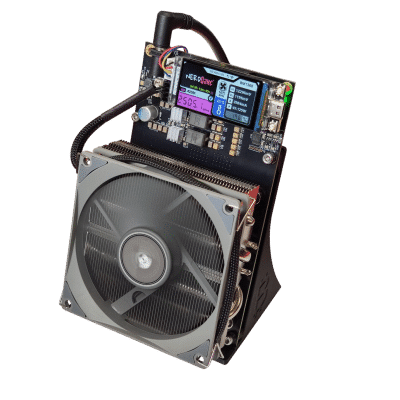
The Antminer S19 XP is not just another mining rig. It is Bitmain’s most efficient SHA-256 machine ever built in the S19 series, delivering 140 TH/s at a jaw-dropping 21.5 J/TH. For home miners and pleb operators who refuse to hand their hash rate to a centralized institution, this machine is a serious tool for decentralizing Bitcoin’s security layer from your own property.
At D-Central Technologies, we have been repairing, configuring, and deploying these units since their release. We are Bitcoin Mining Hackers — we take institutional-grade hardware and hack it to work for the individual miner. This guide gives you everything you need to unbox, set up, configure, optimize, and maintain your Antminer S19 XP for maximum performance and longevity.
Whether you are plugging in your first ASIC or adding another unit to a growing home mining operation, this step-by-step guide covers every phase of deployment — written by the technicians who repair these machines daily.
Choosing firmware first? See every S19 XP firmware option by control board — including the noPIC image split and the March 2024 install lock — before you flash anything.
Antminer S19 XP Technical Specifications
Before you touch a cable, know what you are working with. The S19 XP uses Bitmain’s BM1366 ASIC chip, the same silicon that made the S19 XP the efficiency leader of its generation. Here is the full specification breakdown.
| Specification | Value |
|---|---|
| Algorithm | SHA-256 (Bitcoin) |
| Hash Rate | 140 TH/s |
| Power Efficiency | 21.5 J/TH |
| Power Consumption | ~3,010 W (±5%) |
| ASIC Chip | BM1366AL (5nm-class) |
| Hashboards | 3 (each ~46.7 TH/s) |
| Network | RJ45 Ethernet 10/100M |
| Operating Temp | 0°C to 40°C (32°F to 104°F) |
| Cooling | 4x 12038 fans (dual intake, dual exhaust) |
| Noise Level | ~75 dB |
| Dimensions | 400 x 195 x 290 mm |
| Weight | ~14.4 kg |
| PSU Required | APW12 (included with new units) |
| Voltage | 220-240V recommended (can run 110V with limitations) |
How the S19 XP Compares to Other 19-Series Miners
The S19 XP sits at the top of Bitmain’s 19-series lineup. Here is how it stacks up against its siblings.
| Model | Hash Rate | Efficiency (J/TH) | Power Draw |
|---|---|---|---|
| S19 XP | 140 TH/s | 21.5 J/TH | 3,010 W |
| S19k Pro | 120 TH/s | 23 J/TH | 2,760 W |
| S19j Pro | 104 TH/s | 30.5 J/TH | 3,068 W |
| S19 Pro | 110 TH/s | 29.5 J/TH | 3,245 W |
| S19 | 95 TH/s | 34.5 J/TH | 3,250 W |
The S19 XP delivers 47% more hash rate than the standard S19 while consuming roughly the same wattage. That efficiency advantage directly translates to sats per kilowatt-hour — the metric that actually matters for home miners paying residential electricity rates.
Pre-Setup: What You Need Before Powering On
Plugging in an S19 XP without proper preparation is a fast track to tripped breakers, overheating, and wasted money. Handle the groundwork first.
Electrical Requirements
The S19 XP draws approximately 3,010 watts at the wall. This is a non-negotiable electrical commitment that most standard household circuits cannot handle on their own.
- Recommended voltage: 220-240V on a dedicated 20A circuit (NEMA 6-20 or L6-20 outlet in North America). Running at 240V reduces current draw to ~12.5A, well within a 20A breaker’s capacity.
- 110V operation: Technically possible but draws ~27A, requiring a 30A dedicated circuit (NEMA L5-30). Not recommended for most residential panels. Current draw at 110V runs dangerously close to circuit limits and PSU efficiency drops.
- Dedicated circuit: Never share a circuit with other high-draw appliances. A tripped breaker means unexpected downtime and potential hashboard damage from hard shutdowns.
- Surge protection: Use a heavy-duty surge protector rated for at least 15A continuous draw. Power surges kill ASIC miners — protect your investment.
- Grounding: Verify your outlet is properly grounded. An ungrounded ASIC is a safety hazard and accelerates component degradation.
If you are unsure about your electrical setup, consult a licensed electrician before proceeding. A 240V outlet installation typically costs $200-$500 and is one of the best investments you can make for a home mining operation.
Location and Environment
The S19 XP generates approximately 10,250 BTU/hr of heat (3,010W x 3.412 BTU/W). That is equivalent to a medium-sized portable space heater running at full blast. Location selection is critical.
- Temperature: Keep ambient temperature below 35°C (95°F) for optimal performance. Canadian miners have a natural advantage here — cold winters act as free cooling. In summer, ventilation or AC may be required.
- Airflow: The S19 XP is a wind tunnel. It pulls air from the front (intake) and blasts it out the back (exhaust). Leave at minimum 30 cm (12″) of clearance on both intake and exhaust sides. Never obstruct airflow. Consider D-Central’s S19 shrouds to duct hot exhaust air outdoors or into heating ducts.
- Noise: At ~75 dB, the S19 XP is roughly as loud as a vacuum cleaner running continuously. Dedicated rooms, basements, garages, or outbuildings are ideal. For noise reduction, our Antminer Dual 120mm Silencer can help.
- Dust: Dust is the silent killer of mining hardware. Avoid dusty environments. Install fan dust filters on the intake side and plan for regular cleaning every 3-6 months.
Network Requirements
- Wired Ethernet: The S19 XP uses a standard RJ45 Ethernet connection. WiFi is not natively supported — and you do not want it. Wired connections are more stable and reliable for 24/7 mining operations.
- Bandwidth: Mining uses minimal bandwidth (under 1 Mbps), but latency matters. A stable connection with low latency to your pool’s server reduces stale shares.
- Static IP or DHCP reservation: Assign a static IP or create a DHCP reservation in your router so the miner’s IP does not change. You will need this IP to access the web interface.
- WiFi adapter (optional): If running Ethernet is not feasible, a Vonets WiFi Adapter bridges WiFi to the miner’s Ethernet port.
What Is in the Box
New Antminer S19 XP units from Bitmain typically include:
- Antminer S19 XP unit (control board + 3 hashboards + fans)
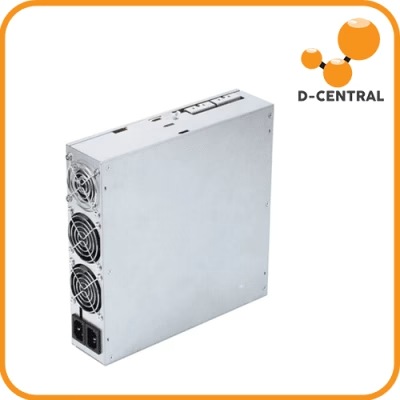
- APW12 Power Supply Unit (PSU)
- Power cord (C13 to regional plug — verify compatibility)
- Ethernet cable
- Quick start documentation
Important: If you are purchasing a used or refurbished S19 XP, verify the PSU is included. The APW12 is specifically matched to the S19 XP’s power draw. D-Central stocks replacement APW12 PSUs if yours is missing or damaged.
Step-by-Step Hardware Assembly
Time to get physical. The S19 XP hardware setup is straightforward, but attention to detail here prevents problems down the line.
Step 1: Inspect the Unit
Before connecting anything, perform a visual inspection.
- Check the exterior for shipping damage — dents, cracks, or bent heatsink fins.
- Look through the fan grilles at the hashboards. Are they seated properly? Any visible component damage?
- Inspect all connectors — data cables between hashboards and control board, fan connectors, PSU input ports.
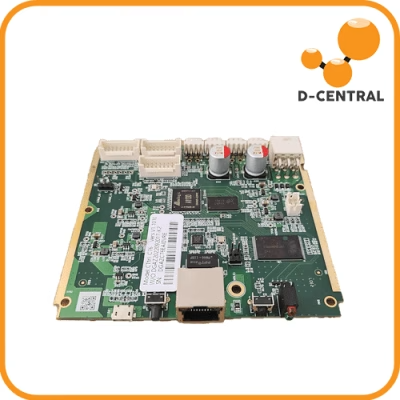
- Verify the control board is firmly secured. Loose control boards cause intermittent connectivity issues.
- Check fans spin freely by gently rotating them with a finger. Grinding or resistance means a fan needs replacement.
If you find damage, do not power on the unit. Contact D-Central’s ASIC repair service for diagnostic assistance.
Step 2: Connect the PSU
- Place the S19 XP on a stable, flat surface with the intake fans facing you and the exhaust fans facing away.
- Position the APW12 PSU near the miner. The PSU connects to the S19 XP via the 6-pin power connectors on top of the unit.
- Connect all PSU output cables to the miner’s power input ports. The S19 XP has multiple power input connectors — all must be connected. Leaving any disconnected will prevent proper operation.
- Plug the C13 power cord into the PSU’s AC input, but do not plug into the wall yet.
- Double-check every connection is firmly seated. A partially inserted connector is a fire hazard under load.
Step 3: Connect Ethernet
- Run an Ethernet cable from your router or switch to the S19 XP’s RJ45 port (located on the control board, typically at the front of the unit).
- Verify the cable clicks into place. A loose Ethernet connection causes pool connectivity drops and lost shares.
- If your router is far away, use Cat5e or Cat6 cable (supports runs up to 100 meters without signal degradation).
Step 4: Power On
- Plug the PSU power cord into your 240V outlet.
- Flip the PSU power switch to ON (if equipped — some APW12 variants power on automatically when plugged in).
- The fans will spin up immediately. The S19 XP will begin its boot sequence, which takes approximately 3-5 minutes.
- During boot, the indicator LEDs on the control board will cycle. A solid green LED indicates normal operation. Flashing red indicates an error — refer to the troubleshooting section below.
Configuring the Mining Software
The hardware is running. Now you need to tell it where to send its hash power.
Finding Your Miner’s IP Address
The S19 XP does not have a screen — you access its configuration through a web browser on the same network. To find its IP address:
- Method 1 — Router admin panel: Log into your router (typically at 192.168.1.1 or 192.168.0.1) and check the DHCP client list for a new device. It usually appears as “Antminer” or by its MAC address.
- Method 2 — IP scanner: Use a free tool like Advanced IP Scanner (Windows), Angry IP Scanner (cross-platform), or Fing (mobile) to scan your local network for new devices.
- Method 3 — Bitmain IP Reporter: Download the IP Reporter tool from Bitmain’s support page. Press the IP Report button on the miner’s control board while the tool is running on a computer on the same network.
Accessing the Web Interface
- Open any web browser on a computer connected to the same network as your miner.
- Enter the miner’s IP address in the address bar (e.g.,
http://192.168.1.100). - The default login credentials are
root/root. - Change the default password immediately. An unsecured miner on your network is a target for firmware hijacking attacks that redirect your hash rate to an attacker’s wallet.
Configuring Your Mining Pool
Navigate to Miner Configuration in the web interface. You will see three pool slots (Pool 1, Pool 2, Pool 3). The miner tries Pool 1 first. If it cannot connect, it falls back to Pool 2, then Pool 3. Always configure at least two pools for redundancy.
For each pool, enter:
- URL: The stratum address of your pool (e.g.,
stratum+tcp://stratum.slushpool.com:3333) - Worker: Your worker name, typically in the format
username.workername - Password: Usually
xor left blank — most pools do not require a password
Choosing a Mining Pool
Pool selection matters. For decentralization-minded miners, avoid the largest pools. Bitcoin’s security depends on hash rate distribution — concentrating too much hash power in a few pools undermines the very protocol you are securing.
| Pool | Fee | Payout Model | Note |
|---|---|---|---|
| Braiins Pool | 2% | FPPS | Transparent, pro-decentralization, Lightning payouts |
| OCEAN | 0%* | TIDES | Non-custodial, block template transparency (*pool keeps subsidy dust) |
| DEMAND Pool | 2% | FPPS | Stratum V2, decentralized block template construction |
| CK Pool (Solo) | 2% | Solo | Solo mining — you win the full block reward or nothing |
After entering your pool details, click Save & Apply. The miner will restart its mining process and connect to the pool within 1-2 minutes. Check the Miner Status page to confirm the hash rate is ramping up.
Custom Firmware and Performance Tuning
Stock firmware gets the job done. Custom firmware lets you hack it. The right firmware can increase your hash rate, reduce your power consumption, or both — and that directly impacts your sats-per-kWh ratio.
Why Run Custom Firmware
- Autotuning: Custom firmware automatically finds the optimal frequency and voltage for each individual ASIC chip on your hashboards, rather than running every chip at the same setting. Result: higher efficiency and more stable operation.
- Underclocking / Undervolting: Reduce power consumption by 30-50% while maintaining proportional hash rate. Essential for home miners on residential electricity rates. A 2,000W S19 XP running at 90 TH/s can be more profitable than a 3,010W unit at 140 TH/s depending on your power cost.
- Overclocking: Push hash rate above 140 TH/s for miners with cheap electricity and adequate cooling. Increases power draw and heat — proceed with caution.
- Better monitoring: Real-time per-chip temperature and hash rate data, email alerts, and fleet management tools.
- DevFee transparency: Reputable custom firmware like Braiins OS+ is transparent about its dev fee (typically 2-2.5%), and the efficiency gains usually more than offset the fee.
Installing Custom Firmware (Braiins OS+ Example)
- Download the latest Braiins OS+ image for S19 XP from the Braiins website.
- Backup your current firmware via the web interface (System > Backup) in case you need to revert.
- Install using the BOS Toolbox (command-line tool) or upload via the web interface under System > Upgrade.
- Reboot automatically happens after installation. The first boot with custom firmware takes 5-10 minutes as it scans and autotunes all ASIC chips.
- Configure your pool settings in the new firmware interface. Previous settings may not carry over.
- Set your target — choose a power target (e.g., 2,000W for underclocking) or a hash rate target, and let autotuning optimize the rest.
Warning: Only install firmware from verified sources. Malicious firmware can redirect your hash rate to an attacker’s address, brick your control board, or install persistent backdoors. If you have firmware concerns, D-Central’s technicians can flash verified firmware as part of our S19 XP repair and service offering.
Underclocking for Home Miners
Most home miners should underclock. Here is why: electricity at $0.10/kWh USD costs you roughly $7.25/day to run an S19 XP at stock settings. Underclocking to 2,000W drops that to $4.80/day — a 34% cost reduction — while your hash rate drops only 25-30%. The efficiency curve is non-linear: the last 20% of hash rate costs disproportionately more power.
On Braiins OS+, set a power limit of 2,000-2,200W. The autotuner handles the rest. You get quieter fans, lower temperatures, longer hardware lifespan, and better profitability at most residential electricity rates.
Dual-Purpose Mining: Heat Your Home with Hash
Here is the real Mining Hacker play. The S19 XP produces 10,250 BTU/hr of heat. Instead of venting that heat outside, capture it. In cold climates — and Canada has no shortage of those — your S19 XP effectively becomes a space heater that earns Bitcoin while warming your home.
D-Central builds purpose-built solutions for this:
- Antminer S19 Space Heater Edition: A pre-configured S19 in a noise-dampened enclosure designed to distribute heat into living spaces.
- Antminer Slim DIY Case: A compact case compatible with 19 and 21 series miners for home heater conversions.
- 6-inch and 8-inch S19 shrouds: Duct the hot exhaust into your home’s HVAC system or directly into a room.
During winter months, your mining electricity cost is effectively subsidized by the heating cost you would have paid anyway. A miner producing 10,000+ BTU/hr can meaningfully offset electric or propane heating costs. You heat your space AND stack sats. That is the dual-purpose mining thesis, and it is one of the strongest arguments for home mining in northern climates.
Read more on our Bitcoin Space Heaters page.
Maintenance and Long-Term Care
An S19 XP that is properly maintained will run for years. One that is neglected will degrade, lose hash rate, and eventually fail. Here is your maintenance schedule.
Monthly Tasks
- Check hash rate consistency: Log into the web interface and compare current hash rate against your baseline. A gradual decline (more than 5% below rated) indicates chip degradation, thermal throttling, or failing components.
- Monitor chip temperatures: Ensure no individual chip runs hotter than 85°C. Consistent hotspots suggest thermal paste degradation or airflow obstruction.
- Review error logs: Check for HW errors (hardware errors) in the miner status page. Occasional errors are normal. A high HW error rate (above 1-2%) on a specific hashboard indicates a problem.
- Verify fan RPMs: All fans should spin within 10% of each other. A fan running significantly slower or faster than the others is failing.
Every 3-6 Months
- Compressed air cleaning: Power off the miner and blow compressed air through the heatsinks from both sides. Do this outdoors — the amount of dust that accumulates is remarkable. Intake dust filters slow accumulation but do not eliminate it.
- Fan inspection: Check fan blades for cracks, wear, or balance issues. Replacement 120mm fans are available from D-Central.
- Connection check: Verify all data cables and power connectors are firmly seated. Vibration from fans can gradually loosen connections.
- Thermal paste assessment: If chip temperatures are climbing despite clean heatsinks, the thermal paste between ASIC chips and heatsinks may need replacement. This is an advanced procedure — thermal paste and application guidance are available, or D-Central can perform it as part of a service.
Annually
- Firmware review: Check for firmware updates from Bitmain or your custom firmware provider. Updates often include efficiency improvements, security patches, and bug fixes.
- Electrical inspection: Check your power cables, outlet, and circuit breaker for signs of heat damage or wear. Three kilowatts continuous is a substantial load on any circuit.
- Profitability assessment: Review your electricity costs, Bitcoin earnings, and hardware condition. After 2-3 years of operation, compare the cost of continued operation against upgrading to newer-generation hardware.
Troubleshooting Common Issues
When something goes wrong — and eventually, something will — systematic troubleshooting saves time and money.
| Symptom | Likely Cause | Solution |
|---|---|---|
| No power / fans not spinning | PSU failure, loose power connection, tripped breaker | Check breaker, verify PSU switch, reseat all power connectors |
| Fans spin but no hash rate | Control board not booting, firmware corruption | Wait 5 minutes for full boot. If no hash rate after 10 min, reflash firmware via SD card |
| Only 1 or 2 hashboards detected | Loose data cable, hashboard failure | Power off, reseat 18-pin data cables. If issue persists, the hashboard may need professional repair |
| High chip temperatures (>90°C) | Dust buildup, failed fan, poor ambient ventilation | Clean heatsinks, replace failed fans, improve room airflow |
| Hash rate lower than rated | Thermal throttling, degraded chips, network latency | Check temperatures, clean unit, verify pool connection quality |
| Cannot access web interface | IP changed, network cable issue, control board fault | Re-scan network for miner IP, try different Ethernet cable, reset control board |
| Frequent pool disconnections | Unstable internet, bad Ethernet cable, router issue | Test internet stability, replace cable, assign static IP |
| Loud grinding noise | Fan bearing failure | Replace affected fan immediately — continued operation risks complete failure and overheating |
For issues beyond basic troubleshooting, D-Central offers comprehensive Antminer S19 XP repair services, including hashboard repair, chip replacement, control board diagnosis, and full refurbishment. We have been repairing these machines since their release — our technicians know every chip, connector, and failure mode.
Replacement Parts and Accessories
Keeping your S19 XP running long-term means having access to quality replacement parts. D-Central stocks a comprehensive inventory of S19 XP parts.
| Part | Use Case |
|---|---|
| Replacement S19 XP Hashboard | Replace a failed or degraded hashboard to restore full hash rate |
| BM1366AL ASIC Chip | Individual chip replacement for hashboard-level repair |
| Replacement 120mm Fan | Replace failed or worn cooling fans |
| APW12 PSU | Power supply replacement |
| Control Board C52 with BraiinsOS | Control board upgrade/replacement with pre-installed custom firmware |
| 18-Pin Data Cable | Replace damaged hashboard data cables |
| Thermal Paste | Re-paste hashboard heatsinks for improved thermal transfer |
Frequently Asked Questions
Can I run the Antminer S19 XP on a standard 110V household outlet?
Technically yes, but it is not recommended. At 110V, the S19 XP draws approximately 27 amps, which exceeds the capacity of a standard 15A household circuit and pushes the limits of a 20A circuit. You would need a dedicated 30A, 110V circuit. Running at 240V is strongly recommended — it draws only ~12.5A, is more efficient, and is safer for continuous operation. A licensed electrician can install a 240V outlet for $200-$500.
How much does it cost to run an Antminer S19 XP per month?
At stock settings (3,010W), running 24/7, the S19 XP consumes approximately 2,167 kWh per month. At $0.10/kWh, that is about $217/month. At $0.06/kWh (common in Quebec), it drops to $130/month. Underclocking to 2,000W reduces consumption to ~1,440 kWh/month ($144/month at $0.10/kWh). Use D-Central’s Mining Profitability Calculator to estimate your specific costs and returns.
Is the Antminer S19 XP still profitable in 2026?
Profitability depends on your electricity cost. The S19 XP’s 21.5 J/TH efficiency remains competitive, though newer models like the S21 (15 J/TH) and S21 XP are more efficient. At electricity rates below $0.07/kWh, the S19 XP remains profitable. At higher rates, underclocking with custom firmware like Braiins OS+ can extend profitability. The dual-purpose mining thesis (using heat output for home heating) also shifts the economics favorably by offsetting heating costs with mining revenue.
How loud is the S19 XP and can I make it quieter?
The S19 XP produces approximately 75 dB at stock settings — comparable to a running vacuum cleaner. It is not suitable for living spaces without noise mitigation. Options include: underclocking with custom firmware (reduces fan speed and noise significantly), installing silencer shrouds, ducting exhaust to another room, or placing the miner in a separate space like a garage, basement, or outbuilding. D-Central’s Loki Edition is specifically built for quiet, 110V-compatible home mining.
What should I do if one of my hashboards stops working?
First, power off the miner and reseat the 18-pin data cable connecting the affected hashboard to the control board. Also reseat the power connectors for that hashboard. Power back on and check if the hashboard is detected. If not, try swapping data cables between a working and non-working hashboard to isolate whether the issue is the cable or the board itself. If the hashboard is confirmed faulty, you can order a replacement hashboard from D-Central or send the unit in for professional hashboard repair, where our technicians can diagnose and replace individual failed chips.
Start Mining, Start Decentralizing
The Antminer S19 XP remains one of the most capable SHA-256 miners available, and with the right setup, firmware, and maintenance, it will serve you well for years. Every terahash you contribute to the Bitcoin network from your own property is a vote for decentralization — hash rate that no institution controls, no government can seize, and no company can shut down.
At D-Central Technologies, we do not just sell mining hardware. We are the technicians who repair these machines. We are the engineers who build custom solutions for home miners. We are the Bitcoin Mining Hackers who believe that decentralization starts at home — one miner, one pleb, one hash at a time.
Need an S19 XP? Buy one from D-Central. Already running one and need help? Our ASIC repair team is standing by. Want to go deeper into home mining? Explore our Bitcoin Space Heaters, browse our full ASIC lineup, or run the numbers on our Mining Profitability Calculator.
Every hash counts.