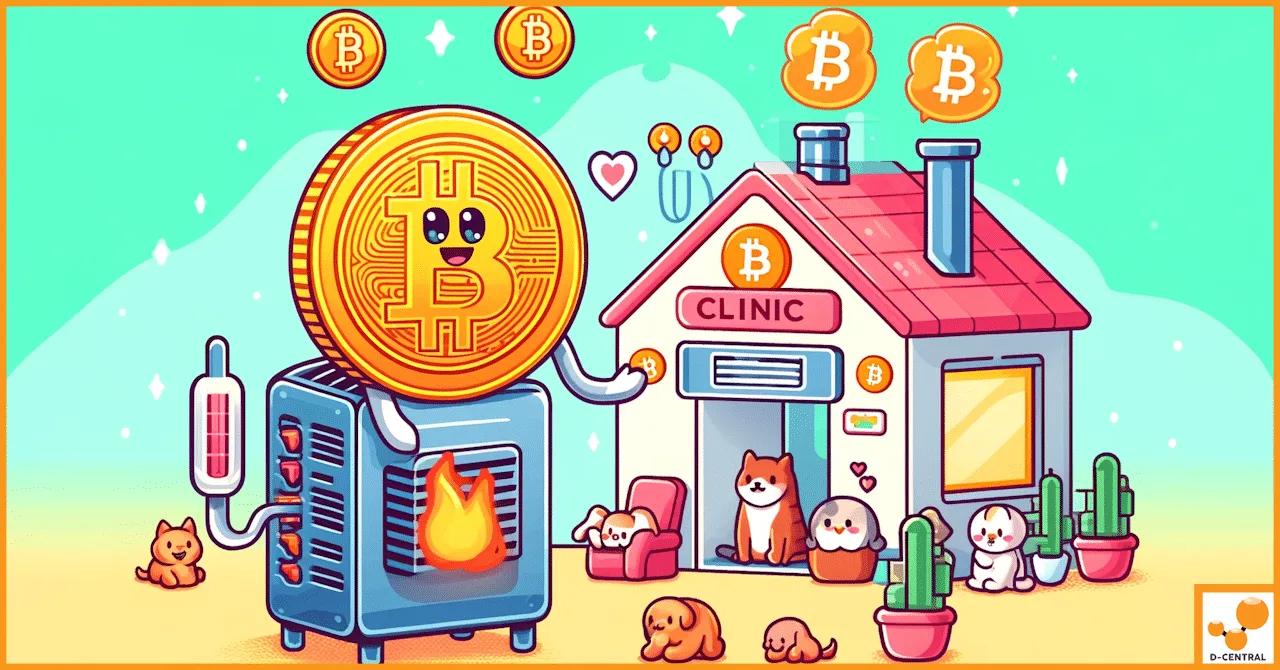
Every ASIC miner is a space heater that happens to secure the Bitcoin network. That is not a metaphor — it is thermodynamics. A single Antminer S19 draws roughly 3,250 watts and converts nearly all of it into heat. For most of Bitcoin’s history, operators treated that thermal output as a nuisance — something to vent, dissipate, or fight with industrial cooling. But a growing number of builders have flipped the script entirely, and veterinary clinics represent one of the most compelling use cases for Bitcoin mining heat recapture in 2026.
Veterinary facilities demand consistent, reliable warmth across recovery rooms, surgical suites, kennels, and exotic animal enclosures. Traditional HVAC systems burn fossil fuels or draw heavy grid loads to meet those needs. Bitcoin miners do both jobs at once: they secure the most decentralized monetary network on Earth while producing the exact thermal output a clinic needs to keep animals healthy. This is not theoretical — it is already happening, and the economics have never been better.
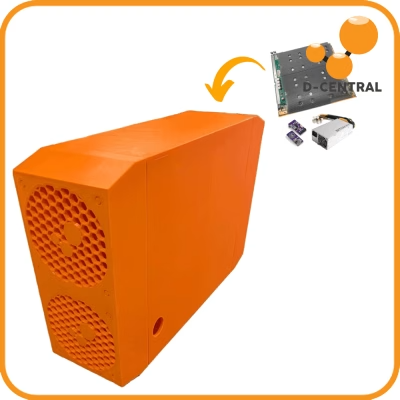
At D-Central Technologies, we have spent since 2016 building, repairing, and deploying ASIC hardware for exactly these kinds of dual-purpose applications. We pioneered Bitcoin Space Heaters — custom-built mining units designed from the ground up to heat residential and commercial spaces while stacking sats. Veterinary clinics are a natural extension of this philosophy.
Why Bitcoin Mining Heat and Veterinary Clinics Are a Perfect Match
A veterinary clinic is not a typical commercial building. The heating requirements are more demanding, more varied, and more critical than a standard office or retail space. Consider what a mid-sized animal clinic needs to keep running:
- Post-operative recovery rooms maintained at 26-30 degrees Celsius to prevent hypothermia in animals coming out of anesthesia
- Neonatal and ICU wards requiring stable, elevated temperatures around the clock
- Exotic animal enclosures mimicking tropical or desert climates — often 28-35 degrees Celsius
- Hydrotherapy pools needing warm water for rehabilitation
- General facility heating for waiting rooms, exam rooms, and staff areas
Traditional solutions attack each of these with separate systems: electric baseboard heaters, forced-air furnaces, radiant floor heating, heat lamps, and dedicated HVAC zones. Every one of those systems is a pure cost center — energy goes in, heat comes out, and the utility bill arrives.
Bitcoin miners change the equation. The energy still goes in, the heat still comes out, but in between, the hardware is doing meaningful computational work that earns bitcoin. In 2026, with the Bitcoin network hashrate exceeding 800 EH/s and difficulty above 110 trillion, every hash still contributes to the security of a network carrying trillions of dollars in value. The block reward stands at 3.125 BTC following the April 2024 halving, and transaction fees increasingly supplement miner revenue.
The Thermodynamics: How It Actually Works
There is no magic here — just physics. An ASIC miner converts electrical energy into computational work and heat. The conversion ratio is effectively 100% to heat, because the computational work itself dissipates as thermal energy through the chips, VRMs, and circuit boards. A 3,000-watt miner produces 3,000 watts of heat — approximately 10,236 BTU/hr. That is equivalent to a mid-range electric space heater, except this one is also mining bitcoin.
Heat Output by Common ASIC Models
| Miner Model | Power Draw | Heat Output (BTU/hr) | Hashrate | Best Use Case |
|---|---|---|---|---|
| Antminer S9 Space Heater | ~1,350W | ~4,607 BTU/hr | ~14 TH/s | Small recovery rooms, kennels |
| Antminer S19 Space Heater | ~3,250W | ~11,089 BTU/hr | ~95 TH/s | Surgical suites, large wards |
| Antminer S17 Space Heater | ~2,400W | ~8,189 BTU/hr | ~56 TH/s | Exam rooms, staff areas |
| Bitaxe Hex | ~90W | ~307 BTU/hr | ~3 TH/s | Small enclosures, desk heating, solo mining |
The key insight is that every watt consumed by an ASIC miner becomes a watt of heat. There is no efficiency loss in the thermal conversion — the “waste” is the product. A veterinary clinic that would otherwise spend $500/month on electric heating can redirect that same electricity through ASIC miners and receive both heat and bitcoin in return.
Choosing the Right Hardware for a Veterinary Clinic
Not every miner is appropriate for a clinical environment. The two critical factors are noise and heat distribution. A stock Antminer S19 at full speed produces 75+ decibels — that is a non-starter in a room full of recovering animals. This is precisely why purpose-built solutions exist.
D-Central Bitcoin Space Heaters
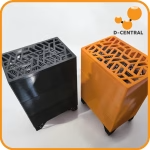
D-Central’s Bitcoin Space Heater line addresses the noise problem head-on. These are ASIC miners rebuilt into custom enclosures with sound-dampening materials, modified fan profiles, and ducting attachments that redirect airflow where you need it. The S9 Space Heater Edition, for example, runs at significantly reduced noise levels compared to a stock unit while still producing over 4,600 BTU/hr of usable heat.
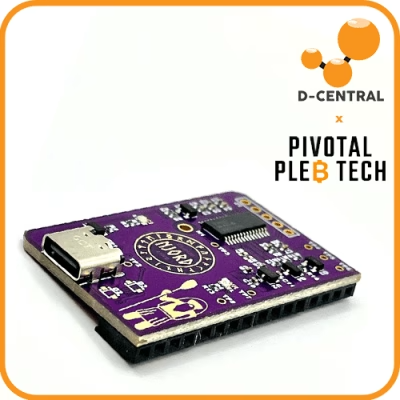
For smaller, targeted heating — think individual kennels or exotic enclosures — open-source miners like the Bitaxe are silent solid-state options. A Bitaxe Supra or Ultra draws only about 15 watts and produces gentle, consistent warmth. It will not heat an entire room, but deployed inside or adjacent to a reptile enclosure or neonatal incubator, it adds meaningful supplemental heat while solo mining bitcoin. Every hash counts.
Hardware Selection by Clinic Zone
| Clinic Zone | Temperature Need | Noise Tolerance | Recommended Hardware |
|---|---|---|---|
| Mechanical/utility room | High output, bulk heating | High | Stock Antminer S19/S21 with ducting |
| Recovery rooms | 26-30C, consistent | Low | S9 or S19 Space Heater Edition |
| Kennel/boarding area | 22-26C, even distribution | Moderate | S17 Space Heater + ducting |
| Exotic enclosures | 28-35C, precise | Very low | Bitaxe or NerdAxe (silent, small form factor) |
| Waiting room / reception | 20-22C, comfort | Low | Space Heater Edition behind wall/ceiling |
| Hydrotherapy/pool area | Warm air + water heating | Moderate | Immersion-cooled miner (liquid-to-water heat exchange) |
Step-by-Step Implementation Guide
Deploying Bitcoin mining heat in a veterinary clinic is not a weekend project, but it is far simpler than most people assume. Here is the practical breakdown:
Step 1: Thermal Audit
Before purchasing any hardware, calculate the clinic’s total heating load. Measure each zone’s square footage, insulation quality, target temperature, and current energy consumption. A qualified HVAC technician or energy auditor can produce a detailed heat-loss calculation. This determines exactly how many watts — and therefore how many miners — are needed.
Step 2: Electrical Assessment
ASIC miners require dedicated electrical circuits. A single Antminer S19 needs a 240V/20A circuit. Plan for the total amperage draw of all miners plus the clinic’s existing electrical load. An electrician must verify that the panel and service entrance can handle the additional capacity. In Canada, all electrical work must comply with the Canadian Electrical Code (CEC).
Step 3: Hardware Procurement
Source your mining hardware from a reputable supplier. D-Central’s online shop carries everything from purpose-built Space Heaters to individual ASIC miners, replacement parts, and accessories. If you need help selecting the right configuration for your clinic’s specific layout, D-Central’s mining consulting service can design a custom deployment plan.
Step 4: Installation and Ducting
For noise-sensitive environments, install miners in a dedicated mechanical room or utility closet. Use insulated ducting to route the heated exhaust air into the zones that need it. Inline duct fans can boost airflow over longer runs. Temperature sensors and smart thermostats at each zone endpoint allow automated damper control — when a recovery room reaches its target temperature, a motorized damper closes and redirects airflow to the next zone.
Step 5: Network and Pool Configuration
Connect miners to your network via Ethernet (Wi-Fi is not reliable enough for sustained mining). Configure each miner to point at a mining pool — or, for the Bitaxe units, set them up for solo mining via public Stratum servers. Solo mining with low-hashrate devices is a lottery, but hitting a block at 3.125 BTC would be a life-changing event for any small business. Every hash counts.
Step 6: Monitoring and Maintenance
Deploy monitoring software to track each miner’s hashrate, temperature, and fan speed. Set up alerts for any unit that goes offline — because when a miner stops hashing, a heating zone loses its heat source. Schedule quarterly cleanings to remove dust from heatsinks and fans. If a hashboard fails, D-Central’s ASIC repair service can diagnose and fix the issue, often within days.
The Financial Case: Running the Numbers
Let us model a mid-sized veterinary clinic in Quebec, Canada — a province with some of the lowest electricity rates in North America at roughly $0.07/kWh.
Scenario: 4x Antminer S19 Space Heaters
| Metric | Value |
|---|---|
| Total power draw | 13,000W (13 kW) |
| Total heat output | ~44,356 BTU/hr |
| Monthly electricity cost | ~$655 CAD (at $0.07/kWh) |
| Combined hashrate | ~380 TH/s |
| Estimated monthly BTC revenue | Variable (depends on difficulty and BTC price) |
| Heating equivalent replaced | ~44,000 BTU/hr (equivalent to a mid-sized furnace) |
| Net heating cost after BTC revenue | Significantly reduced vs. pure electric heating |
The critical comparison is against the alternative: spending the same $655/month on a conventional electric heating system that produces exactly the same amount of heat but earns zero bitcoin. The electricity cost is identical — the difference is that mining hardware gives you a revenue stream on top of the thermal output. Even if mining revenue only offsets 30-50% of the electricity bill, the effective cost of heating drops dramatically.
And here is the real kicker for long-term thinkers: those sats you earn today might be worth substantially more in the future. Many operators choose to hold rather than sell, treating mining revenue as a forced savings mechanism denominated in the hardest money ever created.
Noise Management: The Critical Challenge
Let us be direct — stock ASIC miners are loud. A bone-stock Antminer S19 sits at approximately 75 dB, comparable to a vacuum cleaner running continuously. That is unacceptable in a veterinary environment where stressed, recovering, or noise-sensitive animals need calm surroundings.
Solutions exist at every level:
- Purpose-built Space Heaters: D-Central’s Space Heater editions use custom enclosures with acoustic dampening, reduced fan speeds, and optimized airflow paths. Noise levels drop to 50-55 dB — comparable to a quiet conversation.
- Mechanical room isolation: Install miners in a soundproofed utility room and duct the heated air to where it is needed. The room itself acts as a sound barrier.
- Aftermarket fan replacements: Replacing stock fans with Noctua or similar low-noise fans can reduce noise by 15-20 dB at the cost of some hashrate (due to higher chip temperatures).
- Immersion cooling: The most aggressive solution. Submerging miners in dielectric fluid eliminates fan noise entirely. The heated fluid is then pumped through a heat exchanger to produce warm air or hot water. Silent operation, maximum heat capture.
- Open-source miners: Bitaxe and NerdAxe units are near-silent by design. A Bitaxe Supra with a passive heatsink produces zero fan noise.
Canadian Advantages: Why This Makes Even More Sense Here
Canada’s climate makes Bitcoin mining heat recapture particularly compelling. In provinces like Quebec, Ontario, Alberta, and the Maritime provinces, heating season runs 6-8 months of the year. During those months, every watt of mining heat directly displaces a watt of conventional heating — the economic offset is nearly 1:1.
Additional Canadian advantages:
- Low electricity rates: Quebec hydro rates are among the lowest in the world. Alberta and British Columbia also offer competitive commercial rates.
- Cold ambient air: Cold intake air improves ASIC efficiency, meaning miners run cooler (and therefore more reliably) while the heated exhaust is put to immediate use.
- Tax treatment: Bitcoin mining revenue may qualify as business income, and the mining hardware can be depreciated as a capital asset. Consult a Canadian tax professional familiar with cryptocurrency mining.
- Sustainability narrative: Using Bitcoin mining to displace fossil fuel heating aligns with Canadian provincial carbon reduction goals and may help clinics qualify for green building certifications or energy rebates.
D-Central is headquartered in Montreal, Quebec, and operates mining hosting facilities in Quebec. We understand the Canadian energy landscape from firsthand experience.
Real-World Precedents: Heat Recapture in Action
Bitcoin mining heat recapture is no longer experimental. Across the world, operators are deploying this approach in diverse settings:
- Greenhouse agriculture in Quebec: Farms in the province use ASIC exhaust heat to extend growing seasons through harsh winters, producing strawberries and vegetables year-round.
- Residential heating across Scandinavia and Canada: Home miners have been heating their houses with ASICs for years. D-Central’s Space Heater line was designed specifically for this use case.
- Whisky distilleries in Scotland: At least one distillery uses mining heat for the grain drying process.
- Swimming pools and spas: Several facilities in North America and Europe use immersion-cooled miners to heat pool water.
- Commercial buildings: Office buildings in Scandinavia have integrated mining rigs into their HVAC systems as supplemental heat sources.
Veterinary clinics fit squarely into this pattern. The heating requirements are real, the operational hours are long (many clinics run 24/7 for emergency and boarding services), and the financial benefit of offsetting heating costs with mining revenue is tangible.
Regulatory and Safety Considerations
Before deploying miners in a veterinary clinic, address these regulatory and safety factors:
- Electrical code compliance: All installations must meet local electrical codes (CEC in Canada, NEC in the United States). Dedicated circuits, proper grounding, and appropriate breaker sizing are mandatory.
- Fire safety: ASIC miners generate heat and draw significant current. Ensure adequate clearance around units, use fire-rated enclosures where required, and maintain smoke detection in mining areas.
- Air quality: Miners draw in ambient air and exhaust heated air. In a clinical environment, ensure that intake air is filtered and that exhaust air does not carry contaminants into animal care areas. HEPA filtration on ducting is recommended.
- Insurance: Notify your commercial insurance provider about the mining equipment. Some policies may require additional riders for cryptocurrency mining operations.
- Zoning and permits: Verify that local zoning permits cryptocurrency mining operations within a veterinary clinic. Most jurisdictions treat it as standard commercial electrical equipment, but check first.
- Cryptocurrency regulations: In Canada, mining income is taxable as business income. Maintain records of all bitcoin earned, electricity consumed, and equipment costs for CRA reporting.
Maintenance and Long-Term Operation
ASIC miners are industrial equipment. They require regular maintenance to operate reliably:
- Dust removal: Every 3-6 months, clean heatsinks and fan assemblies with compressed air. Veterinary environments may accumulate pet hair and dander faster than typical settings.
- Fan replacement: Fans are consumable parts with a typical lifespan of 2-3 years. Keep spares on hand.
- Hashboard diagnostics: If hashrate drops, a hashboard may be failing. D-Central’s repair team specializes in hashboard-level diagnostics and component replacement — we have repaired thousands of units since 2016.
- Firmware updates: Keep miner firmware current. Some aftermarket firmware (like Braiins OS or Vnish) offers underclocking/undervolting options that reduce noise and heat output during warmer months.
- Seasonal adjustment: In summer, when heating is not needed, miners can be powered down, relocated, or sent to a hosting facility to continue earning bitcoin without adding unwanted heat to the clinic.
Getting Started: Your Next Steps
If you operate a veterinary clinic and want to explore Bitcoin mining heat recapture, here is how to begin:
- Calculate your heating load — know how many BTUs you need per zone
- Get an electrical assessment — verify your panel can support the additional circuits
- Explore D-Central’s Space Heater lineup — browse our Bitcoin Space Heaters for purpose-built solutions
- Consider consulting — book a mining consultation with D-Central to design a deployment tailored to your facility
- Start small — deploy a single Space Heater in one zone, measure the results, then scale
Every hash secures the Bitcoin network. Every watt heats your clinic. There is no reason those two facts should not work together.
Frequently Asked Questions
How much heat does a Bitcoin miner produce?
Every watt consumed by a Bitcoin miner is converted into heat. A 3,250W Antminer S19 produces approximately 11,089 BTU/hr — equivalent to a mid-range electric space heater. The difference is that the miner also earns bitcoin while producing that heat.
Are Bitcoin miners too loud for a veterinary clinic?
Stock ASIC miners are loud (70-80 dB), but solutions exist. D-Central’s Space Heater editions reduce noise to 50-55 dB through custom enclosures and modified fan profiles. Installing miners in a soundproofed utility room with ducted heat distribution eliminates noise in animal care areas entirely. Open-source miners like the Bitaxe are near-silent.
What is the cost to set up Bitcoin mining heating in a vet clinic?
Costs vary by scale. A single Antminer S9 Space Heater is an entry-level investment, while a full deployment of 4-6 S19 units requires more significant capital for hardware, electrical work, and ducting. The ongoing electricity cost is identical to what you would spend on conventional electric heating for the same BTU output — but mining generates bitcoin revenue that offsets part of that cost.
Does Bitcoin mining heat recapture actually save money?
Yes. The electricity cost of running a miner is the same as running an equivalent electric heater. The difference is that the miner produces bitcoin as a byproduct. Even modest mining revenue — offsetting 30-50% of the electricity cost — means your effective heating cost is substantially lower than pure electric heating. In low-cost electricity regions like Quebec, the economics are particularly favorable.
Can I mine Bitcoin and heat my clinic with renewable energy?
Absolutely. In Quebec, over 95% of electricity comes from hydropower. Running miners on hydro means your heating solution is powered by renewable energy, your carbon footprint is minimal, and you are earning bitcoin with some of the cleanest energy on the planet. Solar and wind can also supplement mining operations.
What happens in summer when I do not need the heat?
You have several options: power down the miners during warm months, relocate them to a hosting facility like D-Central’s Quebec facility to continue earning bitcoin, or use immersion cooling to capture heat for water heating (domestic hot water is needed year-round). Some operators also use underclocking to reduce heat output while maintaining a lower mining operation.
Is Bitcoin mining legal in Canada for a veterinary business?
Yes. Bitcoin mining is legal in Canada. Mining income is treated as business income by the CRA and must be reported. The mining hardware can be depreciated as a capital asset. Consult a tax professional familiar with cryptocurrency mining for specific guidance on your situation.
What if a miner breaks down — does my clinic lose heat?
A well-designed system includes redundancy. If one miner fails, the others continue producing heat. You should also maintain a backup conventional heating source for emergencies. D-Central offers fast ASIC repair service — we have been repairing miners since 2016 and stock parts for all major models.