When Bitcoin’s price moves, the entire mining ecosystem shifts with it. But the real story is not about ticker symbols or market speculation — it is about the fundamental economics of proof-of-work, the hardware decisions miners make, and the thermodynamic realities of converting electricity into hashrate. Understanding how price movements ripple through the mining industry is essential knowledge for anyone running an ASIC in their garage, basement, or dedicated mining room.
Since D-Central Technologies was founded in 2016, we have watched multiple Bitcoin price cycles reshape the mining landscape. Each cycle teaches the same lesson: the miners who survive and thrive are not the ones chasing price — they are the ones who understand their cost structure, optimize their hardware, and think in terms of sats-per-kilowatt-hour rather than fiat returns.
The Hashrate-Price Feedback Loop
Bitcoin’s mining difficulty adjustment is one of the most elegant mechanisms in all of computer science. Every 2,016 blocks — roughly every two weeks — the protocol recalibrates difficulty to maintain approximately ten-minute block intervals. This creates a dynamic feedback loop between price and hashrate that governs the entire mining economy.
Here is how the cycle works:
- Price rises — Mining becomes more profitable at current difficulty levels. Revenue per terahash increases.
- New hashrate comes online — Miners power on shelved equipment, purchase new hardware, and expand operations.
- Difficulty adjusts upward — The network recalibrates, reducing the Bitcoin earned per terahash.
- A new equilibrium forms — Only miners with competitive cost structures remain profitable.
The reverse happens during price declines. Less efficient hardware gets shut down, difficulty drops, and the remaining miners earn proportionally more Bitcoin per terahash. This is why Bitcoin’s network hashrate has never permanently collapsed — the difficulty adjustment ensures mining always remains viable for the most efficient operators.
As of early 2026, Bitcoin’s network hashrate has surpassed 800 EH/s, a staggering number that reflects both rising prices and continuous improvements in ASIC efficiency. The latest generation of miners, like the Antminer S21 series, operate below 15 J/TH — a dramatic improvement from the 80+ J/TH of the S9 era.
What Rising Prices Actually Mean for Home Miners
Mainstream media tends to frame Bitcoin price movements in terms of portfolio value. For miners, the reality is far more nuanced. A price increase does not just mean “your Bitcoin is worth more” — it fundamentally changes the operational calculus.
Revenue Per Terahash
The most direct impact is on revenue per terahash (often expressed as USD/TH/day or sats/TH/day). When price doubles, your daily revenue in fiat terms roughly doubles — assuming difficulty stays constant. But difficulty never stays constant. The key metric is hashprice, which accounts for both the Bitcoin block subsidy and network difficulty.
| Metric | What It Measures | Why It Matters |
|---|---|---|
| Hashprice | Revenue per TH/s per day (USD) | Determines if your hardware is profitable at your electricity rate |
| Break-even electricity | Max $/kWh where mining is profitable | Tells you which hardware models are viable at your power cost |
| Difficulty epoch | Current difficulty level relative to historical | Indicates competitive pressure in the network |
| Sats/kWh | Bitcoin earned per kilowatt-hour consumed | The core efficiency metric for any mining operation |
Hardware Viability Tiers
Price movements create distinct viability tiers for mining hardware. When prices are high, even older-generation ASICs can operate profitably. When prices compress, only the most efficient machines survive. Understanding which tier your hardware falls into is critical for operational planning.
| Hardware Generation | Efficiency (J/TH) | Viability at Low Prices | Viability at High Prices |
|---|---|---|---|
| Antminer S9 / L3+ era | 80-100 J/TH | Unprofitable (electricity only) | Marginal — viable as space heaters |
| Antminer S17 / S19 era | 25-35 J/TH | Marginal at low electricity rates | Profitable at most rates |
| Antminer S19 XP / S19k Pro | 20-25 J/TH | Profitable at low rates | Strong profitability |
| Antminer S21 / Latest gen | 12-17 J/TH | Profitable at most rates | Excellent profitability |
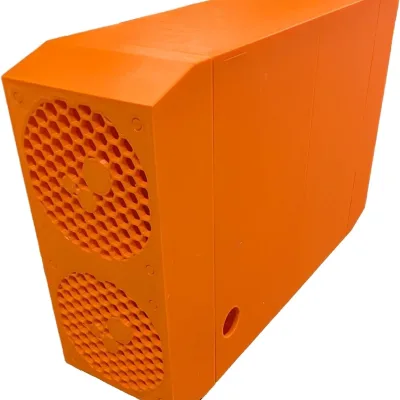
This is exactly why Bitcoin Space Heaters exist as a category. Older hardware like the S9 may no longer be purely competitive as a mining-only device, but when you account for the heat offset — replacing your electric space heater with a device that both heats your room and mines Bitcoin — the economics change entirely. The Bitcoin you earn is effectively a discount on your heating bill, regardless of what the difficulty does.
The Post-Halving Reality: April 2024 and Beyond
The April 2024 halving cut the block subsidy from 6.25 BTC to 3.125 BTC per block. This single event fundamentally reshaped mining economics by cutting miner revenue in half overnight (in Bitcoin terms). For this reduction to be offset, either the Bitcoin price must double, transaction fees must increase significantly, or less efficient miners must capitulate and leave the network.
In practice, all three have occurred to varying degrees:
- Price appreciation — Bitcoin’s price has risen substantially since the halving, partially offsetting the subsidy reduction.
- Fee market maturation — Inscription activity (Ordinals, BRC-20) and general adoption have created periods of elevated fee revenue, sometimes contributing 10-20% of total block rewards.
- Hashrate rationalization — Less efficient operations have powered down, reducing competitive pressure on remaining miners.
For home miners, the post-halving landscape reinforces a simple truth: efficiency is survival. Every joule per terahash matters. Every cent per kilowatt-hour matters. And dual-purpose use cases — mining plus heating — provide a structural advantage that large data center operations cannot replicate.
Electricity Cost: The Variable That Matters Most
If there is one metric that determines whether a mining operation succeeds or fails, it is the cost of electricity. Bitcoin price movements affect revenue, but electricity cost determines your expense floor. The spread between the two is your margin.
Canadian home miners have a structural advantage here. Provincial electricity rates in Quebec, Manitoba, and British Columbia remain among the lowest in North America. When combined with cold climate cooling advantages (reduced or eliminated cooling costs for 6-8 months of the year), Canadian home miners can achieve all-in operating costs that rival industrial operations.
| Factor | Impact on Mining Economics | Home Miner Strategy |
|---|---|---|
| Electricity rate | Direct operating cost — typically 80-95% of expenses | Time-of-use optimization, off-peak mining, solar/wind integration |
| Cooling costs | Additional 10-30% on top of miner power draw in hot climates | Cold climate advantage, heat recapture for home heating |
| Hardware efficiency | Determines break-even electricity price | Upgrade path planning, efficiency-per-dollar calculations |
| Uptime | Higher uptime = more hashes = more revenue | Proper maintenance, professional ASIC repair when needed |
The Break-Even Electricity Price
The break-even electricity price is the rate at which your mining revenue exactly equals your electricity cost — zero profit, zero loss. This number is determined by three variables: the Bitcoin price, the network difficulty, and your hardware’s efficiency (J/TH).
When Bitcoin’s price rises, the break-even electricity price rises with it. This means hardware that was previously unprofitable at your electricity rate suddenly becomes viable. When price drops, the break-even falls, and less efficient hardware gets squeezed out.
As a concrete example: an Antminer S19j Pro operating at approximately 28 J/TH might have a break-even electricity cost of $0.06/kWh at a certain price-difficulty combination. An Antminer S21 at 15 J/TH would have a break-even closer to $0.12/kWh at the same conditions — meaning it remains profitable at electricity rates nearly twice as high. This is the power of efficiency.
Hardware Strategy in a Price-Sensitive Market
Every price cycle creates a decision point for miners: do you upgrade hardware, expand capacity, or hold steady? The answer depends on your time horizon, capital availability, and electricity cost.
During Price Rallies
- Older hardware becomes profitable again — do not sell it prematurely. An S17 or S19 that was marginal at lower prices may produce significant returns during a rally.
- New hardware prices increase — ASIC manufacturers raise prices to match increased demand. Buying during rallies means paying premium prices for hardware.
- Difficulty will catch up — The euphoria window is temporary. New hashrate comes online, difficulty rises, and margins compress.
During Price Declines
- ASIC hardware gets cheaper — This is historically the best time to acquire efficient mining equipment. Distressed sellers and manufacturer discounts create buying opportunities.
- Inefficient miners capitulate — Their departure reduces difficulty, improving economics for remaining miners.
- Focus on efficiency — Audit your operation. Undervolting, firmware optimization, and heat recapture become critical differentiators.
The Open-Source Mining Alternative
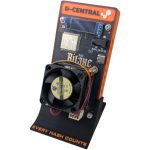
Price volatility has also accelerated interest in open-source mining hardware like the Bitaxe family of solo miners. These devices operate on a fundamentally different economic model — they are not trying to compete with industrial hashrate on a per-terahash basis. Instead, they represent a low-cost, low-power entry point for solo mining, where each hash is a lottery ticket for a full 3.125 BTC block reward.
The beauty of solo mining with a Bitaxe is that Bitcoin price appreciation directly increases the value of the potential reward without meaningfully changing your operating cost. A Bitaxe Supra running at 500+ GH/s draws under 15 watts — costing pennies per day to operate. Whether Bitcoin is at $50,000 or $150,000, your electricity cost is essentially the same, but the value of hitting a block differs enormously.
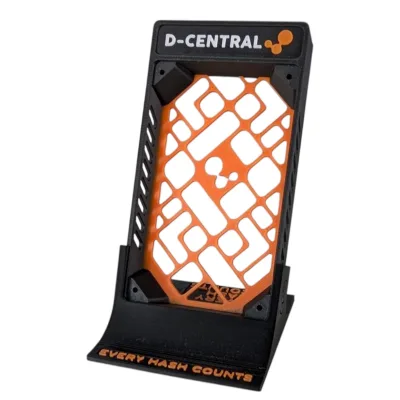
D-Central has been a pioneer in the Bitaxe ecosystem since its inception. We created the original Bitaxe Mesh Stand, developed leading heatsink solutions for both the Bitaxe and Bitaxe Hex, and stock every variant and accessory. Our commitment to open-source mining hardware reflects our core belief: every hash counts, and every miner matters in the fight for network decentralization.
Mining Economics Beyond Price: The Full Picture
Focusing exclusively on Bitcoin’s fiat price misses the broader picture of mining economics. Several factors beyond spot price determine whether a mining operation is healthy:
Transaction Fee Revenue
As Bitcoin’s block subsidy continues to halve every four years, transaction fees will become an increasingly important component of miner revenue. The emergence of Ordinals, BRC-20 tokens, and general network activity has already demonstrated that fee revenue can be substantial during periods of high demand. Miners with consistent uptime benefit most from fee spikes, which often occur unpredictably.
The Sats-Per-Kilowatt-Hour Mindset
We encourage every home miner to think in sats, not dollars. When you mine Bitcoin, you are converting electricity into the hardest money ever created. The fiat-denominated “profitability” on any given day is far less important than the total sats accumulated over time. Many miners who were “unprofitable” in fiat terms during the 2022 bear market found that the Bitcoin they accumulated was worth dramatically more by 2024-2025.
This sats-first mindset is particularly relevant for home miners who are mining with excess energy capacity — solar overproduction, off-peak electricity, or energy that would otherwise be wasted. In these scenarios, the marginal cost of mining approaches zero, and every sat earned is pure upside.
Heat Recapture Value
One of the most undervalued aspects of home mining economics is heat recapture. An Antminer S9 draws approximately 1,350 watts. That is 1,350 watts of heat output — equivalent to a powerful space heater. During cold Canadian winters, this heat is not waste; it is a feature. Bitcoin Space Heaters monetize energy that you would have spent on heating anyway, fundamentally changing the profitability equation.
When you factor in heat offset value, even “unprofitable” older-generation hardware becomes economically rational. You were going to run a 1,500-watt heater regardless — why not run one that also mines Bitcoin?
Network Decentralization: Why Home Mining Matters Beyond Economics
There is a dimension to mining that transcends pure economics: network security and decentralization. Bitcoin’s security model depends on hashrate being distributed across many independent operators. When mining becomes concentrated in a handful of large data centers, the network becomes more vulnerable to regulatory pressure, geographic risk, and coordination attacks.
Every home miner, whether running a single Bitaxe or a garage full of S21s, contributes to Bitcoin’s decentralization. This is not an abstract ideal — it is a practical necessity for the long-term security of the network. The cypherpunk ethos that created Bitcoin was built on the assumption that individuals would participate in securing the network, not just large corporations.
D-Central’s mission since 2016 has been the decentralization of every layer of Bitcoin mining. We provide the hardware, the repair expertise, the education, and the community support that enables home miners to participate in securing the network. Whether Bitcoin’s price is up or down, this mission does not change.
Practical Strategies for Navigating Price Volatility
Here are concrete strategies that home miners can implement to remain resilient across Bitcoin price cycles:
1. Know Your Numbers
Calculate your all-in cost per kilowatt-hour, including any cooling overhead. Compare this against the current break-even electricity price for your specific hardware. Use tools like mining profitability calculators to model different price and difficulty scenarios.
2. Diversify Your Hardware Portfolio
Running a mix of high-efficiency ASICs (for consistent revenue) and solo mining devices like the Bitaxe (for lottery upside) creates a balanced mining portfolio. The ASICs generate steady sats accumulation while the solo miners offer asymmetric upside potential.
3. Optimize Before You Expand
Before buying additional hardware, maximize what you have. Firmware optimization, undervolting, and proper cooling can improve your J/TH ratio by 10-20% without any capital expenditure. Ensure your existing machines are properly maintained — a hashboard running at 80% efficiency is wasting 20% of your electricity cost.
4. Time Your Hardware Purchases
ASIC hardware prices correlate with Bitcoin price. Buying during bear markets or price dips typically yields better hardware-per-dollar. During rallies, focus on optimizing existing operations rather than paying premium prices for new equipment.
5. Leverage Heat Recapture
If you live in a cold climate (and if you are in Canada, you do), integrate your miners into your home heating system. Purpose-built solutions like Bitcoin Space Heaters make this straightforward, but even a standard ASIC in a well-ventilated room provides meaningful heat during winter months.
6. Maintain Your Equipment
A miner that is down for repairs is earning zero revenue. Regular maintenance — cleaning fans, checking thermal paste, monitoring hashboard health — prevents costly downtime. When repairs are needed, professional ASIC repair services can get your hardware back online quickly rather than letting it sit idle for weeks.
7. Think Long-Term
Mining is not a short-term trade. The miners who build sustainable operations — low electricity costs, efficient hardware, heat recapture, proper maintenance — are the ones who accumulate the most sats over time. Price volatility is noise; operational efficiency is signal.
The Future of Mining Economics
Looking ahead, several trends will shape mining economics in the coming years:
- Continued efficiency improvements — ASIC manufacturers are pushing toward single-digit J/TH ratios. Each generation reduces the electricity cost per hash.
- Growing fee revenue — As block subsidy continues to halve, transaction fees will become the dominant revenue source. This transition is gradual but inevitable.
- Energy integration — Mining is increasingly recognized as a flexible energy load that can stabilize grids, monetize stranded energy, and integrate with renewable sources.
- Home mining growth — Quieter, more efficient hardware and dual-purpose use cases (heating) are making home mining more accessible than ever.
- Open-source hardware maturation — Projects like the Bitaxe are democratizing mining hardware manufacturing, reducing dependence on a handful of ASIC manufacturers.
The relationship between Bitcoin’s price and mining economics will always be dynamic. But the fundamentals remain constant: convert electricity to hashrate as efficiently as possible, accumulate sats, and contribute to the decentralization of the network. Everything else is noise.
Frequently Asked Questions
How does Bitcoin’s price directly affect mining profitability?
Bitcoin’s price determines the fiat value of the block reward miners receive. When price rises, each terahash of mining power generates more revenue in dollar terms. However, this effect is tempered by difficulty adjustments — as price rises attract more hashrate to the network, difficulty increases, reducing the Bitcoin earned per terahash. The net effect on profitability depends on the balance between price appreciation and difficulty growth, along with your individual electricity cost.
What is the break-even electricity price and how do I calculate it?
The break-even electricity price is the maximum cost per kilowatt-hour at which your mining operation covers its electricity costs. It is calculated using three variables: the current Bitcoin price, the network difficulty, and your hardware’s power efficiency (measured in joules per terahash, or J/TH). More efficient hardware has a higher break-even electricity price, meaning it remains profitable at higher electricity rates. Online mining calculators can compute this for specific hardware models and current network conditions.
Should I buy mining hardware during a Bitcoin price rally or wait for a dip?
Historically, ASIC hardware prices correlate with Bitcoin’s price. During rallies, demand for mining equipment surges, driving up hardware costs. During price declines, hardware prices typically drop as miners sell equipment and manufacturers offer discounts. For the best hardware-per-dollar ratio, purchasing during bear markets or price corrections tends to yield better long-term returns. During rallies, focus on optimizing your existing hardware rather than paying premium prices for new equipment.
Why is hardware efficiency (J/TH) more important than raw hashrate?
Efficiency determines how much electricity you consume to produce each terahash of mining power. A machine with lower J/TH produces the same hashrate for less electricity cost. In a competitive mining environment where difficulty continuously adjusts, efficiency is the primary determinant of whether a machine is profitable. A 100 TH/s miner at 30 J/TH will be less profitable than a 100 TH/s miner at 15 J/TH — the second machine earns the same revenue but costs roughly half as much in electricity.
How does heat recapture change the economics of home mining?
ASIC miners convert nearly 100% of their electricity consumption into heat. In cold climates, this heat can directly replace traditional space heating, effectively reducing the net cost of mining by the value of the displaced heating energy. For example, if you would normally spend $200 per month on electric heating, and a Bitcoin miner consumes the same amount of electricity while also producing Bitcoin, your effective mining cost is reduced by the full $200 heating offset. This is why Bitcoin Space Heaters are an increasingly popular option for Canadian home miners.
What role does the Bitcoin halving play in mining economics?
The halving, which occurs approximately every four years, cuts the block subsidy in half. The most recent halving in April 2024 reduced the subsidy from 6.25 BTC to 3.125 BTC per block. This instantly halves the Bitcoin-denominated revenue for miners, creating intense competitive pressure. Only the most efficient miners survive the immediate post-halving period. Historically, Bitcoin’s price has appreciated significantly in the months following each halving, eventually more than compensating for the reduced subsidy — but there is always a challenging adjustment period.
Is solo mining with a Bitaxe economically rational?
Solo mining with a Bitaxe operates on different economics than industrial pool mining. The probability of finding a block with a single Bitaxe is very low on any given day, but the potential reward is a full 3.125 BTC block. At extremely low operating costs (under 15 watts for most Bitaxe models), the expected value calculation becomes favorable over long time horizons — especially when Bitcoin’s price is high, increasing the value of each potential block find. Many solo miners also value the contribution to network decentralization and the pure satisfaction of the mining experience.
How can home miners stay competitive against large mining operations?
Home miners have several structural advantages over large operations: zero land lease costs, no cooling infrastructure in cold climates, heat recapture value, and access to residential electricity rates that can be competitive with industrial rates in certain provinces and states. By focusing on efficiency optimization, proper maintenance, heat integration, and running a mix of pool-mined ASICs and solo mining devices, home miners can build sustainable operations that persist through price cycles. The key is low all-in operating costs and a long-term sats accumulation mindset.