The Bitcoin network processes roughly 800 exahashes per second. That is 800,000,000,000,000,000,000 SHA-256 computations every single second, every day, with no downtime, no maintenance windows, and no central authority scheduling the work. Every one of those hashes is produced by a physical machine, burning real watts, sitting in a real location. The question every home miner must answer is simple: which machine do I plug in?
This guide is built from the workshop floor at D-Central Technologies — Canada’s Bitcoin Mining Hackers since 2016. We have repaired thousands of ASIC miners, built custom space heaters from decommissioned hashboards, and pioneered open-source mining hardware like the Bitaxe. We know what survives, what fails, and what actually earns sats for home miners. No altcoin noise. No investment advice. Just the hardware, the watts, and the hashes.
Why Hardware Selection Is the Only Decision That Matters
Bitcoin mining is proof-of-work in its purest form. Your machine proposes candidate block headers, hashes them with SHA-256d, and checks whether the result falls below the current difficulty target. If it does, you win the block reward — currently 3.125 BTC plus transaction fees. If it does not, you try again. Billions of times per second.
The economics are unforgiving. Your revenue is determined by your hashrate relative to the global network. Your costs are determined by your power consumption and your electricity rate. The gap between the two is your margin — or your loss. There is no marketing gimmick, no firmware trick, and no pool selection strategy that can compensate for choosing the wrong hardware.
This is why we obsess over joules-per-terahash (J/TH). It is the single metric that determines whether a machine prints sats or burns money. Every hardware decision flows from that number.
The Bitcoin Mining Hardware Landscape in 2025
The market has stratified into three clear tiers, each serving a different kind of miner with different goals, different budgets, and different tolerance for noise and heat.
Tier 1: Industrial ASIC Miners
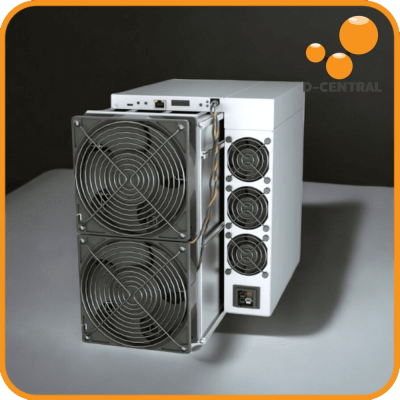
These are the workhorses of the network — purpose-built SHA-256 machines from manufacturers like Bitmain (Antminer series), MicroBT (Whatsminer series), and Canaan (Avalon series). They dominate the global hashrate for good reason: raw efficiency.
| Model | Hashrate | Power Draw | Efficiency (J/TH) | Best For |
|---|---|---|---|---|
| Antminer S21 Pro | 234 TH/s | 3,510 W | 15.0 J/TH | Maximum efficiency at scale |
| Antminer S21 | 200 TH/s | 3,500 W | 17.5 J/TH | High-performance home/facility |
| Antminer S19k Pro | 120 TH/s | 2,760 W | 23.0 J/TH | Budget-friendly mid-gen |
| Whatsminer M50S | 126 TH/s | 3,276 W | 26.0 J/TH | Reliable workhorse |
| Antminer S9 | 14 TH/s | 1,372 W | 98.0 J/TH | Space heater conversion |
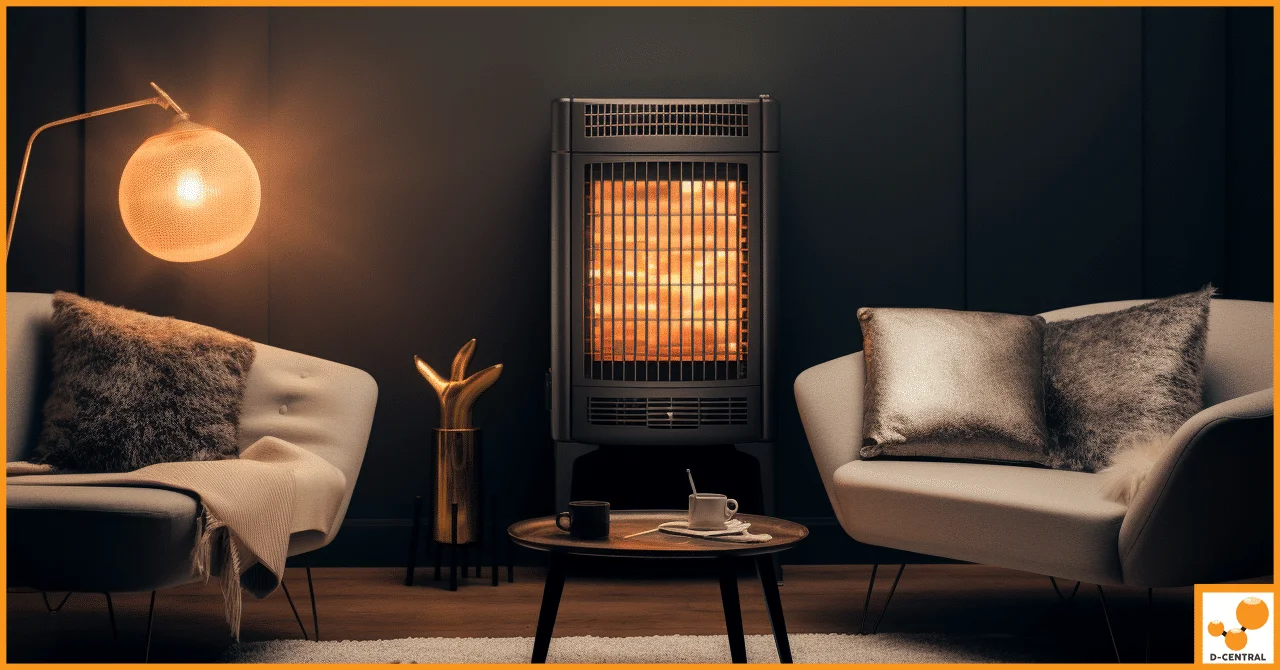
The S9 is technically obsolete for pure profit mining at most electricity rates. But it is far from dead — we build Bitcoin Space Heaters from S9 hashboards specifically because the heat output is the product, and the sats are the bonus. When your miner replaces your electric baseboard heater, the effective electricity cost drops to zero.
For miners running newer-gen machines at scale, the S21 Pro’s 15 J/TH efficiency is the current gold standard. If your electricity cost is under $0.06/kWh, these machines print. Above that, you need to start thinking about dual-purpose strategies or waiting for next-gen hardware.
Tier 2: Open-Source Solo Miners
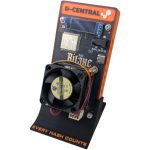
This is where D-Central lives and breathes. Open-source mining hardware — led by the Bitaxe family and the Nerd series — represents the most exciting development in Bitcoin mining since the ASIC itself. These machines are not about competing with industrial hashrate. They are about sovereignty, education, and the lottery ticket that is solo mining.
| Device | Hashrate | Power | Power Input | Solo Mining Odds |
|---|---|---|---|---|
| Bitaxe Supra / Ultra / Gamma | 0.5-1.2 TH/s | 10-15 W | 5V barrel jack (5.5×2.1mm DC) | ~1 in 1M+ per day |
| Bitaxe Hex | ~3 TH/s | ~45 W | 12V DC XT30 connector | ~3x better than single |
| NerdAxe | ~500 GH/s | ~10 W | 5V barrel jack (5.5×2.1mm DC) | Long odds, pure fun |
| NerdQAxe | ~2 TH/s | ~30 W | 12V DC XT30 | Serious open-source contender |
| Nerdminer | ~50 KH/s | <1 W | USB-C | Educational / display piece |
Critical hardware fact: The USB-C port on a Bitaxe or NerdAxe is for firmware flashing and serial communication only — it does NOT supply power. The Bitaxe Supra, Ultra, and Gamma all require a dedicated 5V/6A power supply with a 5.5×2.1mm DC barrel jack. The Bitaxe GT and Hex use 12V DC via an XT30 connector. Plugging in a USB-C cable and expecting your Bitaxe to mine is the number one mistake we see from new builders.
D-Central was one of the first companies in the world to manufacture and stock the Bitaxe. We created the original Bitaxe Mesh Stand, developed heatsinks for both the standard Bitaxe and the Hex, and we carry every variant, every accessory, and every PSU you need to get hashing.
Tier 3: Custom and Dual-Purpose Builds
This is the D-Central specialty — taking institutional mining technology and hacking it for the home miner. Our custom builds include:
- Antminer Slim Edition — Compact single-hashboard builds for reduced noise and power
- Bitcoin Space Heaters — S9, S17, and S19 editions that duct waste heat directly into living spaces
- Antminer Loki & Pivotal Editions — Purpose-built configurations for specific home mining use cases
The philosophy is straightforward: if a machine produces 1,372 watts of heat, and you were going to run a 1,500W space heater anyway, the miner is the smarter appliance. It heats your space AND earns Bitcoin. In Canada’s climate — where heating season runs seven months or longer — this is not a novelty. It is an economic advantage.
The Five Metrics That Actually Matter
Forget marketing specs. When you are evaluating any piece of Bitcoin mining hardware, these are the five numbers that determine whether it earns or burns.
| Metric | What It Measures | Why It Matters |
|---|---|---|
| J/TH (Joules per Terahash) | Energy efficiency | Lower = more sats per watt. The single most important number. |
| Hashrate (TH/s) | Raw computational output | Determines your share of the network and solo mining probability. |
| Power Draw (Watts) | Total electricity consumption | Your largest ongoing cost. Drives your breakeven electricity rate. |
| Noise (dB) | Acoustic output | Determines whether you can run it at home or need a dedicated space. |
| Repairability | Availability of parts and service | A machine you cannot repair is a machine with a hard expiry date. |
That last metric — repairability — is one the industry rarely talks about, but it is critical. An Antminer hashboard failure does not have to mean a $2,000 paperweight. D-Central’s ASIC repair service handles board-level diagnostics and component replacement on 38+ ASIC models from Bitmain, MicroBT, Innosilicon, and Canaan. We repair retail miners — individual home miners who cannot afford to scrap a machine over a single blown chip. That is the Mining Hacker way: fix it, do not trash it.
Home Mining Strategy: The Canadian Advantage
Canada has structural advantages that most miners overlook:
- Seven-month heating season — Mining heat displaces electric or gas heating for half the year or more
- Low-cost hydroelectric power — Quebec averages ~$0.073 CAD/kWh residential, among the cheapest in North America
- Cold ambient temperatures — Natural cooling reduces fan speed, extends hardware life, and cuts noise
- Stable grid infrastructure — No brownouts, no monsoon season, reliable uptime year-round
If you are running a Bitcoin Space Heater during a Quebec winter, your effective mining cost approaches zero because the heat was an expense you were already going to incur. The sats are pure upside. This is why we say: in Canada, Bitcoin mining is not just profitable — it is practical.
For miners who need more than a home setup can provide, D-Central offers Bitcoin mining hosting in Quebec — not Alberta, not Texas, not Iceland. Quebec, where hydroelectric power and cold climate converge to create some of the best mining conditions on the planet.
Choosing Your Path: Pool Mining vs. Solo Mining
The choice between pool mining and solo mining is fundamentally a choice between consistent small payouts and the chance at a full block reward.
Pool mining aggregates your hashrate with thousands of other miners. You receive a proportional share of every block the pool finds. The income is predictable. The trade-off is that you are trusting a pool operator, contributing to hashrate centralization, and receiving fractions of sats rather than full blocks.
Solo mining means your machine works alone (or through a solo mining proxy). If your machine finds a valid block, you receive the entire 3.125 BTC reward plus fees. The odds are long — astronomically long for a single Bitaxe — but Bitaxe solo miners have found blocks. It happens. Every hash counts.
For most home miners, we recommend a hybrid approach: run your main ASIC on a reputable pool for steady income, and keep a Bitaxe running solo for the lottery ticket. The Bitaxe costs pennies per day to operate, and the potential upside is life-changing.
Buying Smart: What to Look for and What to Avoid
The mining hardware market is full of traps for uninformed buyers. Here is what we tell every customer who walks through our doors:
Buy from established sellers. D-Central has been in this business since 2016. We test every machine before shipping. We provide warranty support. We have a physical address in Montreal, Quebec, and a phone you can call. If a seller cannot tell you where they are located, walk away.
Verify power requirements before purchase. A Bitaxe Supra needs a 5V/6A barrel jack PSU. An Antminer S19 needs 220V and a dedicated 20A circuit. An S21 Pro needs 15A at 240V. Buying the miner without planning the electrical is the second most common mistake we see.
Factor in noise. A stock Antminer S19 runs at 75+ dB — louder than a vacuum cleaner, running 24/7. If you are mining at home, you need either a dedicated space, a noise-dampening enclosure, or a custom low-power build. Our Slim Editions and Space Heaters address this directly.
Plan for maintenance. Fans wear out. Thermal paste degrades. Hashboards develop faults. A good mining operation budgets for maintenance from day one. If your machine goes down, D-Central’s consulting team can help you diagnose remotely, and our repair shop can handle board-level fixes that most miners cannot do themselves.
Ignore altcoin miners. This is a Bitcoin operation. SHA-256 ASIC miners are the tool. GPU mining for altcoins is a distraction. Every dollar spent on GPU rigs is a dollar not spent on Bitcoin hashrate. We are Bitcoin maximalists, and we build for Bitcoin.
The Decentralization Imperative
Here is the part most hardware guides skip entirely, because most hardware sellers do not actually care about Bitcoin’s mission.
We do.
Every home miner who plugs in a machine and points it at the network is strengthening Bitcoin’s censorship resistance. When mining hashrate is concentrated in a handful of industrial facilities, the network becomes vulnerable to regulatory capture, geographic risk, and single points of failure. When that same hashrate is distributed across thousands of homes, garages, basements, and workshops around the world, Bitcoin becomes unstoppable.
This is not ideology for its own sake. This is network security architecture. The more distributed the hashrate, the harder it is for any government, corporation, or hostile actor to compromise the network. Your Bitaxe in your living room, your S19 in your garage, your Space Heater warming your basement — each one is a node in a global defense system for sound money.
D-Central exists to make this possible. We take the institutional-grade technology that was built for warehouse-scale operations and we hack it into forms that work for individual Bitcoiners. That is why we are called the Bitcoin Mining Hackers. That is our mission: decentralization of every layer of Bitcoin mining.
Frequently Asked Questions
What is the most efficient Bitcoin miner available in 2025?
The Antminer S21 Pro currently leads with approximately 15 J/TH efficiency. For home miners who factor in heat recovery, older models like the S19 series or even the S9 (as a space heater) can achieve effective efficiency that rivals newer machines when the heat displaces conventional heating costs.
Can I really mine Bitcoin at home?
Absolutely. Thousands of home miners operate profitably, especially in regions with low electricity costs and cold climates. The key considerations are electrical capacity (most ASICs need 220-240V), noise management, and heat exhaust or recovery. D-Central specializes in hardware configurations designed specifically for home mining environments.
What is a Bitaxe and why should I care?
The Bitaxe is a fully open-source, single-chip Bitcoin miner designed for solo mining. It runs on about 10-15 watts, connects to WiFi, and mines SHA-256 independently. While the odds of finding a block are long, solo miners have won full 3.125 BTC block rewards. D-Central is a pioneer in the Bitaxe ecosystem — we created the original Mesh Stand and develop heatsinks and accessories for the entire Bitaxe family. Visit our Bitaxe Hub for the complete guide.
Does the Bitaxe use USB-C for power?
No. This is the most common misconception. The USB-C port on a Bitaxe is for firmware flashing and serial communication only. The Bitaxe Supra, Ultra, and Gamma require a 5V/6A power supply with a 5.5×2.1mm DC barrel jack. The Bitaxe GT and Hex use 12V DC via an XT30 connector. Always use the correct PSU — USB-C will not power the device.
What is a Bitcoin Space Heater?
A Bitcoin Space Heater is an ASIC miner configured to duct its waste heat directly into a living or working space, replacing a conventional electric heater. Since all electrical energy consumed by a miner is converted to heat, a 1,400W miner produces exactly as much heat as a 1,400W space heater — while also earning Bitcoin. D-Central builds Space Heater editions from S9, S17, and S19 hashboards. Browse our Bitcoin Space Heater collection.
How do I get my ASIC miner repaired?
D-Central offers professional ASIC repair services for every major ASIC platform from Bitmain, MicroBT, Innosilicon, and Canaan. We handle board-level diagnostics, chip replacement, and full machine refurbishment. We focus on retail repairs for individual home miners — ship us your machine, and we will diagnose and quote before any work begins.
Is Bitcoin mining bad for the environment?
Bitcoin mining converts electricity into network security. The environmental impact depends entirely on the energy source. In Canada, where most electricity comes from hydroelectric generation, Bitcoin mining has a minimal carbon footprint. Furthermore, miners are uniquely positioned to consume stranded, curtailed, or excess renewable energy that would otherwise be wasted. Dual-purpose mining (heating + hashing) achieves near-100% energy utilization efficiency.
Should I mine in a pool or solo?
Pool mining provides consistent, predictable income proportional to your hashrate contribution. Solo mining offers the chance at a full 3.125 BTC block reward but with much longer expected timeframes between finds. Most home miners benefit from running their primary ASIC on a pool while keeping a low-power device like a Bitaxe mining solo as a lottery ticket. Every hash counts.