
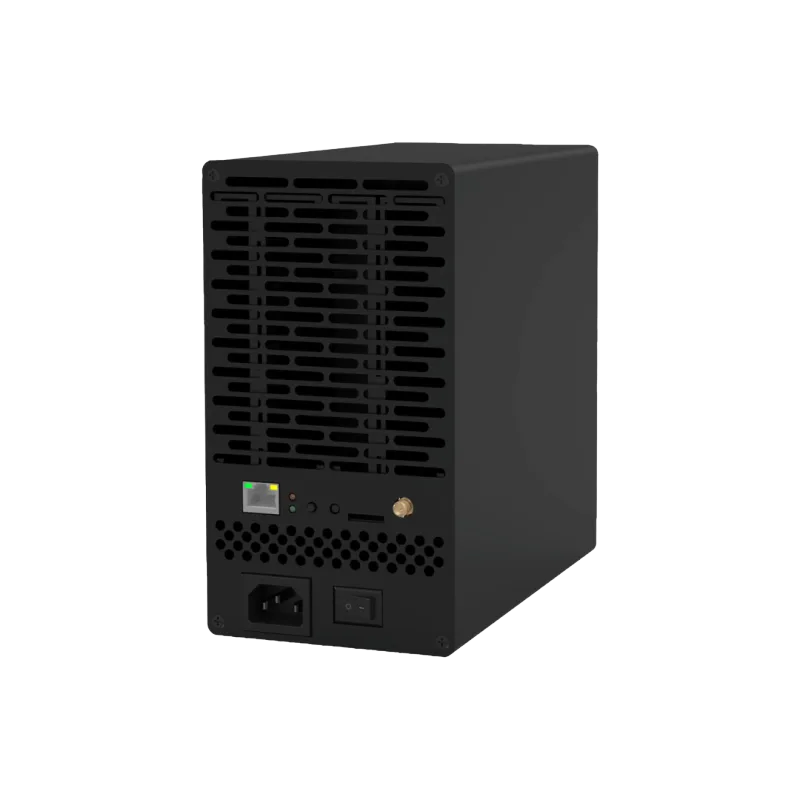
Iceriver ALPH AL2 LITE
Réponse rapide
The Iceriver ALPH AL2 LITE is a Blake3 miner rated about 2 TH/s at roughly 500 W. Quiet and efficient enough for home or desktop solo mining.
Heater-Class Miner
At 500W, this miner outputs approximately 1706 BTU/hr of heat — equivalent to a standard electric space heater. Every watt consumed by an ASIC miner is converted to heat with 100% efficiency, making it a space heater that also mines Bitcoin.
During heating season, miner heat can offset part of the heat a room would otherwise need from another electric heater. The economics depend on your electricity rate, room heat demand, BTC price, network difficulty, and noise constraints.
Calculateur de rentabilité
| Period | Revenue | Electricity Cost | Profit |
|---|---|---|---|
| Daily | $0.06 | $0.84 | $-0.78 |
| Weekly | $0.43 | $5.88 | $-5.45 |
| Monthly | $1.86 | $25.20 | $-23.34 |
| Yearly | $22.59 | $306.60 | $-284.01 |
Heating offset estimates the value of heat replacing an electric space heater during heating season (~6 months/year in Canada). Actual savings depend on your heating setup and climate.
Where to Buy the Iceriver ALPH AL2 LITE
D-Central Technologies is a Bitcoin-only company. For this miner, check out our trusted partner retailers below.
ASIC Miner Market
United StatesWide selection of new and used ASIC miners. US-based shipping.
MagasinerMinersDeals
United StatesCompetitive prices on new ASIC miners with coupon codes.
MagasinerPartner links may earn D-Central a commission at no extra cost to you. Have you considered Bitcoin mining instead? Explore Bitcoin miners →
Full Specifications
| Model | Iceriver ALPH AL2 LITE |
|---|---|
| Model Number | ALPH AL2 LITE |
| Manufacturer | IceRiver |
| Algorithme | Blake3 |
| Coins Mined | Alephium (ALPH) |
| Taux de hachage | 2 TH/s |
| Consommation électrique | 500 W |
| Efficiency | 250 J/TH |
| Niveau de bruit | 45 dB |
| Dimensions | 198*201*110mm |
| Weight | 5 |
| BTU Output | 1706 BTU/hr |
| Equivalent Heater | Small personal heater (1,706 BTU/hr) |
| Daily Power Cost | $0.84/day |
| Monthly Power Cost | $25.20/mo |
| Circuit Requirement | Standard 120V 15A |
| Release Date | 2024-10-01 |
| MSRP | $538.00 |
| État | Active |
Home Mining Assessment
The IceRiver ALPH AL2 LITE is a compact Blake3 ASIC built to mine Alephium (ALPH). It is rated at roughly 2 TH/s for about 500 W, an efficiency near 250 J/TH, in a self-contained chassis that runs at about 45 dB — quiet and low-power enough for a home office, basement, or small utility room.
What the ALPH AL2 LITE actually mines
This is not a Bitcoin machine. IceRiver builds ASICs for algorithms outside the SHA-256 (Bitcoin) and Scrypt (Litecoin/Dogecoin) families, and the ALPH line is purpose-built for Alephium, which secures its network with a Blake3-based proof of work. The AL2 LITE is a single-algorithm device: it hashes Blake3 and only Blake3, so it mines ALPH (and the handful of pools and coins that share the same hashing scheme) and nothing else. If your goal is Bitcoin, this is the wrong tool — but if you want a low-footprint way to accumulate Alephium directly from the protocol, a dedicated unit like this earns far more per watt than any GPU ever could on the same algorithm.
Alephium’s design leans on a work-throttling mechanism (its « Proof of Less Work » model) that rewards efficient hashing rather than raw brute force, which is part of why small, efficient units like the AL2 LITE remain practical for home participants instead of being immediately priced out by warehouse-scale farms.
Chip and hashboard architecture
Honesty first: unlike Bitmain or MicroBT, IceRiver does not publish a public datasheet for its Blake3 silicon. There is no openly documented chip SKU, chain-by-chip layout, process node, or voltage-domain map for the AL2 LITE, and we will not invent one. What we can describe is what is externally verifiable and consistent across IceRiver’s compact ALPH and KS-series hardware:
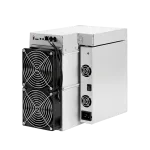
- All-in-one form factor. At roughly 198 × 201 × 110 mm and about 5 kg, the AL2 LITE is a self-contained cube rather than the long tube-and-controller layout of an Antminer. Power supply, controller, hashing logic, and cooling live inside one enclosure.
- Integrated power and control. IceRiver’s small units fold the PSU and control logic into the chassis, so there is no separate APW-style brick to fail independently — a single power cable feeds the whole device.
- Proprietary, closed Blake3 ASIC. The hashing cores are IceRiver’s own design. That makes the device simple to deploy but also means the deep board-level documentation that exists for mainstream Bitcoin ASICs (chip maps, domain diagrams, schematic-level repair notes) simply is not in the public domain for this hardware.
The practical takeaway: treat the AL2 LITE as an appliance. Its strength is plug-and-hash simplicity, not user-serviceable internals.
Real-world power and efficiency
The 500 W figure is the nameplate draw. As with any ASIC, expect the number at the wall to land a little higher once power-supply conversion losses, fan load, and ambient temperature are accounted for — budgeting around 500–550 W from the socket is realistic, and a watt meter on your own circuit is the only way to know your exact figure.
At roughly 250 J/TH, the AL2 LITE is efficient for what it is. One important caveat for anyone cross-shopping spec sheets: Blake3 efficiency numbers are not comparable to Bitcoin SHA-256 J/TH numbers. A Blake3 terahash and a SHA-256 terahash are different units of work, so the « legacy vs. modern » efficiency tiers used for Antminers do not map onto this device. Judge it against other Alephium miners, not against an S21.
Tuning headroom is limited compared with the Bitcoin ecosystem. IceRiver’s stock firmware does not expose the rich undervolt/overclock curves that aftermarket Bitcoin firmware does, so most owners simply run it at the rated point. Our ASIC power-profiles database is built around Bitcoin hardware and the per-domain tuning those chips allow; there is no equivalent profile library for IceRiver’s Blake3 silicon, and we would rather tell you that than pretend tuning options exist that don’t.
On heat: 500 W dissipates to roughly 1,706 BTU/h. That is meaningful but modest — closer to a small electronics load than a true space heater — so think of any captured warmth as a pleasant side effect in a cold room rather than a primary heating strategy.
Verified specifications
| Specification | Value | Notes |
|---|---|---|
| Algorithm | Blake3 | Single-algorithm; not SHA-256 |
| Coin | Alephium (ALPH) | Plus Blake3-compatible pools |
| Hashrate | ~2 TH/s | Manufacturer rating |
| Power (nameplate) | ~500 W | Budget ~500–550 W at the wall |
| Efficiency | ~250 J/TH | Blake3 units — not comparable to SHA-256 |
| Noise | ~45 dB | Home-tolerable |
| Heat output | ~1,706 BTU/h | Modest supplemental warmth |
| Dimensions | 198 × 201 × 110 mm | All-in-one cube |
| Weight | ~5 kg | Integrated PSU and controller |
| Released | October 2024 | MSRP around $538 |
Firmware and software compatibility
The AL2 LITE runs IceRiver’s stock firmware, configured through a simple web dashboard where you set pool URLs, worker credentials, and basic network options. For the overwhelming majority of owners, that stock firmware is the whole story.
It is worth being clear about the third-party reality, because it differs sharply from Bitcoin mining. The mature aftermarket-firmware scene — BraiinsOS+, VNish, LuxOS and the like — exists for SHA-256 Antminers and Whatsminers, not for IceRiver’s Blake3 hardware. There is no drop-in replacement firmware that unlocks new tuning curves on this device, and DCENT_OS, our own firmware work, targets Bitcoin ASICs rather than altcoin units, so it does not apply here either. What does exist is fleet-monitoring support: the open-source pyasic library recognizes IceRiver devices, so if you grow past a single unit you can pull hashrate, temperature, and status into a centralized dashboard alongside other makes.
Common faults and troubleshooting
Even a sealed appliance fails in predictable, hardware-agnostic ways. The most common issues on a compact integrated miner like this are:
- Fan failure / thermal throttling — dust buildup or a seized fan bearing is the number-one cause of a unit that « suddenly slowed down. » Hashrate sags before the device errors out.
- Power-supply faults — because the PSU is integrated, a power-stage failure usually presents as a dead unit or random reboots rather than a swappable brick you can rule out.
- Network / pool connectivity — dropped shares, a stalled dashboard, or « no work » states often trace back to DHCP, DNS, or pool-side config rather than the miner itself.
- Heat soak and dust — an enclosed cube in a warm, dusty room will throttle long before a hashboard genuinely degrades. Airflow and ambient temperature matter.
Work the problem in order — power, cooling, network, then hashing — before assuming the worst. Our ASIC fault finder walks through that decision tree for any miner, and if you are trying to decode what the chassis lights are telling you, our guide to ASIC status LEDs and blink codes covers the patterns most controllers use.
Repair and longevity
D-Central has been diagnosing and rebuilding mining hardware at the board level in Laval, Québec since 2016. A large share of the failures above — fans, thermal management, power delivery, connectivity — are universal, and the same disciplined diagnostic methodology we apply to Antminers applies here. We are also straight with people about the limits: IceRiver’s Blake3 boards are proprietary and far less documented than mainstream Bitcoin ASICs, so true chip-level board repair on this hardware is harder to source parts and reference data for. If your AL2 LITE has died, talk to our repair team first — we will tell you honestly whether it is a quick fan or power fix, a board-level job worth attempting, or a unit better cut for parts. Good airflow, a dust-free intake, clean power, and stable ambient temperatures are what keep one of these running for years.
Who it is for, and buying
The AL2 LITE suits a specific miner: someone who believes in Alephium and wants to accumulate ALPH directly from the protocol without running a noisy, multi-kilowatt machine. At about 500 W and 45 dB it is genuinely livable in a home — closer to a small appliance than an industrial heater — which makes it a sensible entry point for hobbyists, learners, and sovereignty-minded miners diversifying beyond Bitcoin. It is not a profit-maximizer the way warehouse-scale SHA-256 fleets are; treat returns as a function of the ALPH price and your electricity rate, and run your own numbers before buying.
To see how it stacks up against other models and check live profitability and comparison data, browse our ASIC miner database. If you are buying in Canada and want hardware backed by people who actually repair these machines, that is exactly the niche D-Central fills.
Where it sits in IceRiver’s ALPH lineup
IceRiver helped make Alephium mining accessible by productizing compact, plug-and-play Blake3 hardware — credit where it is due, much as Bitmain and MicroBT did for Bitcoin. The ALPH family spans several tiers, from small « LITE » units like this one up to higher-hashrate, higher-power flagship models aimed at miners who want more throughput per box and have the power and cooling to feed them. The AL2 LITE, released in October 2024, sits deliberately at the home-friendly end of that range: less hashrate and less heat than the top of the line, in exchange for a quiet, low-draw unit that an ordinary household can actually live with. In the bigger picture, affordable single-algorithm miners like this are one more way hashpower — and the security of smaller proof-of-work networks — stays distributed across many small participants rather than concentrated in a few large farms.
Broken miner? Get a real quote.
Tell us the symptom and get an instant repair-tier estimate ($95 / $145 / $195 CAD). Mail-in from across Canada, bench in Laval, Quebec.
Send it to D-Central — start a repair →Related Miners
Goldshell AL BOX III
Goldshell AL BOX II (ALPH 720GH 360W)
Goldshell E-AL1M
Dragonball Miner A40
Comparer le Iceriver ALPH AL2 LITE
Foire aux questions
What are the current mining economics for the Iceriver ALPH AL2 LITE?
At $0.07/kWh, the Iceriver ALPH AL2 LITE currently shows an estimated daily net cost of $0.78 before pool fees and hardware cost. Lower electricity rates, network changes, BTC price changes, or useful heat recovery can change the result.
Can I mine Bitcoin at home with the Iceriver ALPH AL2 LITE?
Yes, the Iceriver ALPH AL2 LITE scores 78/100 for home mining viability. It produces 45 dB of noise and draws 500W. It is suitable for home environments with appropriate placement considerations.
Can the Iceriver ALPH AL2 LITE heat my home?
The Iceriver ALPH AL2 LITE outputs approximately 1706 BTU/hr of heat. For reference, a typical space heater produces 5,000-5,500 BTU/hr. All electrical energy consumed by the miner is converted to heat, making it 100% efficient as a heater. D-Central offers Bitcoin Space Heater builds designed specifically for home heating integration.
What power supply does the Iceriver ALPH AL2 LITE need?
The Iceriver ALPH AL2 LITE draws 500W of power. You need a power supply rated for at least 550W with appropriate voltage (200-240V AC). D-Central stocks compatible power supplies in our shop. Always use a quality PSU from a reputable manufacturer to protect the miner and wiring.