

Bitmain Antminer E9 (2.4Gh)
Réponse rapide
The Bitmain Antminer E9 (2.4Gh) is a EtHash miner rated about 2.4 GH/s at roughly 2,556 W. An industrial-class unit — loud and power-hungry, best suited to a dedicated mining space, not living areas.
Professional-Grade Miner
This miner draws 2,556W and produces 75+ dB of noise — it is designed for dedicated mining environments, not living spaces. Professional-grade miners deliver the highest hashrate and revenue per unit but require proper infrastructure: a 240V circuit, adequate ventilation or exhaust ducting, and a space where noise is not a concern (garage, basement, warehouse, or outdoor enclosure).
For home miners looking for a quieter alternative, consider our Bitcoin Space Heater builds or explore open-source miners like the Bitaxe that are purpose-built for residential environments.
Heater-Class Miner
At 2,556W, this miner outputs approximately 8721 BTU/hr of heat — equivalent to a standard electric space heater. Every watt consumed by an ASIC miner is converted to heat with 100% efficiency, making it a space heater that also mines Bitcoin.
During heating season, miner heat can offset part of the heat a room would otherwise need from another electric heater. The economics depend on your electricity rate, room heat demand, BTC price, network difficulty, and noise constraints.
Calculateur de rentabilité
| Period | Revenue | Electricity Cost | Profit |
|---|---|---|---|
| Daily | $0.00 | $4.29 | $-4.29 |
| Weekly | $0.00 | $30.06 | $-30.06 |
| Monthly | $0.00 | $128.82 | $-128.82 |
| Yearly | $0.03 | $1,567.34 | $-1,567.31 |
Heating offset estimates the value of heat replacing an electric space heater during heating season (~6 months/year in Canada). Actual savings depend on your heating setup and climate.
Where to Buy the Bitmain Antminer E9 (2.4Gh)
D-Central Technologies is a Bitcoin-only company. For this miner, check out our trusted partner retailers below.
ASIC Miner Market
United StatesWide selection of new and used ASIC miners. US-based shipping.
MagasinerMinersDeals
United StatesCompetitive prices on new ASIC miners with coupon codes.
MagasinerPartner links may earn D-Central a commission at no extra cost to you. Have you considered Bitcoin mining instead? Explore Bitcoin miners →
Full Specifications
| Model | Bitmain Antminer E9 (2.4Gh) |
|---|---|
| Model Number | Antminer E9 (2.4Gh) |
| Manufacturer | Bitmain |
| Algorithme | EtHash |
| Coins Mined | Ethereum Classic (ETC) |
| Taux de hachage | 2.4 GH/s |
| Consommation électrique | 2,556 W |
| Efficiency | 1065 J/GH |
| Dimensions | 195 x 290 x 400mm |
| Weight | 14.2 |
| BTU Output | 8721 BTU/hr |
| Equivalent Heater | Equal to a 2,556W space heater |
| Daily Power Cost | $4.29/day |
| Monthly Power Cost | $128.82/mo |
| Circuit Requirement | 240V circuit required |
| Release Date | 2022-07-01 |
| MSRP | $1,000.00 |
| État | Active |
Home Mining Assessment
The Bitmain Antminer E9 (2.4Gh) is an EtHash ASIC miner rated at 2.4 GH/s for about 2,556 W at the wall. It is a memory-hard altcoin machine built for Ethereum-family proof-of-work — not a Bitcoin SHA-256 miner — and today it earns almost exclusively on Ethereum Classic (ETC) and a handful of smaller EtHash coins.
Chip and hashboard architecture: a memory-hard machine, not a SHA-256 miner
The single most important thing to understand about the E9 is that it does not belong to the same family as Bitmain’s Bitcoin miners. The S19 and S21 lines hash SHA-256 with chips (the BM136x/BM137x series) that are almost pure compression logic. The E9 instead runs EtHash, the proof-of-work behind Ethereum and Ethereum Classic, which is deliberately memory-hard. None of Bitmain’s SHA-256 ASIC nomenclature applies here, and anyone cross-shopping this against an S19 or S21 is comparing two completely different categories of hardware.
Memory-hard algorithms change the silicon economics. As our chip research notes for the Scrypt family, a memory-bound proof-of-work spends most of its die area and most of its power moving data in and out of memory rather than on raw hashing gates. EtHash takes this further than Scrypt: instead of a small per-core scratchpad, it requires a large pseudo-random dataset — the DAG (directed acyclic graph) — to be held in fast memory and read back constantly. That is why an EtHash ASIC like the E9 is built around banks of high-speed graphics-class memory sitting alongside the hashing engines, and why its hashrate is quoted in gigahashes (GH/s) rather than the terahashes a Bitcoin miner produces. The two numbers are not comparable; they measure different work against different algorithms.
Mechanically, the E9 follows Bitmain’s standard layout: multiple hashboards in a forced-air chassis, fed by a high-current PSU, coordinated by an embedded Linux control board running the stock firmware. As on every modern Antminer hashboard, the ASICs are wired in series strings that form voltage domains, each domain fed by its own DC-DC buck stage. Regulation and tuning happen per domain, not per individual chip — a detail that matters during repair, because a single failed chip pulls down its whole domain rather than dropping out in isolation.
Real-world power and efficiency
The factory rating is roughly 2,556 W. As with any ASIC, plan for the wall draw to sit a little above nameplate once you account for PSU conversion losses and ambient heat, and size the circuit with healthy headroom — do not load a breaker to 100% of a machine’s rated draw on a continuous basis. At that power, the E9 dumps about 8,721 BTU/h of heat, the same order as a small electric space heater, so plan airflow and exhaust accordingly.
One number on the spec card deserves a translation. Our database derives a generic « J/TH » figure for every machine, and for the E9 that lands around 1,065,000 J/TH. That value is a mechanical unit conversion, not a meaningful efficiency rating — J/TH is the language of SHA-256 Bitcoin miners. For a memory-hard miner the honest unit is joules per megahash (J/MH), and the E9 works out to roughly 1.07 J/MH (about 1.07 W per MH/s). For context, Bitmain’s Scrypt L7 of the same era sits near 0.36 J/MH on a different algorithm; the point is simply that you should evaluate the E9 against other EtHash hardware, never against a Bitcoin rig’s J/TH.
Tuning headroom on the E9 is modest. The memory subsystem, not the hashing logic, is usually the limiter, and EtHash silicon does not enjoy the deep aftermarket autotuning ecosystem that Bitcoin miners do. Expect to run close to factory settings. If you want to understand how undervolting and frequency tuning trade hashrate for efficiency on ASIC hardware in general, our ASIC power profiles reference walks through the principles — bearing in mind those curated profiles are built for SHA-256 machines, not for EtHash.
Firmware compatibility
The E9 ships with Bitmain’s stock firmware — a CGMiner-derived stack that loads fixed factory frequency tables rather than calculating a tune at runtime the way modern Bitcoin firmware does. For most owners that is the firmware they will run for the life of the machine.
Be honest about the third-party reality: the rich aftermarket firmware scene — BraiinsOS+, VNish, LuxOS — is built for SHA-256 Antminers and Whatsminers, not for EtHash hardware. The same is true of our own DCENT_OS, which is a Bitcoin-focused project; it is not a fit for the E9. On the pool side, EtHash miners speak Ethereum’s own stratum variants (EthereumStratum / ethproxy-style protocols), so the Bitcoin-only innovations such as Stratum V2 simply do not apply to this machine. In practice, plan to point the E9 at an ETC-capable pool using its stock interface and leave it there.
Common faults and troubleshooting
The E9 fails in mostly familiar ASIC ways, plus one category unique to memory-hard hardware:
- Dead or degraded hashboard / chain. A board that drops offline or reports far below its share of the total hashrate usually has a failed ASIC, a broken domain, or a power-delivery fault on that board.
- Memory errors (EtHash-specific). Because EtHash hammers on-board memory, failing or overheating memory shows up as climbing hardware-error / invalid-share counts and a quietly falling effective hashrate even while the board still appears « up. » This symptom is rare on SHA-256 miners and is a tell-tale sign of a memory or memory-VRM problem.
- Fan failures and thermal trips. Clogged or dead fans push intake temperatures up; the controller will throttle or shut a board down to protect the silicon.
- PSU faults. A high-current EtHash PSU under constant load is a common wear item and a frequent cause of « won’t power on » or random reboots.
For a structured way to localize any of these symptoms before you open the case, work through our ASIC fault finder. It walks you from the observed behavior — no power, missing chains, elevated errors, overheating — toward the subsystem at fault.
Repair and longevity
D-Central has repaired ASIC miners at the board level since 2016, and the E9 is repairable like any other Antminer: dead chips, failed buck stages, memory faults, fans and PSUs can all be diagnosed and replaced rather than scrapped. If your E9 has a down board or won’t boot, our ASIC repair service can assess it.
The honest caveat with the E9 is that its real longevity limit is not the silicon — it is the algorithm. EtHash’s DAG grows over time with each epoch, and once the DAG outgrows a machine’s on-board memory, that machine can no longer mine that coin. This is exactly why Ethereum Classic adopted a modified DAG schedule (Etchash) to keep the dataset within reach of older memory-class hardware. So the E9’s working life is governed by two clocks at once: the physical wear we can repair, and the steady march of DAG growth that we cannot. Factor both into any decision to refurbish versus retire.
Who it is for, and buying
The E9 is a niche tool with a narrow, honest use case: mining Ethereum Classic and other EtHash coins. When Bitmain announced the E9 in 2021 it was pitched as replacing a wall of high-end GPUs for Ethereum mining. Then the picture changed: Ethereum completed The Merge in September 2022 and moved to proof-of-stake, ending all mining on Ethereum mainnet overnight. EtHash ASICs were left to chase the much smaller pool of remaining EtHash/Etchash coins, with ETC the principal survivor. Profitability therefore lives or dies on the ETC price and your power cost — run the numbers before you buy.
If you are here because you want to mine Bitcoin, the E9 is the wrong machine; browse current SHA-256 hardware in our ASIC miner database instead. If EtHash is genuinely your goal — you have a target coin, cheap power, and you have done the math — the E9 can still earn, and D-Central can help you source, configure, or repair one.
Generational context
The E9 belongs to Bitmain’s 2021 wave of altcoin ASICs, the same generation as the Scrypt Antminer L7. It arrived as Ethereum mining was peaking and was rendered largely obsolete on its flagship coin barely a year later by The Merge. That history is the whole story of this machine: capable hardware, excellent at exactly one job, whose primary market disappeared by design. Treat it for what it is today — a specialist EtHash/ETC miner and a respectable supplemental heater — rather than a general-purpose mining investment.
Antminer E9 (2.4Gh) at a glance
| Specification | Antminer E9 (2.4Gh) |
|---|---|
| Algorithm | EtHash (Etchash on Ethereum Classic) |
| Primary coins | Ethereum Classic (ETC) and other EtHash coins |
| Hashrate | 2.4 GH/s (2,400 MH/s) |
| Power draw (nameplate) | ~2,556 W |
| Efficiency | ~1.07 J/MH (memory-hard; not comparable to SHA-256 J/TH) |
| Heat output | ~8,721 BTU/h |
| Cooling | Forced-air, standard Antminer chassis |
| Connectivity | Ethernet |
| Dimensions | 195 x 290 x 400 mm |
| Weight | 14.2 kg |
| Stock firmware | Bitmain (CGMiner-derived); no SHA-256 aftermarket firmware support |
| Generation | Bitmain 2021 altcoin ASIC wave (sibling of the Scrypt L7) |
Looking for full live specs, profitability estimates, and side-by-side comparisons? See the Antminer E9 (2.4Gh) entry in our ASIC miner database.
Broken miner? Get a real quote.
Tell us the symptom and get an instant repair-tier estimate ($95 / $145 / $195 CAD). Mail-in from across Canada, bench in Laval, Quebec.
Send it to D-Central — start a repair →Related Miners
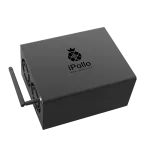
iPollo V1 Mini SE
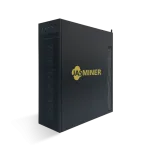
Jasminer X16-QE
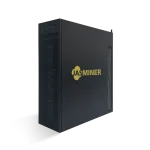
Jasminer X16-Q pro
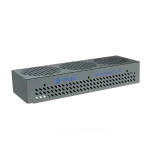
iPollo X1
Comparer le Bitmain Antminer E9 (2.4Gh)
Foire aux questions
What are the current mining economics for the Bitmain Antminer E9 (2.4Gh)?
At $0.07/kWh, the Bitmain Antminer E9 (2.4Gh) currently shows an estimated daily net cost of $4.29 before pool fees and hardware cost. Lower electricity rates, network changes, BTC price changes, or useful heat recovery can change the result.
Can I mine Bitcoin at home with the Bitmain Antminer E9 (2.4Gh)?
The Bitmain Antminer E9 (2.4Gh) has a home mining score of 8/100. With 0 dB noise and 2,556W power draw, it may require a dedicated space like a garage, basement, or outdoor enclosure. Consider noise insulation and proper ventilation.
Can the Bitmain Antminer E9 (2.4Gh) heat my home?
The Bitmain Antminer E9 (2.4Gh) outputs approximately 8721 BTU/hr of heat. For reference, a typical space heater produces 5,000-5,500 BTU/hr. All electrical energy consumed by the miner is converted to heat, making it 100% efficient as a heater. D-Central offers Bitcoin Space Heater builds designed specifically for home heating integration.
What power supply does the Bitmain Antminer E9 (2.4Gh) need?
The Bitmain Antminer E9 (2.4Gh) draws 2,556W of power. You need a power supply rated for at least 2,812W with appropriate voltage (200-240V AC). D-Central stocks compatible power supplies in our shop. Always use a quality PSU from a reputable manufacturer to protect the miner and wiring.