

Jasminer X16-Q
Quiet EtHash miner at only 40 dB with 1.95 GH/s. One of the best home-friendly ETC miners. Server-style form factor with low noise.
Réponse rapide
The Jasminer X16-Q is a EtHash miner rated about 1950 MH/s at roughly 620 W, built on the Custom ASIC ASIC. Quiet and efficient enough for home or desktop solo mining.
Heater-Class Miner
At 620W, this miner outputs approximately 2115.4 BTU/hr of heat — equivalent to a standard electric space heater. Every watt consumed by an ASIC miner is converted to heat with 100% efficiency, making it a space heater that also mines Bitcoin.
During heating season, miner heat can offset part of the heat a room would otherwise need from another electric heater. The economics depend on your electricity rate, room heat demand, BTC price, network difficulty, and noise constraints.
Calculateur de rentabilité
| Period | Revenue | Electricity Cost | Profit |
|---|---|---|---|
| Daily | $0.00 | $1.04 | $-1.04 |
| Weekly | $0.00 | $7.29 | $-7.29 |
| Monthly | $0.00 | $31.25 | $-31.25 |
| Yearly | $0.02 | $380.18 | $-380.16 |
Heating offset estimates the value of heat replacing an electric space heater during heating season (~6 months/year in Canada). Actual savings depend on your heating setup and climate.
Where to Buy the Jasminer X16-Q
D-Central Technologies is a Bitcoin-only company. For this miner, check out our trusted partner retailers below.
Partner links may earn D-Central a commission at no extra cost to you. Have you considered Bitcoin mining instead? Explore Bitcoin miners →
Full Specifications
| Model | Jasminer X16-Q |
|---|---|
| Model Number | X16-Q |
| Manufacturer | Jasminer |
| Algorithme | EtHash |
| Coins Mined | Ethereum Classic (ETC) |
| Taux de hachage | 1950 MH/s |
| Consommation électrique | 620 W |
| Efficiency | 0.32 J/MH |
| Niveau de bruit | 40 dB |
| Chip Model | Custom ASIC |
| Cooling | Air |
| Voltage Range | 100-240V AC |
| Operating Temperature | 5-40°C |
| Dimensions | 360x482x134 |
| Weight | 10 |
| Interface | Ethernet |
| BTU Output | 2115.4 BTU/hr |
| Equivalent Heater | Small personal heater (2,115 BTU/hr) |
| Daily Power Cost | $1.04/day |
| Monthly Power Cost | $31.25/mo |
| Circuit Requirement | Standard 120V 15A |
| Release Date | 2023-06-01 |
| MSRP | $3,500.00 |
| État | Active |
Home Mining Assessment
Quiet EtHash miner at only 40 dB with 1.95 GH/s. One of the best home-friendly ETC miners. Server-style form factor with low noise.
The Jasminer X16-Q is a purpose-built EtHash ASIC that mines Ethereum Classic (ETC) and other EtHash coins. It pairs roughly 1,950 MH/s (1.95 GH/s) with about 620 W at the wall — near 0.32 J/MH — inside a quiet, server-style chassis rated at just 40 dB, which makes it one of the few genuinely home-friendly altcoin miners.
Jasminer X16-Q at a glance
| Specification | Jasminer X16-Q |
|---|---|
| Algorithm | EtHash (Ethash) |
| Primary coin | Ethereum Classic (ETC); other EtHash forks |
| Hashrate | ~1,950 MH/s (1.95 GH/s) |
| Wall power | ~620 W |
| Efficiency | ~0.32 J/MH (≈318 J/GH) |
| Cooling | Forced air |
| Noise | ~40 dB |
| Operating temperature | 5–40 °C |
| Input voltage | 100–240 V AC |
| Dimensions | 360 × 482 × 134 mm (19″ rack-style) |
| Weight | 10 kg |
| Network | Ethernet (RJ45) |
| Heat output | ~2,115 BTU/h |
| Released | 2023 |
| Status | Active |
Chip and hashboard architecture
The X16-Q is built around a custom EtHash ASIC designed by Jasminer (a Sunlune brand) specifically for memory-hard proof-of-work. That distinction matters more than it sounds. EtHash is not an arithmetic-bound algorithm like Bitcoin’s SHA-256; its bottleneck is random reads against a multi-gigabyte dataset called the DAG. A miner lives or dies on memory bandwidth, not raw compute. Graphics cards solved this with large pools of external GDDR, which is why a GPU rig hashing at the X16-Q’s level would draw several kilowatts. Jasminer’s contribution was to integrate high-throughput memory tightly alongside the hashing logic on purpose-built silicon, which is the reason the X16-Q reaches ~1.95 GH/s on roughly 620 W rather than the wall-melting draw of an equivalent GPU farm.
We describe the silicon honestly: Jasminer has not published a public part number, datasheet or process node for the X16-Q’s chip, so any specific die-area, core-count or nanometre figure circulating online for it is unverified, and we will not repeat numbers we cannot stand behind. What we can speak to is the topology, because it follows the same logic as every modern multi-chip miner. The chassis splits into a control board — a small Linux system-on-chip that runs networking, the web dashboard and pool communication — and the hashing hardware that does the actual work. Power is delivered to grouped voltage domains rather than to each chip individually; this is the standard arrangement across ASIC hashboards, and the common claim of “per-chip voltage control” is a misconception regardless of vendor. Cooling is forced air, and the unusually low 40 dB acoustic signature is the headline engineering choice here: this is a machine designed to sit in an office or a home rather than scream in a containerised farm.
The form factor reflects that intent. At 360 × 482 × 134 mm the X16-Q is a 19-inch rack-width unit roughly 3U tall — a tidy, stackable server box rather than the tall tube of a typical Antminer — managed entirely over its Ethernet interface and built-in web UI.
Real-world power and efficiency
The 620 W nameplate is a wall figure, and as with any air-cooled miner the real draw drifts a few percent with input voltage, ambient temperature and power-supply efficiency. The important practical point for home operators is the input range: 100–240 V AC. Unlike high-wattage Bitcoin ASICs that need a dedicated 240 V circuit and derate badly on North American 120 V, the X16-Q runs happily on an ordinary household outlet. There is no 120 V penalty to design around here — one of the reasons it earns its reputation as an approachable home miner.
On efficiency, it is worth correcting a common units error. EtHash hardware is measured in joules per megahash, not joules per terahash. At 620 W over 1,950 MH/s the X16-Q works out to roughly 0.32 J/MH (about 318 J/GH). You will sometimes see that same number inflated into a five-figure “J/TH” value, but terahash-per-second is a SHA-256 frame of reference and tells you nothing useful about a memory-hard miner — treat J/MH as the figure that matters when comparing EtHash machines.
A note on tuning headroom: our ASIC power-profiles database is built around SHA-256 miners running autotuning firmware, where frequency and voltage are calculated at runtime to hit a chosen efficiency target. The X16-Q has no equivalent. Because there is no mainstream third-party firmware for Jasminer hardware, it runs at its factory operating point with only the limited adjustments the stock interface exposes. Treat its ~0.32 J/MH as a fixed characteristic of the unit, not as a starting point you can autotune downward the way you would an S19 or S21.
The flip side of that 620 W budget is heat. Essentially all of it becomes roughly 2,115 BTU/h of warmth — a mild, space-heater-class output rather than a furnace. In a home office or small room that is genuinely useful in winter, letting the electricity do double duty; it is not enough to heat a large or poorly insulated space on its own.
Firmware compatibility
The X16-Q runs Jasminer’s own stock firmware, accessed through a web dashboard for pool setup, status monitoring and the handful of controls the manufacturer exposes. For this machine that is effectively the whole story, and it is worth being straight about why.
The aftermarket firmware ecosystem that miners associate with tuning — BraiinsOS+, VNish, LuxOS — was written for SHA-256 Bitcoin hardware, with a few builds reaching into Scrypt (Litecoin) territory. None of them target EtHash, and none run on Jasminer silicon. That means no calculated power profiles, no efficiency presets and no third-party autotuner for the X16-Q. Stratum V2 does not enter the picture either: native SV2 support today lives in BraiinsOS+ on Bitcoin miners, whereas EtHash pools are served over EthereumStratum-style protocols. The same honesty applies to our own work — D-Central’s DCENT_OS effort is focused on the SHA-256 Bitcoin fleet, so it is not a fit for EtHash silicon. If a listing or forum post advertises a “custom firmware” for a Jasminer, scrutinise it closely; for this device, the manufacturer’s stack is the realistic and supported path. In practice you configure it for pool mining — an ETC pool such as the common public options — rather than running it solo.
Common faults and troubleshooting
The X16-Q is a comparatively gentle machine — low power, modest heat, quiet fans — so it tends to be reliable, but the failure modes that do appear are the familiar ASIC ones:
- Reduced or zero hashrate. The unit powers up but lands below ~1.95 GH/s, or reports missing hashing capacity. As with any multi-board ASIC this points to a fault on part of the hashing hardware, a marginal connector, or a chip-level problem rather than a software glitch.
- Thermal warnings. Even at 620 W, dust-clogged heatsinks, dried thermal interface or an ageing fan will eventually push temperatures up and can trip protection. Keeping the intake clean is the single most valuable bit of maintenance.
- Fan and power-stage faults. Fans are wear items and will throw speed errors as bearings age; internal power-delivery components also age under continuous duty.
- Network or pool drop-outs. A miner that “stops working” is often simply offline — a bad cable, a DHCP change or a stale pool endpoint. Verify connectivity before assuming hardware.
- DAG-load growth. EtHash miners load the DAG into memory, and the DAG grows over time; a unit running short on usable memory is a longevity consideration unique to this class of hardware (covered below).
For a structured, symptom-first diagnosis that routes you from what you are seeing to the most likely cause and fix, start with our ASIC fault finder.
Repair and longevity
A quiet, low-stress miner like the X16-Q is exactly the kind of hardware worth keeping in service rather than discarding when something goes wrong. Most ASIC failures are board-level — a tired fan, a failed power stage, a cracked solder joint, a flaky connector or a control-board issue — not total losses. D-Central has run in-house ASIC repair from Laval, Quebec since 2016. Our deepest bench experience is on the Antminer and SHA-256 Bitcoin fleet, but the diagnostic discipline carries across vendors: power-rail checks, thermal and fan testing, connector and control-board work, and full bench verification before a unit goes back to service. If your X16-Q has stopped hashing, dropped output, or is throwing thermal or fan errors, our ASIC repair service can assess it and tell you honestly whether it is worth fixing.
Longevity for an EtHash ASIC has one extra dimension worth understanding: the DAG. On Ethereum, that dataset grew relentlessly, which is what eventually retired small-memory miners. Ethereum Classic took a deliberately different path — its Thanos hard fork slowed the DAG’s growth rate specifically to keep modest-memory hardware viable for years longer. For an owner of an X16-Q mining ETC, that means memory exhaustion is a long-horizon concern rather than an imminent one, and the practical lifespan of the machine is governed more by the economics of the coin than by a hard technical cliff.
Who the X16-Q is for
This is one of the rare miners that genuinely suits a home. At roughly 40 dB and 620 W on a standard outlet, with a home-mining score of 65/100, it can live in an office, a basement or a spare room without the noise, heat and circuit demands of a flagship Bitcoin machine. It makes the most sense for three kinds of operator: enthusiasts who specifically want to mine Ethereum Classic or another EtHash coin and value a quiet, efficient box over a power-hungry GPU rig; people diversifying a small amount of hashpower outside Bitcoin; and anyone reusing mining heat, where ~2,115 BTU/h takes the edge off a room in winter.
Be clear-eyed about the economics, though. After Ethereum moved to proof-of-stake, EtHash lost its flagship coin, and the remaining EtHash market is thinner and more volatile than Bitcoin’s. Returns ride entirely on ETC’s price and network difficulty, so the X16-Q is best framed as an enthusiast and diversification tool rather than a guaranteed profit centre. If your real interest is sovereign Bitcoin mining, our broader ASIC miner database — including the open-source Bitaxe family — is the better place to start. If you want quiet EtHash hashing at home, the X16-Q is among the best tools for the job.
Where the X16-Q sits in the Jasminer lineage
The X16-Q belongs to a deliberately post-Merge generation of hardware. When Ethereum completed The Merge in September 2022 and abandoned proof-of-work, the entire EtHash mining base — GPUs and ASICs alike — lost its primary coin overnight and pivoted to Ethereum Classic and smaller EtHash forks. Jasminer, having built its name on integrating high-bandwidth memory into low-power EtHash silicon, kept iterating for that surviving market. Credit where it is due: making memory-hard ASIC mining this quiet and this power-efficient was real engineering, and Jasminer (Sunlune) did the hard work to get there.
Within the family, the X16-Q is the quiet, balanced member. Its siblings trade that balance for different priorities — the Jasminer X16-P pushes much higher throughput at a correspondingly higher power draw and noise level, the X16-QE and X16-Q pro are close relatives in the same quiet server format, and the earlier Jasminer X4 line established the platform that the X16 series scaled up. For a home or small-office operator who wants to mine EtHash coins without the noise, heat and power demands of either a GPU rig or a flagship Bitcoin ASIC, the X16-Q remains one of the most sensible, serviceable choices in the lineup.
Broken miner? Get a real quote.
Tell us the symptom and get an instant repair-tier estimate ($95 / $145 / $195 CAD). Mail-in from across Canada, bench in Laval, Quebec.
Send it to D-Central — start a repair →Related Miners
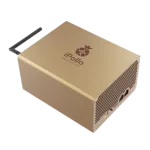
iPollo V1 Mini Wifi 260
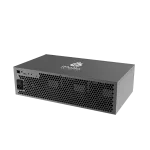
iPollo V1 Hyd
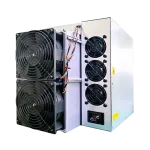
Bitmain Antminer E11 (9.5Gh)

iPollo V1 Mini SE
Foire aux questions
What are the current mining economics for the Jasminer X16-Q?
At $0.07/kWh, the Jasminer X16-Q currently shows an estimated daily net cost of $1.04 before pool fees and hardware cost. Lower electricity rates, network changes, BTC price changes, or useful heat recovery can change the result.
Can I mine Bitcoin at home with the Jasminer X16-Q?
Yes, the Jasminer X16-Q scores 81/100 for home mining viability. It produces 40 dB of noise and draws 620W. It is suitable for home environments with appropriate placement considerations.
Can the Jasminer X16-Q heat my home?
The Jasminer X16-Q outputs approximately 2115.4 BTU/hr of heat. For reference, a typical space heater produces 5,000-5,500 BTU/hr. All electrical energy consumed by the miner is converted to heat, making it 100% efficient as a heater. D-Central offers Bitcoin Space Heater builds designed specifically for home heating integration.
What power supply does the Jasminer X16-Q need?
The Jasminer X16-Q draws 620W of power. You need a power supply rated for at least 682W with appropriate voltage (100-240V AC). D-Central stocks compatible power supplies in our shop. Always use a quality PSU from a reputable manufacturer to protect the miner and wiring.