
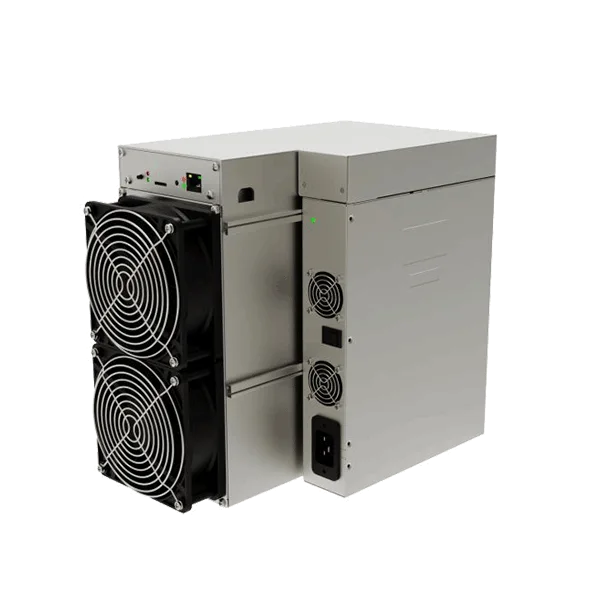
Iceriver KS3M
Réponse rapide
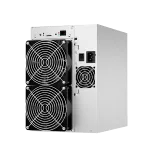
The Iceriver KS3M is a KHeavyHash miner rated about 6 TH/s at roughly 3,400 W. An industrial-class unit — loud and power-hungry, best suited to a dedicated mining space, not living areas.
Professional-Grade Miner
This miner draws 3,400W and produces 75 dB of noise — it is designed for dedicated mining environments, not living spaces. Professional-grade miners deliver the highest hashrate and revenue per unit but require proper infrastructure: a 240V circuit, adequate ventilation or exhaust ducting, and a space where noise is not a concern (garage, basement, warehouse, or outdoor enclosure).
For home miners looking for a quieter alternative, consider our Bitcoin Space Heater builds or explore open-source miners like the Bitaxe that are purpose-built for residential environments.
Heater-Class Miner
At 3,400W, this miner outputs approximately 11601 BTU/hr of heat — equivalent to a standard electric space heater. Every watt consumed by an ASIC miner is converted to heat with 100% efficiency, making it a space heater that also mines Bitcoin.
During heating season, miner heat can offset part of the heat a room would otherwise need from another electric heater. The economics depend on your electricity rate, room heat demand, BTC price, network difficulty, and noise constraints.
Calculateur de rentabilité
| Period | Revenue | Electricity Cost | Profit |
|---|---|---|---|
| Daily | $0.19 | $5.71 | $-5.53 |
| Weekly | $1.30 | $39.98 | $-38.68 |
| Monthly | $5.57 | $171.36 | $-165.79 |
| Yearly | $67.76 | $2,084.88 | $-2,017.12 |
Heating offset estimates the value of heat replacing an electric space heater during heating season (~6 months/year in Canada). Actual savings depend on your heating setup and climate.
Where to Buy the Iceriver KS3M
D-Central Technologies is a Bitcoin-only company. For this miner, check out our trusted partner retailers below.
ASIC Miner Market
United StatesWide selection of new and used ASIC miners. US-based shipping.
MagasinerMinersDeals
United StatesCompetitive prices on new ASIC miners with coupon codes.
MagasinerPartner links may earn D-Central a commission at no extra cost to you. Have you considered Bitcoin mining instead? Explore Bitcoin miners →
Full Specifications
| Model | Iceriver KS3M |
|---|---|
| Model Number | KS3M |
| Manufacturer | IceRiver |
| Algorithme | KHeavyHash |
| Coins Mined | Kaspa (KAS) |
| Taux de hachage | 6 TH/s |
| Consommation électrique | 3,400 W |
| Efficiency | 566.67 J/TH |
| Niveau de bruit | 75 dB |
| Dimensions | 370×195×290mm |
| Weight | 17.1 |
| BTU Output | 11601 BTU/hr |
| Equivalent Heater | Equal to a 3,400W space heater |
| Daily Power Cost | $5.71/day |
| Monthly Power Cost | $171.36/mo |
| Circuit Requirement | 240V circuit required |
| Release Date | 2023-09-01 |
| MSRP | $320.00 |
| État | Active |
Home Mining Assessment
The IceRiver KS3M is a dedicated Kaspa (kHeavyHash) ASIC miner from IceRiver, the manufacturer that pioneered the Kaspa hardware category. It produces a nameplate 6 TH/s for roughly 3,400 W at the wall (~566.7 J/TH on kHeavyHash), runs IceRiver’s closed stock firmware, and ships in a compact, loud, air-cooled chassis. It is a 2023-generation Kaspa machine, now positioned below IceRiver’s newer KS5- and KS7-class hardware.
Chip and hashboard architecture
The KS3M is not a Bitcoin miner. It runs kHeavyHash, the proof-of-work used by the Kaspa (KAS) network — an algorithm that sandwiches a fixed 64×64 matrix-multiply core between Keccak/SHA-3 rounds. That structure is ASIC-friendly and deliberately not memory-hard, which is exactly why purpose-built machines like the KS3M exist instead of GPUs.
IceRiver builds the KS3M around its own in-house kHeavyHash ASIC, not the Bitmain BM-series or MicroBT silicon used in SHA-256 Bitcoin miners. IceRiver has never published a die-level datasheet for that part, so D-Central treats its process node, per-die core count, and chips-per-board as unconfirmed rather than repeating reseller numbers we cannot verify against primary sources. Anyone who tells you the exact node or core count of an IceRiver Kaspa die is almost certainly guessing.
What is well established is the engineering pattern these machines follow. Like essentially every production hashboard miner, the dies are daisy-chained in series and powered in groups from a boosted rail, never regulated one chip at a time. A boost stage lifts the PSU voltage, and per-group regulators step it back down to the low core voltage each cluster of chips needs. This matters the moment a board misbehaves: a single weak or shorted die drags down its whole power group, so board-level diagnosis works in group blocks, not chip-by-chip guesswork. The KS3M’s chassis is notably compact for a 3.4 kW machine — about 370×195×290 mm and 17.1 kg, a tighter air-cooled form factor than the larger Antminer-style Kaspa units, with high-static-pressure fans front-to-back that account for its 75 dB rating.
Real-world power and efficiency
IceRiver rates the KS3M at about 6 TH/s for roughly 3,400 W, which works out to 566.7 J/TH. As with any high-power ASIC, real wall draw drifts above the datasheet figure once PSU efficiency, ambient heat, and 208 V vs 240 V input are accounted for, so budget your circuit and breaker for more than the nameplate, not less.
The most important number to read correctly is that J/TH figure — and it is where the old description of this miner was simply wrong. kHeavyHash terahashes are not interchangeable with Bitcoin SHA-256 terahashes. A 566.7 J/TH reading on a Kaspa miner does not drop it into the same « legacy » efficiency tier as a 566 J/TH Bitcoin machine; the algorithms, the definition of a hash, and the economics are entirely different. Judging the KS3M against a Bitcoin efficiency chart is a category error. The honest comparison is against other Kaspa ASICs, and there the KS3M lands as a mid-2023 unit: notably, within IceRiver’s own KS3 family it is the least efficient of the trio — it trades efficiency for its particular 6 TH/s bin — and it has since been out-paced on KAS-per-watt by IceRiver’s KS5- and KS7-class hardware.
| Specification | KS3M | How to read it |
|---|---|---|
| Algorithm | kHeavyHash (Kaspa / KAS) | Matrix-multiply core between Keccak/SHA-3 rounds; ASIC-friendly, not memory-hard |
| Hashrate | 6 TH/s nameplate | kHeavyHash TH/s — not comparable to Bitcoin TH/s |
| Power | ~3,400 W | Nameplate; budget more at the wall for PSU and ambient overhead |
| Efficiency | ~566.7 J/TH | Compare only to other Kaspa miners, never to Bitcoin ASICs |
| Heat output | ~11,601 BTU/h | ~3.4 kW of usable space heat |
| Noise | ~75 dB | Datacenter-loud; not a living-space machine |
| Weight / size | 17.1 kg, 370×195×290 mm | Compact air-cooled chassis |
| Released | ~September 2023 | Mid-generation IceRiver KS3 family |
Tuning headroom on the KS3M is far more limited than on a SHA-256 Antminer. Where Bitcoin operators lean on mature autotuners and curated power profiles to dial efficiency, Kaspa operators on IceRiver hardware are largely working with stock behaviour (more on the firmware reality below). If you do plan to experiment with undervolting or power capping, start by understanding the voltage/frequency relationship before you change anything — our ASIC power profiles database is the right reference for the underlying mechanics, even though curated kHeavyHash profiles are thinner than the SHA-256 catalog.
Firmware compatibility
This is where IceRiver hardware differs most from a Bitcoin Antminer, and where new owners are most often surprised. The KS3M runs IceRiver’s own closed stock firmware with a simple web dashboard — you set pools, see hashrate and temperatures, and not much more. There is essentially no mature third-party firmware ecosystem around IceRiver Kaspa miners the way there is for SHA-256 Antminers; the autotuning, watt-targeting, Stratum-V2 and deep-monitoring suites that Bitcoin operators take for granted largely do not exist here. For the KS3M, the realistic answer is: run stock, point it at a reputable Kaspa pool, keep the firmware current from IceRiver, and don’t plan a fleet around aftermarket features that aren’t available.
To be clear about our own work: D-Central’s DCENT_OS is a GPL-3.0 firmware aimed at SHA-256 Antminer hardware — it is not a kHeavyHash firmware and does not run on the KS3M. We will not pretend otherwise. If broad firmware freedom is a hard requirement, a Kaspa machine is the wrong place to expect it today, and that is a property of the category, not a knock on IceRiver, which deserves real credit for building the Kaspa ASIC market from nothing.
Common faults and troubleshooting
Most KS3M problems are the same failure modes that affect any high-power, air-cooled ASIC — just on a Kaspa hash board:
- Dead or partial hash board — a chain reports zero or a reduced ASIC count. Because the dies sit in series within shared power groups, one open or shorted chip can silence an entire chain. This is a board-level diagnosis, not a reset-and-hope fix.
- Over-temperature shutdowns — at ~3.4 kW the KS3M makes serious heat (about 11,601 BTU/h). Blocked intakes, a failed fan, dried thermal interface, or a hot ambient will trip thermal protection. Clean the filters and confirm both fan tachometers before suspecting silicon.
- PSU and power instability — brown-outs, an undersized breaker, or a degrading supply cause restarts and hashrate dips well before a board is actually at fault. Verify clean, adequate power first.
- Temperature-sensor and control faults — a stuck sensor can trip protection on a board that is physically fine, and network or web-UI hiccups can masquerade as a « dead » miner.
For a guided walk-through that maps a symptom (chain offline, zero ASIC found, temperature-too-high) to the right next step, start with our ASIC fault finder. The tool is built around the most common ASIC error states, and the diagnostic logic carries over cleanly to an IceRiver hash board even though the firmware vocabulary differs.
Repair and longevity
A 2023 Kaspa miner is well worth repairing rather than scrapping while KAS remains worth mining. D-Central has run an in-house ASIC repair lab in Laval, Québec since 2016, and the component-level techniques that keep Antminer fleets alive apply directly to an air-cooled IceRiver board: power-group voltage tracing, reflow and chip replacement, boost- and regulator-circuit repair, temperature-sensor and connector work, PSU diagnosis, and full bench testing afterward. The honest caveat is supply chain — donor chips and boards for IceRiver’s proprietary Kaspa silicon are scarcer than the deep, mature parts pool behind the Antminer line, so some repairs come down to board swaps rather than die-level rework. Even so, the failures that take a KS3M offline are almost always on the hash boards, fans, or PSU, all of which are serviceable. If your unit is down or under-hashing, our ASIC repair service covers diagnosis and board-level work, and we will tell you honestly whether a given machine is economical to keep running.
Who the KS3M is for — and buying
The KS3M makes sense for one specific operator: someone who believes in Kaspa, has a dedicated or well-insulated space that can absorb 3.4 kW of continuous heat and 75 dB of fan noise, and wants KAS hashrate without chasing the newest IceRiver models. Its ~11,601 BTU/h output is genuinely useful as supplemental heat — ducted into a workshop, garage, or basement through a Canadian winter, it turns money you would spend on heating into coins. With a home-mining score of just 36/100 it is emphatically not a living-room appliance; the noise and heat demand a space planned around them.
It is also not the right pick if you want best-in-class efficiency per KAS today — that has moved to IceRiver’s KS5- and KS7-class machines. If you are new to Kaspa and want to learn on something small and quiet first, IceRiver’s entry-level KS0/KS1 units are a far gentler introduction than a 3.4 kW KS3M. Because availability on older Kaspa hardware is variable, treat the KS3M as a build-to-order or refurbished-fleet purchase rather than something pulled off a shelf. Browse the full lineup and current specs in our ASIC miner database, and reach out if you want a hand matching a Kaspa unit to your power and heat budget.
Generational context
IceRiver effectively created the Kaspa ASIC category, shipping its KS0/KS1/KS2 units before the major SHA-256 manufacturers entered the space. The KS3 family — including this KS3M — was IceRiver’s 2023 push to higher Kaspa hashrate density, and it landed at a moment when Kaspa’s GHOSTDAG blockDAG, designed for very high block rates rather than Bitcoin’s ten-minute cadence, was rapidly scaling. That momentum cuts both ways: the same growth that made the KS3M attractive in 2023 has since produced more efficient KS5- and KS7-class hardware, and network difficulty has climbed accordingly. The KS3M remains a capable, repairable, mid-generation Kaspa miner — best understood as a heat-positive way to hold KAS hashrate, judged honestly against its own algorithm and its IceRiver peers rather than against a Bitcoin efficiency chart it was never meant to appear on.
Broken miner? Get a real quote.
Tell us the symptom and get an instant repair-tier estimate ($95 / $145 / $195 CAD). Mail-in from across Canada, bench in Laval, Quebec.
Send it to D-Central — start a repair →Related Miners
Antminer KS5
Iceriver KS5L
SuperScalar K10
Iceriver KS1
Foire aux questions
What are the current mining economics for the Iceriver KS3M?
At $0.07/kWh, the Iceriver KS3M currently shows an estimated daily net cost of $5.53 before pool fees and hardware cost. Lower electricity rates, network changes, BTC price changes, or useful heat recovery can change the result.
Can I mine Bitcoin at home with the Iceriver KS3M?
The Iceriver KS3M has a home mining score of 8/100. With 75 dB noise and 3,400W power draw, it may require a dedicated space like a garage, basement, or outdoor enclosure. Consider noise insulation and proper ventilation.
Can the Iceriver KS3M heat my home?
The Iceriver KS3M outputs approximately 11601 BTU/hr of heat. For reference, a typical space heater produces 5,000-5,500 BTU/hr. All electrical energy consumed by the miner is converted to heat, making it 100% efficient as a heater. D-Central offers Bitcoin Space Heater builds designed specifically for home heating integration.
What power supply does the Iceriver KS3M need?
The Iceriver KS3M draws 3,400W of power. You need a power supply rated for at least 3,740W with appropriate voltage (200-240V AC). D-Central stocks compatible power supplies in our shop. Always use a quality PSU from a reputable manufacturer to protect the miner and wiring.