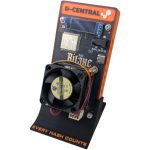
Why Mine Bitcoin at Home?
Bitcoin mining was never meant to live in corporate data centers. Satoshi Nakamoto envisioned “one CPU, one vote” — a decentralized network where anyone with a computer could participate in securing the hardest money ever created. Home mining brings that vision back to reality.
When you mine Bitcoin at home, you’re doing more than chasing satoshis. You’re strengthening the network’s decentralization, heating your space with productive energy, and stacking sats without KYC. Every hash you contribute makes the network harder to censor, harder to control, and harder to shut down.
This guide covers everything you need to go from zero to hashing — hardware selection, electrical setup, noise management, heat recovery, pool configuration, and optimization. Whether you’re plugging in a USB-powered Bitaxe for solo lottery mining or wiring up an Antminer S21 to heat your garage, this manual has you covered.
New to Bitcoin mining entirely? Start with our Getting Started guide for a quick orientation before diving into this comprehensive walkthrough.
Understanding Bitcoin Mining Basics
Before you buy any hardware, you need to understand what mining actually does and how the economics work.
What Mining Actually Does
Bitcoin miners perform a specific computational task: they take a block of pending Bitcoin transactions, combine it with a random number (called a nonce), and run it through the SHA-256 hash function. If the resulting hash starts with enough zeros (determined by the current difficulty), the miner wins the right to add that block to the blockchain and collect the block reward — currently 3.125 BTC (after the April 2024 halving).
This process repeats trillions of times per second across the entire network. Your miner’s hashrate — measured in terahashes per second (TH/s) — determines how many guesses it makes each second. More hashrate = more chances to find a block.
Key Mining Metrics
| Metric | What It Means | Why It Matters |
|---|---|---|
| Hashrate (TH/s) | Trillions of SHA-256 computations per second | Your share of the network’s total mining power |
| Power Consumption (W) | Watts drawn from the wall | Your largest ongoing cost — electricity |
| Efficiency (J/TH) | Joules of energy per terahash | Lower = better. Determines profitability at any electricity rate |
| Difficulty | How hard it is to find a valid hash | Adjusts every 2,016 blocks (~2 weeks) to maintain 10-minute block times |
| Block Reward | BTC earned for finding a block | Currently 3.125 BTC, halves every ~4 years (next halving ~2028) |
Pool Mining vs. Solo Mining
Pool mining combines your hashrate with thousands of other miners. When the pool finds a block, the reward is split proportionally among contributors. You earn small, steady payouts — like getting a regular paycheck instead of winning the lottery.
Solo mining means you’re on your own. If YOUR miner finds a block, you keep the entire 3.125 BTC reward. But with a single ASIC miner, the odds are astronomical — you might wait years or decades. Small open-source miners like Bitaxe are purpose-built for this “lottery mining” experience, making it fun rather than frustrating.
Choosing Your Mining Hardware
Home mining hardware falls into four tiers based on power consumption, noise, hashrate, and investment level. Choose your tier based on your electrical capacity, noise tolerance, and goals.
Quick Reference: Mining by Budget
Not sure where to start? This table maps your budget to the best mining hardware available in 2026. Every tier is a legitimate way to mine Bitcoin at home — the difference is scale, not validity.
| Budget | Best Hardware | Hashrate | Power Needed | Electrical Mods? | Mining Style |
|---|---|---|---|---|---|
| Under $50 | Nerdminer | ~78 KH/s | USB (1.5W) | None | Educational / solo lottery |
| $50 – $200 | Bitaxe Supra / Bitaxe Gamma | 0.6 – 1.2 TH/s | 5V USB-C (15-25W) | None | Solo lottery mining |
| $200 – $500 | Bitaxe Hex / NerdQAxe | 2 – 3.6 TH/s | 12V adapter (40-90W) | None | Serious solo / small pool mining |
| $500 – $1,500 | S9 Space Heater / BitChimney | 13.5 – 30 TH/s | 120V or 240V (750-1,350W) | May need dedicated circuit | Pool mining + home heating |
| $1,500 – $3,000 | Antminer S19j Pro / S19 XP | 100 – 140 TH/s | 240V required (2,950-3,010W) | 240V circuit + electrician | Serious pool mining |
| $3,000+ | Antminer S21 / S21 Pro | 200 – 234 TH/s | 240V required (3,500-3,510W) | 240V circuit + electrician | Maximum hashrate, best efficiency |
For a deep dive into the open-source mining options at the lower budget tiers, see our complete Bitaxe Hub guide, which covers every Bitaxe variant, accessory, and setup walkthrough.
Tier 1: USB & Open-Source Miners (Entry Level)
Perfect for beginners, solo lottery mining, and learning how mining works without any electrical modifications.
| Miner | Hashrate | Power | Efficiency | Noise | Best For |
|---|---|---|---|---|---|
| Nerdminer | ~78 KH/s | ~1.5W | N/A (educational) | Silent | Learning, desk display |
| Bitaxe Supra | ~0.6 TH/s | ~15W | ~25 J/TH | ~30 dB (whisper) | Solo mining, always-on lottery |
| Bitaxe Gamma | ~1.2 TH/s | ~15-25W | ~18 J/TH | ~35 dB (low) | Solo mining, more hashpower |
| NerdAxe | ~0.5 TH/s | ~15W | ~30 J/TH | ~30 dB | DIY builders, display + mining |
| NerdQAxe | ~2 TH/s | ~40W | ~20 J/TH | ~40 dB | More serious solo mining |
| Bitaxe Hex | ~3.6 TH/s | ~90W | ~25 J/TH | ~45 dB | Maximum open-source hashrate |
D-Central is a pioneer Bitaxe manufacturer — creator of the original Bitaxe Mesh Stand and maker of custom heatsinks, cases, and accessories. We stock every Bitaxe variant: Supra, Ultra, Gamma, Hex, and GT, plus all accessories and power supplies. See our complete Bitaxe Hub for detailed specs and setup guides.
Browse Bitaxe Miners →Tier 2: Space Heater Miners (Dual-Purpose)
The mining hacker’s favorite: older ASIC miners converted into quiet space heaters. You pay for heat you were going to buy anyway — except this heat also mines Bitcoin. All heat generated by a miner is transferred into your room at 100% efficiency (every watt becomes heat), making them as efficient as any electric heater, with the bonus of earning sats. Explore our full Bitcoin Space Heaters collection for details on every model.
| Space Heater Edition | Hashrate | Power | Heat Output | Noise (Modified) |
|---|---|---|---|---|
| S9 Space Heater | ~13.5 TH/s | ~1,350W | ~4,600 BTU/hr | ~45-55 dB |
| S17 Space Heater | ~50-56 TH/s | ~2,000W | ~6,800 BTU/hr | ~45-55 dB |
| S19 Space Heater | ~90-95 TH/s | ~3,250W | ~11,000 BTU/hr | ~50-60 dB |
| BitChimney | ~23-30 TH/s | ~750-1,000W | ~2,500-3,400 BTU/hr | ~53 dB |
Tier 3: Modern ASIC Miners (Serious Mining)
Current-generation miners deliver the best efficiency (lowest J/TH), but require dedicated 240V circuits and produce significant noise and heat. Best suited for garages, basements, or dedicated mining rooms.
| Miner | Hashrate | Power | Efficiency | Noise | Voltage |
|---|---|---|---|---|---|
| Antminer S19j Pro | 100 TH/s | 2,950W | 29.5 J/TH | ~75 dB | 220-240V |
| Antminer S19 XP | 140 TH/s | 3,010W | 21.5 J/TH | ~75 dB | 220-240V |
| Antminer S21 | 200 TH/s | 3,500W | 17.5 J/TH | ~75 dB | 220-277V |
| Antminer S21 Pro | 234 TH/s | 3,510W | 15 J/TH | ~75 dB | 220-277V |
| Whatsminer M50S | 126 TH/s | 3,276W | 26 J/TH | ~75 dB | 200-240V |
Tier 4: Custom & Modified Builds
D-Central’s specialty. These are institutional miners hacked for home use — underclocked for efficiency, modded for noise reduction, and built to integrate into residential environments.
- Antminer Slim Edition — Compact custom Antminer builds for tight spaces
- Antminer Loki Edition — Custom configurations for maximum flexibility
- Antminer Pivotal Edition — Optimized configurations for specific use cases
- DIY Space Heater Kits — Convert your existing miner into a space heater with D-Central’s enclosure kits
Electrical Requirements for Home Mining
Electricity is the foundation of home mining. Get this wrong and you’ll trip breakers, damage equipment, or create fire hazards. Get it right and your operation runs smoothly for years.
Before You Start: Electrical Checklist
- Know your electrical panel’s total amperage (typically 100A, 200A, or 400A)
- Count your available breaker slots
- Determine your electricity cost per kWh (check your utility bill)
- Identify 240V circuits already available (dryer outlet, EV charger, etc.)
- Have a licensed electrician’s contact ready for any new circuit installations
120V vs. 240V: Which Do You Need?
This is one of the most common questions from new home miners. For a detailed walkthrough of running miners on standard household power, see our complete 120V mining guide.
| Factor | 120V (Standard Outlet) | 240V (Dryer-Style Outlet) |
|---|---|---|
| Available Power | 1,440W max (15A circuit) or 1,920W max (20A circuit) | 3,840W max (20A) or 5,760W max (30A) |
| Suitable For | Bitaxe, NerdAxe, NerdQAxe, S9 (underclocked) | All ASIC miners, multiple miners per circuit |
| Installation | Existing outlets, no electrician needed | May need electrician for new circuit |
| Efficiency | Slightly lower (more amps = more heat loss in wiring) | Higher (half the amps for same power) |
Calculating Your Electrical Capacity
Here’s how to figure out what your home can handle:
Step 1: Find your panel’s main breaker rating (typically stamped on the breaker). A 200A panel at 240V provides 48,000W total capacity for your entire home.
Step 2: Estimate your existing load. Average Canadian home uses 30-40A of continuous capacity for HVAC, appliances, lighting, etc.
Step 3: Calculate available mining capacity. On a 200A panel: 200A – 40A (home load) = 160A available. At the 80% rule: 128A continuous. At 240V, that’s 30,720W — enough for ~8 Antminer S21 units.
Step 4: Determine circuits needed. Each 30A/240V circuit supports one modern ASIC miner. A dedicated 20A/240V circuit supports one S9-class miner or space heater.
Outlet & Plug Types
| Plug Type | Voltage | Amps | Max Continuous Power | Common Use |
|---|---|---|---|---|
| NEMA 5-15 | 120V | 15A | 1,440W | Standard wall outlet |
| NEMA 5-20 | 120V | 20A | 1,920W | Kitchen/bathroom outlet |
| NEMA 6-20 | 240V | 20A | 3,840W | Window AC, S9-class miners |
| NEMA 6-30 | 240V | 30A | 5,760W | Most popular for ASIC miners |
| NEMA 14-30 | 240V | 30A | 5,760W | Dryer outlet (with neutral) |
| NEMA L6-30 | 240V | 30A | 5,760W | Twist-lock (PDU standard) |
Setting Up Your Mining Location
Where you put your miner matters almost as much as which miner you choose. Consider these factors:
Location Requirements by Miner Type
Bitaxe / NerdAxe / NerdQAxe (Tier 1): These run on USB power or a small 5V/12V adapter. Put them anywhere — desk, bookshelf, windowsill. No special location needed. They’re quieter than a laptop fan.
Space Heater Editions (Tier 2): These replace a traditional space heater. Place them in the room you want to heat — living room, bedroom, home office. They need adequate airflow (don’t box them in) and a nearby 120V or 240V outlet depending on the model.
Full ASIC Miners (Tier 3-4): These need a dedicated space:
- Garage — Most popular for home miners. Good airflow, separate from living space, usually has existing 240V for tools/EV charging. In winter, the heat is welcome.
- Basement — Great for year-round mining. Cooler ambient temps improve efficiency. Watch humidity levels.
- Utility room / mechanical room — Near the panel for easy circuit installation. Separate from living areas for noise.
- Outdoor shed — Works well with proper ventilation and weatherproofing. Consider security.
Environmental Requirements
| Factor | Recommended Range | Notes |
|---|---|---|
| Ambient Temperature | 0-35°C (32-95°F) | Most miners rated 0-40°C, but efficiency drops above 35°C |
| Humidity | 10-65% RH | Condensation kills electronics. Avoid damp basements without dehumidifier |
| Dust | Minimal | Dust clogs heatsinks and reduces cooling. Clean filters monthly |
| Airflow | Unobstructed intake & exhaust | Never block vents. Minimum 6 inches clearance on all sides |
Noise Management
This is the #1 reason home mining fails. Stock ASIC miners run at 75+ dB — about as loud as a vacuum cleaner, running 24/7. Here are your options, from simple to advanced. For a complete deep-dive on this topic, see our dedicated Noise Reduction Guide for Home Bitcoin Miners.
Noise Reduction Strategies
| Strategy | Noise Reduction | Cost | Difficulty |
|---|---|---|---|
| Distance (separate room) | 10-20 dB | Free | Easy |
| Firmware underclocking | 5-15 dB | Free (BraiinsOS/LuxOS) | Easy |
| Fan replacement (Noctua) | 10-20 dB | $30-80 | Moderate |
| Air ducting | 10-20 dB (indoors) | $50-150 | Moderate |
| Sound-absorbing enclosure | 20+ dB | $100-500 | Moderate |
| Rubber feet / vibration pads | 3-5 dB | $10-20 | Easy |
| Space Heater conversion | 20-30 dB | $100-300 | Moderate |
| Immersion cooling | 35-50 dB (near silent) | $500-2,000+ | Advanced |
Heat Management & Space Heater Mining
Every single watt your miner consumes becomes heat. This is physics — 100% of electrical energy converts to thermal energy. A 3,500W Antminer S21 produces 3,500W of heat, equivalent to a large electric space heater outputting ~12,000 BTU/hr.
This isn’t a problem — it’s an opportunity.
The Space Heater Strategy
In cold climates (hello, Canada), your heating costs are your second-largest household expense. Mining lets you convert that expense into Bitcoin earnings. Here’s the math:
| Scenario | Monthly Electricity Cost | Monthly Bitcoin Earned | Net Heating Cost |
|---|---|---|---|
| Traditional 1,500W heater (8 hrs/day) | ~$43 (at $0.12/kWh) | $0 | $43 |
| S9 Space Heater (1,350W, 24/7) | ~$117 | Varies (market dependent) | $117 – BTC earned |
| BitChimney (750W, 24/7) | ~$65 | Varies (market dependent) | $65 – BTC earned |
HVAC Integration
For the ultimate setup, integrate your miner into your home’s HVAC system:
- Remove stock fans from the miner (or use a space heater enclosure)
- Install inline fan (AC Infinity CLOUDLINE S4 is the community favorite)
- Duct the hot exhaust into your home’s HVAC return duct
- Pull intake air from an outside vent or cool area
- Use a smart thermostat (Ecobee) to control dampers — when temperature is reached, dampers redirect hot air outside instead of inside
This creates a fully automated mining heater that behaves like “Stage 1” in your HVAC system — the miner heats first, and your furnace only kicks in if more heat is needed.
Choosing a Mining Pool
Unless you’re solo mining with a Bitaxe (which uses dedicated solo pools), you’ll want to join a mining pool. For a comprehensive comparison of all major pools with pros, cons, and fee structures, see our Mining Pool Comparison Guide. Here are the top options for home miners:
| Pool | Fee | Payout Method | Min Payout | Best For |
|---|---|---|---|---|
| Braiins Pool | 2% | FPPS | 0.001 BTC | BraiinsOS users, large miners |
| Ocean Mining | 0% (TIDES) | TIDES | Varies | Decentralization maximalists, block template transparency |
| Luxor | 1-2.5% | FPPS | 0.001 BTC | LuxOS firmware users, North American miners |
| DEMAND Pool | 0% | PPLNS | 0.0005 BTC | Stratum V2 supporters |
| public-pool.io | 0% | Solo | Full block (3.125 BTC) | Bitaxe solo miners, lottery mining |
| CKPool Solo | 2% | Solo | Full block (3.125 BTC) | Solo mining with any hardware |
Internet & Networking Requirements
Good news: Bitcoin mining uses almost no bandwidth. The bad news: it is extremely sensitive to connection stability. A dropped connection means lost mining time, and stale shares mean wasted work. Here is what you need to know.
Bandwidth Requirements
A single ASIC miner uses approximately 10-50 KB/s of bandwidth — less than streaming a low-quality audio podcast. Even 10 miners running simultaneously would barely register on your internet plan. Bandwidth is not the bottleneck; latency and uptime are.
Wired vs. Wi-Fi
Full-size ASIC miners (Antminer S-series, Whatsminer, etc.) use wired Ethernet and do not have Wi-Fi capability. Open-source miners like the Bitaxe and NerdAxe connect via Wi-Fi (2.4 GHz only — most do not support 5 GHz).
| Factor | Wired Ethernet | Wi-Fi |
|---|---|---|
| Latency | 1-3 ms (excellent) | 5-50 ms (variable) |
| Reliability | Extremely stable | Subject to interference |
| Stale Shares | Minimal (~0.1%) | Higher (~0.5-2%) |
| Setup | Run Cat5e/Cat6 cable to miner location | Enter SSID/password in miner interface |
| Best For | Full ASICs, serious setups | Bitaxe, NerdAxe, desk-side miners |
Network Setup Tips
- Use a dedicated subnet or VLAN to isolate mining traffic from your home network. This improves security and makes it easier to manage multiple miners.
- Assign static IPs to each miner through your router’s DHCP reservation feature. This prevents IP address changes that can break your monitoring setup.
- Use a simple unmanaged switch (Netgear, TP-Link) to connect multiple miners when your router does not have enough Ethernet ports.
- Consider a UPS (Uninterruptible Power Supply) for your router and switch. Your miners will survive brief power blips, but if your network goes down, they stop earning.
- Port security: Never port-forward to your miner’s web interface. Keep all miner management behind your router’s firewall.
Setting Up Your Miner: Step by Step
This section covers the general setup process for ASIC miners. For device-specific setup guides, see our dedicated manuals for each model — including Bitaxe Supra setup, Bitaxe Hex setup, and Bitaxe Gamma setup.
Step 1: Unbox & Inspect
- Inspect the miner for shipping damage — dents, loose parts, broken fans
- Check that all hashboards are properly seated (gently try to wiggle them — they shouldn’t move)
- Verify the PSU is included or compatible (check the miner’s required voltage and connector type)
- Note the serial number and MAC address (usually on a sticker on the miner)
Step 2: Connect Power
- Place the miner on a stable, level surface with good airflow
- Connect all power cables from PSU to miner (each hashboard and control board needs power)
- Connect the PSU to your wall outlet — DO NOT turn on yet
- Double-check all connections are secure
Step 3: Connect Network
- Connect an Ethernet cable from your router/switch to the miner’s Ethernet port
- Most miners require a wired connection — Wi-Fi is generally not supported on full-size ASICs
- Ensure your router has DHCP enabled (it does by default)
Step 4: Find Your Miner on the Network
- Power on the miner
- Wait 2-3 minutes for it to boot and get an IP address
- Find the miner’s IP address using one of these methods:
- Check your router’s connected devices list (DHCP client list)
- Use an IP scanner app (Angry IP Scanner, Advanced IP Scanner, or Fing)
- For Antminers: the default hostname is usually “Antminer”
- Open a web browser and navigate to the miner’s IP address (e.g.,
http://192.168.1.xxx)
Step 5: Configure Mining Pool
- Log into the miner’s web interface (default credentials are usually
root/rootfor Antminers) - Navigate to Miner Configuration or Pool Settings
- Enter your pool’s Stratum URL, worker name, and password:
- URL:
stratum+tcp://pool-address:port(provided by your pool) - Worker:
YourBTCAddress.WorkerName(most pools use this format) - Password:
x(or as specified by the pool)
- URL:
- Set up 3 pools: primary, backup, and fallback — so your miner never stops if one pool goes down
- Click Save & Apply
Pool 1: stratum+tcp://stratum.braiins.com:3333
Worker: YourBTCAddress.home-miner
Password: x

Pool 2: stratum+tcp://stratum.braiins.com:25 (backup port)
Worker: YourBTCAddress.home-miner
Password: x

Pool 3: stratum+tcp://solo.ckpool.org:3333 (fallback to solo)
Worker: YourBTCAddress.home-miner
Password: x
Step 6: Verify Operation
- After saving pool settings, wait 5-10 minutes for the miner to start hashing
- Check the miner’s dashboard for:
- Hashrate: Should approach the miner’s rated speed within 15-30 minutes
- Temperature: ASIC chip temps should be 50-80°C depending on model
- Fan speed: Should be running (you’ll hear them)
- Hardware errors: Should be 0% or very close. Above 1% indicates a problem
- Pool status: Should show “Active” or “Alive”
- Check your pool’s dashboard — your worker should appear within a few minutes
root/root credentials on Antminers are well-known. Any device on your network — or the internet if your ports are open — could access your miner and redirect your hashrate. Change the password in System > Administration as your first step.
Monitoring & Optimization
Once your miner is running, ongoing monitoring ensures maximum uptime and early detection of problems.
What to Monitor
| Metric | Healthy Range | Action If Out of Range |
|---|---|---|
| Hashrate (5min avg) | Within 5% of rated speed | Check for overheating, failed chips, or firmware issues |
| ASIC Chip Temp | 50-75°C (model dependent) | Clean fans/heatsinks, improve airflow, reduce ambient temp |
| PCB Temp | 30-60°C | Improve ventilation, check for dust buildup |
| Fan Speed | Varies (should be consistent) | If one fan is much slower, replace it |
| Hardware Errors | <0.1% | Reseat hashboard cables, check voltage, potential chip failure |
| Pool Uptime | 99%+ | Check internet connection, pool status page |
| Power Consumption | Within 10% of spec | Check PSU, wall voltage, cable quality |
Monitoring Tools
- Miner web interface — Built-in dashboard accessible via browser (basic but always available)
- Foreman — Cloud-based fleet management for multiple miners
- Awesome Miner — Windows-based miner management with alerts and remote access
- BraiinsOS dashboard — If running BraiinsOS firmware, the built-in dashboard is excellent
- Grafana + Prometheus — For advanced users who want custom dashboards and historical data
- Kill A Watt meter — Physical plug-in meter to verify actual power consumption at the wall
Optimization Tips
- Custom firmware: BraiinsOS+, LuxOS, or VNISH can improve efficiency by 10-25% through autotuning. BraiinsOS is free for Braiins Pool users.
- Underclock for efficiency: Running your miner at 70-80% power often yields the best joules-per-terahash ratio and significantly reduces noise and heat.
- Seasonal strategy: Run at full power during winter (free heating), underclock during summer (lower power bills). Some miners even shut down during peak summer months.
- Time-of-use rates: If your utility offers time-of-use pricing, schedule higher power consumption during off-peak hours.
- Clean regularly: Compressed air on heatsinks and filters every 1-3 months prevents thermal throttling.
Profitability Considerations
Let’s be honest: home mining profitability depends on three variables — your electricity cost, Bitcoin’s price, and the network’s total hashrate (difficulty). Here’s how to think about it:
The Profitability Framework
Your electricity cost is the only variable you control. Bitcoin price and difficulty are external. So the question isn’t “will I be profitable?” — it’s “at what electricity rate am I profitable?”
Break-Even Electricity Rates (Approximate)
| Miner | Efficiency (J/TH) | Approx. Break-Even Rate | Profitable In |
|---|---|---|---|
| Antminer S21 Pro | 15 J/TH | ~$0.12-0.15/kWh | Canada (most provinces), US (most states) |
| Antminer S21 | 17.5 J/TH | ~$0.10-0.13/kWh | Quebec, many US states, Latin America |
| Antminer S19 XP | 21.5 J/TH | ~$0.08-0.10/kWh | Quebec, some US states |
| Antminer S19j Pro | 29.5 J/TH | ~$0.06-0.08/kWh | Only the cheapest electricity regions |
Note: Break-even rates shift constantly with Bitcoin price and network difficulty. These estimates assume mid-2026 difficulty levels. Use a mining profitability calculator for current numbers.
The Heat Credit
If your miner replaces an electric heater, your effective electricity cost drops dramatically. A 1,500W heater running 8 hours/day for 6 months costs ~$324 (at $0.12/kWh). If your miner handles that heating instead, credit $324 against your mining electricity costs. This “heat credit” can make even older, less efficient miners profitable during heating season.
Canadian Advantages for Home Mining
Canada is one of the best countries in the world for home Bitcoin mining. Here’s why:
- Low electricity rates: Quebec averages $0.073/kWh — among the lowest in North America. Alberta and BC also offer competitive rates.
- Cold climate: 6+ months of heating season means your miner does double duty as a heater for half the year. Plus, cooler ambient air improves mining efficiency.
- Hydroelectric power: Quebec and BC run almost entirely on hydro — clean, cheap, and renewable. Your mining is as green as it gets.
- Stable grid: Canadian electrical infrastructure is reliable. No brownouts, no load-shedding events common in other mining jurisdictions.
- Favorable regulations: No mining bans, no special permits required for residential mining (check local noise bylaws).
- D-Central is here: Canada’s leading Bitcoin mining company ships from Laval, Quebec. Local support, no customs delays, no cross-border hassles.
Security Best Practices
Your miner is a small computer connected to your network that handles Bitcoin. Treat security seriously:
- Change default passwords on every miner immediately after first boot
- Don’t expose miners to the internet — keep them behind your router’s firewall. Never port-forward to a miner’s web interface
- Use a separate network (VLAN or separate router/switch) for mining equipment
- Verify firmware integrity — only download firmware from official manufacturer websites or trusted sources (BraiinsOS, LuxOS). Malicious firmware can redirect your hashrate to an attacker’s wallet
- Monitor your pool dashboard — if your reported hashrate drops unexpectedly, investigate immediately. It could be hardware failure or firmware compromise
- Physical security — miners in accessible locations (sheds, garages) should be secured. They contain no Bitcoin, but they’re valuable equipment
Troubleshooting Common Issues
Most issues have simple fixes. If you run into something beyond basic troubleshooting, D-Central’s ASIC Repair Service has fixed 2,500+ miners since 2016 — we handle everything from chip-level diagnostics to full hashboard replacement.
| Problem | Likely Cause | Solution |
|---|---|---|
| Miner won’t power on | PSU issue, blown fuse, bad outlet | Test outlet with another device, check PSU switch and fuse, verify voltage |
| No hashrate (0 TH/s) | Hashboard not detected, cable issue | Reseat hashboard power and data cables, check control board connections |
| Low hashrate | Overheating, failed ASIC chips, bad fan | Check temps, clean heatsinks, inspect fans, check for error codes |
| High hardware errors | Bad chip, overheating, unstable power | Check chip temps, reseat cables, check PSU output voltage |
| Can’t find miner on network | DHCP issue, bad Ethernet cable | Try different cable and port, check router DHCP, use IP scanner |
| Pool shows “inactive” | Wrong pool URL, network issue | Verify pool URL and port, check internet connectivity, try backup pool |
| Tripping breaker | Circuit overloaded | Move miner to dedicated circuit, check total load on that circuit |
| Excessive noise | Stock fans at full speed | Replace with aftermarket fans, underclock firmware, add ducting |
Next Steps: Deep-Dive Guides
This guide gave you the complete overview. Now dive into the specifics with our detailed companion guides:
- Bitaxe Hub: The Complete Guide — Everything about every Bitaxe variant, accessories, and the open-source mining ecosystem
- Bitaxe Supra Setup Guide — Step-by-step walkthrough for the Supra 401
- Bitaxe Hex Setup Guide — Complete setup for the multi-chip Hex
- Bitaxe Gamma 601 Setup Guide — Setup and optimization for the Gamma
- Solo Bitcoin Mining Guide — Configure solo mining on any hardware with public-pool.io or CKPool
- Mining Pool Comparison Guide — Detailed comparison of all major pools with pros, cons, and fee structures
- Noise Reduction Guide — Advanced techniques for silent home mining
- 120V Mining Guide — Everything about running miners on standard household power
- Bitcoin Space Heaters Hub — All space heater models, setup guides, and the heating-while-mining strategy
- BraiinsOS Setup Guide — Install custom firmware for 10-25% efficiency gains
- LuxOS Setup Guide — Alternative firmware with autotuning and advanced features
- ASIC Mining Profitability Guide — Deep-dive into the economics and optimization strategies
D-Central stocks everything you need — from beginner-friendly Bitaxe solo miners to full ASIC rigs and Space Heater Editions. We’ve been the Bitcoin Mining Hackers since 2016, with 2,500+ miners repaired and thousands shipped across Canada and worldwide. Need help choosing? Our mining consultants can match you with the right hardware for your setup.
Browse All Mining Hardware →Frequently Asked Questions
Is Bitcoin mining at home still profitable in 2026?
It depends on your electricity cost. With current-generation hardware (S21 Pro at 15 J/TH), mining is profitable below ~$0.12-0.15/kWh. In Canada (especially Quebec at $0.073/kWh), home mining is highly profitable. During heating season, the profitability equation improves dramatically since the heat replaces your regular heating costs. See our ASIC Mining Profitability Guide for a detailed breakdown.
How much does it cost to start mining Bitcoin at home?
Entry level: A Bitaxe Supra costs under $100 and runs on USB power — no electrical work needed. Mid-range: A BitChimney space heater starts around $500. Full ASIC: An Antminer S21 runs $2,000-3,000 plus potential electrician costs for a 240V circuit ($200-500). See the budget tier table above for a complete breakdown.
Will mining damage my home’s electrical system?
Not if installed correctly. Follow the NEC/CEC 80% rule, use appropriate gauge wiring, and have a licensed electrician install any new circuits. Mining draws a constant, predictable load — which is actually easier on your electrical system than devices that cycle on and off (like air conditioners). For details on running miners on standard outlets, see our 120V mining guide.
How loud is a Bitcoin miner?
A Bitaxe is whisper-quiet (~30 dB). A stock Antminer S21 is very loud (~75 dB, like a vacuum cleaner). Space Heater Editions with aftermarket fans typically run at 45-55 dB (quiet conversation level). With a soundproof enclosure, you can get full-size miners below 50 dB. See our Noise Reduction Guide for all the techniques.
Can I mine Bitcoin on 120V power?
Yes, but it limits your options. Bitaxe, NerdAxe, NerdQAxe, and underclocked S9-class miners all run on standard 120V outlets. Modern high-performance miners (S19, S21, Whatsminer M50+) require 240V. Most home miners start on 120V and upgrade to 240V as they scale up. We have a dedicated 120V Mining Guide covering this in detail.
Do I need special internet for mining?
No. Mining uses very little bandwidth — about 10-50 KB/s per miner. Any home internet connection works fine. Latency matters more than speed — a stable, low-latency connection reduces stale shares. Wired Ethernet is strongly recommended over Wi-Fi for full ASIC miners. See the Internet & Networking section above for setup tips.
How much Bitcoin will I earn per month?
This varies constantly with difficulty and Bitcoin price. As a rough guide: an Antminer S21 (200 TH/s) currently earns approximately 0.0002-0.0004 BTC per day. A Bitaxe (0.6 TH/s) solo mining earns nothing until it finds a block — then it earns 3.125 BTC all at once (extremely rare but it happens). Use an online mining calculator for current estimates.
Is home mining legal in Canada?
Yes. There are no federal or provincial laws prohibiting residential Bitcoin mining in Canada. However, check local municipal noise bylaws if your miner is audible from neighboring properties. Some condo/strata agreements may restrict high-power appliance usage — check your building rules if applicable.
What is solo mining vs. pool mining? Which should I choose?
Pool mining combines your hashrate with others for small, frequent payouts. Solo mining means you mine alone — you get nothing until you find a full block (3.125 BTC), which may take months or years depending on your hashrate. Most home miners use pool mining for their main ASIC and run a Bitaxe on the side for solo lottery mining. See our Solo Mining Guide and Pool Comparison Guide for full details.
Can I use a Bitcoin miner to heat my home?
Absolutely — this is one of the best use cases for home mining, especially in cold climates. Every watt your miner draws becomes heat at 100% efficiency. D-Central’s Bitcoin Space Heaters are purpose-built for this: quiet, enclosed ASIC miners that function as space heaters while mining Bitcoin. During Canadian winters (October to April), your miner replaces your electric heater, and the Bitcoin earned is a bonus on top of the heat you were already paying for.
What custom firmware should I use for my ASIC miner?
The two most popular options are BraiinsOS+ (free when mining on Braiins Pool, excellent autotuning) and LuxOS (works with any pool, advanced features). Both improve efficiency by 10-25% over stock firmware through intelligent frequency tuning. VNISH is another solid option. Custom firmware also enables underclocking for noise reduction and overclocking for maximum hashrate.
Where can I buy mining hardware in Canada?
D-Central Technologies ships from Laval, Quebec, and has been the leading Canadian Bitcoin mining company since 2016. We stock every Bitaxe variant, full ASIC miners, Bitcoin Space Heaters, replacement parts, and accessories. Buying from a Canadian vendor means no cross-border customs delays, no import duties, and local support. Browse our full catalog here.
Is Bitcoin mining at home still profitable in 2026?
It depends on your electricity cost. With current-generation hardware (S21 Pro at 15 J/TH), mining is profitable below ~$0.12-0.15/kWh. In Canada (especially Quebec at $0.073/kWh), home mining is highly profitable. During heating season, the profitability equation improves dramatically since the heat replaces your regular heating costs. See our ASIC Mining Profitability Guide for a detailed breakdown.
How much does it cost to start mining Bitcoin at home?
Entry level: A Bitaxe Supra costs under $100 and runs on USB power — no electrical work needed. Mid-range: A BitChimney space heater starts around $500. Full ASIC: An Antminer S21 runs $2,000-3,000 plus potential electrician costs for a 240V circuit ($200-500). See the budget tier table above for a complete breakdown.
Will mining damage my home’s electrical system?
Not if installed correctly. Follow the NEC/CEC 80% rule, use appropriate gauge wiring, and have a licensed electrician install any new circuits. Mining draws a constant, predictable load — which is actually easier on your electrical system than devices that cycle on and off (like air conditioners). For details on running miners on standard outlets, see our 120V mining guide.
How loud is a Bitcoin miner?
A Bitaxe is whisper-quiet (~30 dB). A stock Antminer S21 is very loud (~75 dB, like a vacuum cleaner). Space Heater Editions with aftermarket fans typically run at 45-55 dB (quiet conversation level). With a soundproof enclosure, you can get full-size miners below 50 dB. See our Noise Reduction Guide for all the techniques.
Can I mine Bitcoin on 120V power?
Yes, but it limits your options. Bitaxe, NerdAxe, NerdQAxe, and underclocked S9-class miners all run on standard 120V outlets. Modern high-performance miners (S19, S21, Whatsminer M50+) require 240V. Most home miners start on 120V and upgrade to 240V as they scale up. We have a dedicated 120V Mining Guide covering this in detail.
Do I need special internet for mining?
No. Mining uses very little bandwidth — about 10-50 KB/s per miner. Any home internet connection works fine. Latency matters more than speed — a stable, low-latency connection reduces stale shares. Wired Ethernet is strongly recommended over Wi-Fi for full ASIC miners. See the Internet & Networking section above for setup tips.
How much Bitcoin will I earn per month?
This varies constantly with difficulty and Bitcoin price. As a rough guide: an Antminer S21 (200 TH/s) currently earns approximately 0.0002-0.0004 BTC per day. A Bitaxe (0.6 TH/s) solo mining earns nothing until it finds a block — then it earns 3.125 BTC all at once (extremely rare but it happens). Use an online mining calculator for current estimates.
Is home mining legal in Canada?
Yes. There are no federal or provincial laws prohibiting residential Bitcoin mining in Canada. However, check local municipal noise bylaws if your miner is audible from neighboring properties. Some condo/strata agreements may restrict high-power appliance usage — check your building rules if applicable.
What is solo mining vs. pool mining? Which should I choose?
Pool mining combines your hashrate with others for small, frequent payouts. Solo mining means you mine alone — you get nothing until you find a full block (3.125 BTC), which may take months or years depending on your hashrate. Most home miners use pool mining for their main ASIC and run a Bitaxe on the side for solo lottery mining. See our Solo Mining Guide and Pool Comparison Guide for full details.
Can I use a Bitcoin miner to heat my home?
Absolutely — this is one of the best use cases for home mining, especially in cold climates. Every watt your miner draws becomes heat at 100% efficiency. D-Central’s Bitcoin Space Heaters are purpose-built for this: quiet, enclosed ASIC miners that function as space heaters while mining Bitcoin. During Canadian winters (October to April), your miner replaces your electric heater, and the Bitcoin earned is a bonus on top of the heat you were already paying for.
What custom firmware should I use for my ASIC miner?
The two most popular options are BraiinsOS+ (free when mining on Braiins Pool, excellent autotuning) and LuxOS (works with any pool, advanced features). Both improve efficiency by 10-25% over stock firmware through intelligent frequency tuning. VNISH is another solid option. Custom firmware also enables underclocking for noise reduction and overclocking for maximum hashrate.
Where can I buy mining hardware in Canada?
D-Central Technologies ships from Laval, Quebec, and has been the leading Canadian Bitcoin mining company since 2016. We stock every Bitaxe variant, full ASIC miners, Bitcoin Space Heaters, replacement parts, and accessories. Buying from a Canadian vendor means no cross-border customs delays, no import duties, and local support. Browse our full catalog here.